The Chained Lady
The story of Andromeda comes from ancient Greece. Cassiopeia, the queen of Ethiopia bragged her daughter was even more beautiful than the sea nymph Nereids, who - offended by this remark - called upon Poseidon to punish Cassiopeia.
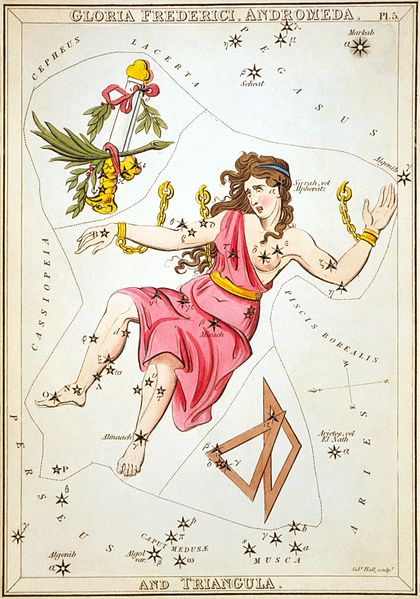
Poseidon then sent the sea monster Cetus to attack Ethiopia. The king, Cepheus was told be an oracle the only way to save the country was to sacrifice Andromeda to the monster.
Thus she was chained to a rock at the shore. Perseus, upon the winged horse Pegasus, rescued her by showing Cetus the severed head of Medusa, turning it into stone.
Athena, placed her into the sky to commemorate the events: Cassiopeia, Cepheus, Perseus, Cetus, and Pegasus all are surrounding constellations.
Andromeda was one of the original 48 constellations in Ptolemy’s 2nd- century Almagest. Between the body of Andromeda and Lacerate is a collection of stars called Gloria Frederici which was introduced by Bode in 1787 honoring Frederick the Great as a sword, pen, and olive branch as a “new” constellation similar to others added in the 18th and 19th centuries, but like many, didn’t catch on, and was not included in the official list of l 88 constellations made by the IAU in 1922.
Map of Andromeda
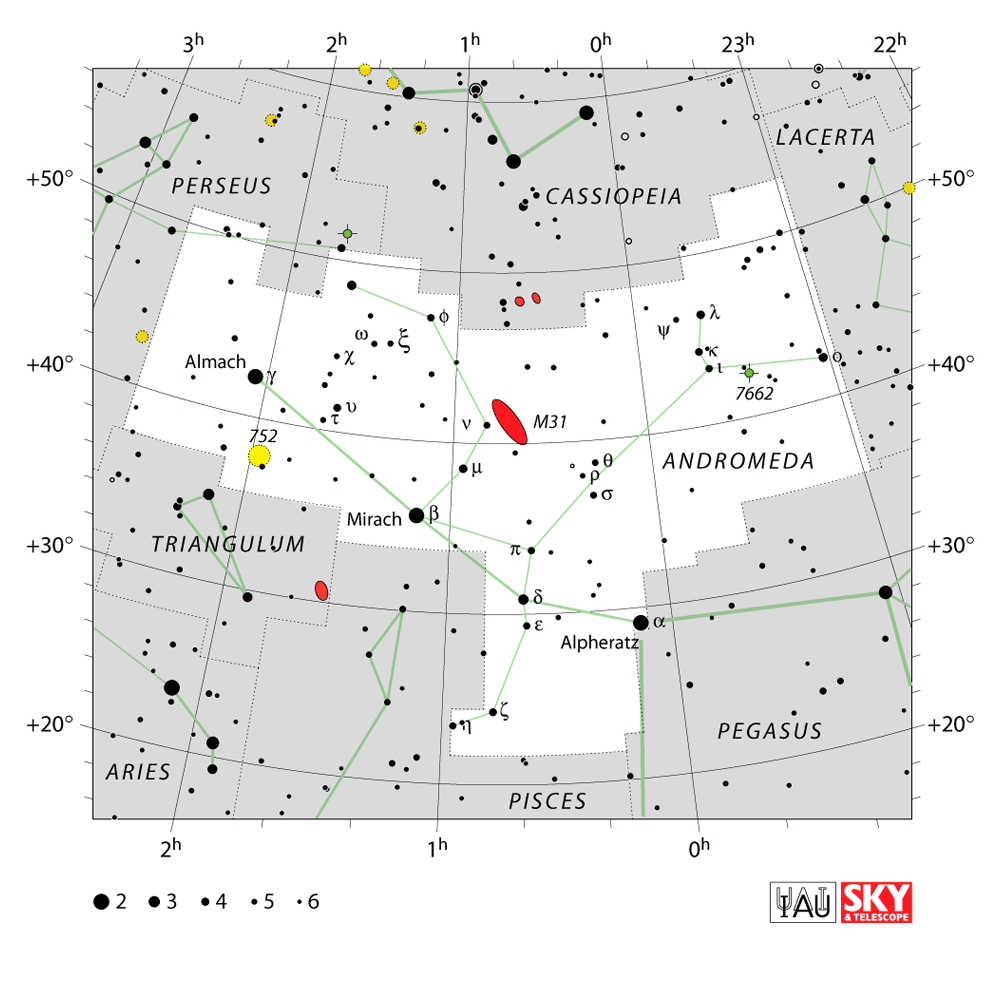
The bright star Alpheratz is part of the Great Square of Pegasus. The three brightest stars (Alpheratz, Mirach, and Almach) extend to the East from Pegasus over to Perseus. The Andromeda Galaxy (M 31) can be easily located following from red-giant Mirach through the fainter Mu (μ) Andromedae to a fuzzy patch that is the galaxy. Scanning with binoculars slightly “left” from between Mirach and Almach, you might spy the open cluster NGC 752. Similarly, going from Mirach in the opposite direction from M 31 you might see the large - but faint - Triangulum Galaxy (M33).
Things to See in Andromeda
Andromeda has several objects of different types to check out! Most notably is the Andromeda Galaxy…
Quick Reference: Objects of Interest
| Object | Type | Equipment |
|---|---|---|
| γ And | Double Star | Small Telescope |
| M 31 + M 32 + M 110 | Spiral Galaxy | Naked Eye, Binoculars |
| NGC 752 (C 28) | Open Cluster | Binoculars, Small Telescope |
| NGC 891 (C 23) | Spiral Galaxy | Small Telescope |
| NGC 7662 (C 22) | Planetary Nebula | Small Telescope |
Almach (γ And)
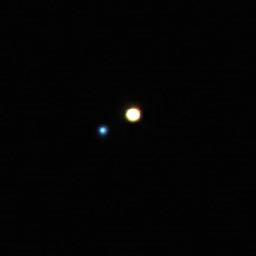
Located at the eastern end of Andromeda, this 2nd magnitude star system is about 350 light years from Earth, only about 6.5 million years old, and is actually a quadruple star system.
In a small telescope, it’s seen as a bright orange/gold colored red-giant star with a blue/indigo companion. The color contrast makes it a favorite for observers.
The Andromeda Galaxy
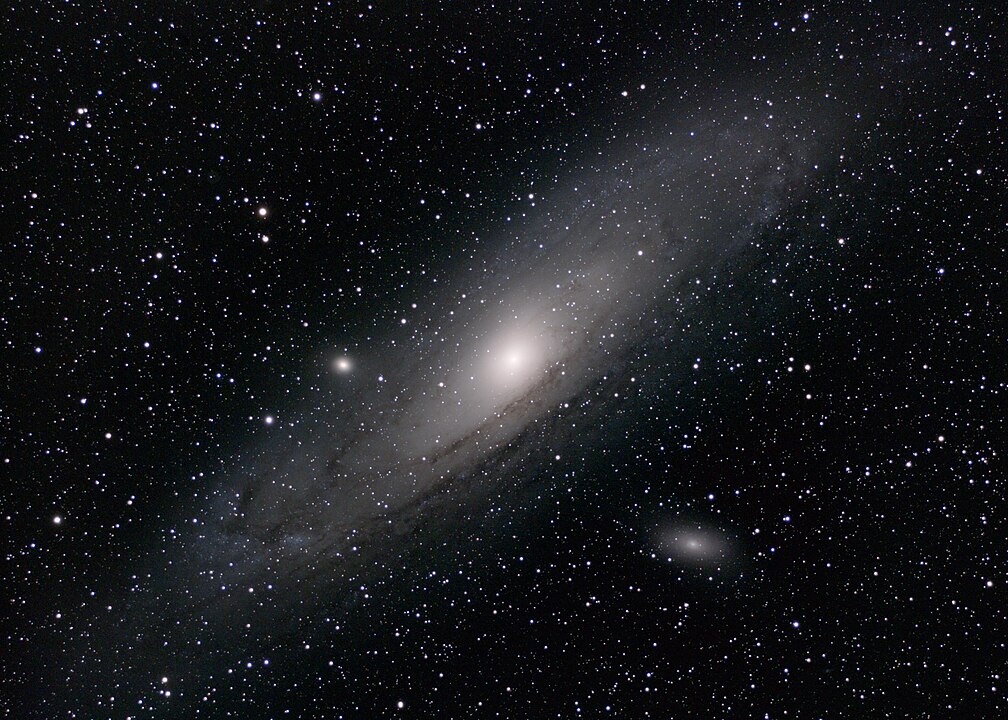
Probably the most famous galaxy, M 31 is the closest major galaxy to the Milky Way, about 2.5 million light years from Earth. Like the Milky Way Galaxy, Andromeda has several satellite galaxies: Messier 32 and 110 are the largest, to the left and below right of M 31, respectively.
M31 and the Milky Way might be on a collision course (models of each galaxy’s long-term motions differ). If they interact (in about 2½ to 4 billion years), they could merge. Or we might just have a “near miss”.
NGC 752
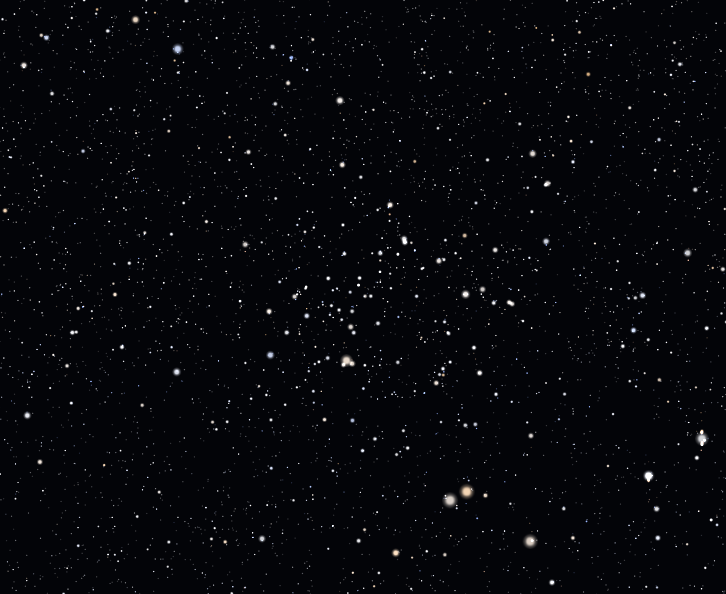
Also known as Caldwell 752, this open cluster is easy to detect with binoculars and has about 60 stars of roughly 9th magnitude. It’s slightly older than most open clusters – about 1.3 billion years.
The Blue Snowball Nebula
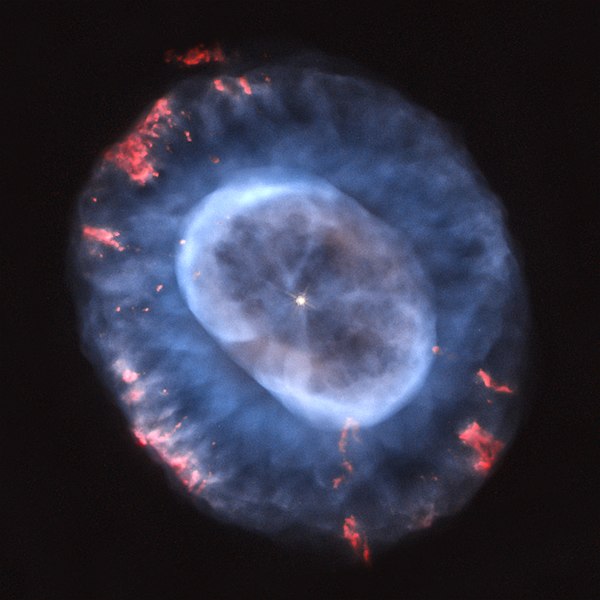
This is NGC 7662, also known as Caldwell 22, a planetary nebular almost 6,000 light years from Earth, the remnant of a star that ejected its outer layers, about 3,000 years ago. In a small telescope this will appear like a bluish ring; the color is caused by glowing atoms of oxygen that have lost two of their electrons - this happens because the gas is still heated by the hot star at the center, which itself is on the way to becoming a white dwarf star.
The Silver Sliver Galaxy
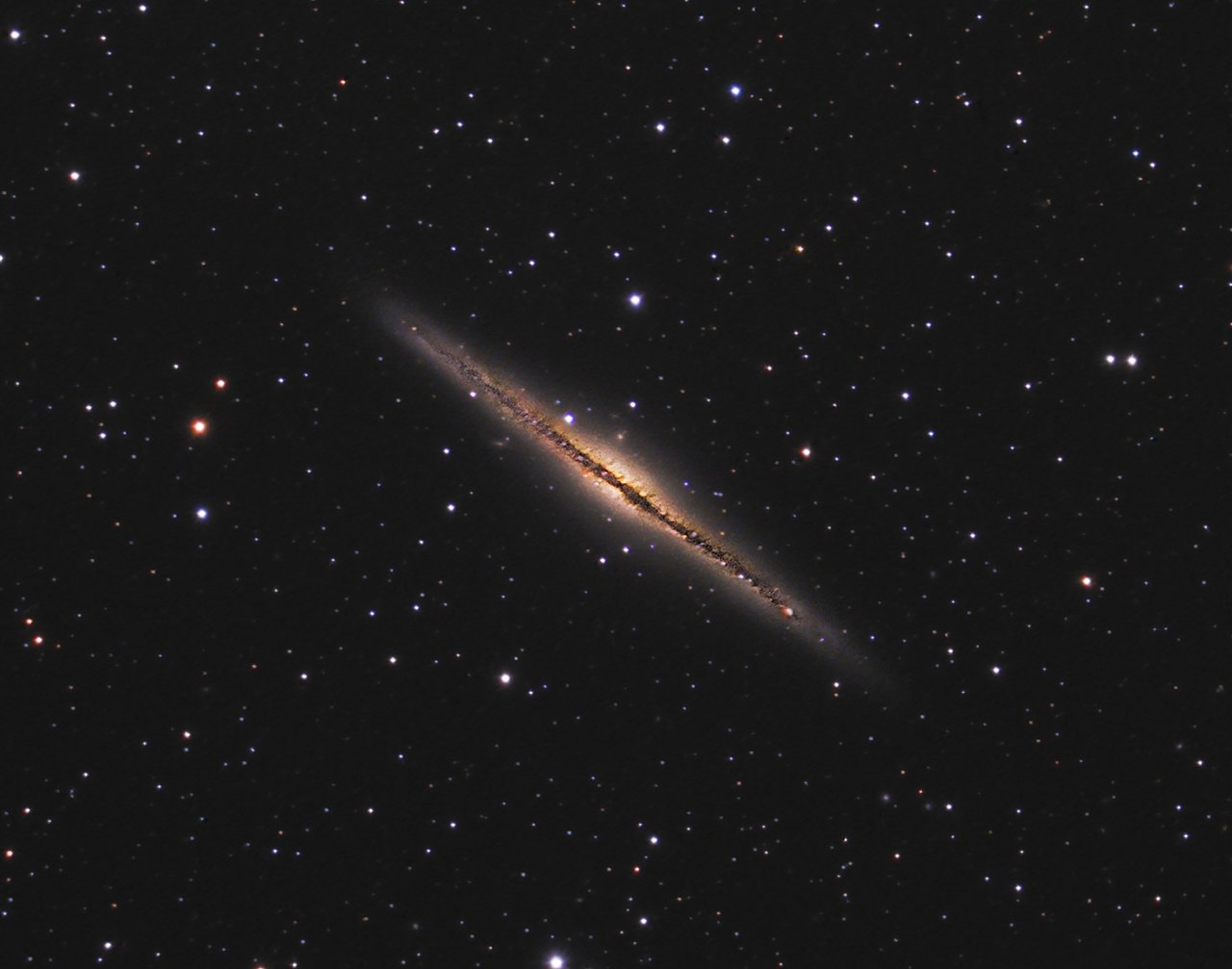
Finally, there’s NGC 891 (Caldwell 23) an edge-on spiral galaxy, this galaxy is very similar to the Milky Way with a prominent band of interstellar dust. It is 27 million light years away.