The Giraffe
Almost always overlooked, despite being a circumpolar constellation, the constellation of the Giraffe contains treasures that rival objects in more popular nearby constellations.
Because it’s in a dim part of the sky, away from the Milky Way, with no prominent stars, it wasn’t a constellation known to the ancients. It was only introduced in 1612 or 1613 by Petrus Plancius, a cartographer who created several globes of the celestial sphere, with some of the first mappings of the Southern Hemisphere (including the Magellanic clouds), with depictions of southern constellations like Crux and Triangulum Australe.
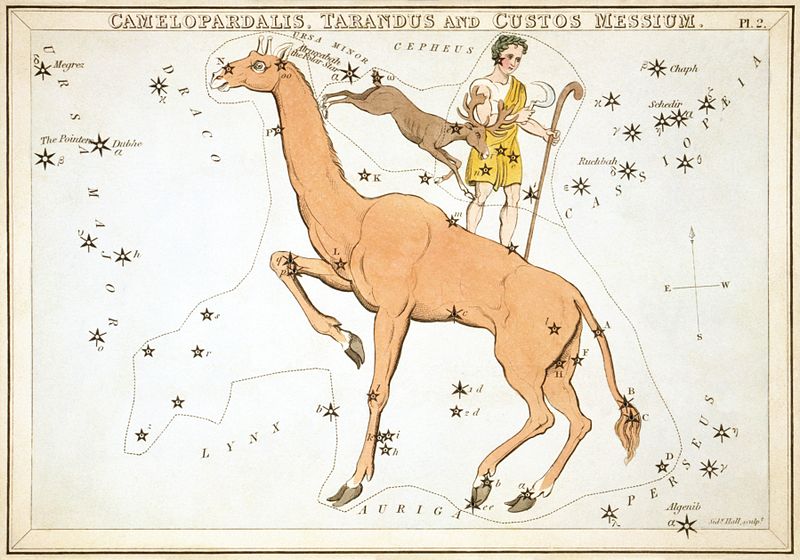
To fill in the gaps of “uncharted” skies, he added several constellations that were then included in the 1603 Uranometria and made their way into the official list, including Apus, Chameleon, Dorado, Grus, Hydrus, Indus, Pavo and Phoenix, as well as Apis the Bee which was changed to Musca the Fly. He did the same to the northern sky, adding eight more constellations there, but only two — Camelopardalis and Monoceros — survived to the present.
On the map above, there are two other “didn’t make the cut” constellations: Custos Messium introduced by Lalande in 1775 to honor Charles Messier (of the famous catalog), and Tarandus (or Rangifer) the Reindeer by Le Monnier in 1736 to commemorate the expedition to Lapland that proved the Earth’s oblateness. Over the 17-19th centuries, over 50 of these abandoned constellations show up on star maps of the time.
Map of Camelopardalis
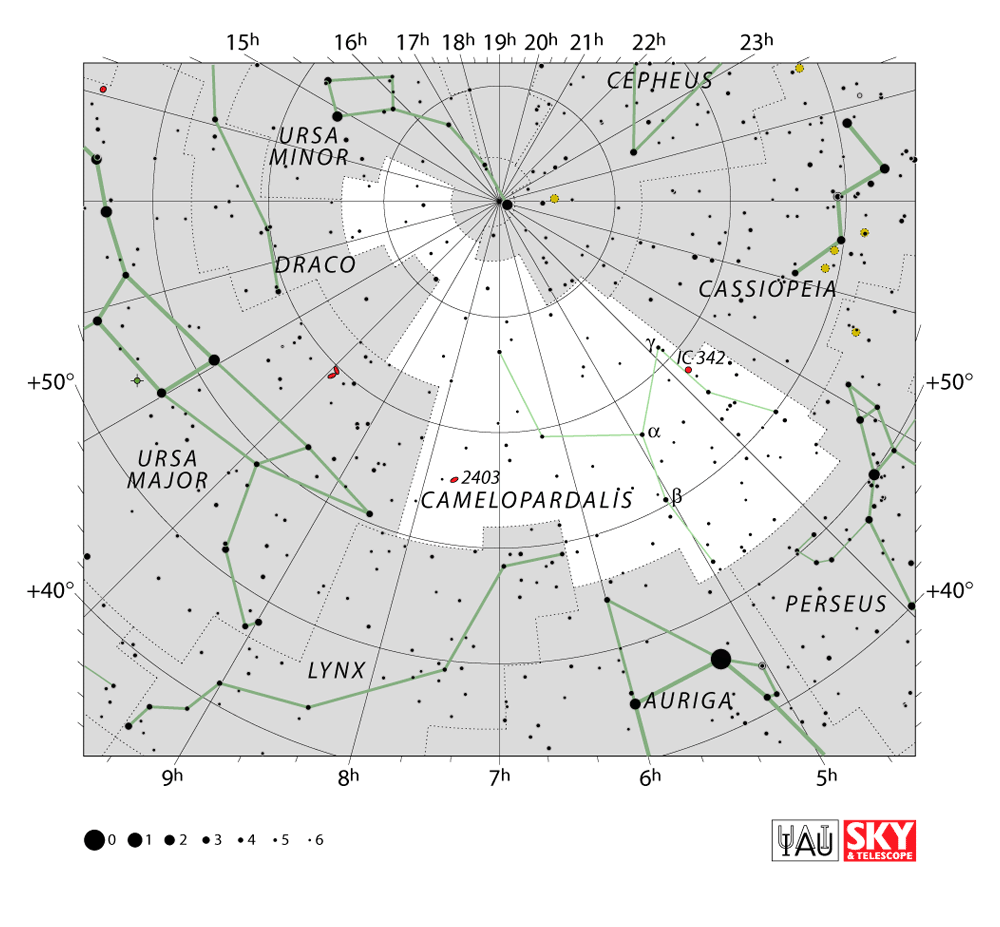
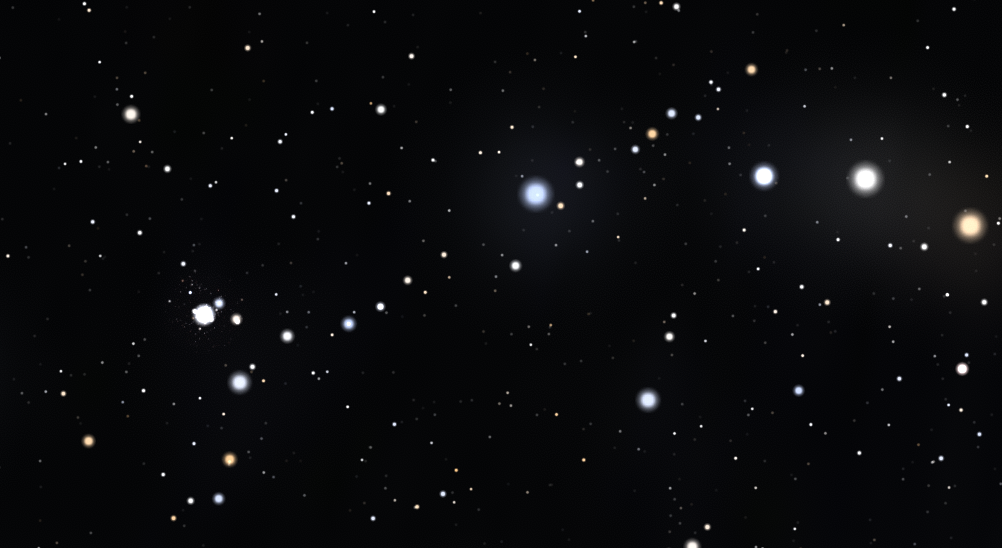
There are no bright stars in Camelopardalis; you might see a few dim 4th magnitude stars scanning between bright Capella in Auriga and the North Star. However, in this empty span of sky, there are several deep-sky objects (DSOs) that rival objects found in more well-known constellations. One asterism is “Kemble’s Cascade” a trial of 5th-9th magnitude stars in a straight line midway between the W of Cassiopeia and the bright star Capella, visible in binoculars.
Things to See in Camelopardalis
While there aren’t any of the “famous” DSOs in Camelopardalis, there are a few objects worth investigating.
Quick Reference: Objects of Interest
| Object | Type | Equipment |
|---|---|---|
| NGC 1502 | Open Cluster | Binoculars, Small Telescope |
| NGC 1501 | Planetary Nebula | Small/Medium Telescope |
| Caldwell 5 (IC 342) | Galaxy | Medium/Imaging Telescope |
| Caldwell 7 (NGC 2403) | Spiral Galaxy | Small Telescope |
| IC 3568 | Planetary Nebula | Medium Telescopes |
| NGC 2146 | Galaxy | Small/Medium Telescope |
| RU Cam | Cepheid Variable | Binoculars/Small Telescope |
Jolly Roger Cluster
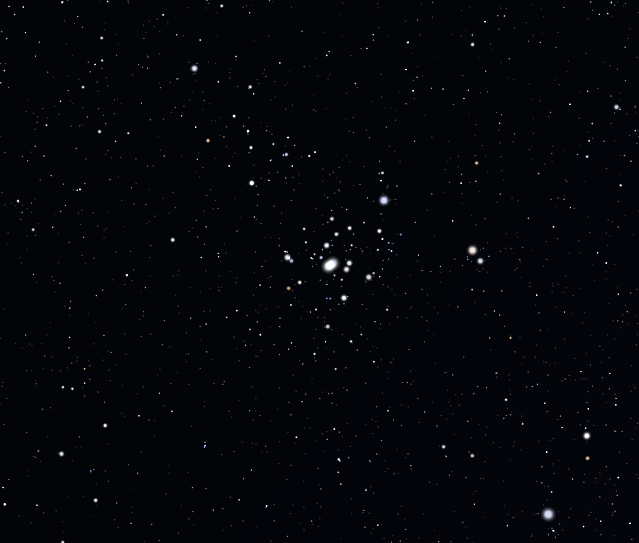
NGC 1502 is an open cluster located at the end of Kemble’s Cascade with about 45 stars located about 2,700 light years from Earth.
The Oyster Nebula
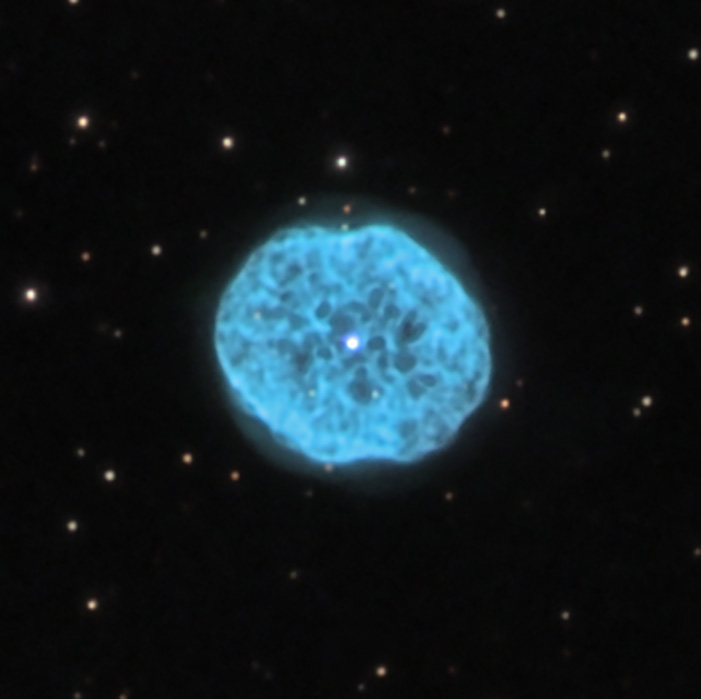
Also nearby, the small but intricate NGC 1501, a planetary nebula 4,240 light years distant spanning 0.5 light years across.
The Hidden Galaxy
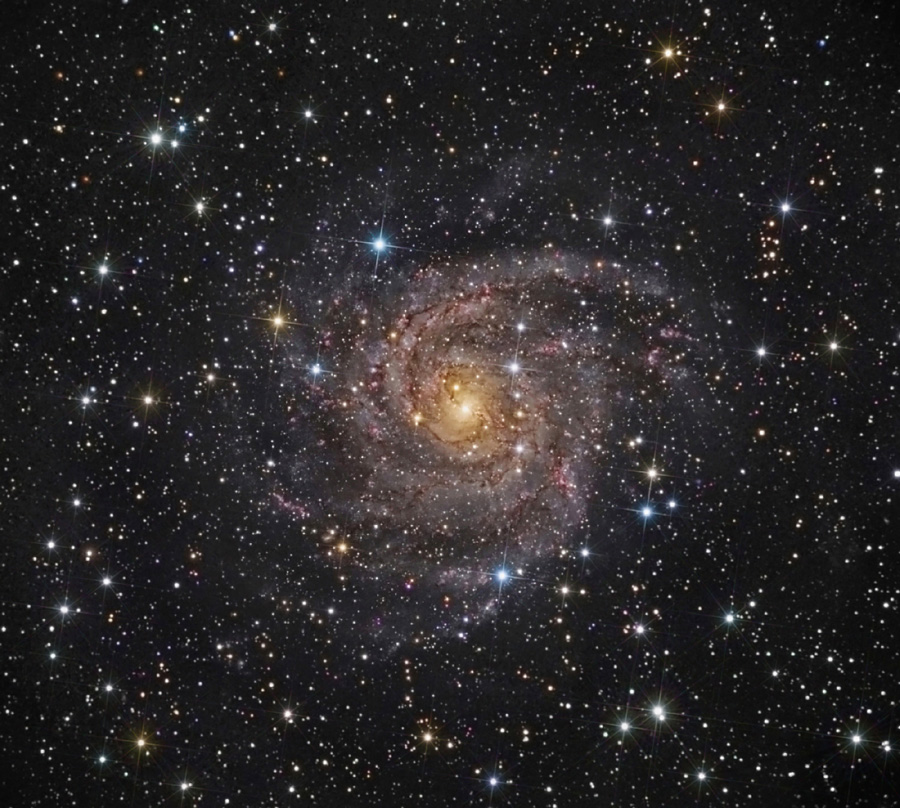
“Hidden” because it’s close to the dusty areas of the galactic plane, large, but relatively faint (like M33), this close-by galaxy (10.7 Mly) is a challenging but rewarding object.
Caldwell 7 (NGC 2403)
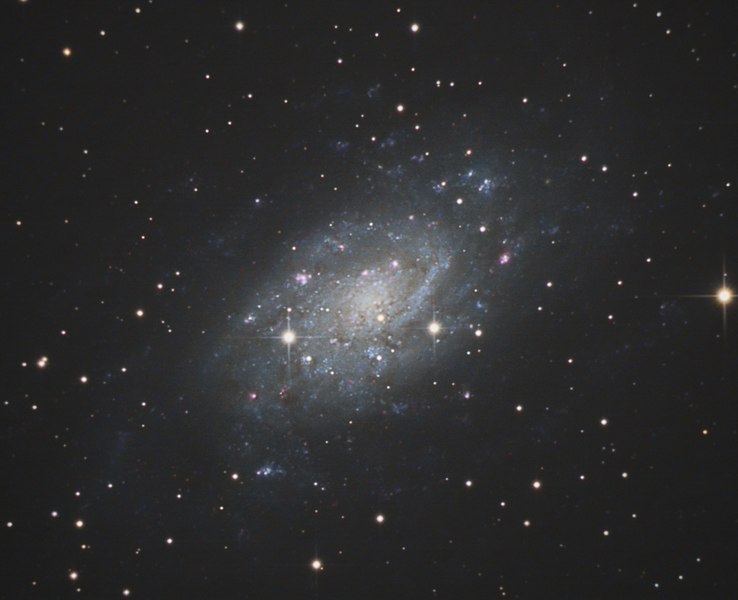
An outlying member of the M81 Group, and 10 million light years distant, this galaxy is reachable with 10x50 binoculars in dark skies. It also contains the giant nebula NGC 2404 almost 1000 light years wide.
The Dusty Hand
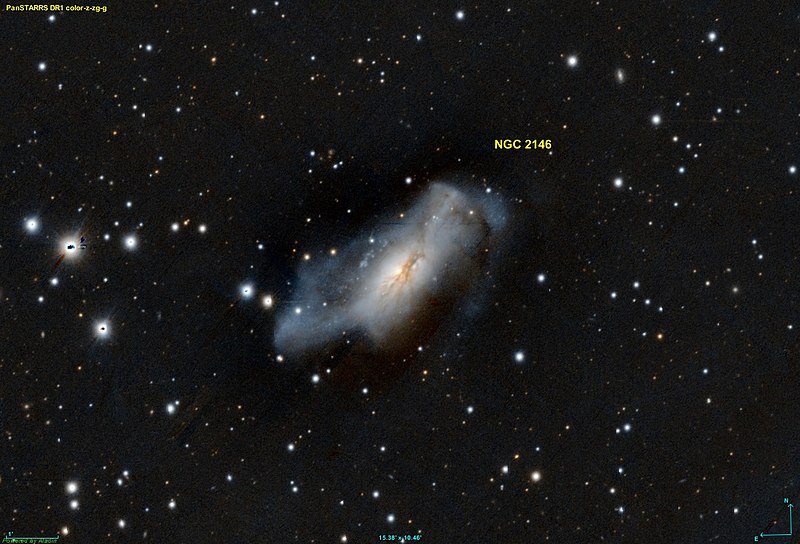
The barred spiral galaxy NGC 2146 is interesting because of the dark dusty lanes of its twisted spiral arm, likely caused by the interaction of a satellite galaxy 0.5 billion years ago.
The Lemon Slice
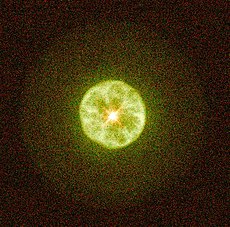
Named from a false-color Hubble image (it’s not really yellow), this almost perfectly spherical planetary nebula is 4,500 light years distant, and about 0.2 light-years in diameter. It was discovered in 1900 by Robert Aitken.
Mysterious RU Camelopardalis
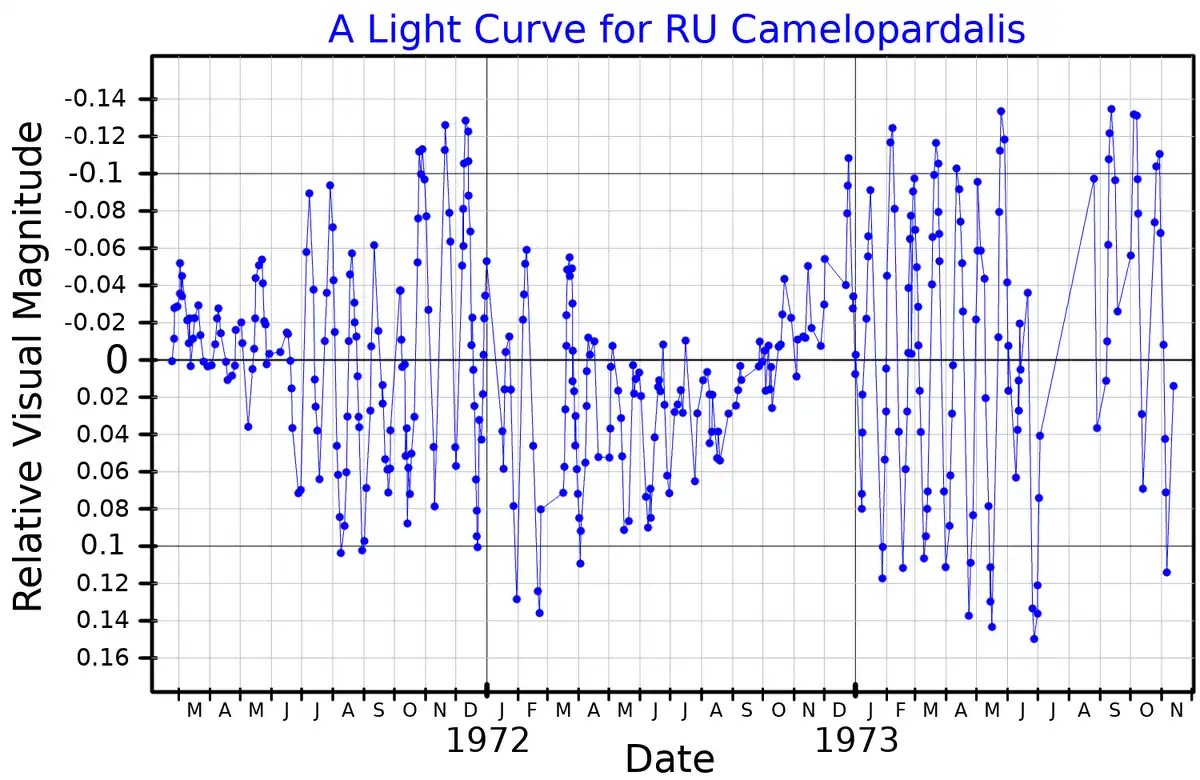
Finally, a variable star to learn about. RU Cam is a type II Cepheid that is in a stage of evolution putting it right at the edge of the “instability strip”. For the most part, it varies between mag 8 and 10 over 17-27 days. However, it occasionally almost stops pulsating for months at a time. As it evolves, it’ll first become hotter/bluer, then eventually become cooler/redder. We catching it right now in this sort of transitional phase.