The Longest Nights
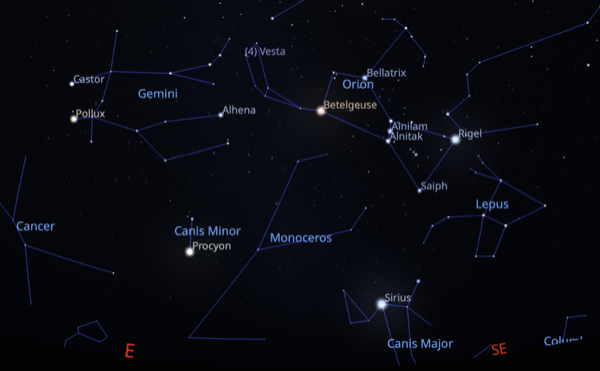
With the Winter Solstice, we now have the longest nights of the year. Orion is now rising in the East after sunset, with all of the celestial treasures discoverable in these long cold nights.
The Geminid meteor shower peaks mid-month, and this year benefits from a moonless sky. The peak is on the 12th/13th, with an average of several dozen meteor per hour, especially in the early morning hours when Gemini is almost overhead, though meteors will be visible throughout the night. An interesting fact: the source of the Geminid meteors is the asteroid 3200 Phaethon and not the typical icy comet. Phaethon is interesting because its orbit carries it very close to the Sun - twice as close as Mercury! This sun-grazing might be responsible for its “comet-like” behavior, stripping matter into its orbit, which become our Geminid meteors when the Earth crosses this path.
Mercury might be visible the first week of Dec. just after sunset hanging low on the horizon in the twilight, setting at 5:45 PM.
Playing “Connect the Dots”
Here are a few open star clusters - generally overlooked - that are a fun sight in binoculars or small telescopes, where the random position of its stars create familiar diagrams.
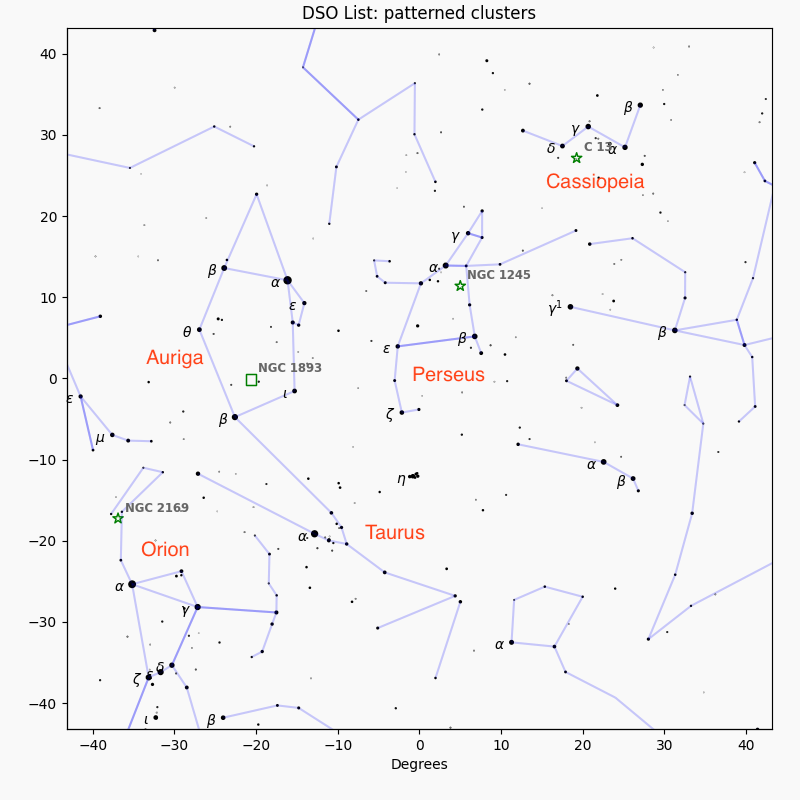
Here’s a finding chart for all four of these clusters. Scanning the Milky Way from Cassiopeia down to Orion will show even more clusters!
NGC 2169: the “37” Cluster
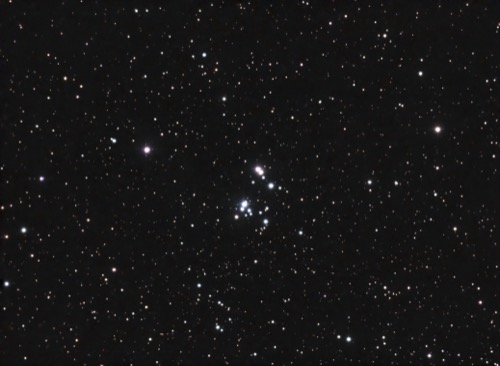
NGC 1893: the “Letter Y Cluster”
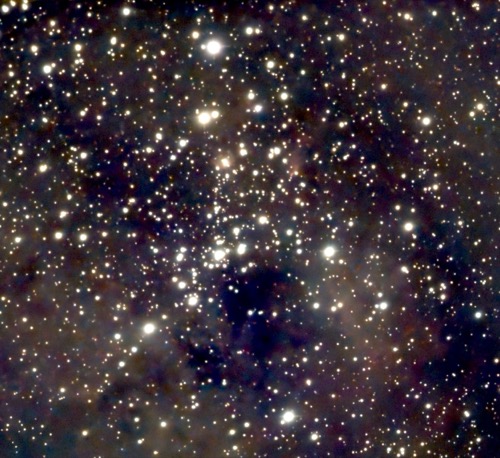
NGC 1245: the “Starfish Cluster”
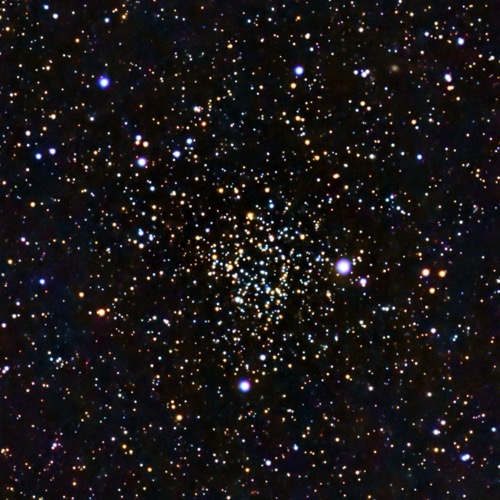
Caldwell 13 (NGC 457): the “Owl” Cluster
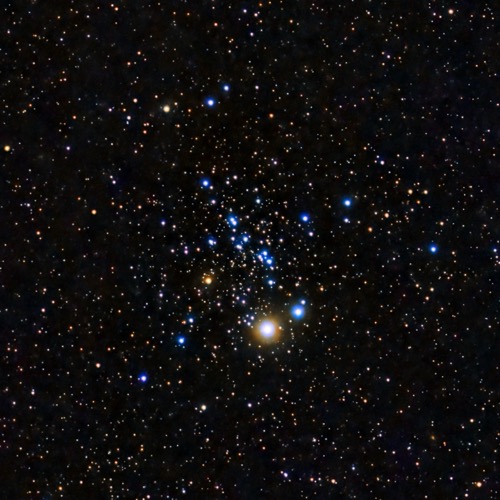
This Month’s Image
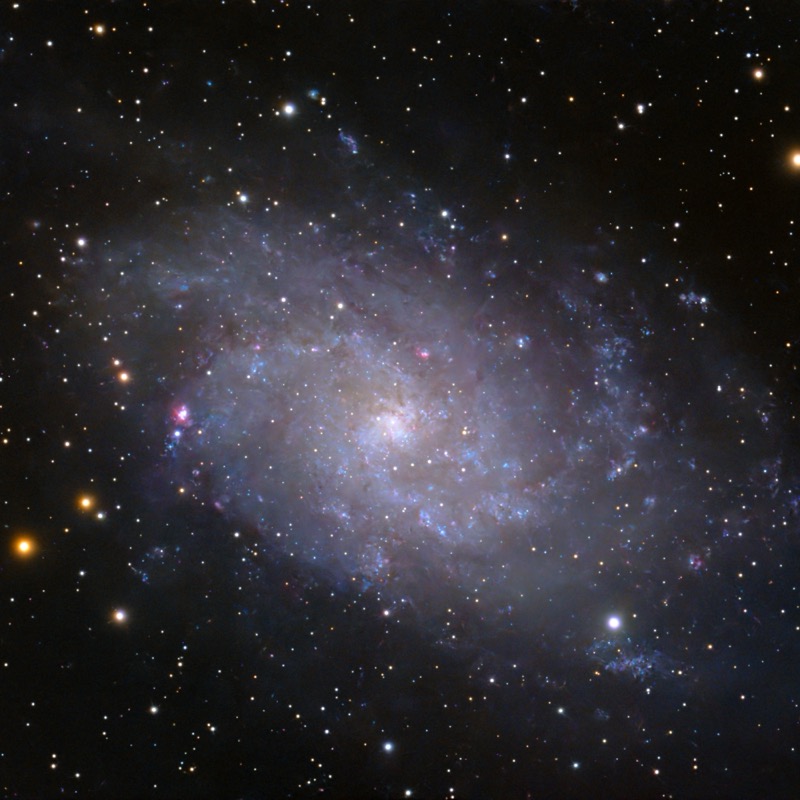
The Triangulum Galaxy (M33) is sometimes overlooked, or just an afterthought - partly because of being overshadowed by its neighbor Andromeda, but also because though it’s bright “overall”, it’s actually rather dim in surface brightness. But, it’s nearly overhead and well-suited for imaging, though even this image required a 60-minute exposure (with a Seestar S30).
Some of the brighter “puffs” in the spiral arms are very large star-forming regions, as much as 40x larger than the Orion Nebula and far more luminous.