The Unicorn
This dim constellation lies in the gulf between the bright stars Betelgeuse, Sirius, and Procyon. It begins to appear in atlases of the early 17th century, but might be older. The brightest stars are only 4th magnitude.
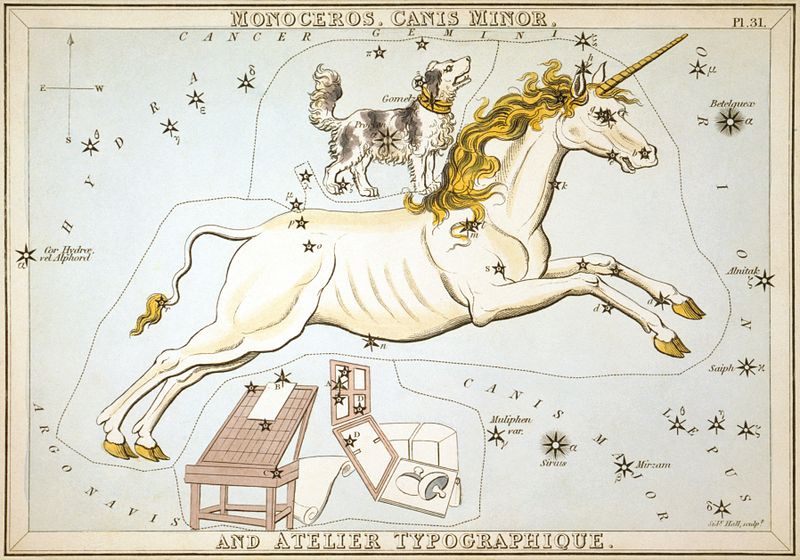
Despite being over-staged by its constellation neighbors, Monoceros is a treasure trove of star clusters, and nebulae, but get overlooked by other nearby “famous” objects.
Beta Monocerotis is a pretty triple star system of three hot blue stars arranged in an almost straight line. Plaskett’s star (mag. 6) is a binary with a total mass 100x that of the Sun. Scholtz’s Star (mag. 18, so essentially invisible) is a very low-mass red dwarf and brown dwarf pair. Why this system is interesting is that it passed close to the Sun 70,000 years ago, and likely through the Oort cloud. This may have caused perturbations within the Oort Cloud, whose effects in sending comets inward might not be seen for another 2 million years.
Above Monoceros is the small constellation Canis Minor, whose primary object of note is the 1st magnitude star Procyon, 11.45 light years distant. Strangely, despite its location not too distant from the galactic plane, has virtually no bright or intermediate deep-sky objects. Below, carved out of parts of Canis Major and Puppies is the defunct “constellation” Atelier Typographique (the printer’s workshop) to commemorate the Gutenburg printing press. It fell into disuse in the 19th century.
Map of Monoceros
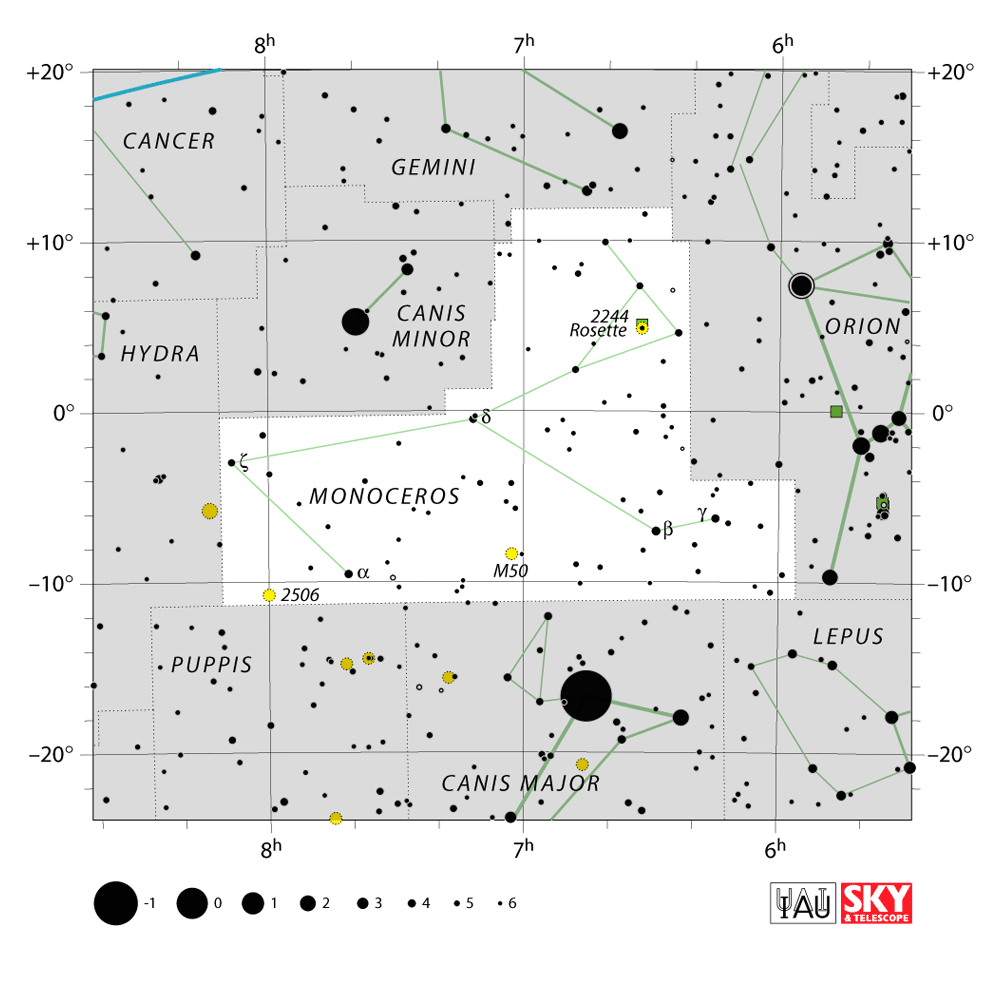
The area between Betelgeuse and Procyon is particularly full of open clusters (the “head” of the unicorn), with the Rosette Nebula (C 49 = NGC 2237/2246) and Harp Cluster (C 50 = NGC 2244) at the forefront. Across from the Sword of Orion, near Gamma Mon is the “Angel Nebula” a set of several reflection nebulae embedded in the Milky Way. Further East, M 50 (the sole Messier object in Monoceros), can be just above the nose off Canis Major. Another interesting cluster - Caldwell 54 (NGC 2506 on the map) - is very compact with a haze of faint stars (similar to Messier 11 in Scutum).
Things to See in Monoceros
Quick Reference: Objects of Interest
| Object | Type | Equipment |
|---|---|---|
| C 49/C 50 - the Rosette Nebula | Open Cluster + Nebula | Binoculars/Small Telescope |
| M 50 - the "Heart-Shaped" Cluster | Open Cluster | Binoculars/Small Telescope |
| NGC 2346 - the "Butterfly Nebula" | Small Telescope/Imagers | Binoculars/Small Telescope |
| IC 2177 - the "Seagull Nebula" | Emission Nebula | Medium/Imaging Telescope |
| C 46 (NGC 2261) - Hubble's Var. Neb. | Reflection Nebula | Medium/Imaging Telescope |
| NGC 2264 - Cone Neb./Xmas Tree Cluster | Open Cluster + Nebula | Binoculars/Telescopes |
The Rosette Nebula
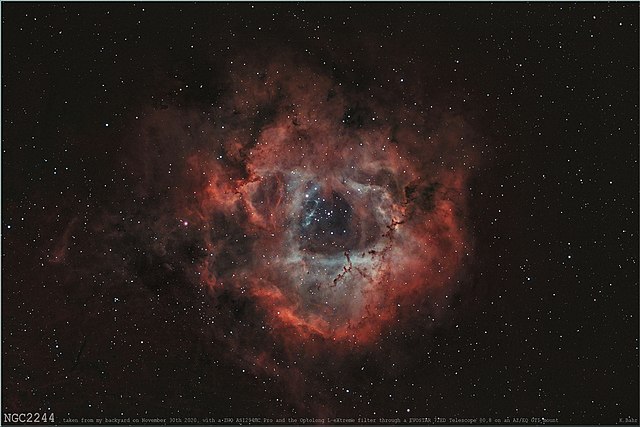
Somehow this object evaded Messier’s catalog, though it rivals many objects he included. 5000 light years away, the stars in the embedded Harp Cluster were formed from the nebula. Their light in turn lights up the surrounding gas.
Messier 50
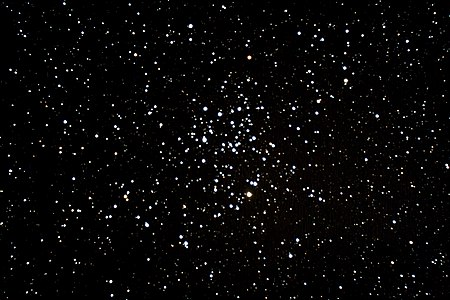
Discovered before 1711 by Cassini and included by Messier in his catalog, this 6th magnitude object is 2870 light years away, thus about 18 light years across with about 500-600 stars. Like most open clusters, it’s relatively young - only about 140 Myr old.
The Cosmic Butterfly
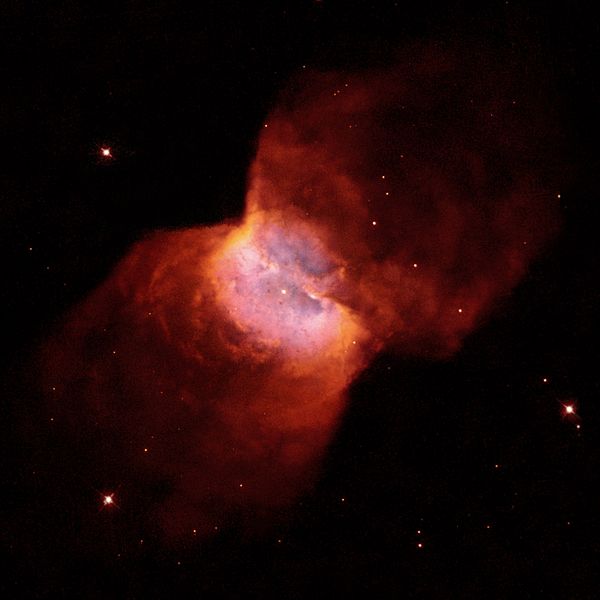
This “bipolar” planetary nebula probably gets its shape from having a binary star at its center. When one star became a red giant it swallowed the other stripping a ring of material blown out (now, 2 light years) when the core was exposed.
Galactic Seagull
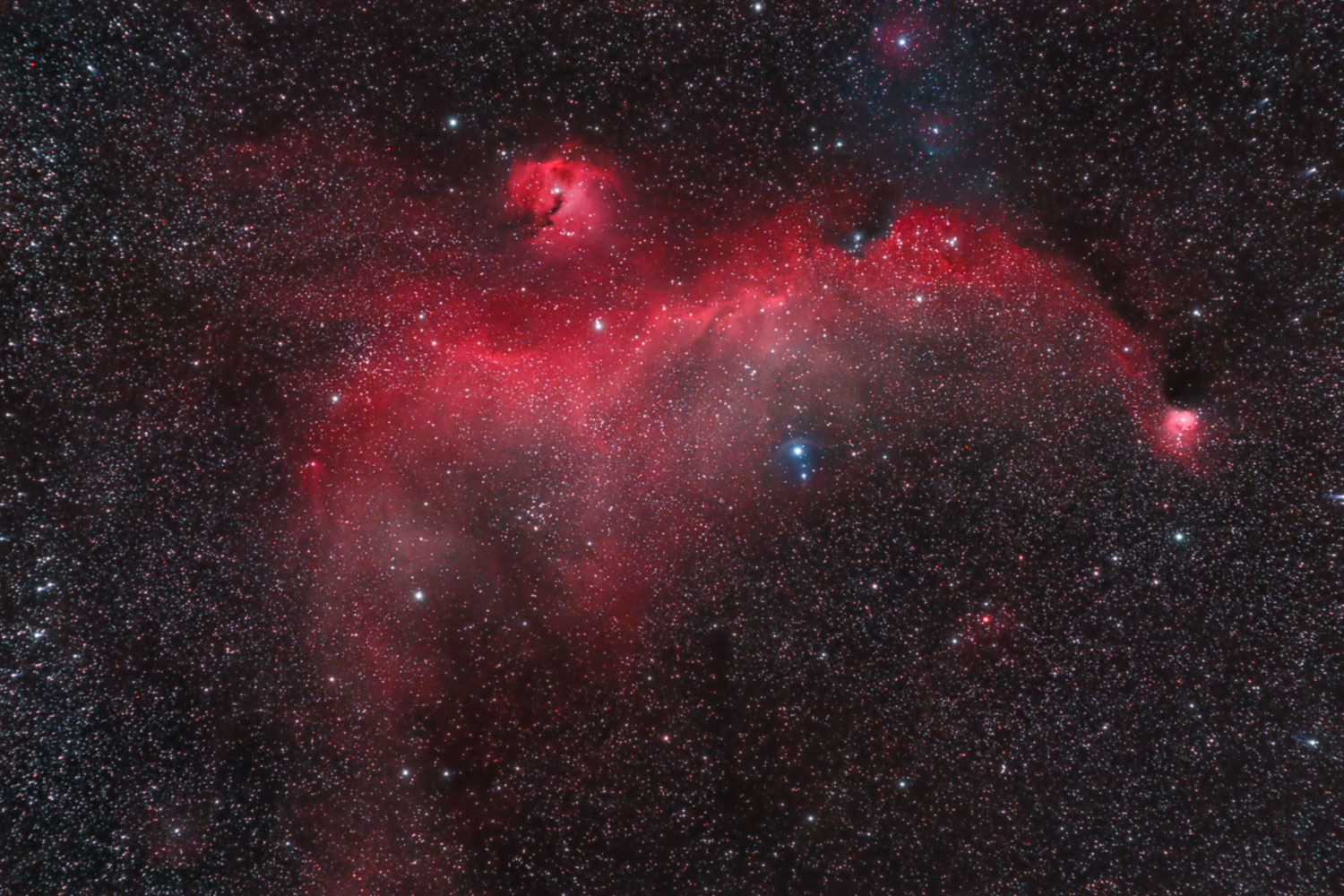
This faint nebula generally requires imaging, and straddles the border between Monoceros and Canis Major with a head and large wings resembling a bird in flight, 3,650 light years away, which considerable structure
A Variable Nebula
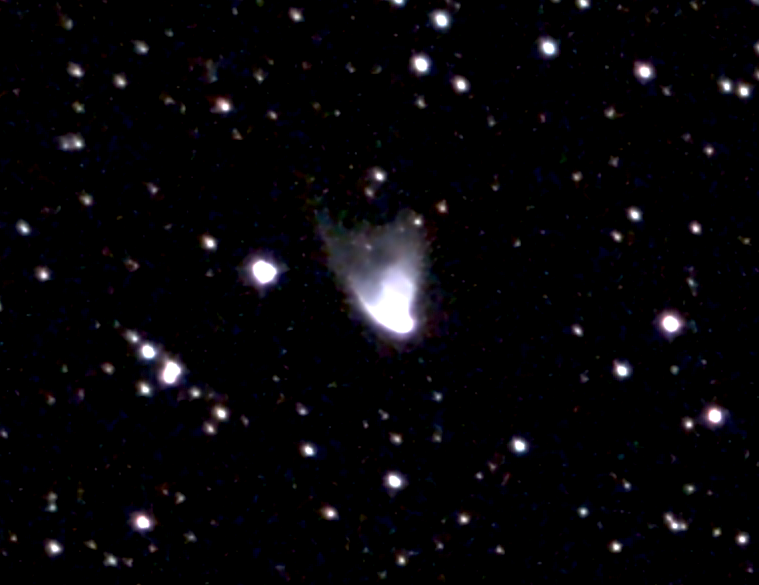
Illuminated by the star R Mon, this comet-shaped reflection nebulae shows discernible changes over a period of months, possible due to dense clouds of dust surrounding the parent star, causing the changes in illumination, It is small (2’) but has a high surface brightness, and should be reachable by modest-aperture telescopes.
Cosmic Christmas Tree
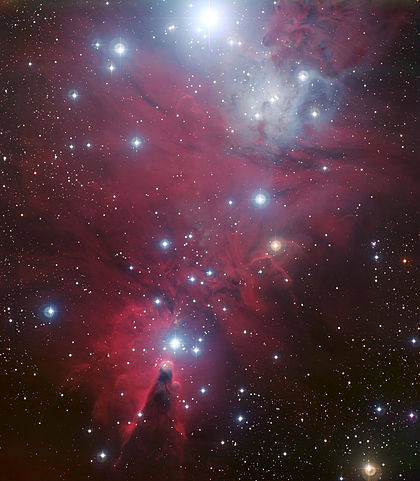
This large complex - 2,300 light-years away has a star cluster in the shape of a Christmas Tree (upside-down in this image), of young stars illuminating surrounding dust clouds. It was discovered by Herschel in 1784/5. Dark nebulae are clouds of dust blocking light from these newborn stars. At the bottom of the image (or the topper of the Christmas tree if you prefer) is the Cone Nebula. While the cluster is bright an easy to detect, the details of the nebulosity typically requires intense imaging.