The Crab
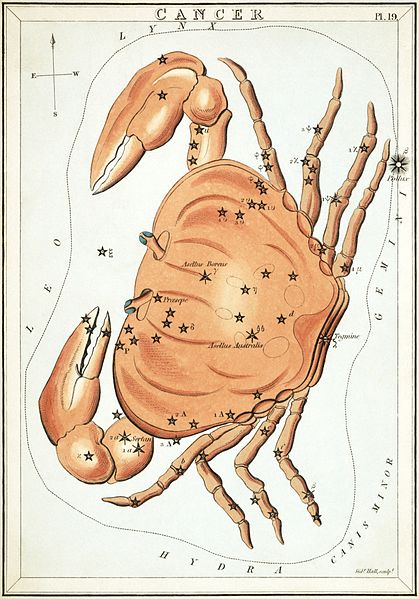
One of the twelve zodiacal constellations, it was recorded in Ptolemy’s Alagest, this collection of relatively faint stars (only 3½ magnitude at their brightest; ranking with Pisces). In Greek mythology, the crab was slain by Heracles after biting him in the foot while he fought the Hydra. It bridges the transition from winter to spring.
For observing opportunities, there are two prominent open clusters: Praesepe (the Beehive; Messier 44) and the “Golden-Eye” (Messier 67).
While we know it as the Crab, other cultures have applied similar water crustaceans to the constellation: a crayfish, or lobster, or a water beetle. In Babylonia is was sometimes seen as a snapping turtle.
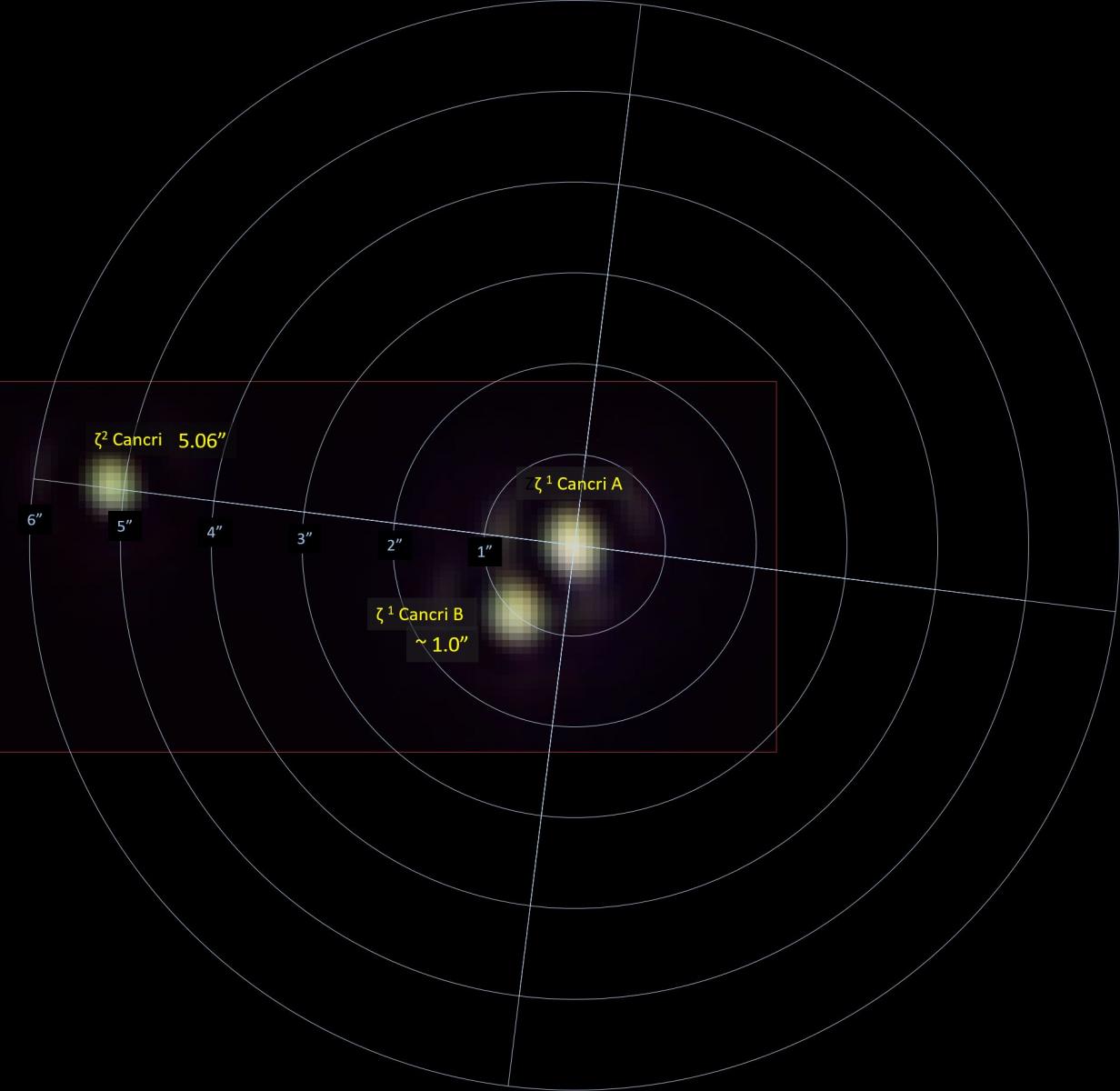
There are a few interesting double/triple stars: Zeta (ζ) Cancri - named Tegmine - is a multiple star system: two stars are 5” apart and relatively easy to discern with a small telescope, but the primary star is also a close double star - only 1” apart, and a good challenge to discern under very good seeing conditions.
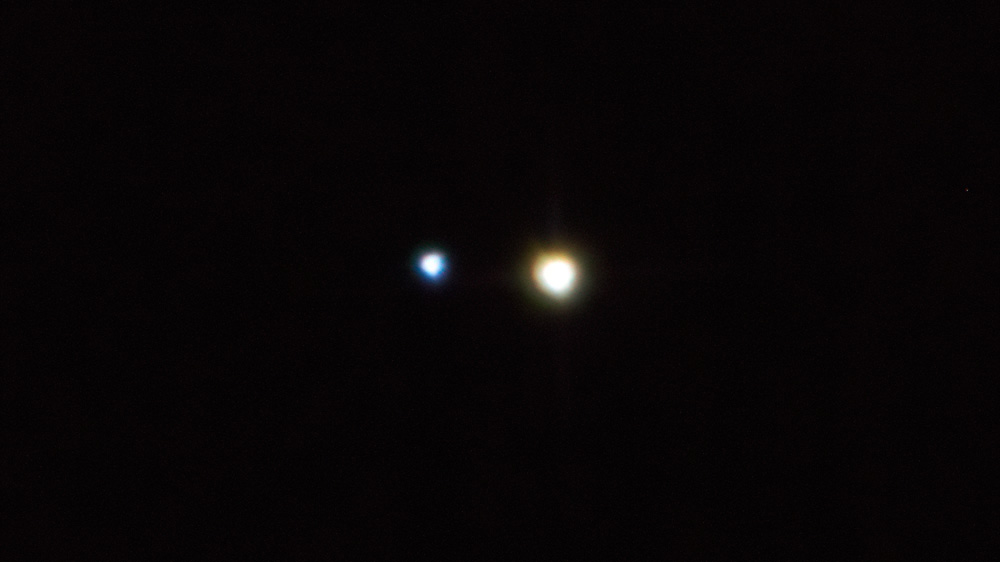
Iota (ι) Cancri is a blue/ yellow pair similar to Gamma Andromedae.
Map of Cancer
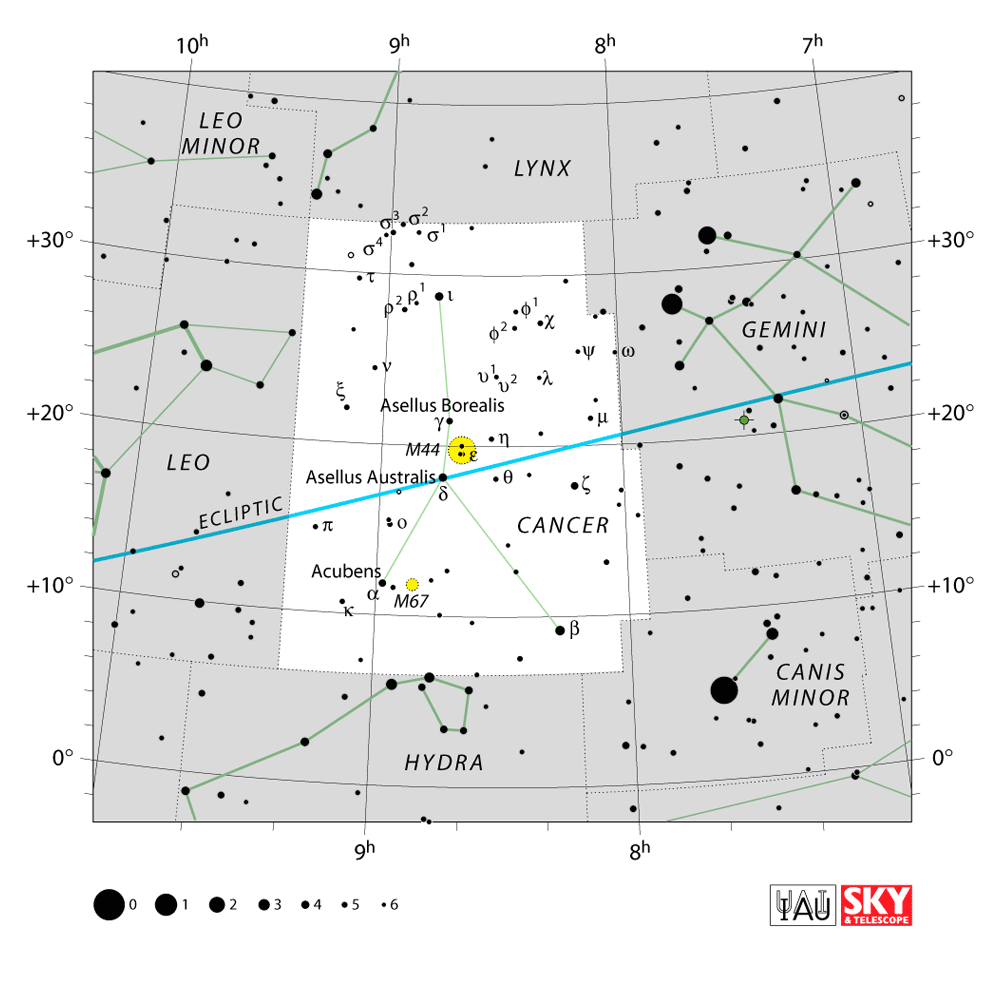
Messier 44 lies at the center of the constellation: the Ecliptic crosses it to the South, but close enough that occasionally solar-system objects will traverse the cluster. About half way from Praesepe to the head of Hydra in the South, you’ll find the other cluster, Messier 67.
Things to See in Cancer
Quick Reference: Objects of Interest
| Object | Type | Equipment |
|---|---|---|
| M 44 - Praesepe | Open Cluster | Binoculars/Small Telescope |
| M 67 - the "Golden-Eye" Cluster | Open Cluster | Binoculars/Small Telescope |
| C 48 (NGC 2775) | Spiral Galaxy | Small Telescope |
| NGC 2672 (Arp 167) | Spiral Galaxy | Small Telescope |
| 55 (ρ¹) Cnc | Exoplanet System | Binoculars |
| X Cnc | Variable Star | Binoculars |
The “Beehive” Cluster
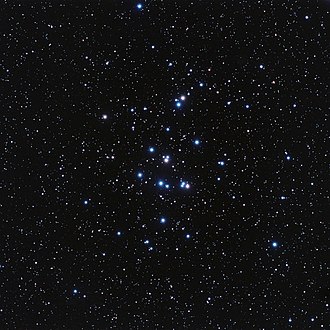
One of the closest clusters to the Sun (~600 ly), the Latin name means “manger”. Galileo observed it as early as 1609, seeing about 40 stars and was even mentioned by Hipparcos, c. 130 BC. It can be seen with the naked eye under dark skies, and easily found with binoculars or a small telescope. It has about 1000 stars, about 600 Myr old all within ~25 ly of each other.
Messier 67
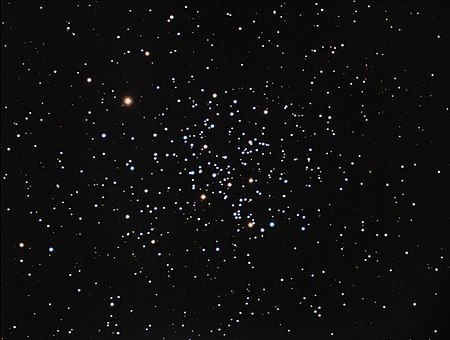
Dimmer than the Beehive, this cluster is very important because of it’s age: between 3 and 5 Gyr. Clusters this old are rare (most dissipate after 1 Gyr or so), so having several dozen stars all known to be about the age of the Sun provides a laboratory to investigate stellar properties and evolution. Astrophysics aside, it is an easy object for binoculars and small telescopes.
Caldwell 48
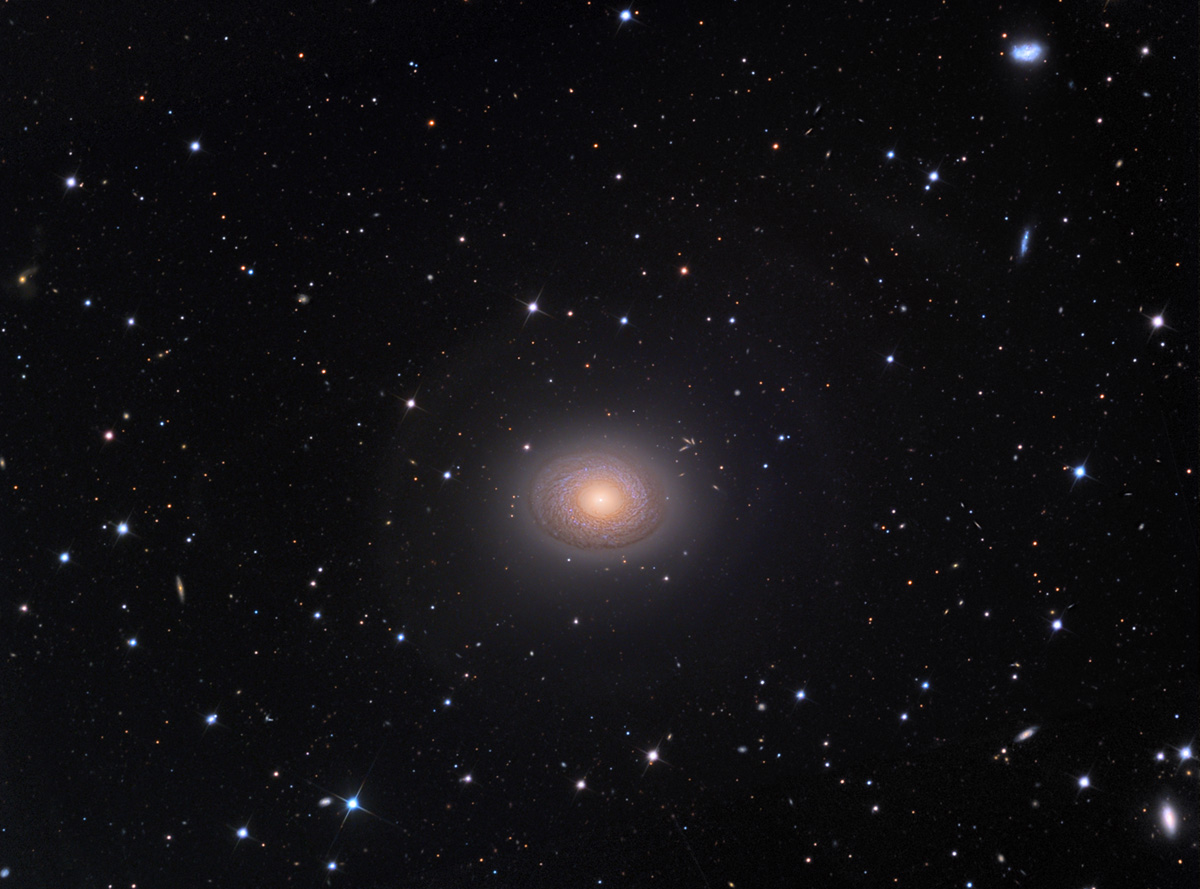
As we move away from the Milky Way in Auriga, Gemini, and Orion, we start to find more galaxies outside the Galactic plane. This spiral galaxy has tightly-wound arms, and shows almost no star formation in its nucleus. It is 67 Mly distant, and is an outlier to the Antlia-Hydra galaxy cluster, which in turn is an outlier to the Virgo supercluster.
NGC 2672/3
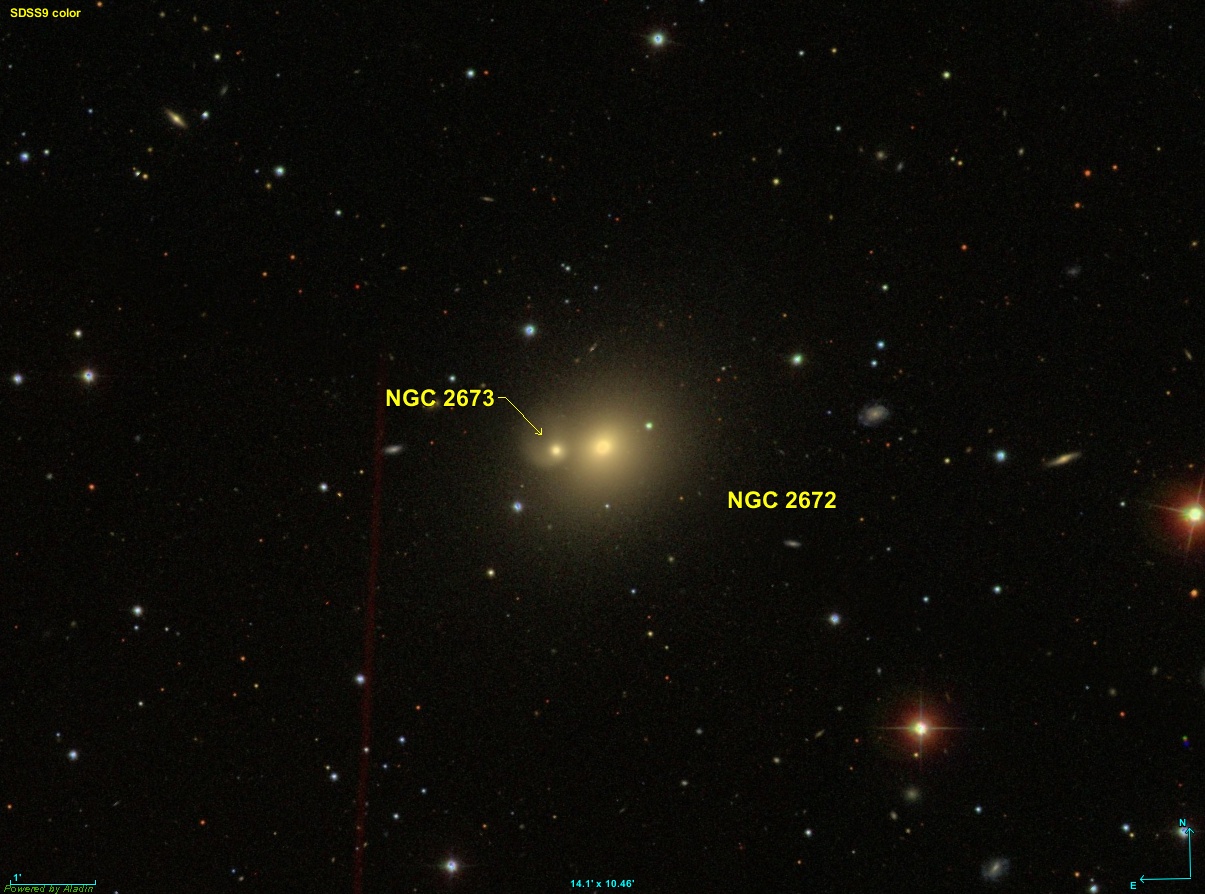
These two galaxies are clearly interacting, but you’ll need a telescope of moderate aperture to see the disrupting companion galaxy.
A Family of Exoplanets
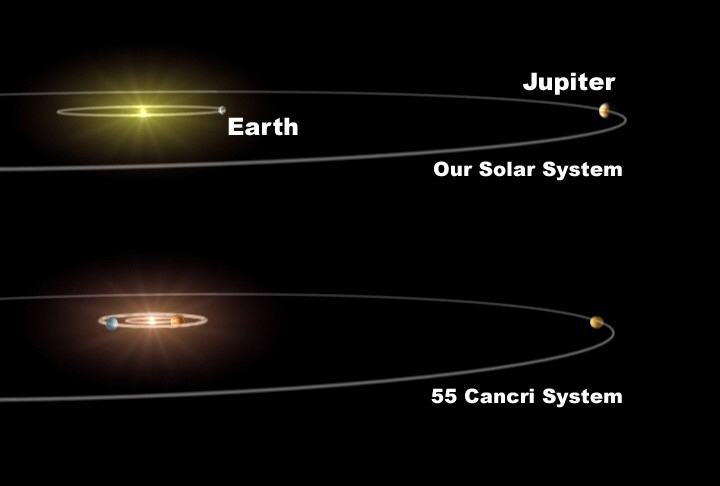
Seen on the map as Rho-1 (ρ¹) Cancri, and 55 Cancri in Flamsteed’s catalog, this system is 40 ly away and much older than the Sun (8 Gyr) such that the star has just started to evolve off the Main Sequence towards becoming a red giant.
Five exoplanets have been discovered: all are larger than Earth (“super Earths”), and mostly close to the star, except for one more massive than Jupiter, that is at about the same distance as Jupiter is from the Sun.
A Gem in the Crab
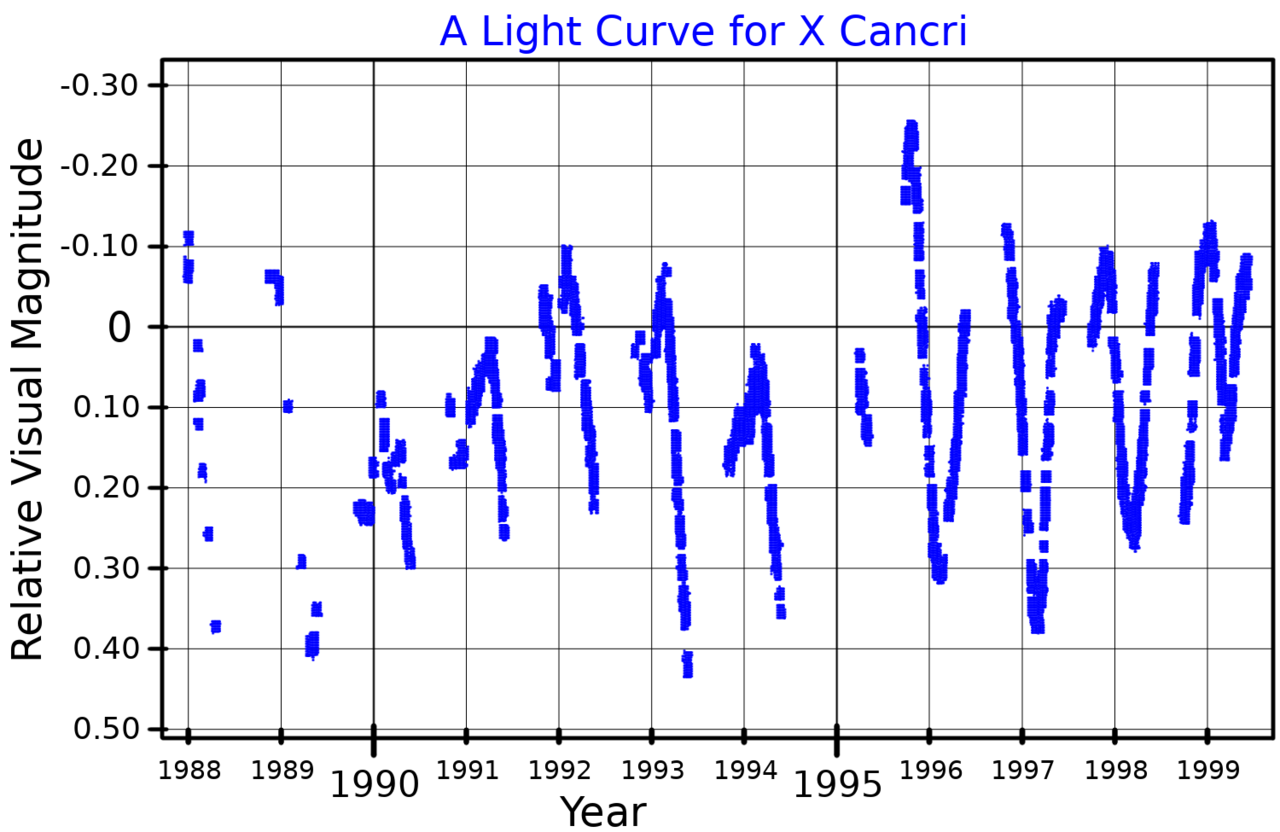
X Cancri is a “carbon” star - an aging red giant that has more carbon in its atmosphere than oxygen, one of the visually brightest stars of this type. It’s also a semi-regular variable star, with a period of about 193 days, varying between magnitudes 5.5 and 7.5, so visible to the naked-eye at its brightest (under dark skies) but an easy object to find with binoculars.
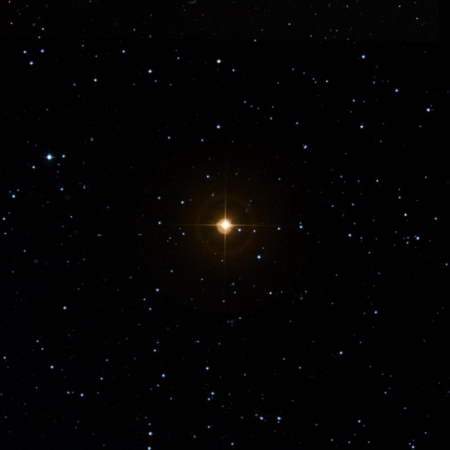
What makes it interesting is its deep red color: it’s one of the reddest bright stars in the sky, much more so than other bright red giants: e.g., Betelgeuse or Antares, and even Mira (Omicron Ceti), and will stand out in contrast with other stars in the field.