The Hunting Dogs
Created by Hevelius in the 17th century, this dim constellation (in Latin “hunting dogs”) links the constellations of the Herdsman (Boötes) to the East, with Ursa Major to the North and West, with idea that they’ve been unleashed to chase the Bear across the sky (and in fact the bright star Arcturus means “follower of the bear”. But even this is something of an accident: the Arabic description had these stars part of Boötes as a club, but when translated into Arabic, they became “dogs”.
Its stars were shown in Ptolemy’s catalog, but were not given any description. Away from the Milky Way, we’re peering out of the plane of the Galaxy, so there are no galactic star clusters or nebulae (and only one globular cluster). Instead we’re treated to several bright galaxies: the northern extension of a field that stretches from Ursa Major, through to Virgo.
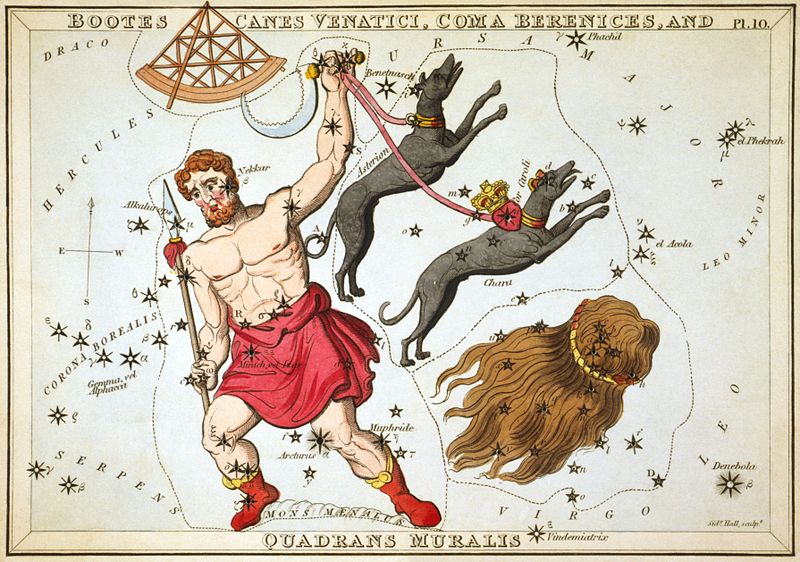
In this historical chart, above Böotes’ head is the ex-constellation Quadrans Muralis (the “Mural Quadrant”), depicting a device used in pre-telescopic days to measure the altitude of stars over the horizon, helping to create more accurate star atlases, especially for navigation.
Charles’ Heart
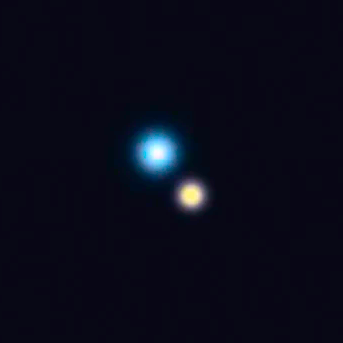
The brightest star, Cor Caroli is a wide double star, easily observable with the smallest telescopes with a wide color contrast (blue/yellow), 110 light years away. Its name honors either King Charles I or Charles II (accounts vary).
Map of Canes Venatici
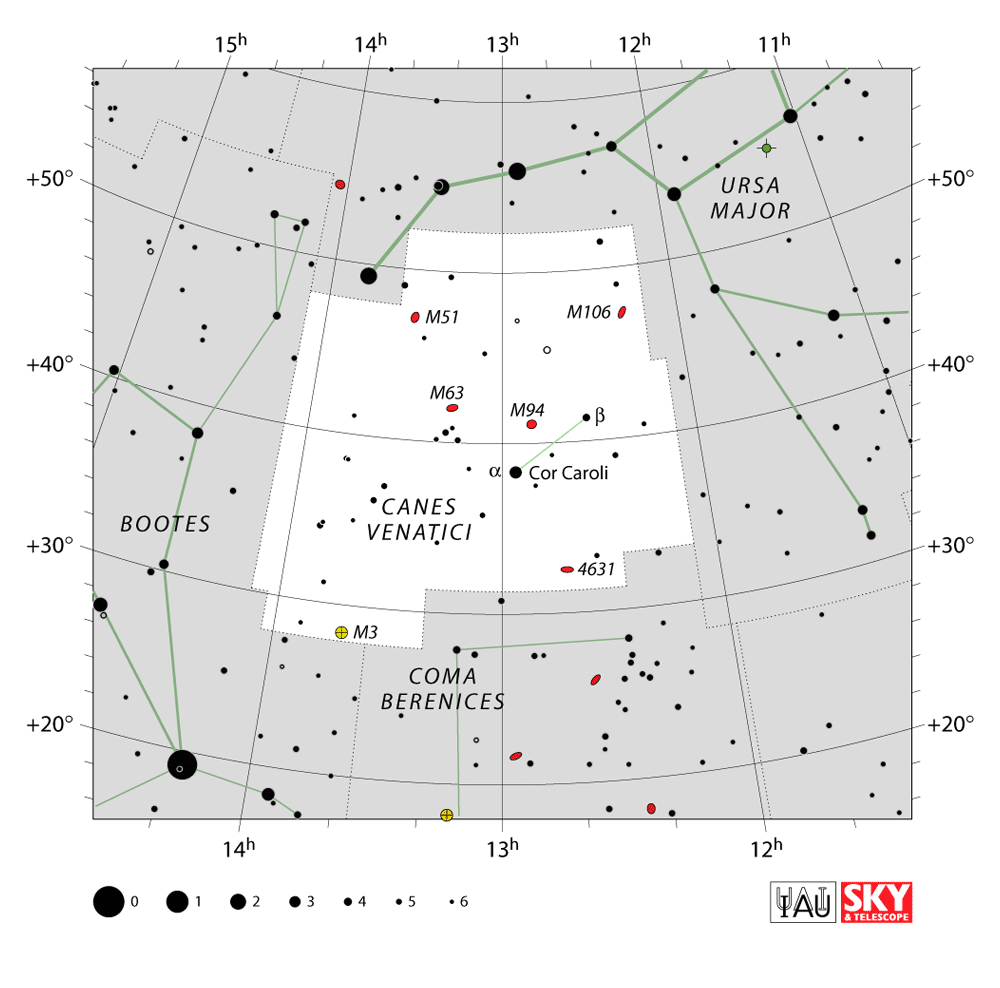
There are only two stars of moderate brightness: α (Cor Caroli) and β (Chara). They’re easily located just south of the handle of the Big Dipper.
This constellation is known for the number of deep-sky objects within, almost all galaxies. Roughly half-way between α CVn and the innermost Handle star in the Big Dipper (Alioth) is “La Superba”, a very-red carbon star that can be easily detected with binoculars.
Several of the brighter galaxies come in pairs: M 51, C 32 (NGC 4631), M 106, NGC 5395 (the Heron Galaxy), and NGC 4490 (the Cocoon Galaxy) all have comparatively bright companions. Three other galaxies: C 21/NGC 4449) “The Box” and NGC 5033 “The Waterbug” and NGC 4656 “The Crowbar” have interesting shapes.
Things to See in Canes Venatici
Quick Reference: Objects of Interest
| Object | Type | Equipment |
|---|---|---|
| Messier 51 | Interacting Galaxies | Small Telescopes |
| Messier 63 | Spiral Galaxy | Small/Medium Telescope |
| Caldwell 32 (NGC 4631) | Galaxy Pair | Small/Medium Telescope |
| Messier 3 | Globular Cluster | Small Telescope |
| TON 618 | Quasar/Blazar | Imaging Telescope |
| Y Canum Venaticorum | Carbon Star | Binoculars |
The Whirlpool
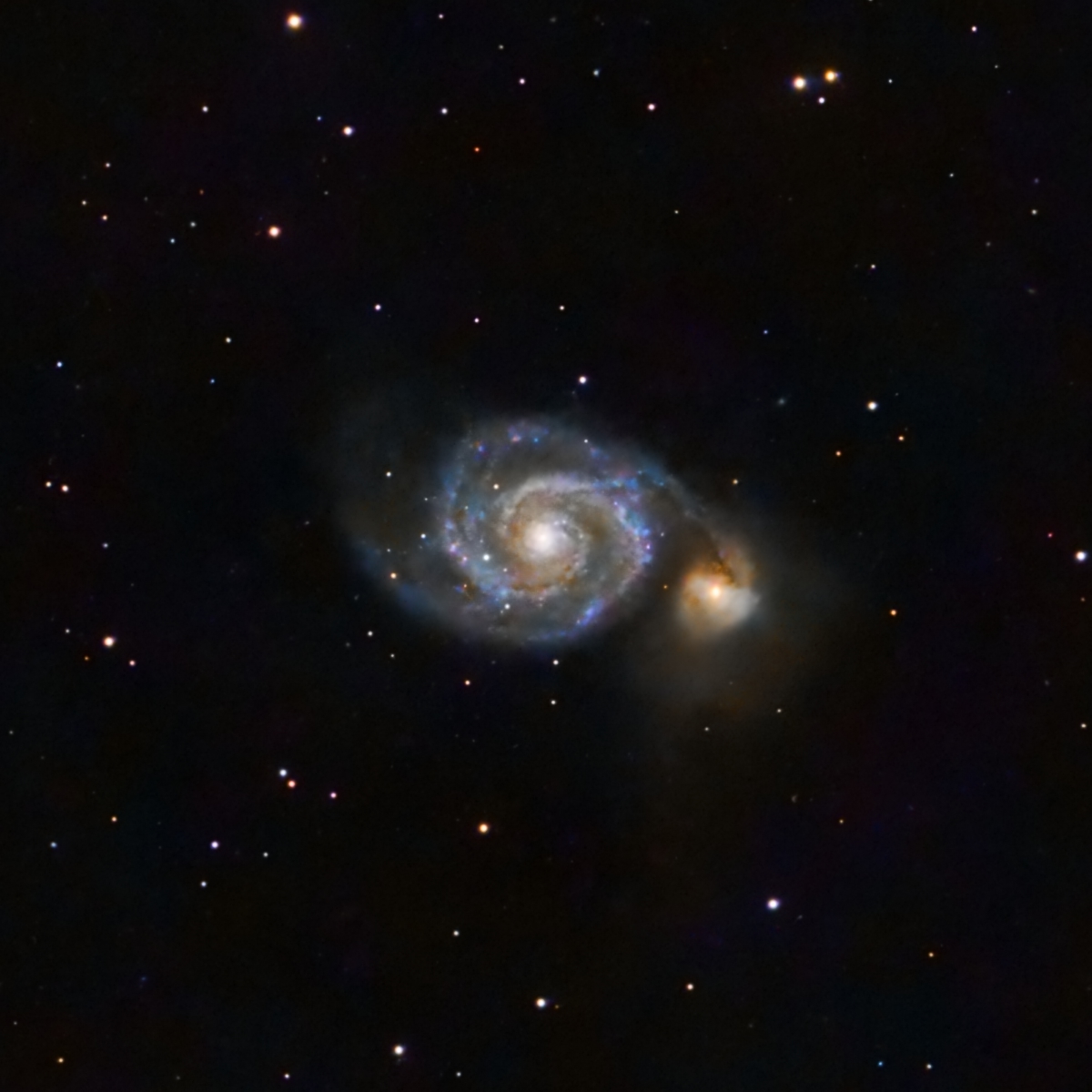
The most famous object in this constellation (Messier 51 + NGC 5195): two interacting galaxies, 31 Mly away. The companion is passing behind the spiral galaxy.
Flocculent Sunflower
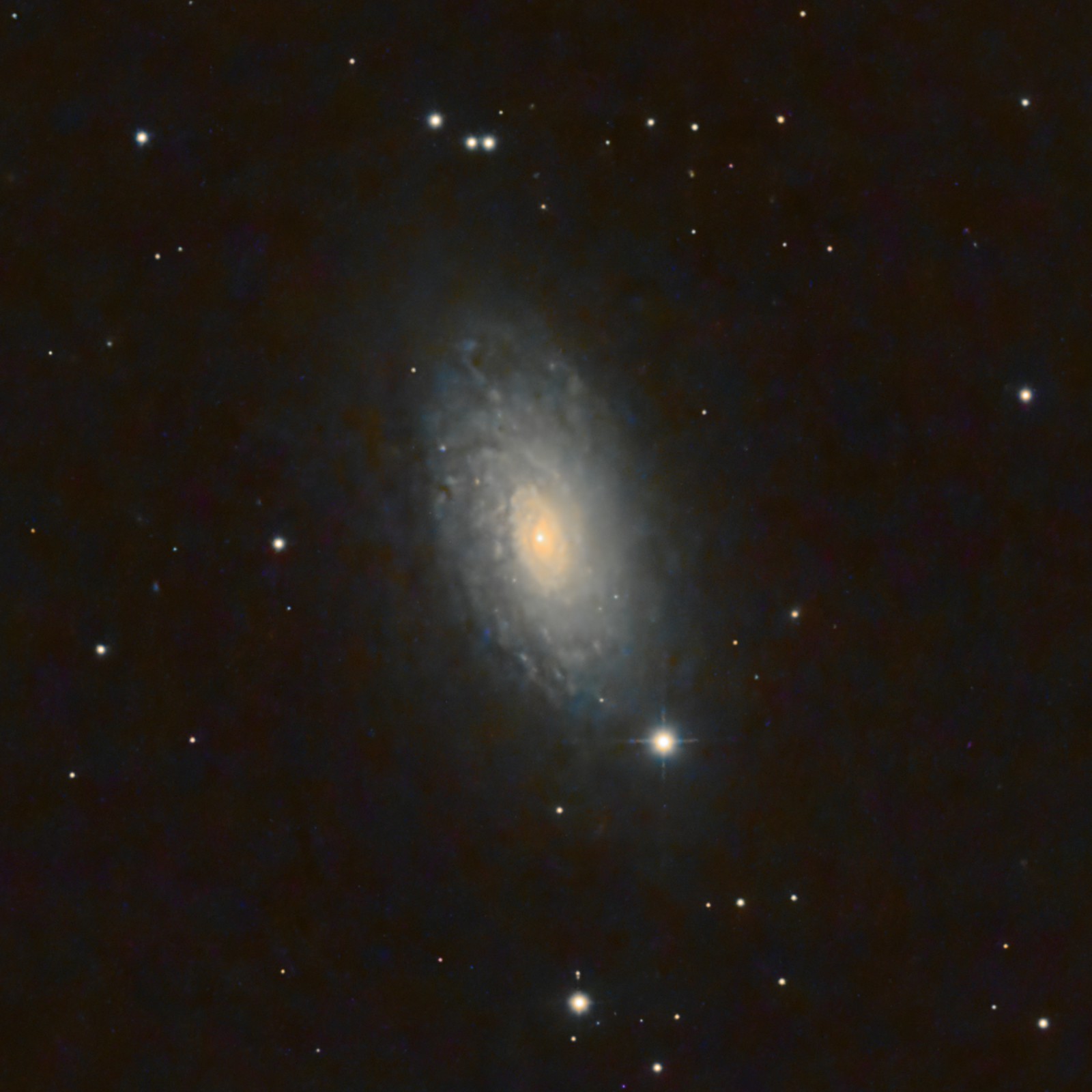
27 Mly away, Messier 63 doesn’t have the large-scale spiral structure of M 51 (two distinct arms are present in infrared images).
A Whale and a Calf
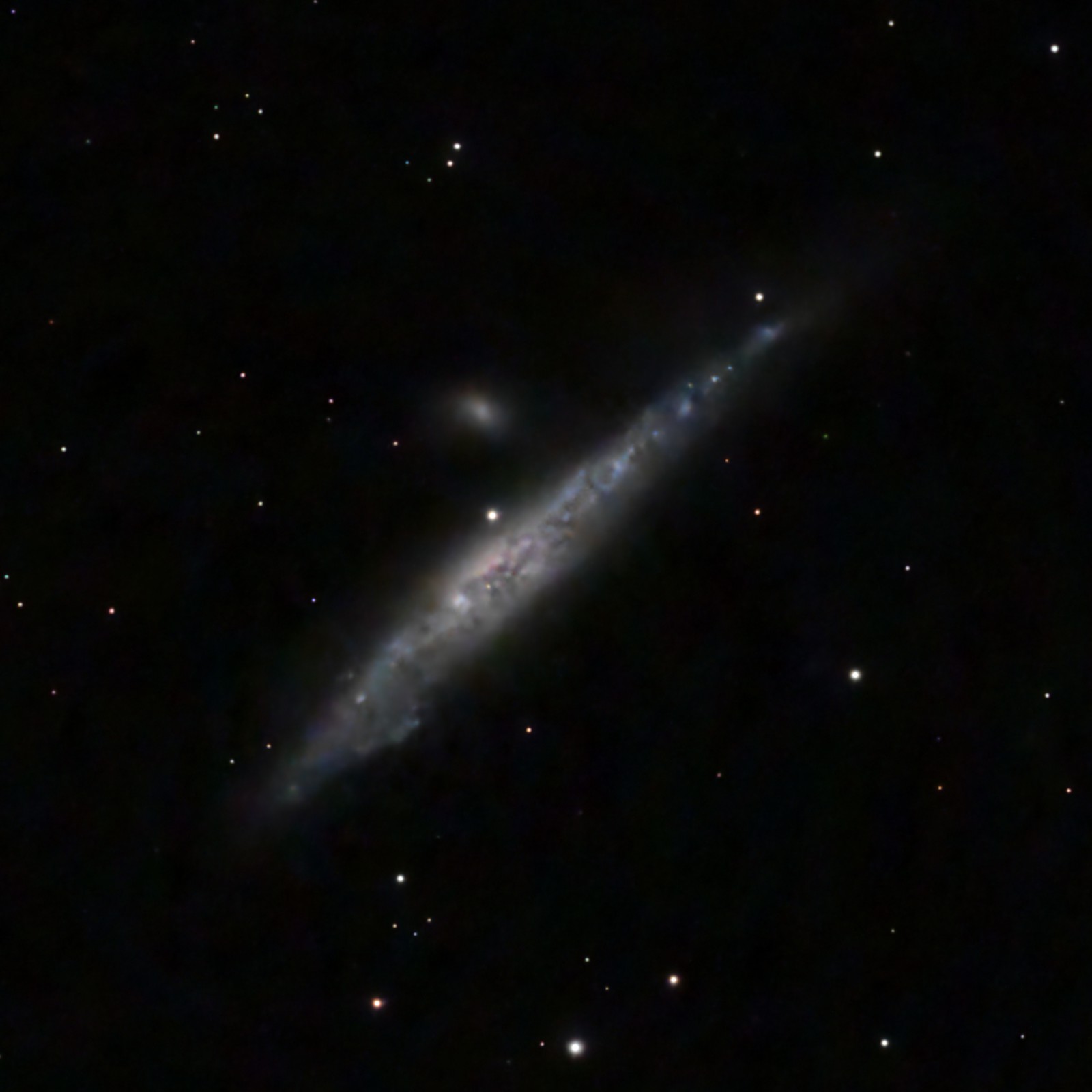
The oddly shaped galaxy Caldwell 32 (NGC 4631) is edge-on with significant dust clouds. The companion is NGC 4627, a dwarf elliptical galaxy.
Messier 3
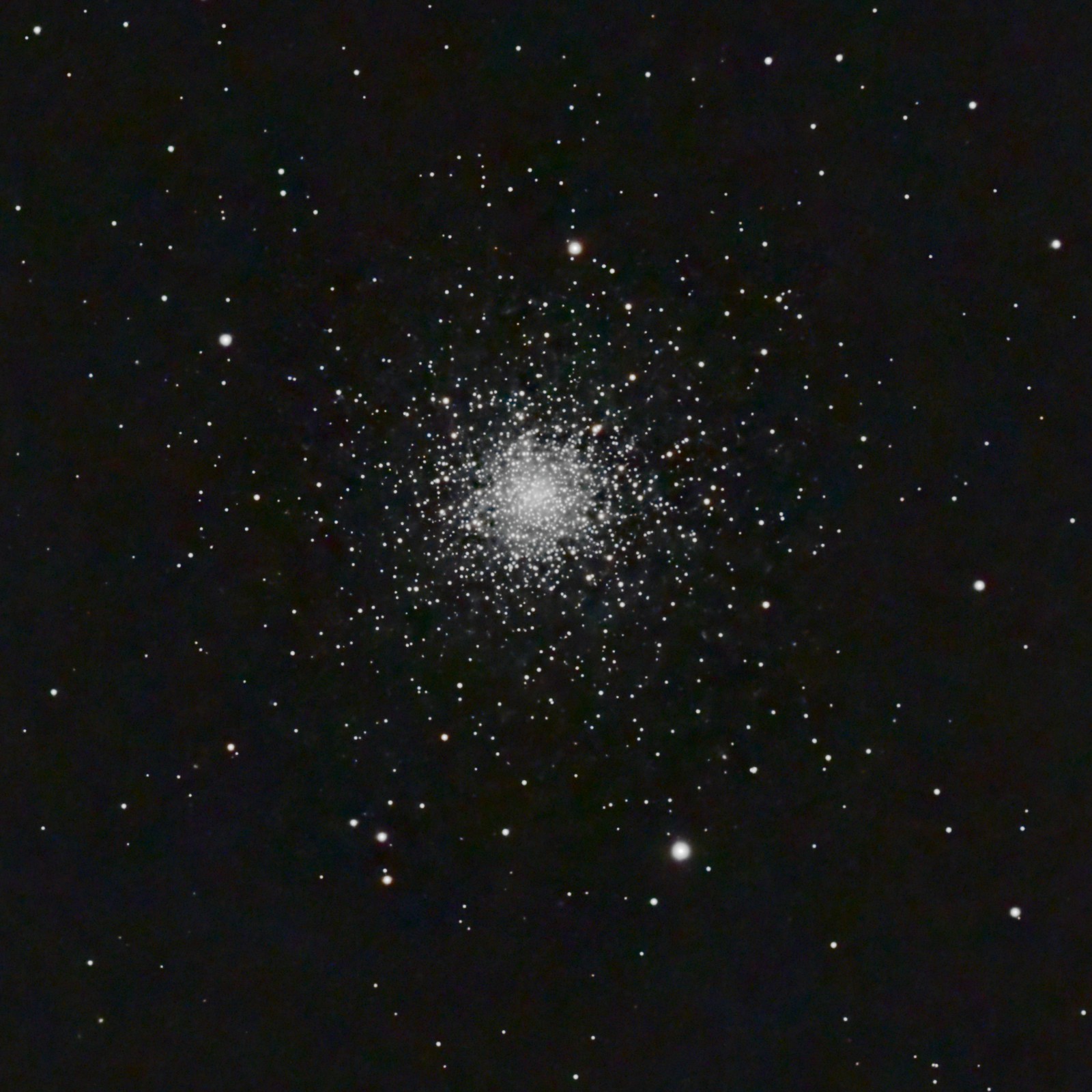
A somewhat isolated globular cluster (it’s high above the Galactic Plane, given it’s in CVn), with 500,000 stars, and is a bright and easy object for small telescopes, and larger binoculars.
Very Distant Super-Massive Black Hole
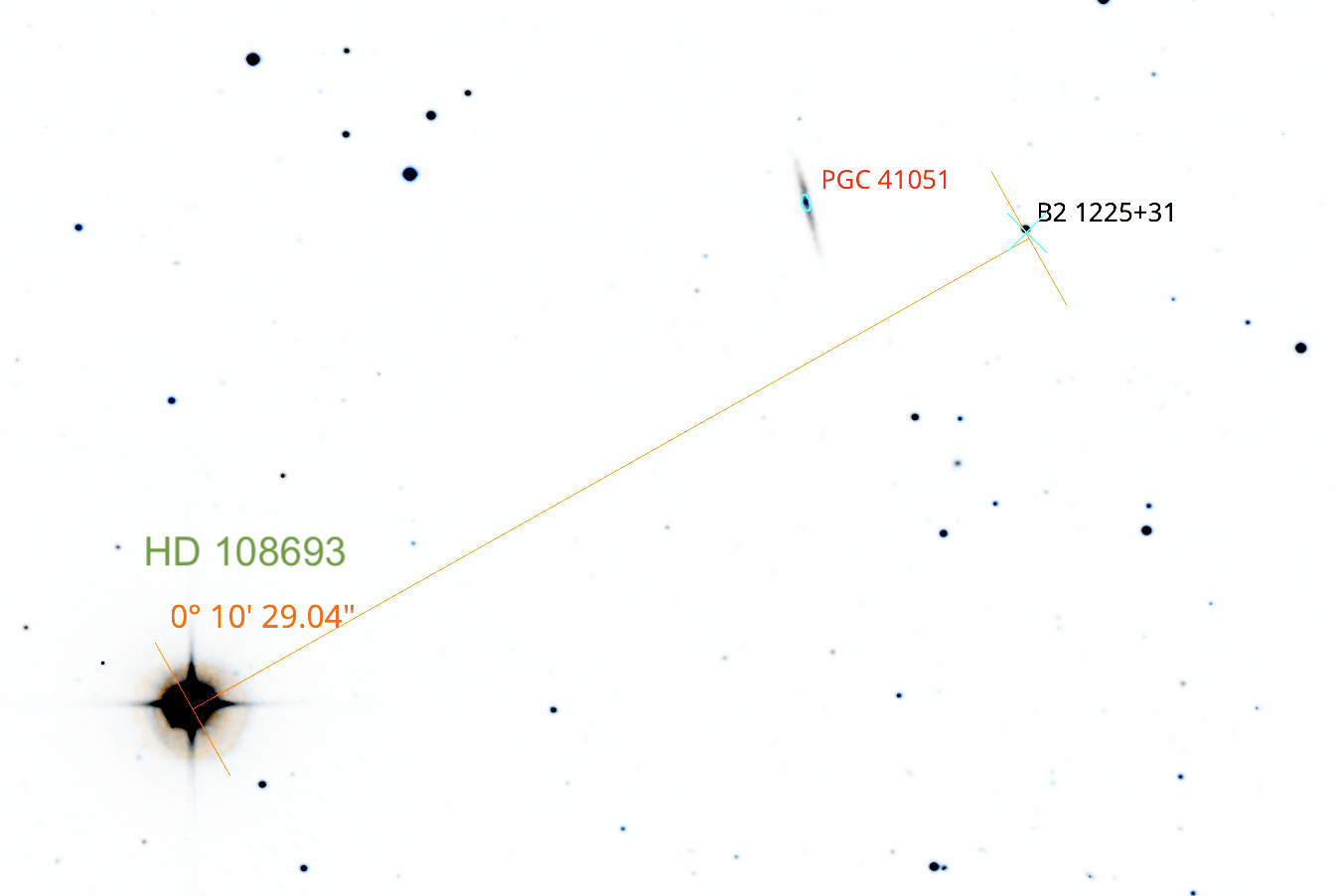
While not interesting visually, TON 618 is a quasar whose coming distance places it 18 billion light years away! (The light travel time is “only” 10.8 Gyr). The central black hole of this object has a mass up to 66 billion solar masses - more than the mass of all the stars in the Milky Way, and the event horizon would up to 1500 AU (40x the size of Neptune’s orbit). Despite its distance, visually it’s a star-like object at magnitude 15.9, which places it in the reach of larger telescopes and imaging telescopes.
La Superba
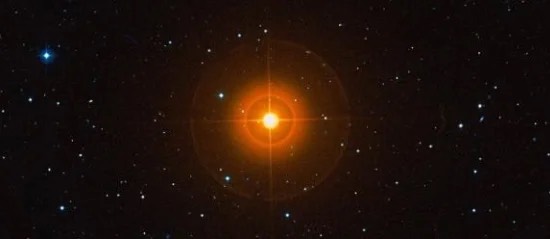
Finally, an overlooked object, competing against all of the exciting deep- sky objects: Y Canum Veniticorum is a semi-regular variable/carbon star, but what makes it interesting to observe is that it’s one of the reddest moderately-bright stars in the sky, so striking that it was given the name “La Superba” by Secchi.
It’s easily seen in binoculars, almost midway from the hunting dog stars to the handle of the Big Dipper (it’s the open circle on the map on the previous page).