The Scorpion
… is one of the oldest identified constellations, owing to its very characteristic distribution of stars, pre-dating the Greeks.
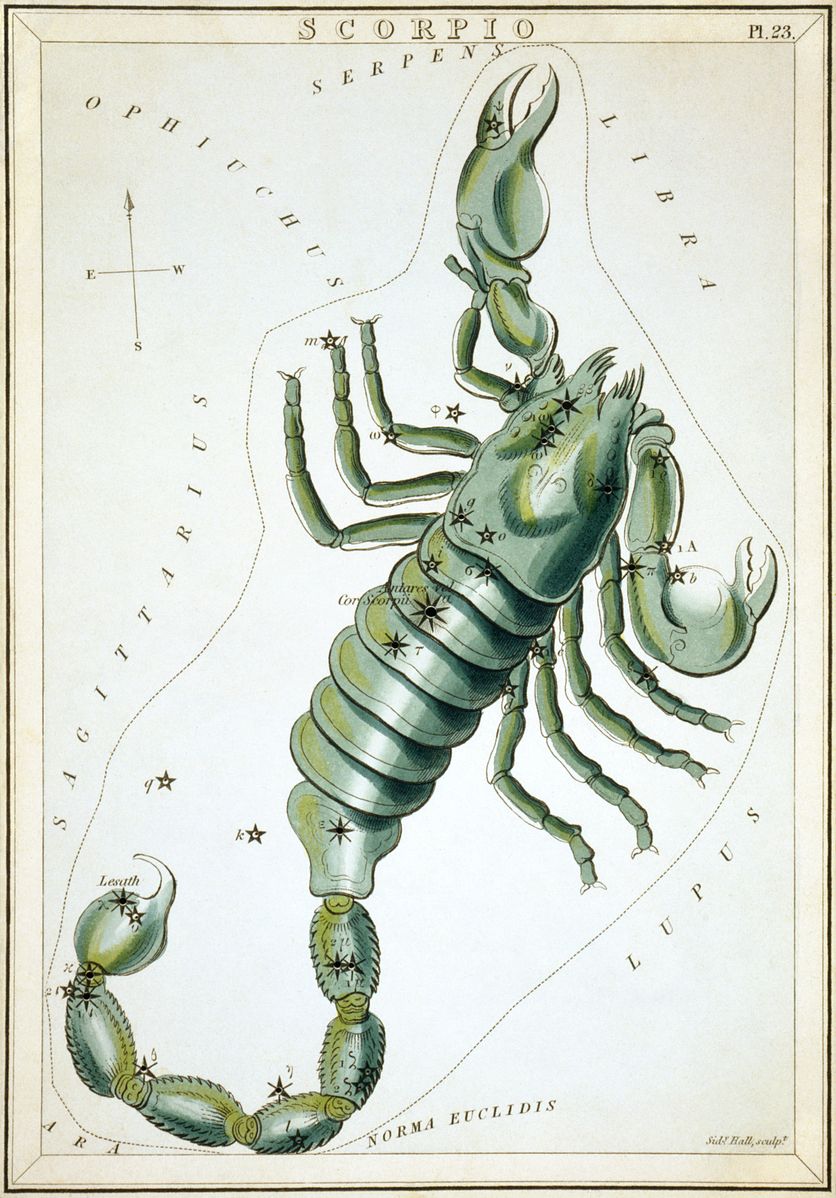
In Greek mythology, several myths associated with the constellation attribute it to Orion. According to one version, Orion boasted to the goddess Artemis and her mother, Leto, that he would kill every animal on Earth. Artemis and Leto sent a scorpion to kill Orion. Their battle caught the attention of Zeus, who raised both combatants to the sky to serve as a reminder for mortals to curb their excessive pride. In another version of the myth, Artemis’ twin brother, Apollo, was the one who sent the scorpion to kill Orion after the hunter earned the goddess’ favor by admitting she was better than him. After Zeus raised Orion and the scorpion to the sky, the former hunts every winter but flees every summer when the scorpion comes. In both versions, Artemis asked Zeus to raise Orion.
In some older interpretations, the stars in neighboring Libra were seen as the scorpion’s claws. This is reflected in their given names: Zubenelgenubi (α Librae) and Zubenelschamali (β Librae) in Arabic mean “southern claw” and “northern claw”, respectively.
Map of Scorpius
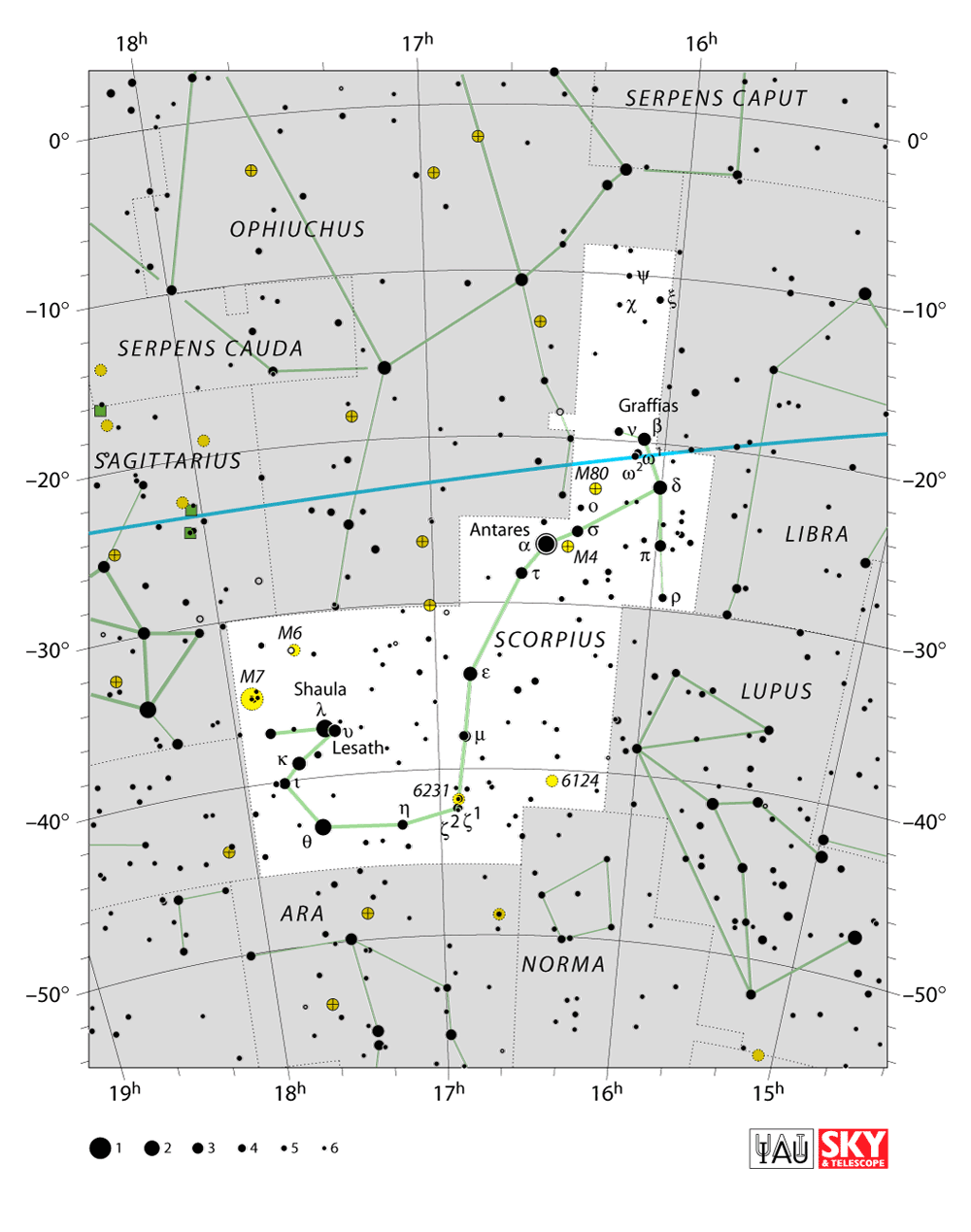
Scorpius is easily found hugging the southern horizon with bright red Antares. On non-hazy nights, you can trace its body further down to the SE along its fishhook shape to the “stinger” stars just West of the “teapot” of Sagittarius. Scan with binoculars and you’ll encounter several bright stars clusters, both globular (M 4 and M 80, near Antares) and open (M 6 and M 7).
Even though it’s a Zodiacal constellation, the Ecliptic only crosses a small part of the constellation (just south of β Sco): instead existing largely in the constellation Ophiuchus. The northernmost naked eye star - 18 Scorpii (on the border with Ophiuchus at the top of the constellation) - is unremarkable except that it is extremely similar to the Sun in age and activity.
Things to See in Scorpius
Quick Reference: Objects of Interest
| Object | Type | Equipment |
|---|---|---|
| Messier 6 | Open Cluster | Naked Eye/Binoculars |
| Messier 7 | Open Cluster | Naked Eye/Binoculars |
| Messier 4 | Globular Cluster | Binoculars/Small Telescope |
| IC 4592 | Reflection Nebula | Imaging Telescope |
| NGC 6334/6357 | Emission Nebulae | Imaging Telescope |
| Antares | Double Star | Naked Eye/Medium Telescope |
Butterfly Cluster
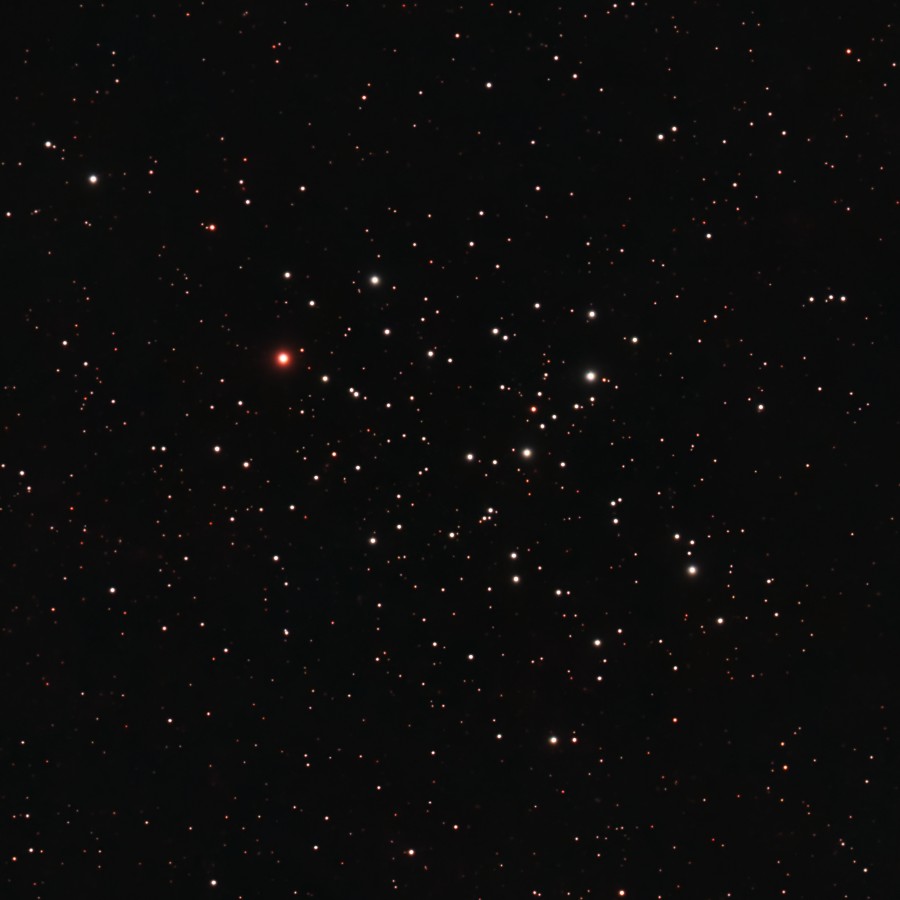
Messier 6 is 1500 light years away, and only 100 Myr old, this cluster at the tail of Scorpius is easy to find in binoculars, low on the southern horizon. The brightest stars are hot blue stars, with one evolved red giant (BM Sco).
Ptolemy’s Cluster
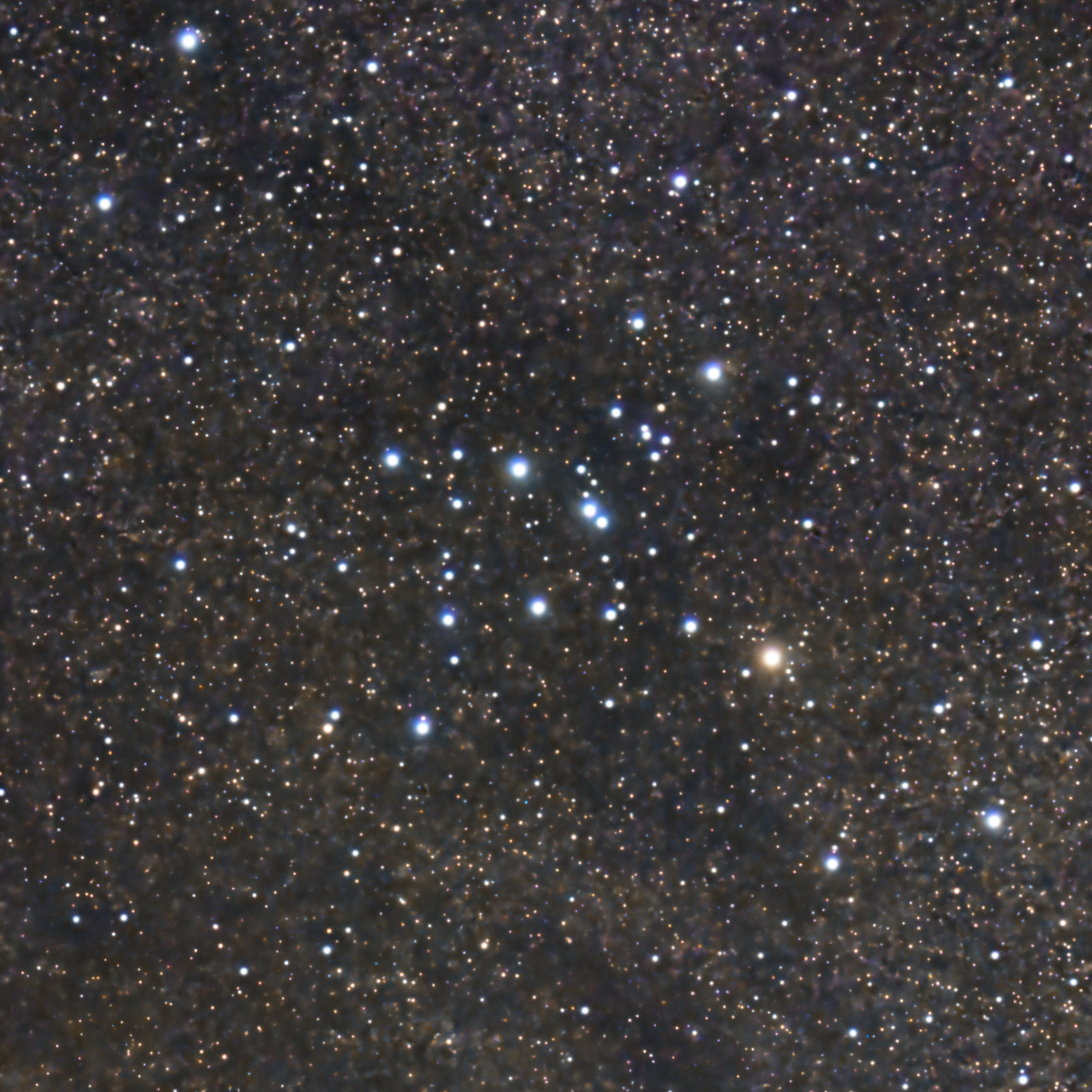
Just south of Messier 6 - and the most southern of all the Messier objects is the open cluster Messier 7. It’s slightly older than the former cluster (200 Myr) and closer (980 light years). Both have been known for centuries.
Crab Globular
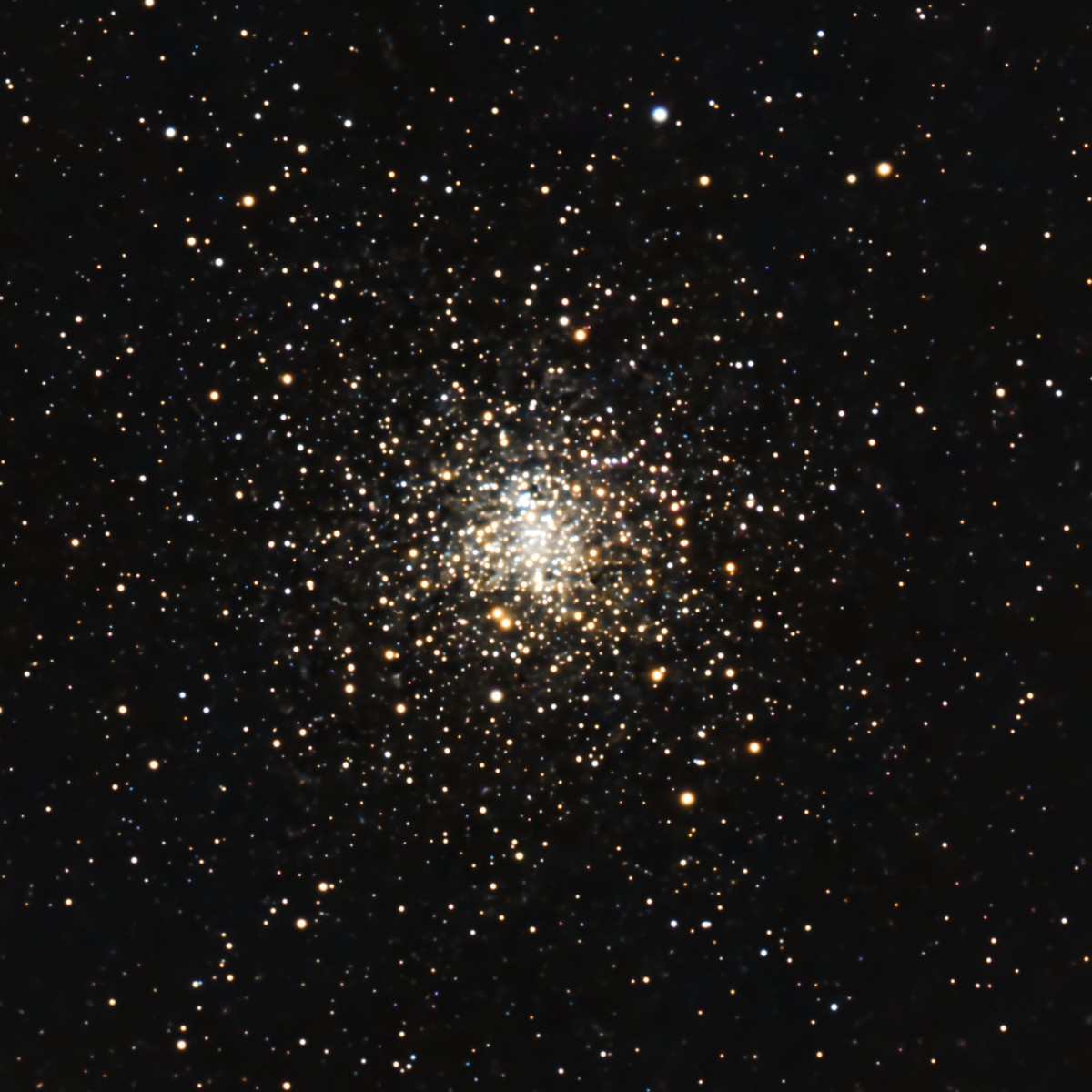
Two bright globular clusters are in the vicinity of Antares in the sky: Messier 4 is large (the full extent is about the size of the Moon) and comparative close for a globular (only 6000 ly distant). With a larger scope, the core has a bar-shaped set of stars.
Blue Horsehead
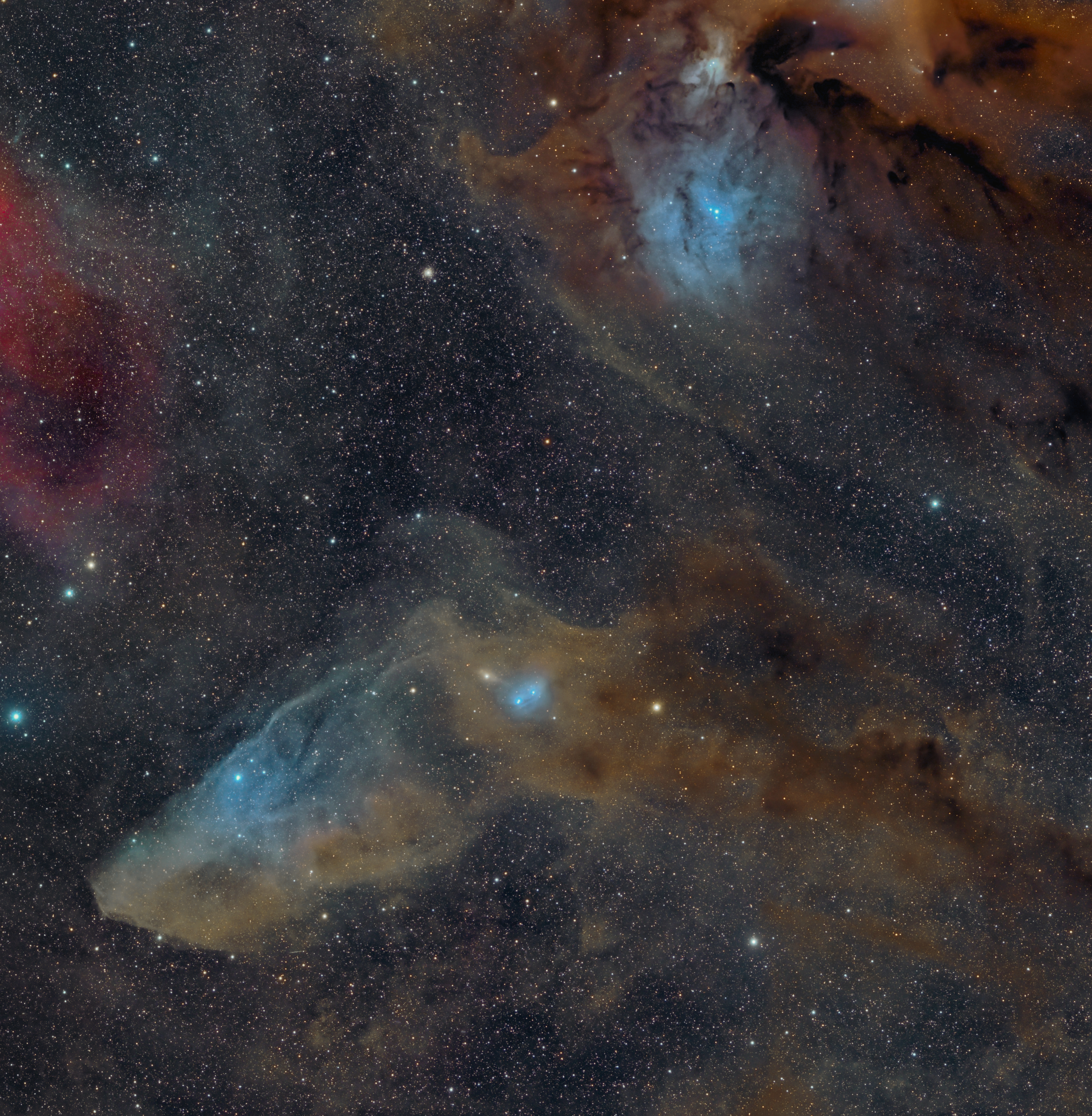
This faint nebulosity is adjacent to the Rho (ρ) Ophiuchi molecular cloud complex. Made of illuminated dust (as opposed to the obscured dust seen with the more- famous Horsehead in Orion) illuminated by the hot star Nu (ν) Scorpii, “Jabbah”, 470 light years distant, which is a very complicated multiple star with as many as seven components!
Lobster/Cat’s Paw in the Scorpion
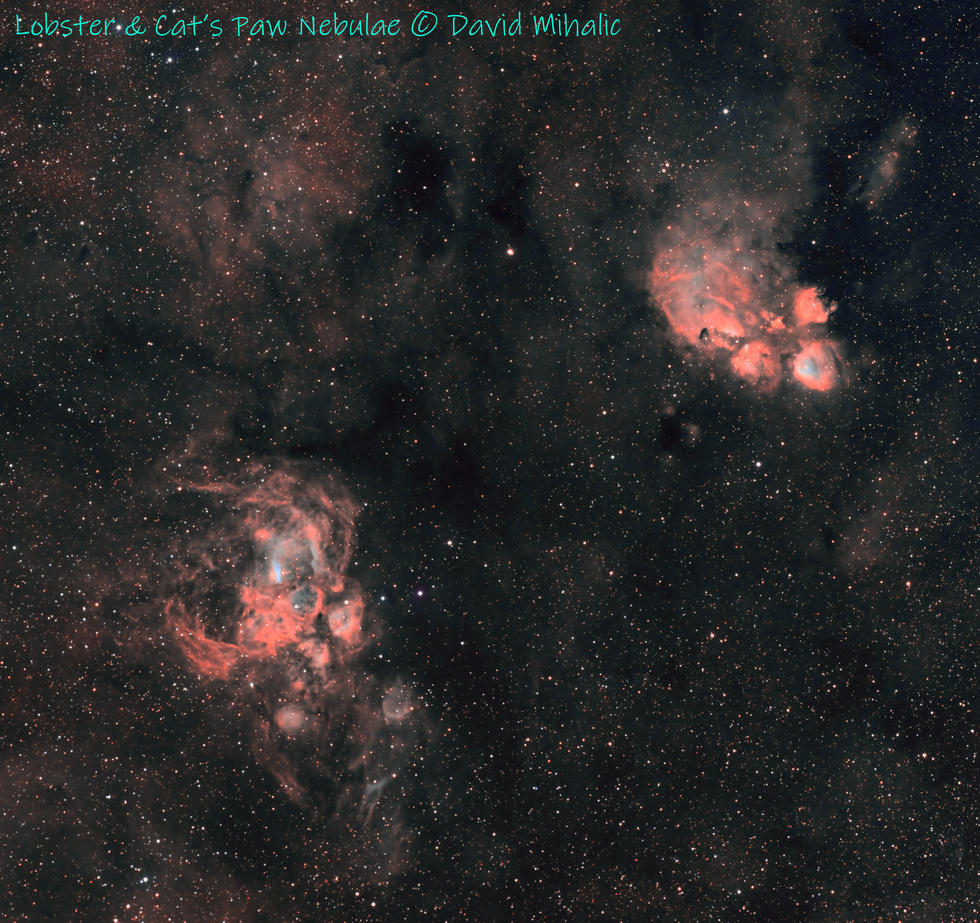
These two emission nebulae are a challenge because they’re so far south, but are bright, and can be aided with a hydrogen filter. Both are above the tail of Scorpius west of cluster M 6.
“Not Mars”
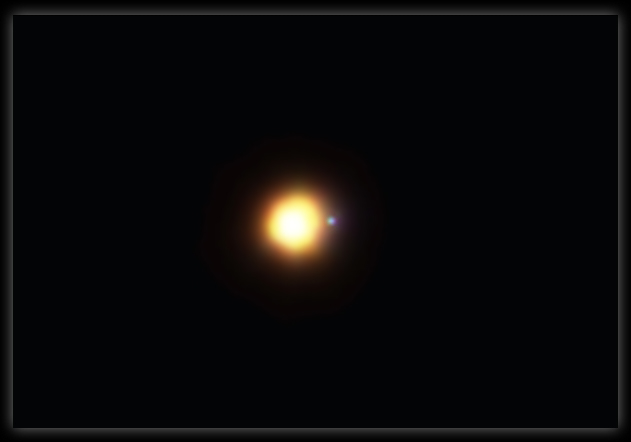
Its name - literally - means “not Ares” (the Greek name for Mars), because it’s of similar brightness and color to the Red planet. Antares is the brightest and most-evolved star of the Sco/Cen OB association - just over 500 light years away, and only about 15 Myr old!
It’s also a very challenging double star: the companion is a hot B-type star but generally appears greenish because of the contrast to the red They’re only 2” apart so you need extremely good seeing to separate them: using a blue supergiant. filter to cut down the glare (and observing early in the evening) might provide a tactical advantage.