Mid-Summer
The Milky Way is overhead, Sagittarius dominates, nights are getting (slightly) longer, Perseid meteors invade, and planets begin to return to the evening skies! It’s August!
Perseid Meteor Shower
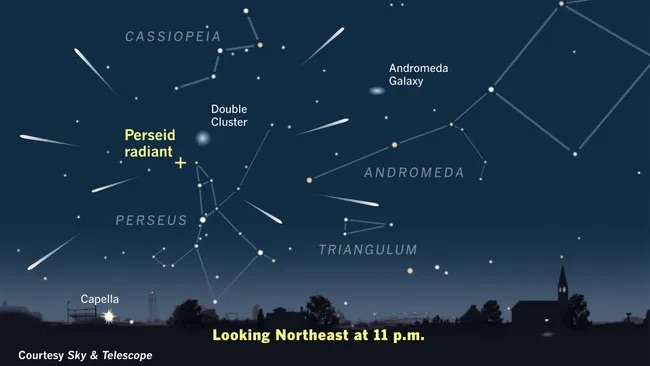
Mid-August is the peak of the Perseid meteor shower (esp. the nights of 8/11-13). This year, it will be slightly hindered by the First Quarter Moon (low in the sky in Scorpius - setting just before midnight), but you can still expect to see a few dozen per hour: as with all meteor showers, some years are better than others, and occasionally can be surprisingly active.
Although the radiant (the point in the sky that the meteors appear to emanate from) is in Perseus, individual meteors can be seen several degrees away, but for the most part setting up a comfortable chair facing NE is the best configuration. Plotting the ones you see on a star chart will reveal the “Perseus” center.
What’s Going on with Saturn?
Saturn is the first bright planet to return to the evening skies in 2024, over in Aquarius between the “Water Jar” asterism and the star Fomalhaut. But compared to other years, it doesn’t stand out quite as much, even though it’s in a comparatively uncrowded part of the sky.
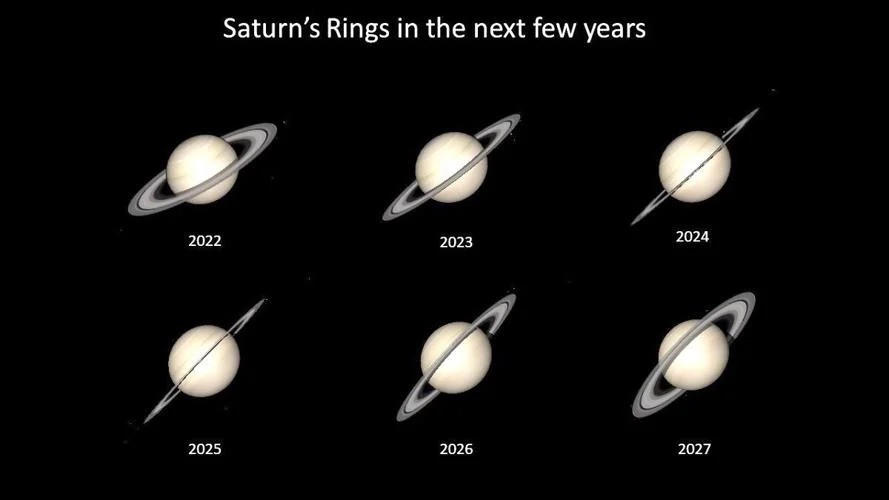
The reason for this is because - like the Earth - Saturn’s poles are inclined to its orbit, which gives us the seasons here (and there though they take on different characteristics), but the primary effect of this is that the projection of the rings to our line of sight also varies over its 29.4 year orbit around the Sun: the rings “open up”, then slowly close until their edge-on as seen from Earth happening about every 15 years. This will happen early in 2025, but at present, they’re only tilted 4° (as opposed to 27° when they’re fully open).
Because the rings are so bright, that change in tilt greatly affects Saturn’s overall brightness, ranging from about –0.5 (as in 2018, and 2032) to +1.2 at its faintest. This month, it’s at +0.7 - still pretty bright, but fainter than Vega. In a telescope, you can still perceive the rings, though they lack some of the “wow” you’d see in other years, but their disappearance presents a few other opportunities: it might make it easier to detect some of the smaller moons that orbit just outside of the rings: Mimas and Enceladus, for example.
What about Neptune?
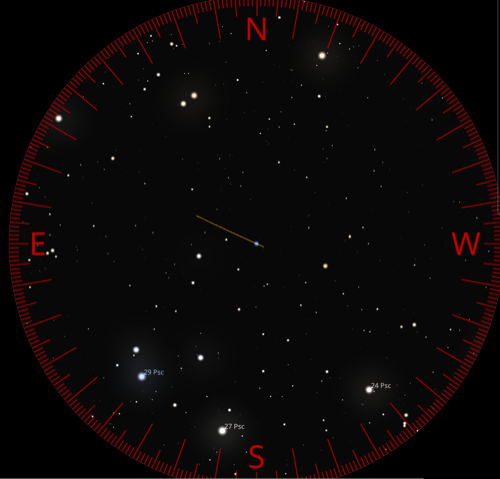
Rising shortly after Saturn, in Pisces, Neptune can be elusive if you don’t know where to look for it.
Resolving its disk requires very high magnification, though its bluish tint compared to the nearby stars is generally a good indicator you’ve found it.
This Month’s Image
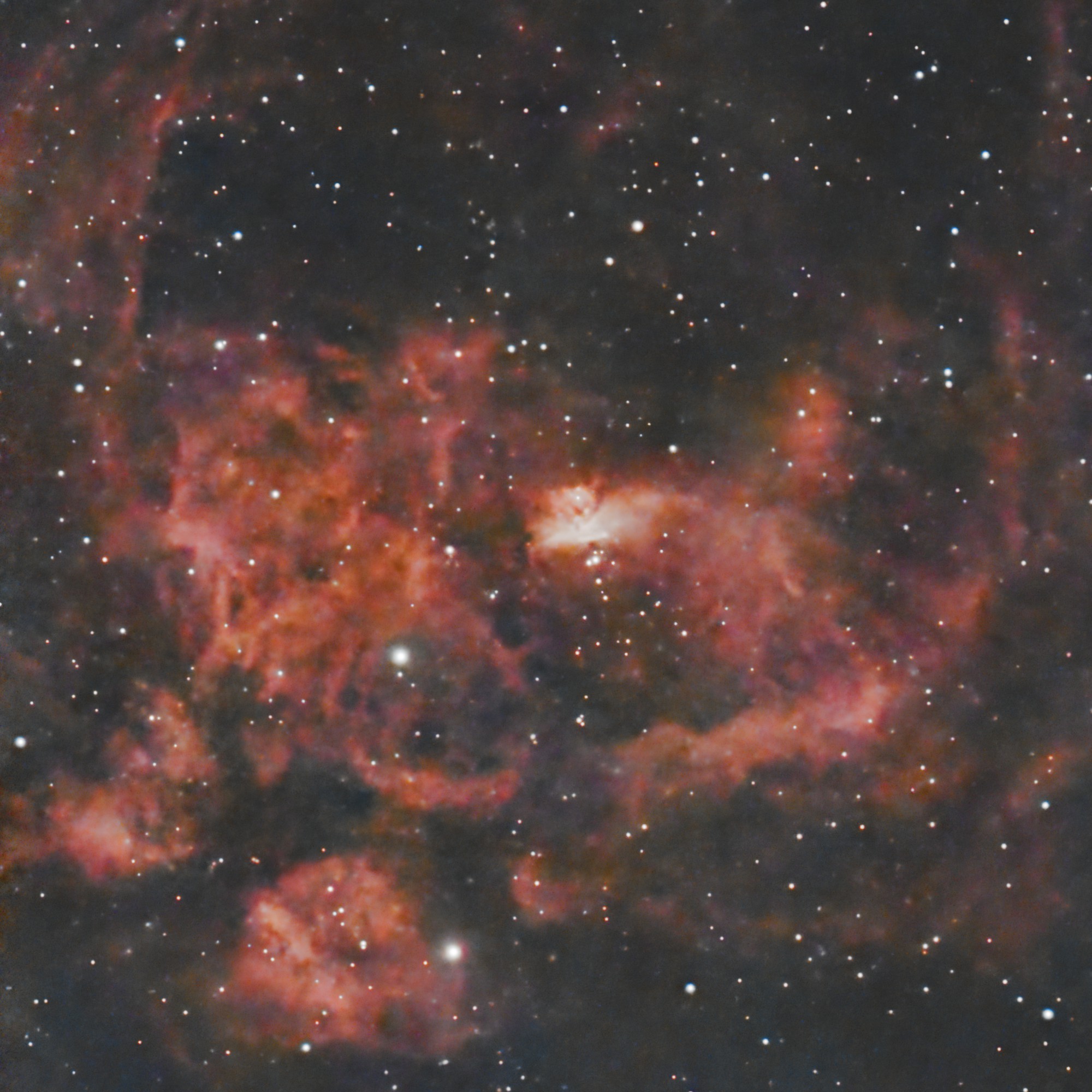
NGC 6357 is low in the sky above the “tail” of Scorpio, just west of the Galactic Center. It’s name is the Lobster Nebula, though it does look more like a Crab, though that name was already taken!