The Swan
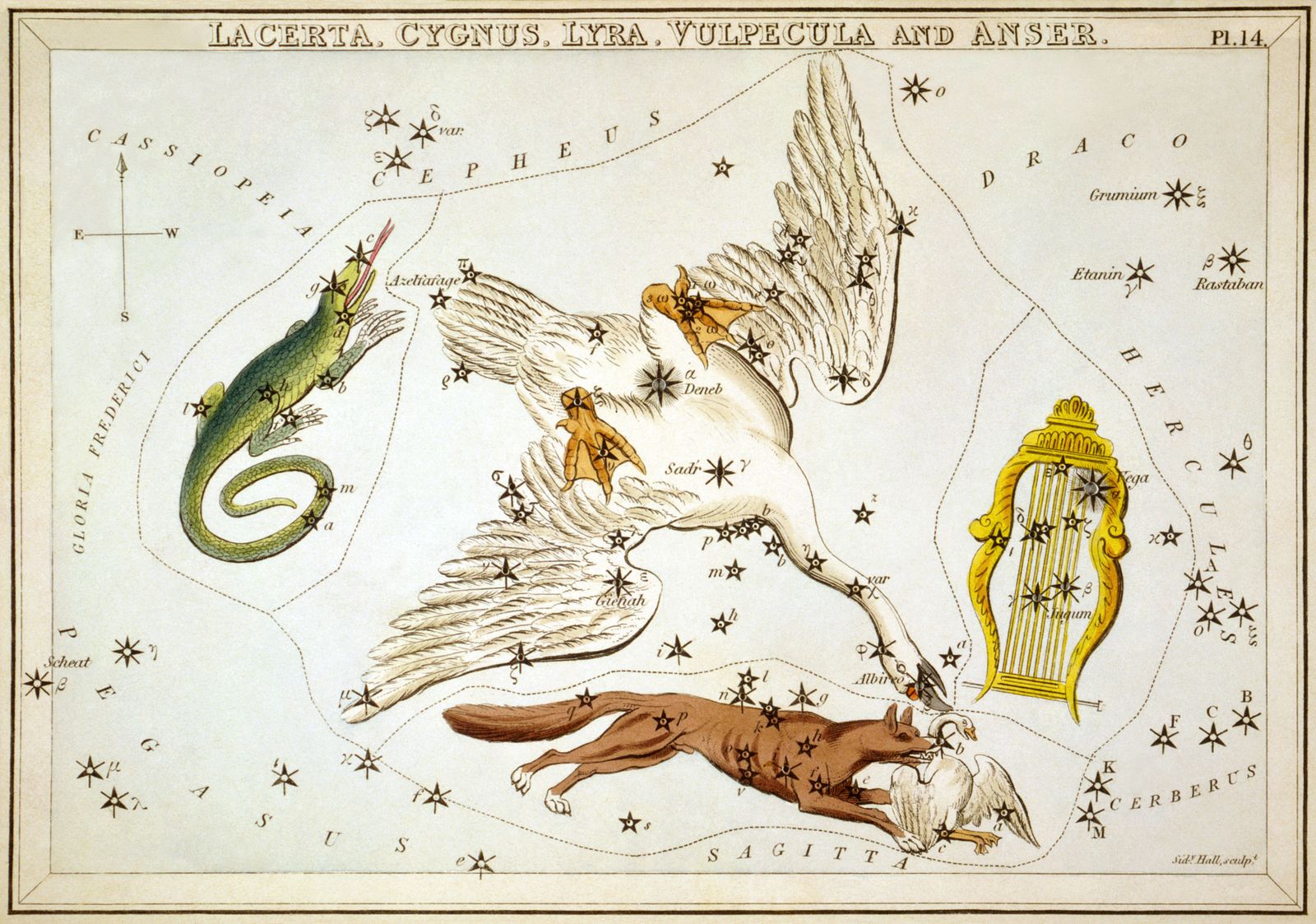
A very recognizable constellation, its name is simply the Latin word for Swan.
In Greek mythology, Cygnus has been identified with several swans: Zeus disguised himself as a swan to seduce Leda. Also, Orpheus was transformed into a swan after his murder, placed near his lyre (the constellation Lyra).
Deneb is one of the stars in the Summer Triangle, but despite their similar brightnesses (all are 0th or 1st magnitude stars), it is much MUCH further away: 2600 light years to Vega’s 25 or Altair’s 17. This makes Deneb a blue supergiant star, so large it would extend to the Earth’s orbit if placed in our Solar System. It has been losing mass throughout its evolution, but at ~20 times the mass of the Sun, is destined to one day become a supernova.
The Summer Triangle itself doesn’t appear to have very historic roots: it appears to have become popular only since the early 20th century.
The three constellations of the Summer Triangle have all been represented as birds: Cygnus the Swan, Aquila the Eagle, and Lyra
- not as the Harp we all know but as “Vultur Cadens” - the falling vulture. Together they might represent the Stymphyalian Birds - one of the twelve Labors of Hercules.
Map of Cygnus
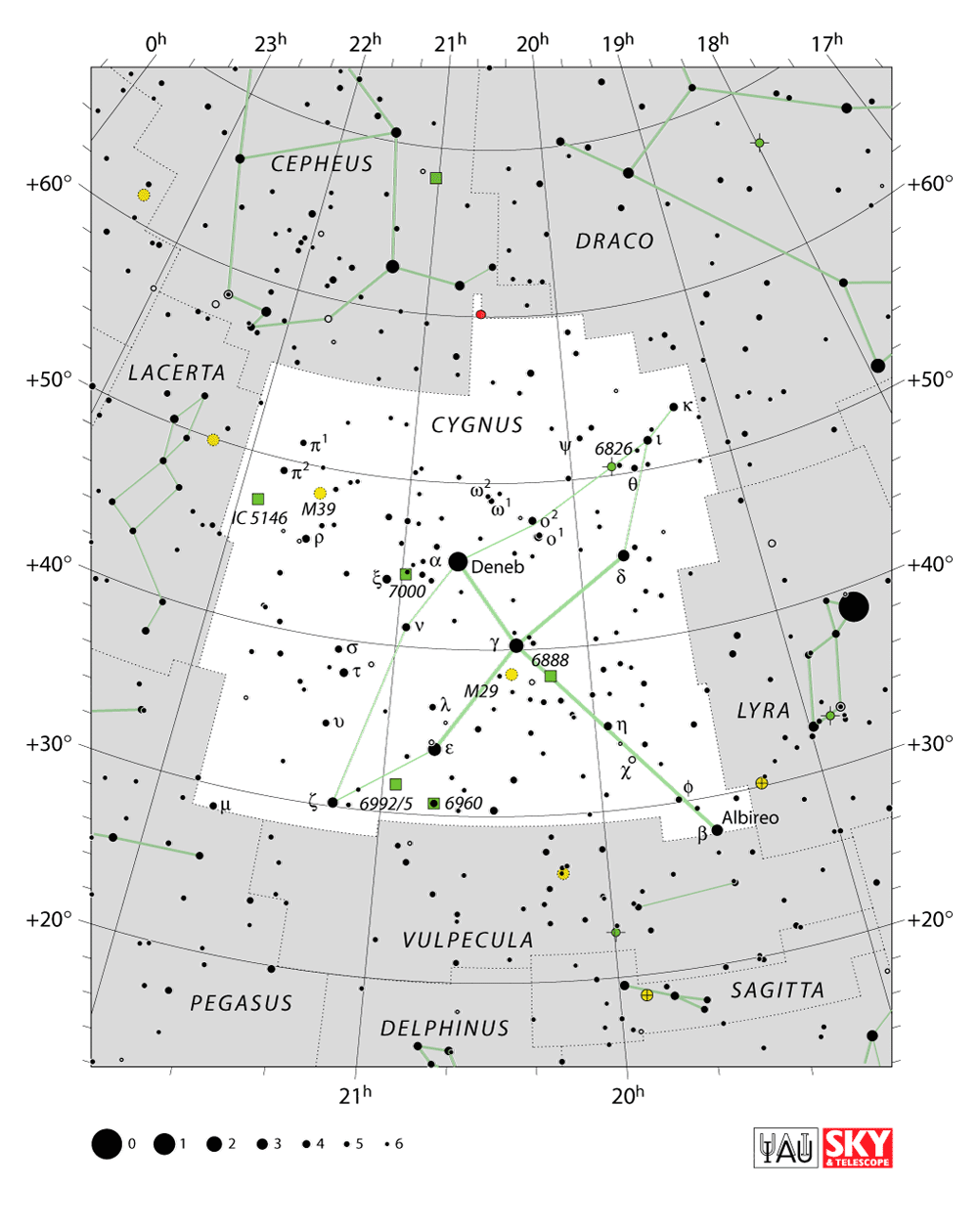
As far as constellations go, Cygnus is particularly satisfying: one can easily see a Swan from its “stick figure” with Albireo as the “head” and Deneb at the “tail”(in fact its name itself means tail) with the next brightest stars Sadr (γ), Fawaris (δ) and Aljanah (ε) as its “wings” (and creating the Northern Cross asterism). But more so, these stars are positioned along one of the brightest parts of the Milky Way, so you also get the impression of the Swan gliding over the stellar stream. In late summer it’s overhead in the evening skies.
Just sweeping over the constellation with binoculars or a low-power eyepiece is satisfying: hazy patches of nebulosity, and clusters pop up, and even the background has structure with the silhouette of the Great Rift against the Milky Way. Several prominent stars are also in Cygnus: the long-period variable Chi (χ) Cygni varies about 10 magnitudes with an inconsistent period of about 400 days. At brightest, it can briefly be seen with the naked eye or binoculars; at faintest (mag ~14) you’d need a larger telescope. 61 Cygni was the first star whose distance was measured from its parallax; HDE 226868 is the visual component of a binary star containing Cygnus X-1 - the first black hole discovered.
Things to See in Cygnus
Quick Reference: Objects of Interest
| Object | Type | Equipment |
|---|---|---|
| Sh 2-101 | Emission Nebula | Medium/Imaging Telescope |
| Caldwell 20 (NGC 7000) | Emission Nebula | Binoculars/Telescopes |
| Messier 29 | Open Cluster | Binoculars/Small Telescope |
| Caldwell 33/34 (NGC 6960/6992) | Supernova Remnant | Medium/Imaging Telescope |
| Caldwell 12 (NGC 6946) | Spiral Galaxy | Medium/Imaging Telescope |
| β Cygni (Albireo) | Double Star | Small Telescope |
Tulip Nebula
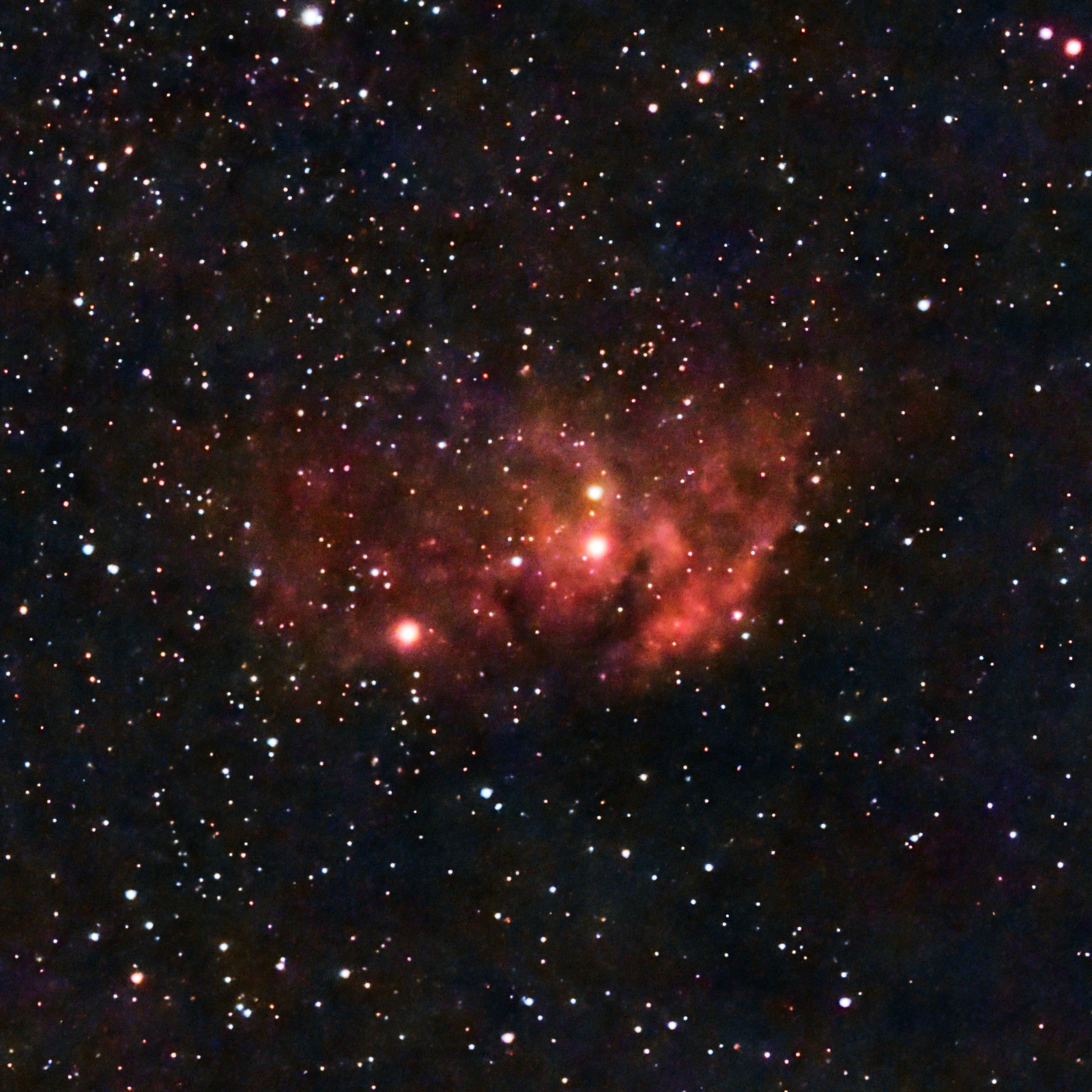
6000 light years away, this H II region has patches resembling the petals of a tulip separated by dark lanes of dust. Just west of it is the dark nebula Barnard 144, and one of the stars bordering it is the hot O-type star HDE 226868; orbiting that star is the first confirmed black hole, Cygnus X-1 - detected because of the strong X-ray flux it emits.
North American Nebula
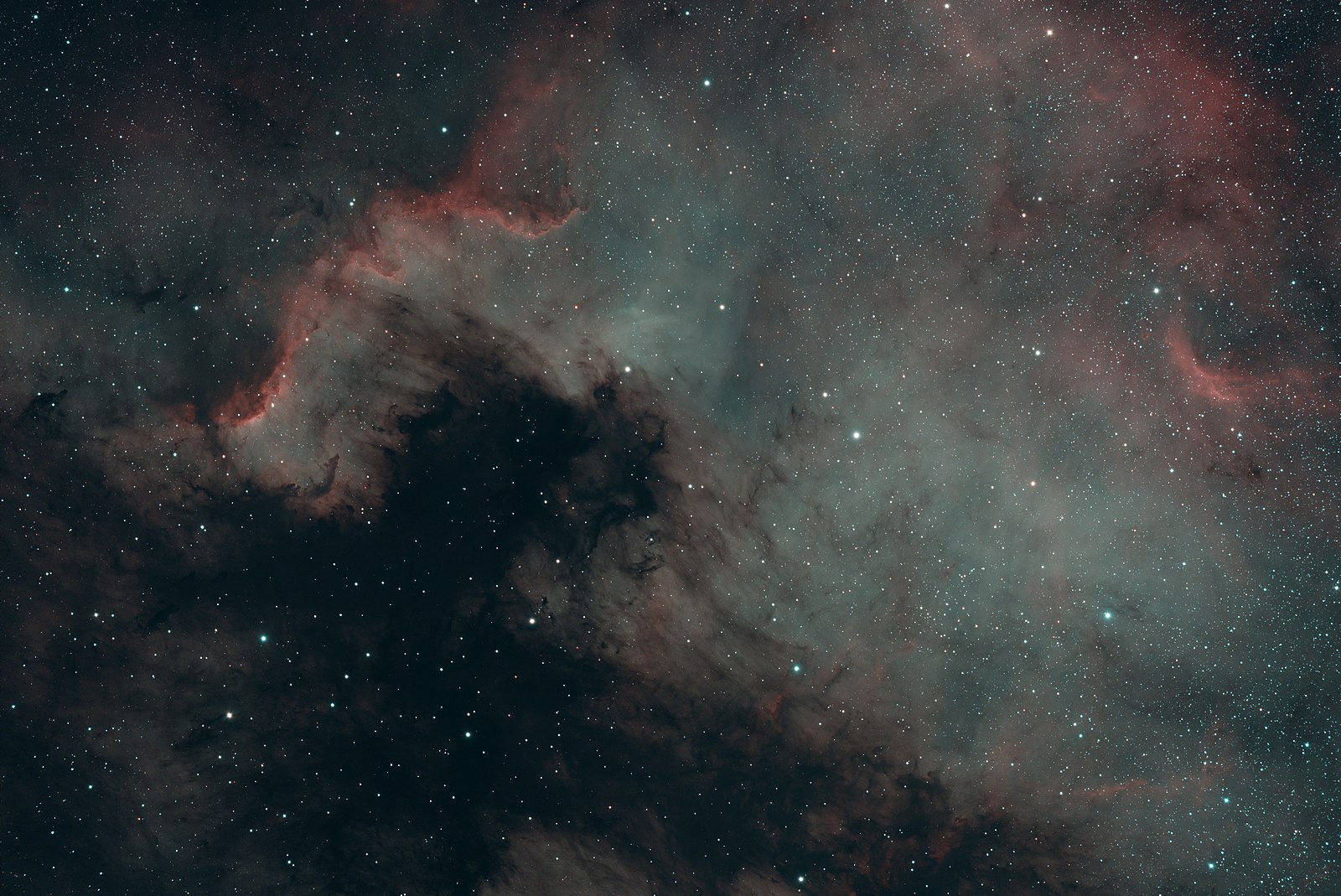
Close to Deneb, this very large nebula complex has a distinct shape that mimics the outline of the coast along the Caribbean (the Cygnus Wall). It can be seen faintly with binoculars, particularly using a UHC filter (which will improve the contrast). Like Deneb, this nebula is about 2590 light years distant.
Cooling Tower Cluster
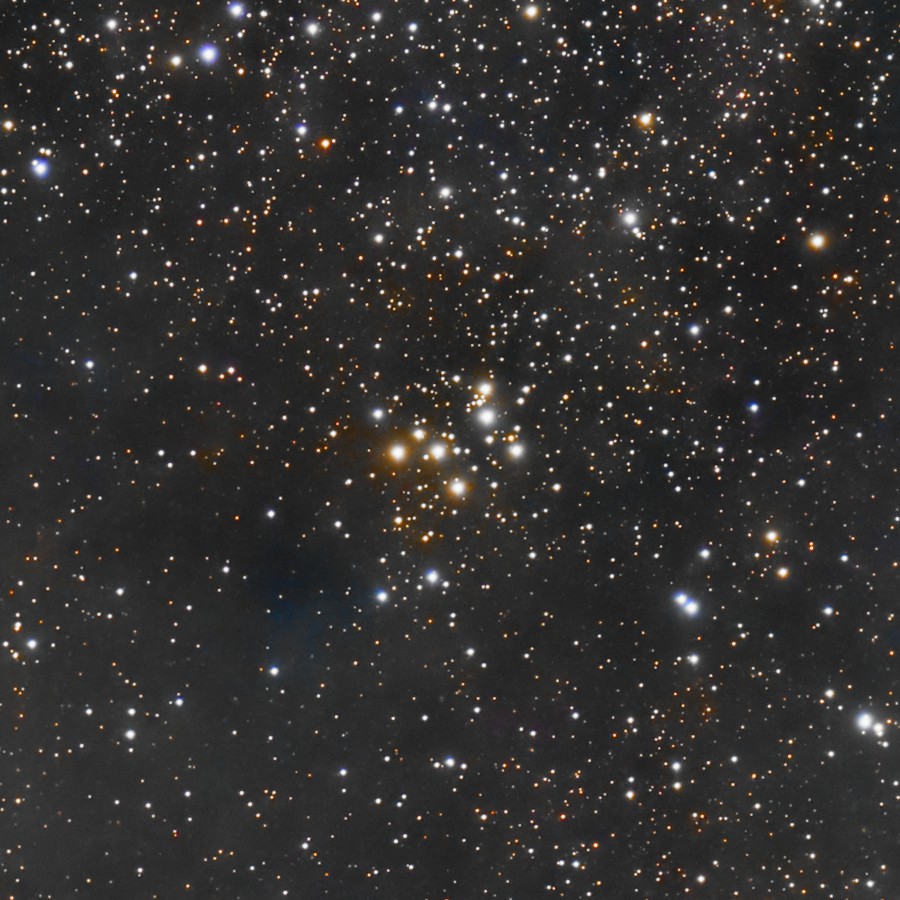
This small cluster - sort of a “mini-Pleiades” is an easy target for binoculars, 5,240 light years away, and is very young (only 10 Myr).
Cosmic Veil
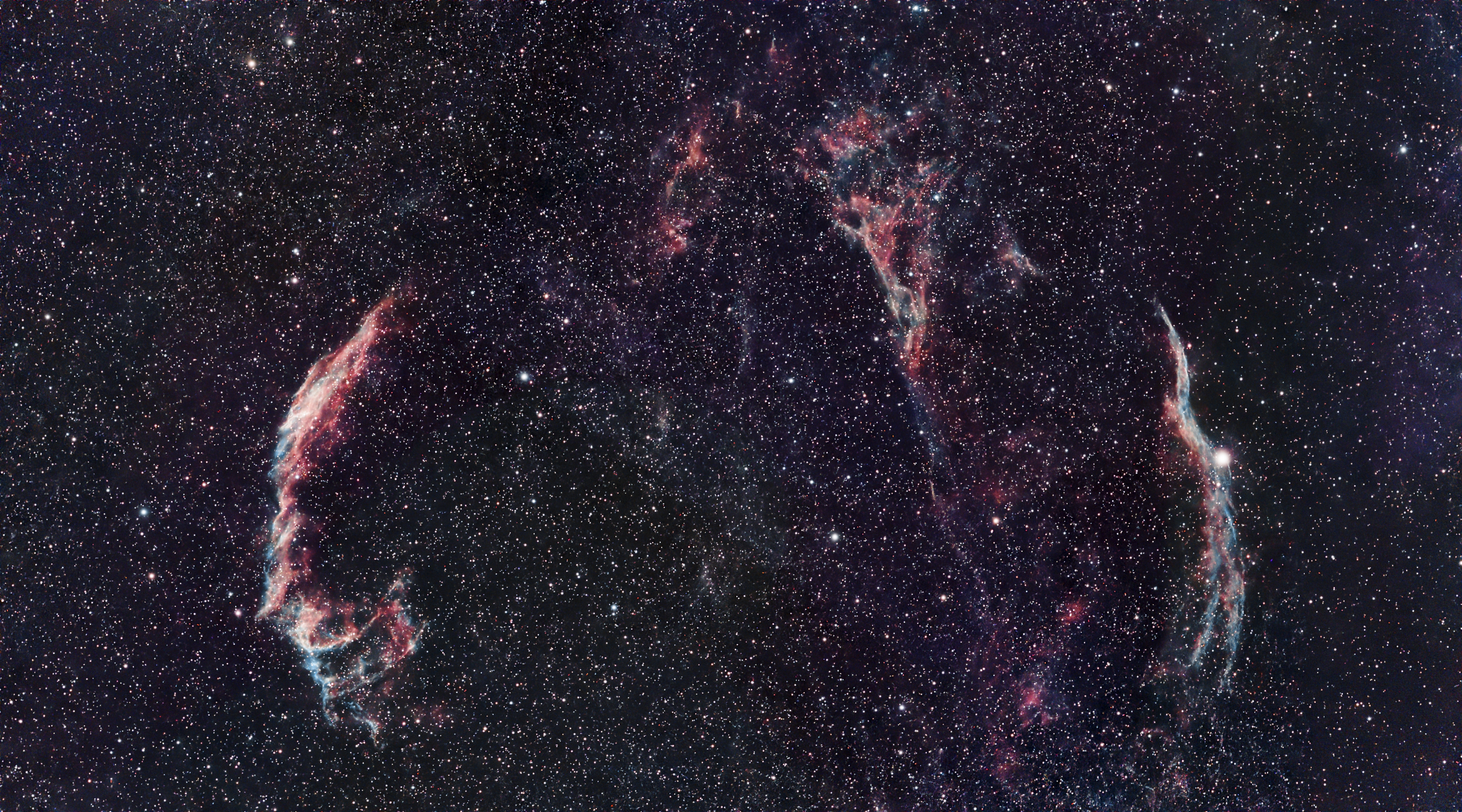
Another famous nebula in Cygnus is the supernova remnant of the Veil Nebula or “Cygnus Loop”. The supernova itself exploded over 10,000 years ago - and would’ve been visible during the day on Earth. It’s 2400 ly distant has two brighter sections: NGC 6960 to the West (right) - also called the “Witch’s Broom” - and NGC 6992 to the East (left, aka the “Network Nebula”) with additional structures (including Pickering’s triangle) on the northern side.
Observationally a challenging object (owing to its low surface brightness) it can be see in medium-sized telescopes when overhead under dark skies.
A Galaxy — in Cygnus?
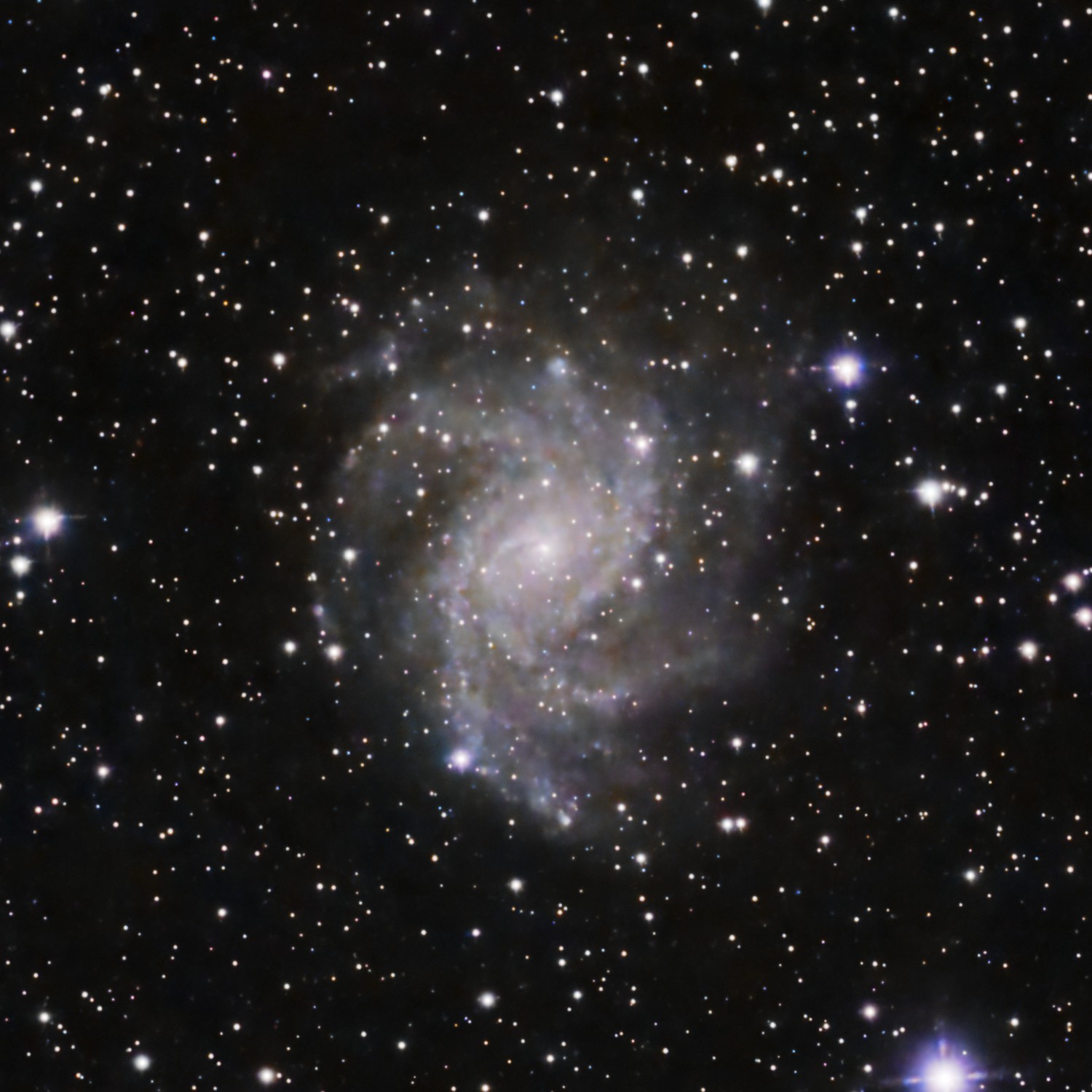
On the Cepheus border, is one of the few summertime galaxies: the “Fireworks” galaxy - so named because it has produced supernovae at about 10x the frequency of our Galaxy, even though it only has half the stars. Even though it’s not especially far away (22 Mly) and large, because it’s close to (and basically “behind” the Milky Way, it’s fairly dim being obscured by the Milky Way’s dust.
Nonetheless, it’s a fun challenge to locate - and a brief distraction to the cascade of star clusters and nebulae we find in the summertime Milky Way constellations.
“Galactic Center”
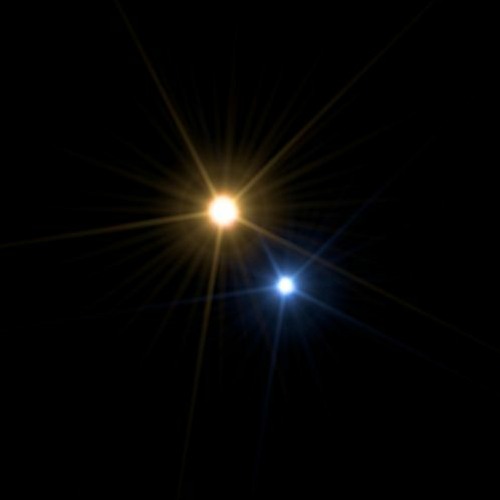
Finally we come to one of the most-popular double stars in the sky. “beta” it’s actually the fifth brightest star in Cygnus, but its fame comes from its nature as a somewhat wide double star (Saturn would fit between them) with a wide color contrast. The system has a brighter “amber” colored star and a blue or blue-green companion.
Even though it’s a bright naked-eye star, it’s not even certain if they’re a physical pair even though estimates of their distance are approximately the same (about 300-400 light years in each case but with large uncertainty). It’s likely that they are themselves several dozen light years apart but just very close in their line of sight to us.