The Water Bearer
One of the Ptolemy’s original constellations, it’s in an area of the sky that contains many other “water”-related constellations: it’s between Pisces and Piscis Austrinis (the two “fish” constellations), Cetus (the Whale) and Eridanus (the River) and Capricornus (the “Sea Goat” - half goat, half fish).
For the Greeks, Aquarius depicted a water container held by Ganymede, the cup bearer of Zeus. Babylonians, and even Hindus all associated this part of the sky with a vessel containing water, typically surrounding the potential for floods.
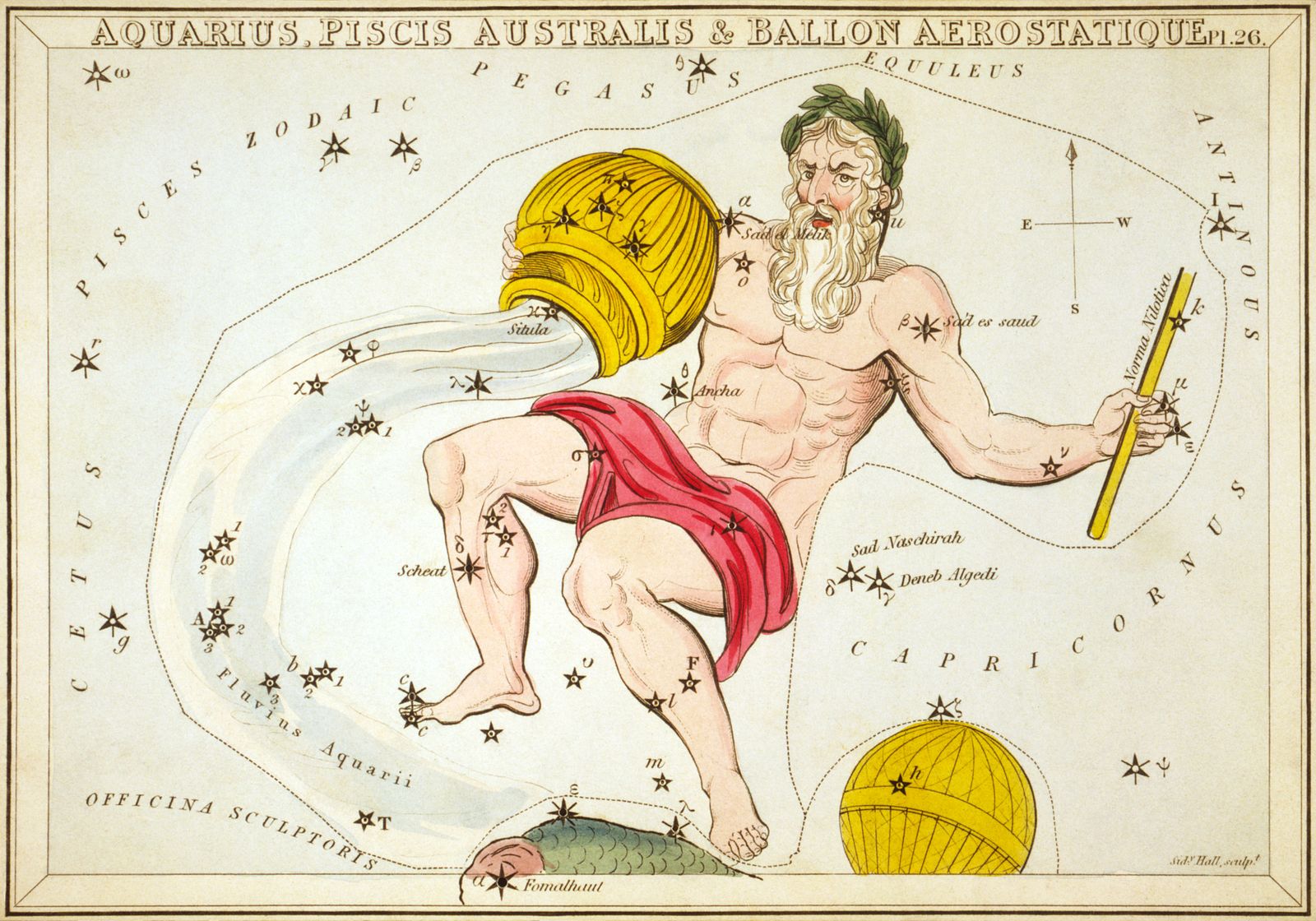
Specifically, for the ancient Egyptians, Aquarius was associated with the annual flooding of the Nile – when Aquarius puts his jar into the river beginning Spring. At that time, owing to precession, the Sun’s location at the Spring Equinox – currently in Pisces – would have been in Taurus (later Aries), making Aquarius an early morning constellation at the beginning of Spring (this will move into Aquarius around 2600 CE as ecliptic longitudes move westward about 1° every 72 years).
Nestled in a visually empty part of the sky in some 19th century star maps is the defunct constellation of “Ballon Aerostatique” – the hot- air balloon – whose celestial real estate was given back to Capricornus, and the modern constellation of Microscopium.
Map of Aquarius
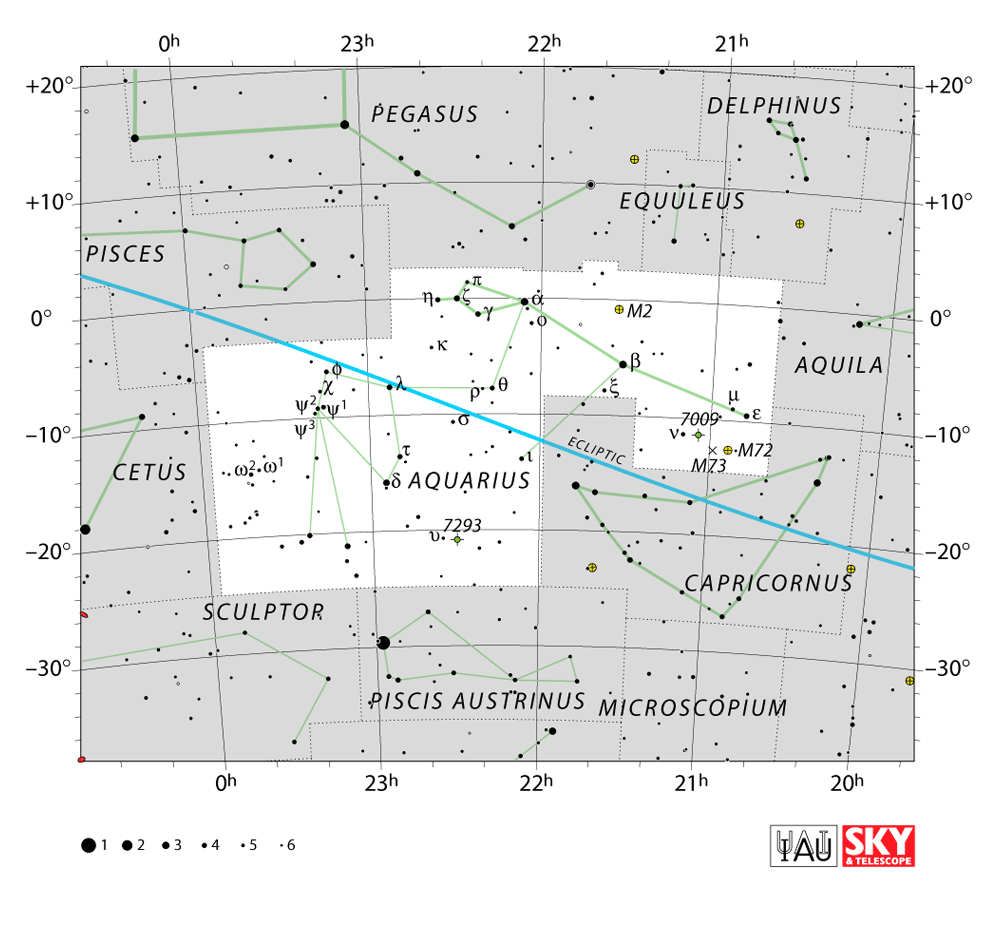
Despite the complicated “stick figure” in the map above, many of the stars in Aquarius are somewhat faint – especially in our light polluted skies. The two brightest stars, Sadalmelik (Arabic: “luck of the king”) and Sadalsuud (Arabic “luck of lucks”) thought brighter than 3rd magnitude don’t seem to stand out much compared to other stars of similar brightness (the stars of the Great Square of Pegasus aren’t much brighter).
Somehow more prominent is the asterism of the “Water Jar” with 3rd-4th magnitude stars η (Eta), π (Pi), ζ (Zeta), and γ (Gamma).
Aquarius is the home constellation of several well-known stars with exoplanet systems (though most are too faint to detect except with large telescopes): Trappist-1 is a very low-mass red dwarf star (mag 19) with 7 rocky worlds – three of which are likely to be in the habitable zone of the star. Their tight orbits, however, mean the planets are all likely tidally-locked to the star (as the Moon is to the Earth) which would produce a very alien environment in terms of whether water could be present, and if so, in what form it could take and where on the planet.
Things to See in Aquarius
Quick Reference: Objects of Interest
| Object | Type | Equipment |
|---|---|---|
| Caldwell 63 (NGC 7293) | Planetary Nebula | Medium/Imaging Telescope |
| Messier 2 | Globular Cluster | Binoculars/All Telescopes |
| NGC 7284/5 | Galaxy Pair | Medium Telescope |
| Caldwell 55 (NGC 7009) | Planetary Nebula | Medium/Imaging Telescope |
| Hickson Group 88 | Compact Group | Large/Imaging Telescope |
| Messier 73 | Asterism | Small Telescope |
| Messier 72 | Globular Cluster | Small/Medium Telescope |
“Eye of God”
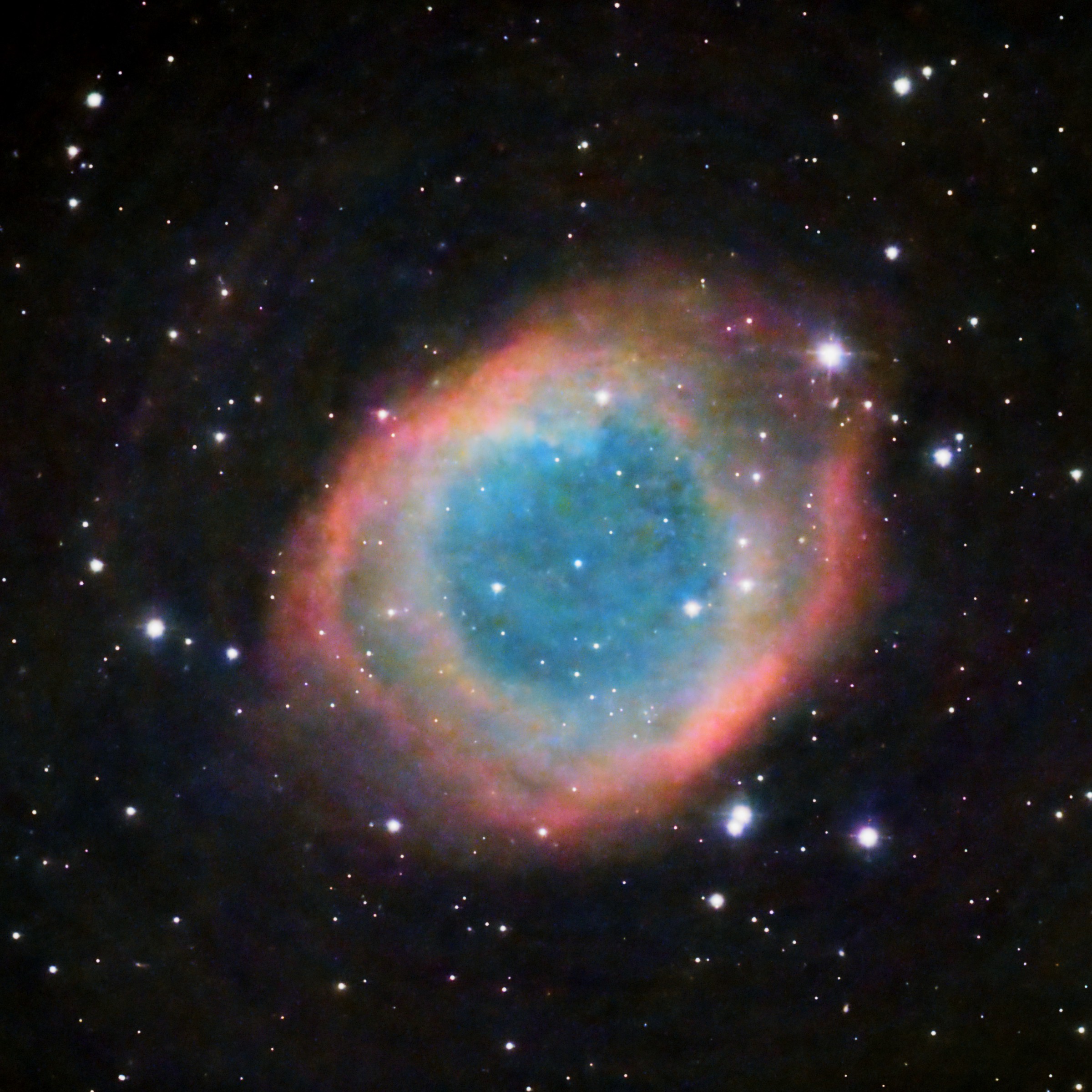
The Helix Nebula is one of the closest planetary nebulas (only ~650 ly), and spans 2.5 ly across resulting from the expulsion of the central star’s outer atmosphere ~9-13 kyr ago. While it is bright overall (mag 7.5), it extended size on the sky gives it a low surface brightness, though it is technically possible to glimpse with binoculars under very dark conditions.
Adopted Globular
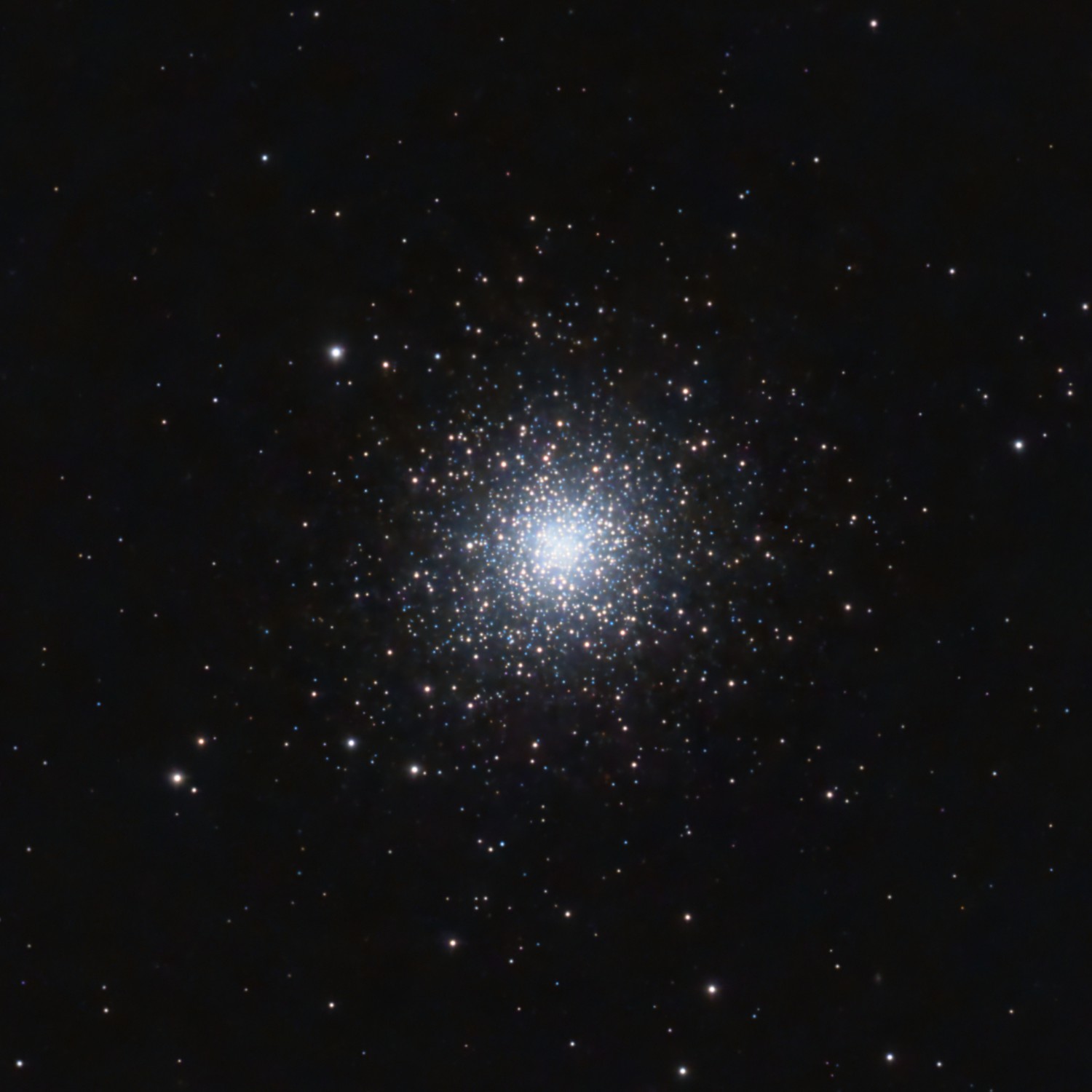
This is one of the largest globular clusters (diam. 87y), about 12.5 Gyr old. Its shape is slightly elliptical, possibly due to tidal perturbations from the Large Magellanic Cloud. Now orbiting the Milky Way, its original was a galaxy cannibalized through a collision with the Milky Way 8–11 billion years ago. It should be easy to find in binoculars or a small telescope.
Hugging Galaxies - Arp 93
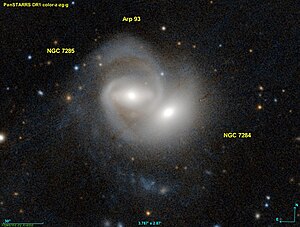
Two galaxies – a spiral (NGC 7285) and an elliptical (NGC 7284) – are in the process of colliding 200 Mly away. Although their cores are still separated by ~20 kly, the interaction has produced a very long tidal stream over 200,000 ly long (you can see the beginning of it in the lower-left corner of the image. You’ll need a large aperture to see this visually (mag 13).
Not Saturn
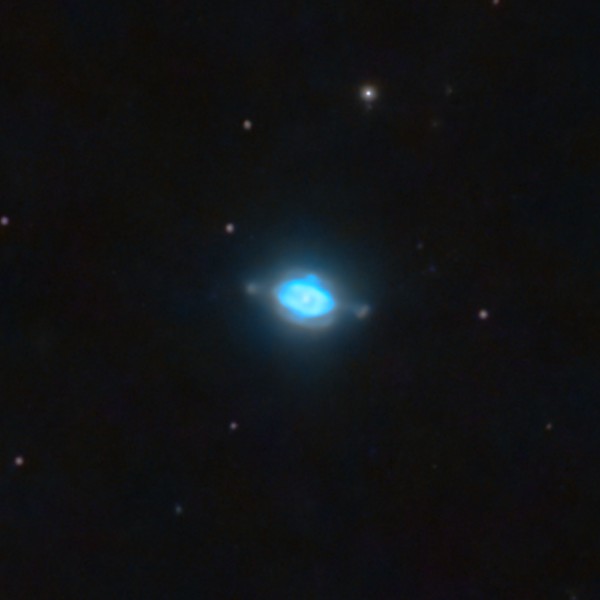
Another planetary nebula in Aquarius - the “Saturn” Nebula gets its name from the resemblance to the planet with its handles (ansae) on either side. The central portion coincidentally is about the same size as the planet Saturn is on the sky. It is smaller (about 0.5 ly across) and younger (about 6000 yr) than the Helix.
Observing details will require magnification and about 8” aperture: smaller scope might show it is definitively not round and greenish in color.
Faint Galaxy Group
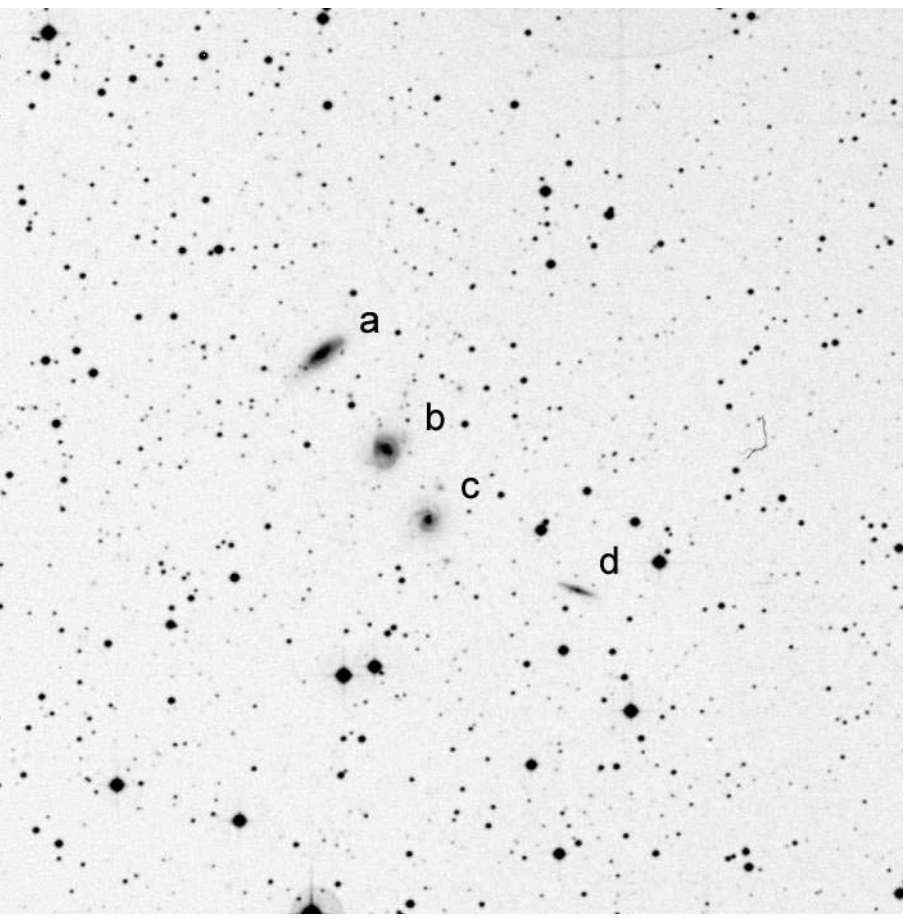
Like other small groups of galaxies in the Fall sky (Deer Lick, Stephan’s Quintet) this string of four faint galaxies – are all about 260 Mly distant – are NGC 6978, 6977, 6976, and 6975 (a–d on the chart). All are mag 14-15 (so a bit of a challenge) with three mostly face-on spirals and one edge-on.
Messier’s “Oops”
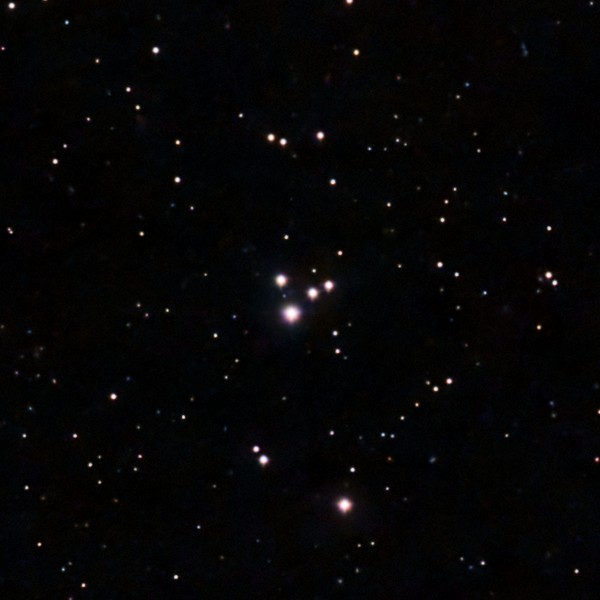
Finally we come to Messier 73, which he described as a small cluster with nebulosity. In reality, these four stars have no nebulosity, and aren’t even physically related (their distances range from 1000 and 2300 light years). It even doesn’t achieve the rank of “most boring Messier object”: that “honor” generally is given to M 40 (in UMa) two stars that also aren’t physically related! So, observing this “mistake” typically happens for no other reason than to “check the object off” in the quest to observe the complete catalog.
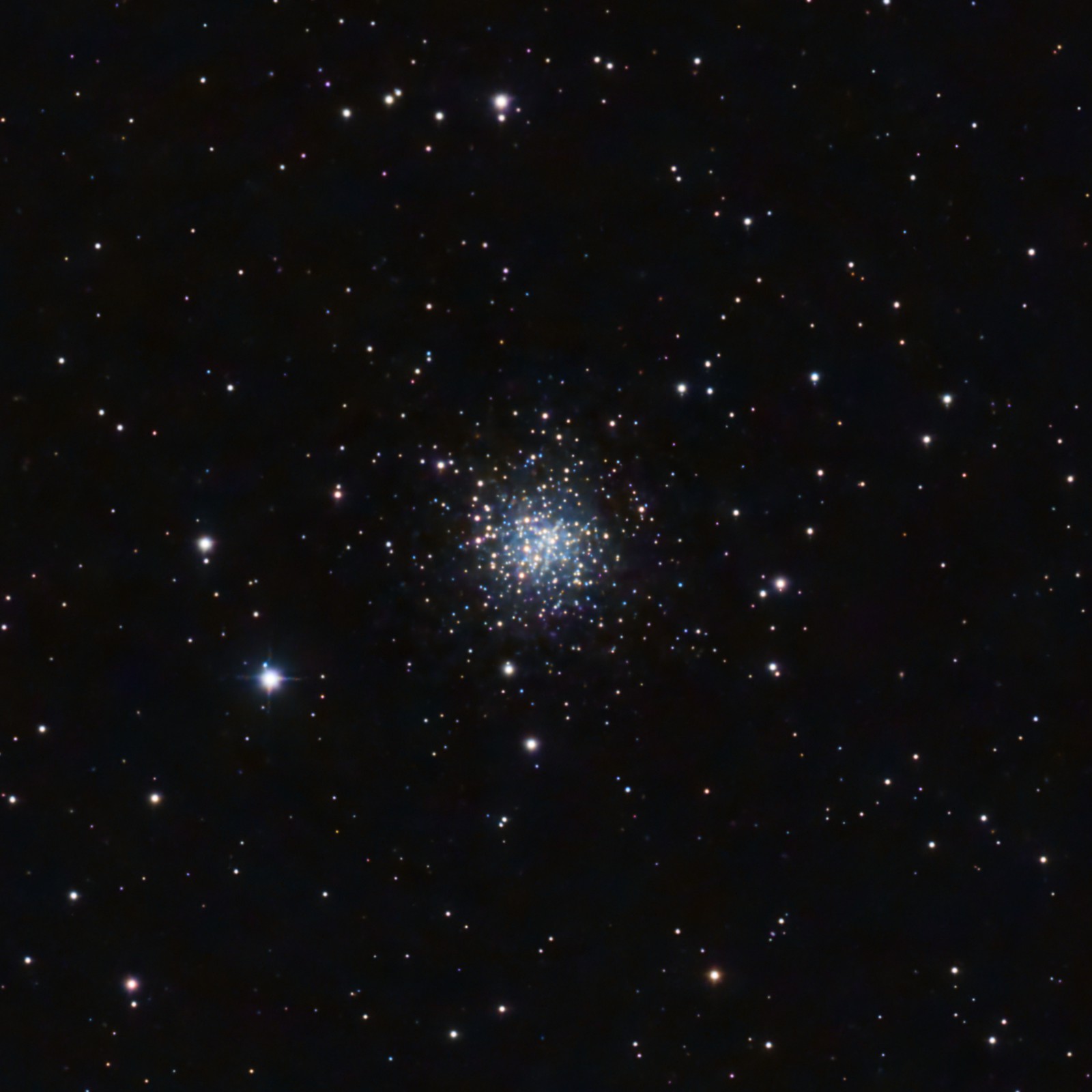
As a consolation prize, though, just 1 1/2° to the East is globular cluster Messier 72. Compared to M 2 (above) it’s fainter (a bit of a challenge for smaller scopes), smaller, and perhaps younger. Like M 2 it might also be “adopted” – captured from an ancient encounter between the Milky Way and dwarf galaxy some 6–9 Gyr ago. These ancient mergers played an important role in establishing the larger structures of our galaxy.