Venus and the Moon
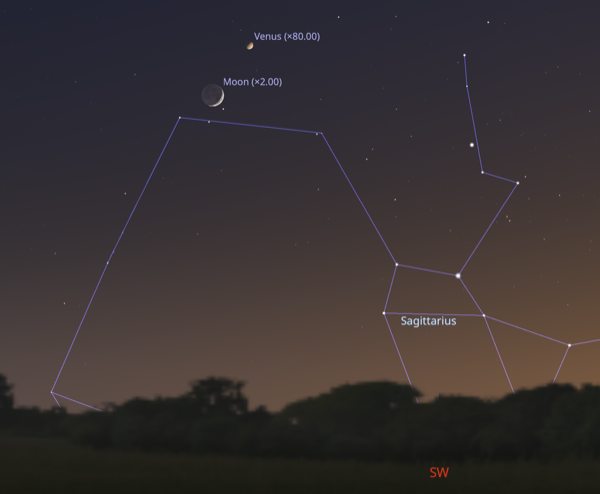
The Moon passes close to Venus in the Southwest on the evening of Dec. 4th. (the chart is for 6PM, local time), separated by 3°. What’s interesting to see is the different phases of the two objects: while the Moon is still a thin crescent, Venus is still in a Gibbous phase (it’ll slowly shrink to dichotomy - when it is a “half Venus” - at the beginning of 2025.
Meteor Showers
The Gemini’s peak on Dec. 13, but the presence of the nearby Full Moon (in Gemini) will be poor seeing. However, the shower trails off a few days before and after this date, so seeing some of the brighter meteors might be possible while avoiding the Moon’s glare.
Scanning Around Taurus
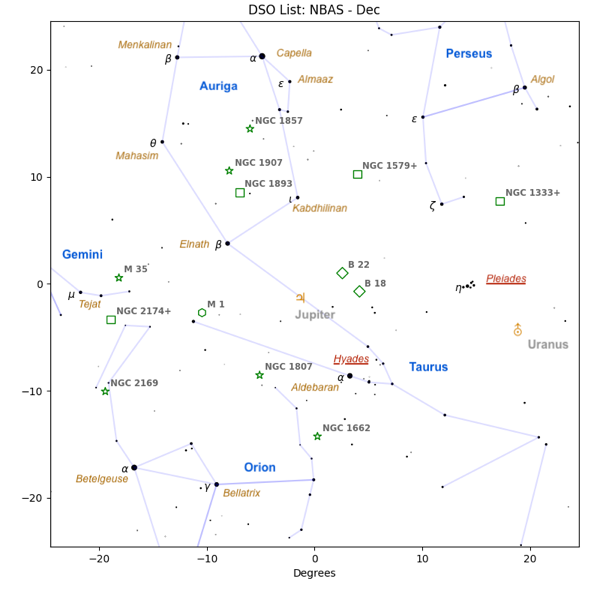
This month, we’re in the neighborhood of Taurus. planets Jupiter which dominates the sky and Uranus, visible in binoculars. The Hyades and Pleiades clusters are marked, along with the proper names of several of the brighter stars. Starting in Auriga and working our way South through Taurus and just touching the top of Orion, Perseus, and Auriga we can find:
The pentagon of Auriga has many different open clusters: the three well-known Messier clusters (36, 37, and 38) were in last month’s map; this month, we add NGC 1857 and NGC 1907, plus NGC 1893 “the Letter Y cluster” which also has significant nebulosity. M 35 and nearby NGC 2157 in Gemini are good to compare: one is younger, the other older - you might detect the overall color difference in the stars.
In Orion NGC 1807/1817 are “the Poor Man’s Double Cluster”; NGC 2169 is “the 37 Cluster” and why is very apparent when you look at it. Challenges for small scopes are the nebulae: M 1 (of course) and the Monkey Head (NGC 2174), Embryo (NGC 1333) and Northern Trifid (NGC 1579).
Finally, two dark nebulae: Kutner’s Cloud (Barnard 18) and the Taurus Dark Cloud (Barnard 22). Here, we’re looking for the absence of something (stars) caused by foreground dusk eclipsing the background Milky Way.
This Month’s Image
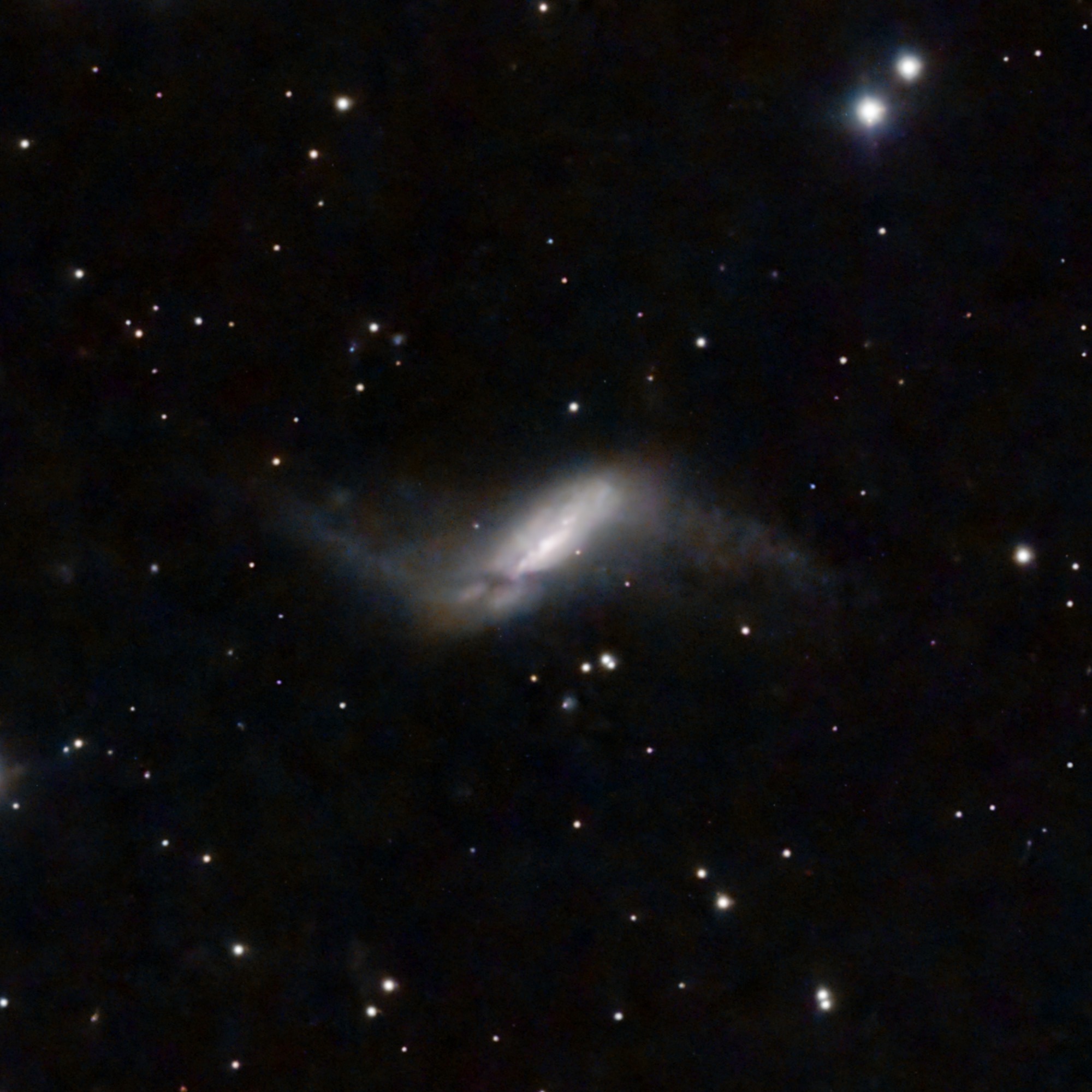
There are several interesting galaxies in the Fall sky, in Pisces, Cetus, and Aries. NGC 660 has wide open arms, with a barred center, and dust lanes. Its shape might come from either the merger of two galaxies, or by taking on mass from a close encounter, pulling out the spiral arms from the disk.