
The Greater Dog
One of Ptolemy’s original 48 constellations, the “greater dog” (as opposed to the “Lesser Dog” of Canis Minor), follows Orion around in the sky. The stellar pattern easily produces a “stick figure” that resembles a dog looking up at Orion.
In Babylonian astronomy, the stars of Canis Major (plus others from
neighboring Puppis) depicted an arrow aimed at Orion. The Greeks
changed this to a dog with varying identifications including Laelaps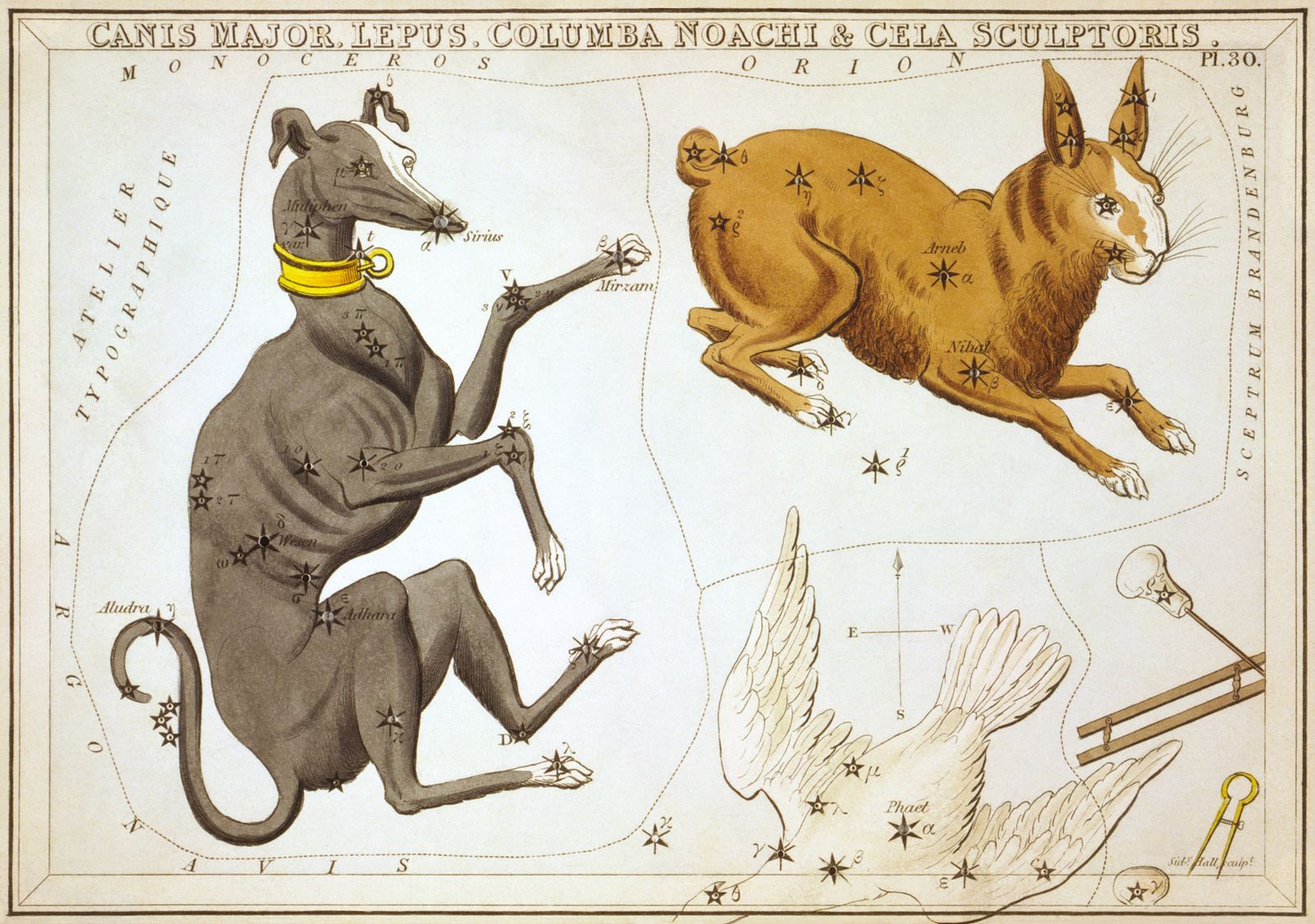
The Romans continued this in their mythology - guarding Europa from Zeus (masquerading as a bull). Similarly the medieval Arabs have “the dog of the Giant”.

Map of Canis Major
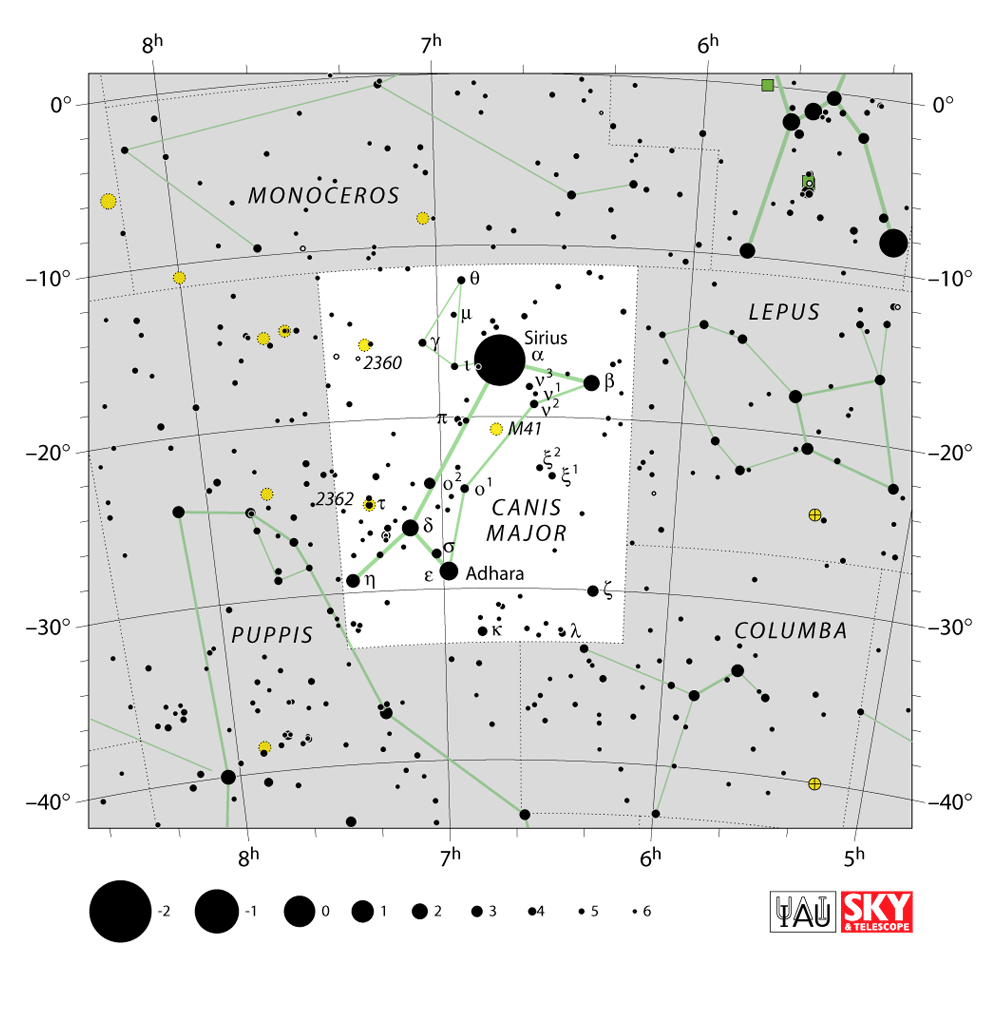
You can find Canis Major by following the stars of Orion’s Belt “down and to the left” (Southeast), although Sirius - the brightest star in the sky - is a dead giveaway to its location, situated at the heart of the dog, magnitude -1.46).
It doesn’t take much effort to see a Dog in the constellation’s “stick figure” - several bright stars trace out the back, tail, and paws: Wezen (Delta, δ CMa, mag 1.8) - at the end of the dog’s back - is a yellow supergiant; Mirzam (Beta, β CMa, mag 2.0) - a blue giant - is the front paw; Aludra (Eta, η CMa, mag 2.4) - another blue-white supergiant star - is the dog’s tail; and Furud (Zeta, ζ CMa, mag 3.0) marks the dog’s back paw. Other fainter stars make up the head and body.
Canis Major is dotted with several open star clusters - scanning with binoculars on a dark (moonless) night you should be able to find several; Messier 41 (directly south of Sirius) is the easiest whose stars show a remarkable color contrast. Two other bright open clusters to observe: Caldwell 64 (NGC 2362) called the “Mexican Jumping Bean Cluster” surrounds the star τ (Tau) Canis Majoris, while “Caroline’s Cluster” (Caldwell 58 = NGC 2360) has a shape resembling (sort of) a hummingbird. Two striking nebulae: Thor’s Helmet, and The Dolphin’s Head are also favorite targets - especially for imaging telescopes (the latter is especially challenging to capture, but outstanding in long-exposure images).
Quick Reference: Objects of Interest
| Object | Type | Equipment |
|---|---|---|
| Messier 41 | Open Cluster | Binoculars/Small Telescope |
| Caldwell 58 (NGC 2360) | Open Cluster | Binoculars/Small Telescope |
| NGC 2359 | Supernova Remnant | Medium/Imaging Telescope |
| Sh 2-308 | Reflection Nebula | Medium/Imaging Telescope |
| Canis Major Overdensity | Dwarf Galaxy? | — |
| Sirius | Nearby Star | Naked Eye/All Telescopes |
The Little Beehive Cluster
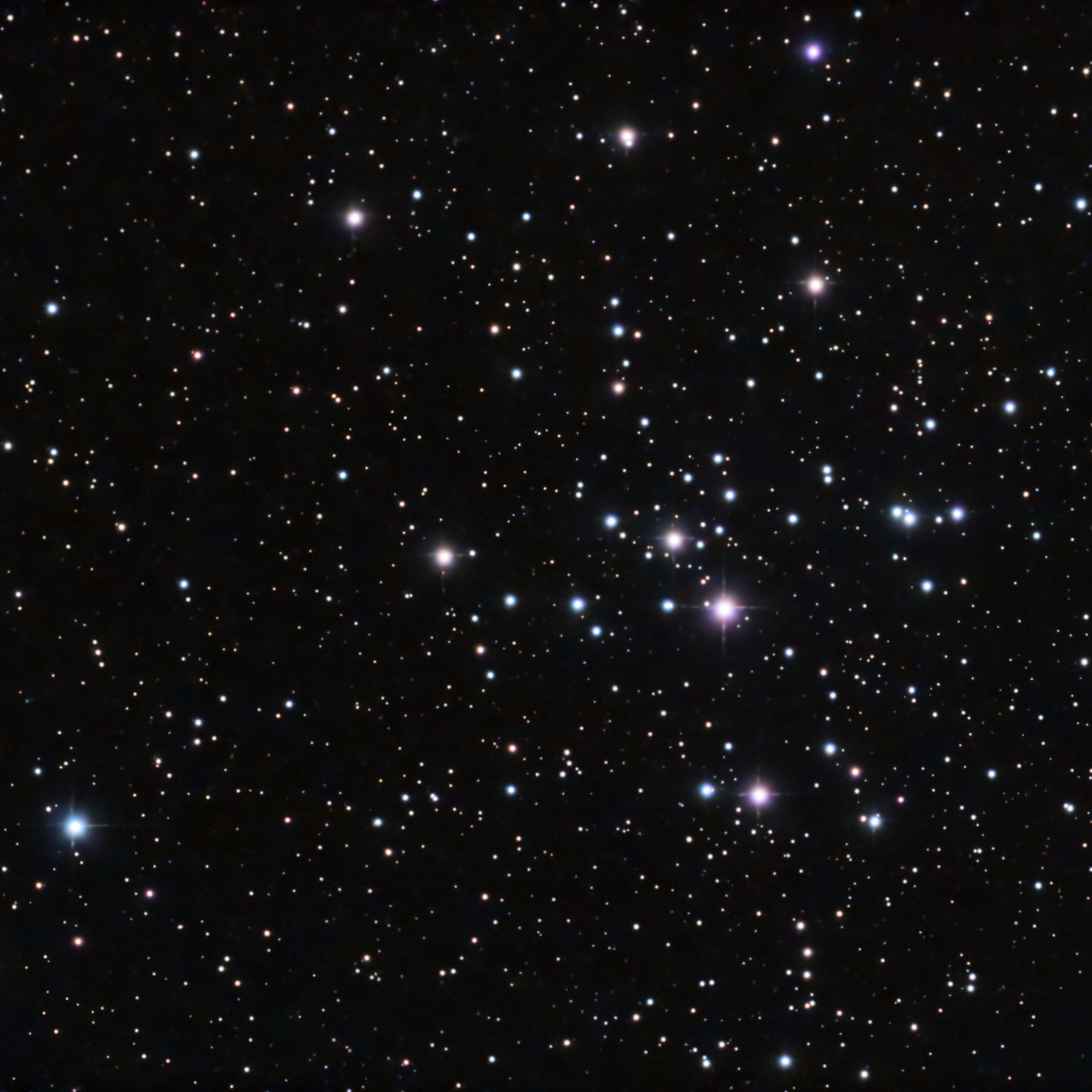
M 41 is a large cluster (about the size of the Full Moon) is an easy target being about 4° due South of Sirius. It’s a pretty cluster with a few red giants along with (as-yet) unevolved hot blue stars, so showing a wider color contrast than many open clusters with about 100 stars across 25 ly. At 190 Myr old, it has about another ~300 Myr before it dissipates into the disk of our Galaxy.
Caroline’s Cluster
This cluster is smaller (only 15 ly across) but is 10x older than M 41 (which is uncommon - most open clusters don’t last more than 1 Gyr before being completely dissolved). It’s named after Caroline Herschel who discovered it in 1783. either NGC 2360 or Caldwell 58.
Thor’s Helmet
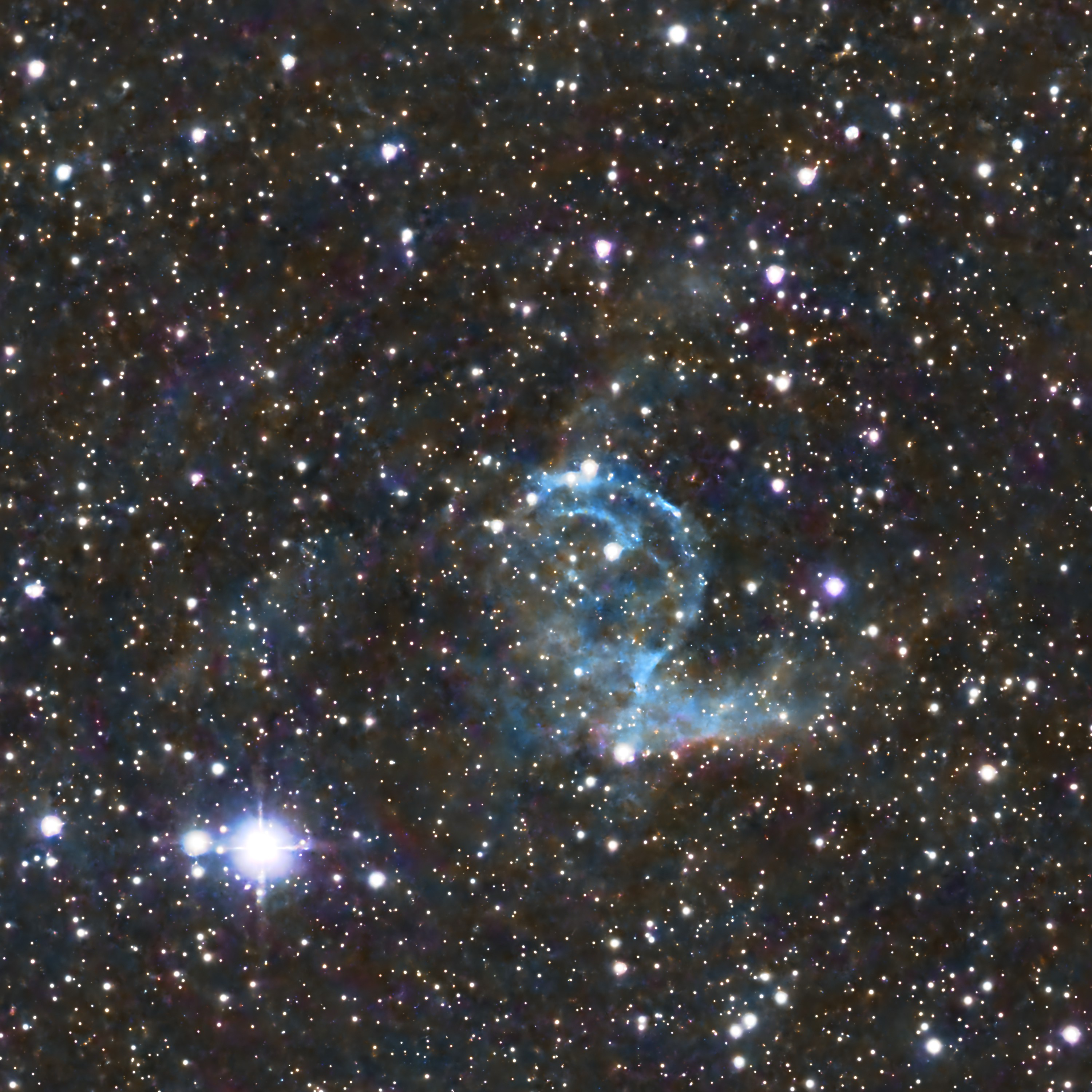
NGC 2359 is an emission nebula almost 12,000 ly distant and 30 ly across. It has a bubble shape with complex filaments, either caused by interactions with the local interstellar medium combined with mass loss from the hot central star on its way to becoming a supernova. On the outskirts are several very faint arcs, all a product of the intense stellar wind.
Dolphin Head
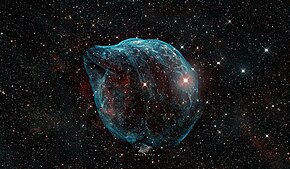
Another nebula with a similar situation and history to Thor’s Helmet is Sharpless 308: the “Dolphin’s Head” nebula. Again the central star (EZ CMa) is highly-evolved on its way to going supernova, with radiating winds (about 4 million MPH!) interacting with surrounding gas (that were thrown off of the star in an outburst about 70 kyr ago) causing a bubble over 60 ly wide. This nebula is very faint and a challenge even for imaging telescopes, but the fine structure does resemble a dolphin - eerily 3-d!
An Ex-Galaxy?
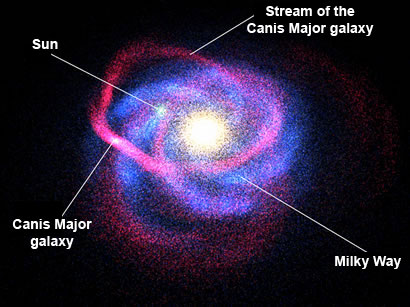
A mysterious object (or not?) discovered in 2003 might be the closest dwarf galaxy to the Milky Way (only 25 kly from the Sun) that might have been captured long ago and over time has been virtually obliterated through interactions with the Milky Way. Remnants might also include a few of its original globular clusters (including NGC 1851 and 2298), but other research suggests that the stream of stars is merely an artifact produced by the warping of the Milky Way’s disk.
The Dog Star
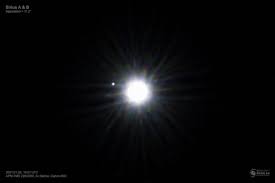
Of the closest 10 stars/star systems to the Sun, only Alpha Centauri and Sirius are visible to the naked eye, and Sirius also has the distinction of being the brightest star in the sky.
It’s a binary system with a white Main Sequence star (Sirius A), twice the mass of the Sun, and a white dwarf companion (Sirius B) locked in an elliptical orbit of 50 years: the distance between the two stars varies between 8 and 31 AUs: so slightly closer than Saturn is to the Sun out to the orbit of Neptune. The apparent orbit of the two stars describes an ellipse with the separation of the two stars varying between 3” and 11”: in 2025, they’re close to maximum separation.

The system is about ~250 Myr old - meaning that Sirius B was once the “primary star” - starting out as the more massive star, quickly expending its nuclear fuel, becoming a red giant, shedding its outer layers, and then collapsing to the white dwarf we see today about 120 Myr ago.