
The Twins
Another of Ptolemy’s original list of 48 constellations, Gemini (Latin: twins) associated with Castor and Pollux. In Greek mythology, though, they’re not technically twins: Pollux was the son of Zeus and Leda, but Castor’s father was Tyndareus, King of Sparta (and Leda’s husband). Castor, therefore being mortal - died, and Pollux begged Zeus to give him immortality in the sky - which he did - uniting them together in the heavens.
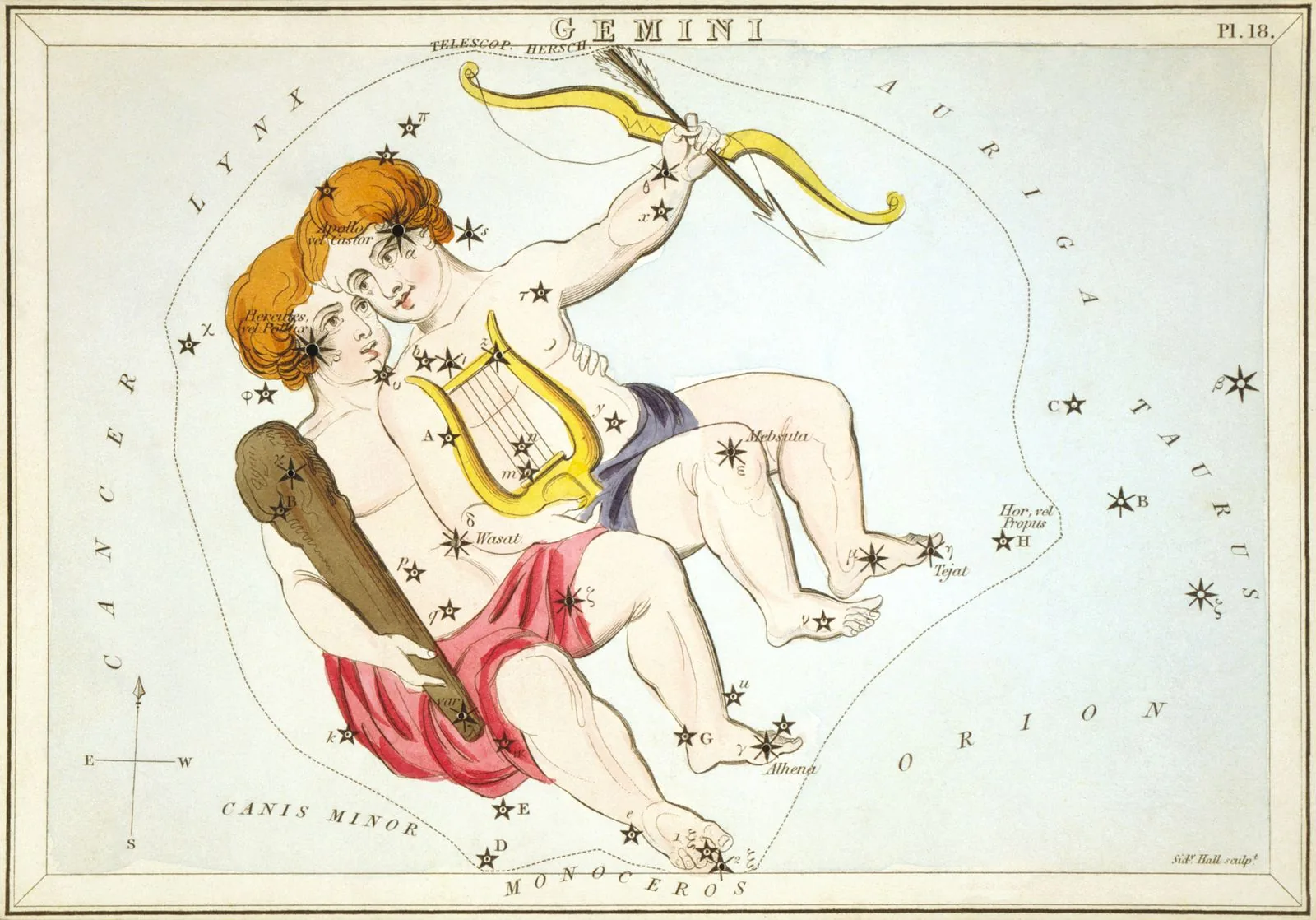
As the edge of the winter Milky Way cuts through the southern half of the constellation, Gemini has several open clusters, a few nebulae, several planetary nebulae, but no bright galaxies of note.
Castor (α Geminorum) and Pollux (β Gem) represent the heads of the twins, but when cataloged by Bayer in 1603 (when all the Greek letters to constellation stars were assigned “officially”), he failed to recognize that Pollux is actually brighter than Castor (mag 1.2).
Map of Gemini
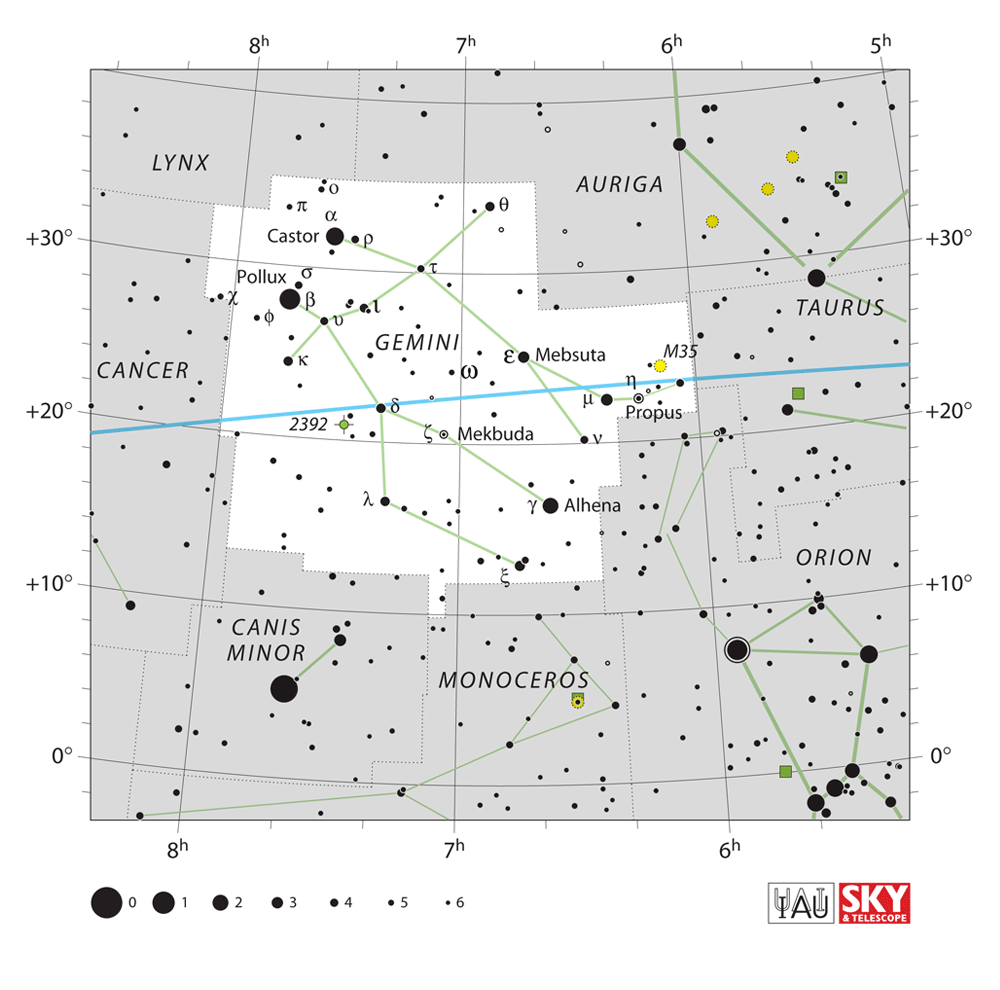
It’s not hard to see how the stars in Gemini could resemble a pair of people: with Castor and Pollux as the twins’ “heads”, the 3rd-4th magnitude stars easily form two “stick figures” standing above Orion and Canis Minor.
Interesting Variable Star: Eta (η) Geminorum
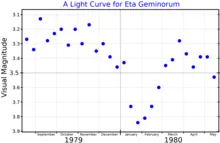
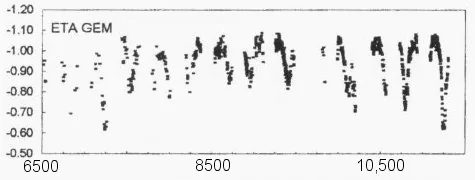
The star Propus (η = Eta Gem), is a somewhat complicated variable star. It’s a triple system with two stars (Aa and Ab) orbiting each other every 8.2 yr with eclipses of about 0.5 mag lasting a few weeks (the next one would be in late-2028/early-2029. On top of that it also is a semi-regular star with variations of up to 0.6 mag roughly every 234 days. The third star (B; still only 1.4” from the others - or about 150 AU at its distance of 350 ly) orbits the close binary stars taking over 700 yr to do so.
Quick Reference: Objects of Interest
| Object | Type | Equipment |
|---|---|---|
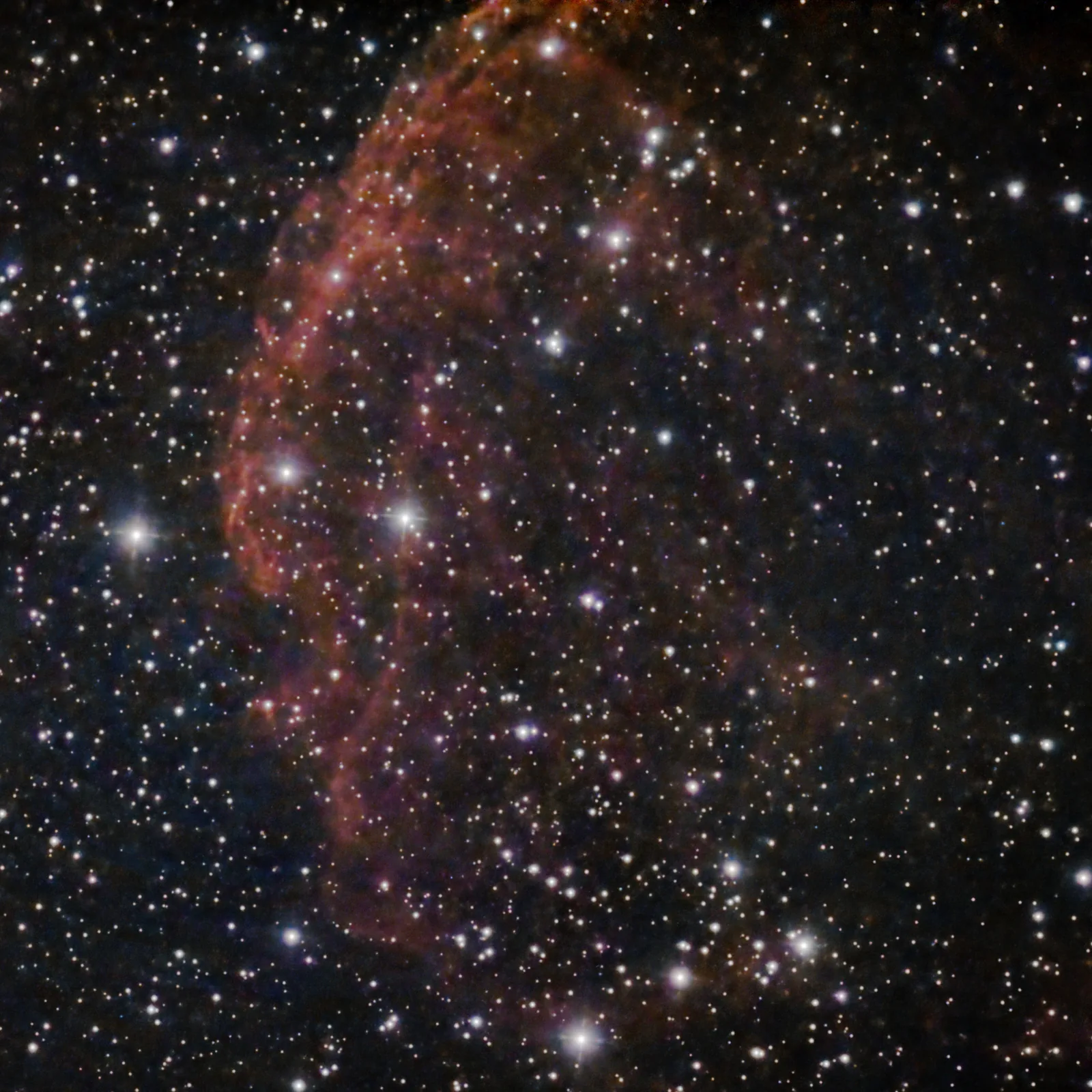
| Messier 35 + NGC 2158 | Open Star Clusters | Binoculars/Small Telescope |
| IC 443 | Supernova Remnant | Medium/Imaging Telescope |
| Caldwell 39 (NGC 2392) | Planetary Nebula | Small/Medium Telescope |
| NGC 2371/2 | Planetary Nebula | Medium Telescope |
| NGC 2420 | Open Cluster | Small Telescope |
| Castor | Triple Binary Star System | Naked Eye/All Telescopes |
The “Other” Double Cluster
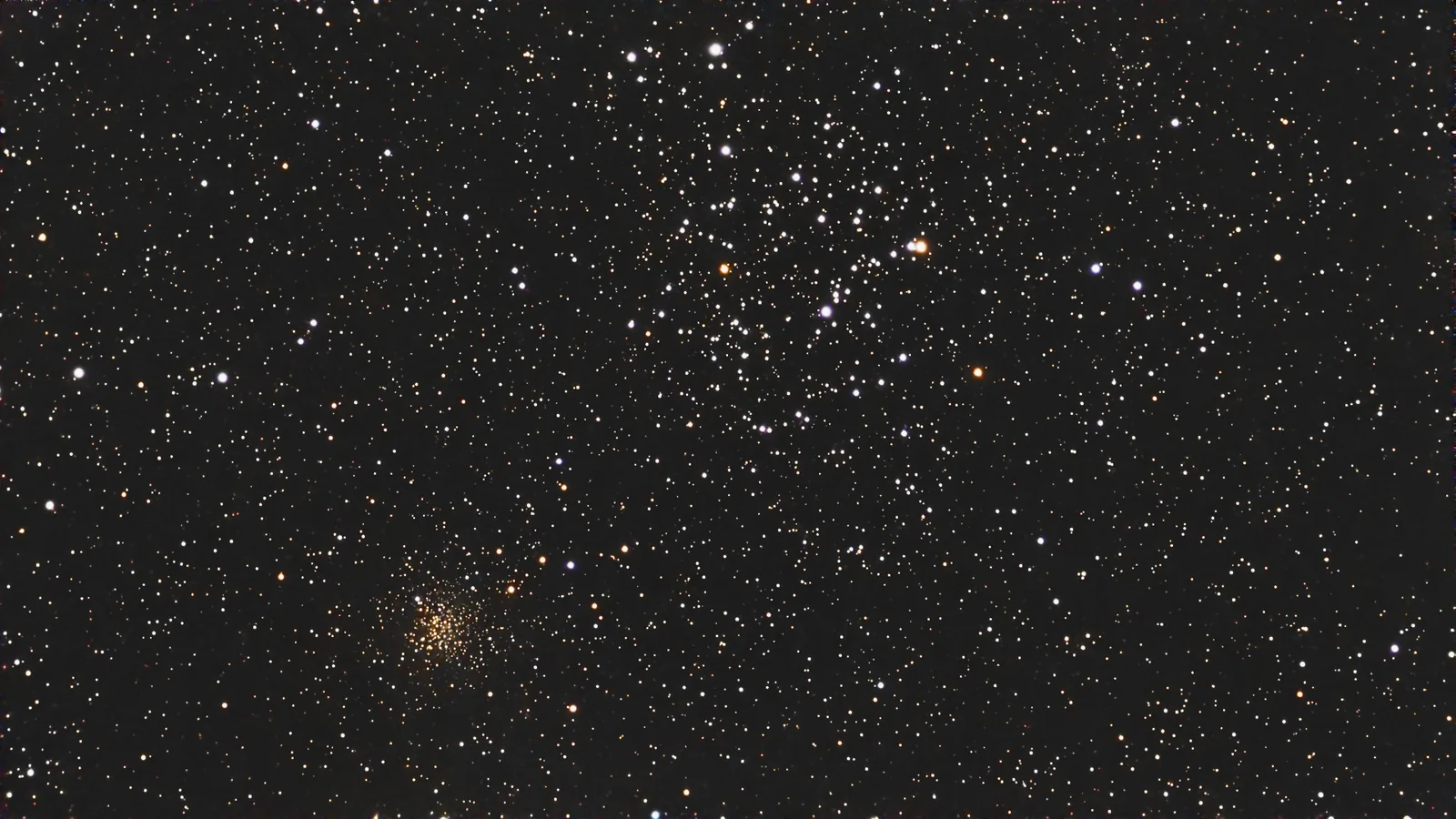
At Castor’s foot is Messier 35 “the Show Buckle Cluster” a typical young (100 Myr) open cluster 3 kly away with bright blue stars visible in binoculars or a small telescope (and even the naked eye under very dark skies, esp. when Gemini is nearly overhead). Just SW is NGC 2158, 3x more distant and over 20x older! Here, the hot blue and white stars that dominate M 35 have long evolved to white dwarfs: it’s old enough that stars not much more massive than the Sun are starting to evolve to their red giant phase.
Jellyfish
This cluster is smaller (only 15 ly across) but is 10x older than M 41 (which is uncommon - most open clusters don’t last more than 1 Gyr before being completely dissolved). It’s named after Caroline Herschel who discovered it in 1783. either NGC 2360 or Caldwell 58.
Ghostly Clown Face
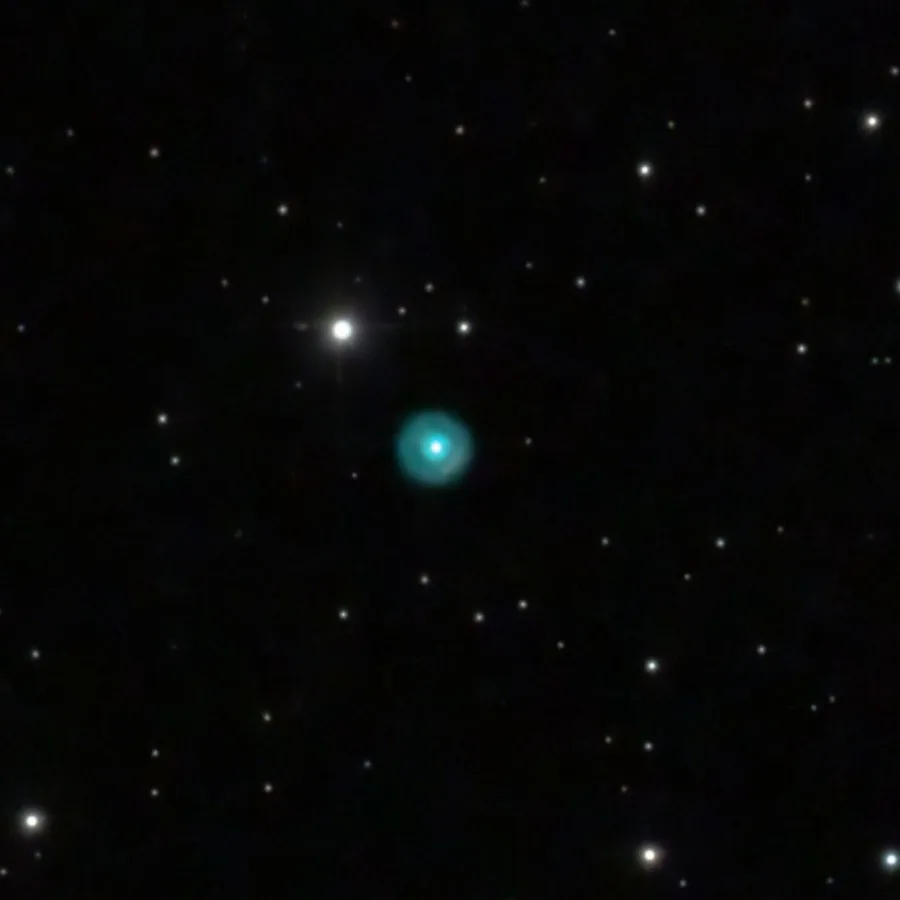
This nebula gets its name from its double-shell structure and resembles a face peeking out of a hood. This object is small (only 48” wide) and requires magnification to resolve. It is 6500 ly distant and 20,000 AU across, having formed about 10 kyr ago.
Celestial Ant
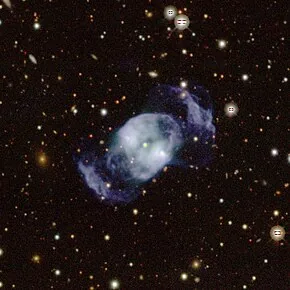
Also known as the Peanut or “Double Bubble” this dual-lobed planetary nebula is quite different than most of the other more- famous objects of its type. Visually it almost looks like two separate objects (which is how it got two entries in the NGC catalog). It’s a challenging object, requiring some aperture (prob. 8” or better) and has overall a dim surface brightness.
As PNs go, it’s fairly old: 10 kyr since it erupted, leaving the hot core of the central star.
Twinkling Comet Cluster
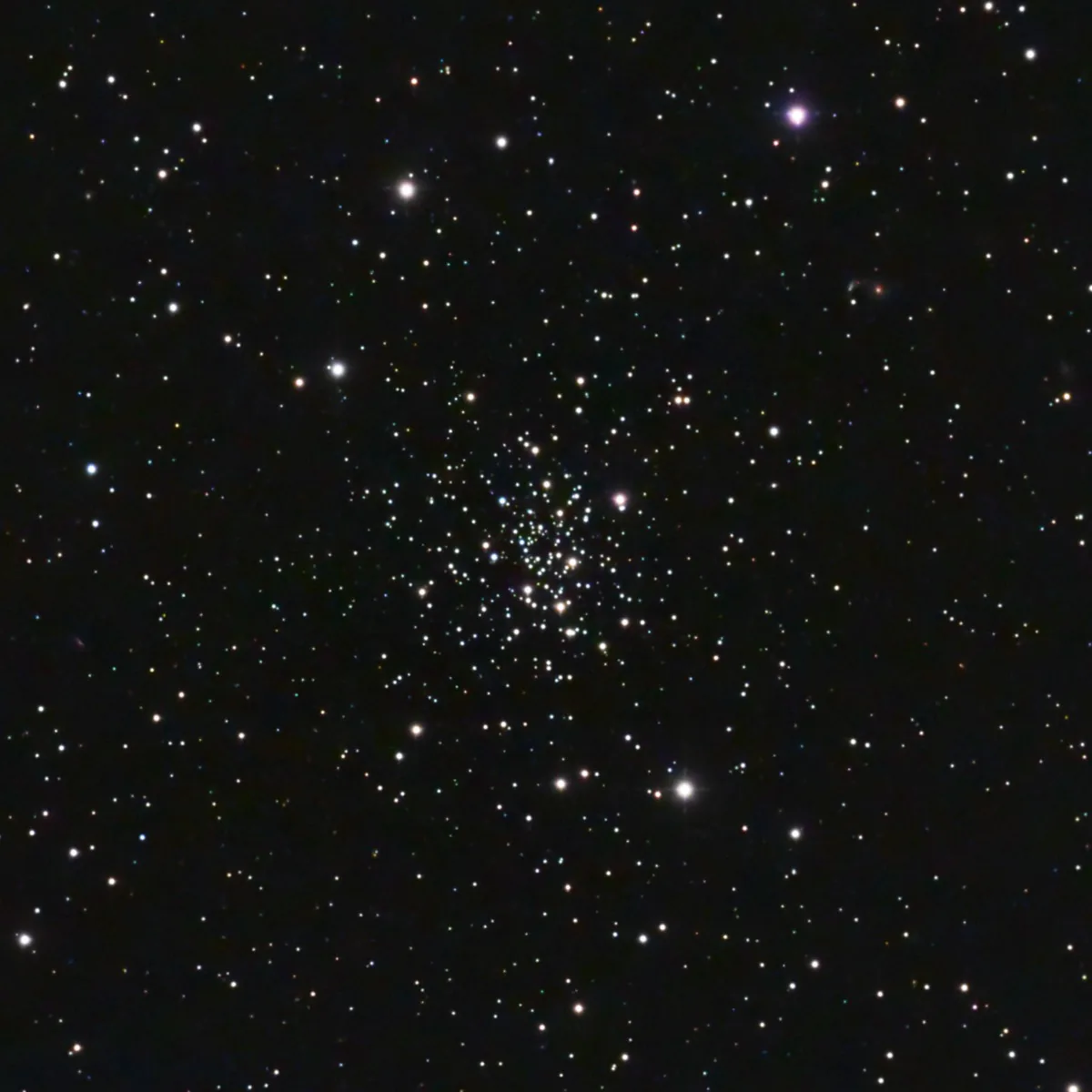
NGC 2420 is another older-than-average cluster - about the same as NGC 2158. It lies further out in the spiral arms of the Milky Way than the Sun (which might help explain its longevity).
Castor: A Sextuple Star System
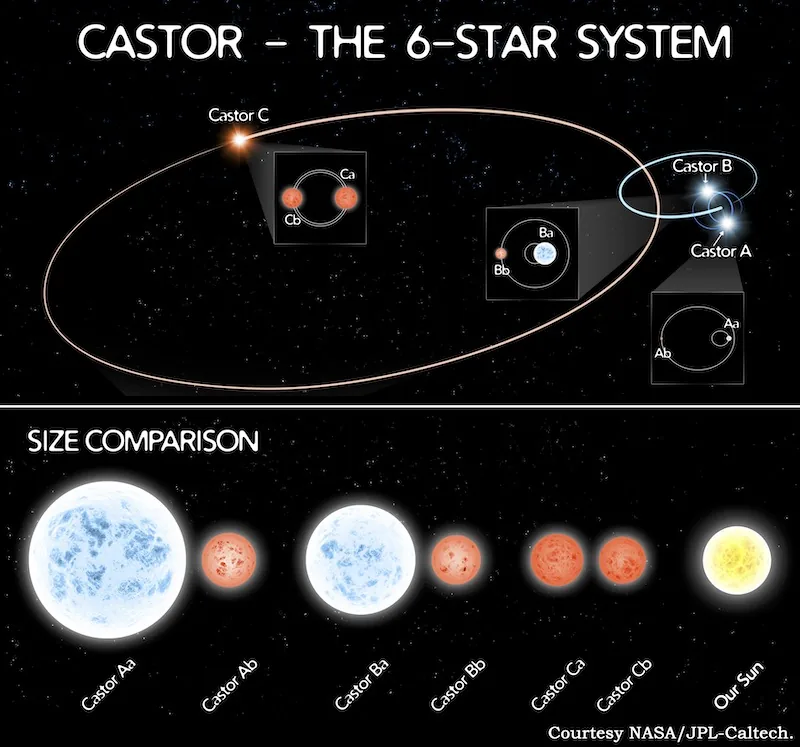
Castor is also a sextuple star system (49 ly away) with three visible components, each of which a spectroscopic binary pair. Castor AB is a tight double star for small/medium telescopes but might be resolvable under steady skies. These two stars (and their invisible red-dwarf companions) have a 459-year orbital period and the visual separation varies between 2” and 6.5” (currently it’s about 6”).
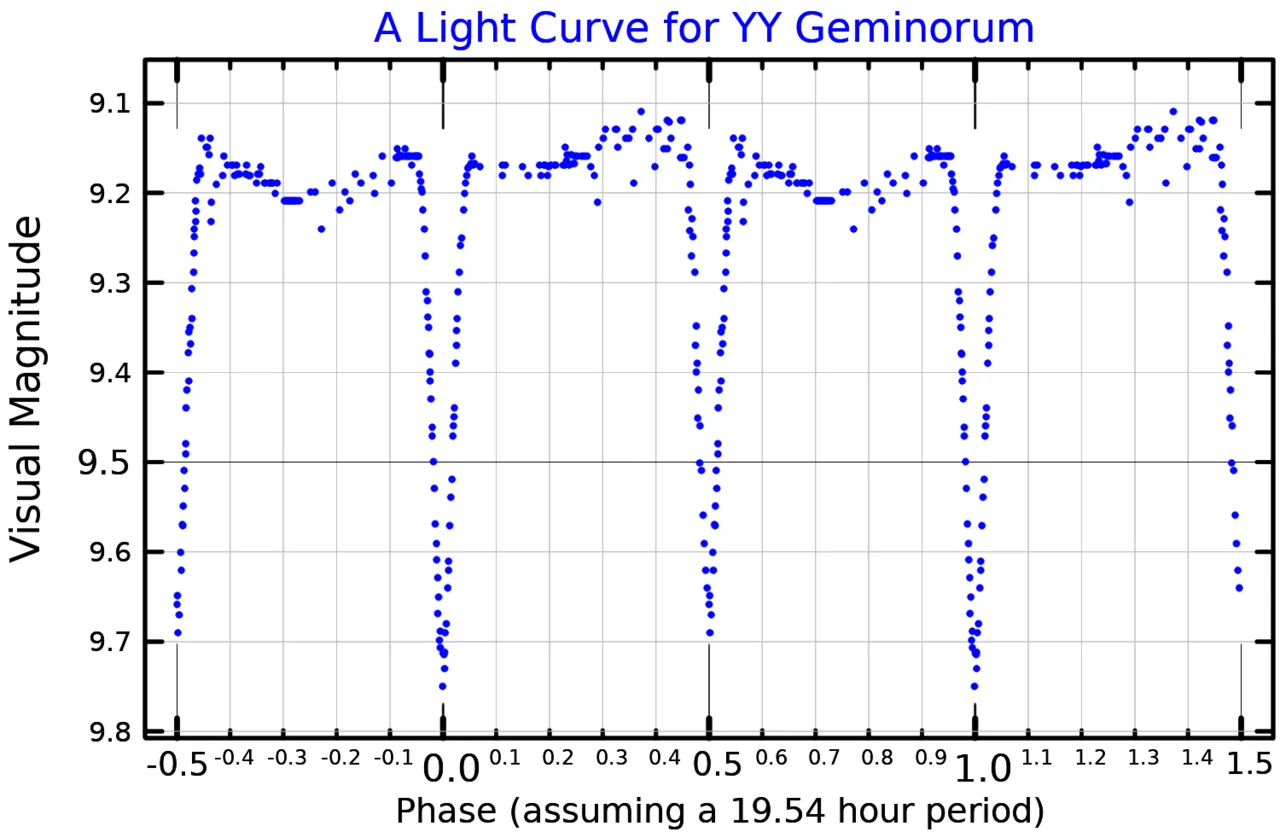
Castor C is 1.2° away and is the variable star YY Gem showing variations from stellar activity (of both stars) and from eclipses (with an 19 1/2-hr period). The eclipses are very short (both primary and secondary are about 1hr) but close to a magnitude deep; on top of that there’s a ~0.1 magnitude variation owing to the presence of “star spots”. Finally all four red dwarfs in the system are prone to stellar flares.