
Galaxy Season is Starting!
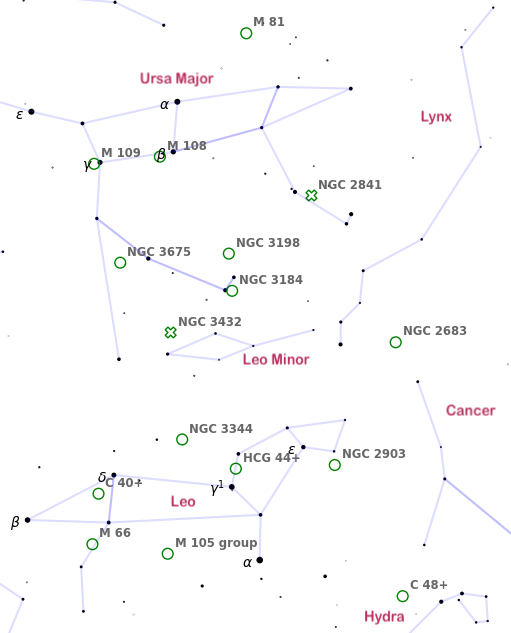
Spring means galaxies! While there are several hundred reachable with a larger (or imaging) telescope, many can be found with smaller scopes. In particular, there are groups of galaxies: M 81/M 82/ NGC 3077, the Leo Triplet (at M 66), the Leo Quartet (here as Hickson Group 44), and the M 105 group. All of these galaxies are brighter than 11th magnitude.
Lunar Eclipse!
The early morning of Mar 14th we have a total eclipse of the Moon. The “good part” starts around 1AM, lasting for ~2 hours.
The Messier Marathon

Ideally, this is done from lower latitudes, but it can also be attempted from northern mid-latitudes. It doesn’t require a large telescope - 4”-6” are sufficient enough. Either the weekend of the 22nd or the 29th falls in the window - aided by the New Moon on the 29th.
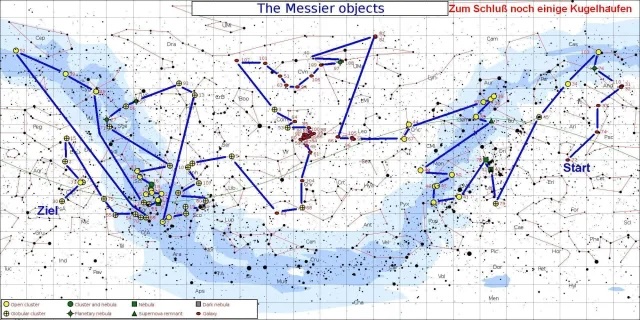
You’ll begin observing as soon as the Sun sets: one of the largest challenges happens at the very outset: bagging galaxies M 74 (in Pisces) and M 77 (in Cetus), both of which are particularly difficult owning to their low surface brightnesses.
From there you work West to East zig-zagging from North to South and back again. You’ll spend quite a bit of time in Ursa Major/Coma Berenices/Virgo of course, and again in Sagittarius.
The last challenge is the globular M30 in Capricorn: one trick is to offset from a nearby star and wait for it to slide into view (by this point you’re really racing the clock and morning twilight).
This Month’s Image
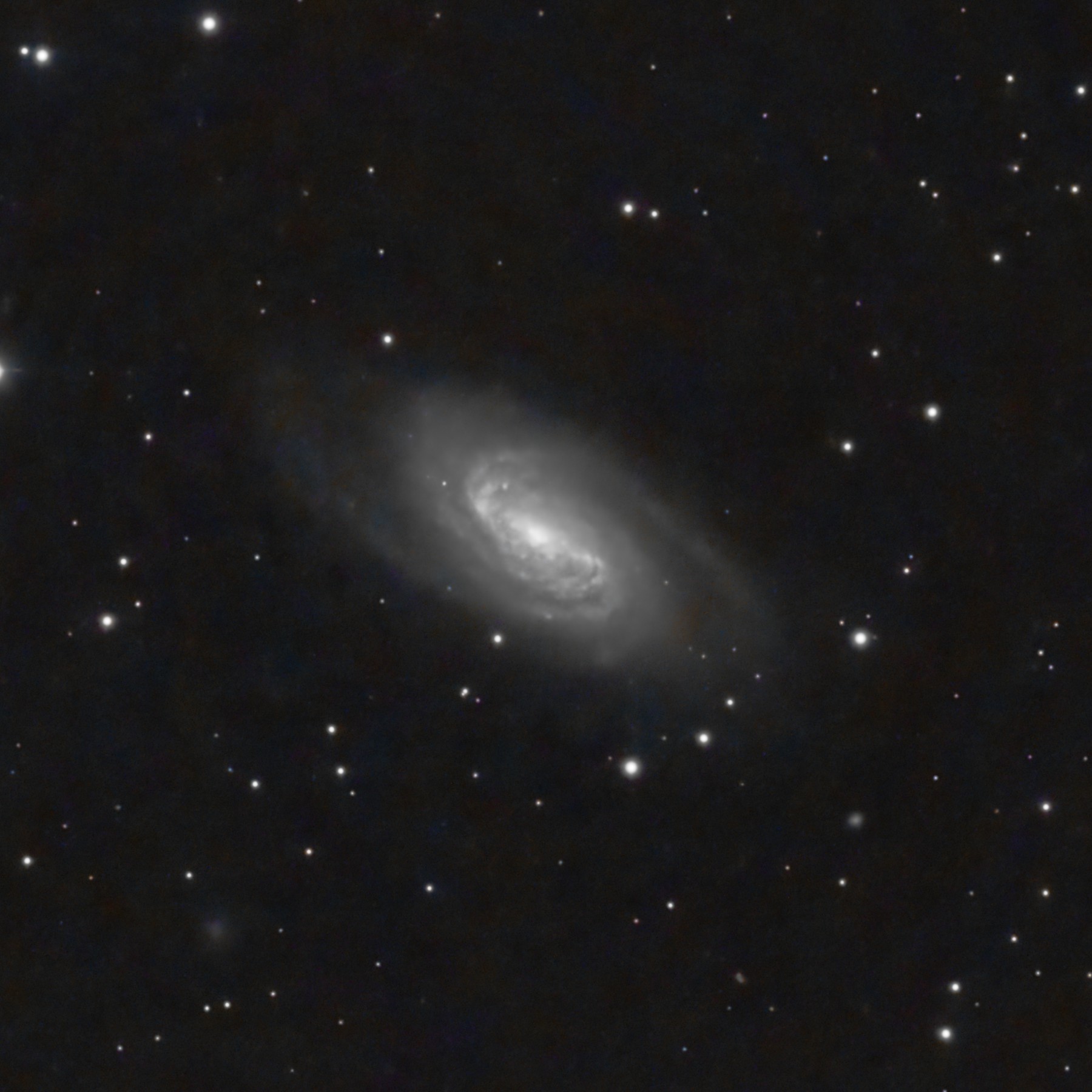
NGC 2903 is just west of the “Sickle” of Leo - 1.5° south of λ (Lambda) Leonis. Strangely, though this intermediate spiral galaxy (type: SAbc) is bright (9th magnitude) and large (11.5’x5.3’) it’s neither in the Messier or the Caldwell catalogs!
So this makes it a particularly fun challenge, as a “hidden find” as the “galaxy season” spring constellations come into view. It’s 30 Mly away, and one of the closer members of the Virgo supercluster.