Remember T CrB?
| Orbit | Date |
|---|---|
| 126 | 12 Aug 2024 |
| 127 | 27 Aug 2025 |
| 128 | 10 Nov 2025 |
| 129 | 25 Jun 2026 |
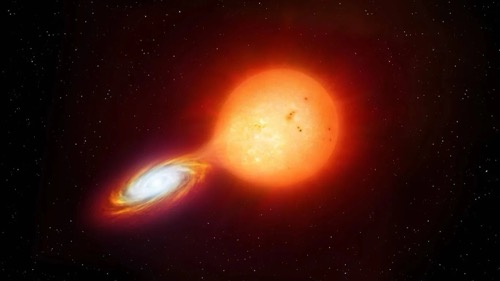
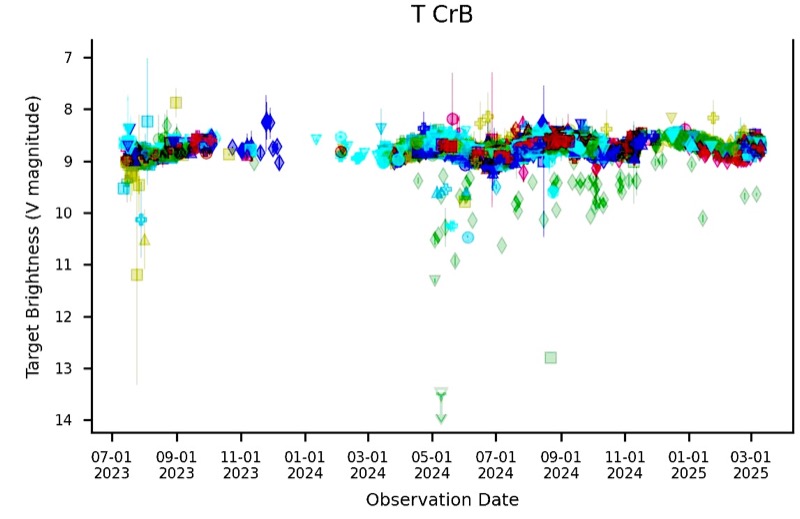
If it hasn’t already blown, there are some indications that the accretion rate to the white dwarf has increased. An interesting analysis of the previous three eruptions finds that they are spaced by close to an integral number of orbits of the binary star pair: the orbital period is ~227.6 days, and it appears that the eruptions typically happen after 125–129 orbits (so there’s a range in the frequency between 78–81 years - we’re in year 79 now.
This means there are particular dates that might have a higher probability of being close to an eruption (within a few days; see the table to the right).
But we won’t know until it happens! Fortunately, it’s now above the horizon just after twilight in the East - easy to find as it’s next to bright Arcturus.
Smiley Morning
The morning of April 25th, there’s a triple conjunction between Venus, Saturn and the crescent Moon (also Neptune and Mercury though they’ll be largely invisible in the twilight).
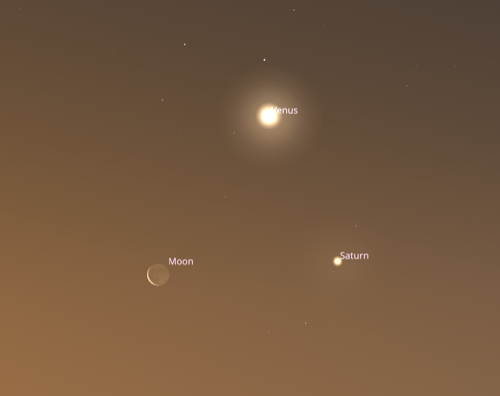
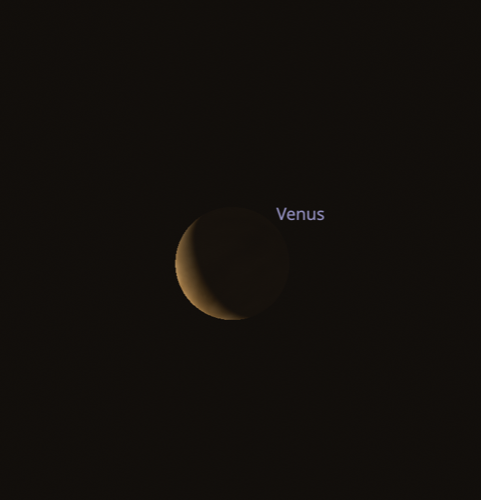
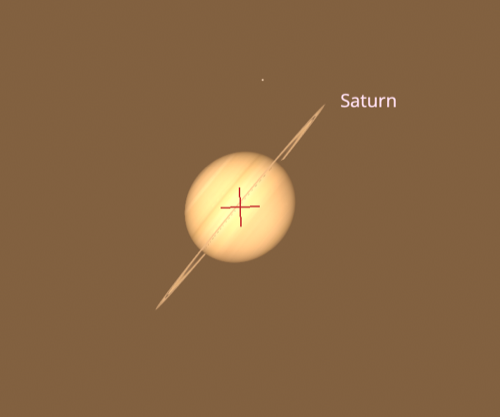
Saturn fainter at mag 1.2 has almost edge-on rings that might be essentially invisible in small telescopes (the rings disappeared in late-March, though Saturn was behind the Sun at that time). They’ll widen slightly through the Summer and into Fall, and then almost disappear against late in the year, after which they’ll be one more visible heading into 2026.
This Month’s Image
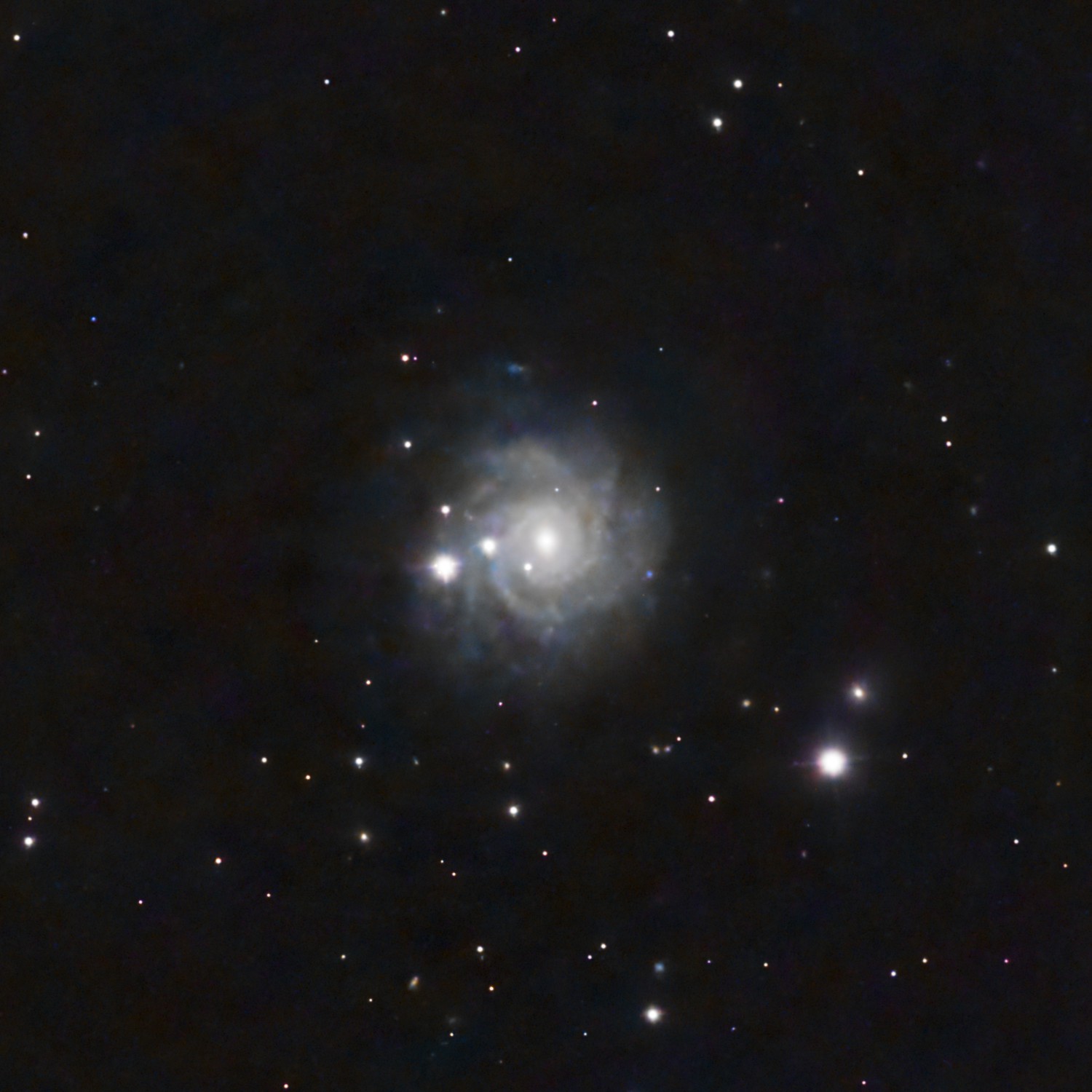
NGC 3344 in Leo Minor is the “Sliced Onion” Galaxy, almost face-on with several, thin and extensive spiral arms. It’s about the same size as our Galaxy.
Being in a small faint constellation and not in the Messier/Caldwell catalogs, it might get overlooked, but it’s generally findable in small telescopes (under dark skies). It’s located East and slightly North of the “Sickle” asterism in Leo.