A Planet, A Star Cluster, and the Moon
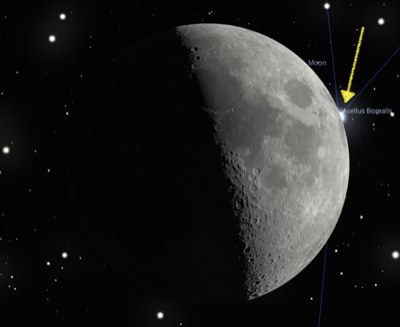
Mars, the Moon, and the Beehive star cluster have several interactions over the first week of May! First Mars is slowly traversing the cluster.
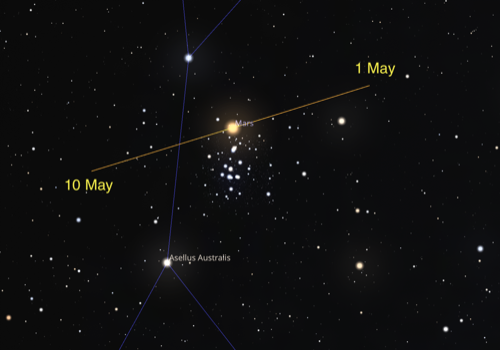
On the 3rd, the Moon invades the region:
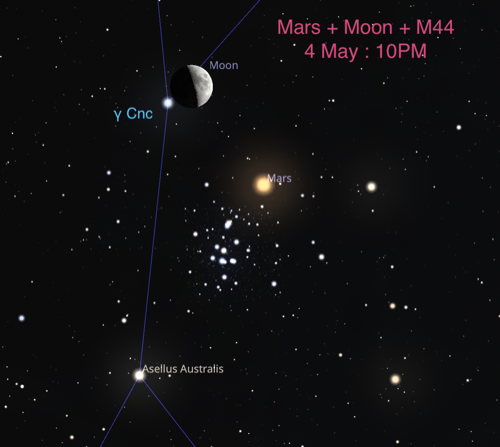
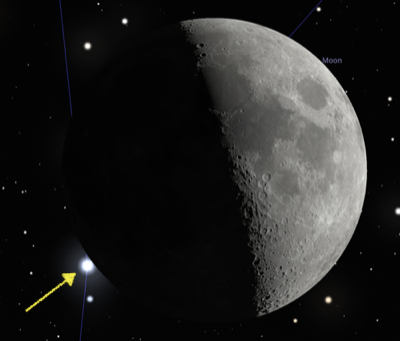
and will occult the mag 4.6 star Gamma (γ) Cancri: the star will disappear behind the dark side of the lunar disk at about 10:10 PM (EST), and re- appear on the sunlit side at 11:15 PM.
South of Spica
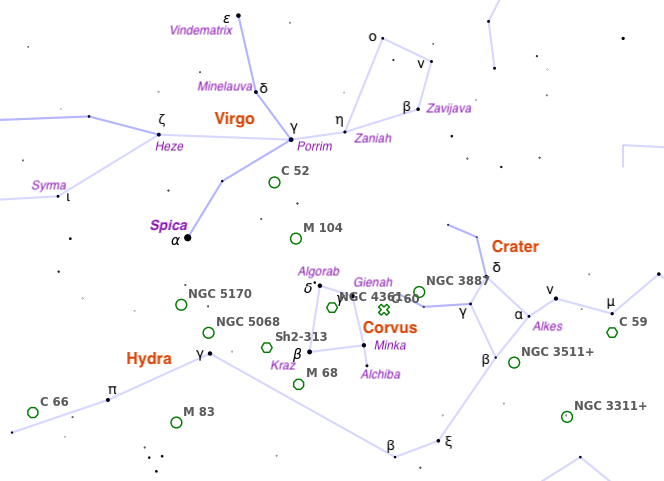
While our attentions are in the center of the Virgo galaxy cluster, we might overlook the more southern objects, made more difficult by their low altitudes! Yet, there are several “must see” things south of Spica!
Messier 104 (the Sombrero) is a good starting point, just West of Spica, but also Caldwell 52 - a large bright elliptical to the NW. Moving down into Corvus (whose lopsided trapezoid is easy to spot) there’s the interacting “Antenna” Galaxies - Caldwell 60 and 61. To the west is the fainter Crater with the misty NGC 3887 and galaxy pair NGC 3511/3513 to the SE. A further southern challenge is NGC 3311 - the center of the Hydra galaxy cluster just below the 4.9 mag star HD 92036.
If you’re getting bored with galaxies, then also check out three planetary nebulae - Caldwell 59 (the “Ghost of Jupiter”), the “Lawn Sprinkler” (NGC 4381, in Corvus), and the dim but large Sh 2-313. Plus there are also two globular clusters of note: Messier 68 and Caldwell 66 (a good challenge because it’s one of the more distant clusters, and somewhat small).
Finally, over to the East, is the “Southern Pinwheel” Messier 83, plus two additional galaxies between Spica and Gamma Hydrae (a star that doesn’t have a proper name): the face-on NGC 5068 and the edge-on NGC 5170.
This Month’s Image
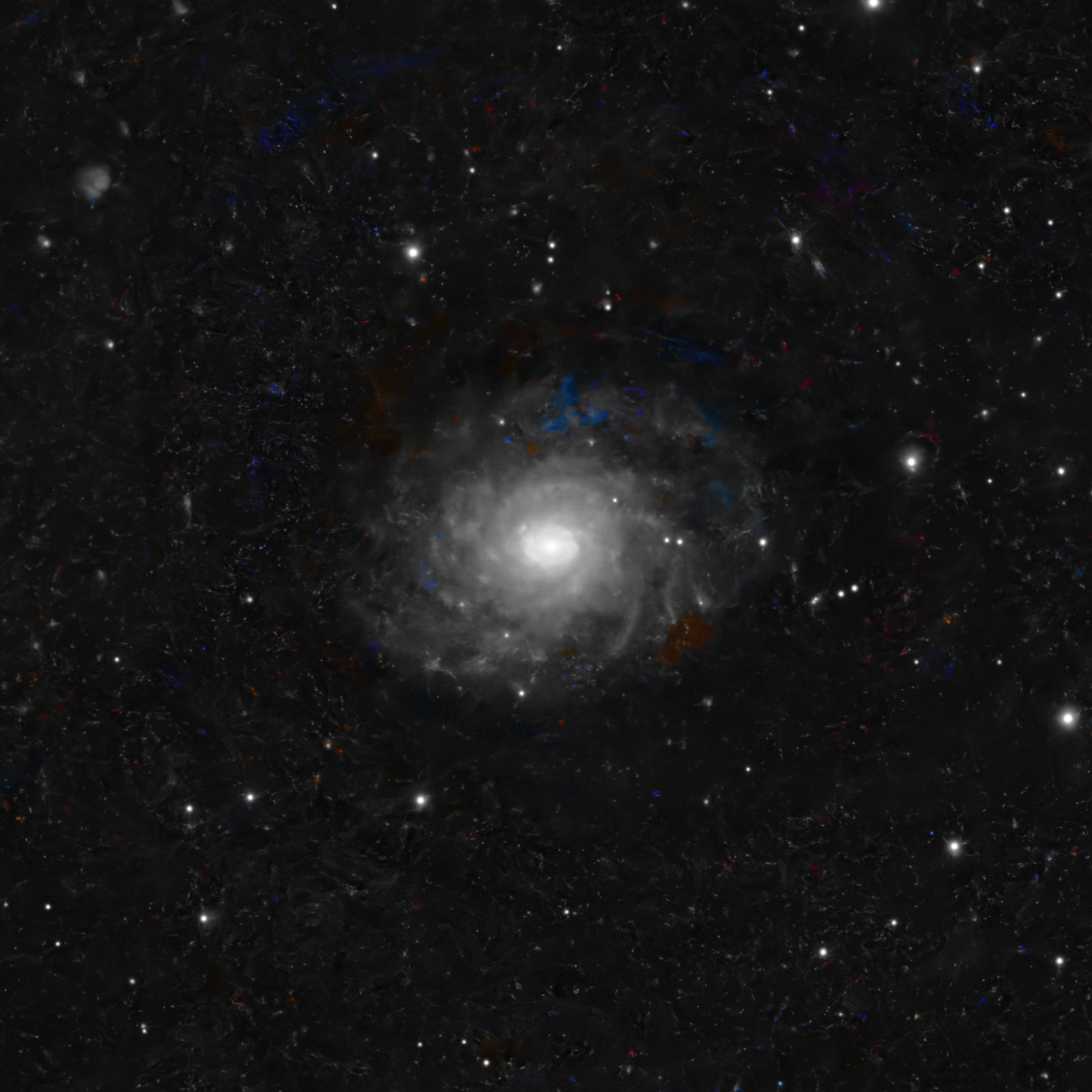
NGC 3486 in Leo Minor is a face-on galaxy, with a large number of spiral arms, 27 Mly away. Even though it’s comparatively large (7’x5’) and bright (mag 10.5), it’s not in either of the Messier or Caldwell catalogs (it did make it into the Herschel 400), which makes it comparable to more- popular objects like Messier 61 or Messier 77.