
The Dragon
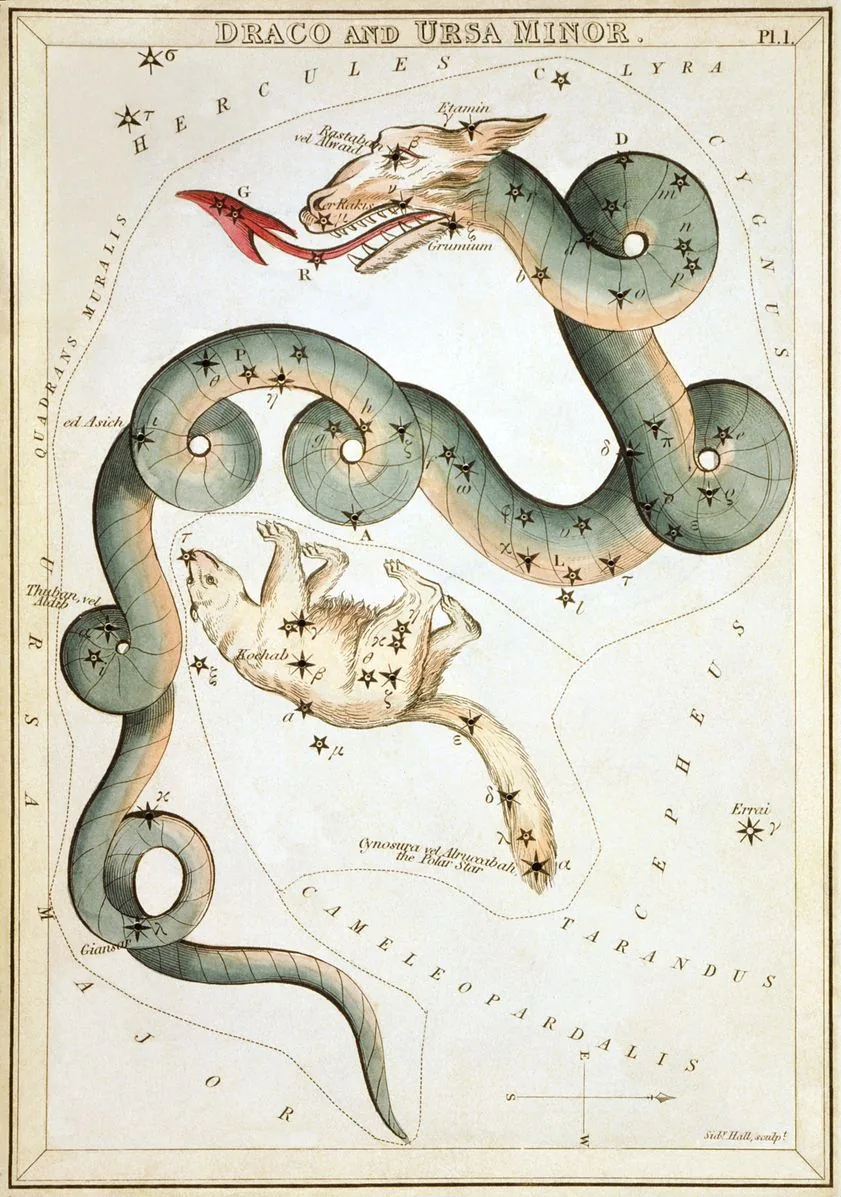
One of Ptolemy’s original 48 constellations, Draco obligingly lives up to its name, snaking around the northern sky, around the Little Bear (Ursa Minor) separating it from the Greater Bear (Ursa Major).
The faintest star in the “head” of Draco, Nu (ν) Draconis is an easy to see double star (even in binoculars if you have them steady or on a tripod). Both are young hot stars, almost 2000 AU apart (or 11.6 light days) with an orbital period of over 40,000 years. One of the stars (Nu-2) is also a spectroscopic binary: it’s companion is far too close to it to see optically (with only a 39-day period).
The Draconid meteor shower peaks on Oct. 8. Typically, it’s a minor shower, but every 13 years has greatly increased activity (it might happen next in 2037).
Map of Draco
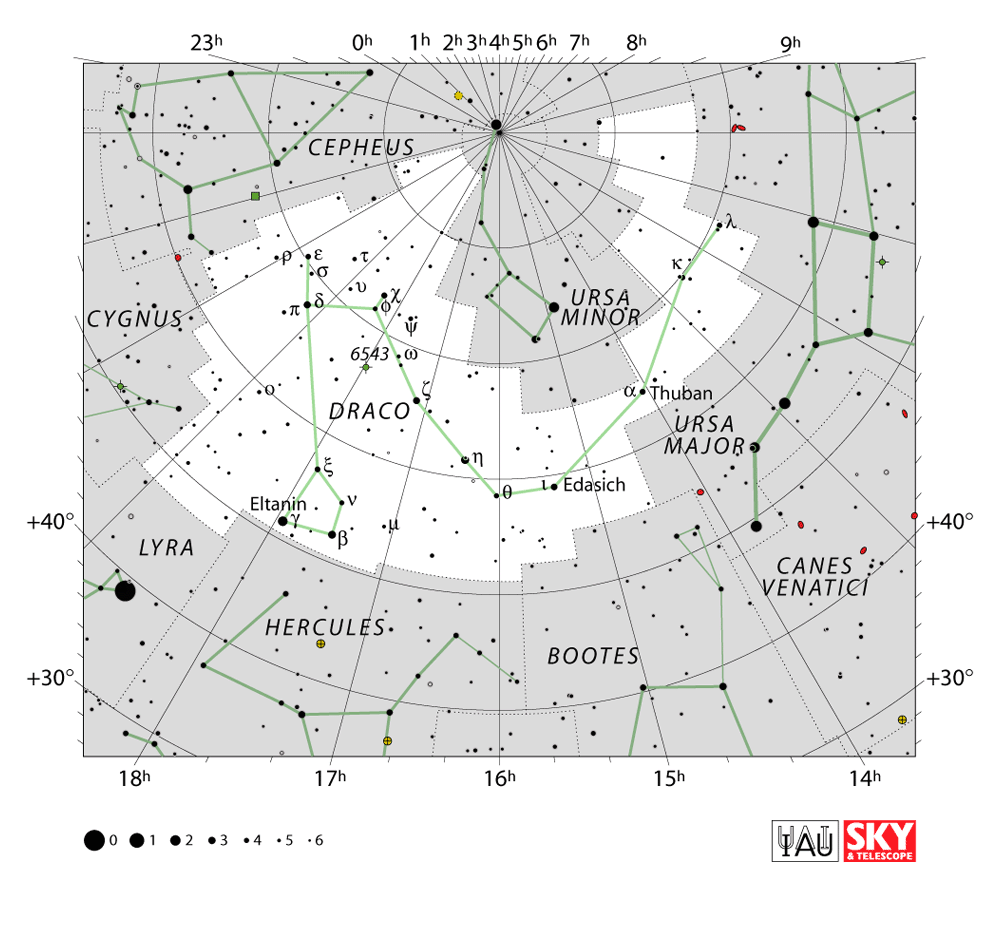
Draco is high in the sky in the late Spring between the bright star Vega and the Big Dipper. The bright red giant star Eltanin marks the eye and head of the dragon - “Caput Draconis” (familiar to Harry Potter fans), though most of the other stars making up the draconic stick figure are somewhat faint tracing all the over and above the Big Dipper.
Around the body, near the planetary nebula NGC 6543 (Caldwell 6) is the North Pole of the Ecliptic, which is not far (23°) from the current location of the North Celestial Pole. The Earth - wobbling on its axis - precesses along the Ecliptic moving the rising of the Zodiacal constellations slowly earlier and earlier in the year. This also changes the location of the North Celestial Pole: at present it’s within 1° of Polaris at the tail of the Little Dipper, but this will change over time (see the diagram later in this document). The process takes 26,000 years - so around 28,000 AD, Polaris will once again be the Pole Star. For Southern Hemisphere observers the Southern “pole star” is Sigma Octantis - very faint - barely visible to the naked eye.
Quick Reference: Objects of Interest
| Object | Type | Equipment |
|---|---|---|
| Caldwell 6 (NGC 6543) | Planetary Nebula | Small/Medium Telescope |
| Caldwell 3 (NGC 4236) | Barred Spiral Galaxy | Small/Medium Telescope |
| Messier 102 | Spiral Galaxy | Small/Medium Telescope |
| NGC 5981/2/5 | Group of Galaxies | Medium/Imaging Telescope |
| Arp 188 | Interacting Galaxies | Medium/Imaging Telescope |
| Alpha (α) Draconis | Giant Star | Naked Eye/Binoculars |
Cat’s Eye
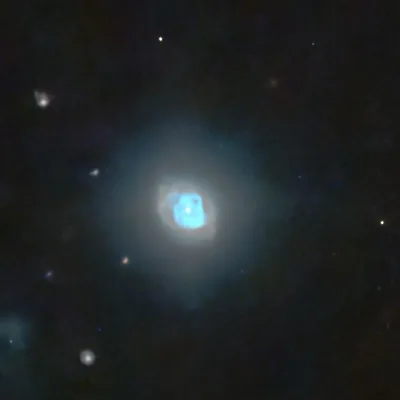
3300 light years away, and only 1000 years ago, the star at the center of this object shed it’s atmosphere, beginning the transition to become a white dwarf star and creating this planetary nebula. It has a more complex structure compared to others of its type: the heat from the central star excites the ejected gases causing them to glow. The fainter outer structure may have been from earlier ejections starting 15,000 years ago.
Elusive Edge-On
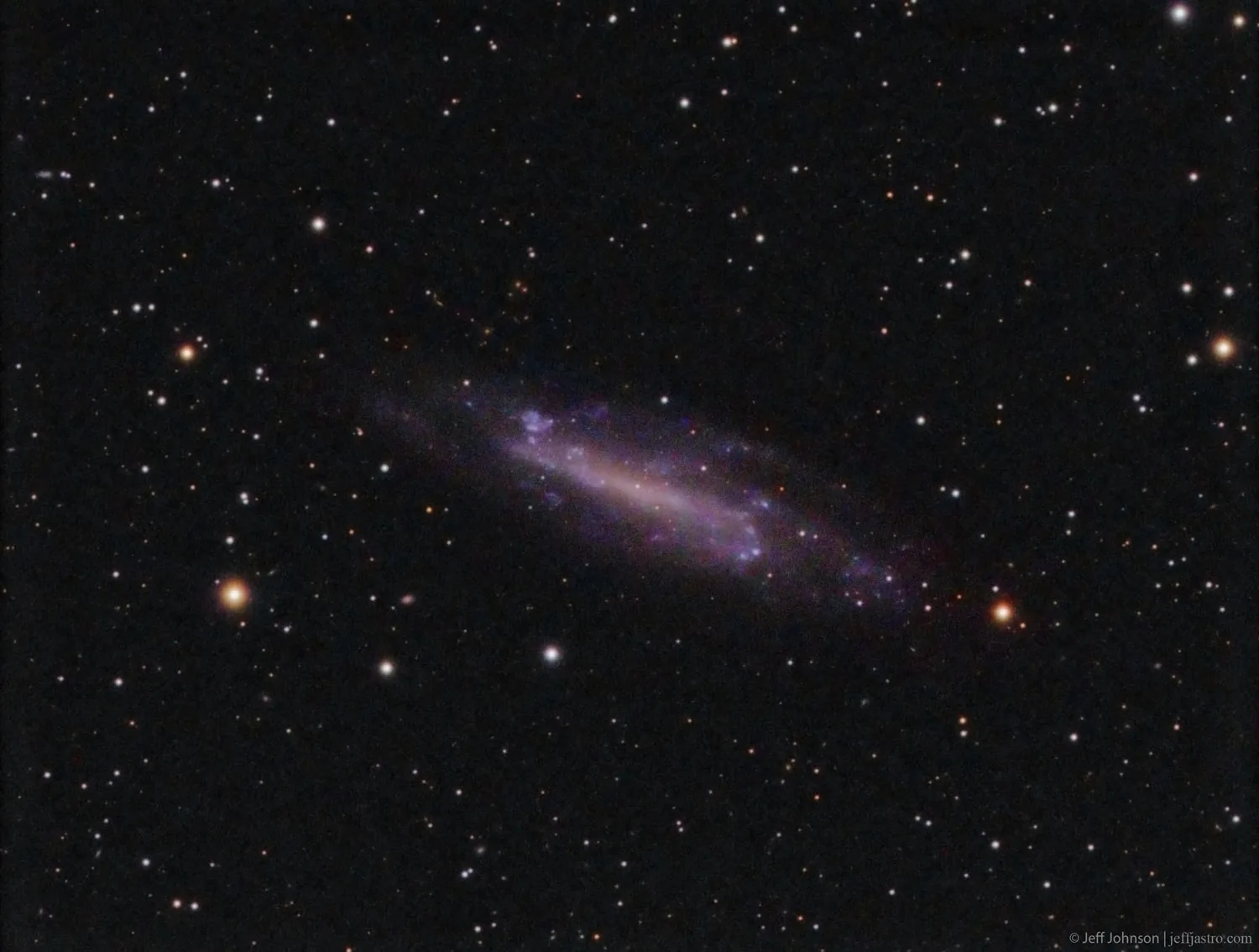
An outlying member of the M81/M82 group, this galaxy is somewhat nearby: only 11.7 Mly distant. Its structure is largely hidden from us because it’s nearly edge-on from our line of sight. Observationally, it’s a challenge: even though it’s large (21’x 7’), it has a very low surface brightness, and thus much fainter than nearby M 81 and M 82.
Messier’s Missing Spindle
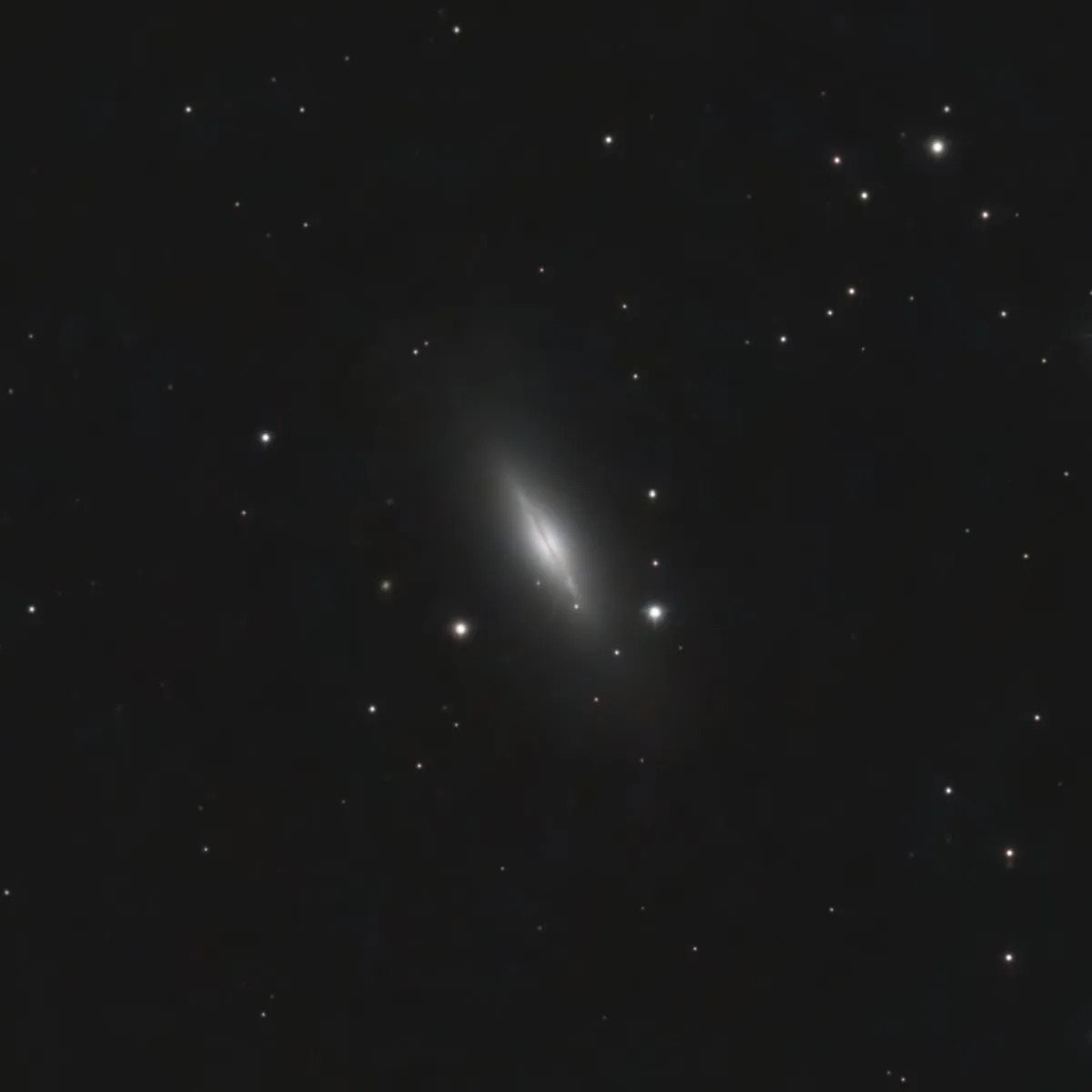
Another edge-on spiral (with a very thin dust lane) this object’s inclusion in Messier’s catalog might be a lucky mistake: its coordinates were not included in the original catalog - Méchain’s collaborating observations might’ve duplicated nearby M 101, and this galaxy added to “fill in the blank” later. It’s 44.7 Mly away.
Draco Trio
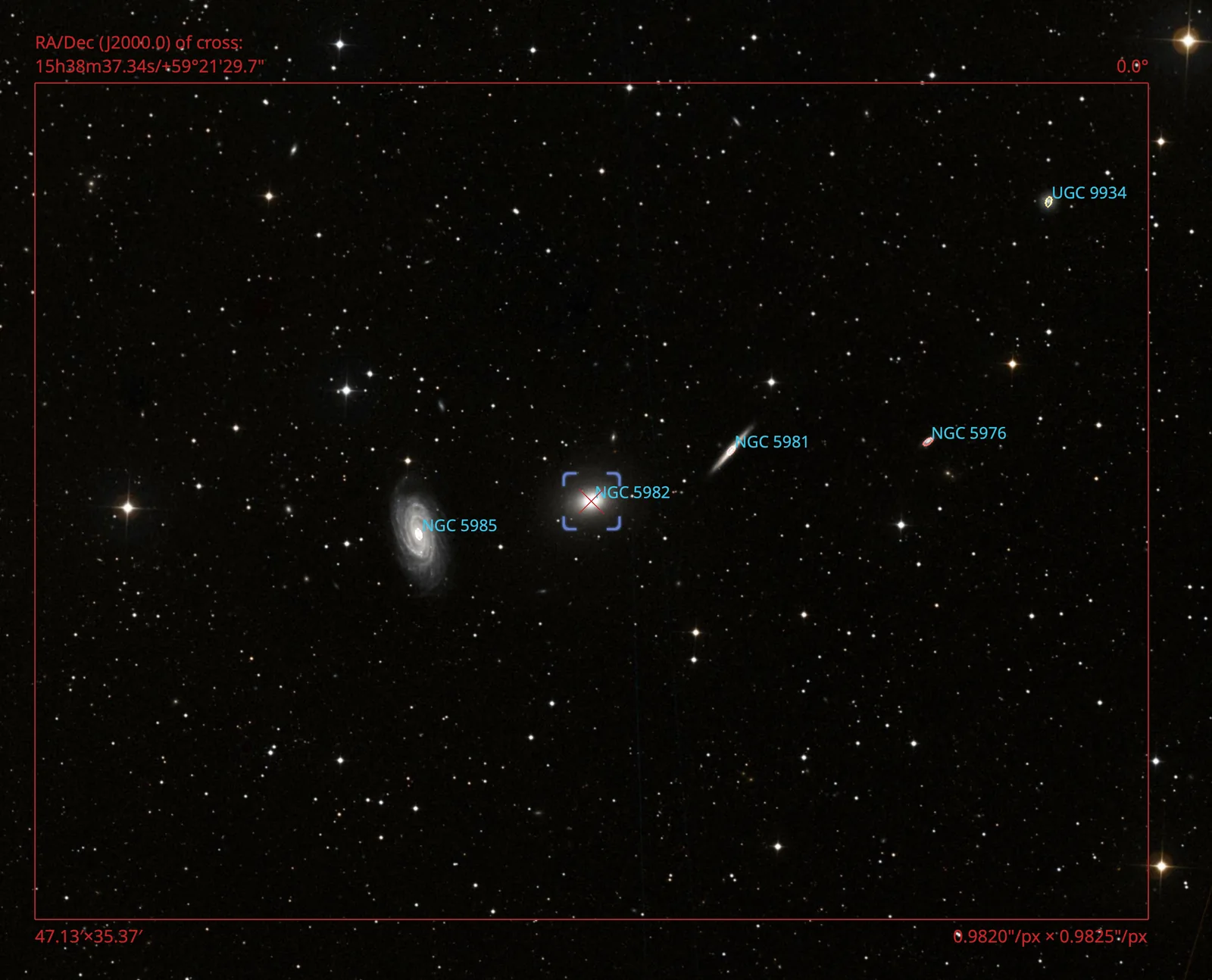
This triplet has three very different looking galaxies in the same field of view: NGC 5982 is an elliptical, NGC 5981 is edge-on, and NGC 5985 has tight spiral arms. While the last two are about 150 Mly away, NGC 5982 is closer: (about 130 Mly), suggesting that they aren’t actually a physical group.
Tadpole Galaxy
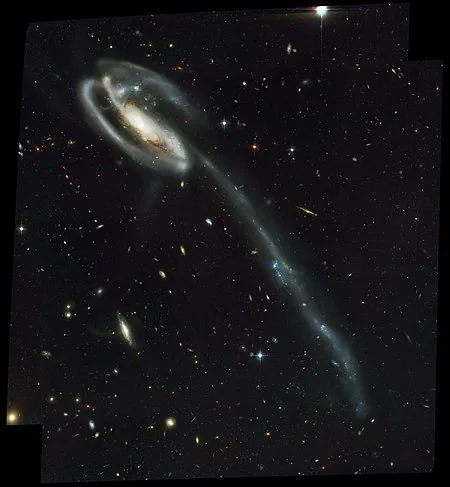
Arp 188 (UGC 10214) is an example of a disrupted galaxy showing the after-effects of an extremely violent encounter with another galaxy about 100 Myr ago (the remnant might be behind the spiral arms, upper-left). In the process of being whipped around, it left a trail of stars, 300,000 ly long, and also cause significant bursts of star formation in the very bright spiral arms (well over a million new stars).
Ex-Pole Star
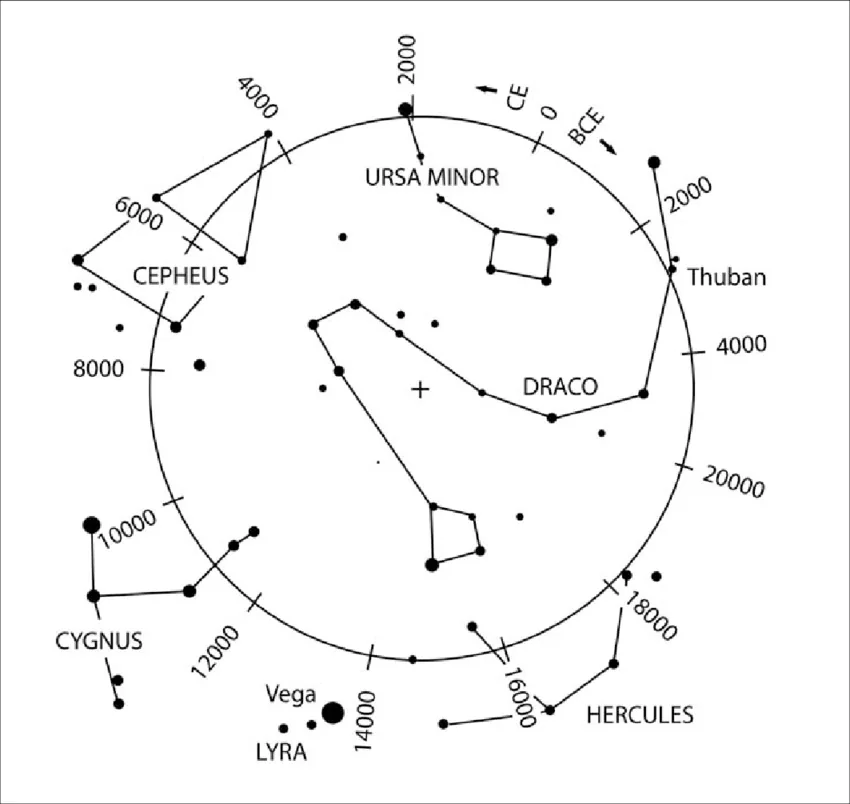
This otherwise unremarkable 3rd magnitude star has an interesting history. 5,000 years ago it was the Pole Star! In fact it was Thuban - not Polaris - that the Egyptians used for marking North at the time the first pyramids were constructed. You can see the path of the location of the North Star at left: over 26,000 year it moves around in this circle. 2,000 years from now, it will be in Cepheus, then pass near Deneb, Vega, into Hercules, and - finally - in 20 kyr, return to Draco.
Of the stars in its path, Polaris is the brightest star that gets really close to the celestial pole.