
The Milky Way Returns!
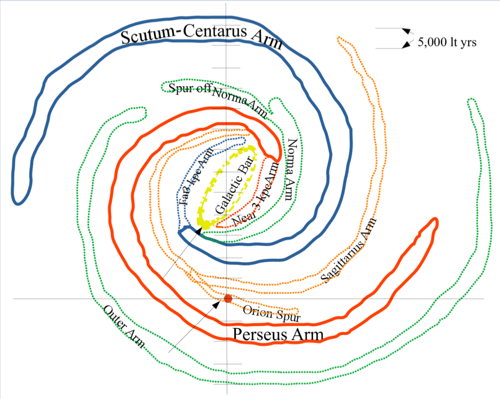
One of the most exciting features of the Summer sky is looking up and seeing the Milky Way stretching overhead. At this time of year, we’re looking inward towards the central part of the Galaxy: the Summer Milky Way stretches from left to right in this diagram across the Sagittarius Arm with the Scutum-Centaurus Arm behind it and the Galactic Bar, suspected but not confirmed until 2005. The Sun’s position is in the Orion Spur - an offshoot of the Sagittarius Arm.
With a smartphone attached to a holder on a tripod, you can quite easily capture our home galaxy, showing bright and dark features spanning from Cygnus all the way to Sagittarius, where just W of the “spout” of the Teapot asterism, you’re gazing to the galactic center!
Mercury Challenge!
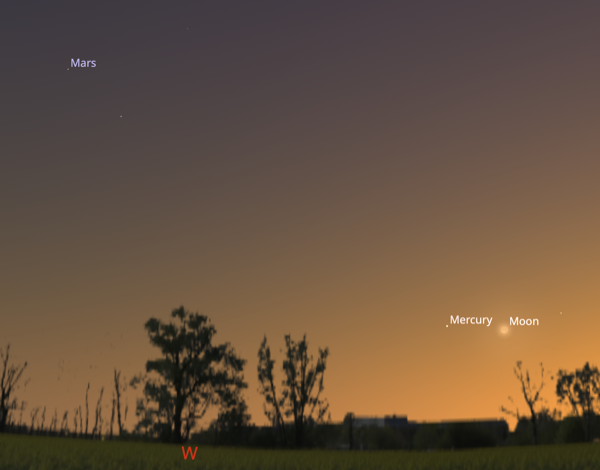
On June 27th, Mercury - only ~10° above the horizon in the twilight appears just 3° East of the very thin crescent Moon. While this isn’t the best circumstance of an Eastern elongation, the juxtaposition of the two might make it slightly easier to find the elusive planet using the Moon as a guide.
Mars Passes Regulus
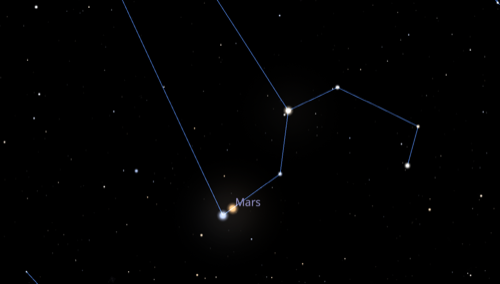
Mars passes Regulus in Leo mid-month: on the 17th, coming as close as 45’ to the star (1.5x the width of the Moon). The star’s bluish tint compared to Mars’ red hue will have a striking color contrast!
This Month’s Image
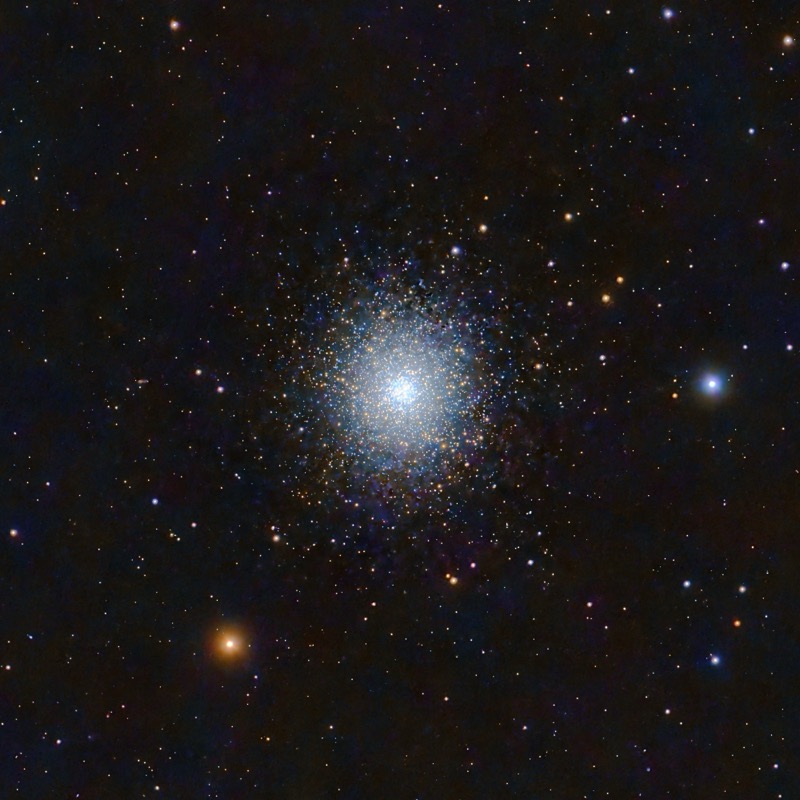
M 13 is a delight, because you can experience it in any telescope, with binoculars, and can even detect it with the naked eye when it’s close to overhead! It’s the first of the summer globular clusters in Hercules with several hundred thousand stars. Its orbit around the Milky Way suggests that it’s an immigrant - originating in another galaxy that was trapped and merged with the Milky Way Galaxy 8-11 billion years ago.