The Serpent Bearer
One of Ptolemy’s original 48 constellations, Ophiuchus (sometimes called Serpentarius) was described by the Greeks (specifically in Eudoxus’ poem from the 4th century BCE) but could also have older Babylonian origins, representing Nirah a serpent god, half-human with snakes for legs. In fact the name is a Latinized version of the earlier Greek Ophioūkhos (serpent-bearer).
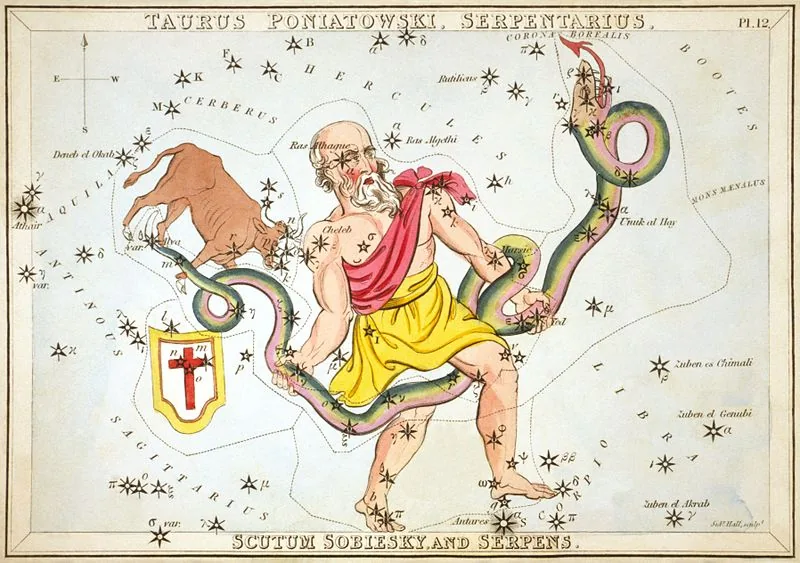
In many early star charts he is seen trampling on Scorpius with his feet, with the scorpion - in turn - trying to sting him. Kepler’s Supernova of 1604 was in southern Ophiuchus, coming only 30 years after the 1572 supernova in Cassiopeia observed by Tycho (we’re very overdue for such an event - at least within our own Galaxy), reaching magnitude –2.5, and visible in the day for ~3 weeks.
A V-shaped clump of 4th magnitude stars just East of β (beta) and γ (gamma) Oph form the ex- constellation (now asterism) Taurus Poniatovii - “Poniatowski’s Bull”, coined by the director of the Vilnius Obs. in 1777 to honor the King of Poland and Grand Duke of Lithuania (there are several other cases of “new” constellations added in this era, all with the apparent goal of currying political favor, or regional pride. The only similar constellation that made the final “official” list is Scutum (Sobiscianum) — the Shield — likewise added by Hevelius in 1684 to commemorate the victory of Polish King Jan III (Sobieski) in the Battle of Vienna lies just to the Southwest of Ophiuchus.
Map of Ophiuchus
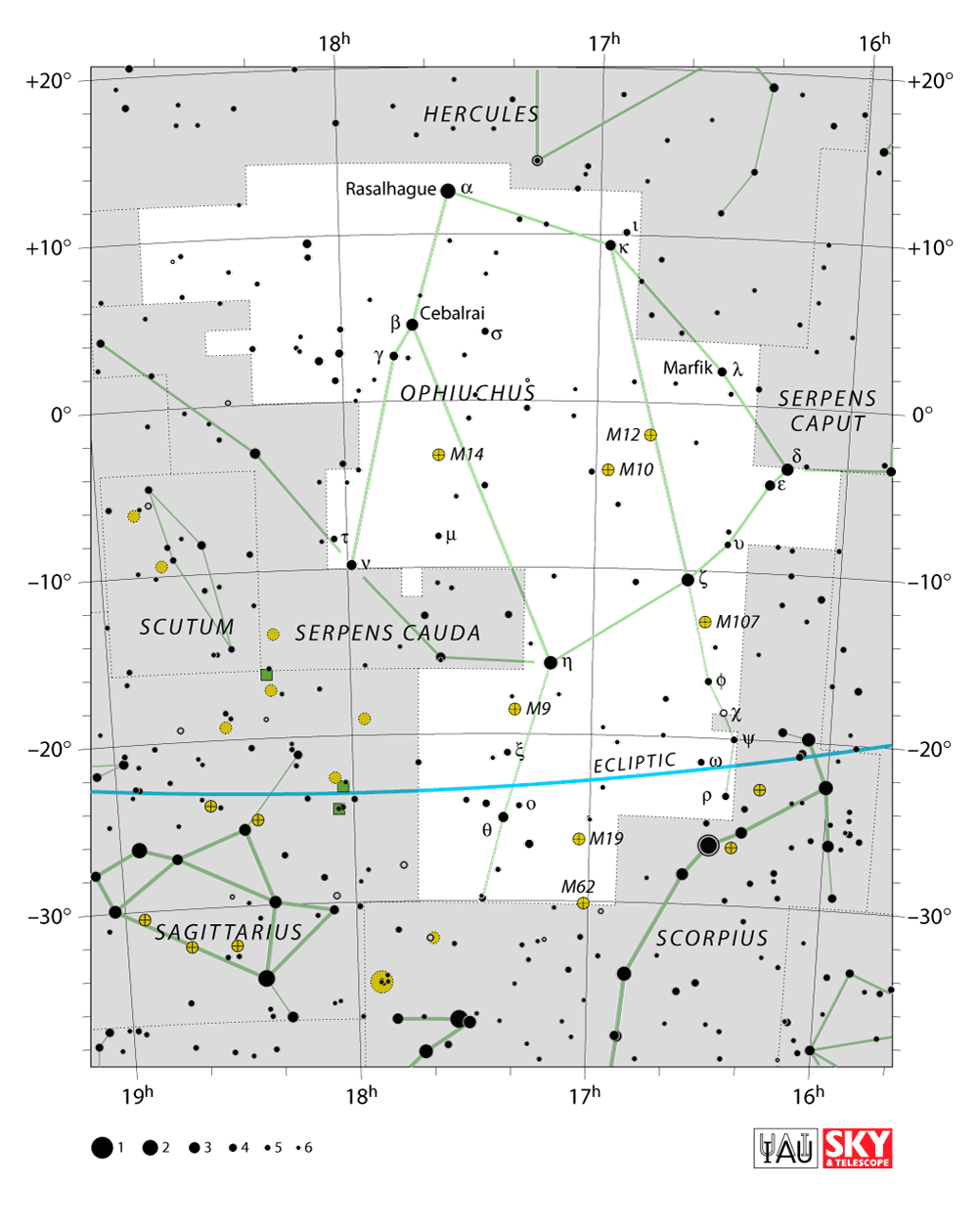
Ophiuchus borders on the Milky Way. As such it contains many Deep-Sky Objects, but especially Globular Clusters: there are over 20 visible to small/medium telescopes, and 4 bright enough to be seen in binoculars (M 9, 10, 12, and 62). A few Open Clusters can be found in the northern part of the constellation.
Another peculiarity: because of how the “official boundaries” of the constellations were defined, Ophiuchus contains more of the Ecliptic than the “zodiac” constellation of Scorpius (the boundaries were defined, in part, to respect the constellations assignments of known variable stars, so a chunk of the sky assigned to Ophiuchus sits between Scorpius and Sagittarius, making it the “13th Ecliptic Constellation”.
Quick Reference: Objects of Interest
| Object | Type | Equipment |
|---|---|---|
| Messier 10 | Globular Cluster | Binoculars/Small Telescope |
| Barnard 65-67 | Dark Nebula | Binoculars/Small Telescope |
| IC 4665 | Open Cluster | Binoculars/Small Telescope |
| Rho (ρ) Ophiuchi | Nebula Complex | Medium/Imaging Telescope |
| NGC 6384 | Spiral Galaxy | Medium/Imaging Telescope |
| Barnard's Star | Nearby Star | Medium/Imaging Telescope |
One of Many Globulars
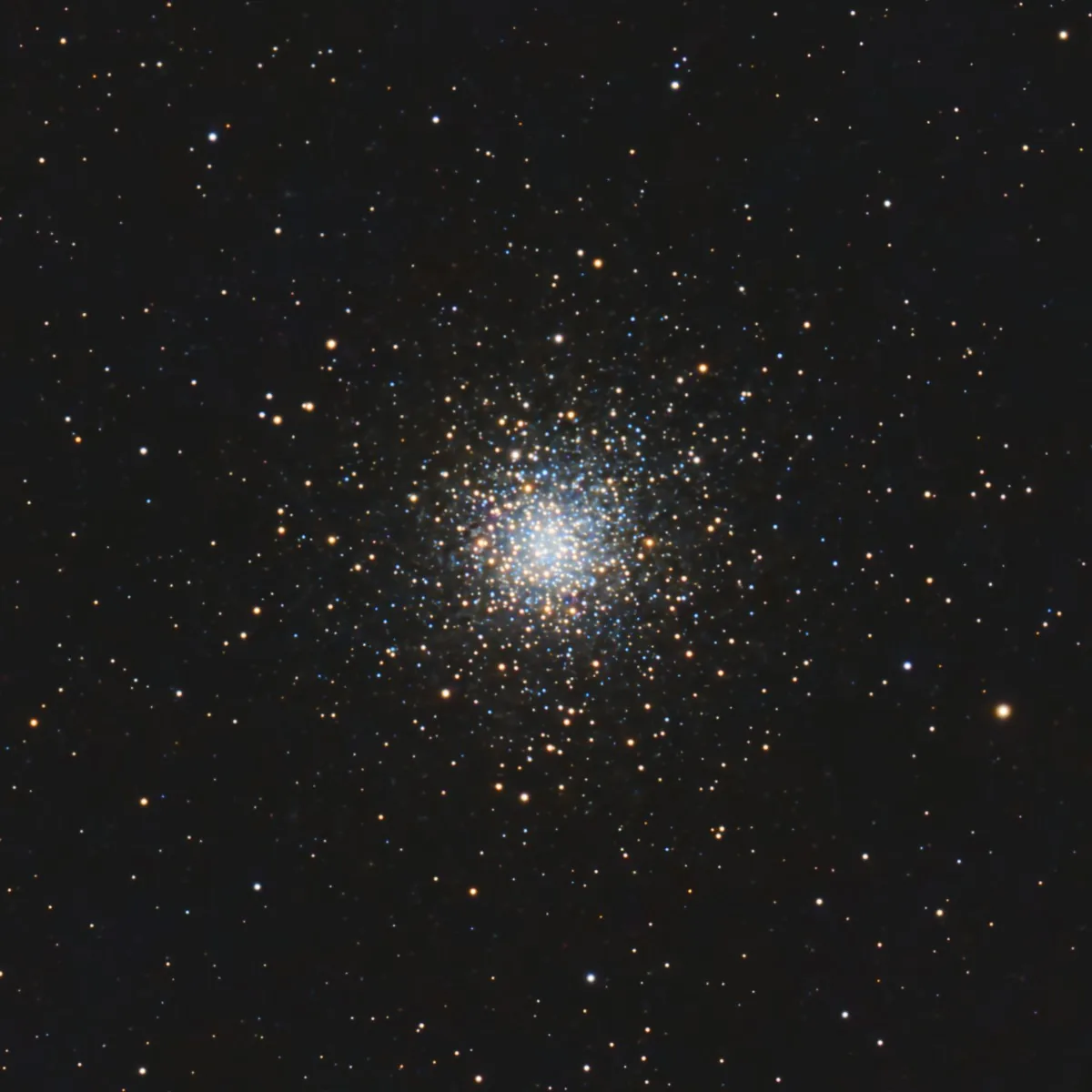
While there are many globular clusters to see, M 10 has the largest angular diameter (20’) and is almost naked-eye brightness (mag 6.6). Like many similar clusters, it orbits the Milky Way in the halo — it’s 13,000 ly from us. Although a few globular clusters are now known to have been “born” in other galaxies that collided with the Milky Way billions of years ago, all the bright Ophiuchan globulars appear to have been formed along with the Milky Way galaxy.
Dark Pipe
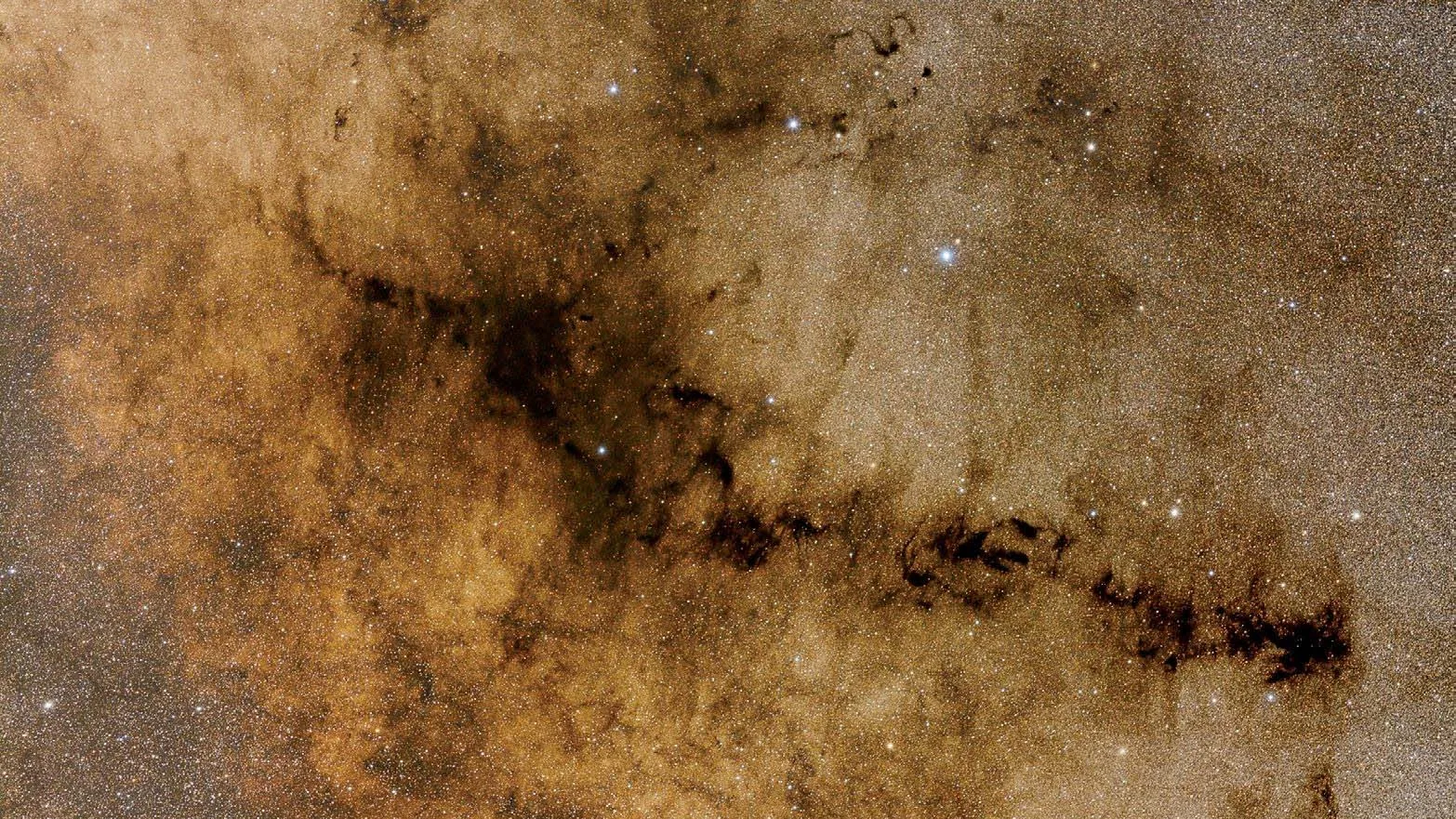
This large dark nebula is located between the “tip” of the Teapot asterism (Kaus Borealis) and Antares, just below θ (theta) Oph. In dark skies, it might be visible to the naked eye (esp. if the humidity is low), but should stand out in binoculars or a wide-field telescope eyepiece against some of the brightest parts of the Milky Way.
Summer Beehive
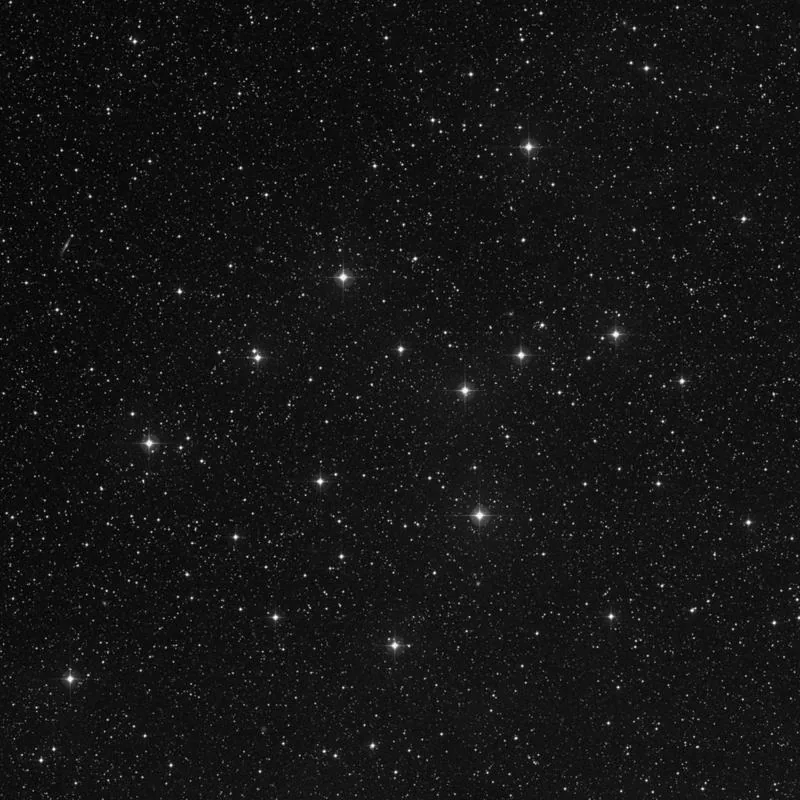
This somewhat sparse open Cluster is just 1° NE of β (beta) Ophiuchi. It’s best observed with binoculars or lower-power telescope eyepieces. Like many open clusters, it’s young (about 40 Myr old), but while it has few hot (bright) bluish stars, there are many faint lower-mass stars. About 1° to the SE is another sparse cluster: Collinder 350 also at the same distance from the Sun: in fact these two clusters are only 118 ly apart, having moved closer together since their individual formation - so there’s a (very slow) collision going happening!
Widespreaed Nebulosity
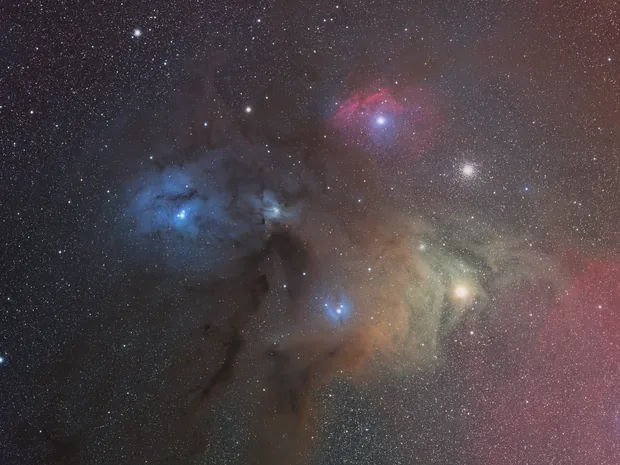
The ρ Ophiuchi complex is one of the closest star-formation region (460 ly) to the Solar System. It spans a large (4½°x6½°) swath of sky, extending (in the sky) to Antares (which is further away - 550 ly), full of young stellar objects. The range of colors is stunning: best captured with camera and tracking mount.
Unexpected Galaxy
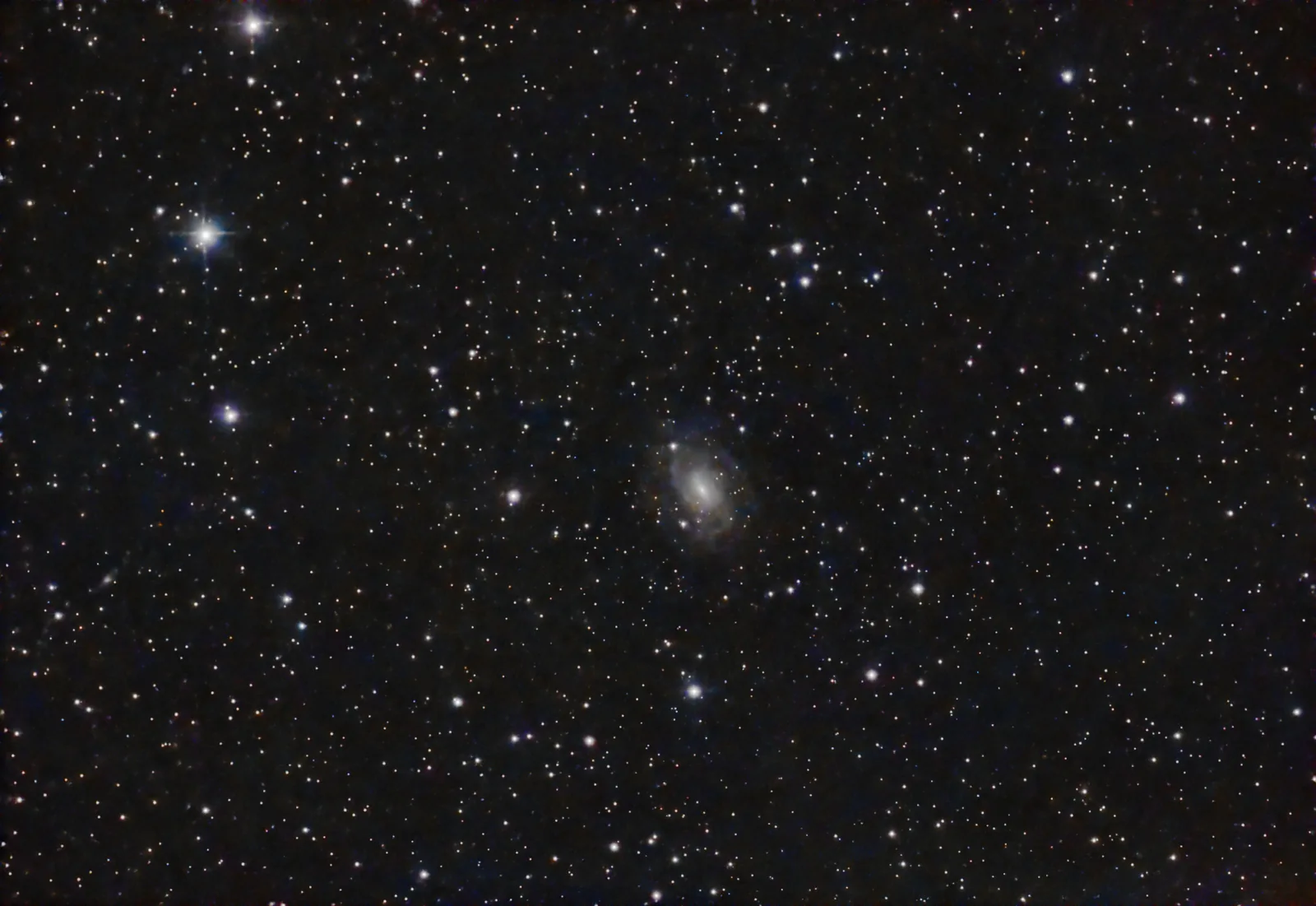
In terms of deep-sky objects, Ophiuchus isn’t known for galaxies, but there are a few, though slightly challenging. One is NGC 6384, a slightly inclined intermediate barred spiral (SABbc) 77 Mly distant, and slightly smaller than our Milky Way.
Exoplanet System Neighbor
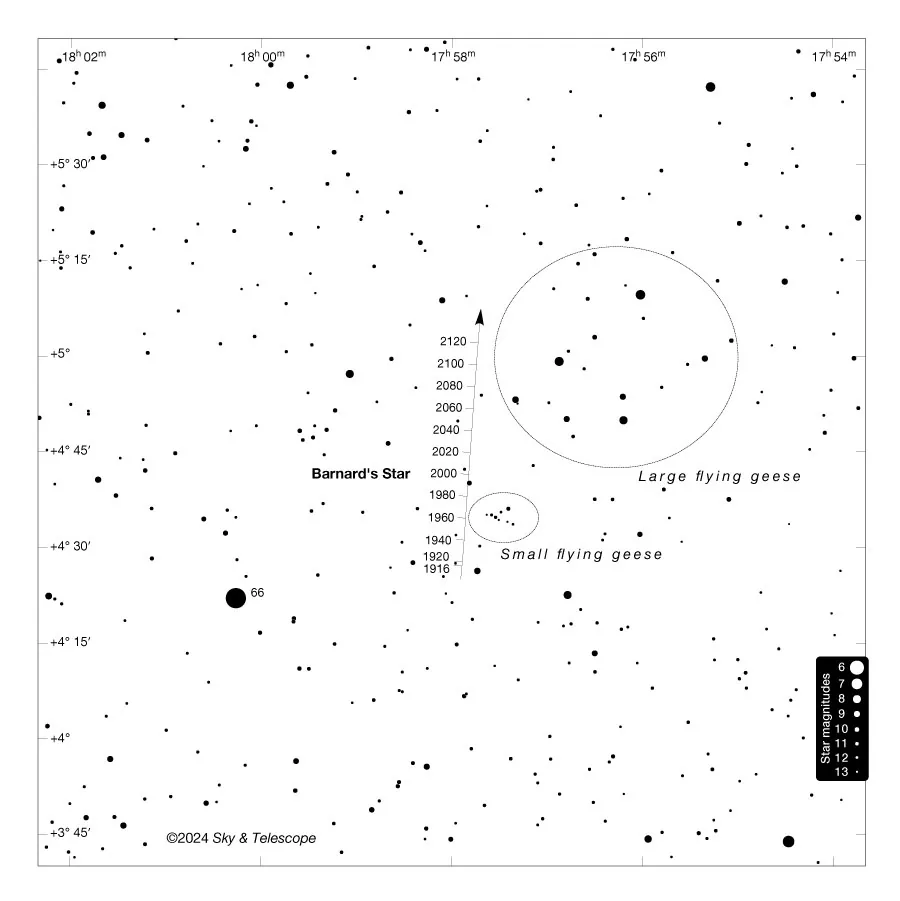
The 2nd closest star system to the Sun, (4th closest star; 6 ly distant) Barnard’s Star - like many of the Sun’s closest neighbors is a red-dwarf (spectral type M4V): only 1/6th of the Sun’s mass, and only 19% of the Sun’s diameter (making it only twice the size of Jupiter). It’s much older than the Sun (at least 7 Gyr), and while generally quiescent (as old stars typically are) can have periodic intensive stellar flares (as most M dwarf stars do).
It’s home to 4 close-in exoplanets (so far), all them 2-3x the mass of Mars, and therefore likely rocky with periods in the 2-7d range.
At magnitude +9.5, you’ll need a telescope to view it — and a finder chart that shows it’s high proper motion: 10.3 arcsec/year, with a corresponding radial velocity of –110 km/s, so the star is coming closer to us — at least for the next 8000 years, after which it will recede again. (The Alpha Cen system is also moving in our direction, so Barnard’s Star will never be the closest star to the Sun. However Ross 248 - another red dwarf star currently 10 ly away — will — for about 10kyr — get as close as 3 ly, 30 kyr from now!