The Shield
“Most Serene, Most Powerful, and Most Invincible, John III, King of Poland.” begins the dedication by Hevelius in his 1687 Uranographia, which included several “new” constellations - including “Scutum Sobiescianum”: the “Shield of Sobieski”, the ruling family in Poland.
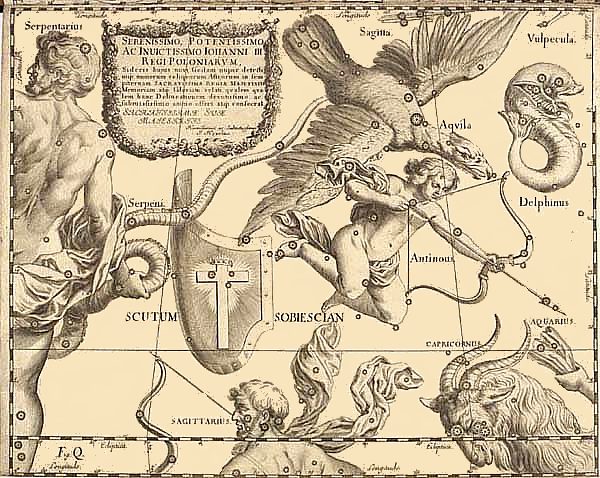
This of course was one of several “new” constellations which were created from otherwise “unused” spots in the sky as the constellations neither had official boundaries, nor was there any complete official list of them. So, along with Canes Venatici, Lacerta, Leo Minor, Lynx, Sextans, and Vulpecula (and also defunct attempts with Cerberus, Mons Menials, and Triangulum Minus) Scutum entered the celestial sphere. Somehow it survived to be included in the official list of constellations set by the International Astronomical Union in 1922; all of the other “patronage” constellations (each of which was “created” in an attempt to curry favor with one of several European monarchs) were excluded.
At least it is in a fortunate place: nestled below Aquila, bordering Serpens and Sagittarius, the Milky Way runs through it, and although it has few stars of note (the brightest star is only magnitude 3.85) it manages to contain several prominent deep-sky objects, including two Messier objects. The naked-eye stars form a very thin diamond shape: in binoculars, the open star clusters M 11 and M 26 stand out; more challenging (but still detectable) are a few dark nebulae. In moderate telescopes, other open and globular star clusters can be found in this small (5th smallest) constellation!
Map of Scutum
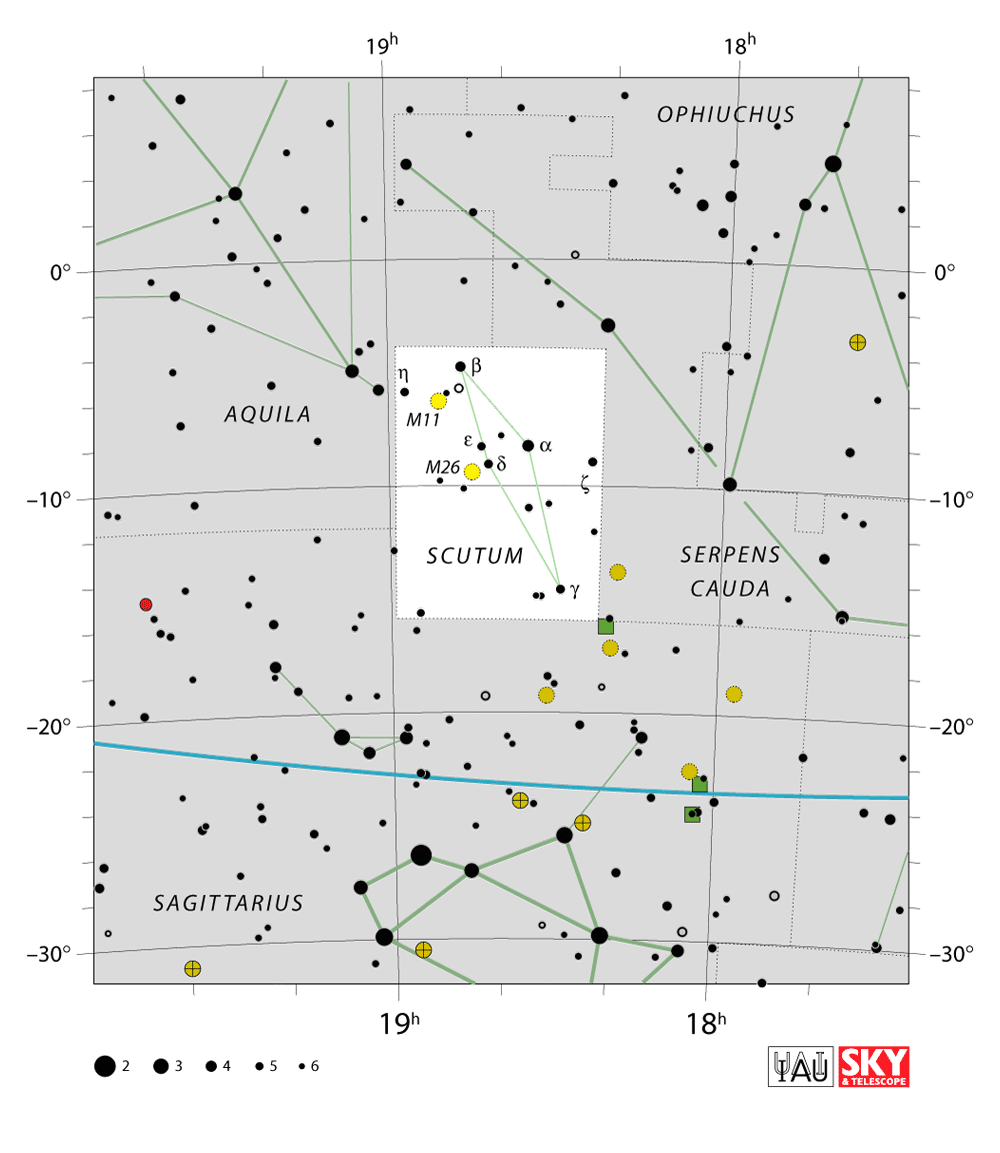
Although Scutum is small (the 5th smallest of all the constellations), its proximity to the Summer Milky Way means it has several prominent deep-sky objects. Scanning from the “beak” of Aquila, down to the Teapot of Sagittarius, with any telescope or good binoculars you’ll encounter open clusters and dark nebulae, all against a rich “steamy” background of the Milky Way.
Quick Reference: Objects of Interest
| Object | Type | Equipment |
|---|---|---|
| Messier 11 | Open Cluster | Binoculars/Small Telescope |
| Messier 26 | Open Cluster | Binoculars/Small Telescope |
| Barnard 104 | Dark Nebula | Binoculars/Small Telescope |
| NGC 6712 | Globular Cluster | Small/Medium Telescope |
| Scutum Star Cloud | Galactic Star Cloud | Naked Eye/Binoculars |
| Delta (δ) Scuti | Variable Star | Binoculars/Telescopes |
Wild Duck Cluster
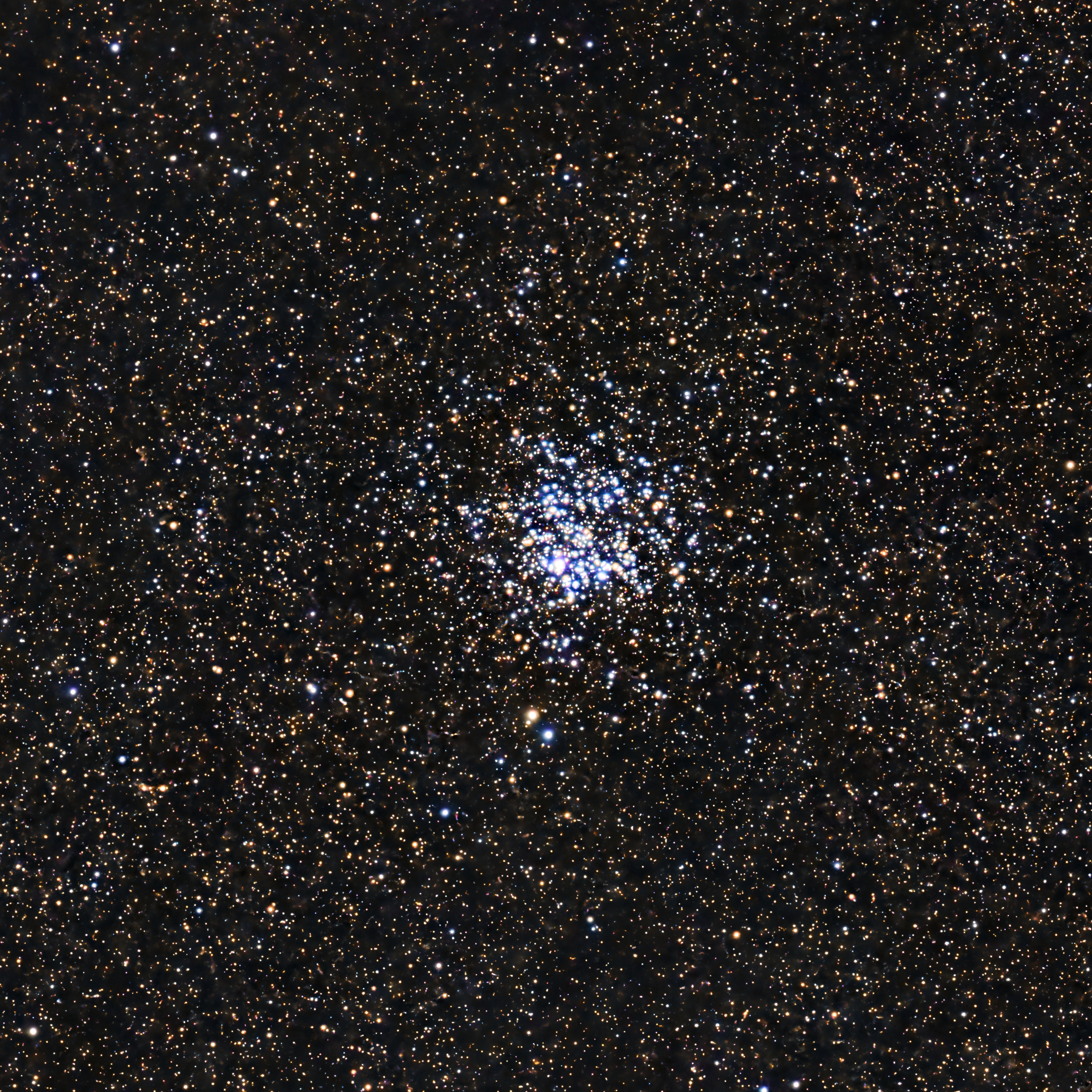
Messier 11 is one of the standout open clusters in the sky. While other clusters (Praesepe, or M 6 and M 7) are sparse, the Wild Duck is extremely concentrated (almost looking like a loose globular) and for as bright as it is, somewhat distant at 6,800 ly. With almost 1,000 members, it’s also one of the most massive open clusters known.
Overshadowed Gem
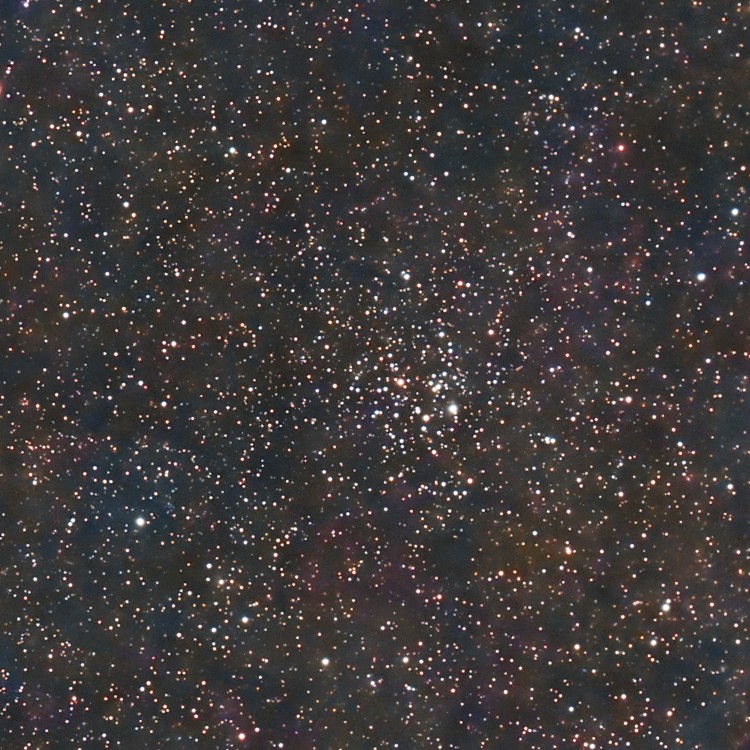
If it were elsewhere in the sky, this bright, rich cluster would likely be a more popular target, but tends to be overlooked in favor of the more “showy” M 11. While it can be glimpsed with binoculars under very dark skies it might be hard to pick out against the dense Milky Way: it’s much easier with a small telescope.
Letter “E”
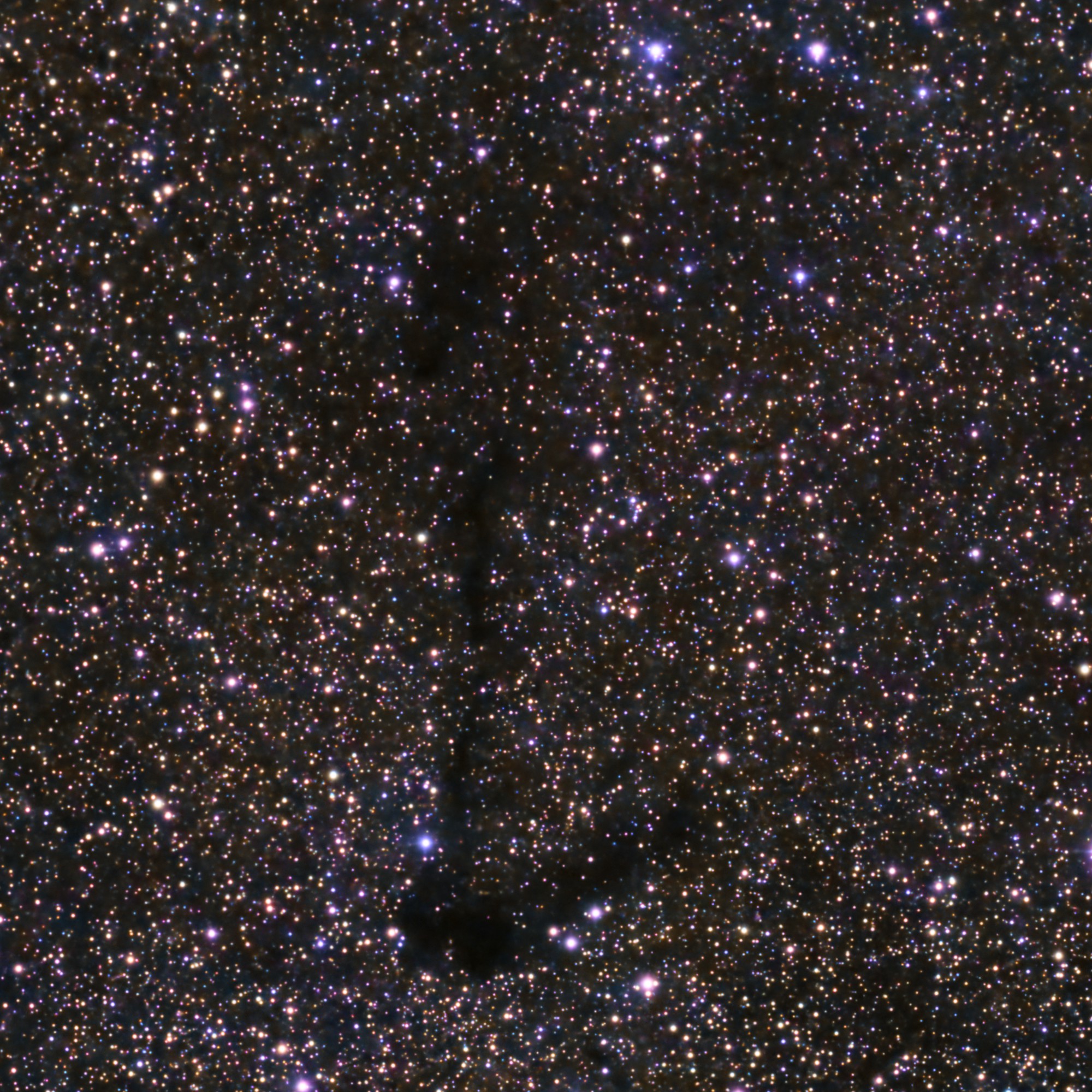
Most of the deep-sky objects in Scutum are dark nebulae: in fact, there are over 30 entries in the Barnard catalog of dark nebulae within Scutum - almost 10% of the entire catalog! Probably the most observed is Barnard 104 which very clearly resembles a stick-letter “E” against the rich Milky Way. These dust clouds appear in many emission nebulae (the Horsehead is the most-famous example) but until they’re part of a new star-forming region, are only seen against the stellar background, especially against the Milky Way.
Metal-Rich Globular
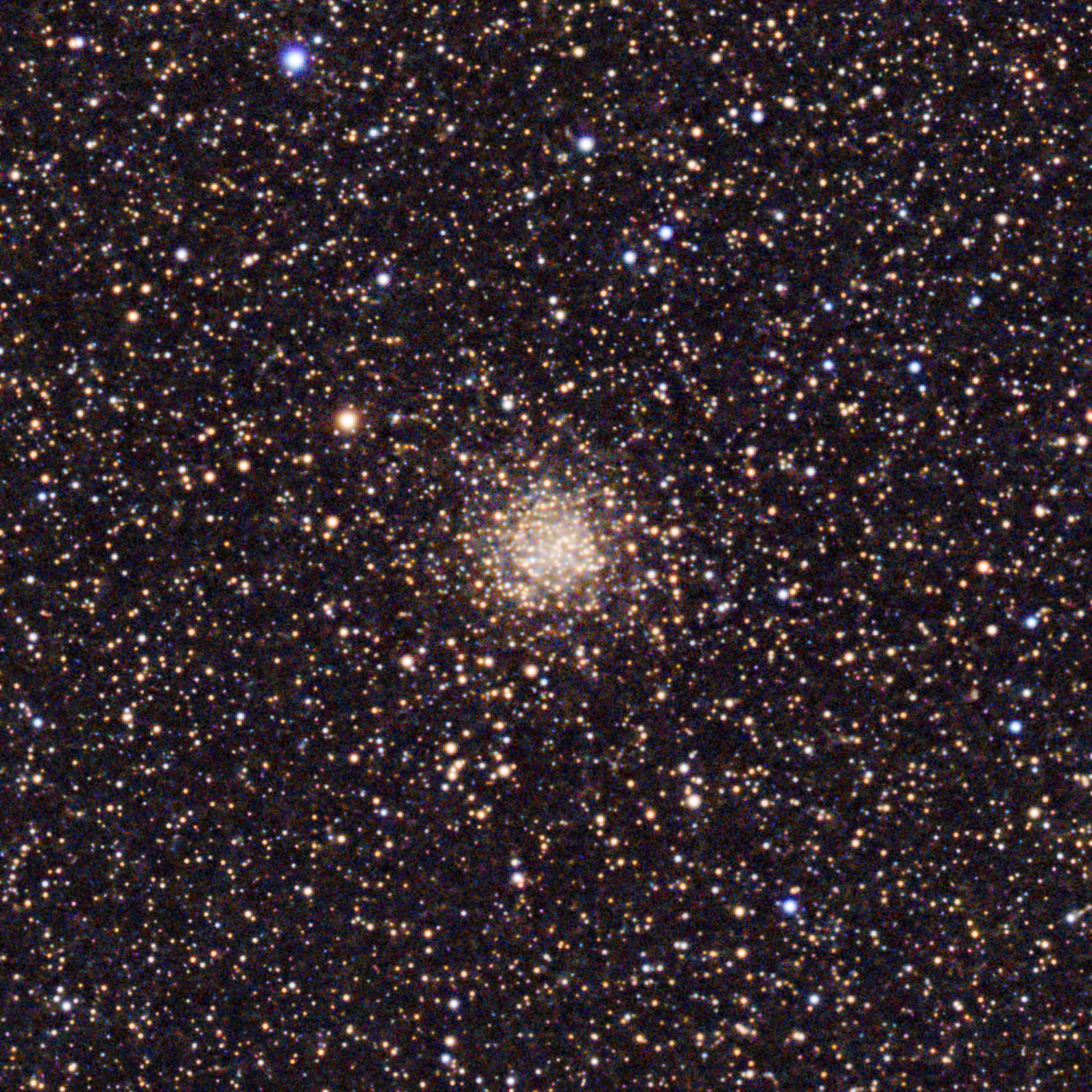
NGC 6712 — like many other globular clusters — is about 12 Gyr old, and over this lifetime may have shed some of it mass through tidal stripping happening as it passes through the galactic disk in its orbit. Not visible in amateur telescopes is a pulsar + brown dwarf system (PSR J1853-0842A), with the high radiation causing the low-mass companion to slowly evaporate.
A Bright Section of the Milky Way
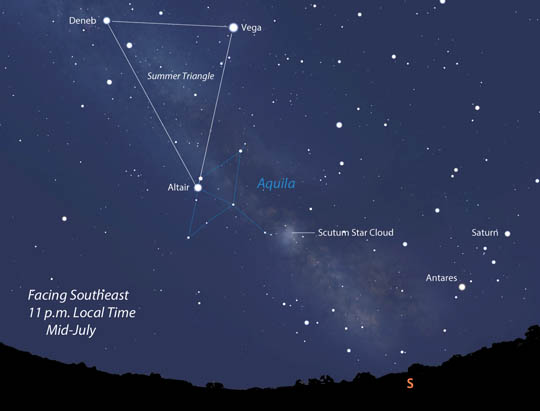
Adjacent to Messier 11, is the Scutum Star Cloud. Under dark skies it appears to be one of the brighter “clumps” in the Milky Way just below the dark Cygnus Rift, and easily found by finding the stars at the bottom of Cygnus. In binoculars it really stands out.
Wildly Pulsating Star
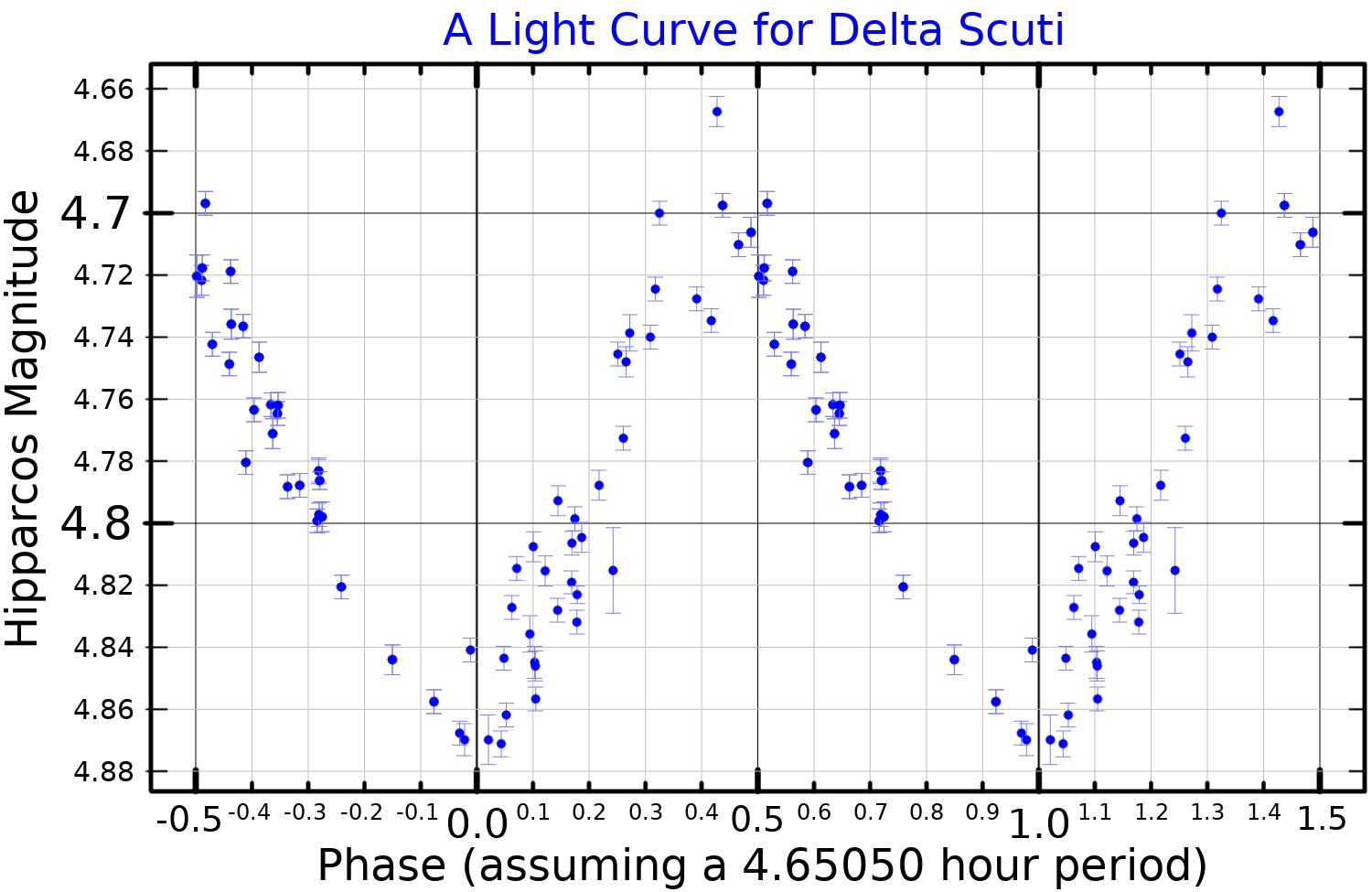
200 light years from the Sun is an interesting variable star - the fifth brightest star in Scutum. Unlike many pulsating stars like Cepheids, this class of variables has several prominent pulsation modes (8 have been modeled thus far) with the primary period at only 4.65 hours with a brightness change of 0.2 mags.
However, its space motion is also coincidentally interesting: it’s slowly coming closer to the Sun as both orbit the center of the Galaxy. In about 1.2 million years, it will come as close as 10 light years to the Sun, with an apparent magnitude of almost –2 making it (briefly) the brightest star in the sky.
These stellar close approaches happen a few times every million years (the Alpha Centauri system will be 1 light year closer to us in about 28 kyr.)
However, another low-mass star, Gliese 710 (currently 62 ly away, dimly glowing at mag +9.66 in Serpens) makes a much-closer approach to the Solar System in about 1.3 million years - only 1/6 of a light year (when it will shine at mag –2.7). This is so close that it will penetrate the Oort Cloud over a period of about 20,000 years, which will cause significant disruptions to the outer Solar System, likely sending many comets into the inner Solar System, enough that well over 10 naked-eye comets will be visible in any given year. At present this is the “closest encounter” to the Sun known - past or future!