The Little Fox
This “minor” constellation was introduced by Hevelius in his 1687 atlas Firmamentum Sobiescianum, along with several others.
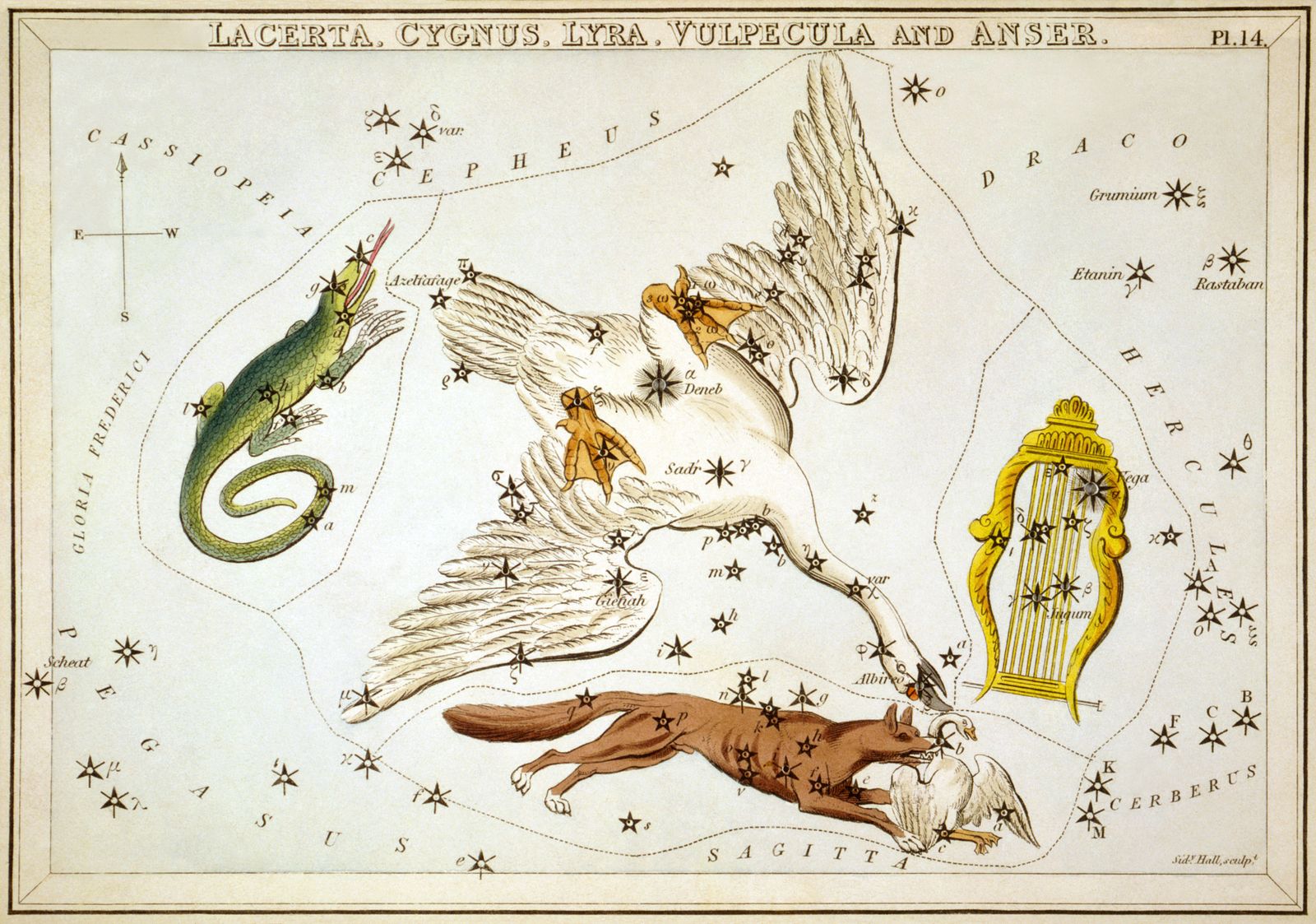
Why? While now we have “official” constellations with “official” boundaries, this wasn’t always the case. Going all the way back to Ptolemy’s Almagest, his star catalog assigned stars to 48 constellations but were referenced to its imagined rendition in the sky: all the “other” stars were marked as “unformed”. These unclaimed areas were the source for many added constellations though most didn’t survive the test of time.

So thus it was for Vulpecula. There isn’t any mythology involved, not even a shout-out to some king or country (as was the case for several other proposed constellations - only Scutum made the final cut). In his atlas, there’s an engraving showing Hevelius bending before Urania to offer his 10 new constellations - you can see some of them (including our Fox and Goose) at the lower left!
Map of Vulpecula
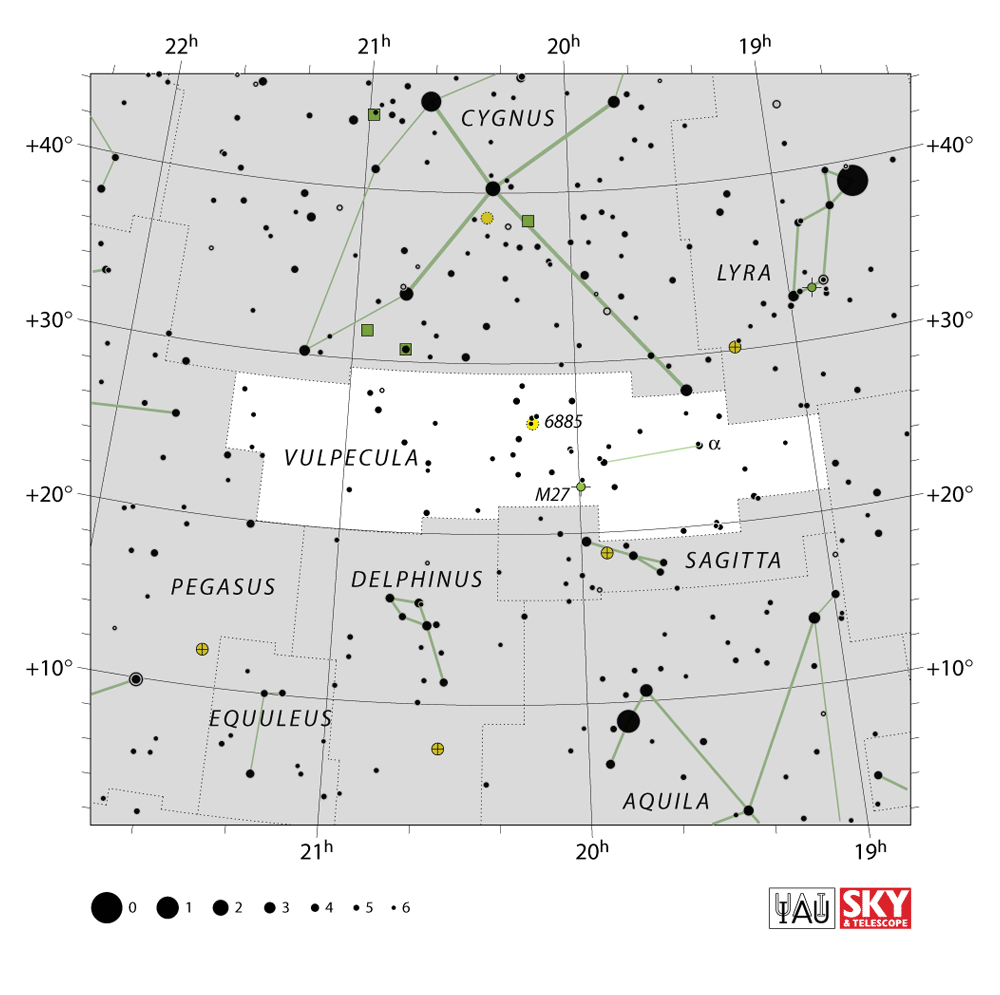
Vulpecula is in the celestial center of the more-prominent constellations of the Summer Triangle: Cygnus, Lyra, and Aquila, and other small and minor constellations: Delphinus and Sagitta, though each of them have patterns of stars that are easy to spot in the night sky. Generally to “find” it, locate the part of sky between Albireo and Altair, find the arrow of Sagitta, and that mostly empty space above Sagitta is Vulpecula.
Alpha (α) Vulpeculae — Anser — is the only named star, and that naming comes from recognizing the original name for the constellation “Vulpecula cum Anser” — “the little fox with the goose”. It’s also the brightest star in the constellation, but shines at just magnitude 4.4. Of course in binoculars or a telescope, Vulpecula makes up for its dim stellar showing! Despite it’s small size, it has several open clusters, many of which are easy to discover, just by scanning across the constellation.
Quick Reference: Objects of Interest
| Object | Type | Equipment |
|---|---|---|
| Messier 27 | Planetary Nebula | Small Telescope |
| NGC 6802 | Open Cluster | Binoculars/Small Telescope |
| Caldwell 37 | Open Cluster | Binoculars/Small Telescope |
| Collinder 399 | Asterism | Binoculars |
| NGC 6820/3 | Cluster + Nebula | Small/Medium Telescope |
| NGC 6830 | Open Cluster | Small/Medium Telescope |
Dumbbell Nebula
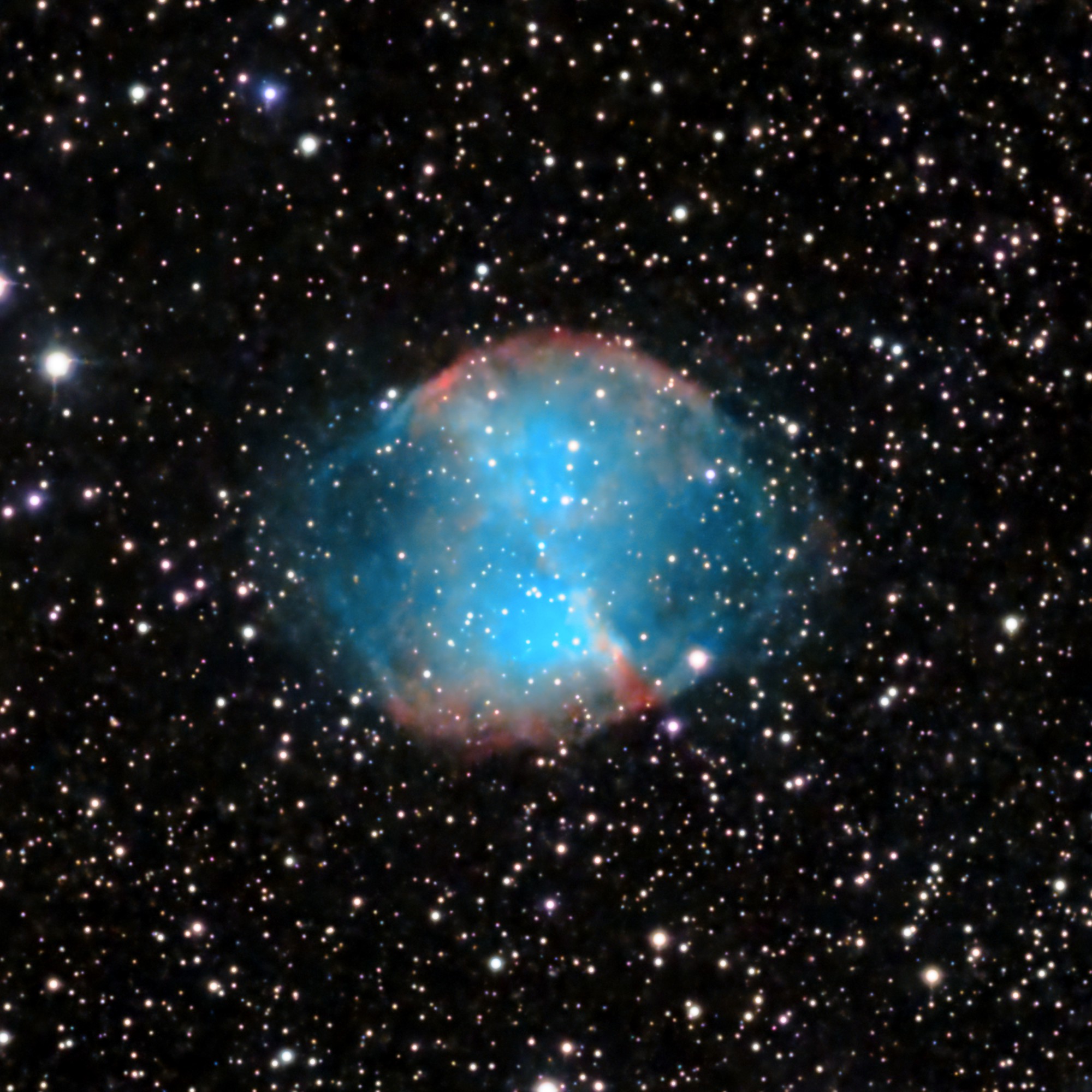
The first planetary nebula to be discovered (in 1764 - before the Ring Nebula in 1774), it’s easy to find just 7° N of Altair. This is the remnant stellar atmosphere surrounding a (now) white dwarf that was blown off of the surface about 10 kyr ago. The gas is excited from the heat of the white dwarf: the different colors come from the excitation “glow” from different elements - mostly hydrogen (red) and oxygen (greenish-blue).
Unlike other planetary nebulae that show a ring, this nebulae has a prolate spheroid shape, though if observed from a different location (over the “top”) it’d appear more ring-like. This is an easy object to find with a small telescope - or even binoculars.
Stellar Concentration
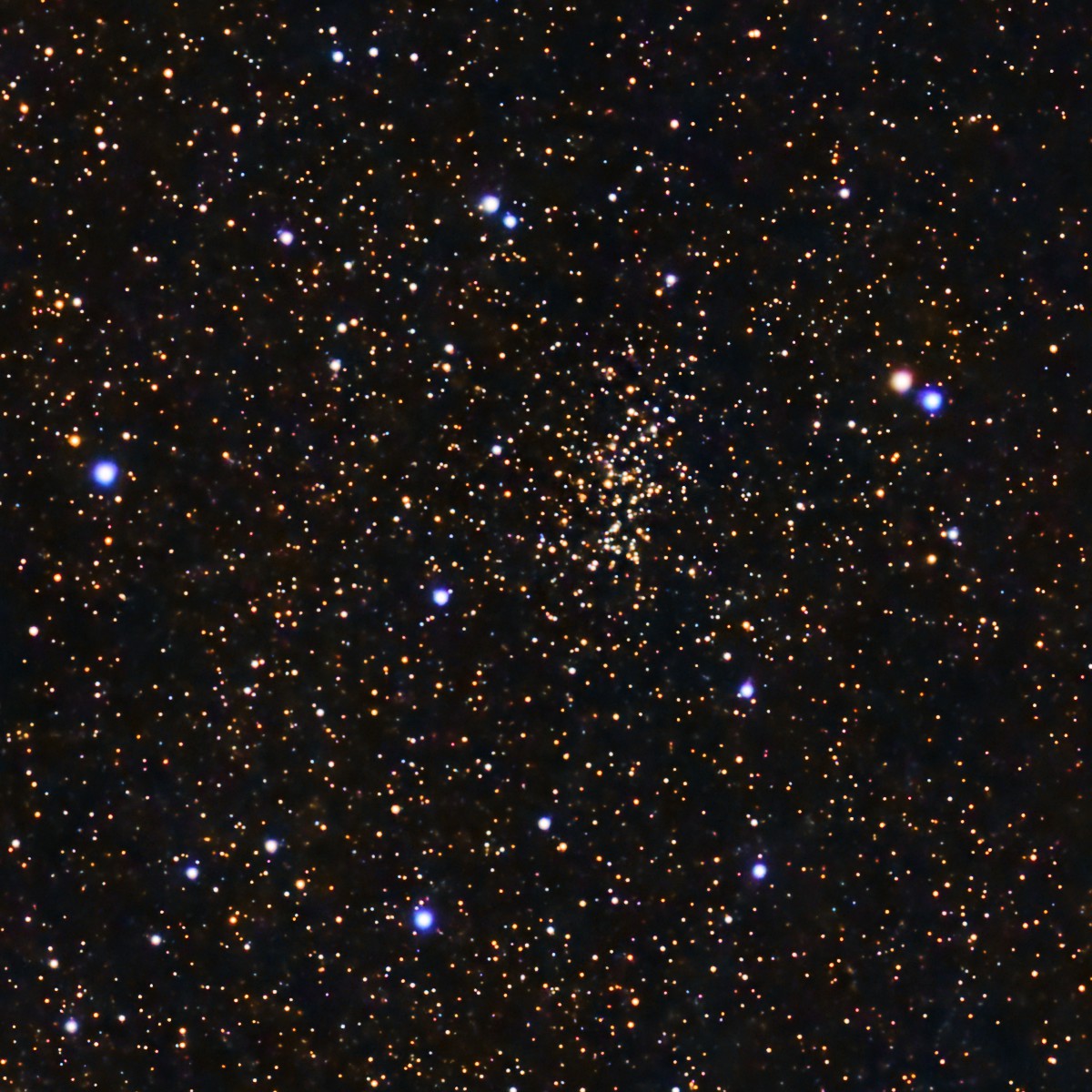
NGC 6802 is 9000 ly away, just under 1 Gyr old, just E of the “Coathanger” asterism. It might be visible with binoculars under dark skies, inside of (and off-center from) a pentagon of 8-9th magnitude stars.
Two Clusters in One
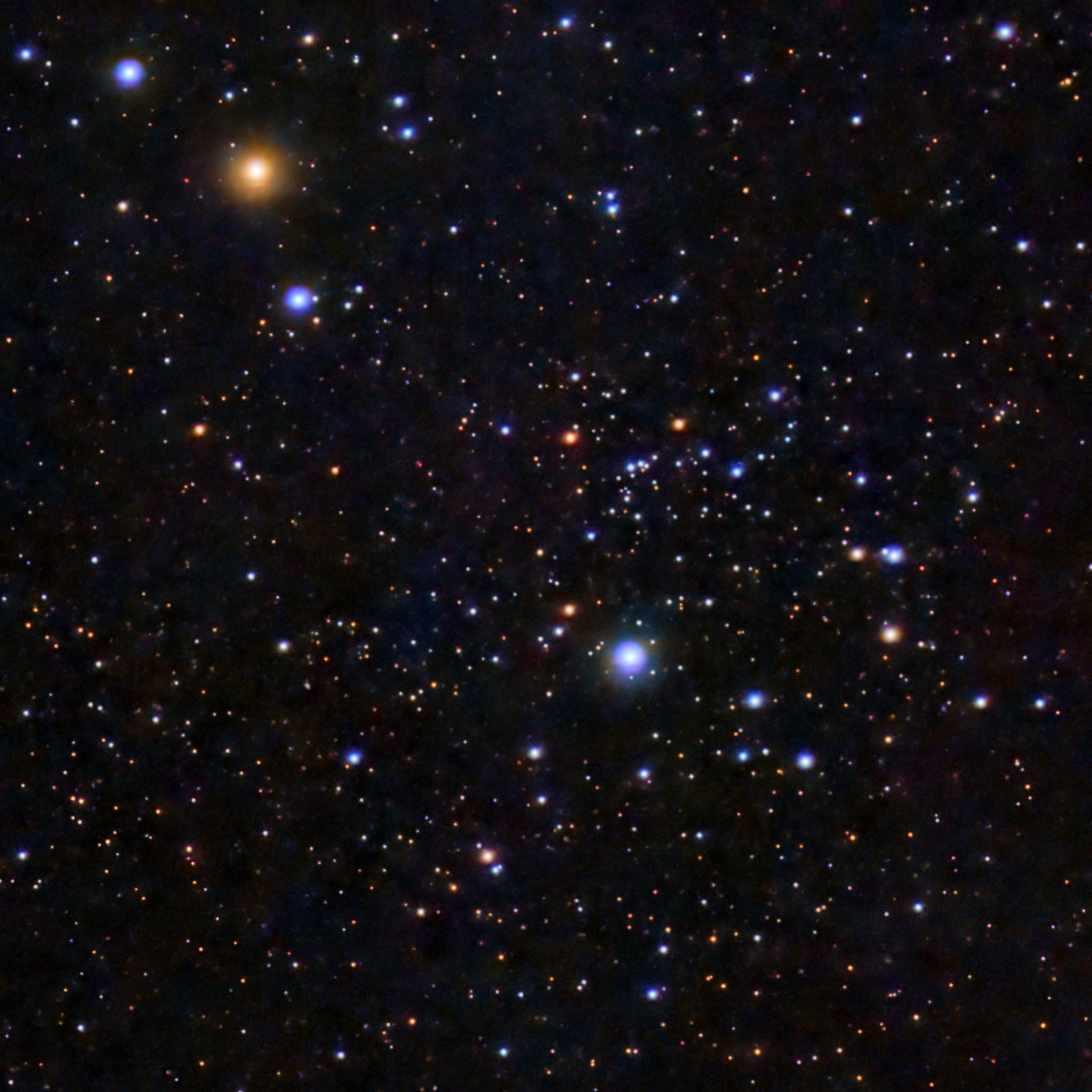
In comparison, Caldwell 37 is another open cluster that is far from concentrated: it’s large (20’) and loose surrounding the hot star 20 Vul. At the upper left is the bright red star 19 Vol, around which is another sparse cluster, NGC 6882 (whose stars are ~300 ly then NGC 6885).
The “Coathanger”
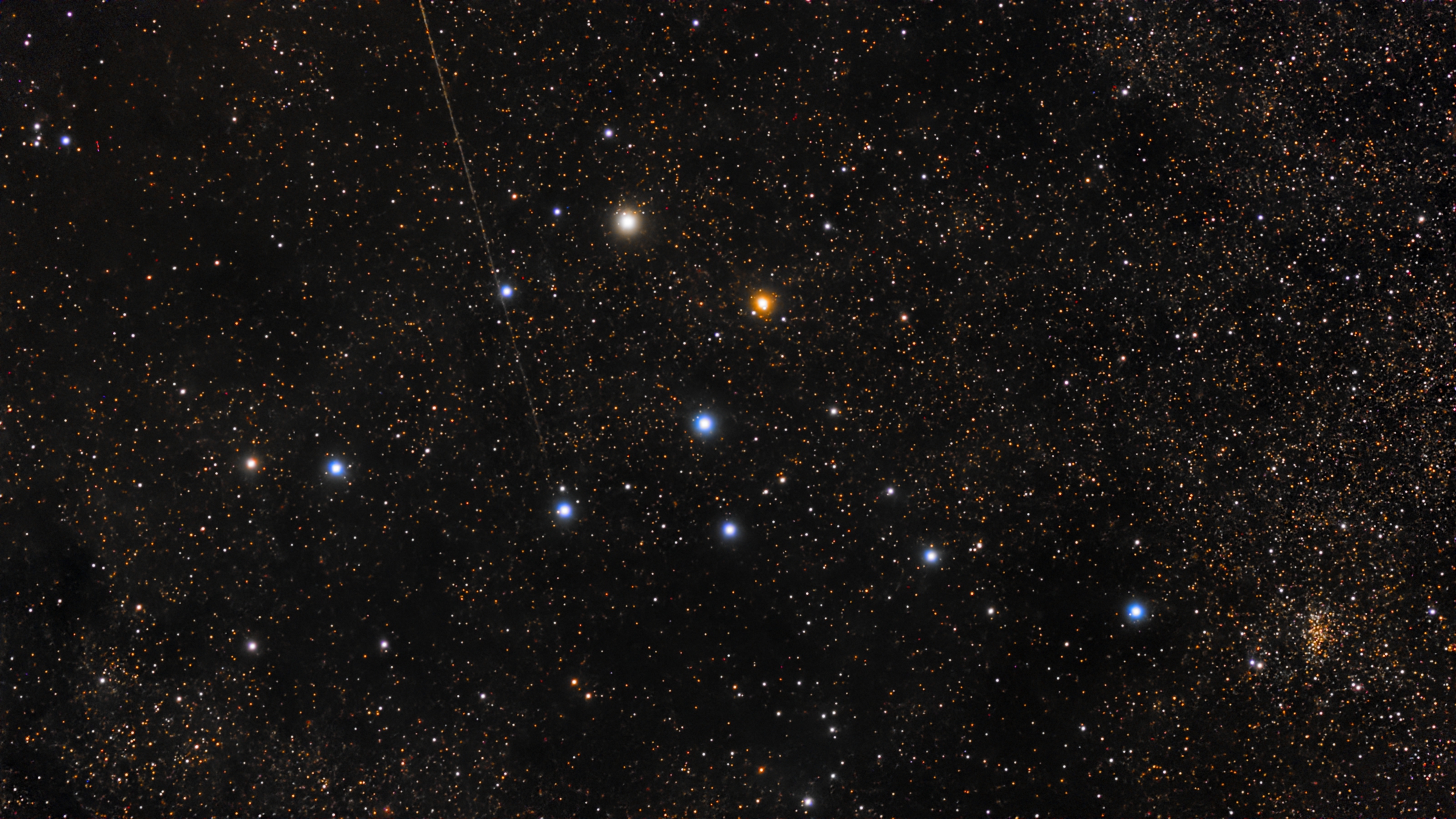
Once you’ve seen it, you can’t help but notice it. In binoculars it stands out because of the obvious shape of a coathanger! This is not a true cluster: the 10 stars are not physically bound; in fact they range in distance from 200 ly to 2,000 ly - so it’s just a give us the lucky projection (the same is also true of the Big Dipper stars, though some of them probably do have a shared history).
Still Forming Cluster
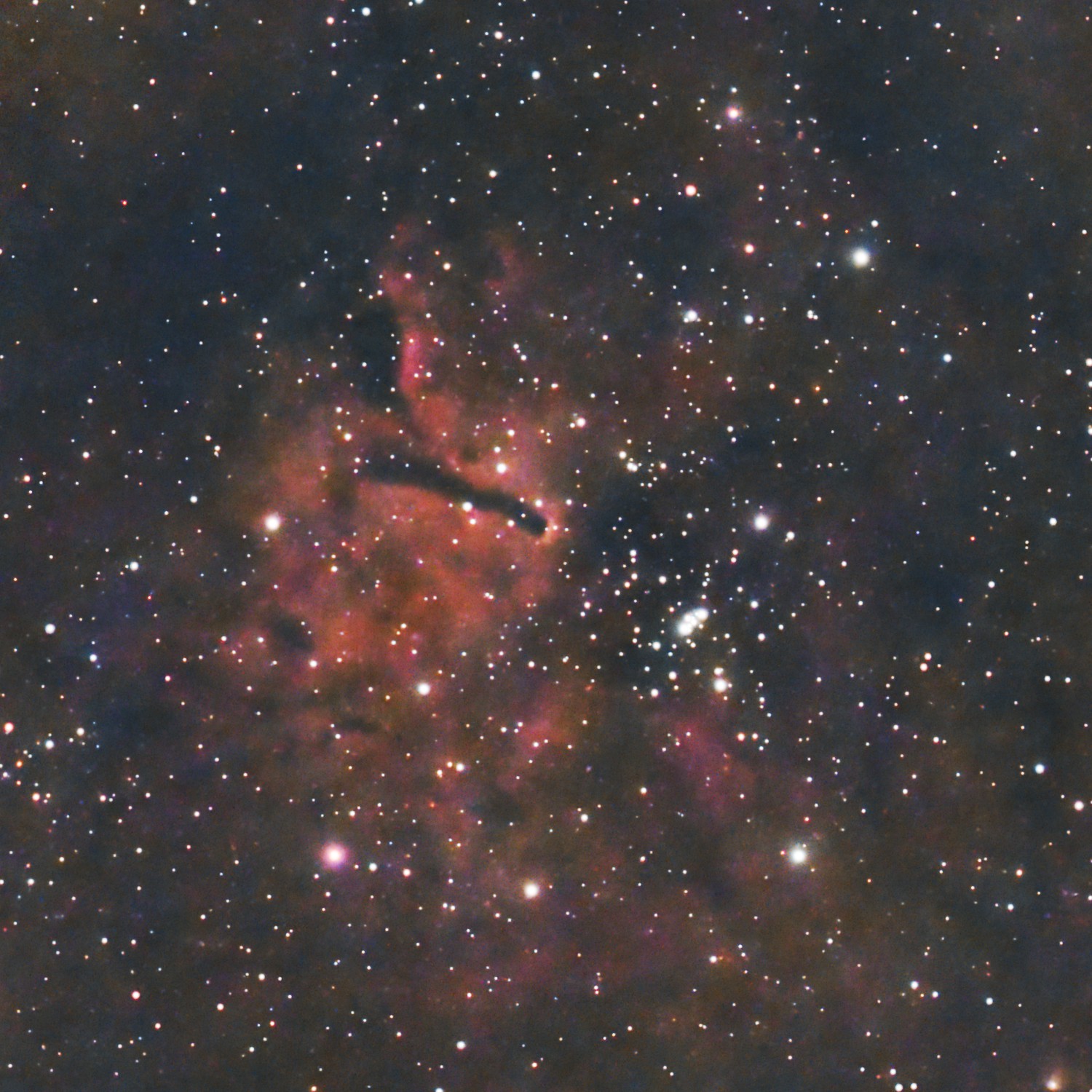
NGC 6820 is an emission nebula (with some distinct dark nebula features) being used to create a new star cluster (NGC 6823) that’s only 2 Myr old! Observing the cluster can be done with a small telescope; you’ll need something larger to detect the nebulosity (surface brightness is mag 14.5).
Poodle Cluster
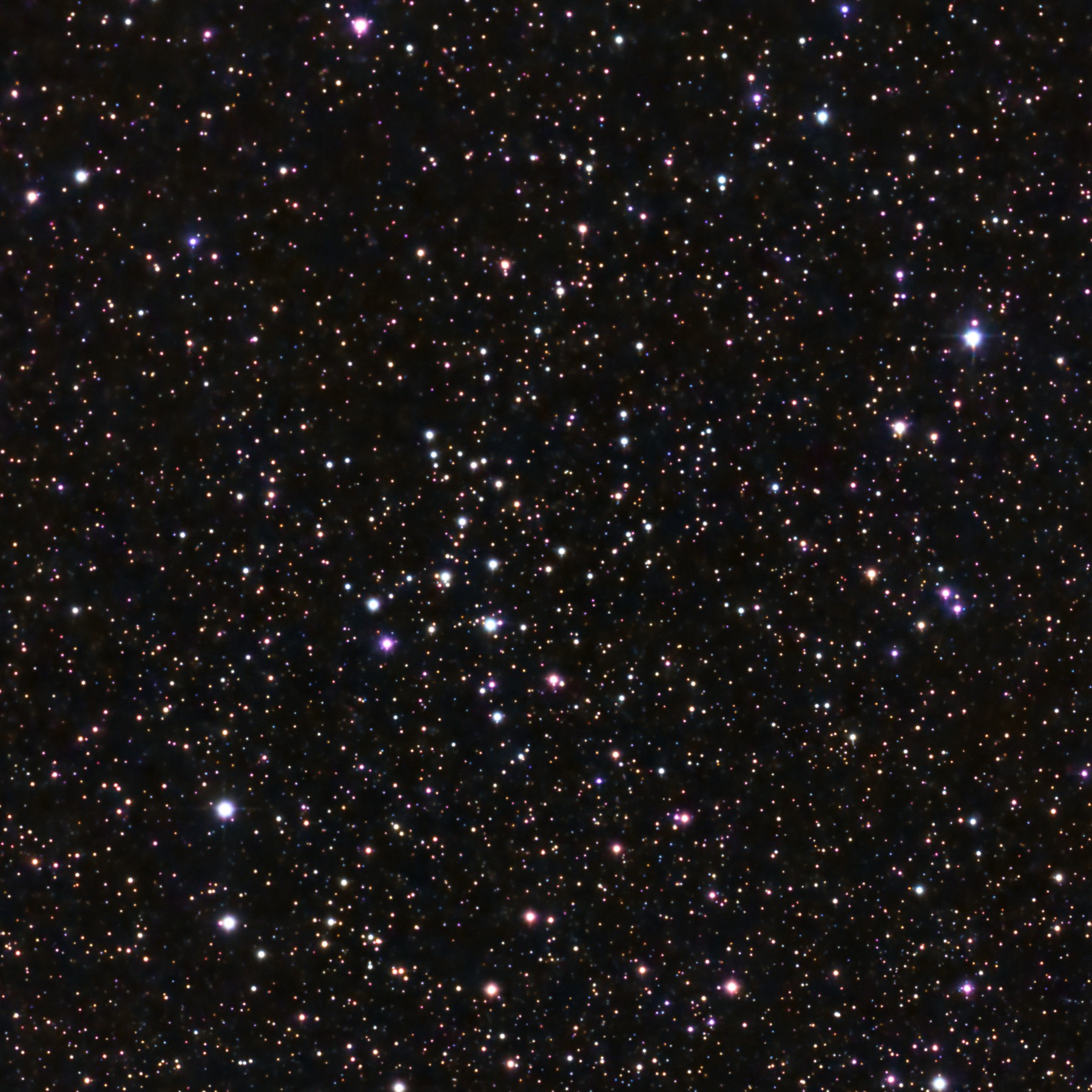
That’s the name given to NGC 6830 another relatively easy target for a small telescope. Like most open clusters, it’s young (100 Myr): most clusters begin to be torn apart as they travel around the Galaxy, and after a few galactic orbits are no longer distinguishable (there are some very old exceptions). It was discovered by William Herschel in 1784.