
The Fish
The two fishes are associated with a Greek legend with Aphrodite and Eros (her son) turning themselves into fishes to escape the monster Typhon (who is said to be buried under Mt. Etna). In the Greek sky they’re joined together by a cord.
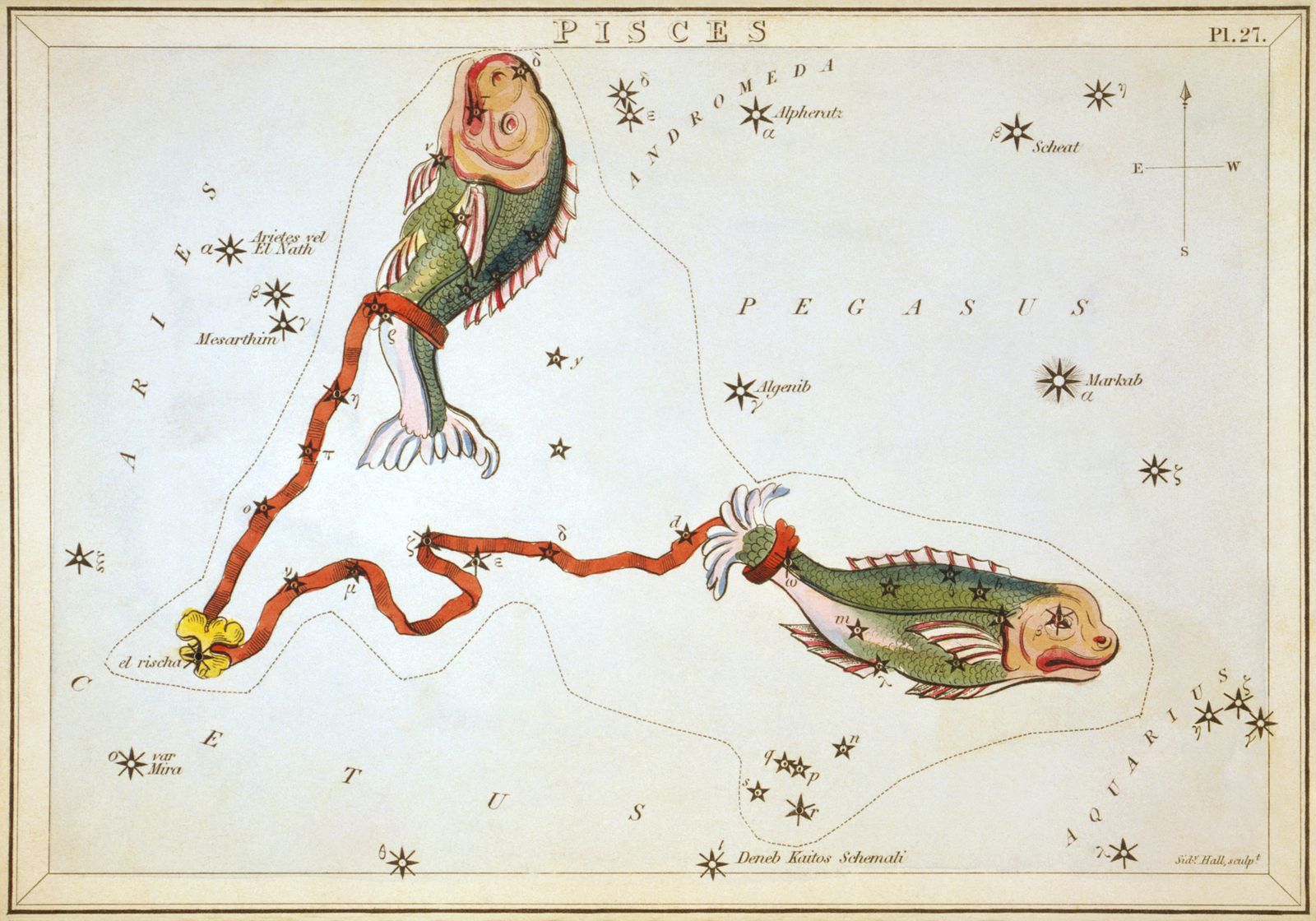
The earlier Babylonians here have two or three constellations for “a great swallow” at the western “fish", the “Lady of the Heaven” at the northern “fish” and then (later) a “fish cord”. “western fish” that has a nice circle of stars below the Great Square of Pegasus; the “northern fish” that is a faint triangle nestled up against the eastern side of the Great Square; and the “cords” connecting each fishy asterism to the star Alrescha at the SE corner of Pisces.
Aside from the fact that Saturn and Neptune are in the vicinity (though Saturn’s retrograde motion has put it in Aquarius briefly), there are few bright stars to be found: aside from Alrescha α (alpha), mentioned above mag 3.8), only Alpherg η (eta) Piscium on the cord midway to the “northern fish” asterism is slightly brighter (mag 3.6) but is the star to use to help find the face-on galaxy M 74.
Pisces is one of the “water” constellations many of which are clumped together in the Fall sky, with Aquarius (the water bearer), Cetus (the Whale), Piscis Austrinus (the Southern Fish), Eridanus (the River), and even little Delphinus (the Dolphin) to checkout. And of course Saturn is located amongst them!
Map of Pisces
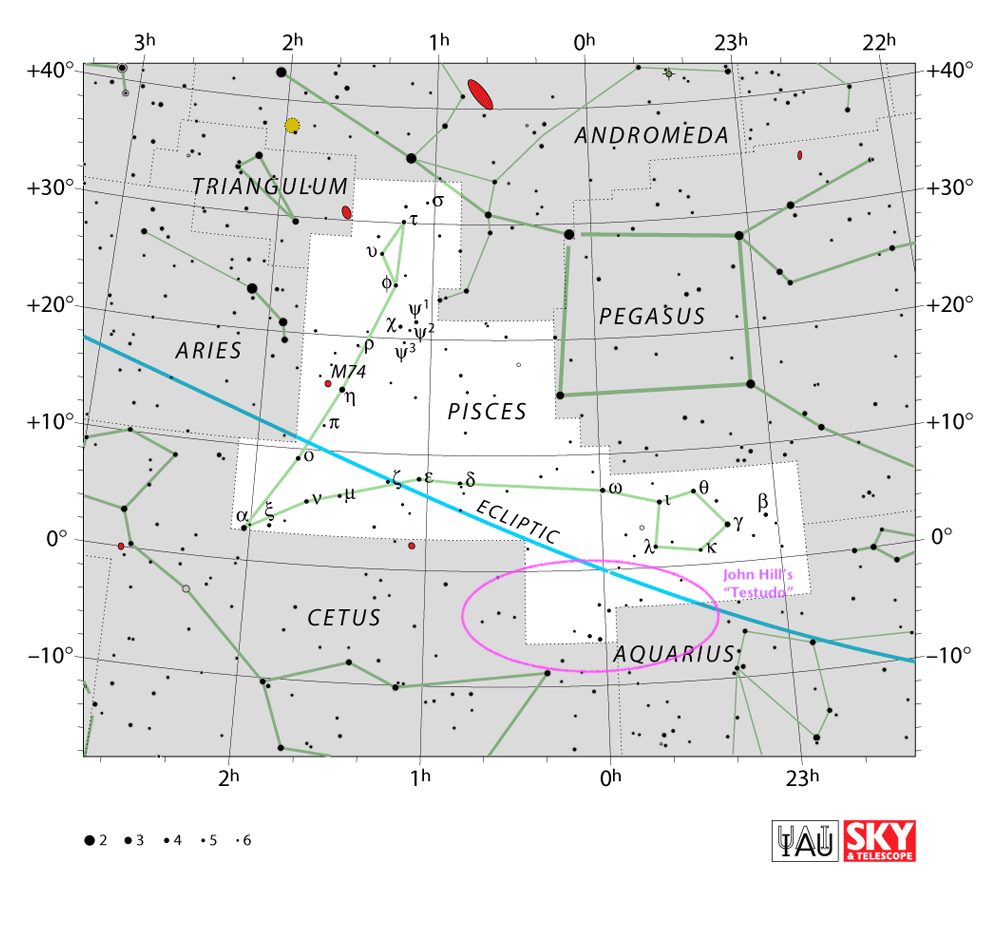
Pisces is both an Ecliptic and Equatorial constellation (the other is Virgo) — at least for now. The intersection of the two “great circles” defines the First Point of Aries where the Sun crosses from the celestial Southern Hemisphere to the North, beginning Spring in the Northern Hemisphere. But why Aries? This is due to Earth’s precession of the equinox where over a period of 26 kyr; as such the precession is about 1° every 72 years moving westward on the celestial equator. So, when first defined that point was in Aries, but in 78 BCE (based on the modern definition of constellation boundaries) it moved into Pisces. It has been inching along since then and will pass into Aquarius in 2597 CE, and then into Capricornus in 4312 CE. Currently it’s located just SE of the Pisces Circlet asterism.
Pisces is also the location for one of John Hill’s “added” constellations: Testudo the Turtle made up of some very faint stars below the western fish/circlet (in the purple ellipse on the map). Among his “contributions” the turtle is one of the more appealing: the others include constellations for the earthworm and slug!
As for deep-sky objects, Pisces has no star clusters or nebulae to offer: all of the brighter objects are galaxies, though for galaxy lovers, there are sample objects of every type: spirals, ellipticals, lenticulars, barred spirals, irregulars and a few compact groups, especially the rich Pisces Cluster (the NGC 507 Group).
Quick Reference: Objects of Interest
| Object | Type | Equipment |
|---|---|---|
| Messier 74 | Spiral Galaxy | Small/Medium Telescope |
| NGC 266 | Intermediate Spiral Galaxy | Medium/Imaging Telescope |
| NGC 488 | Intermediate Spiral Galaxy | Small/Medium Telescope |
| NGC 520 (Arp 157) | Interacting Galaxy Pair | Small/Medium Telescope |
| NGC 660 | Spiral Galaxy | Small/Medium Telescope |
| NGC 507 Group | Galaxy Cluster | Medium/Imaging Telescope |
Phantom Galaxy
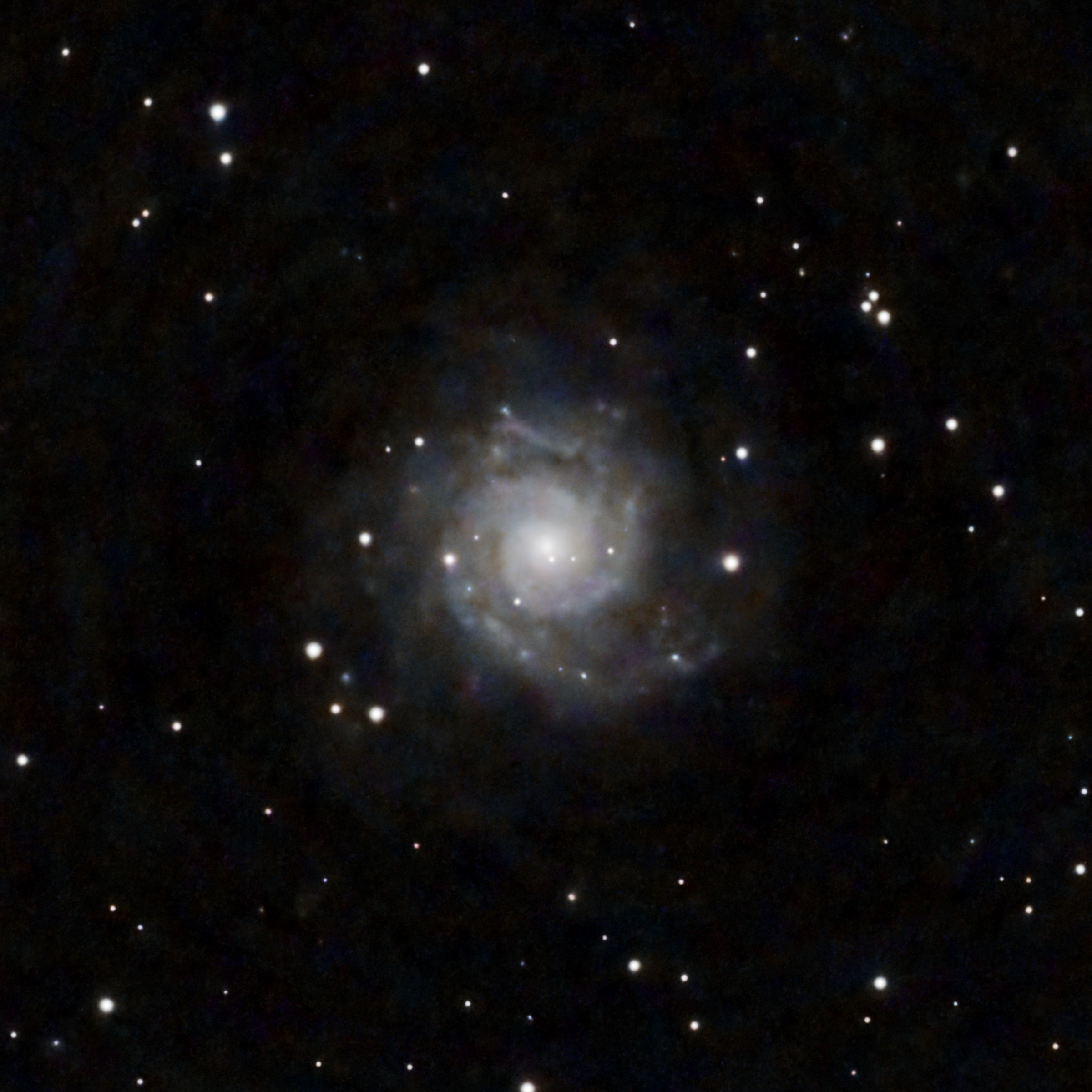
M 74 is one of the “Fall highlight” galaxies: a “Grand Design” spiral, 32 Myr from the Sun with two very defined spiral arms. Like several other Fall galaxies (esp. M 31 and M 33) although bright (mag 9.5), it has low surface brightness, making it particular challenging (you’ll want a very dark night to attempt it). It and nearby NGC 660 (below) are part of the “M74 Group” along with a few fainter irregular galaxies.
A Ring and a Bar
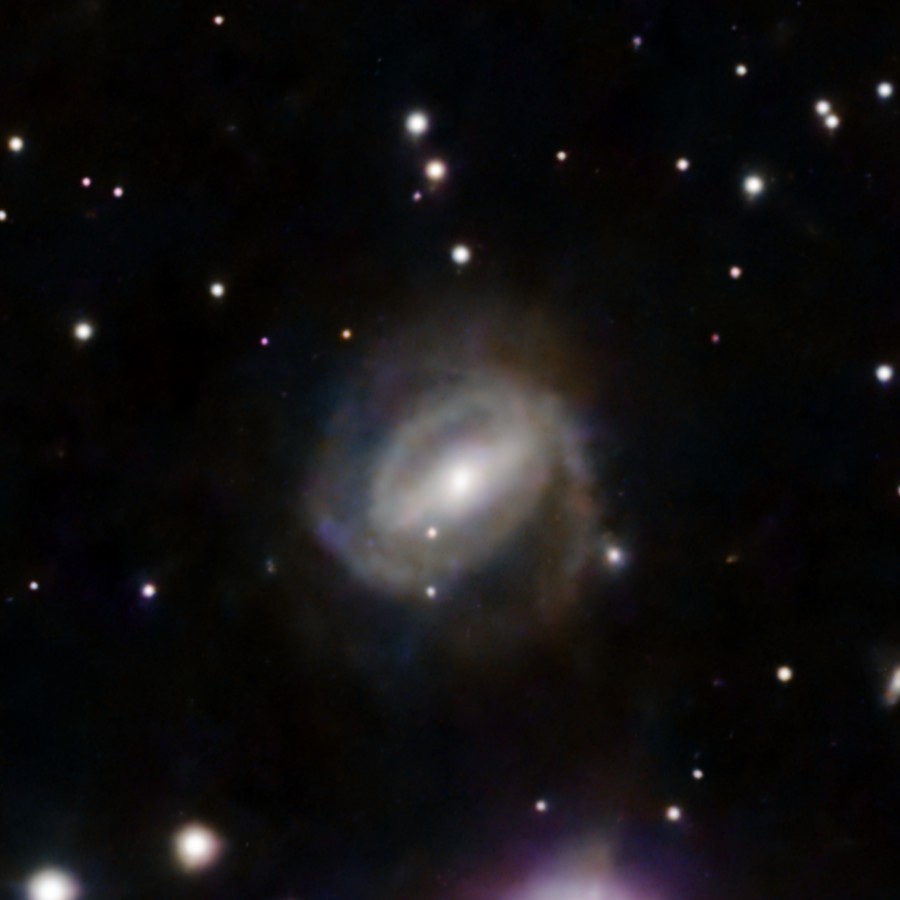
NGC 266 is a massive barred spiral galaxy, about 200 Myr distant. It’s also a member of a larger galaxy group (the NGC 315 Group) and is twice the size of the Milky Way Galaxy: over 200 kly in diameter. With imaging, you can see two spiral arms, and the central bar, but the spiral arms show a ring-like towards the center: all features that go into galaxy morphology classification (here, SB(rs)ab: “B” for barred, “rs” for the ring-like inner structure, and “ab” for the intermediate tightness of the spiral arms.
Very Tight Spirals
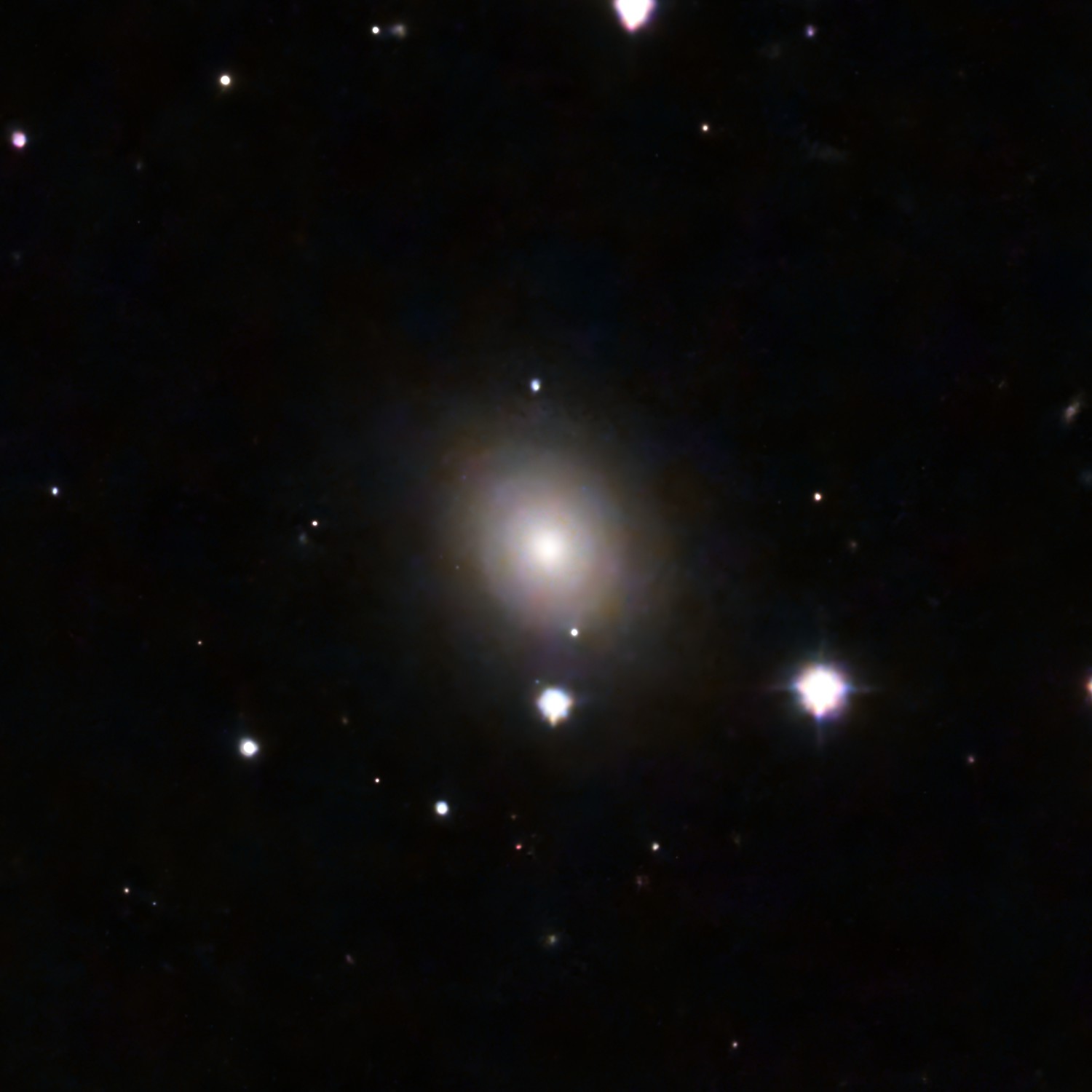
Speaking of tightly-wound, the “Whirligig” Galaxy (NGC 488) has several very thin arms wound so tightly it also looks like an elliptical galaxy in most telescopes. It’s another galaxy that’s much larger than the MWG (about 186,000 ly across). Discerning the faint and very fine structure typically requires imaging. To the NE are a few very faint and small galaxies, but only NGC 490 (mag 14.5) is a satellite (both at just over 100 Myr distance): the others are background galaxies over 500 Myr further away.
Flying Ghost
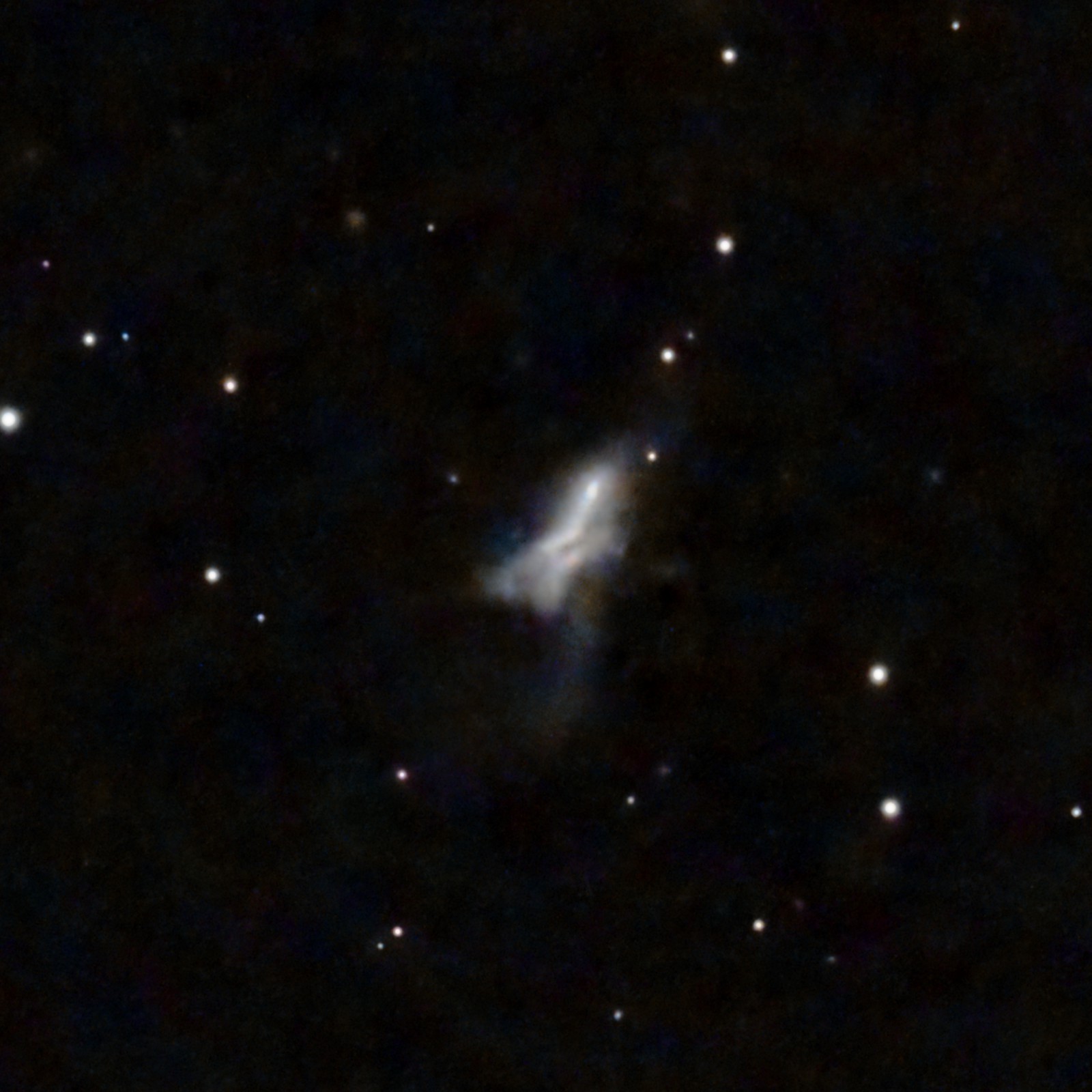
Starting 300 Myr ago, two galaxies began a violent collision (that is still ongoing) appearing like a distorted “X”. Extending from this is a faint tidal tail, with a very faint galaxy (UGC 957) at the end which might be a by-product of the interaction. The pair are 105 Mly from Earth and the combined size of the main bodies are about the size of the Milky Way Galaxy. This is one of the brighter examples of a pair of interacting galaxies (the Antenna Galaxies in the Corvus is another, as is M 51 in Canes Venatici, though with less disturbance.
Elongated Spiral
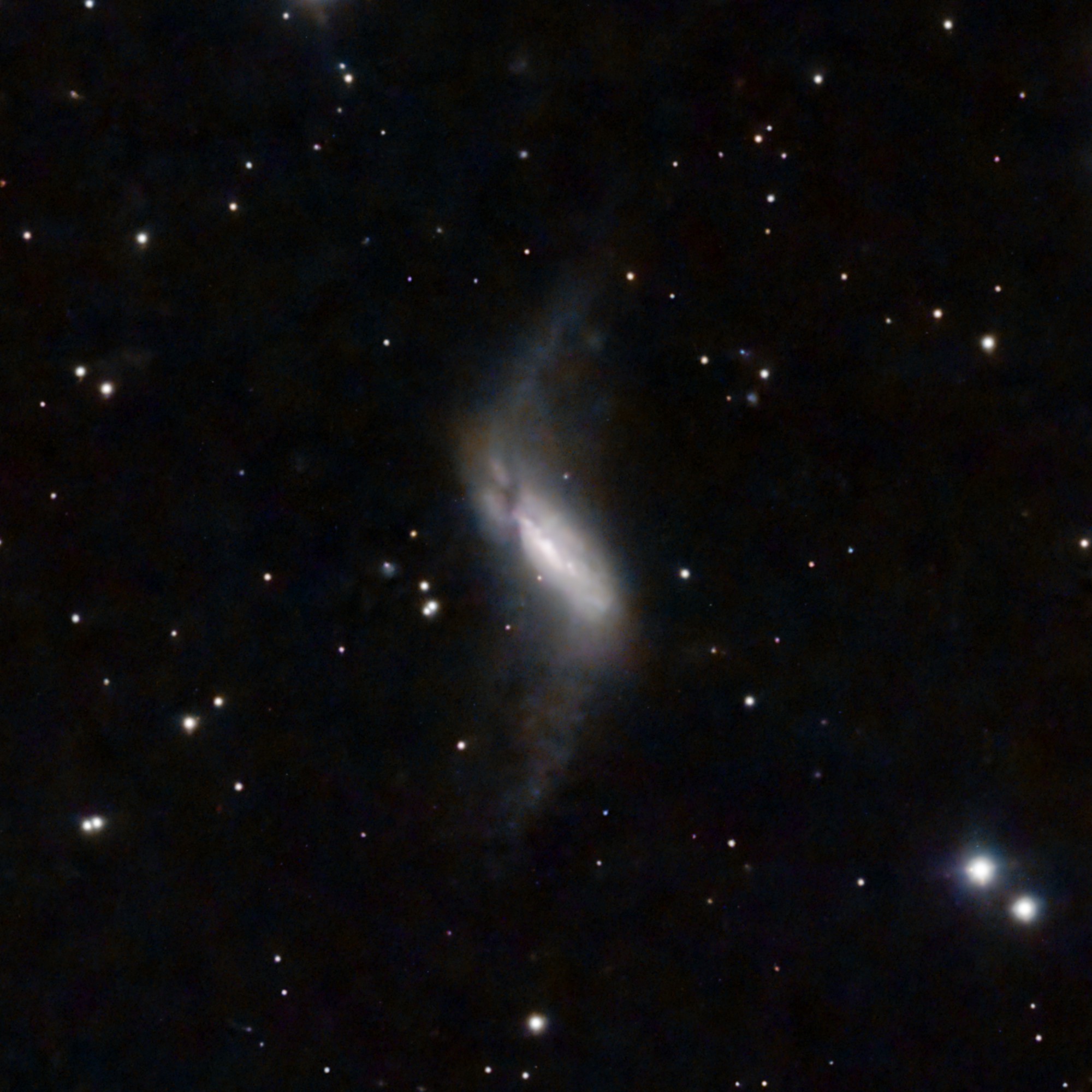
Another likely product of a long-ago galaxy merger, NGC 660 is unique, with a lenticular galaxy at its core, but with a strung-out “ring” (seen almost edge on in the image) that’s 50 kly across that’s still experiencing significant star formation (with many supergiant stars only a few million years old).
Bright Galaxy Cluster
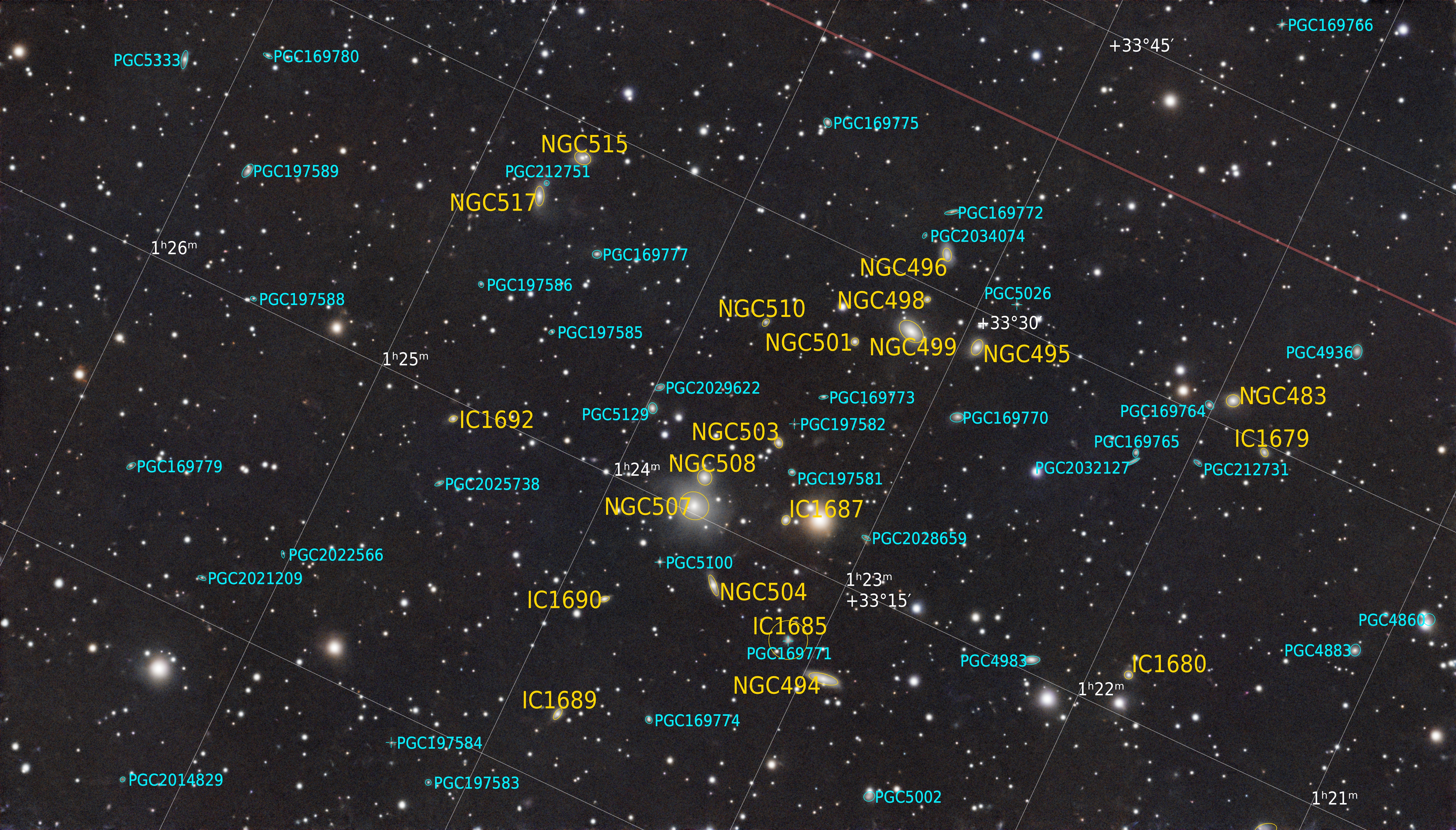
The NGC 503 group (which includes Arp 229 = NGC 507+508) has over 20 galaxies brighter than 15th magnitude. They lie in a cluster about 250 Mly away extending across ~50 Mly, mostly consisting of lenticular and elliptical galaxies, but with a few spirals (the brightest is NGC 494 at the bottom of the image). The brighter galaxies form two clumps: one centered on NGC 499, and the other with the triple pair of NGC 507 and 508, and IC 1687.
In the image, there are also several PGC-designated galaxies, most of whom are also members of this group, all around 250±40 Mly away. In comparison to other observable galaxy clusters, the core of the Virgo Cluster is ~54 Mly, and the Fornax cluster ~62 Mly, are both closer. The Perseus Cluster (centered around NGC 1275) is about the same distance as this (240 Mly) whereas the Coma Cluster is more distant (336 Mly) and the Hercules Cluster (surrounding NGC 6041) even more so (500 Mly).