
The Sculptor’s Workshop
One of only two constellations that denote a place (the other is Mensa for Table Mountain in South Africa), this “filler” of a constellation was added by Nicolas Louis de Lacaille in the 1751, mostly to just carve up the rest of the southern hemisphere skies not already taken up with other constellations. Lacaille’s contribution to the celestial sphere added 14 constellations - mostly dim, and generally in honor of instruments produced in the Age of Enlightenment.
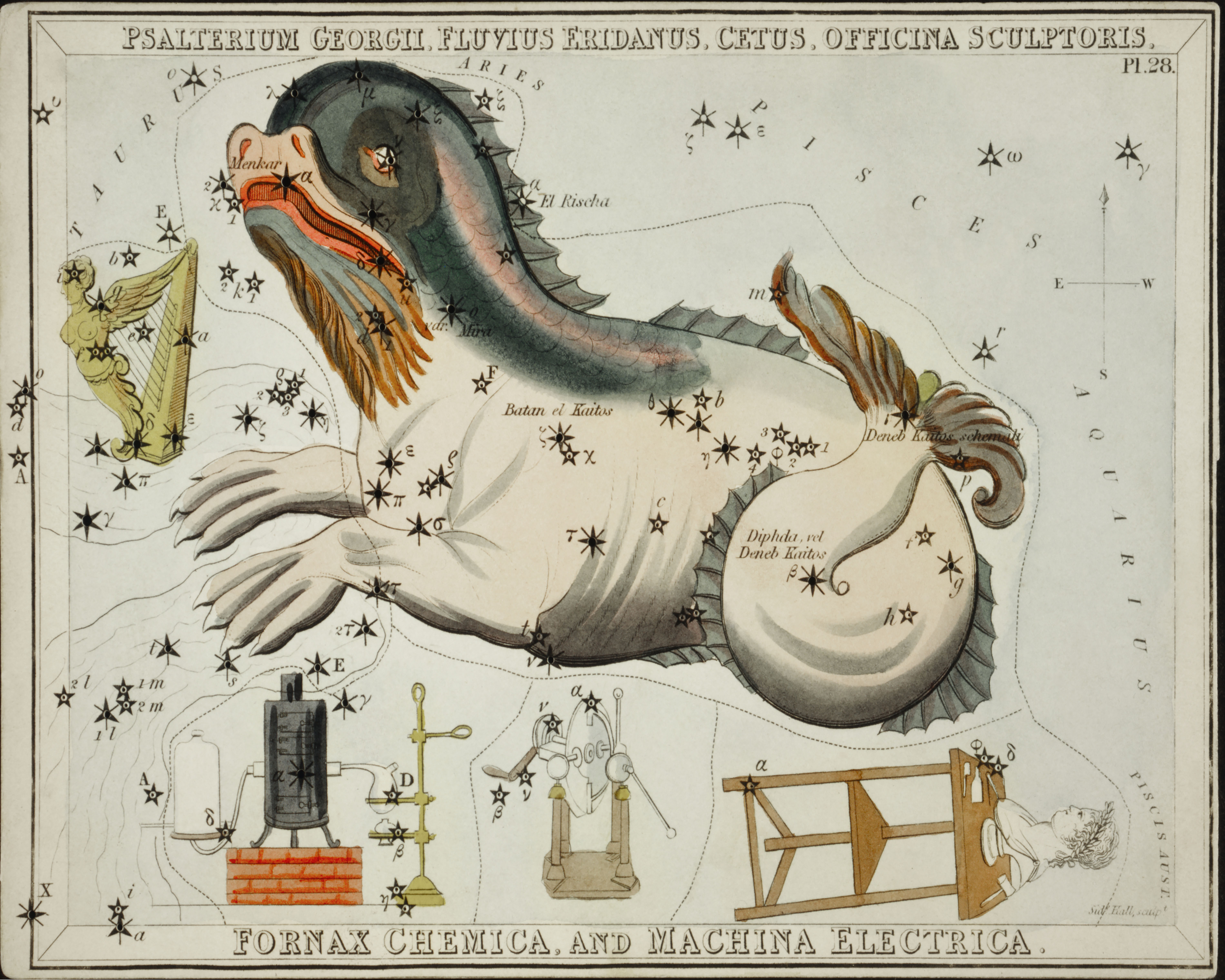
At this time, star charts largely had to do with some artistic representation drawn onto the sky (which also somewhat defined boundaries between constellations, although their positions and shapes varied widely across atlases): somehow out of the scattering of 4th and 5th magnitude stars, we are meant to imagine a three-legged table with a marble bust on top of it!
This region wasn’t entirely unnoticed by the ancients: Aratus called it “The Waters” (which given the watery associations of the constellations around it, makes sense. But despite the un-impressiveness of the constellation itself, contained within Sculptor are many hidden gems - mostly galaxies, and if you’re lucky, you might be able to locate a few of them!
Map of Sculptor
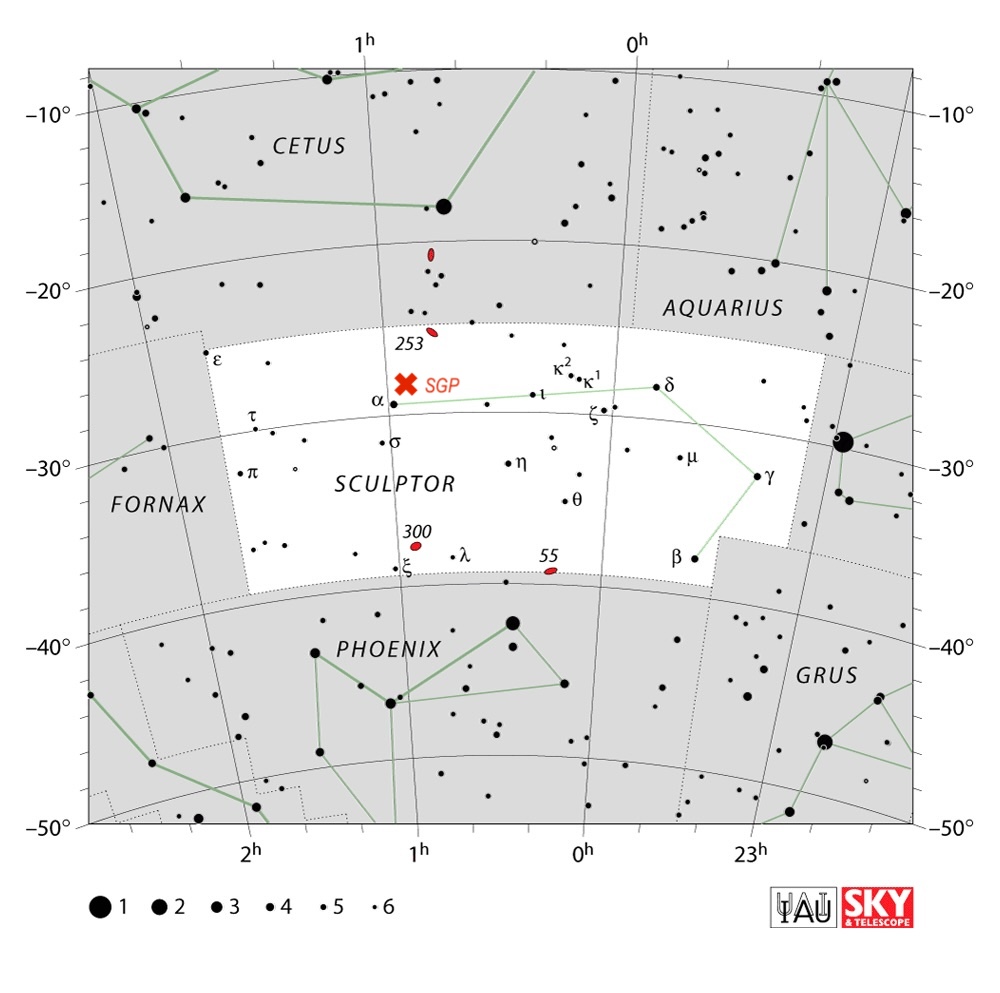
Hugging the southern horizon (in the same way that most of Scorpius does in the Summer), Sculptor has no bright stars to guide you to it. The best way is basically “go East (left) from Fomalhaut (α PsA) until you’re under β Ceti (Diphda, which might look yellowish-orange), and you’re in the area.
Despite the dimness of the constellation as a whole (the brightest star, α Sculptoris, is only magnitude 4.3), the are many bright, large, and spectacular deep-sky objects here! Unfortunately for observers at northern latitudes, just detecting them is a real-challenge: many are at the same low declinations as Messier 7 in Scorpius (the southernmost object in that catalog). But if you have dark skies, good seeing, and access right to the southern horizon, a little effort might pay off! The reason why Sculptor is so rich with extra-galactic objects is it’s location: we’re looking perpendicularly out of the Milky Way Galaxy: the South Galactic Pole is slightly NE from α (Alpha) Sculptors (the big red X on the map, above). (The NGP is located in Coma Berenices.)
Quick Reference: Objects of Interest
| Object | Type | Equipment |
|---|---|---|
| Caldwell 65 (NGC 253) | Intermediate Spiral Galaxy | Small/Medium Telescope |
| NGC 288 | Globular Cluster | Binoculars/Telescopes |
| Caldwell 70 (NGC 300) | Spiral Galaxy | Small/Medium Telescope |
| PGC 3589 | Dwarf Spheroid Galaxy | Medium/Imaging Telescope |
| NGC 613 | Barred Spiral Galaxy | Small/Medium Telescope |
| NGC 7793 | Spiral Galaxy | Small/Medium Telescope |
The Silver Coin

Surprisingly, this is one of the most easily viewed galaxies after Andromeda - at least for southern observers - a can be seen with binoculars. From northern latitudes it’s a greater challenge, though its elongated shape should be discernible even in smaller telescopes. Even though it’ll be low in the sky, it’s easy to locate as it’s just a few degrees south of the bright star β Ceti (Diphda).
Irregular Globular
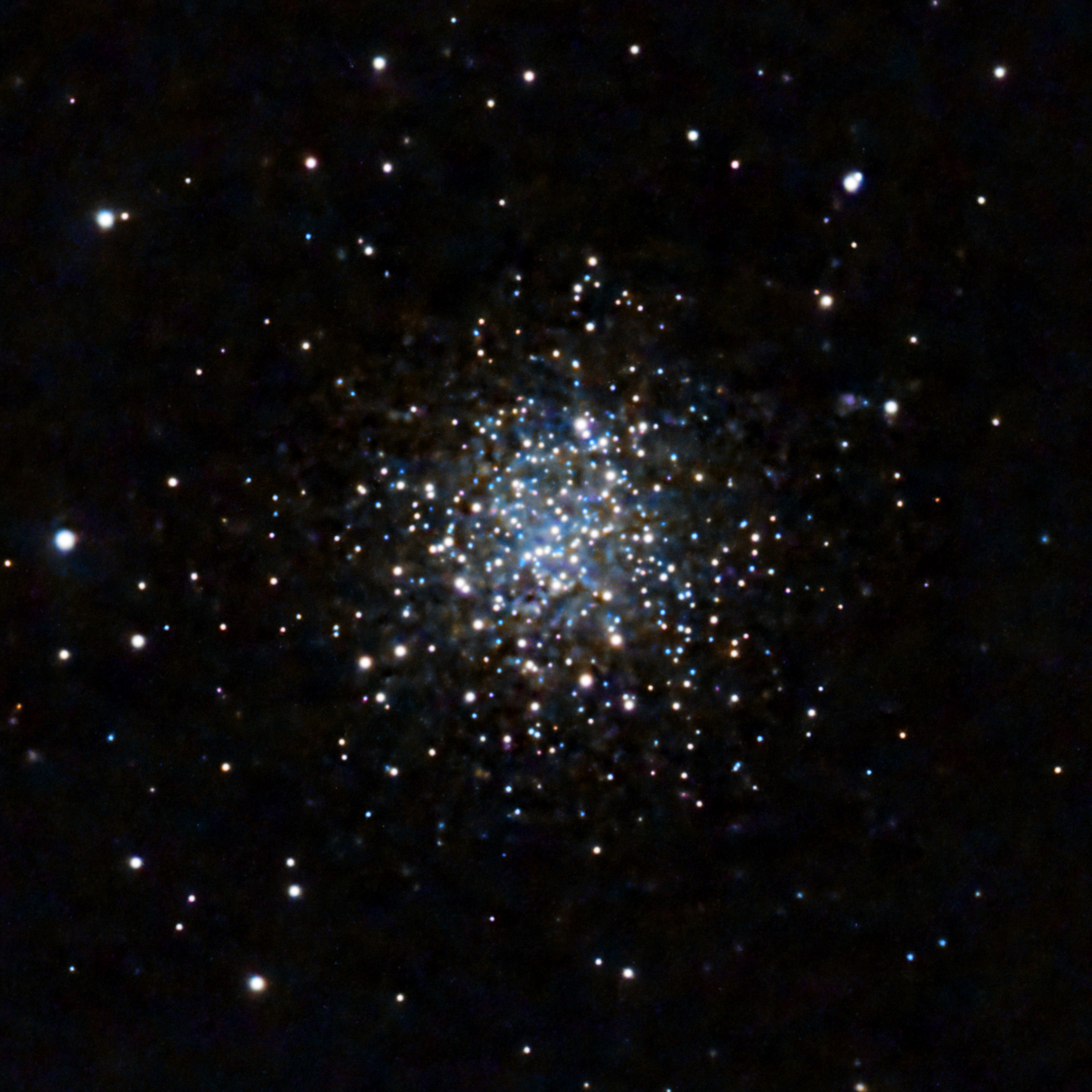
This cluster is slightly loose (class X) with an asymmetric distribution of the brighter stars, especially to the S and SW. It’s bright enough to be visible in larger binoculars. It’s situated only 37’ from the position of the South Galactic Pole; you’re definitely looking out the bottom of the Milky Way Galaxy!
Sculptor Pinwheel
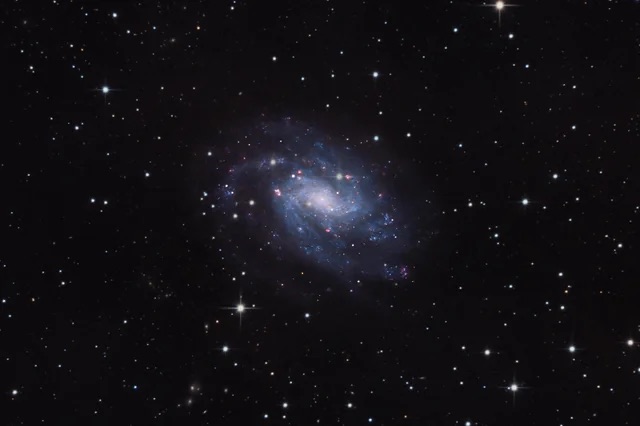
Observing from North Adams, this is about “as low as you can go”: with a declination of almost –38°, it only reaches 10° maximum altitude (at which point you’re looking through 5.75 air masses (overhead it’s 1.0), which reduces its brightness by almost a full magnitude. Only 6 Mly away - it’s fairly close, though its size is smaller than the MWG (94 kly across).
Primitive Satellite
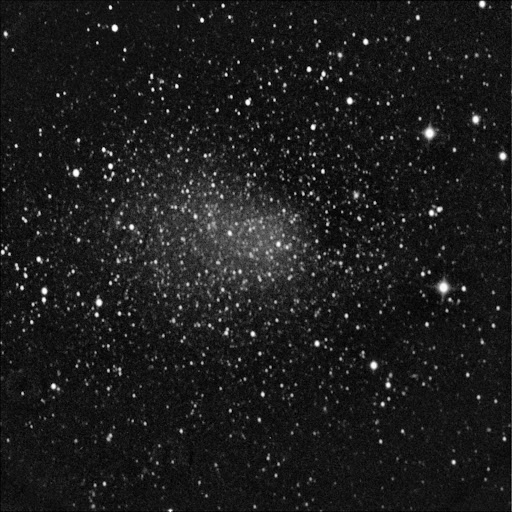
This dwarf spheroidal galaxy almost looks like a loose (but very large) globular cluster. It’s a satellite of the Milky Way, only 290 kly away. It’s extremely metal-poor with two distributions, suggesting that it is the remains of a past merger with another dwarf galaxy. This characteristic is similar to the primitive galaxies we see at great distances from the early Universe.
Elongated Barred Spiral

This galaxy has a little of everything: a central bar, inner ring and several spiral arms (two are especially prominent). In larger scopes, dust lanes are also present. Compared to some of the other bright galaxies in Sculptor, this one is an outlier: 67.5 Mly away and is about the same size as our Milky Way (just under 150 kly across).
Bond’s Galaxy
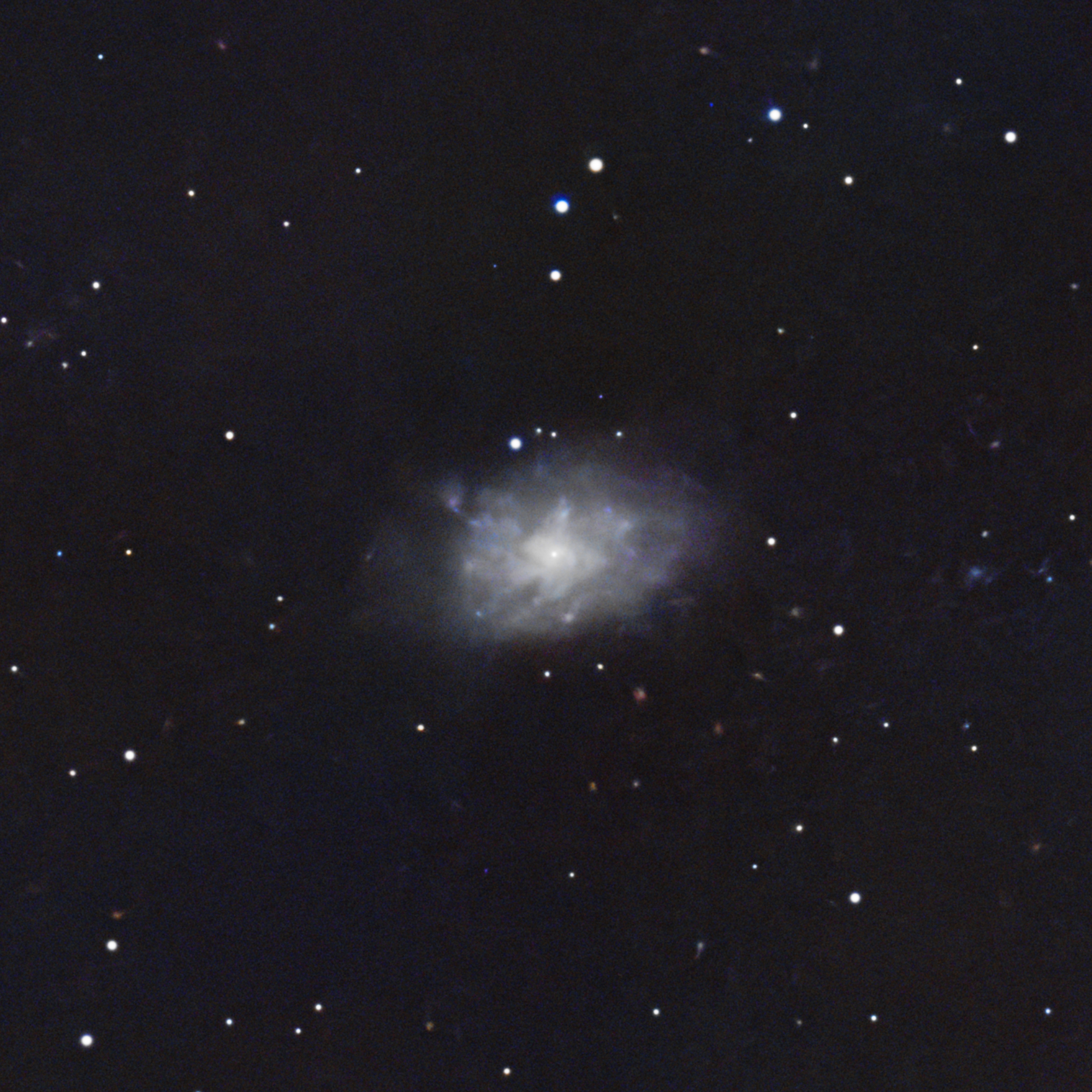
Somewhat nearby at 12.2 Mly (about the same distance and M 81 and M 82), this galaxy is described as “flocculent” (basically “fluffy”) and is one of the five brightest galaxies in the Sculptor Group (that also includes NGC 253, above,