The Scales
Libra is the only zodiacal constellation that represents an inanimate object (all the others are animals/creatures or people). It’s also the second dimmest zodiacal constellation (behind Cancer), and tends to be “overlooked” because the neighboring constellations have brighter stars, or more interesting deep-sky objects.
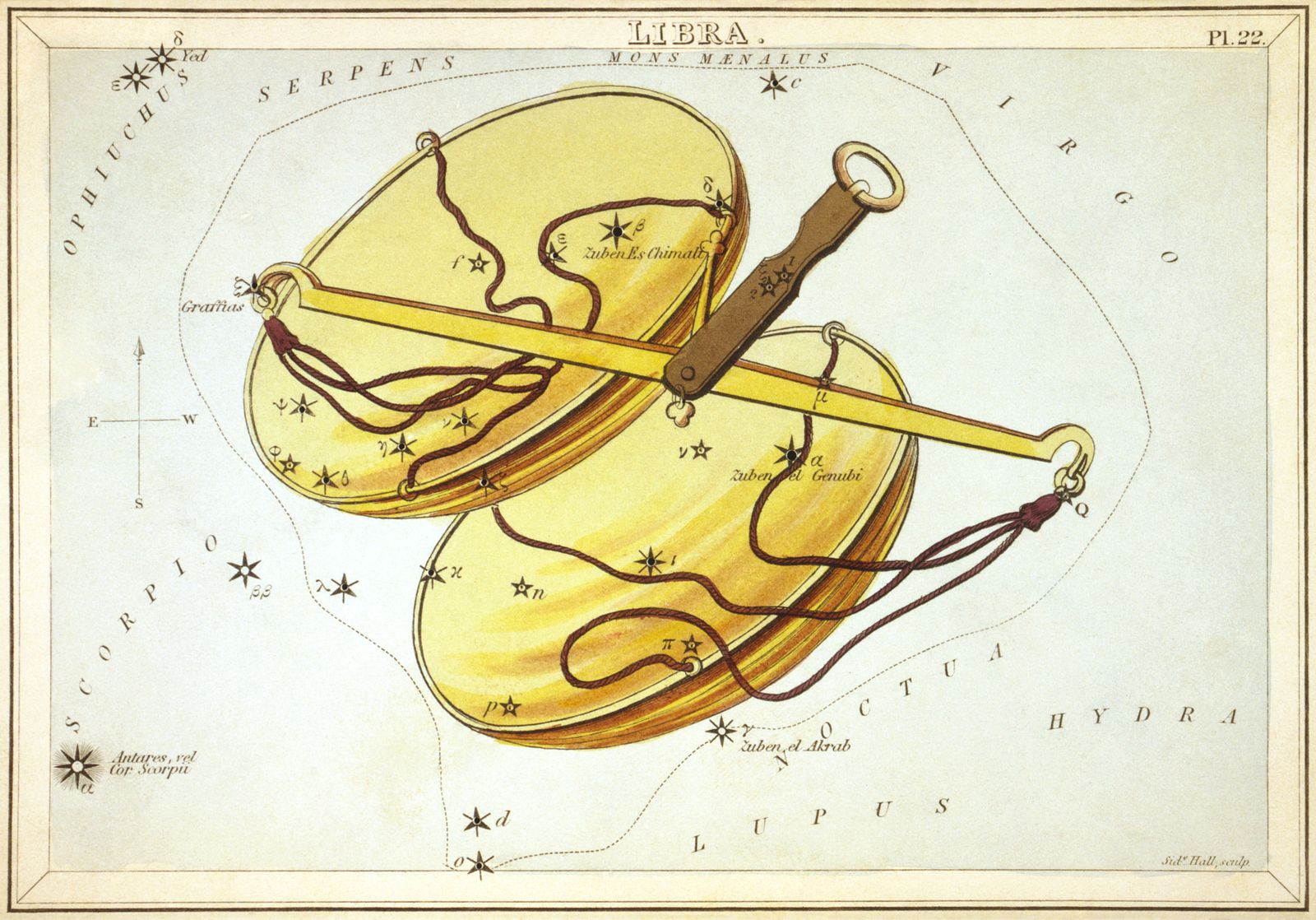
Even its historical provenance is murky: while the Romans associated it with the scales of justice held by Astraea, the goddess of justice, this comes after the Greeks saw it merely as the claws of the Scorpion, while the Babylonians sort-of did both: the star names reference the claws, but it was also seen as “the Balance”. Compared to many other constellations, it’s a late addition - becoming more or less “official” in the first century BCE (just before Ptolemy, though even he referred to the constellations as “the Claws”). Meanwhile the Egyptians just used the three brightest stars as a boat constellation.
Libra’s importance predates most of this: from ~3000 to 730 BCE the position of the Autumnal Equinox (where the ecliptic crosses the equator) was in Libra (it’s now in Virgo), and like the Spring Equinox, is the point in the calendar where the length of day and night are equal. This might have had some influence on Libra’s identification with “scales” or “balance” but its contiguity with Scorpius (and especially the arrangement of stars in both constellations, as Scorpius is very “scorpion looking”) definitely promotes Libra as an “anatomical extension”.
Map of Libra
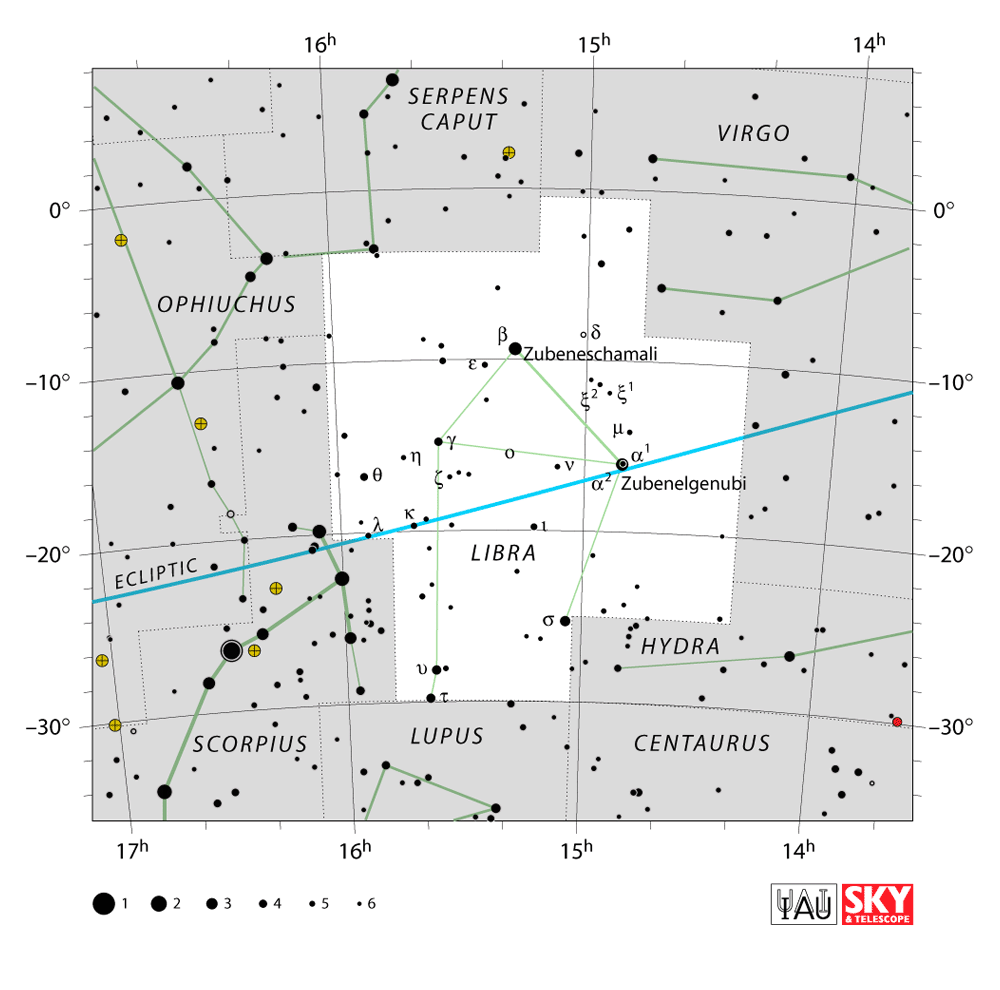
Looking at the stick figure, you can see how Libra could be seen as a balance, and also how it would be easy to just extend the figure of Scorpius “into” Libra. In fact, σ (Sigma) Librae (Brachium, the 3rd brightest star in the constellation) was originally labeled γ (Gamma) Scorpii.
As mentioned above, the brightest stars in Libra also have “scorpion claw” names: α (Alpha) Librae is Zubenelgenubi is “the Southern Claw”, β (Beta) - Zubenelschemali - “the Northern claw”. Finally, γ (Gamma) the name Zubenelhakrabi, which is just “the scorpion’s claw”. (The IAU has also formally designated δ (Delta) Librae as Mulu-izi (“man of fire”) from the name of an Akkadian lunar mansion.
In terms of interesting deep-sky objects, Libra is in a weird void compared to all the constellations around it: it’s midway between the Galactic pole (where you find more galaxies) and equator (where you find more star clusters and nebulae). It contains no objects in either the Messier or Caldwell catalogs. But it does have a few objects that are detectable with small/medium telescopes (and especially images).
Quick Reference: Objects of Interest
| Object | Type | Equipment |
|---|---|---|
| NGC 5595/5597 | Spiral Galaxy Pair | Medium/Imaging Telescope |
| NGC 5728 | Barred Spiral Galaxy | Medium/Imaging Telescope |
| NGC 5987 | Globular Cluster | Small/Medium Telescope |
| LDN 134 | Dark Nebula | Binoculars/Imaging Telescope |
| HD 140283 | Very Old Star | Binoculars/Small Telescope |
| Alpha (α) Librae | Double Star | Binoculars |
Galaxies with a Past
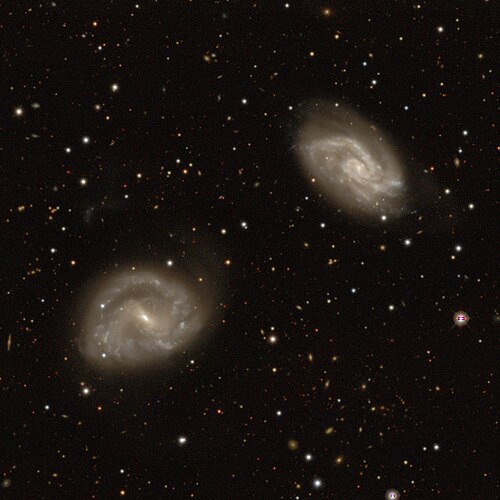
Members of the “Southern Virgo-Libra Cloud” - an extension of the Virgo Cluster, this is a physical pair ~108 Mly, away but only about 114 kly apart from each other (so closer than the Magellanic Clouds are to the MWG). Their slightly twisted shapes suggest have had some sort of interaction in the past, but the lack of features like tidal bridges or stellar streams between them means that any interaction must have been slight.
Triple-Ringed Barred Spiral
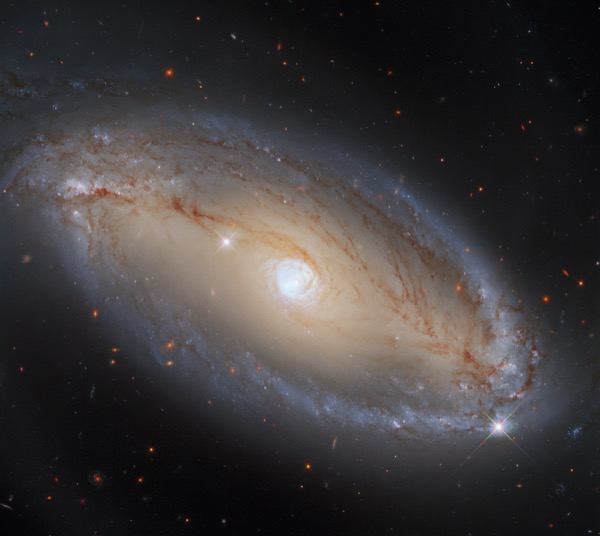
This galaxy has a complicated structure: a bright core, a faint weak bar, dust lanes across the halo and disk and significant star formation in outer ring, making the overall appearance very “eye-like”.
Metal-Poor and Loose Globular Cluster
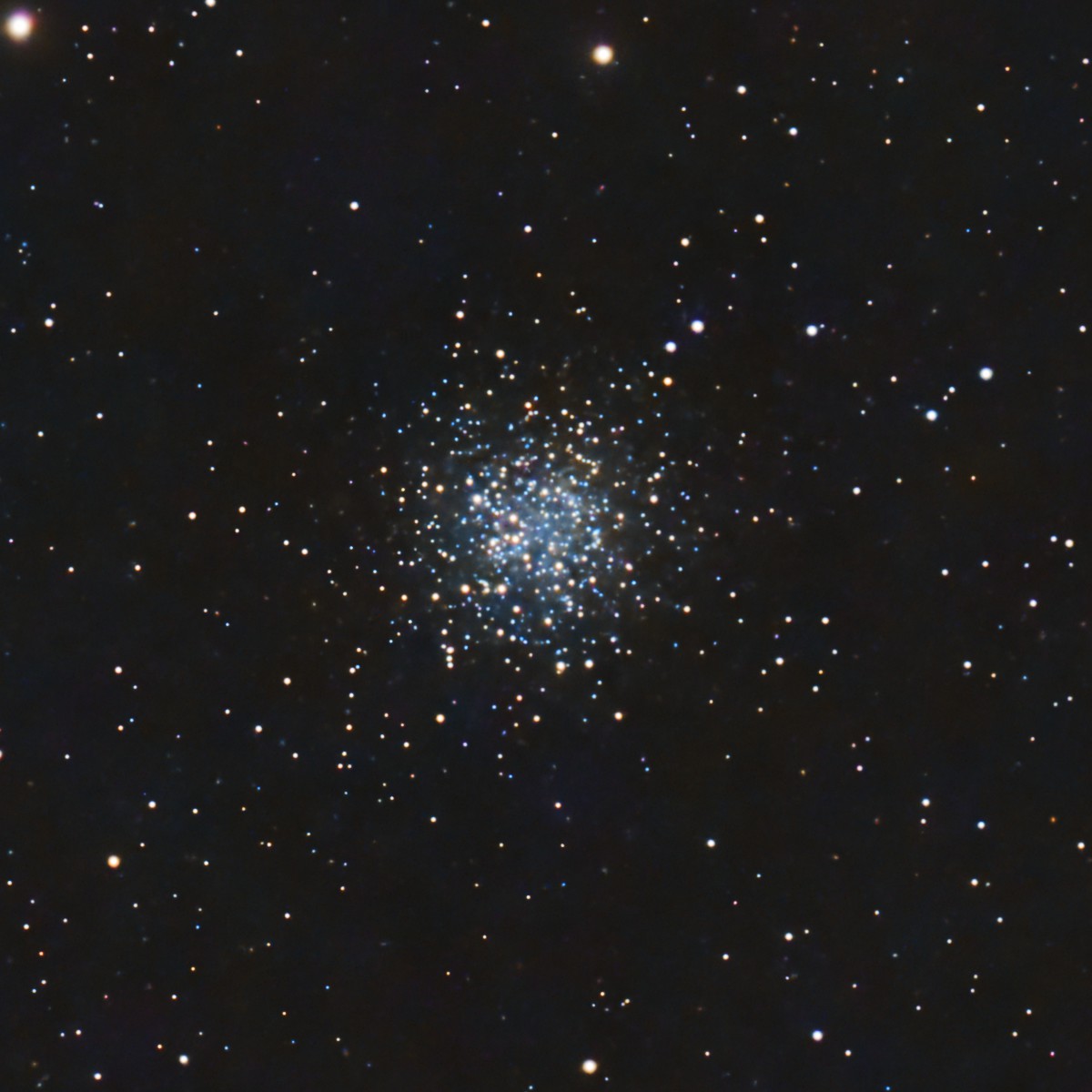
With so many globular clusters in the Spring and Summer skies, this one can get passed over, but it’s a nice gem. It’s an easy target in small/medium telescopes (larger apertures will resolve more stars, showing its “looseness” compared to - say M 13 in Hercules or M 3 in Canes Venatici.
Dark Nebula Complex
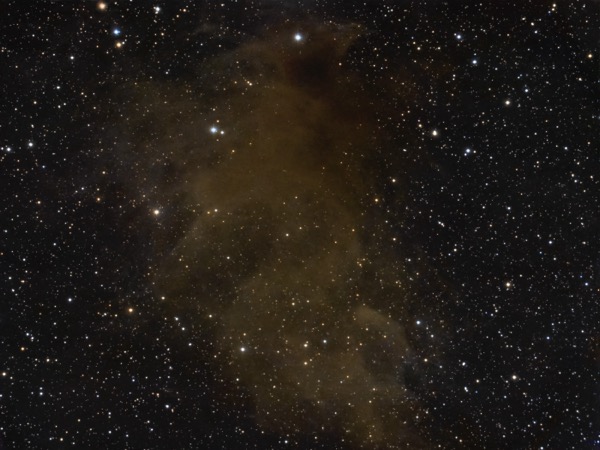
Several molecular clouds are in Libra, extending over 1° all the way to Serpens. LDN 134 and LDN 10 are interesting because they’re somewhat away from the Galactic Plane (b = 35°): most are seen closer to the Milky Way. The “brightness” of the cloud (which only comes out in very long-exposures isn’t from an embedded hot star, but from the light of the Milky Way galaxy reflected on it (an “Integrated Flux Nebula”: most observers will see a dark “void” against the surrounding stars in the area.
Methuselah
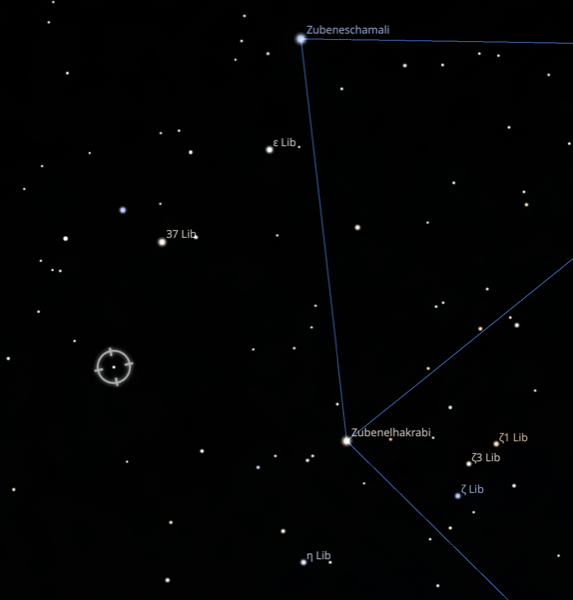
200 ly away, this mag 7.5 star is a puzzle. It’s one of the oldest stars known: the abundances of metals in its atmosphere is 250x lower than the Sun’s. Some models estimate its age at 14.2 Gyr - 500 Myr older than the Universe itself, but stars like this are so rare, getting an accurate age stymies most models. The recent re- determination of its distance (and therefore luminosity) from the GAIA satellite gives a refined age of 12.0-14.0 Gyr which is more realistic, but no matter what it had to have formed very early in the Universe and the formation of our Galaxy. It’s bright enough to find in binoculars.
A Naked-Eye Double?
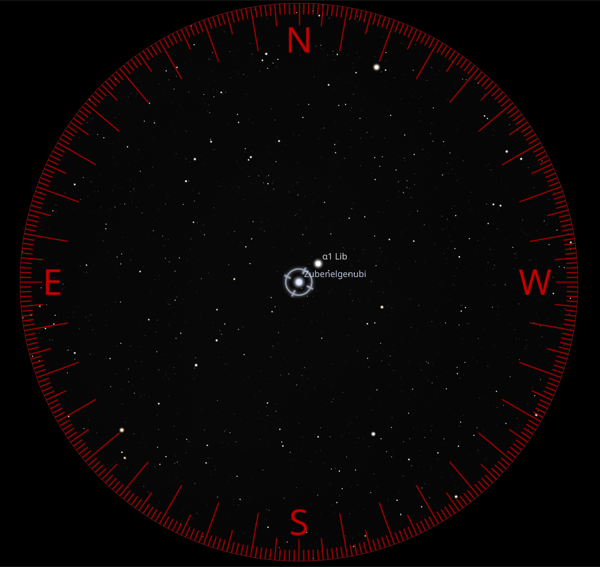
Separated by 3.8’, this mag 2.8 and 5.2 pair is just at the limit of resolution for dark-adapted eyes, so theoretically the most keen-eyed observers might be able to resolve it under very dark and steady skies. It’s probably easier in binoculars; and definitely splittable in a small telescope. The stars are in a physical system: at least 5,500 AU apart implying an orbital period of over 200 kyr.
This is actually a quadruple system as both stars are also spectroscopic binaries (where the two stars are too close to be seen separately). There might also be a fifth star: KU Librae, 2.6°W shares the same space motions, distance, metal content, and age, though at a distance of 217,000 AU, it might not be in orbit around the rest of the system as much as “along for the ride”.