Bright Planet Encounter: Venus and Jupiter
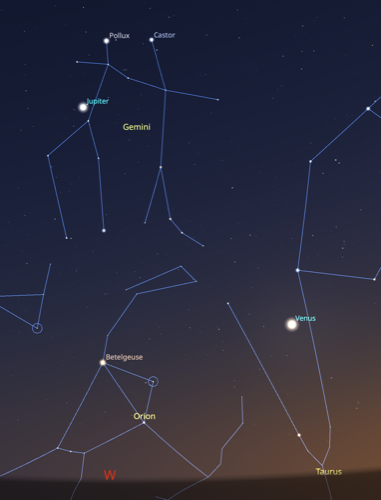
Venus has been creeping up higher and higher this year in the West after sunset. This month, it starts to get closer to Jupiter, which has been sinking lower and lower.
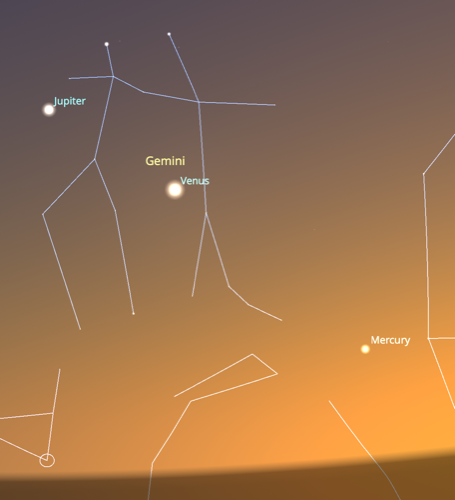
The two planets will be closest in the sky (a conjunction) on June 9th, only 1.6° apart! But for now leading up to that, you can watch them inch closer and closer together. The challenge is that sunsets (and the end of astronomical twilight) are also getting later, so you might have to sneak a peek before it’s completely dark.
Timings
| Date | Sunset | Twi. End | Jupiter Set | Venus Set | Sep. |
|---|---|---|---|---|---|
| May 10 | 8:02 PM | 10:00 PM | 12:37 AM | 10:37 PM | 30° |
| May 20 | 8:13 PM | 10:14 PM | 12:07 AM | 10:52 PM | 20° |
| May 30 | 8:22 PM | 10:30 PM | 11:39 PM | 11:03 PM | 10° |
Venus and Jupiter in Twilight
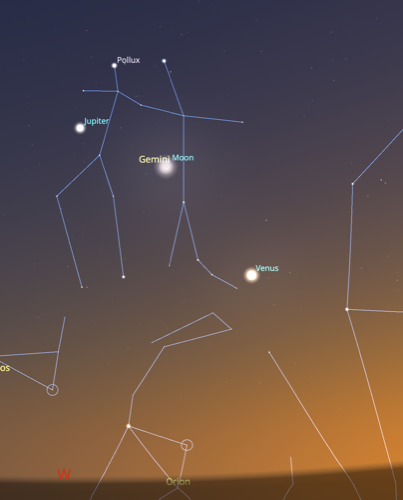
The Moon stands between the two around the 20th which might be a neat photo-op for a smartphone camera on a tripod! (If anyone does capture it, we can feature it in next month’s newsletter!)
Late in the month (and into June), Mercury also comes up over the western horizon (briefly - it reaches maximum altitude on the 10th).
Spring Meteor Showers!
Two meteor showers in May!
The Eta (η) Aquarids
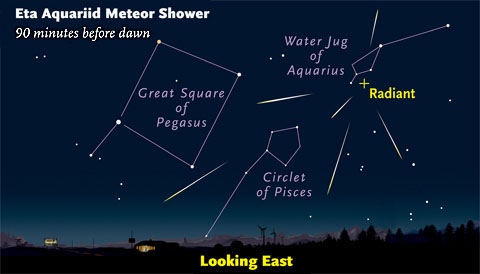
The peak is around May 5th, but you’ll see meteors from this shower broadly from mid-to-late April all through May, which a rate of about 1 per minute (it can be twice that some years). Unfortunately this year the peak happens just after Full Moon, and the radiant doesn’t rise until the early morning hours, so for most of May you’ll have to contend with the Moon getting in the way.
The Eta (η) Lyrids
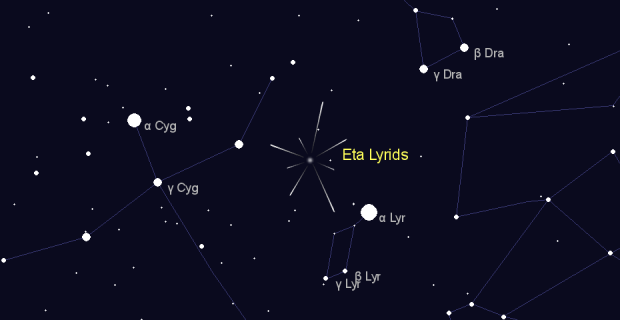
Psyche Probe Reaches Mars
Launched in 2023, the Psyche probe is on a 6-year journey to visit it’s namesake, asteroid 16 Psyche.
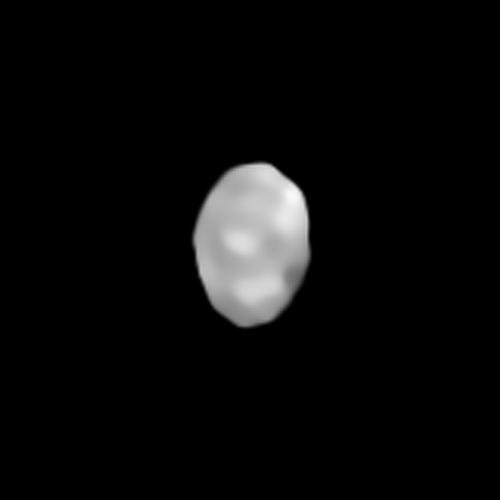
But to have such a high metal content, it has to have had an interesting history. The prevailing theory is that it’s the remnant exposed core of a larger asteroid about twice its current size with a differentiated interior: more-massive objects while still molten in their early formation would allow the heavier materials to sink to a core; lighter objects (like most of the asteroids) cool before this can happen, and are therefore “undifferentiated” with a similar composition throughout. After one or more collisions, the crust and mantle have been largely stripped away, leaving the differentiated code behind.
Another theory suggests that early in its history, while it was still cooling, it
experienced “ferrovolcanism” with iron being transported and spewed on the surface.
If that’s the case, then when the probe reaches 16 Psyche it should see localized regions
of higher iron content.
The Psyche Mission
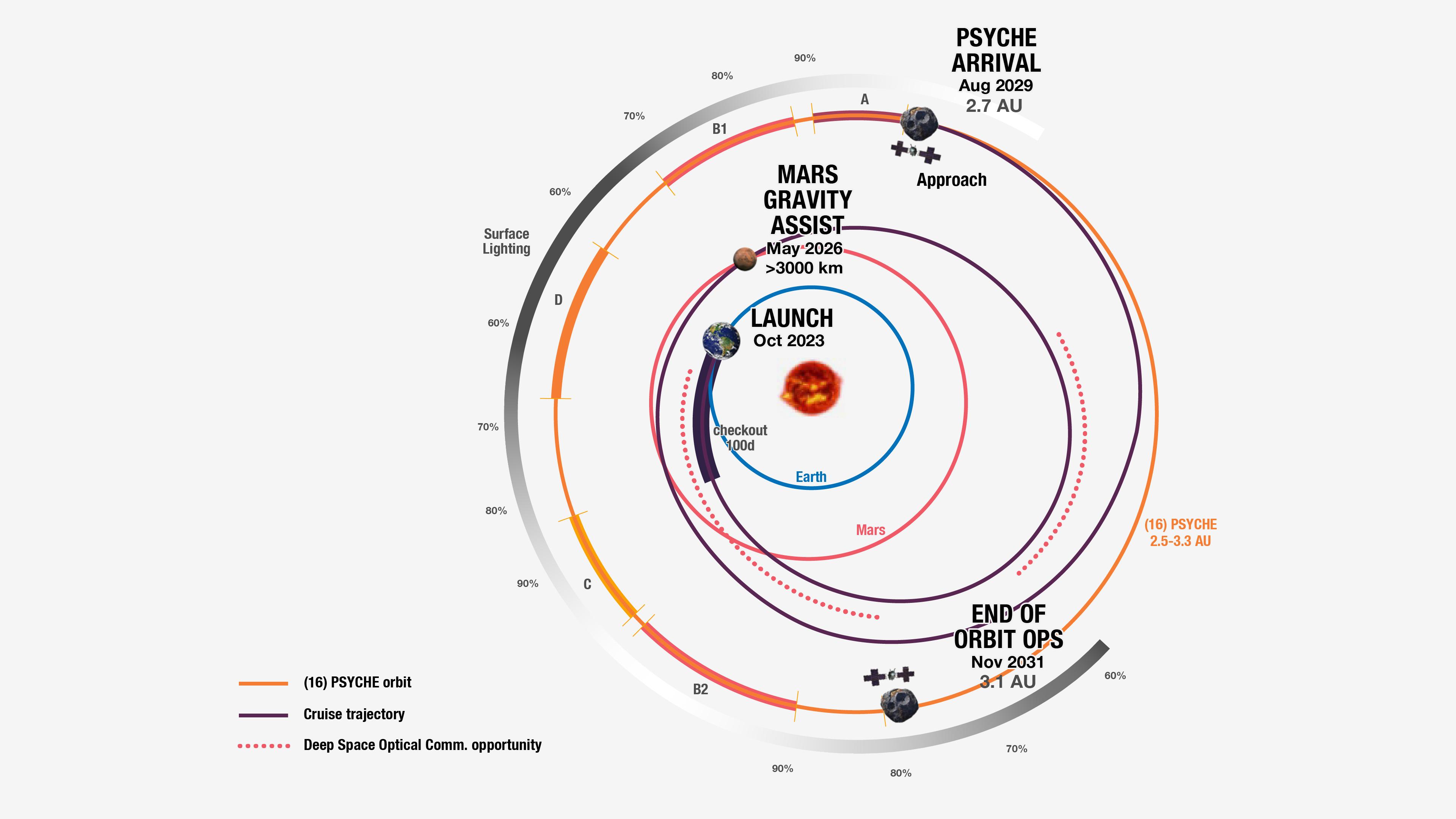
Launched in October 2023, the spacecraft is getting a gravity assist from Mars in May, giving it the boost it needs to get out to the asteroid belt. It will arrive in 2029 and spend several months in orbit around the asteroid, mapping it in three-dimensions.
This Month’s Image
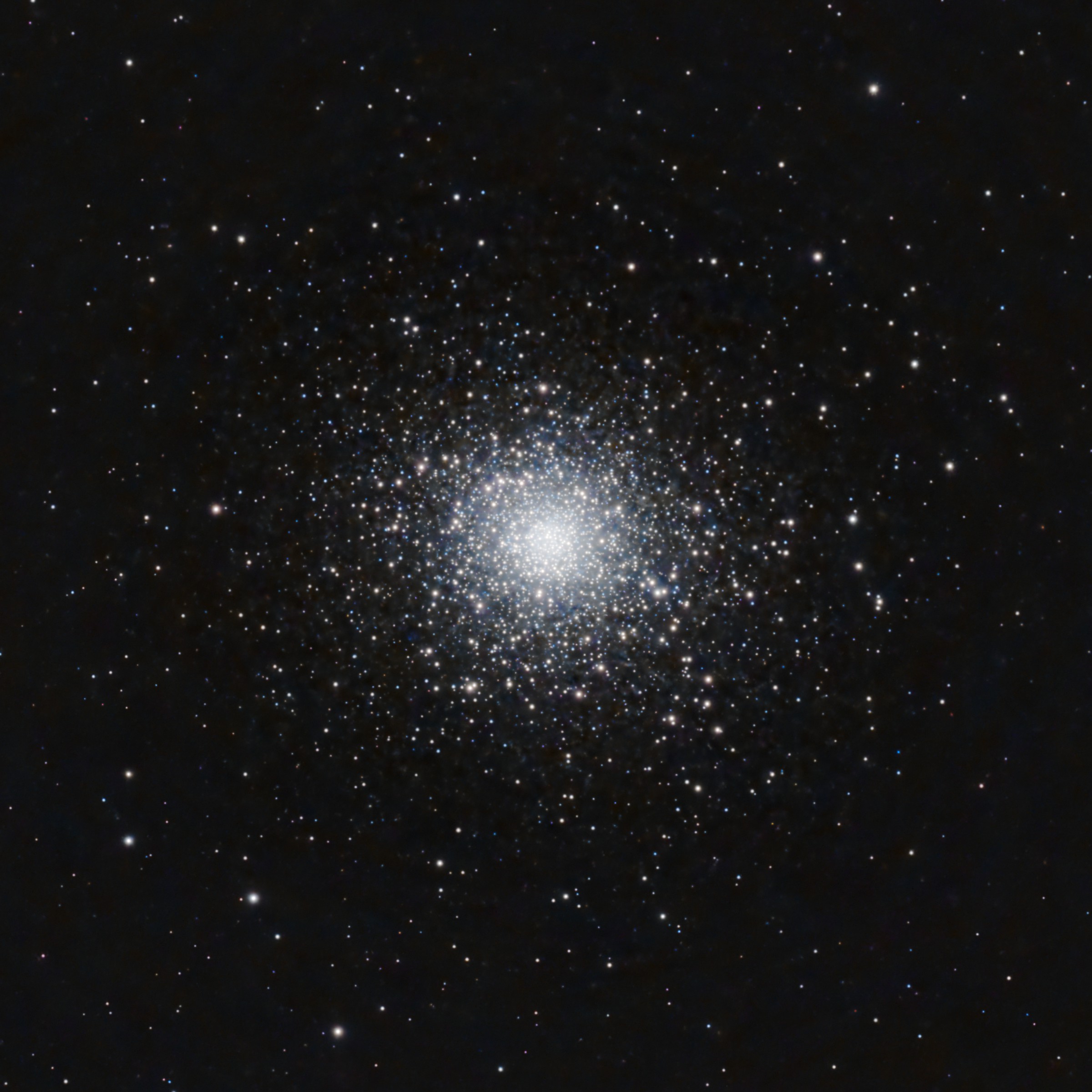
This globular is overshadowed by the competition, namely the Great Hercules Cluster (M 13), but it’s almost as bright: under very dark skies, like M 13, it is visible dimly to the naked eye. While in binoculars and smaller telescopes, it only shows as a hazy patch, larger telescopes (≥ 6") will resolve individual stars: the brightest are about mag 10.5. It also might be one of the younger globular clusters: only 10.6 Gyr instead of the usual ~12.
🔭 Monthly Starmap
To help you navigate the night sky this month, we’ve provided a high-resolution starmap. The PNG is great for quick viewing, while the PDF is optimized for sharp home printing.
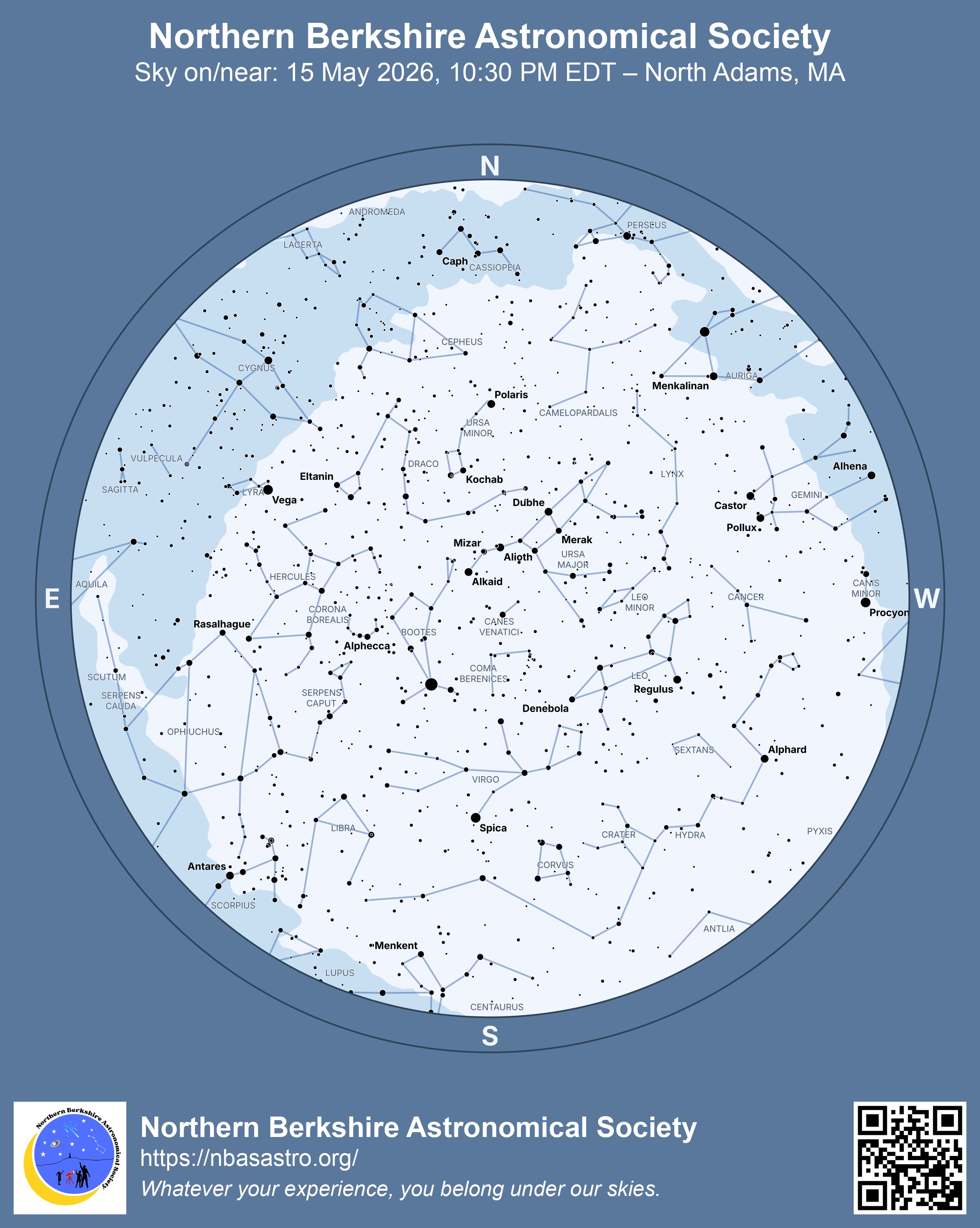
May 2026 Reference Starmap
Reference chart (no planets) — optimized for sharp home printing.
📥 Download Chart (Print Ready)