
Introduction
Spring is Galaxy Season! In Virgo and Coma Berenices is the heart of the Virgo cluster with thousands of galaxies. But there are many that are reachable even with small telescopes.
Here are 10. All within a small part of the sky (within a 6° circle), with a range of shapes.
How many can you find?
Objects
| Name | Type | RA | Dec | Mag. | Size | Con. | Dist. |
|---|---|---|---|---|---|---|---|
| M 84 | Elliptical | 12h 25.1m | +12° 53.2' | 9.8 | 7.4' | Vir | 55 Mly |
| M 86 | Elliptical | 12h 26.2m | +12° 56.8' | 8.9 | 11.5' | Vir | 52 Mly |
| M 87 | Elliptical | 12h 30.8m | +12° 23.4' | 9.0 | 7.1' | Vir | 54 Mly |
| M 88 | Spiral | 12h 32.0m | +14° 25.2' | 10.3 | 8.7' | Com | 47 Mly |
| M 90 | Spiral | 12h 36.8m | +13° 09.8' | 10.7 | 9.1' | Vir | 59 Mly |
| M 91 | Spiral | 12h 35.4m | +14° 29.8' | 11.0 | 5.5' | Com | 63 Mly |
| M 99 | Spiral | 12h 18.8m | +14° 25.0' | 9.8 | 5.0' | Com | 45 Mly |
| M 100 | Intermediate | 12h 22.9m | +15° 49.3' | 9.5 | 6.0' | Com | 55 Mly |
| NGC 4216 | Intermediate | 12h 15.9m | +13° 09.0' | 9.9 | 7.8' | Vir | 55 Mly |
| NGC 4302 | Spiral | 12h 21.7m | =14° 35.9' | 11.5 | 6.0' | Com | ~54 Mly |
(1 Mly = 1 million light years)
Descriptions
M 84 and M 86
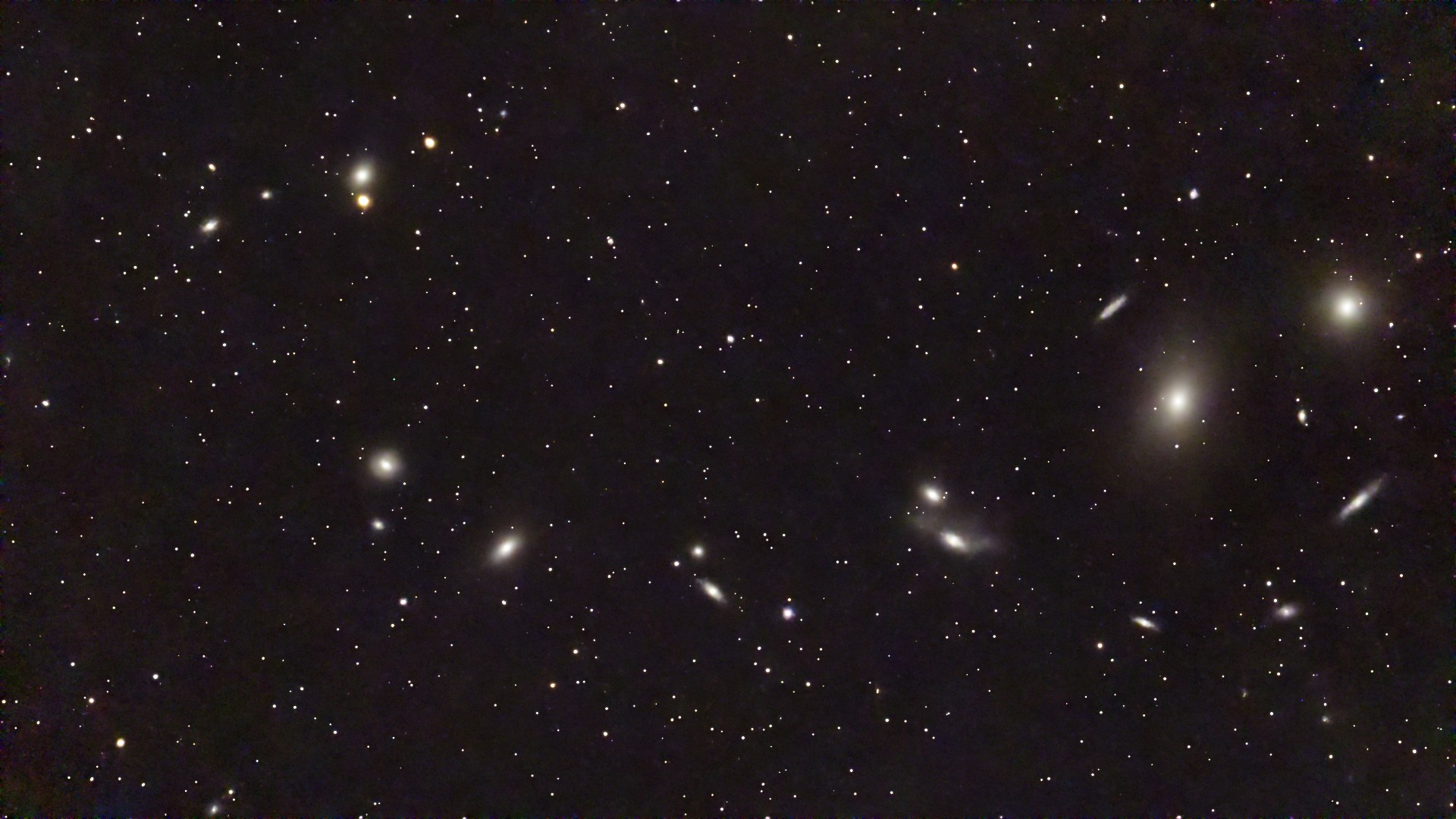
Both are ellipticals, and are at the head of “Markarian’s Chain” so you might be able to detect some of the fainter members trailing off to the East from this pair.
M 87 = Virgo A
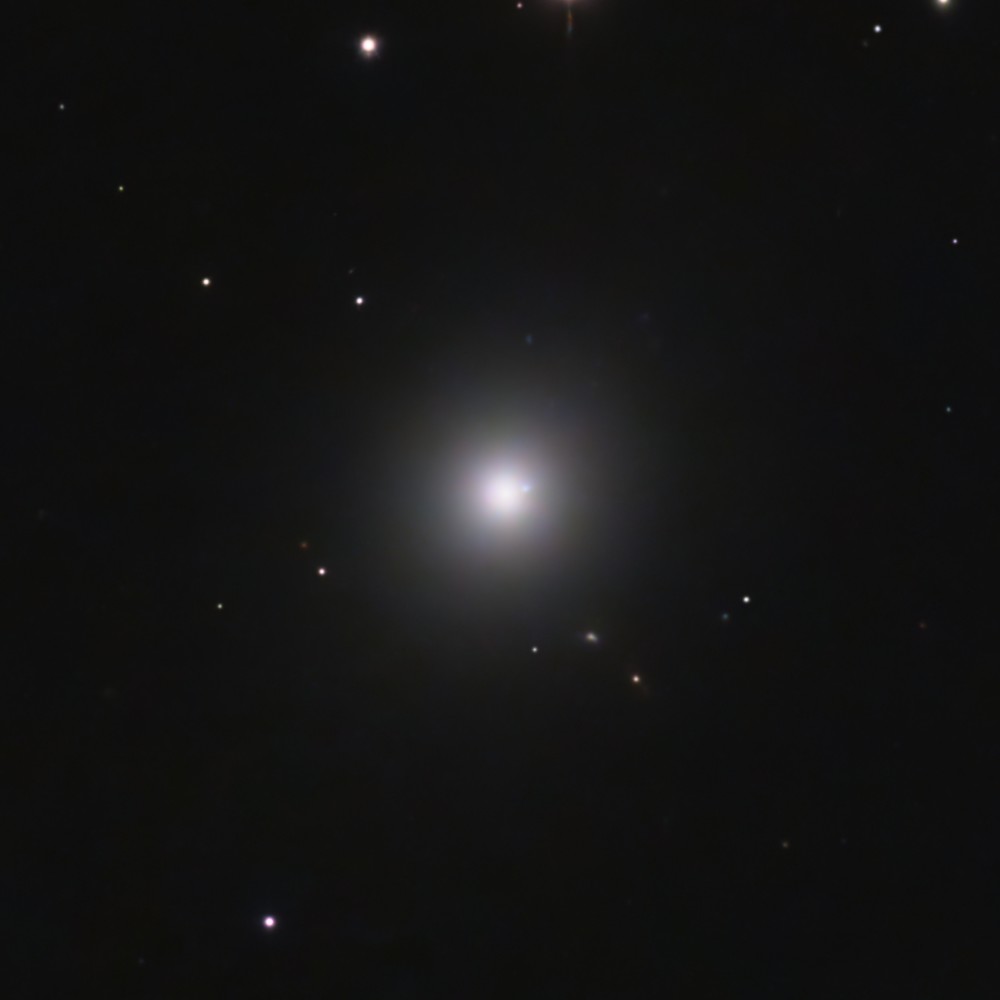
One of the largest and most massive galaxies in the local universe: it has probably consumed many other galaxies in past encounters. It has over 15,000 globular clusters (about 100x the number the Milky Way has). It’s close to the graviational center of the Virgo Cluster (no doubt adding to its cannabalistic nature).
Observationally, like most ellipticals, there’s not much see - they generally look like a soft, puffy cotton ball: but this ball holds a secret: a central super-massive black hole at the center that creates a jet of plasma (which you might see as a blue spot in the image) traveling at relativistic speeds.
M 88
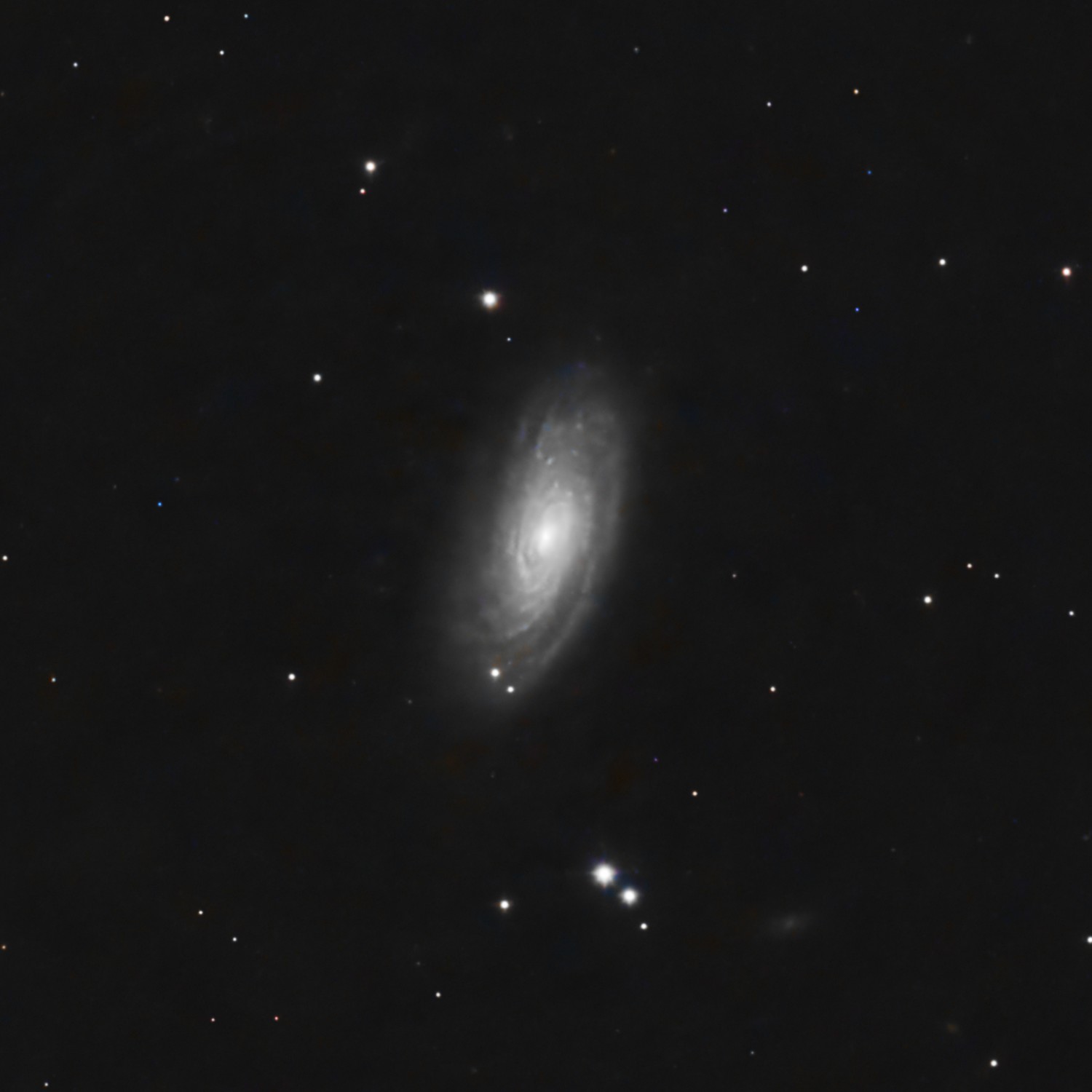
In smaller telescopes, the halo will appear as slightly elongated. You’ll need a larger scope to detect the spiral arms.
M 90
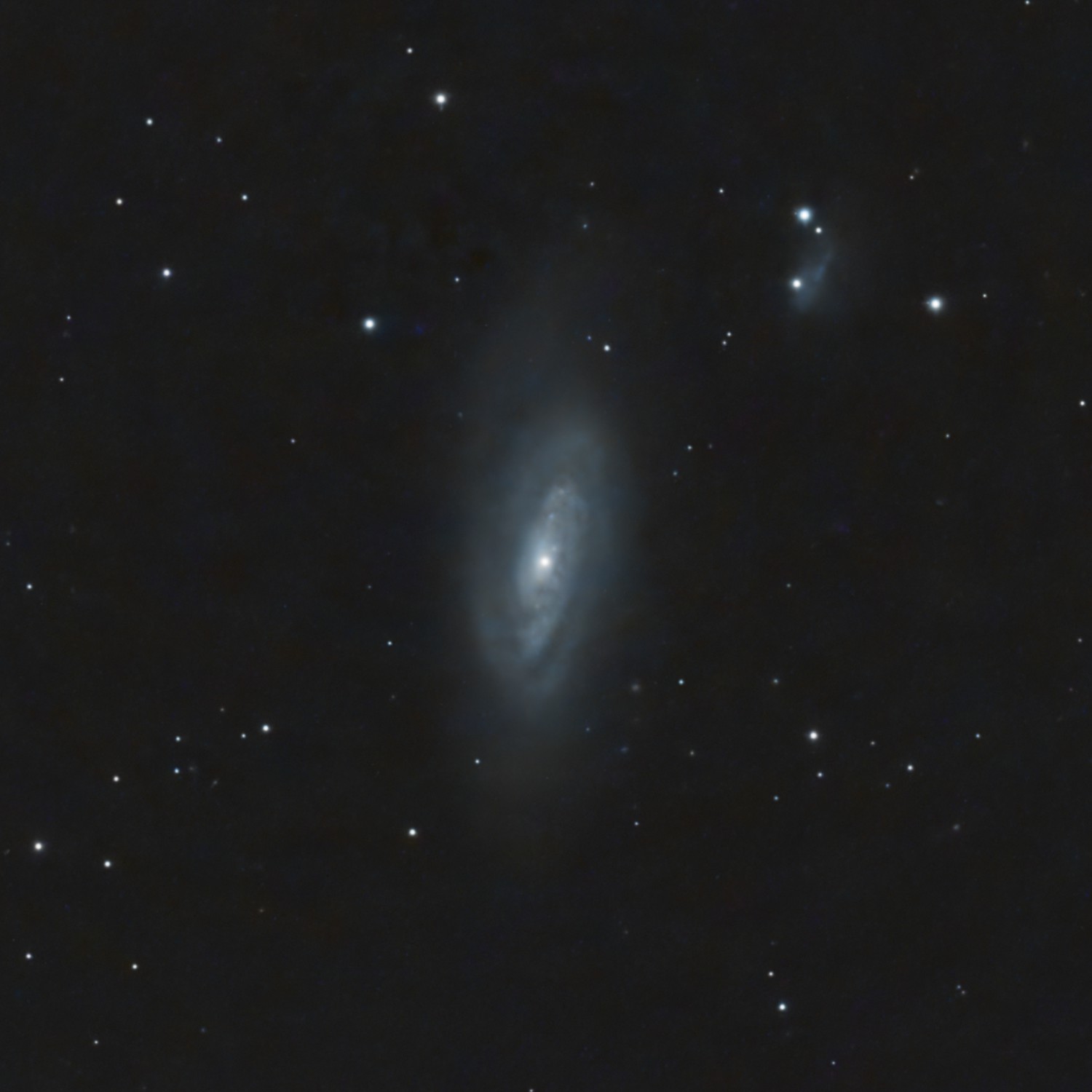
M 91
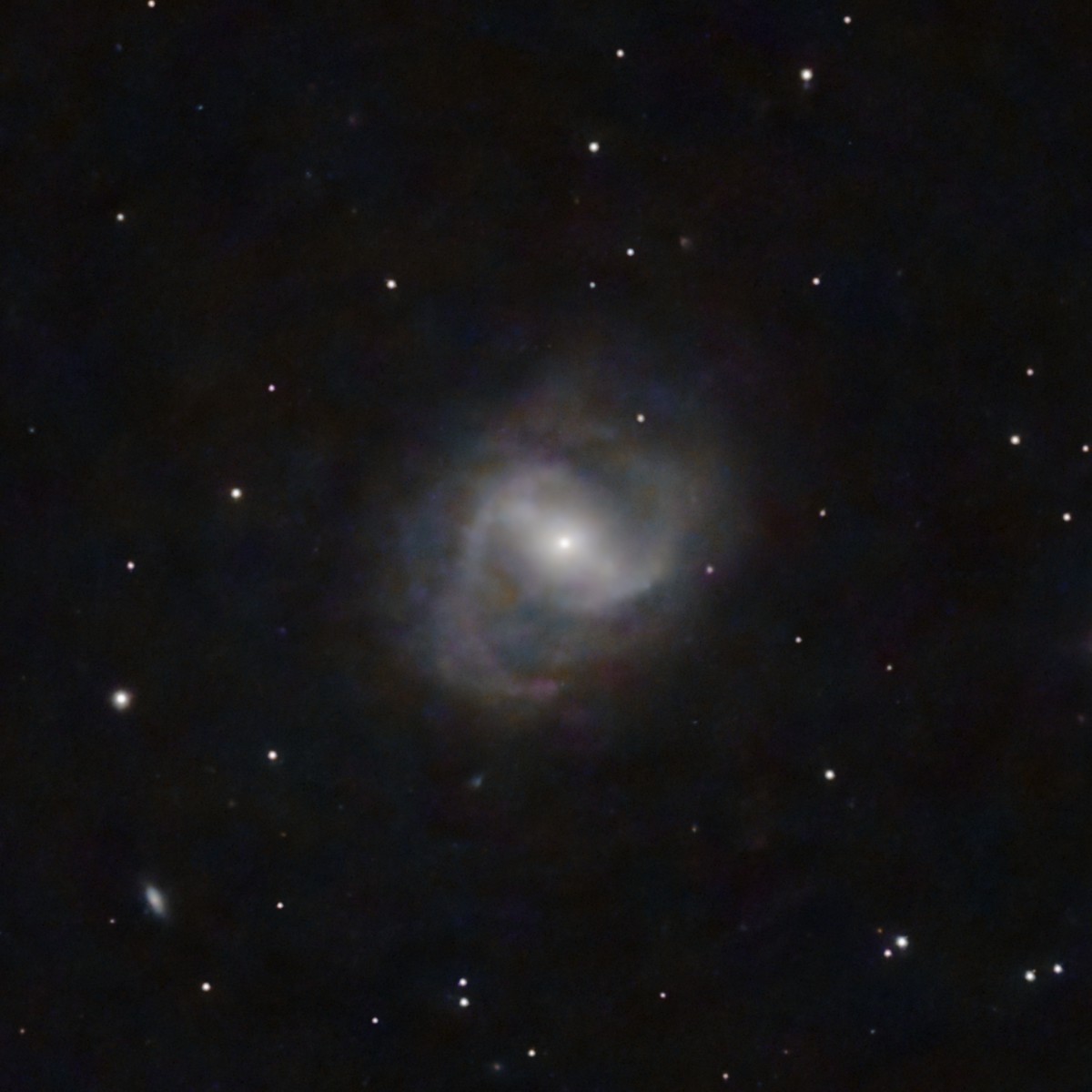
In small telescopes, you’ll probably notice that it’s elongated with an oval haze surrounding it,
M 99
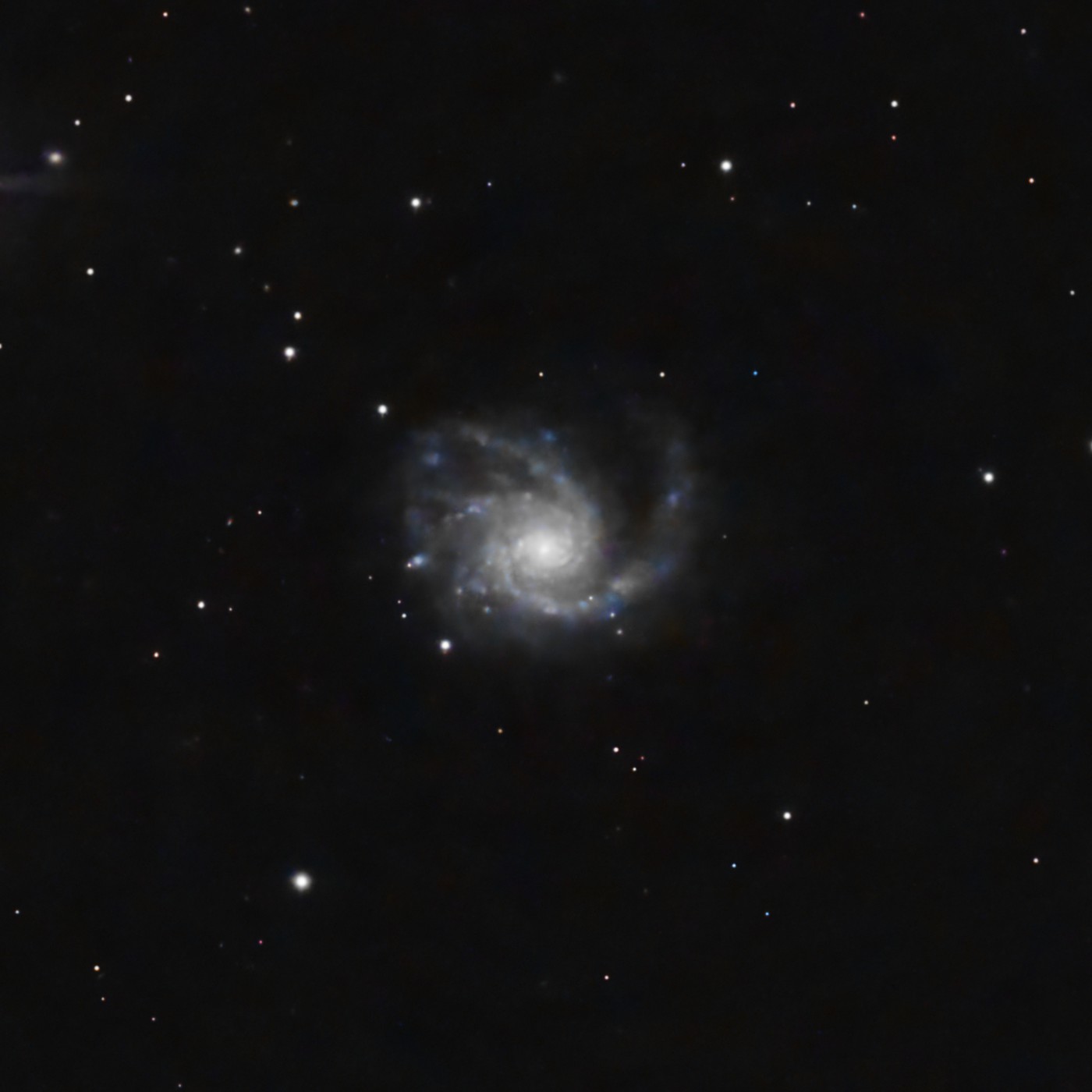
In medium telescopes (6-10") and dark skies, you might be able to detect that it’s just quite round, and should be able to discern pieces of the spiral arms.
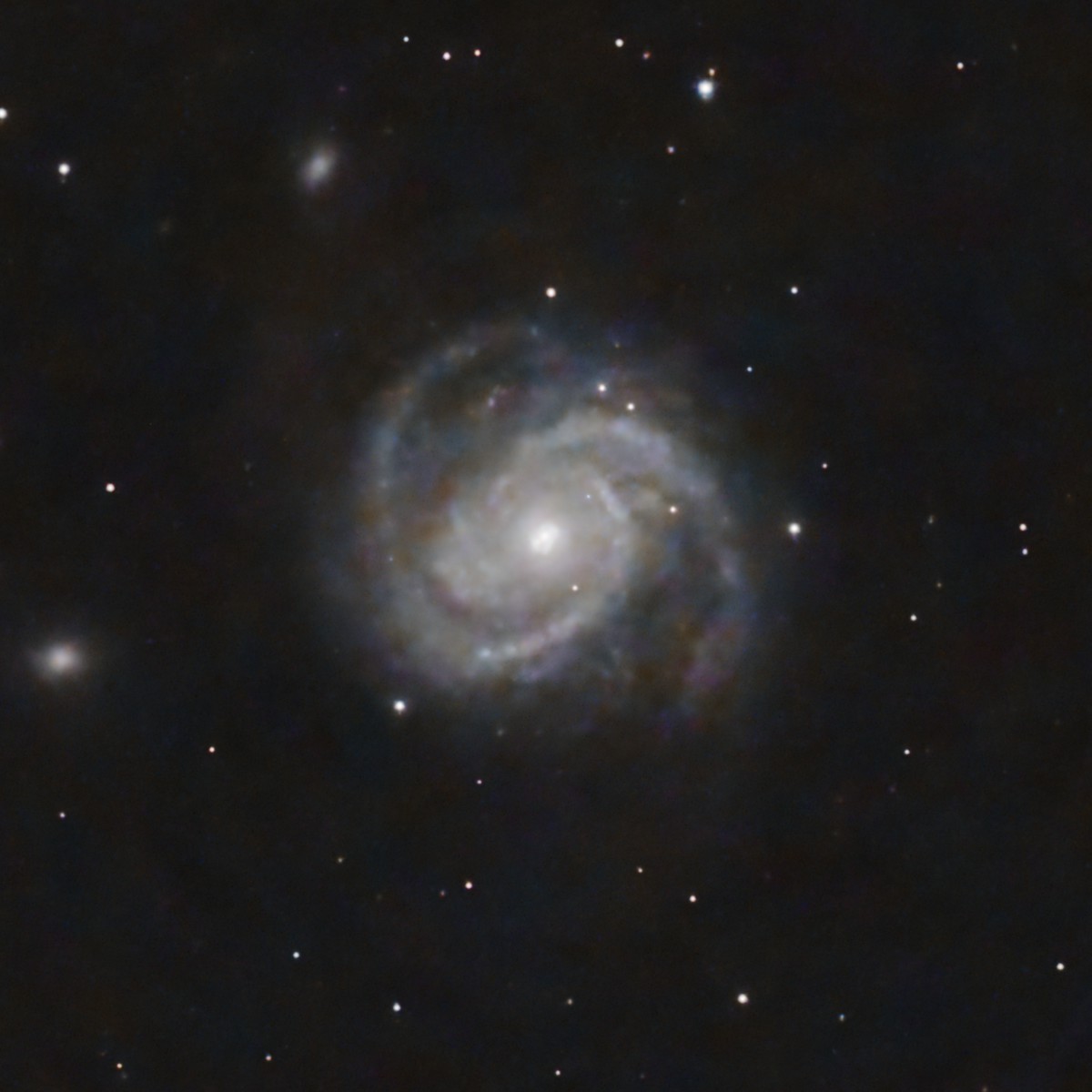
M 100
NGC 4216
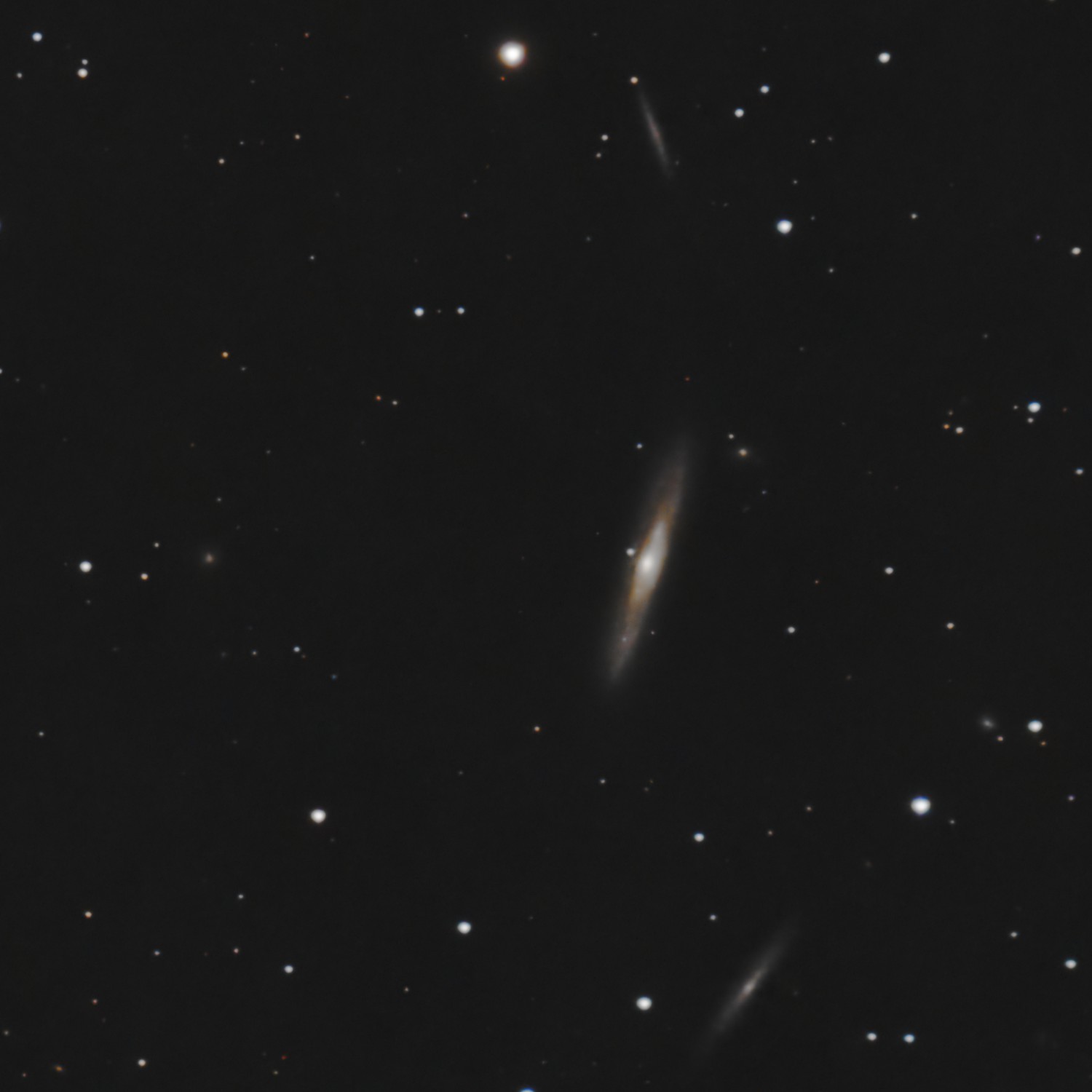
NGC 4298 and NGC 4302 = a curious pairing
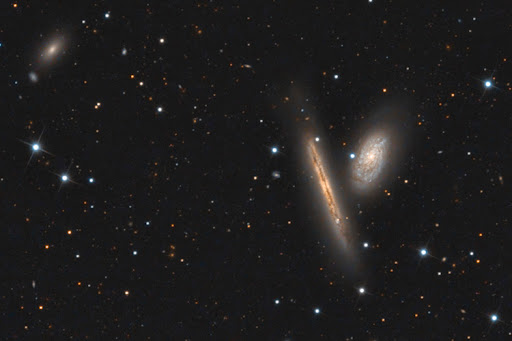
Again if you have an imaging telescope - this pair is something of a “wow” object, and since they’re not in the Messier or Caldwell catalogs tend to be overlooked by many observers.
Finder Chart
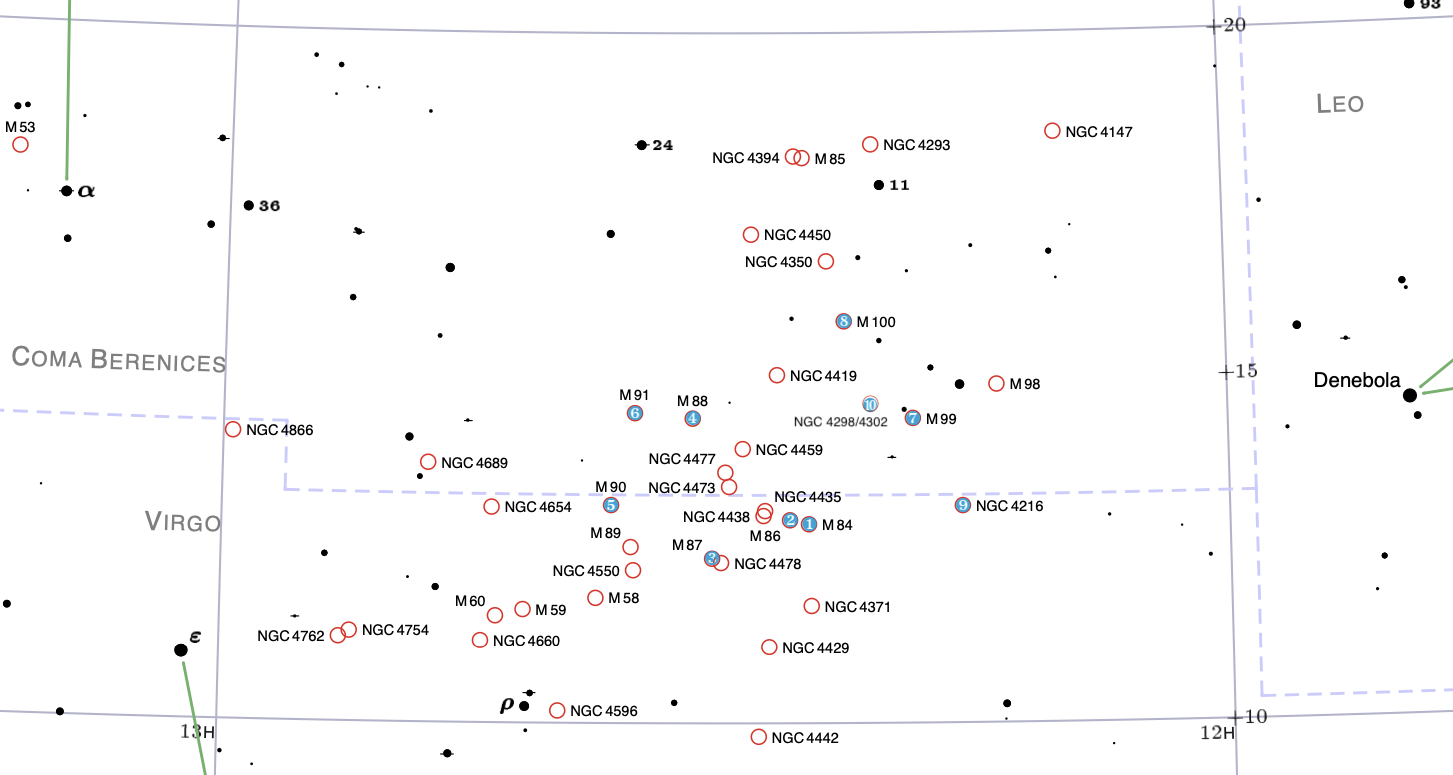
All of the galaxies here are in the same region of the sky - and there dozens of others to encounter!
Share your observations with us on our Facebook group! https://www.facebook.com/groups/nberkastro