Introduction
Watching the planets move against the background stars has been a fascination for millenia. You can imagine how the brighter planets changing their locations in the sky over weeks and months in a completely different way than the fixed stars would make their way into folklore and legends.
At present, the two brightest planets — Venus and Jupiter — are doing a dance in the early-evening sky. Venus is coming around in its orbit “catching up” to the Earth and has been rising higher and higher since the beginning of the year. Jupiter, meanwhile, has been going along it’s 11-year orbit around the Sun - it had it’s opposition back on January 10th and has been slowly sinking into the West; it’ll go behind the Sun in July, after which it’ll reappear in the early AM hours as a “morning star”.
The Encounter
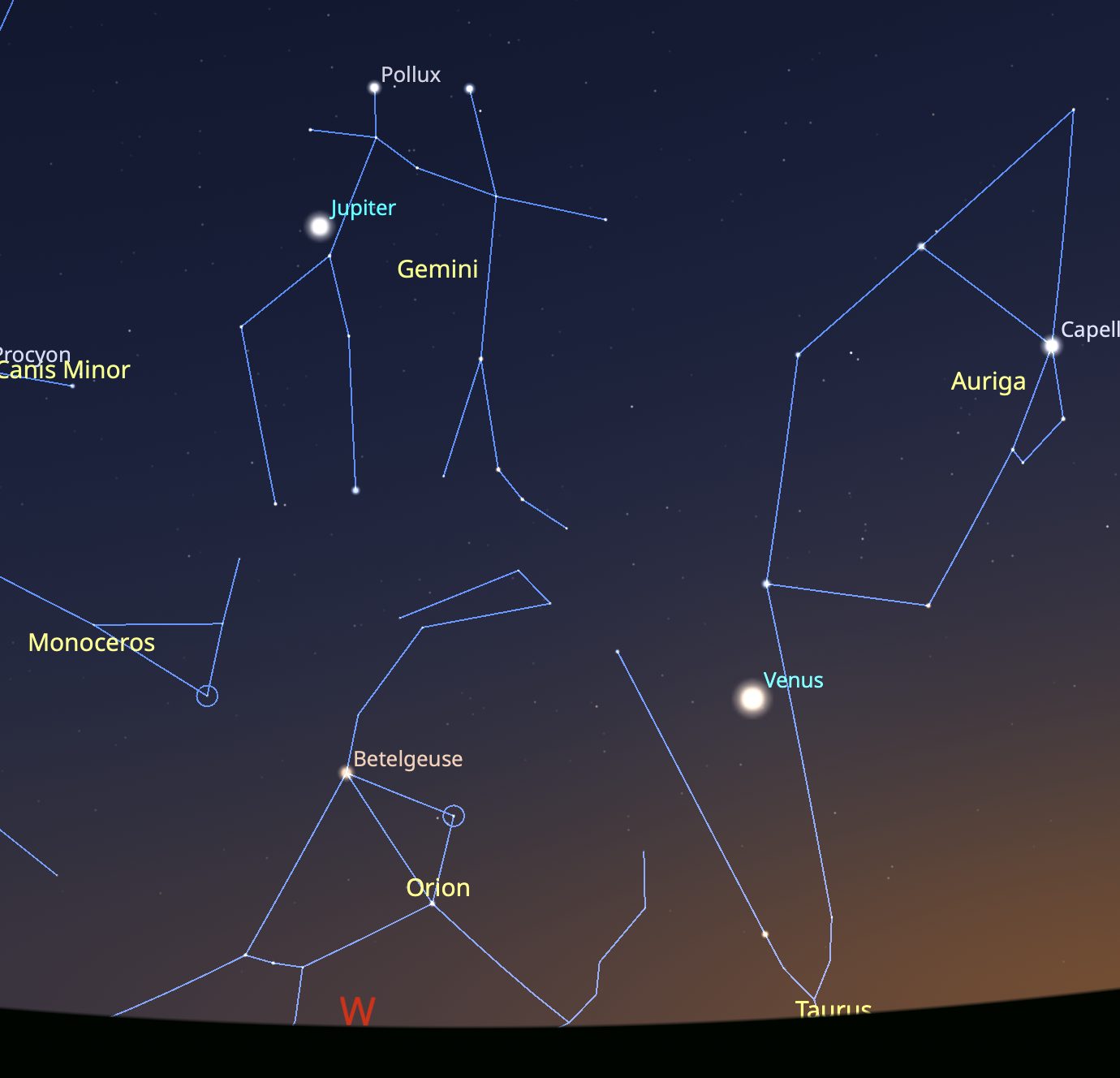
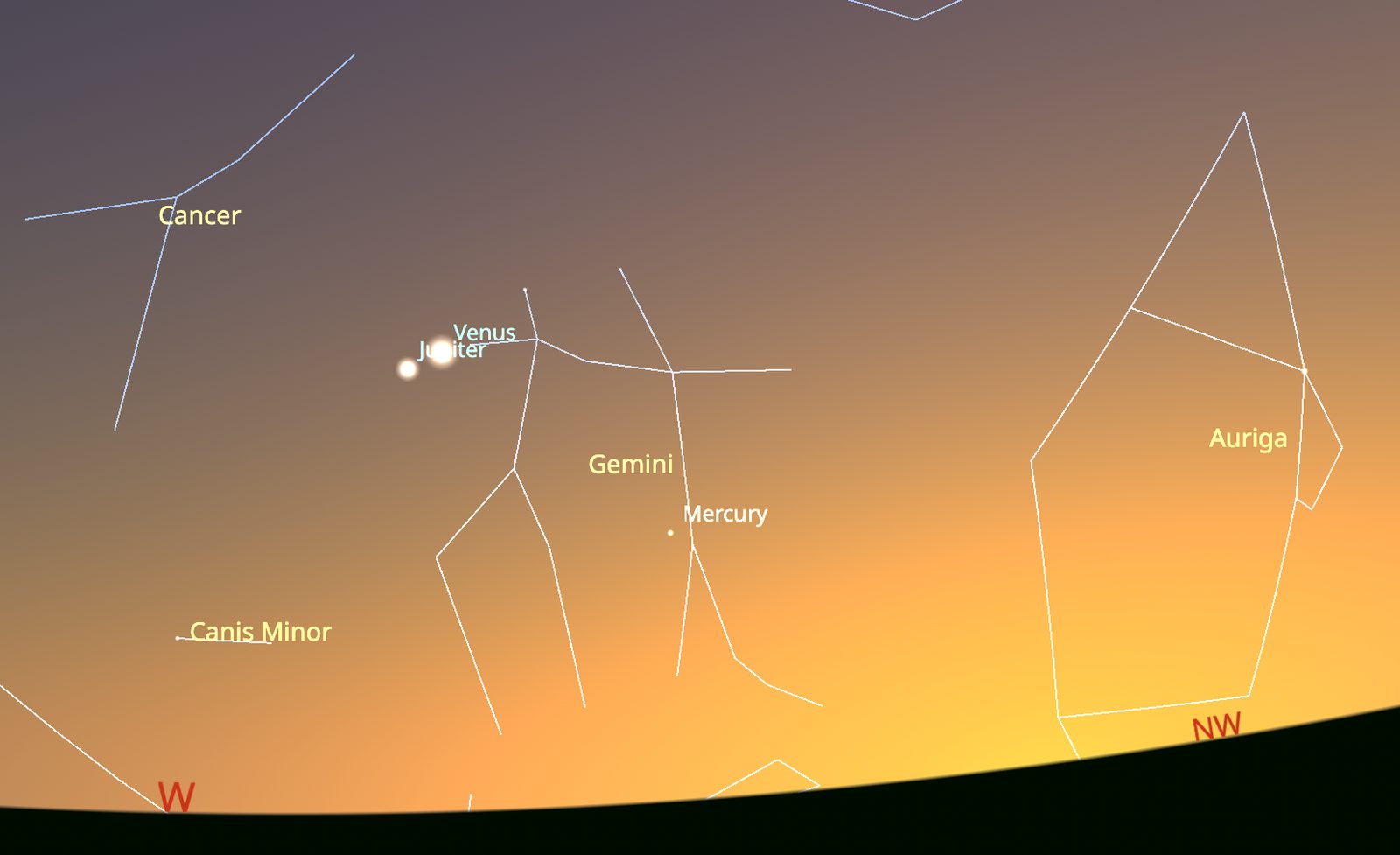
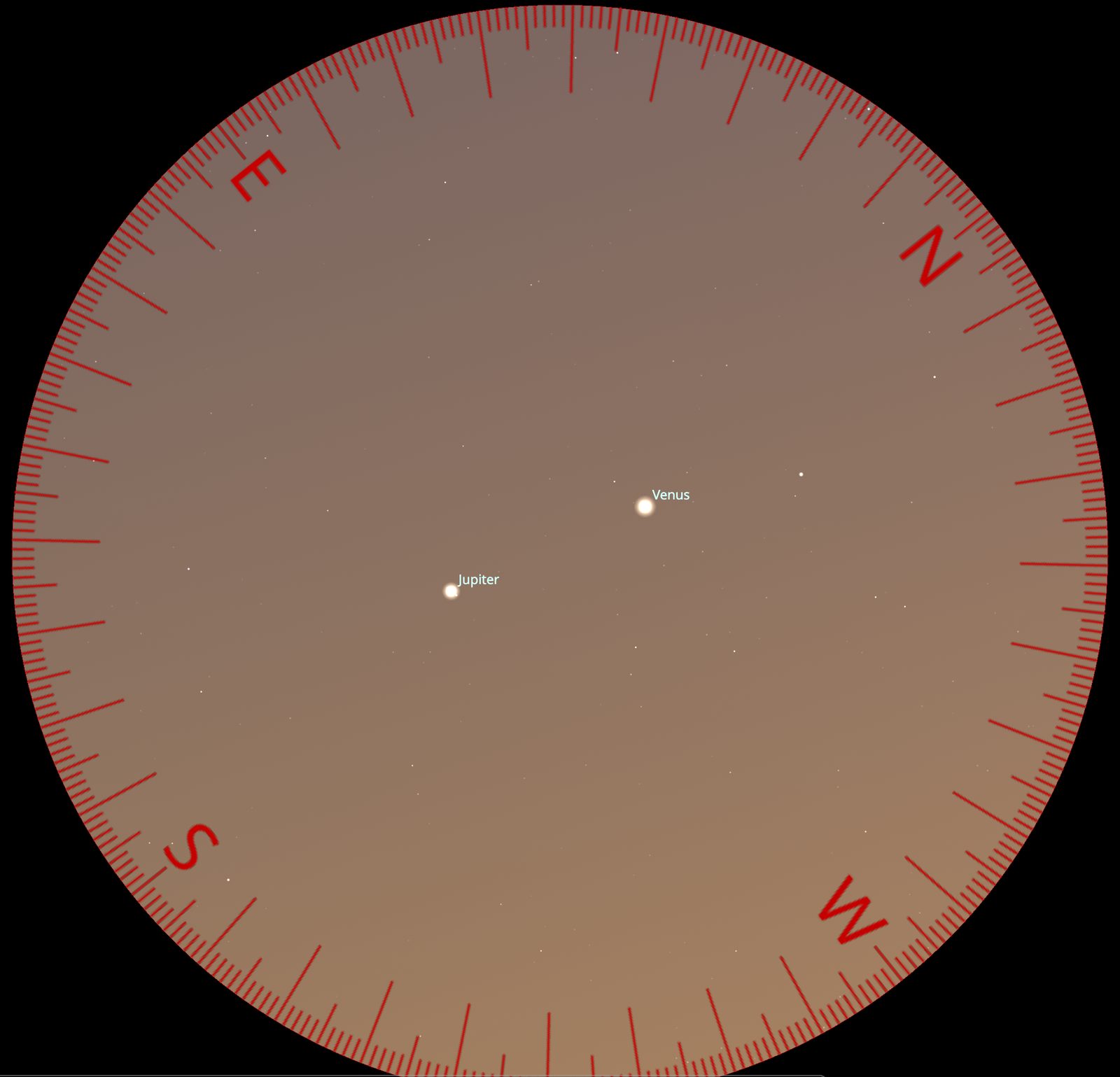
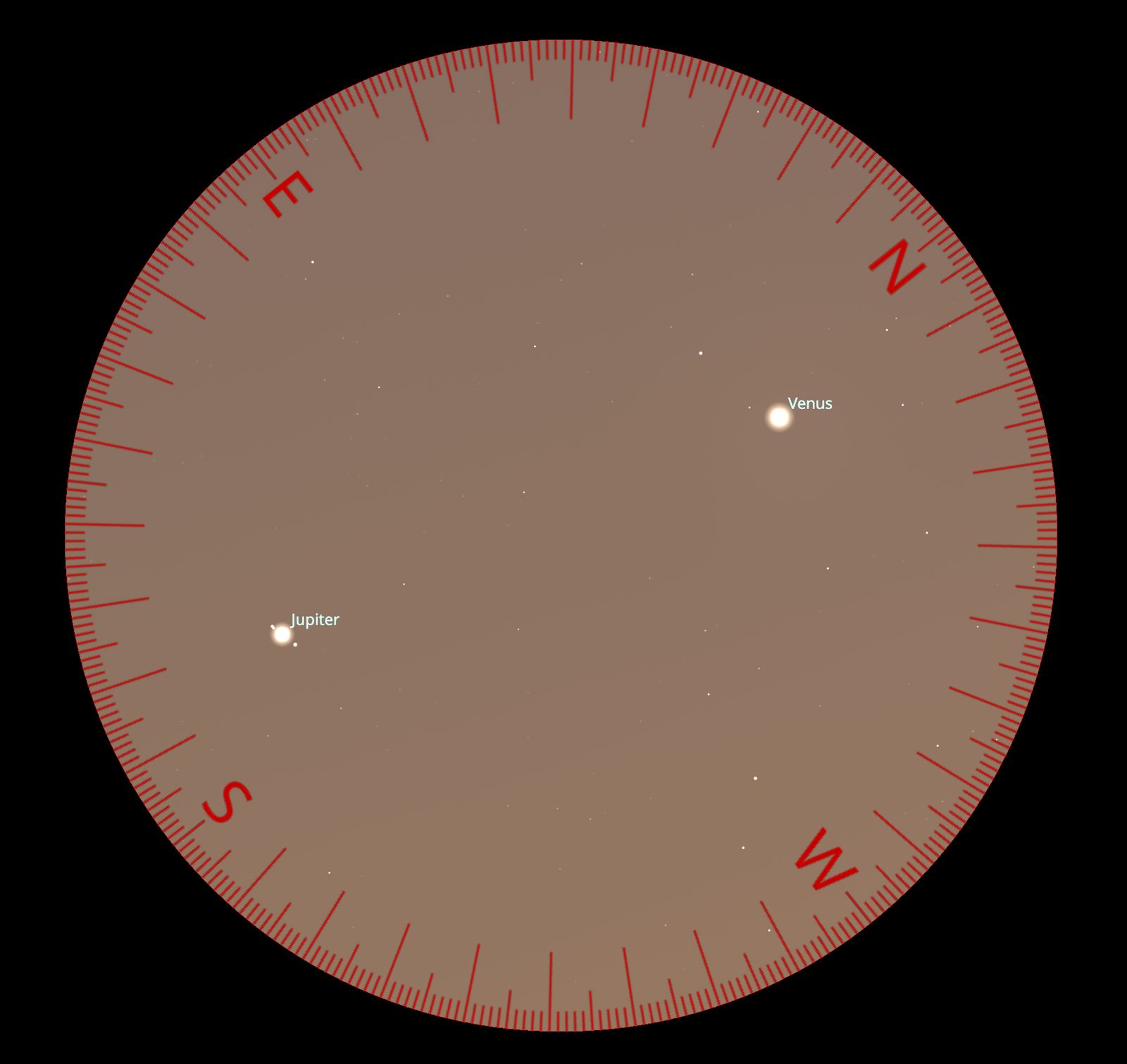
Over the next few weeks, you can track them easily after sunset: Jupiter is in Gemini, and Venus in Taurus, but every night they’ll become closer and closer until June 8th/9th when they’ll get be at their closest: only 1.5°.
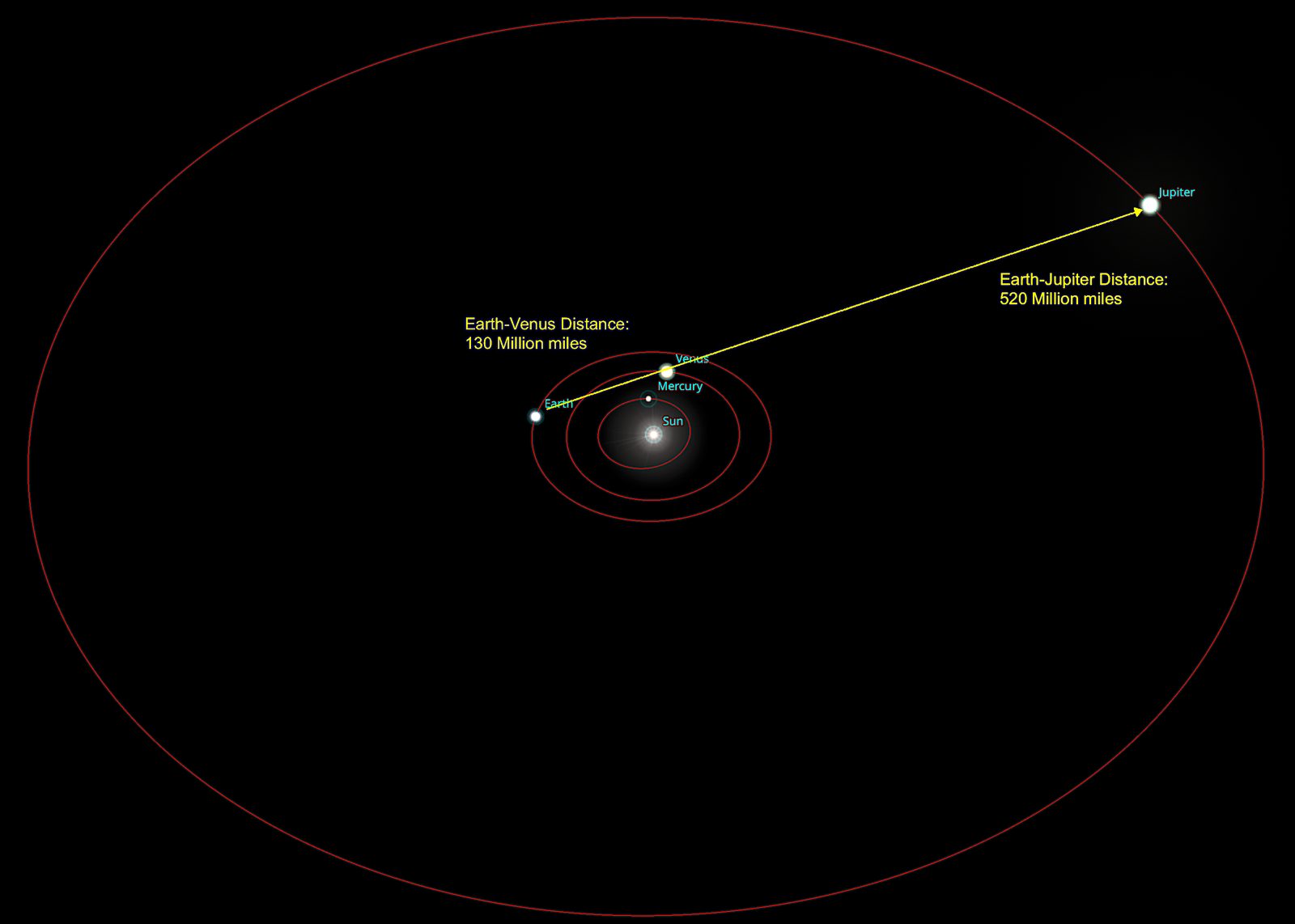
While it looks like they’re getting really “close together” in fact they’re very far apart in space: Venus in early May is about 130 million miles from the Earth (it can get as close as 24 million miles at inferior conjunction, though it’d be too close to the Sun to see). Jupiter is 520 million miles from the Earth - 4x times further away!
How it looks visually
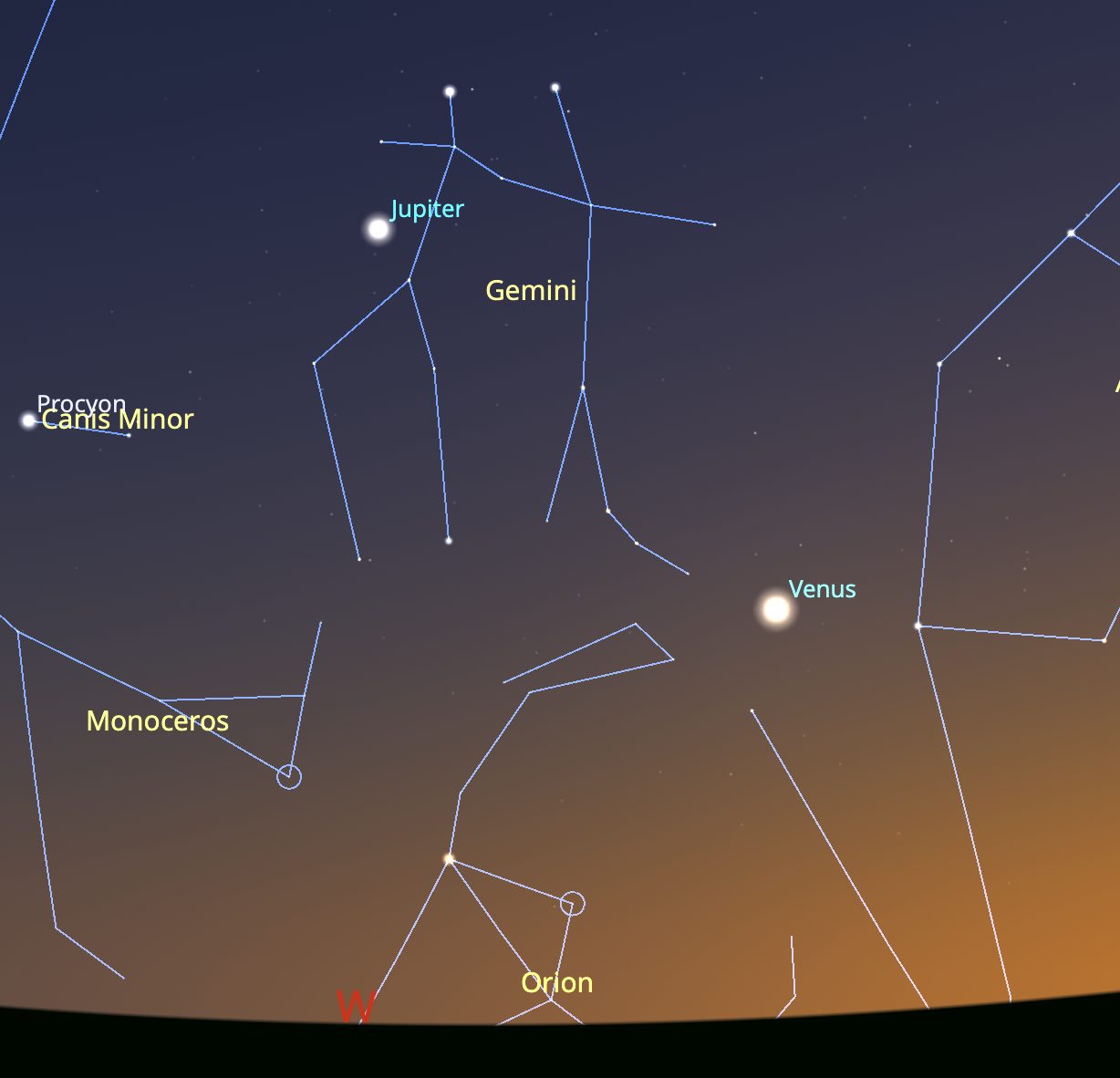
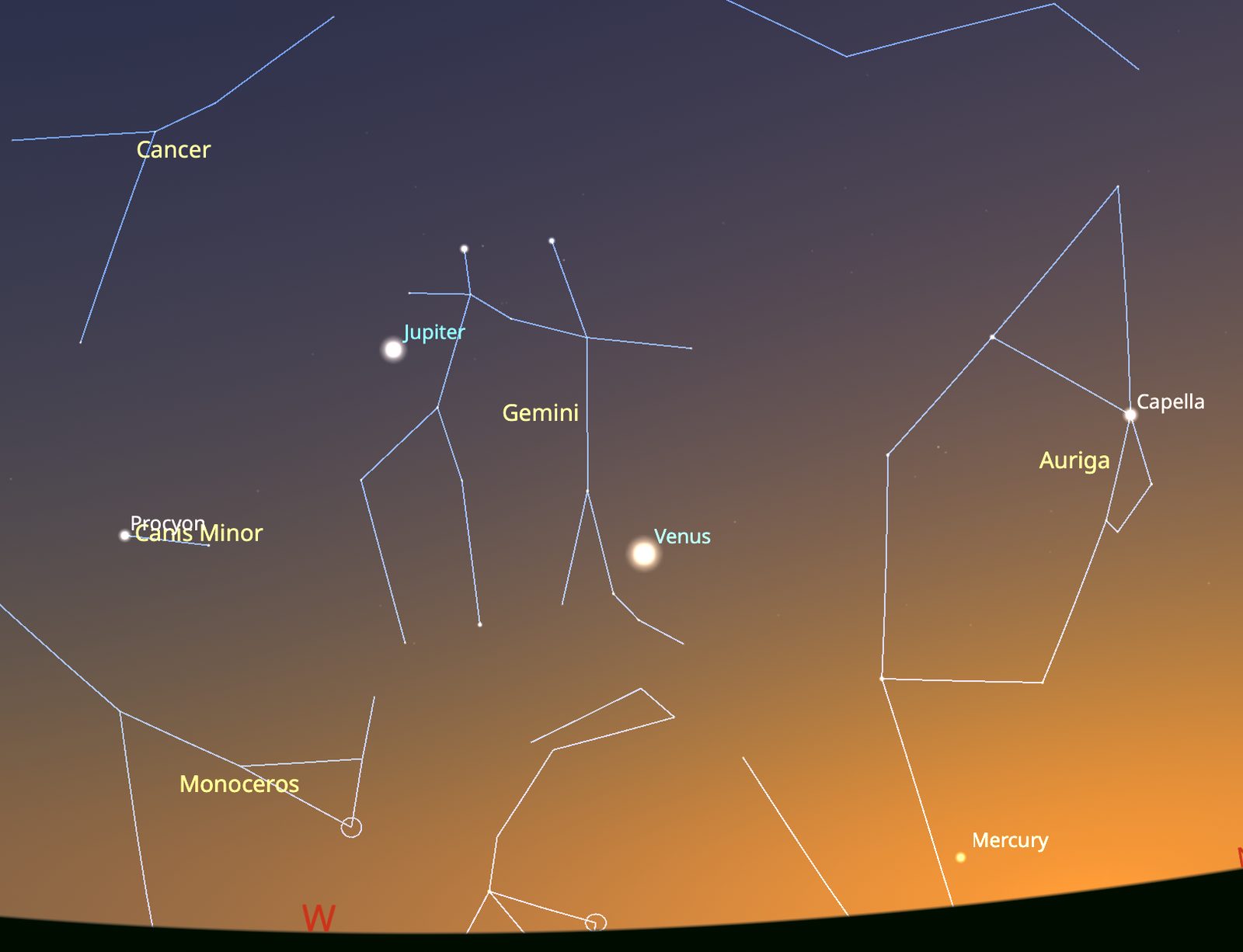
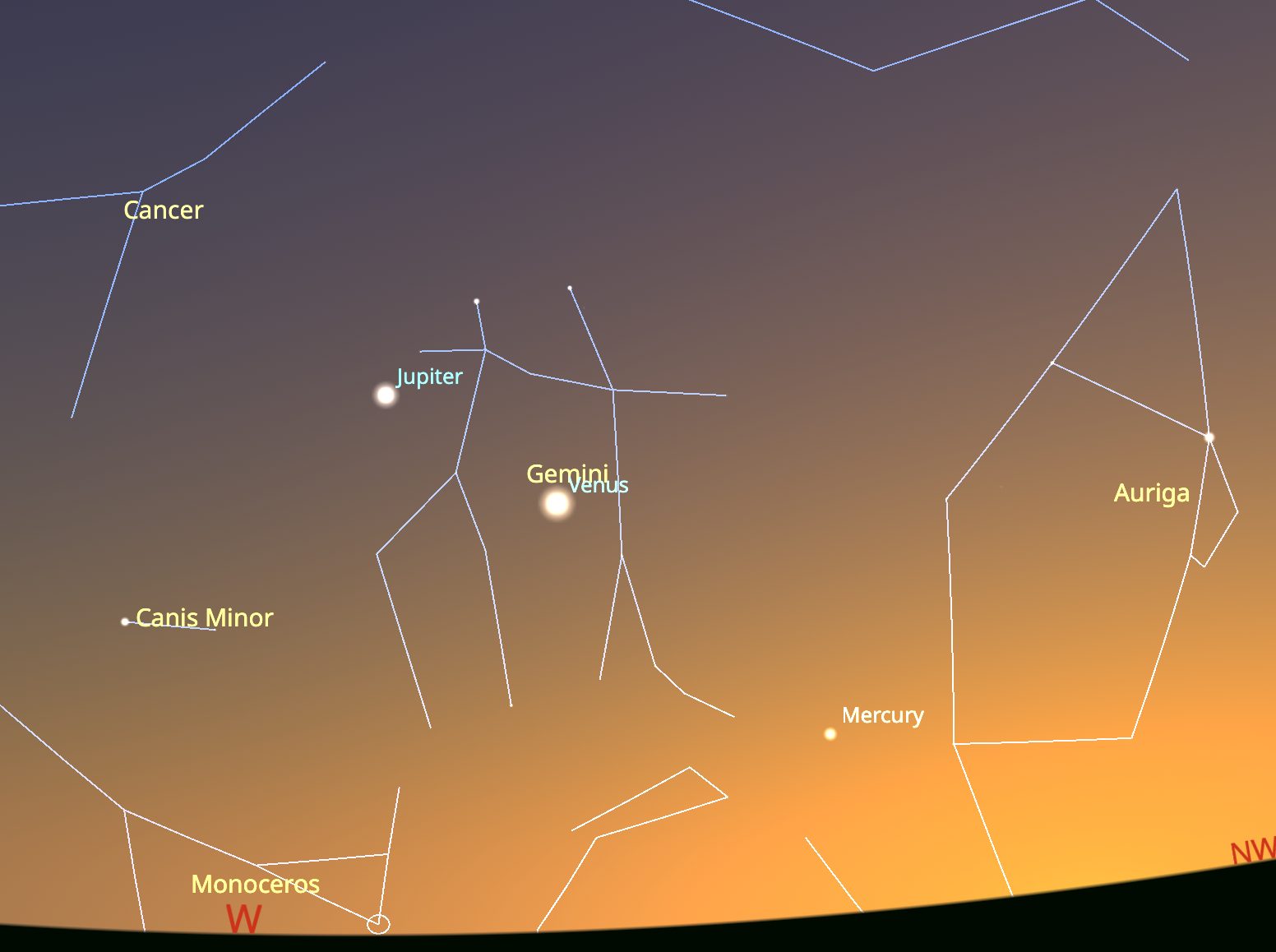
After sunset, looking to the West you can’t miss them: they’re the brightest objects in the sky. Once it gets dark enough to see stars, you’ll see Castor and Pollux - the brightest two stars in Gemini - above Jupiter.
Here’s a few images showing what to expect taken every week:
Venus Meets Jupiter!
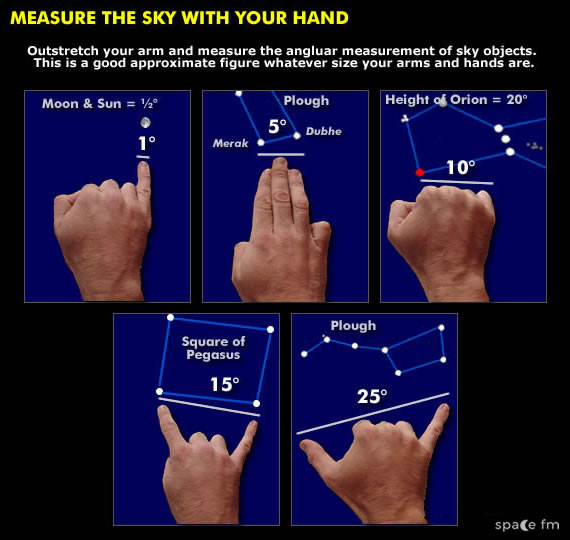
Measuring the separation
At closest separation
As the two planets get closer to minimum separation, you can see them both either with binoculars, or with a very low power eyepiece (magnification 20x).
Of course even in a small telescope, you can also see the changing of the “phase” of Venus, although over May it’s very subtle: Venus almost appears close to “full” and only changes subtly. However after it passes Jupiter in the sky, and is swinging around in its orbit, that phase will change dramatically, and it will start getting larger!
Wait! There’s more!