Moon Occults Venus — June 17, 2026
The Event
On the afternoon of June 17, 2026, the crescent Moon will pass directly in front of Venus in a rare daytime celestial event known as an occultation. Beginning at approximately 2:47 PM, Venus will slip behind the Moon’s dark (unlit) limb — disappearing almost instantaneously, as the Moon has no atmosphere to cause a gradual fade. The planet will remain hidden for just over two and a half hours before reappearing from behind the Moon’s bright limb at approximately 5:14 PM, popping back into view just as sharply as it vanished.
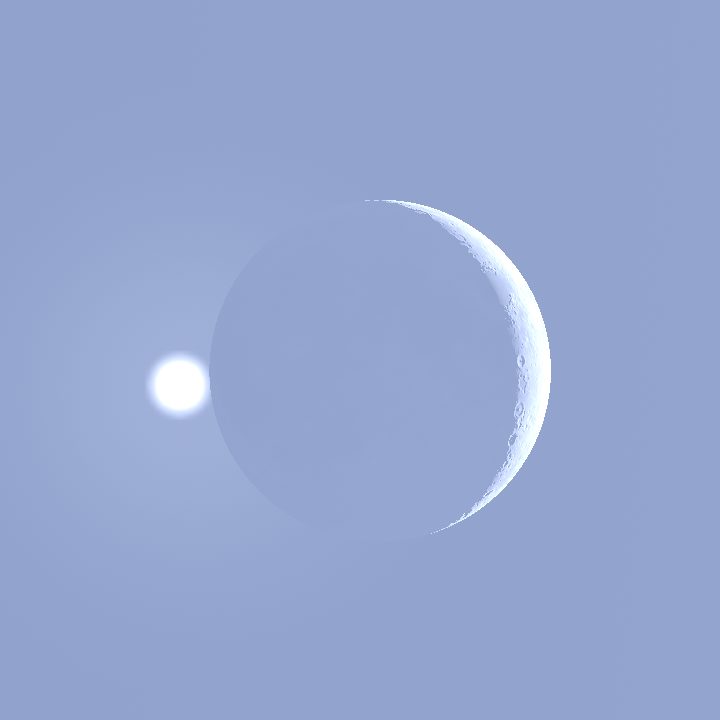
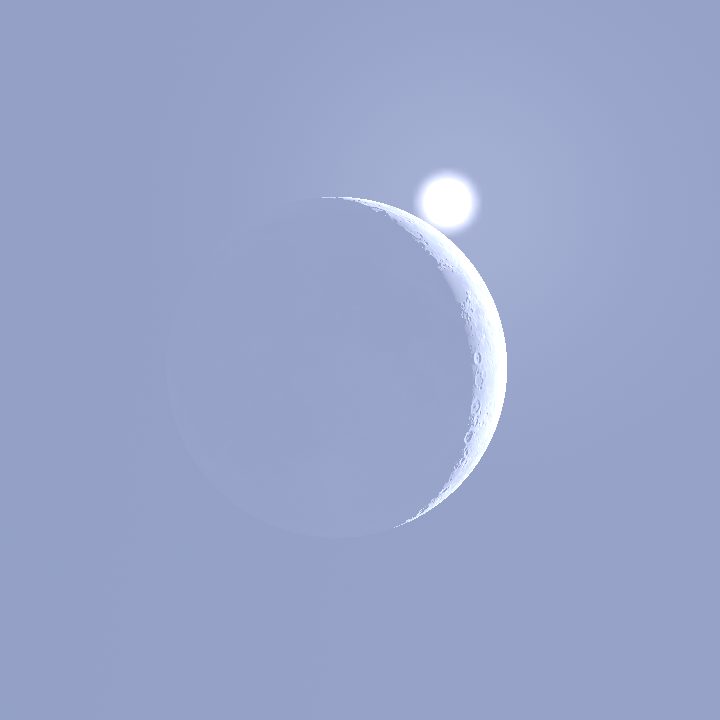
What makes this occultation particularly striking is that it takes place in broad daylight. Both the crescent Moon and brilliant Venus will be visible against a blue sky — Venus shines brightly enough to be seen with the naked eye in daylight if you know exactly where to look, and binoculars or a small telescope will make the event unmistakable. The Stellarium simulations below show the geometry at first and last contact: Venus approaching the dark limb before disappearance, and re-emerging above the Moon’s bright northern horn at egress.
Safety Information
Is This Event Safe to Watch?
Yes — with important caveats. Unlike a solar eclipse, a Moon–Venus occultation involves no risk from the Moon or Venus themselves. However, because this event occurs during the afternoon, the Sun will still be above the horizon, and that introduces real danger.
Key Safety Rules
Never point binoculars or a telescope at or near the Sun. The Sun will be in the same general area of the sky. Accidentally sweeping optical equipment across it — even for a fraction of a second — can cause instant, permanent eye damage or blindness. Always locate the Moon visually with your naked eye first, then bring optics to your eye only when you are certain they are aimed at the Moon.
Know where the Sun is at all times. Before and during the event, be aware of the Sun’s position relative to the Moon. Keep it well outside your field of view. If you are unsure, do not use magnification.
Supervise children at all times. Young observers should never use binoculars or telescopes unsupervised during a daytime event. An adult should align any optical equipment and confirm the target before a child looks through it.
Solar filters are not needed for the Moon — but keep them handy. You do not need a solar filter to look at the Moon or Venus. However, if you wish to observe the Sun as a reference point, you must use a certified solar filter (ISO 12312-2) over the full aperture of any optical instrument, or use eclipse glasses rated to the same standard.
Naked-eye observation is safest. Venus is bright enough to be spotted without optical aid once you know where to look. Starting with a naked-eye view lets you orient yourself safely before using any equipment.