The Serpent
Serpens is the only constellation that is split into two parts, an effect of the International Astronomical Union’s “formalization” of the 88 constellations in the 1920s. Each part has a name: Serpens Caput, “the head of the snake” is the western half; Serpens Cauda “the tail of the snake” is the eastern half. In between is Ophiuchus, the Serpent Bearer - Oφιϛ in Greek (or Ophis in Latin) meaning “serpent”.
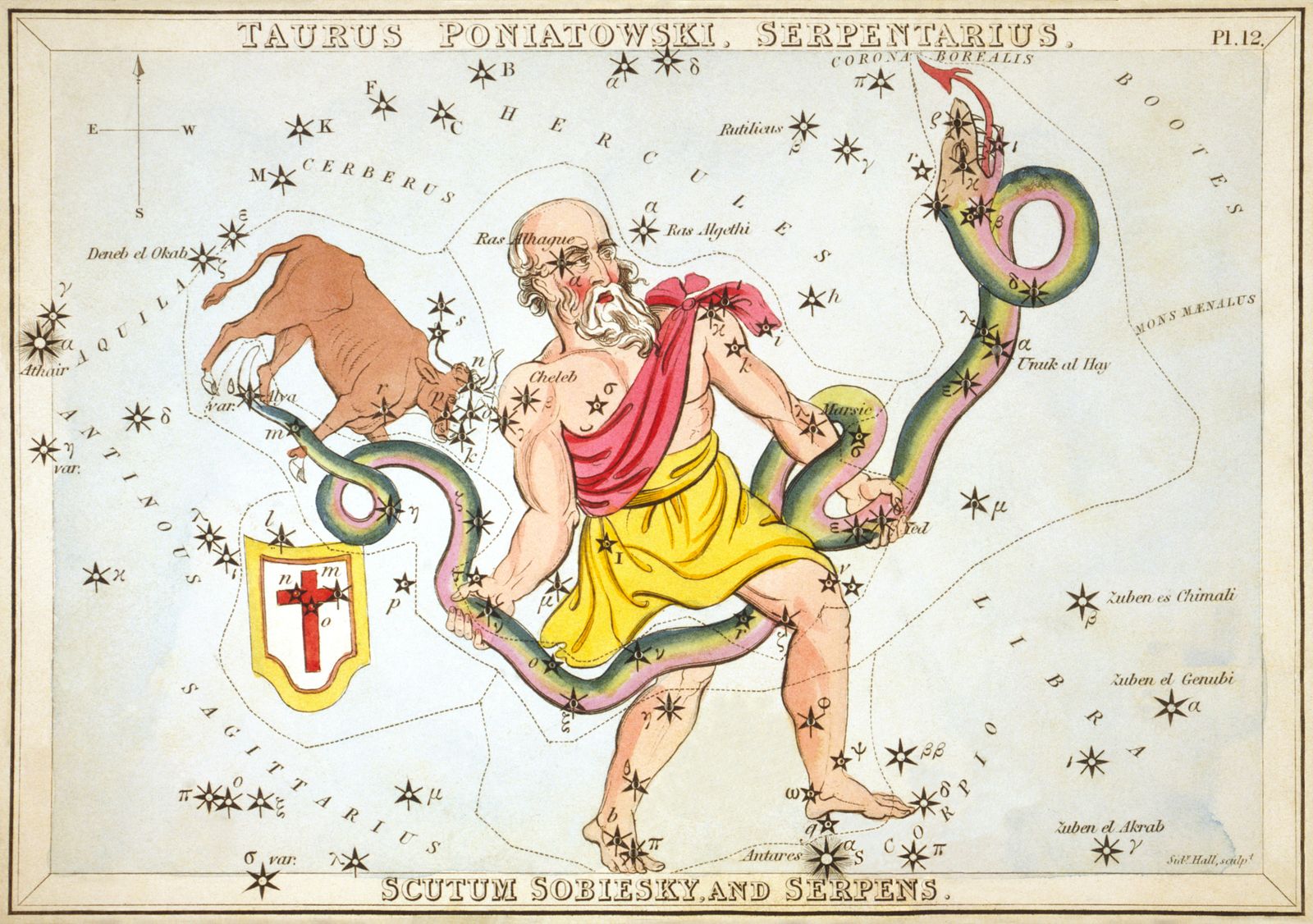
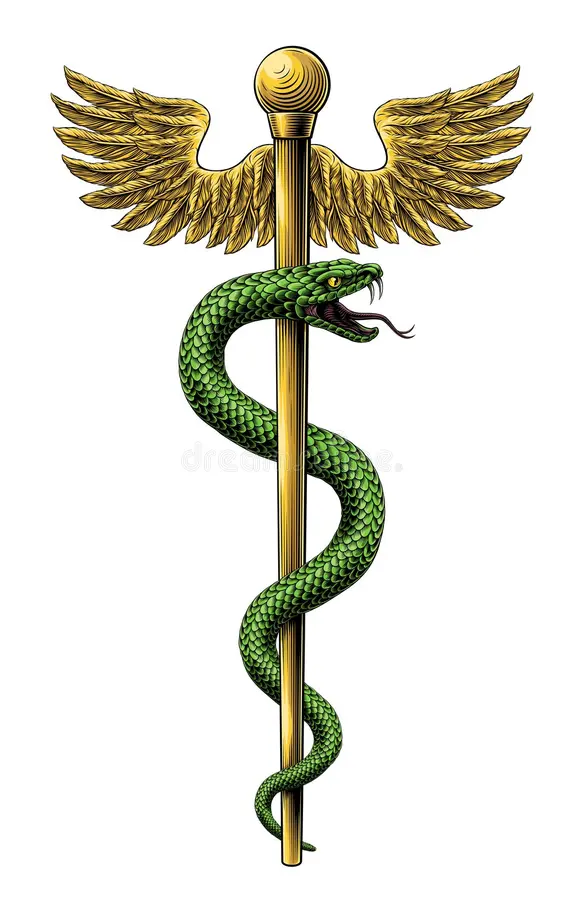
Mythologically, Serpens is being held by the healer Asclepius (represented by Ophiuchus) and today, that association is seen in the “Rod of Ascelpius” as a symbol for healthcare. Why a snake? Their shedding of their skin was seen as a symbol of rebirth.
Tucked away in this (now) asterism is the second closest star system in the sky, Barnard’s Star. 5.96 light years away.
Maps of Serpens
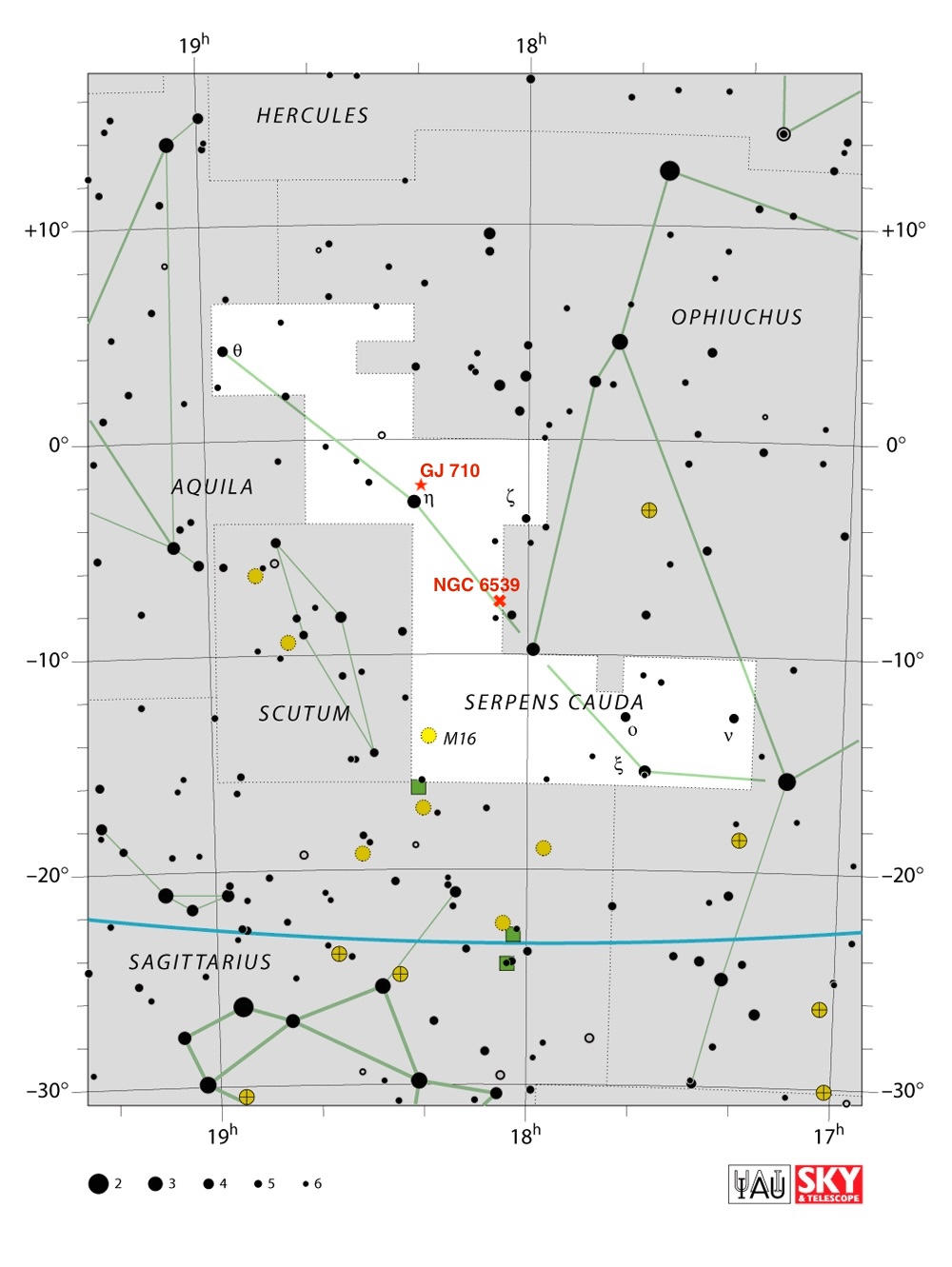
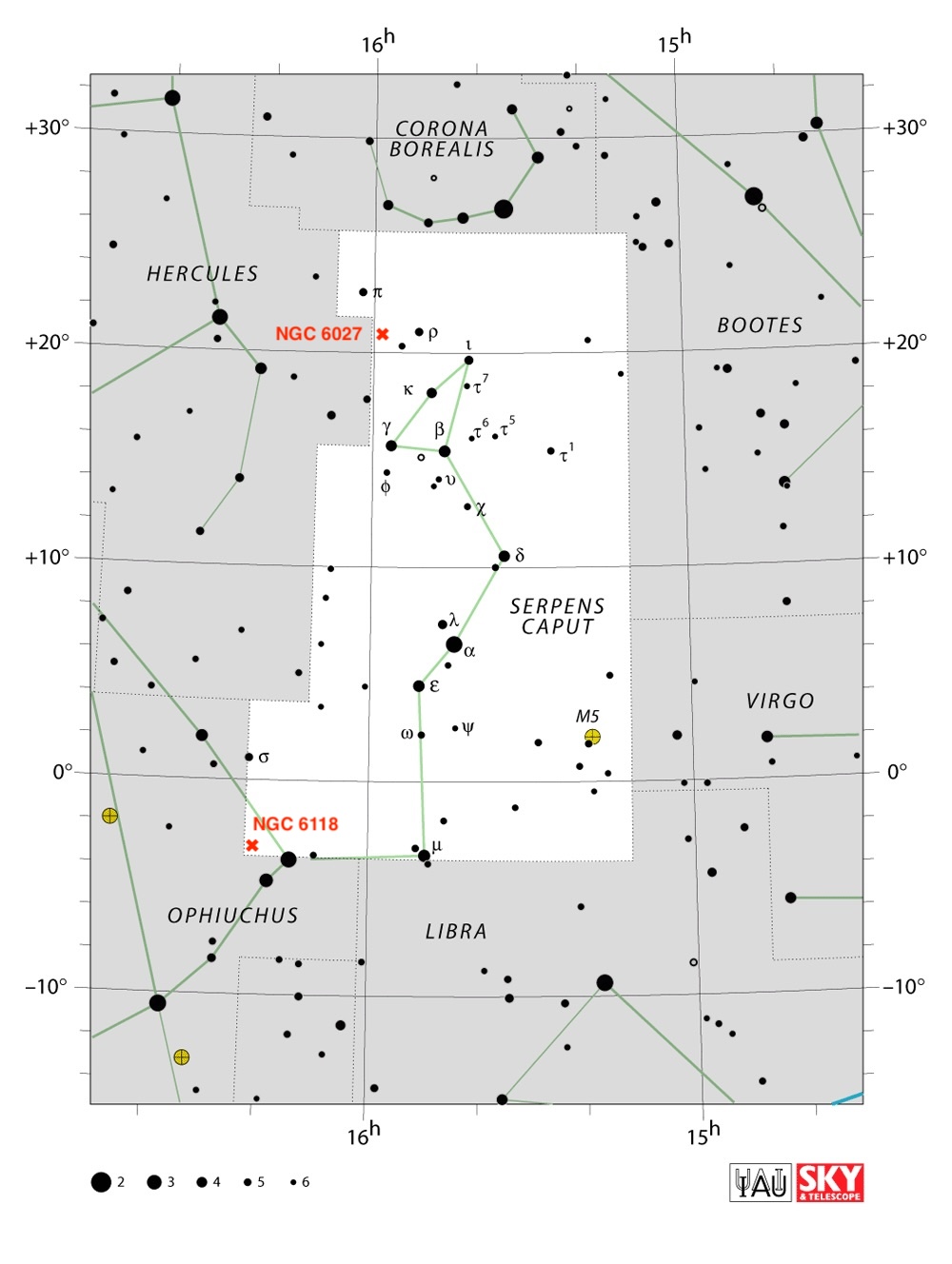
Serpens is one the constellations whose “stick figure” somewhat resembles what it represents. You can make out the head, just below the Northern Crown, and follow it to and across Ophiuchus picking up the trail of stars of the tail in the East alongside Aquila. As for deep-sky objects, Serpens Caput has more galaxies (since we’re further away from the obscuring haze of the plane of the Galaxy), where in Serpens Cauda, we see more star clusters and nebulae: globular clusters adorn both “sides”.
The brightest star, Alpha (α) Serpentis, “Unukalhai” (Arabic: “the serpent’s neck) is an ordinary red-giant star. Just NE of it is the mag 4.4 star Lambda (λ) Ser, only 39 light years from the Sun hosting a “hot Neptune” exoplanet (13.6 M⊕).
On the “tail” side the brightest star is Eta (η) Serpentis - another 3rd magnitude red giant star. The SE corner of the constellation borders Scutum (another constellation honoring a Polish king) and Sagittarius, and has several nebulae (Messier 16 being the most famous) and star clusters.
Quick Reference: Objects of Interest
| Object | Type | Equipment |
|---|---|---|
| Messier 5 | Globular Cluster | Binoculars/Telescopes |
| Messier 16 | Cluster and Nebula | Small/Medium Telescope |
| NGC 6118 | Spiral Galaxy | Medium/Imaging Telescope |
| NGC 6027/Hickson 79 | Compact Galaxy Group | Imaging Telescope |
| NGC 6539 | Globular Cluster | Small/Medium Telescope |
| Gliese 710 | Late Dwarf Star | Small/Medium Telescope |
Summer Rose Cluster
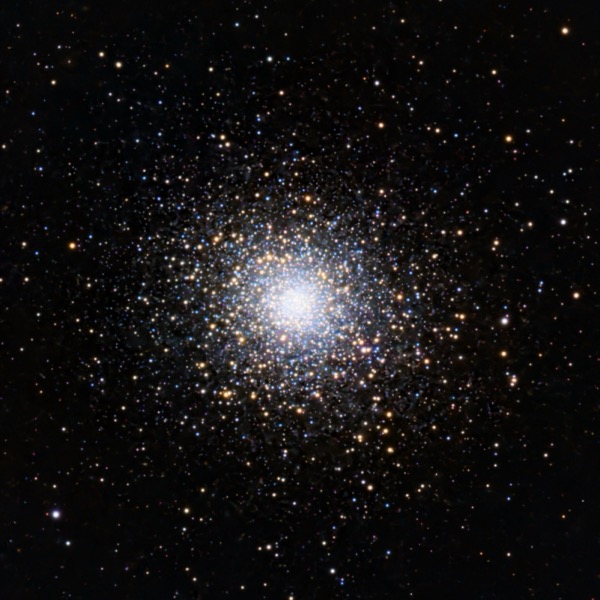
This globular is a nice object - under very dark skies it is visible to the naked eye as a faint patch just next to 5 Ser, and findable with binoculars. In a small telescope, it’s a bright glow a little “shaggy” around the edges. Larger telescopes resolve it well with the outlier stars making it look slightly asymmetrical. Imaging scopes will show both hot blue stars and cooler red giants.
The Eagle Nebula
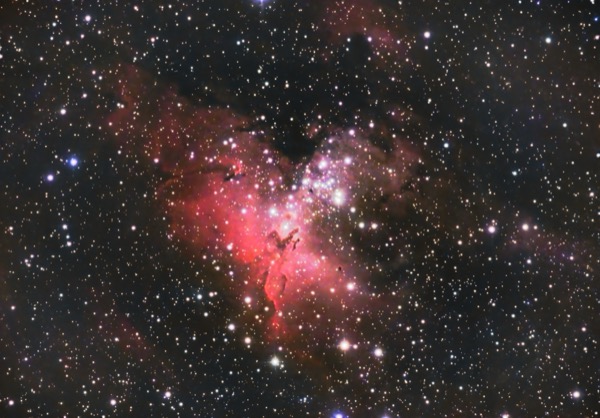
This is a large star-forming region with the cluster NGC 6611, and observing it, you can tell it’s very dynamic: the nebula shows a great amount of structure with the center dark region giving it it’s name, looking like an eagle with extended talons. This region was made famous by Hubble with the “Pillars of Creation” image - dark clouds harboring stellar nurseries, sculpted by the winds from the hot young stars in the cluster. The hot cluster stars are very young: only 1-2 Myr old: stellar “infants”.
“Blinking” Galaxy
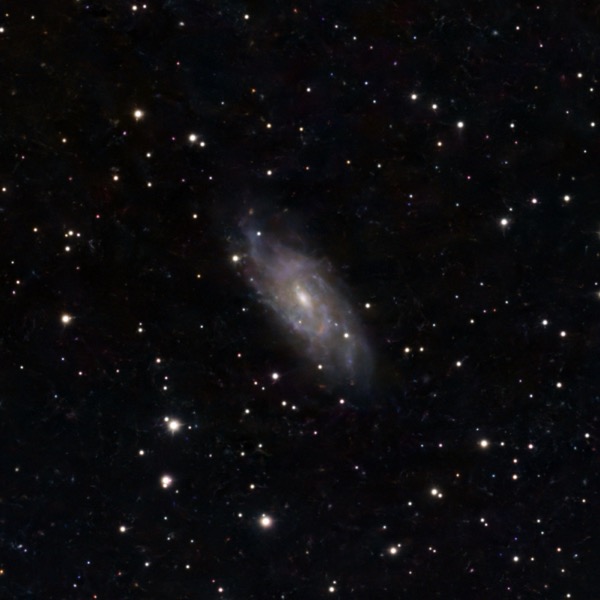
70 Myr away, this elongated “Grand Design” spiral is a challenge for observers who report that in the eyepiece it “blinks” in and out view. Imaging scopes will definitely show it is elongated (tilted to our line of sight), with a bright core, and - given enough exposure time - start to bring out the spiral arms.
This galaxy is one to monitor for supernovae - two have been seen in the past few years.
Seyfert’s Sextet
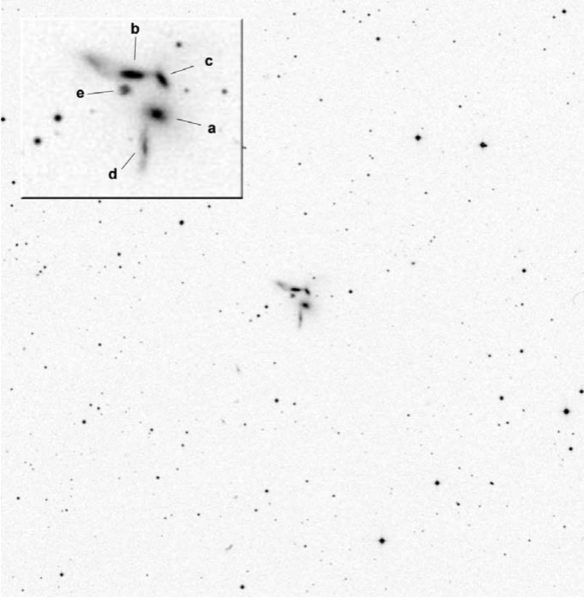
These interacting galaxies (NGC 6027) are ~200 Mly away (except for
“e” on the map: that galaxy is over 900 Mly distant, the spiral in
the HST image). The 6th “galaxy” (unlabeled, top-left) is actually
part of “b”.
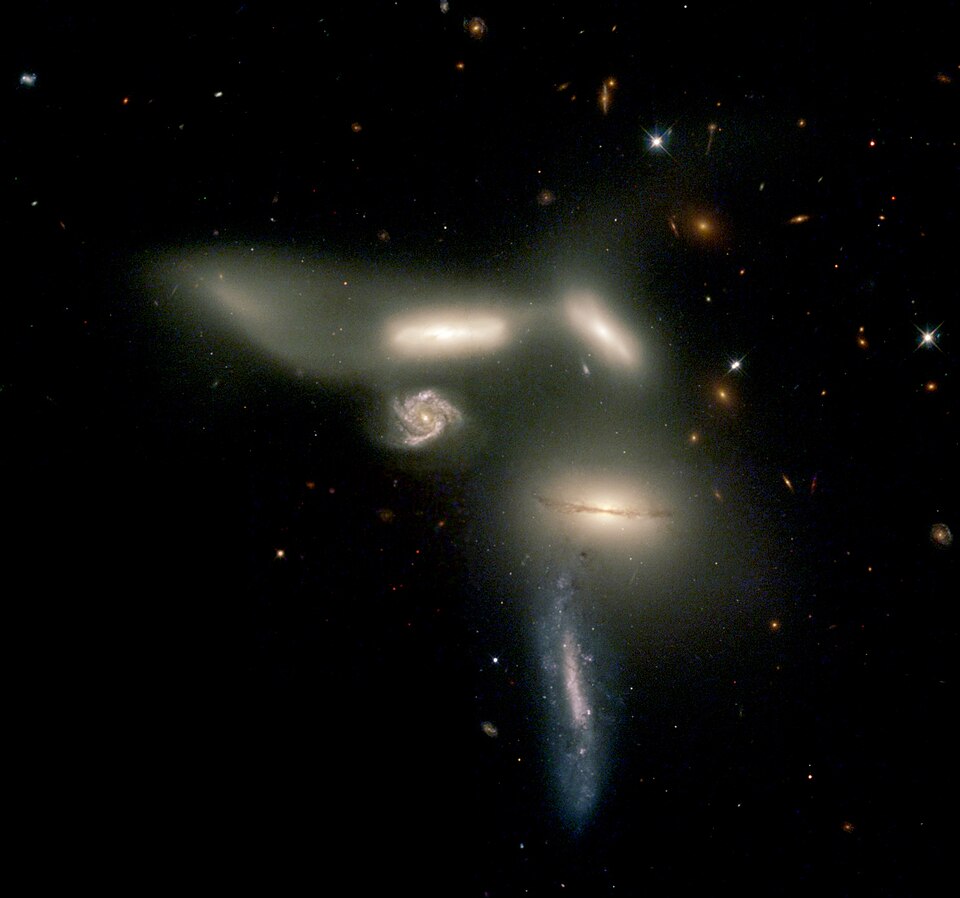
These galaxies are in a long process of gravitational interactions, bending and twisting them, until - eventually - they will become a large elliptical. You’ll need a larger-aperture telescope to detect them: images might have better luck, though the whole “7”-shaped assemblage is also small, only about 2’ from end to end.
Wallflower Globular
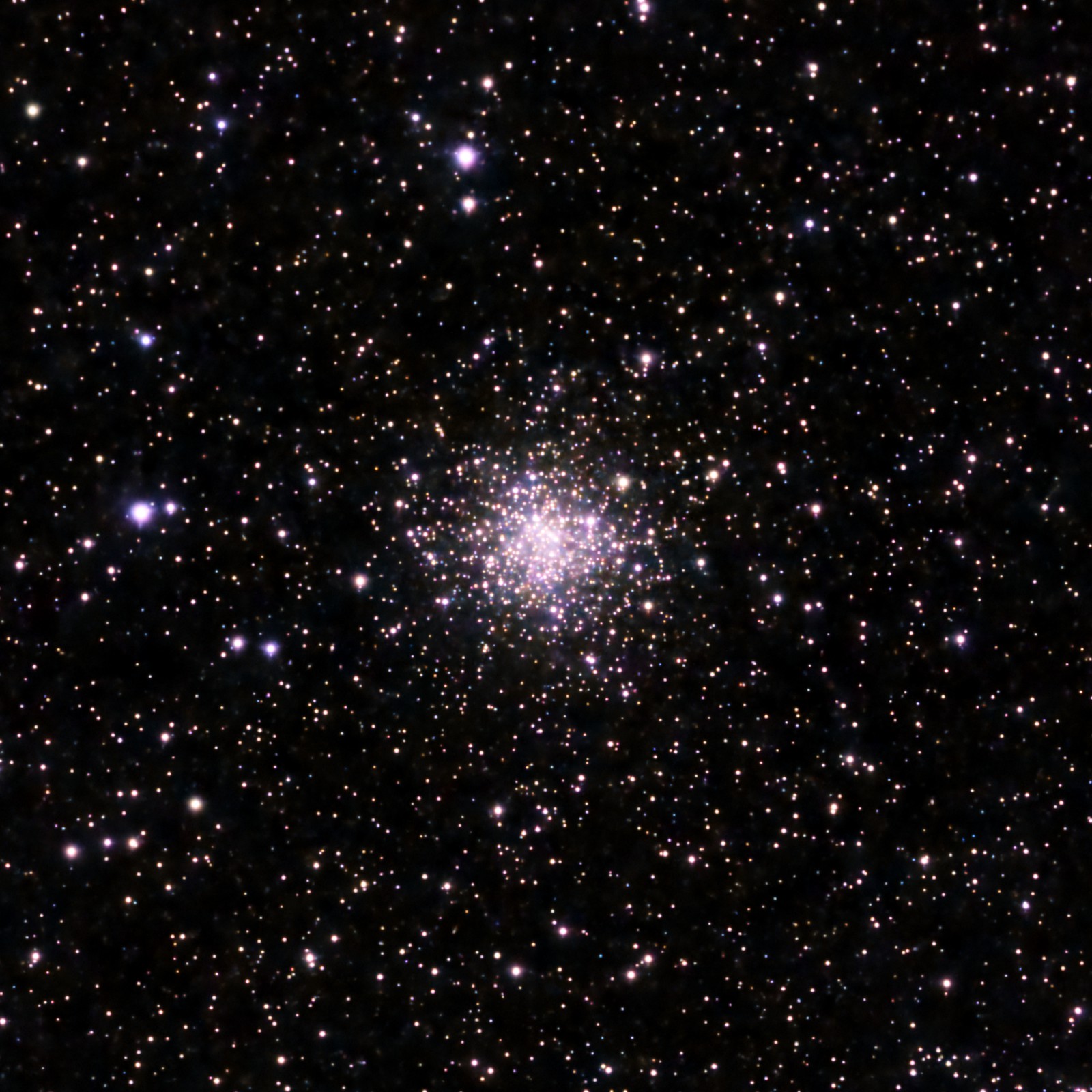
Here’s another example of a DSO that is bright, yet neither Messier nor Herschel noticed it - it wasn’t “discovered” until 1856! Yet, it is reachable even in small telescopes as a “broadly concentrated spot” or a “diffuse glow”. It’s located in the outer parts of the Galactic bulge, but being only 7° from the plane of the Galaxy, its light is attenuated and reddened by foreground galactic dust.
The Death Star?
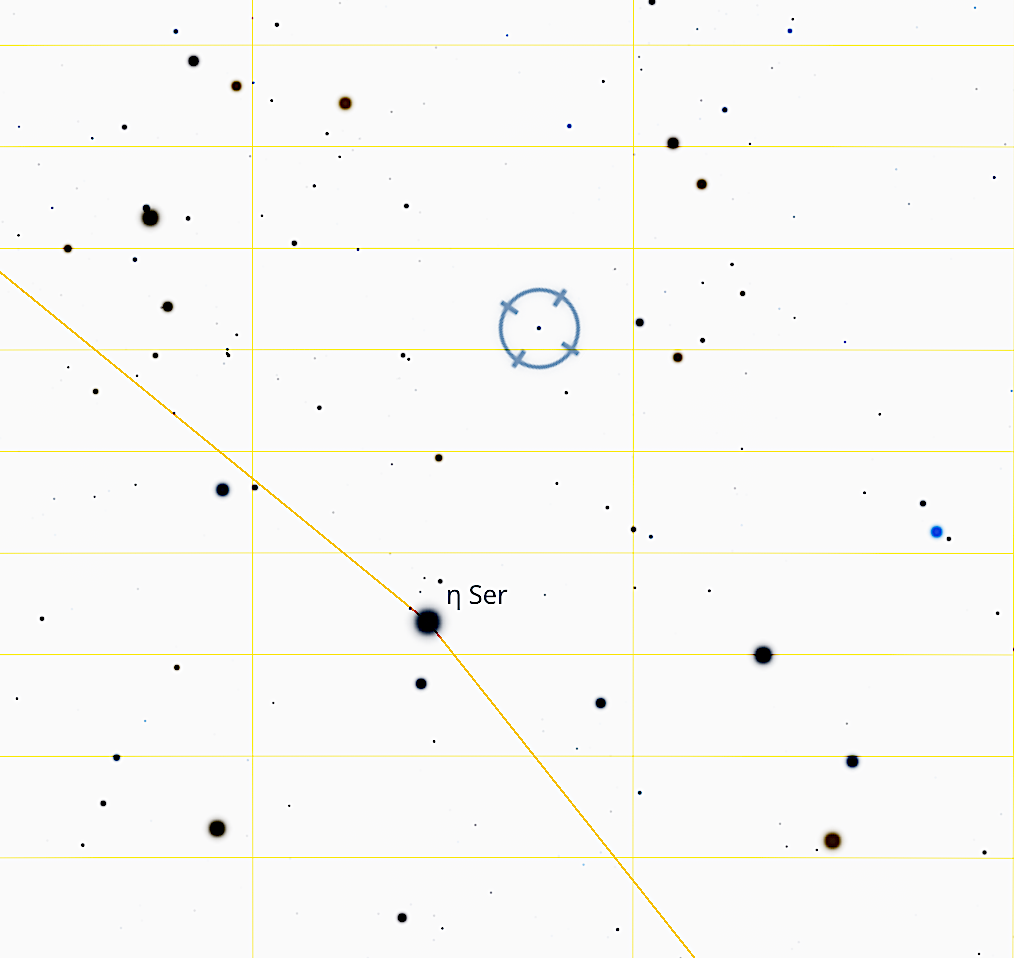
An unassuming 9th magnitude late K-type dwarf (only slightly more than half the Sun’s mass and radius, and one-tenth the luminosity is presently 62 ly away. You can find it 1° NNW of the 3rd magnitude star Eta (η) Serpentis.
However, it’s extremely important because it actually poses a threat to our Solar System. This star is heading toward us at 14.5 km/s, and in about 1,300,000 years will pass While even that number doesn’t sound particularly close (it’s ~360 times the distance to Neptune), it is well within the Oort Cloud, and this passage may very well be the closest encounter experienced by the Sun in its entire lifetime, and possibly in its future.
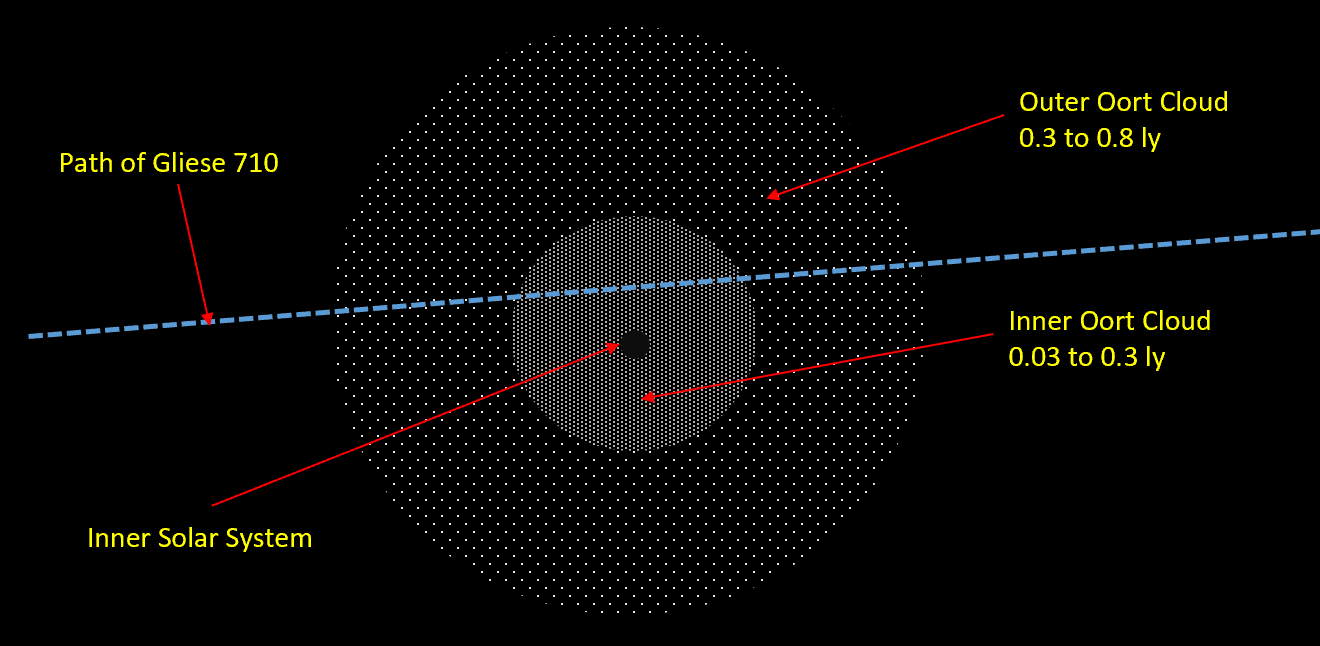
What’s the threat? Penetrating the Oort Cloud will have enormous effect: it will disrupt orbits, sending showers of comets into the inner Solar System for millions of years afterwards, increasing the chances of a major impact event. Observers at that time would see naked- eye comets almost monthly.