After Venus Encounters Jupiter
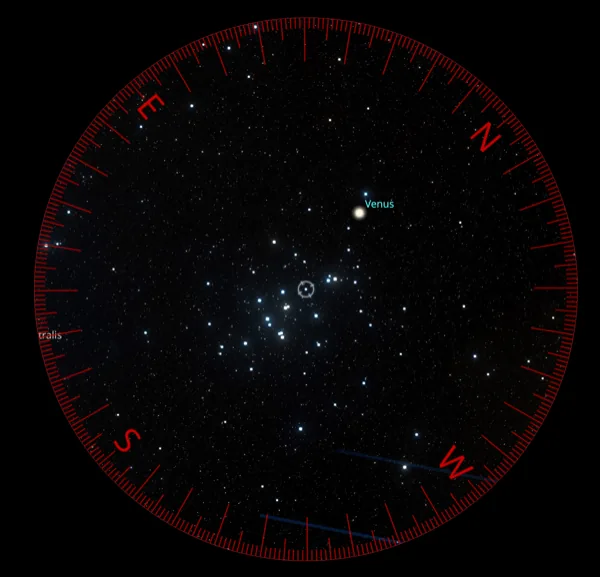
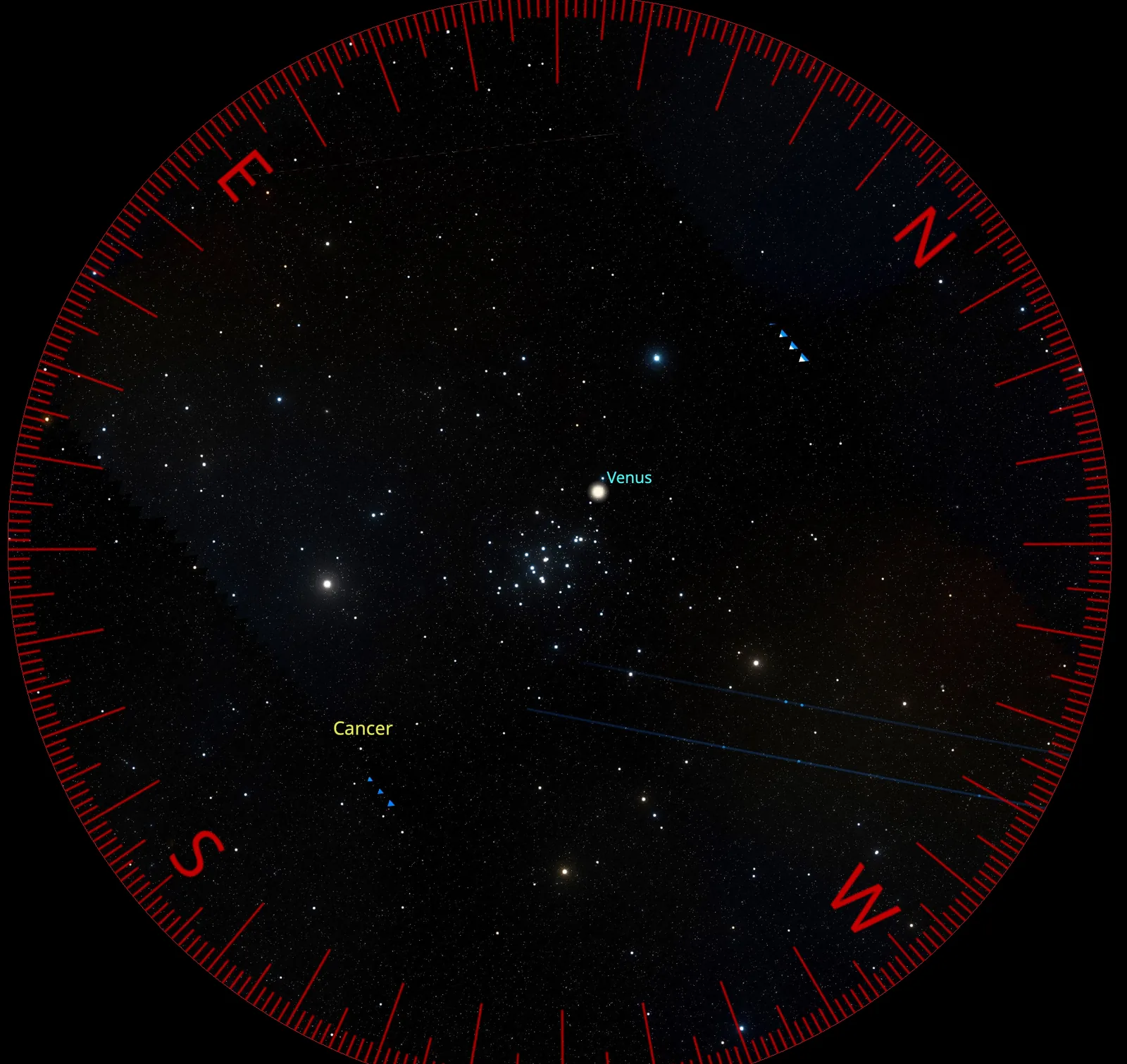
Venus and Jupiter get within 1.5° of each other on June 8th-9th. But as Venus continues moving across Cancer, it will next cross just above the Praesepe cluster (also called the Beehive Cluster), Messier 44.
Messier 44 is one of the bright open clusters - you can see it on a dark moonless night as a dim patch in the center of the Cancer constellation. The brighter stars show up with binoculars, and it’s a pretty cluster in small telescopes.
Setting Up the Encounter
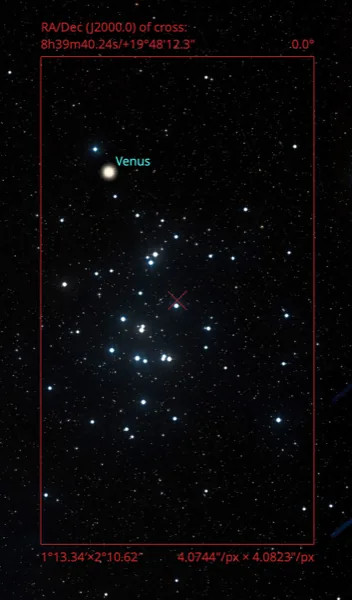
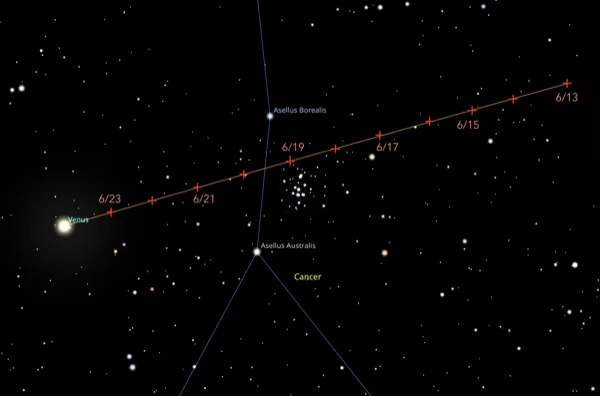
Venus makes its closest approach on the evening of June 19th, and with binoculars you’ll be able to track its approach:
The Moon Gets There First!
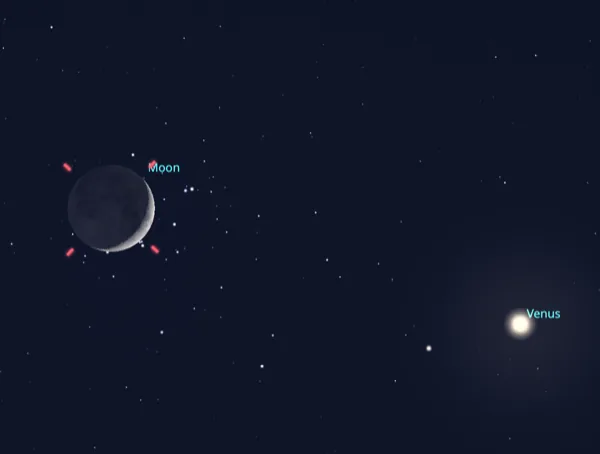
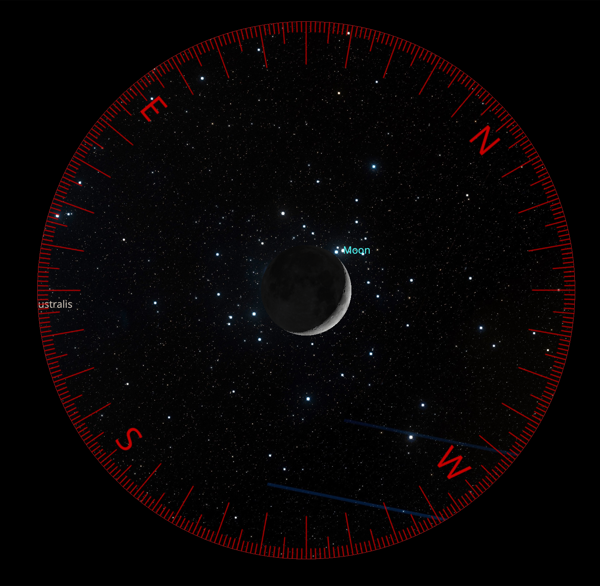
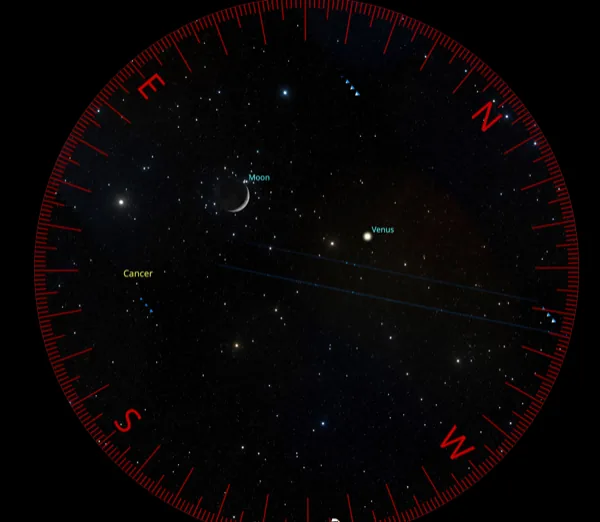
On the 17th, the waxing crescent Moon also transits the cluster, with Venus nearby. This will be something of a challenge: the Moon is embedded in the cluster around 9:30 EDT, but that’s still at the end of astronomical twilight, so the sky will still be bright: by 10 PM it’s a little darker and the Moon is still in the eastern part of the cluster.
Venus Arrives!
On the 19th, Venus reaches the cluster. No matter how you view it, it’s a sight.