The Eagle
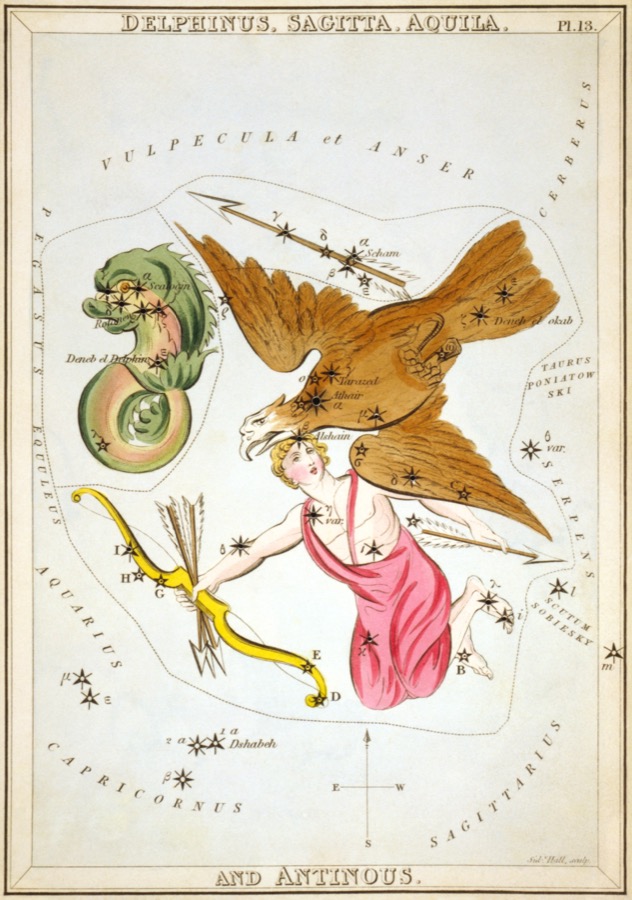
The southern part of Aquila for a time was reformed as the now-extinct “constellation” of Antinoüs - the lover of Hadrian (who drowned in the Nile), introduced in 130 CE. Interestingly, it was mentioned by Ptolemy in the Almagest not as a constellation but an asterism though it was included in various star atlases up to the 19th century. However, it did not “make the cut” when the International Astronomical Union defined the “official” list of 88 constellations in 1922.
Map of Aquila
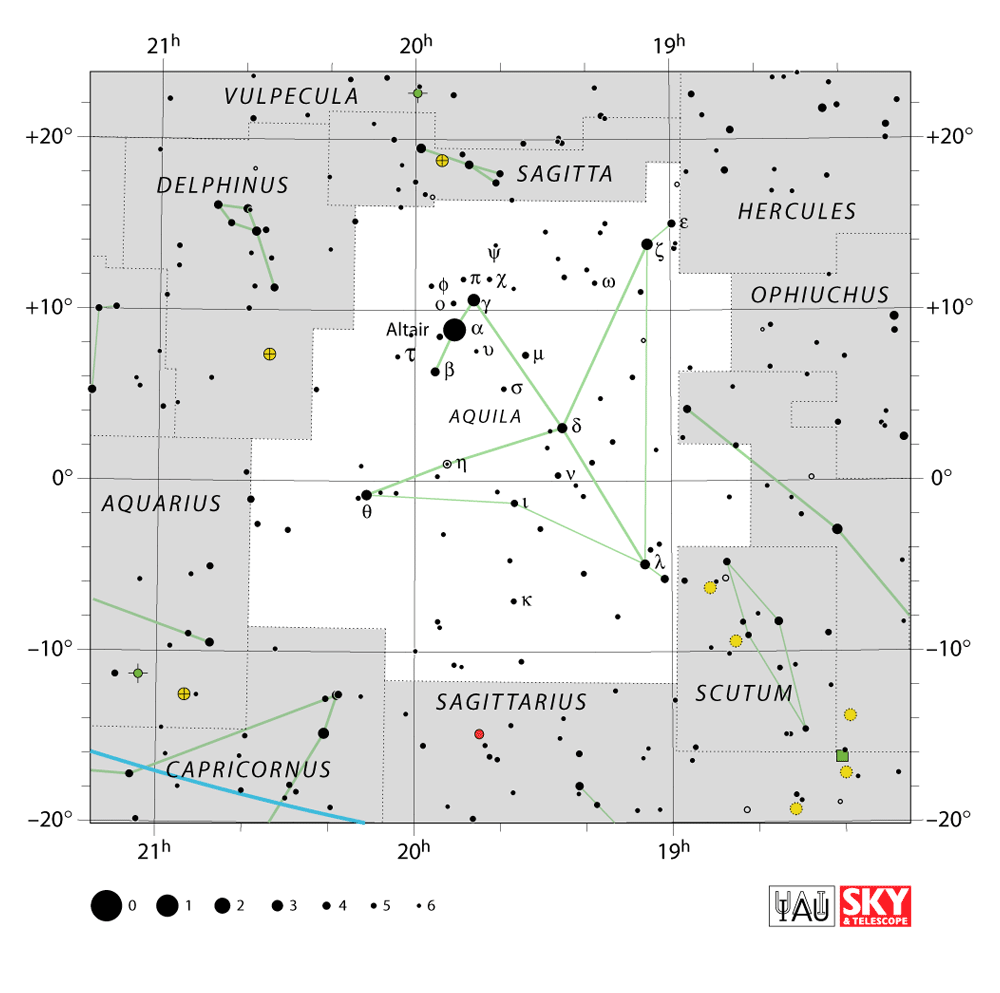
The Milky Way extends through the Western Half of Aquila, and the celestial equator bisects it. Therefore, it’s not surprising that most of the deep-sky objects are types found close to the plane of the Galaxy: planetary nebulae, dark nebulae, and open star clusters. A few globular clusters are there too that are closer to the Galactic Plane than most.
Variable Star η Aquilae
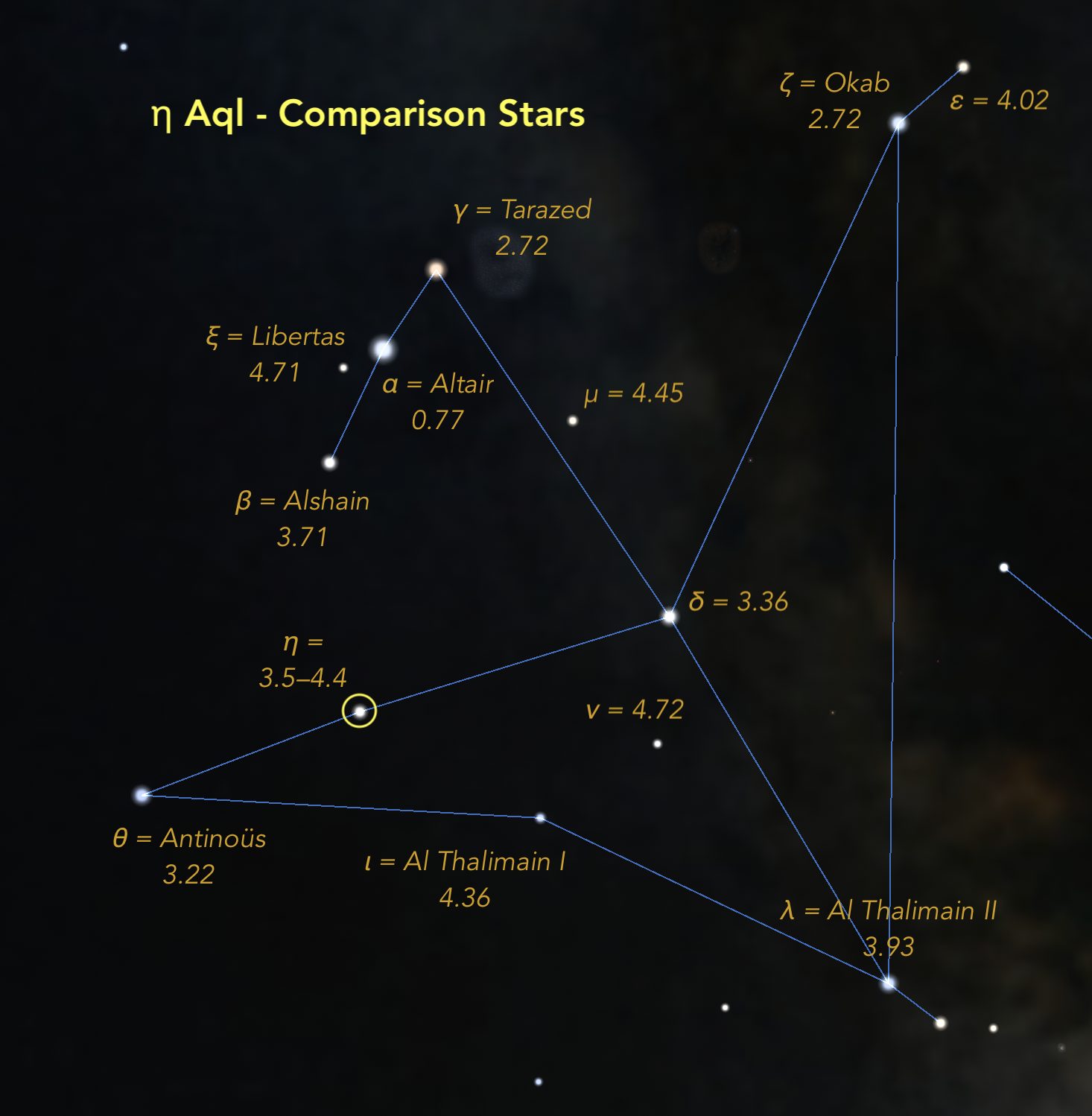
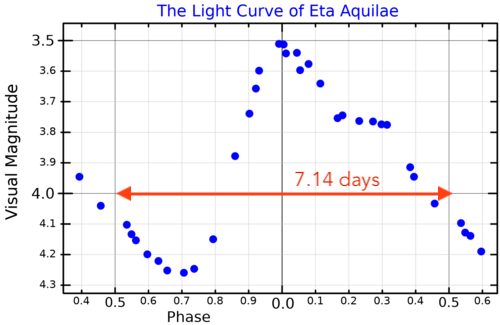
η (Eta) Aquilae is one of the brighter Cepheid variable stars. It pulses with a period of 7.18 days and ranges between magnitudes 3.5 and 4.4. This is something you can track with the naked eye if you have patience. Once you’ve located the star, you can use the other stars in Aquila to estimate its brightness to within ~0.1 magnitudes following its cyclic brightening and dimming.
Quick Reference: Objects of Interest
| Object | Type | Equipment |
|---|---|---|
| NGC 6781 | Planetary Nebula | Medium/Imaging Telescope |
| Barnard 143 | Dark Nebula | Binoculars/Imaging Telescope |
| NGC 6751 | Planetary Nebula | Medium/Imaging Telescope |
| NGC 6709 | Open Cluster | Binoculars/Small Telescope |
| NGC 6772 | Planetary Nebula | Medium/Imaging Telescope |
| NGC 6814 | Spiral Galaxy | Medium/Imaging Telescope |
Snowglobe in Space
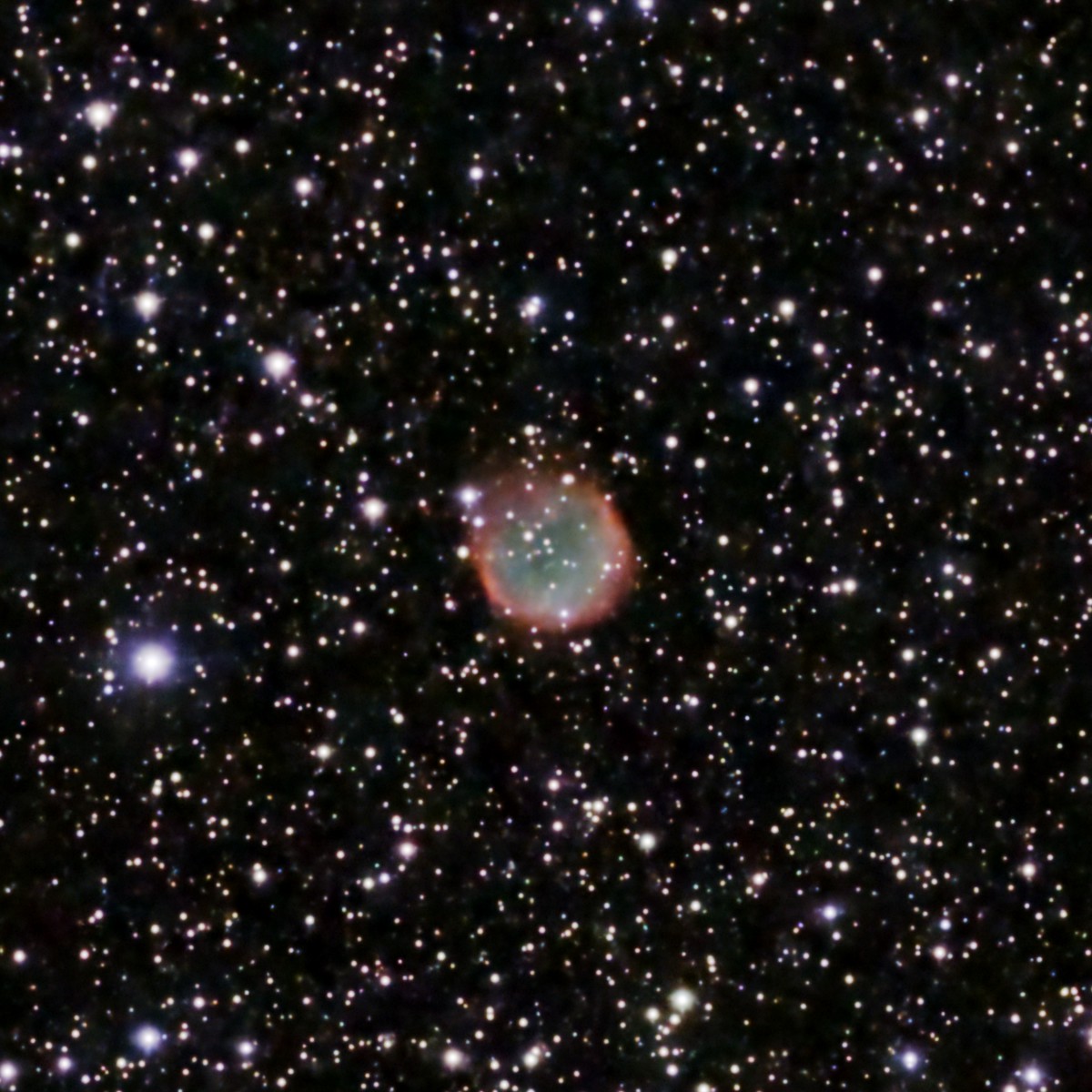
Also known as the “Snowglobe Nebula” (with other foreground stars being the “snowflakes”, it has the distinctive colors like the Ring Nebula but is more opaque in the center. Like the Ring Nebula we’re looking at it pole-on: the nebular shell is really hourglass-shaped; if we were viewing it from another place in the galaxy it might look more like the Dumbbell Nebula in Vulpecula.
The very faint central star expelled its atmosphere about 8,000 years ago and is probably part of a binary star system.
Barnard’s “E”
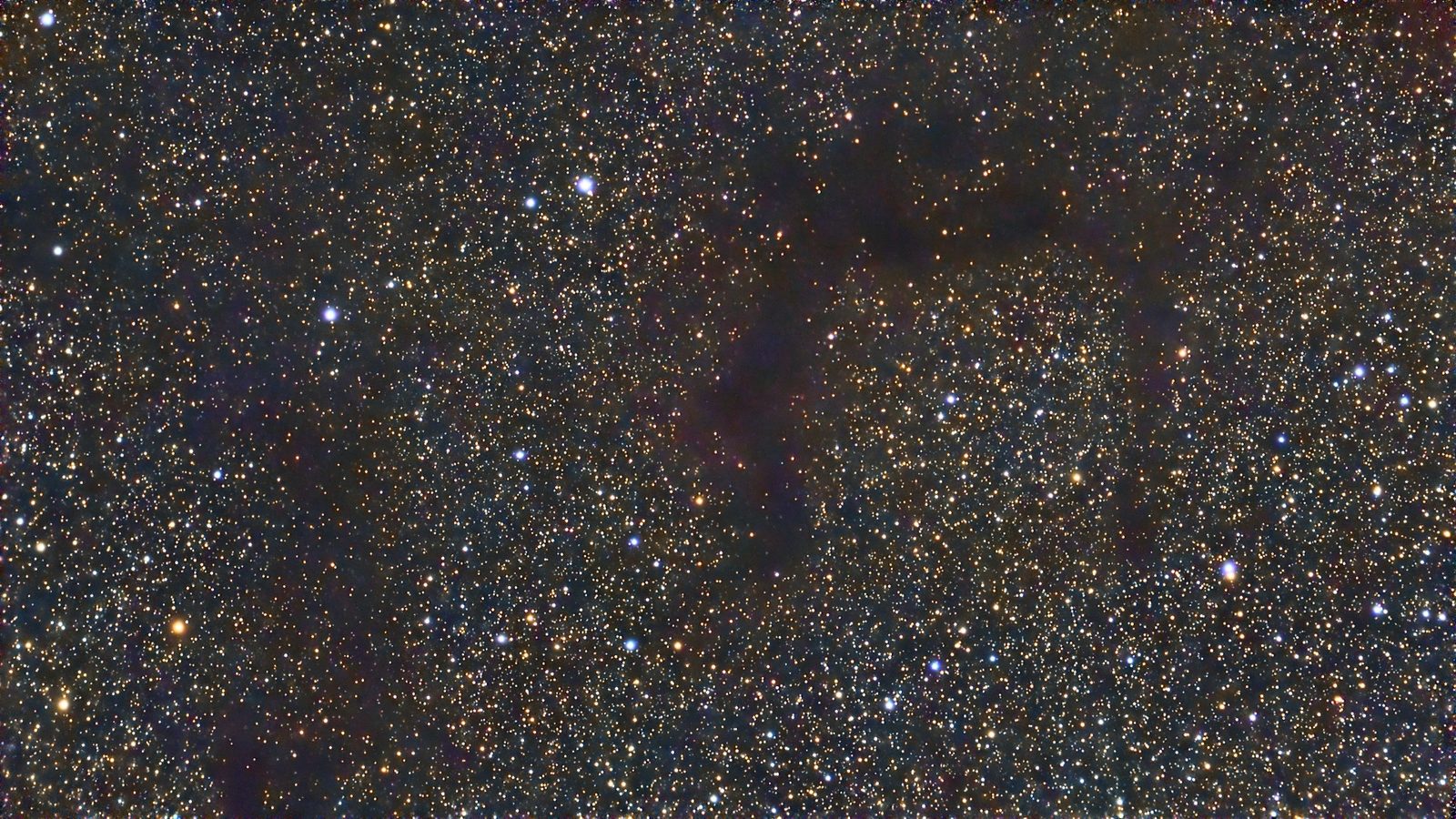
Dark Nebulae abound in Aquila and the constellations surrounding it (Scutum, Cygnus). While generally overlooked, when you take the time to examine them, they’re fascinating, with complex shapes. The top parts of the “E” are made up of the darker Barnard 143, while the bottom part is Barnard 142: these two nebula are not physically connected, though they’re both about 2,000 light years away.
These nebulae occur throughout the Galactic disk, and are a prominent feature with several edge-on galaxies, like M 104 “the Sombrero” in Virgo.
Dandelion Puffball
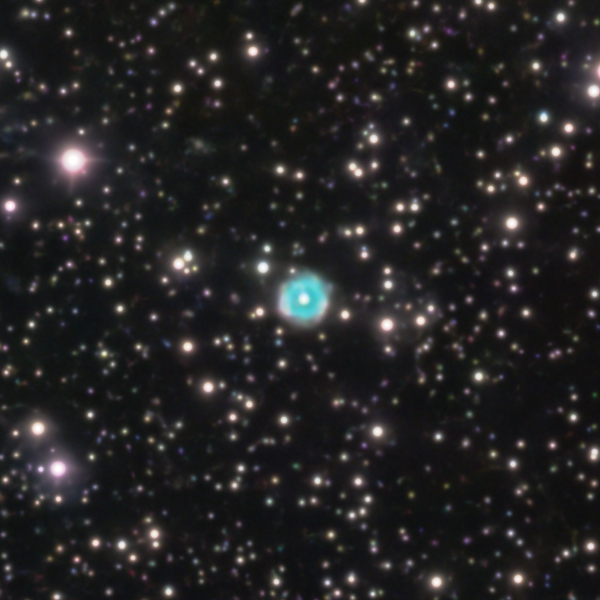
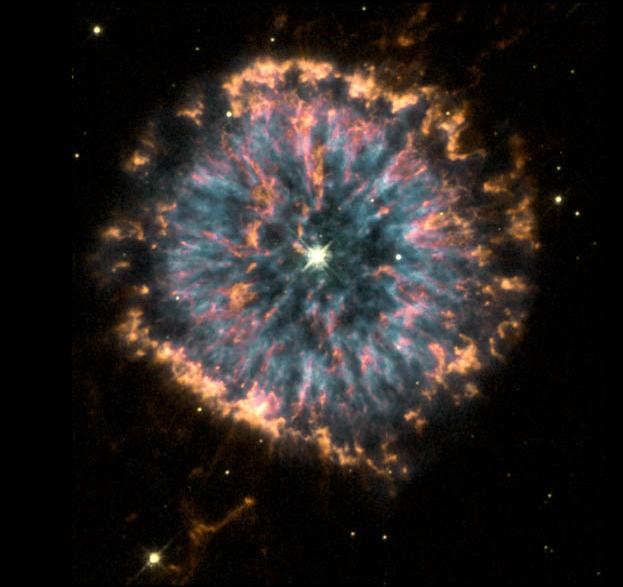
Another smaller planetary nebula is NGC 6751 the “Dandelion Puffball”, also known as the “Glowing Eye” Nebula. It’s about 6500 light years away and about 0.8 ly across. It has a very complicated structure (as seen in the HST image) with the hotter gas (blue) overlaid with cooler (red) streamers that are in the foreground (you have to imagine this in three dimensions).
Flying Unicorn Cluster
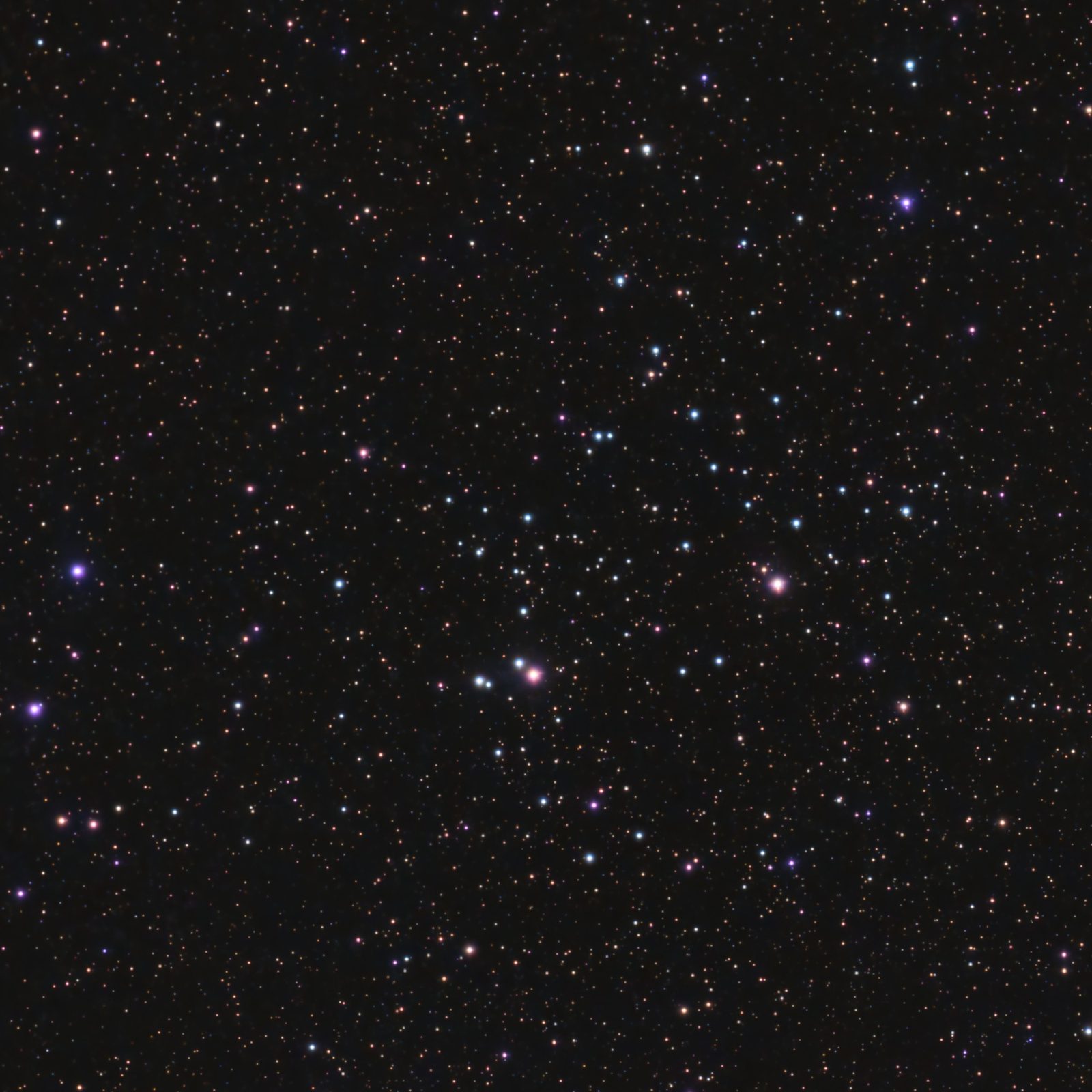
Aside from planetary nebulae (of which Aquila has many), there are a few star clusters. NGC 6709 is moderately aged for an open cluster (about 150 Myr) about the same age as the Pleiades. It looks very different because it so much further away: about 3,500 light years. This cluster looks best with low magnification.
Very Elliptical Planetary
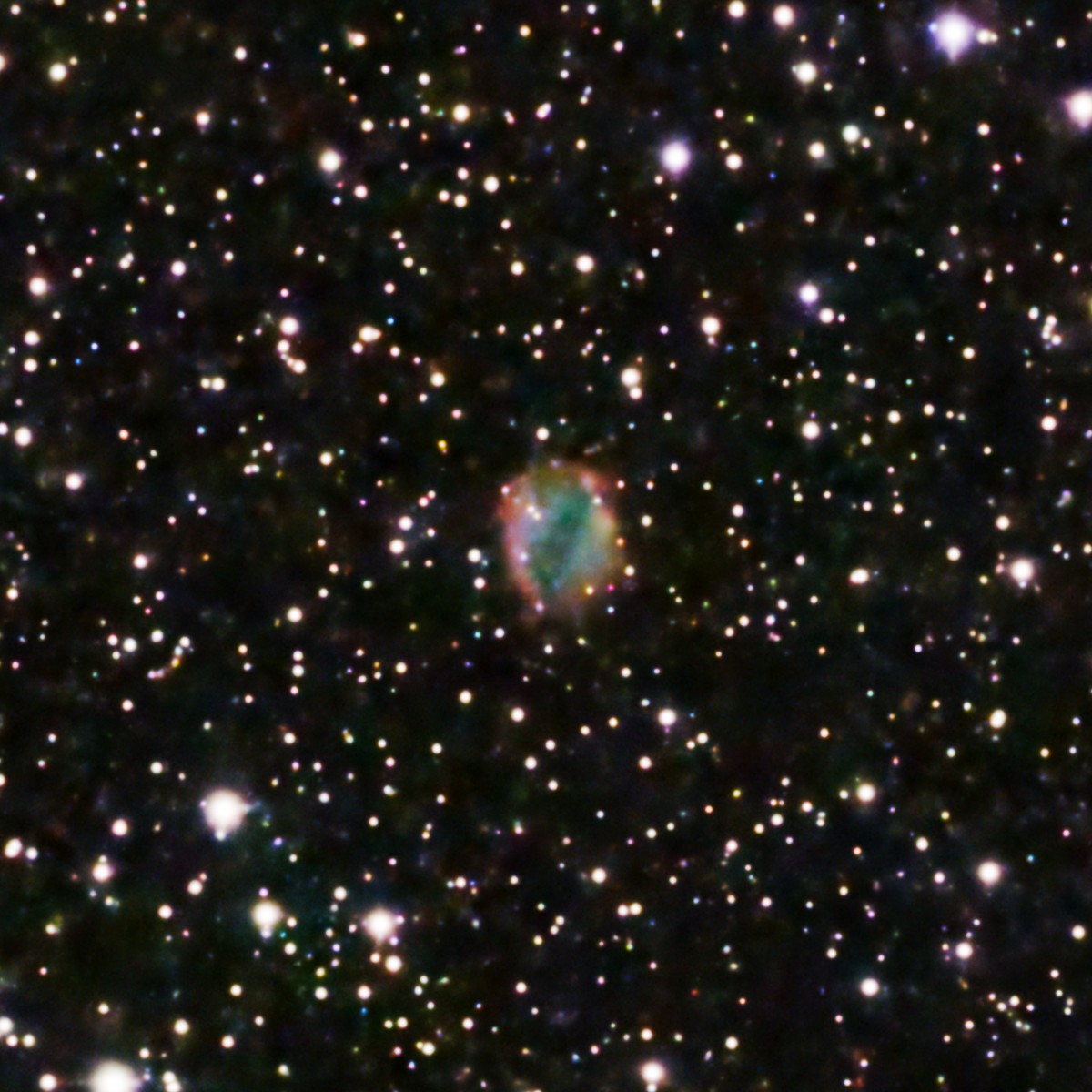
Most planetary nebulae are only a few thousand years old. NGC 6772 is interesting because it’s a bit older: about 11,000 years. It was discovered by William Herschel in 1784. Unlike other popular planetaries, like the Ring Nebula, the shape of this one is distorted: this is probably due to the expanding gas colliding and interacting with the interstellar medium.
An Extra-Galactic Oddball
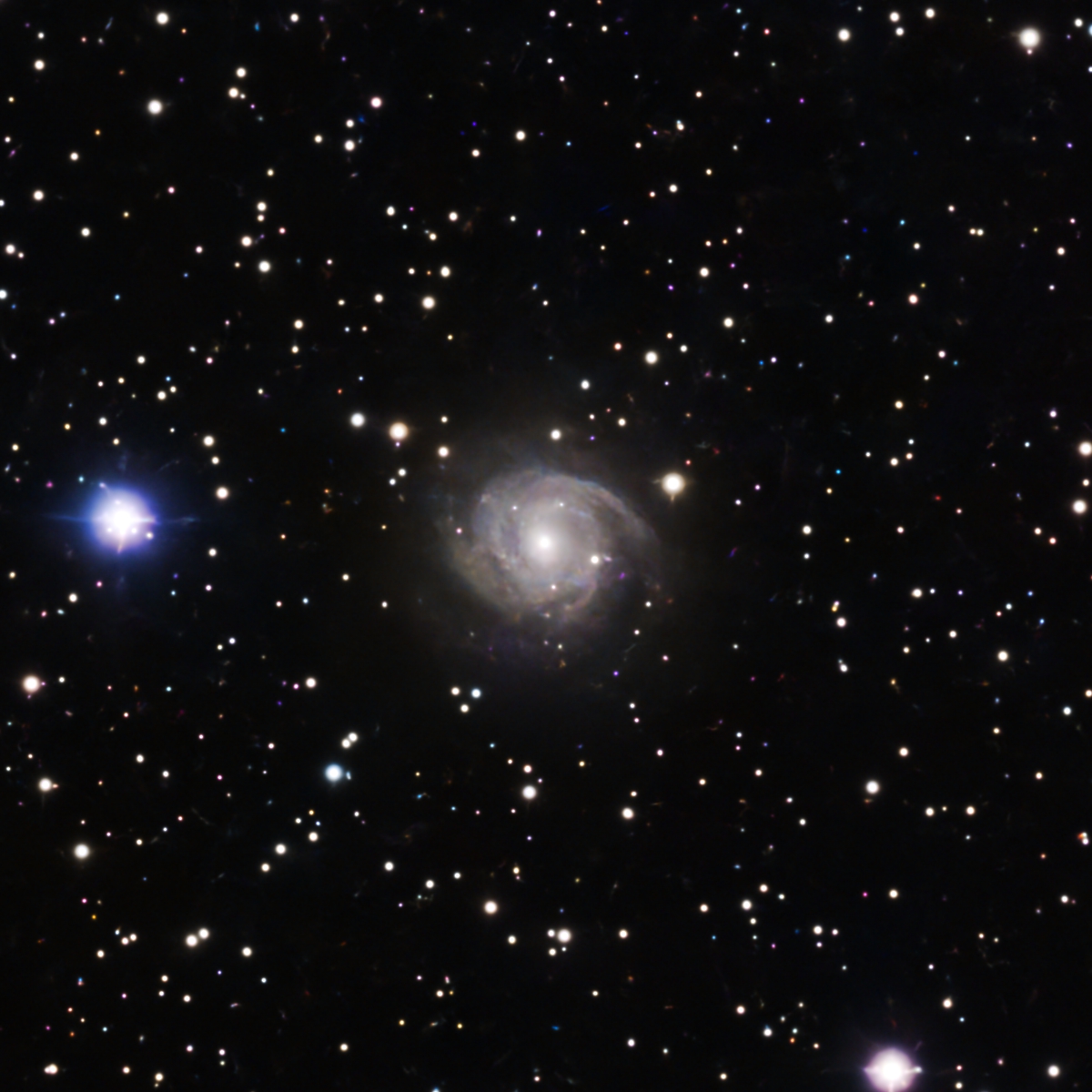
A galaxy? In Aquila? It’s rare to find galaxies so close to the Milky Way, although this one does have a galactic latitude of +10° putting it at the edge of the “Zone of Avoidance”. Of course there are galaxies all over the sky, but the Milky Way blocks almost all of them from view.
NGC 6814 is a nice face-on galaxy with four arms tightly wound around the core. It’s a nice object (esp. with imagers) if you want to take a break from the Summer’s parade of nebulae and clusters.