🌞 Mars Meets Uranus
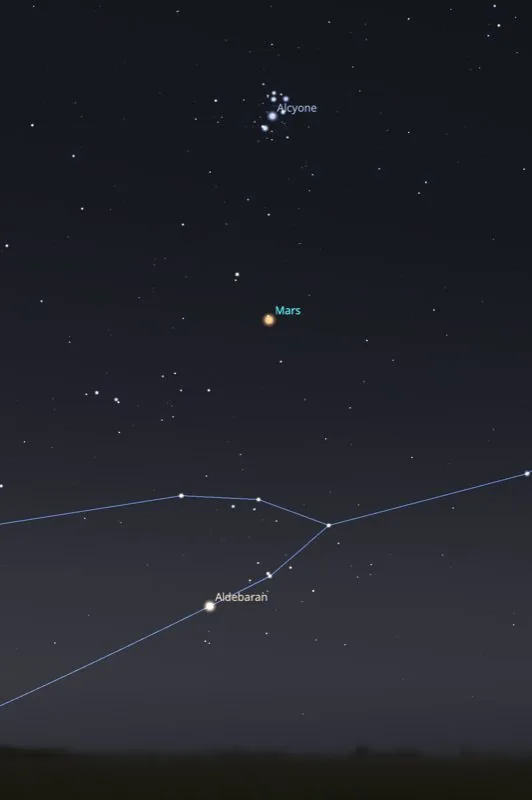
At 4 AM EDT, Mars is above the horizon and nicely placed between the Hyades and Pleiades star clusters in Taurus.
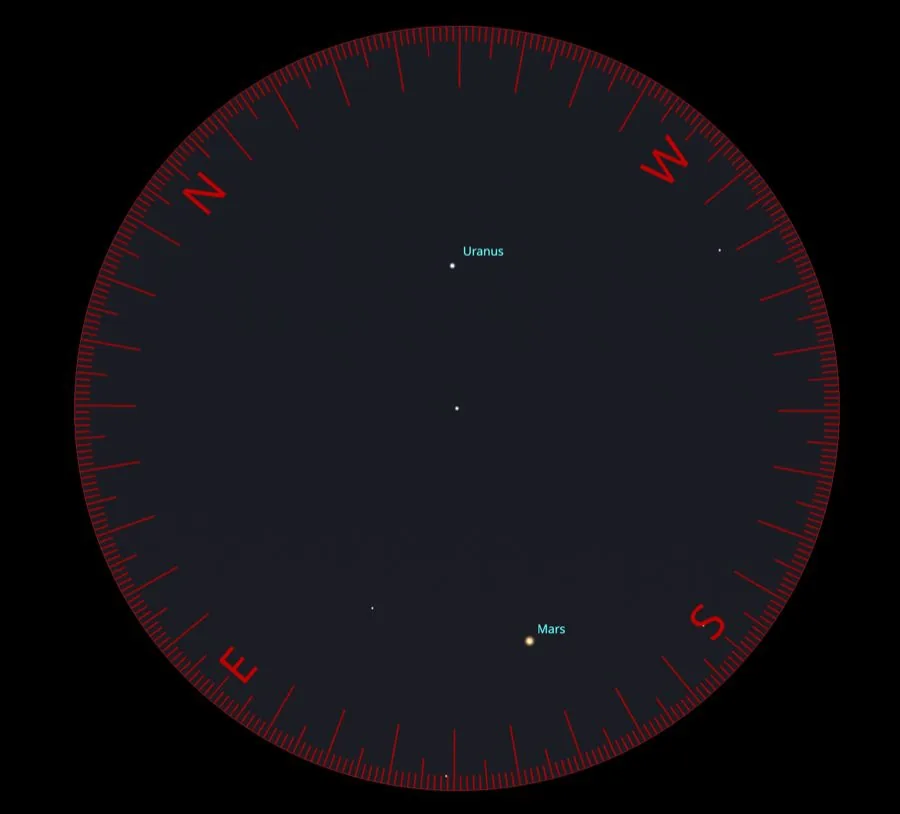
Telescopically, it’s one of the worst times to view the planet: it’s on the other side of the solar system from us (2.1 AU = 195 million miles), but in a telescope, you’ll see it there at magnitude 1.4 with a 6th magnitude “star” to the NE: that’s Uranus.
🪐 Special Event: Ed Faits talks about “The Wanderers”
We’re really excited to have our first speaker at our monthly meeting in a while: Ed Faits of the Arunah Hill group, is coming to present “The Wanderers”:
Throughout the ages humans have been fascinated with the night sky. All the stars move in lock step through the year, except for five “wanderers” that didn’t follow the rules: the planets. This talk takes a look at how perception of the planets changed over time as knowledge and technology evolved. We’ll also look at the ups and downs of the public view of Pluto and take a look beyond the solar system.
🌐 What’s Happening on Our Website
Articles
A few of the topics that came up in June:
- We took a “Closer Look” at Arcturus, galaxy M 101, nebula M 57, and globular cluster M 92
- We published a Beginners Guide to Telescopes, including tips on what to prioritize (and what to avoid)
- We created a few quizzes on astronomical discoveries, and stellar evolution
New Features
We also expanded our list of Series, and services:
- We’ve improved our Star Maps: they’re now done weekly (and are available into 2027)
- Members’ Skies: where NBAS members share their images
- The NBAS Store: t-shirts, caps, stickers, and some surprises
Coming in July!
- The Summer Triangle Stars: Vega, Deneb, and Altair
- Old Star Clusters: what makes them somewhat rare and so interesting?
- Stellar Dividing Lines: when is a star a brown dwarf? A red giant?
- Barnard’s Star: one of the interesting neighbors to the Sun
- A Guide to observing this year’s Perseid meteor shower (in August) with tips on how to make it a comfortable experience
📸 This Month’s Image
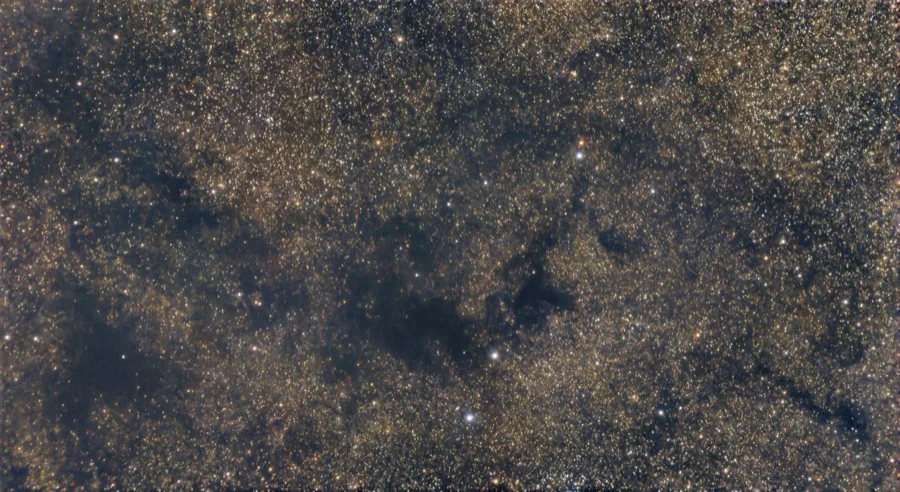
Something that’s overlooked in the Summer Milky Way are dark nebulae. They’re in the plane of the Galactic disk, but in the foreground against the background Milky Way. You can also see them intertwined with bright nebulae (like the Trifid Nebula, M 20), and of course the most famous one is Barnard 33 - the “Horsehead Nebula” in Orion.
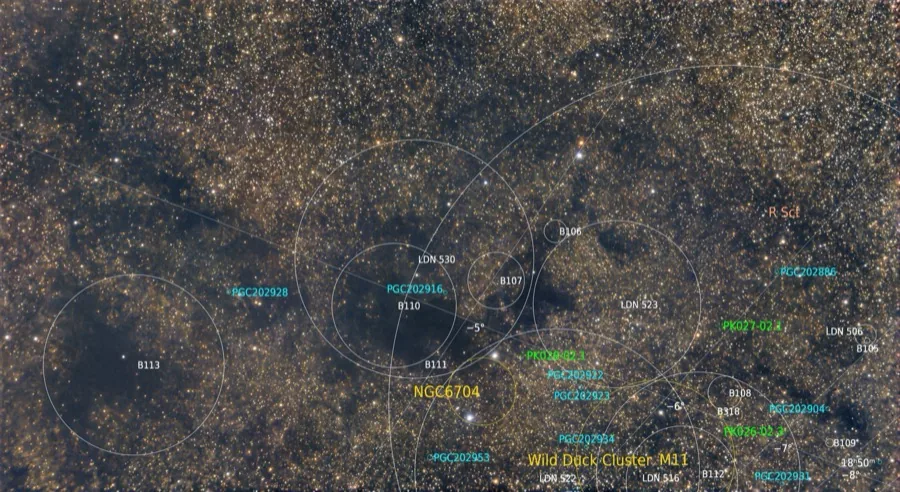
Here we have a strip of sky cutting through Scutum just NW of the rich open cluster M 11. There are several Barnard dark nebulae here: the two largest patches are B 113 and B 110, but these are all probably part of the same larger structure.
What’s fascinating is that they can be so opaque that they completely blot out the Milky Way behind them. Some are prominent enough (in their inkiness) to be detectable with binoculars.
✨🔭 Monthly Starmap
To help you navigate the night sky this month, we’ve provided a high-resolution starmap. The PNG is great for quick viewing, while the PDF is optimized for sharp home printing.
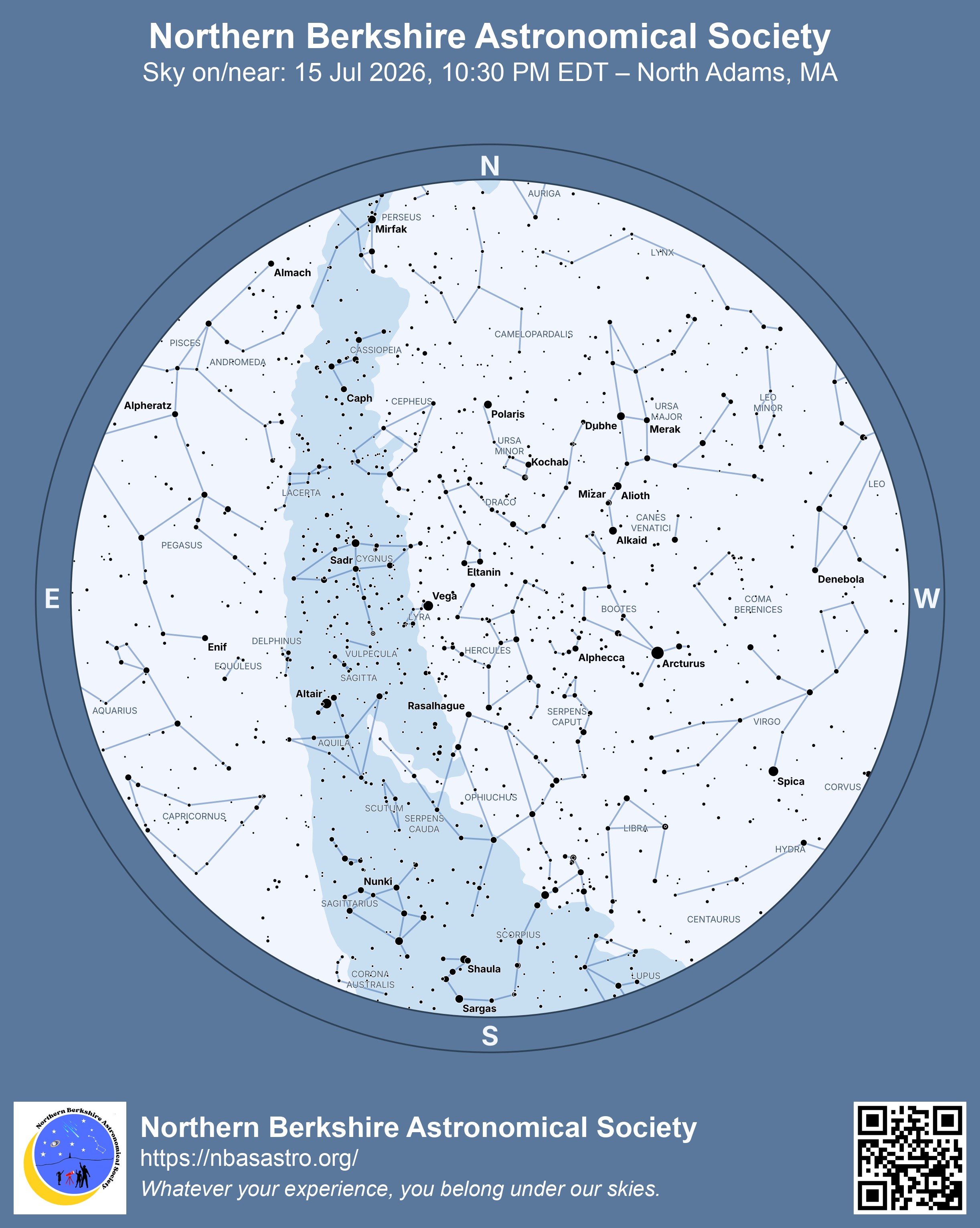
July 2026 Reference Starmap
Reference chart (no planets) — optimized for sharp home printing.
📥 Download Chart (Print Ready)