Introduction
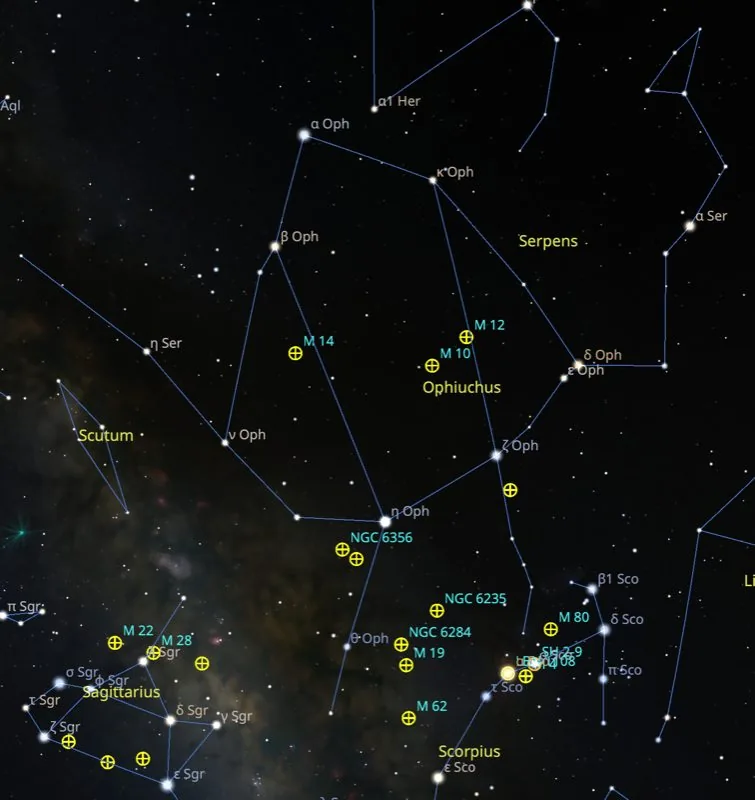
Every one of these clusters is gravitationally bound to the Milky Way today – that part isn’t in question. What is in question, for roughly half of them, is where each one actually formed. Some of these clusters were built here, out of the Milky Way’s own gas, billions of years ago. Others almost certainly weren’t – they were built somewhere else, in a smaller galaxy, and only ended up orbiting the Milky Way after that galaxy got torn apart and absorbed. For a third group, the honest answer is that nobody knows yet.
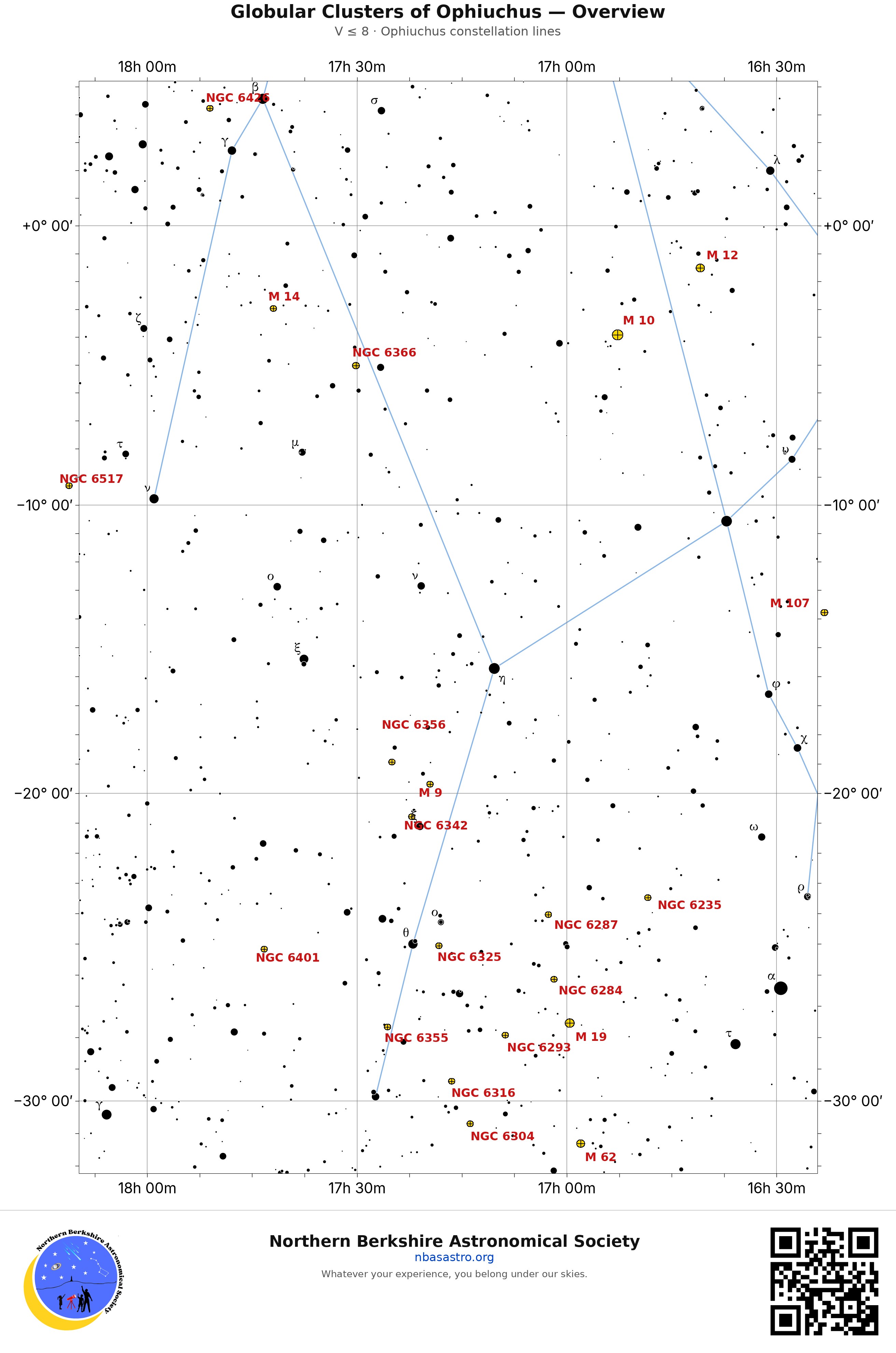
That’s the question this piece follows: of these twenty clusters, sitting in roughly the same patch of sky, how many were actually born in the Milky Way?
The Natives: Main-Bulge and Main-Disk
Astronomers sort “native” Milky Way clusters – the ones that most likely formed here – into two families, based on the shape of their orbit.
Main-Bulge clusters stay close to the galactic center, on orbits tipped at all sorts of steep angles, swinging through the crowded core from every direction rather than sticking to one flat lane. Main-Disk clusters do the opposite: their orbits stay close to the galaxy’s flat plane and close to circular – the same basic shape of path the Sun itself takes around the galaxy.
That’s a statement about the shape of the orbit, not where the cluster actually lives. A globular cluster genuinely embedded in the gas and dust of the star-forming disk wouldn’t last – that environment would have torn a loosely-bound ball of ancient stars apart long before now. “Main-Disk” clusters instead orbit the way disk stars do: they never wander far above or below the plane, and their paths stay close to circular rather than plunging in and out. Same orbital habits as the disk, without being part of its structure.
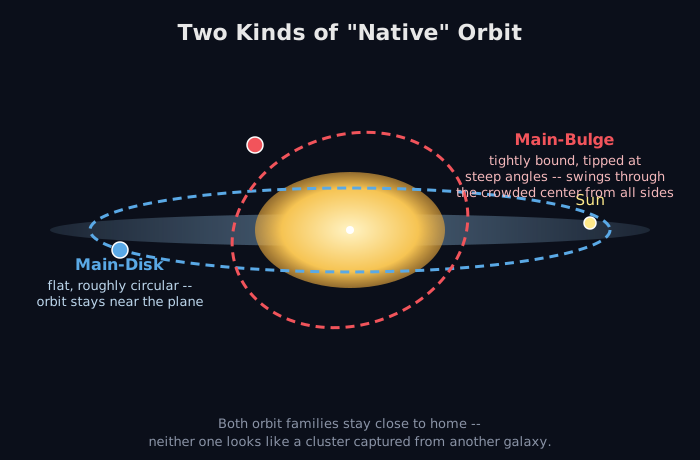
Neither of these orbit shapes looks anything like what you’d expect from a cluster captured from another galaxy – which is exactly the point. Ten of our twenty clusters fall into one of these two native families: seven Main-Bulge, three Main-Disk.
M 62 — the lopsided one
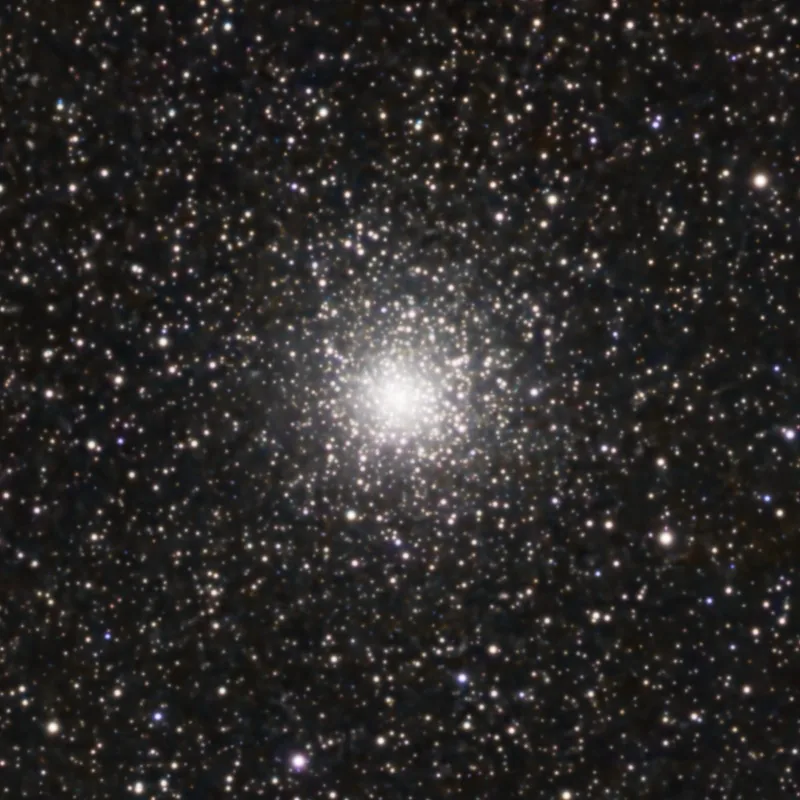
M 62 (Main-Bulge) orbits close enough to the galactic center that the crowded environment there has visibly deformed it – its core is measurably displaced off to one side. A 2010 survey found 245 variable stars inside M 62, 209 of them RR Lyrae – possibly the richest population of these pulsating stars in any Milky Way globular. That’s the same proximity to the center showing up twice: once in the cluster’s shape, once in its stellar population.
M 107 — the last one added
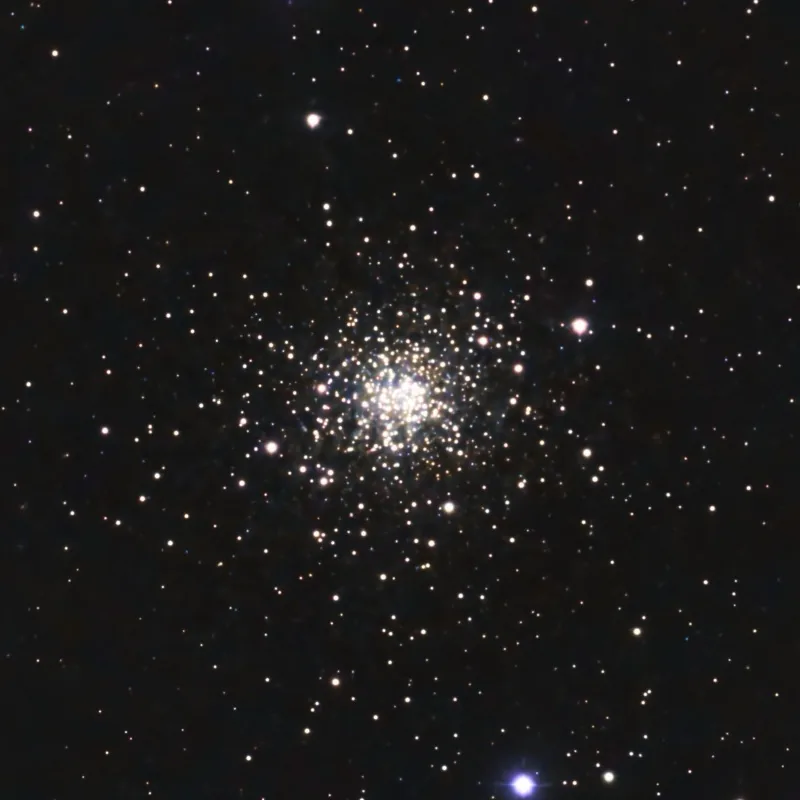
M 107 (Main-Bulge) carries one of the highest numbers in the Messier catalog, which tops out at 110 – and fittingly, it’s also the most recently added, chronologically. Pierre Méchain found it in April 1782, and William Herschel found it again, independently, in 1793, but it never made it into Messier’s own published list – Méchain’s discovery came in just after Messier had already sent his catalog to the printer. M 107 then sat without an official number for over 160 years, until 1947, when astronomer Helen Sawyer Hogg formally folded it into the catalog, along with three other objects Méchain had found.
M 12 and M 10 — twins that aren’t, twice over
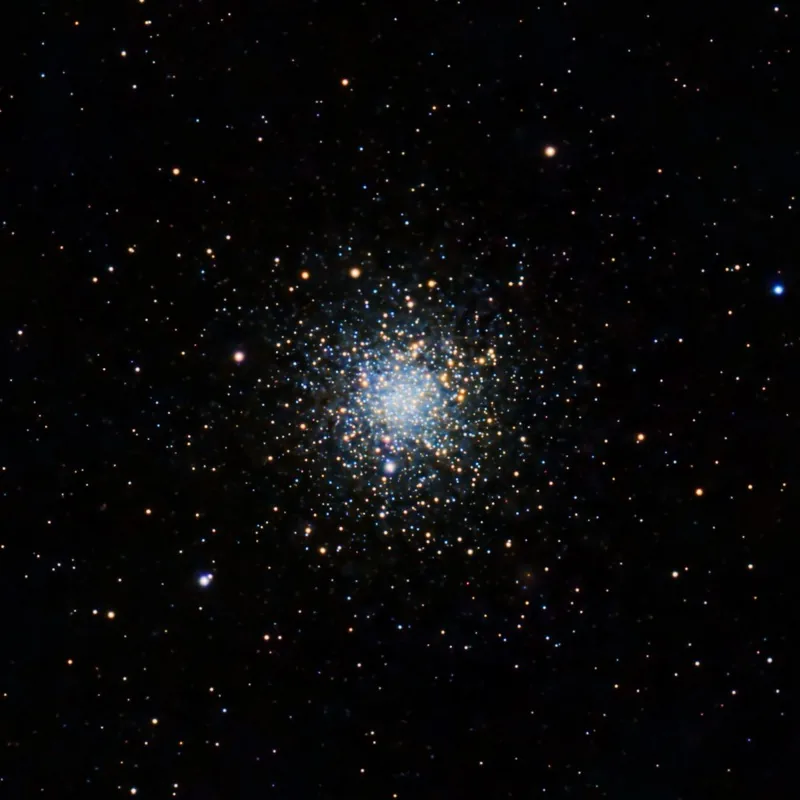
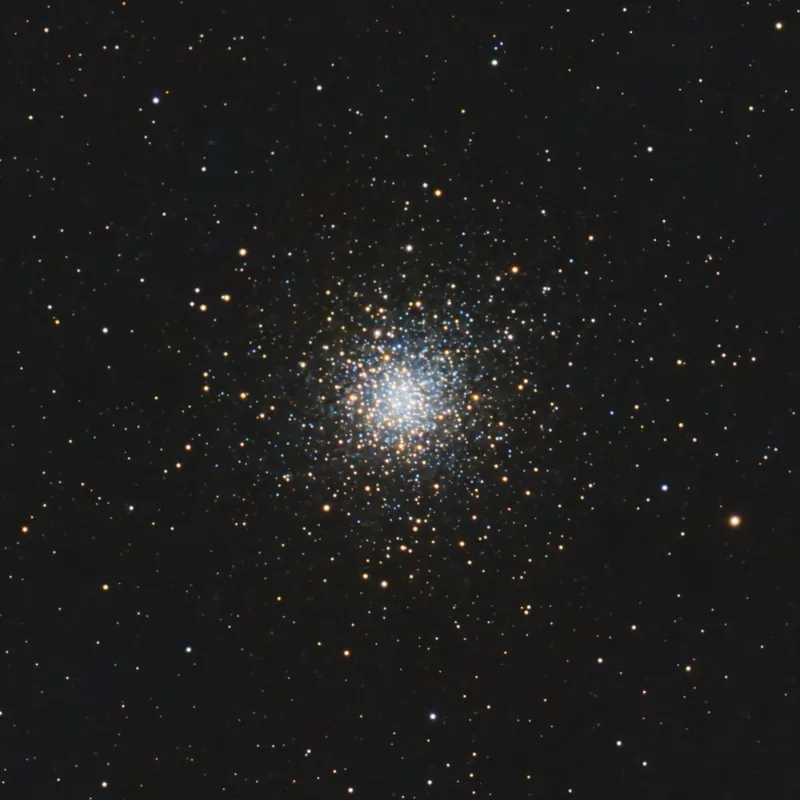
M 10 and M 12 have been nicknamed “the twins” for as long as observers have compared notes on them: about 2° apart in the sky, with similar listed brightness (mag 6.6 and 6.1). They aren’t nearly as similar as they look. The two clusters sit roughly 2,000 light-years apart in real, three-dimensional space – M 10 only looks brighter and more concentrated because it happens to be closer to us.
The deeper split matters more for this piece: these two clusters don’t even belong to the same family tree. M 12 is Main-Disk – almost certainly built here. M 10 falls into the Low-Energy group described further down, a category that most likely is not native. Two clusters that look alike and sit near each other on the sky still manage to disagree about the single most basic fact you can ask of them: where they’re actually from.
Two supporting cases
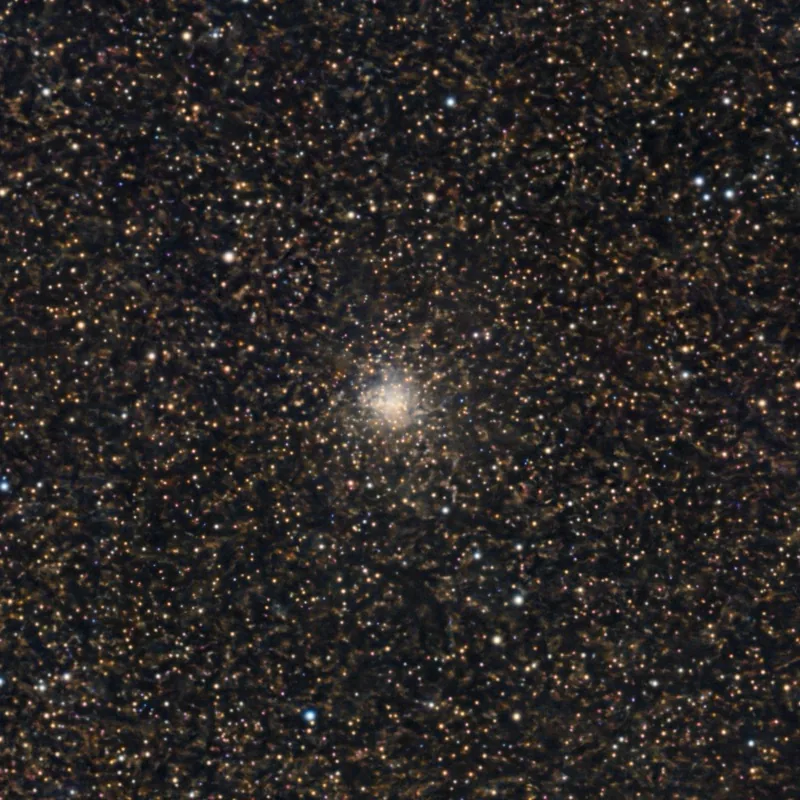
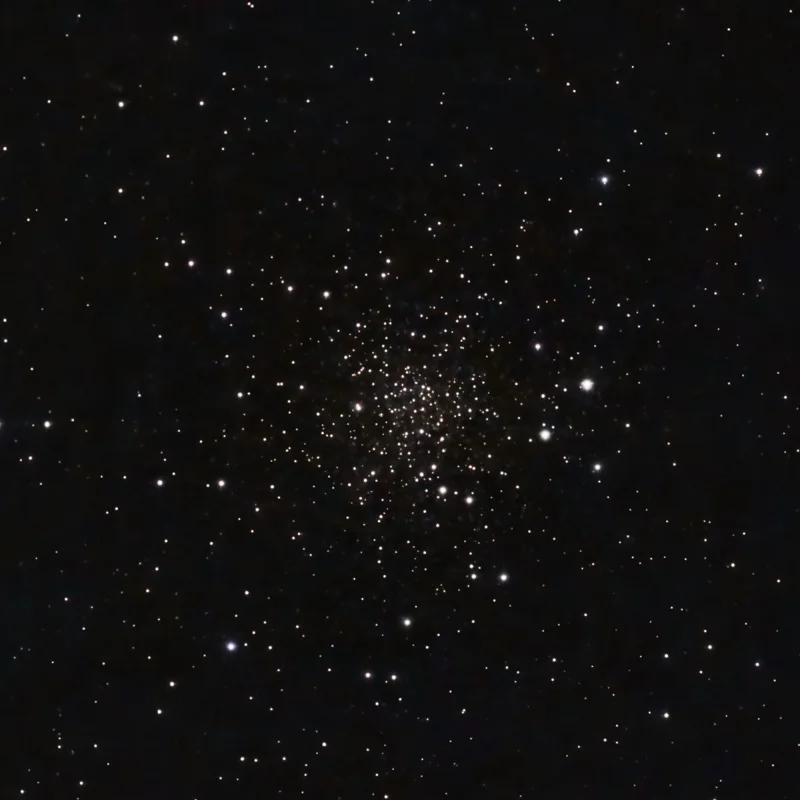
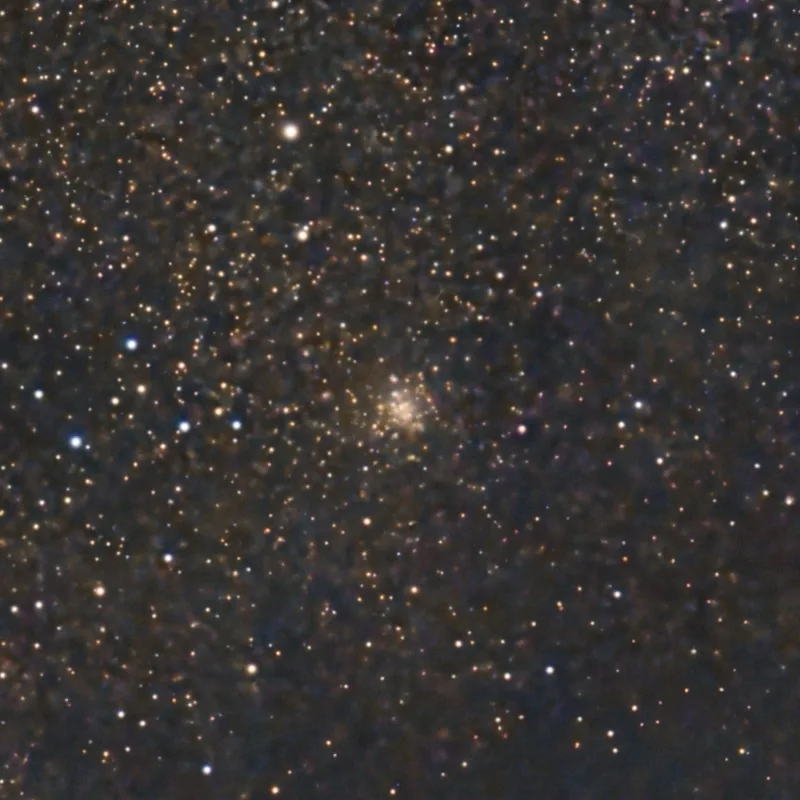
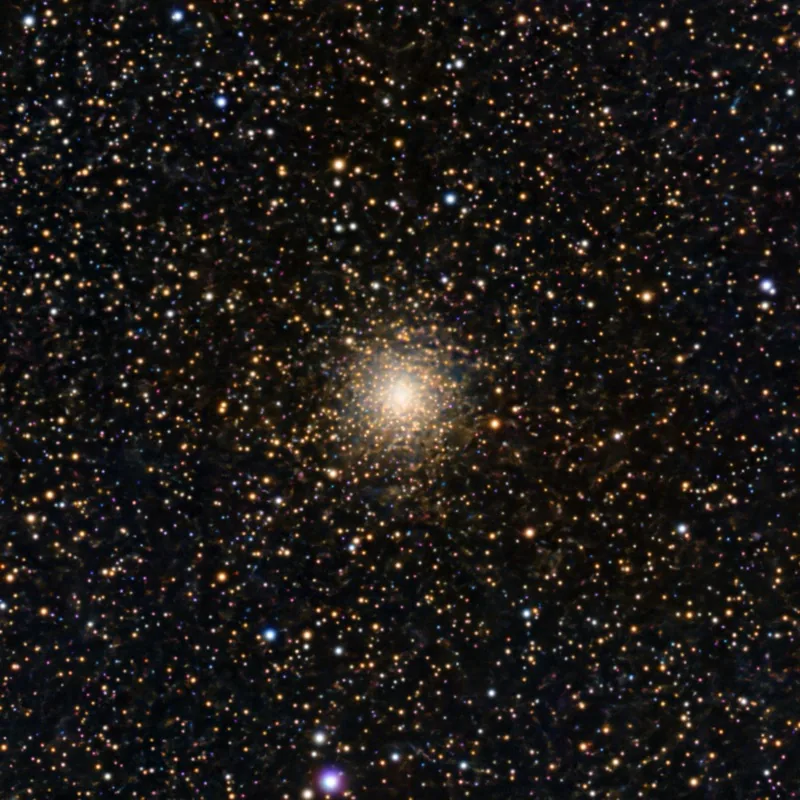
Five more Main-Bulge and Main-Disk natives round out the group, without an individual story to tell here beyond their membership:
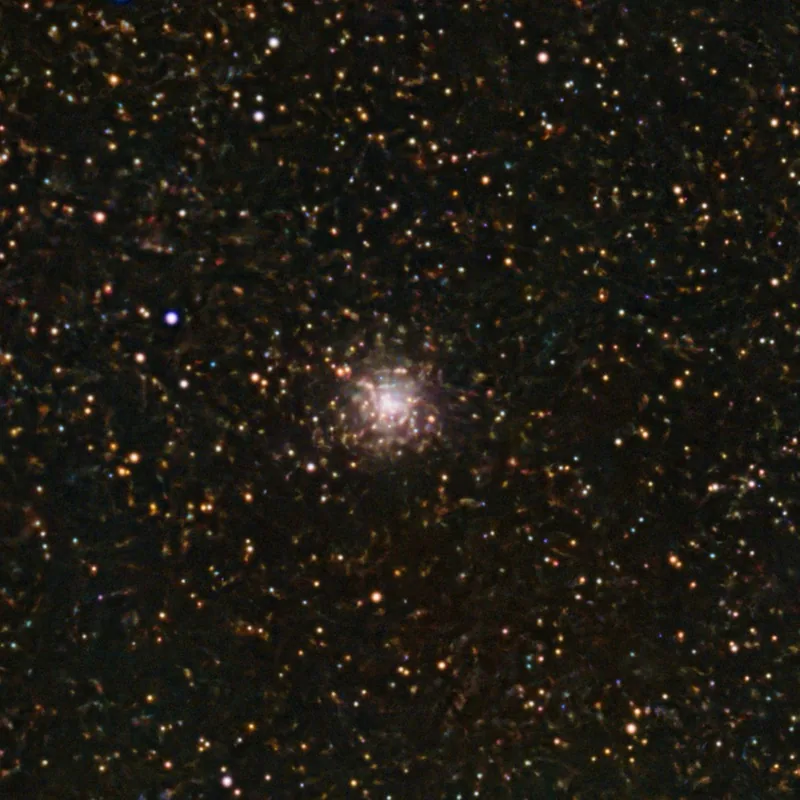
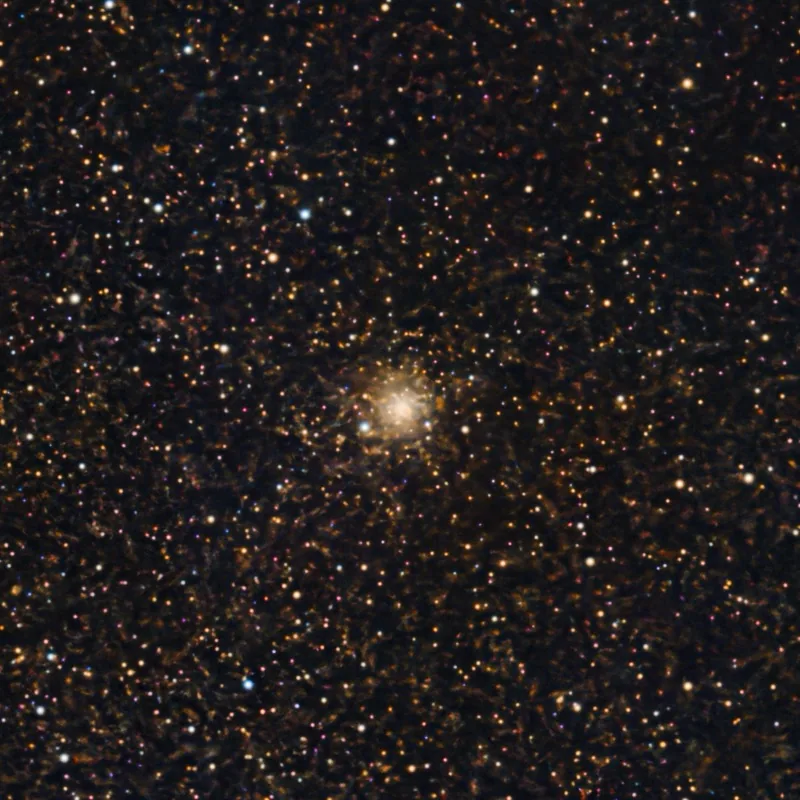
Also Native: The Rest of the Family
The Confirmed Immigrant: Gaia-Enceladus
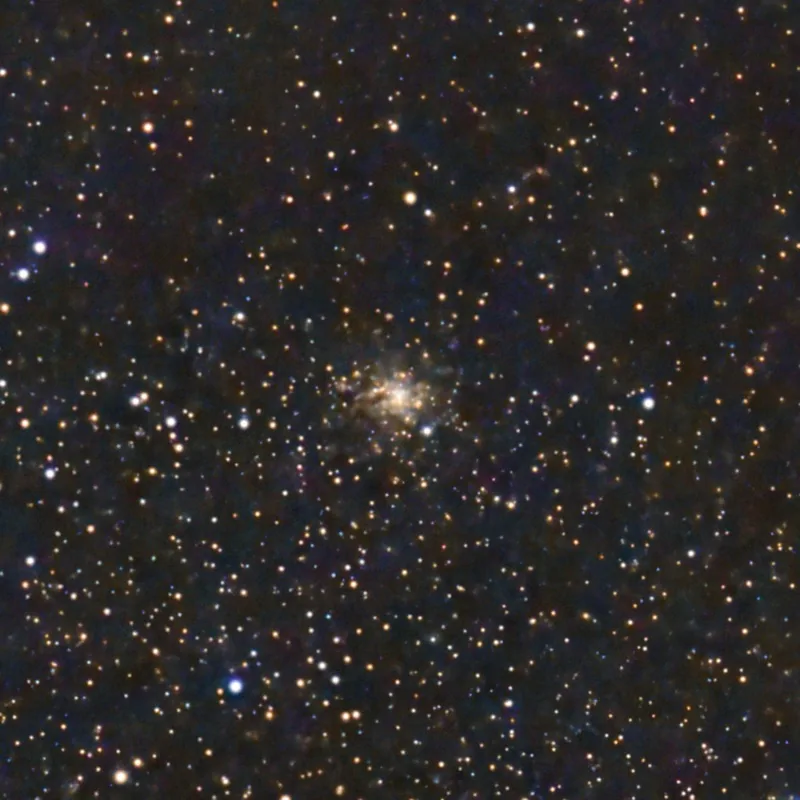
Roughly 8 to 10 billion years ago, the Milky Way collided with and absorbed a smaller galaxy, now known as Gaia-Enceladus – the biggest merger in the Milky Way’s history that astronomers can directly reconstruct today. Its debris still has a distinct dynamical signature (a specific combination of orbital energy and angular momentum), and clusters that share that signature are considered its former members. Twenty-six Milky Way globulars fit that description, including, notably, Omega Centauri, very likely the stripped-down core of the Gaia-Enceladus galaxy itself.
The Suspects
This is where it gets genuinely uncertain – and where more than half of our twenty clusters end up.
Take away the native clusters and the confirmed Gaia-Enceladus immigrants (plus three other identified mergers not represented in this set), and there’s a leftover group of Milky Way globulars that don’t fit anywhere. Astronomers split that leftover group in two, based on how tightly bound their orbits are.
One group – call them the Low-Energy clusters – sit on orbits that are tightly bound to the galaxy, and similar enough to each other that they were probably one single population once. But they don’t match any of the galaxy’s known mergers. The leading idea is that they’re debris from a large galaxy the Milky Way swallowed a very long time ago – one that nobody has been able to identify yet. Probably not native. Whose galaxy it used to be is still an open question.
The other group – the High-Energy clusters – are the opposite kind of puzzle: loosely bound, scattered all over the place, with no shared pattern connecting them. The best guess here is that they’re leftovers from several different small galaxies, each contributing only a cluster or two – too little material from any single one to add up to a recognizable pattern.
Seven of our clusters are Low-Energy (M 10, counted above among the twins, is one of them). One is High-Energy.
M 9 — reddened, not disturbed
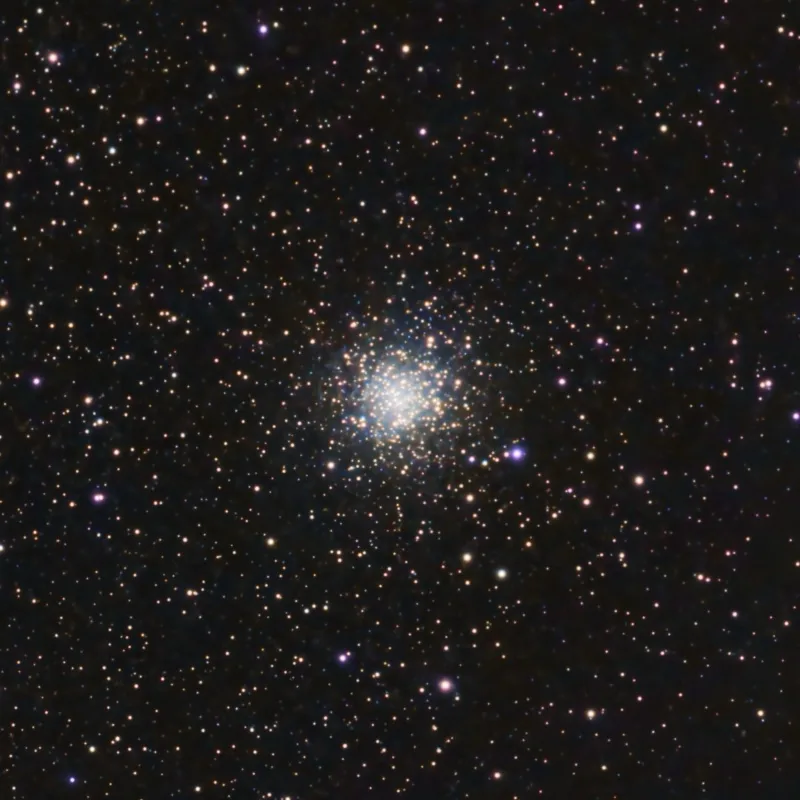
M 9 (Low-Energy) sits close enough to the galactic center to share the same crowded neighborhood as M 62, but its proximity shows up differently here: instead of a distorted shape, M 9 shows heavy reddening, because its light has to pass through a thick lane of interstellar dust near the galactic plane before it reaches us.
M 19 — flattened, or just dusty?
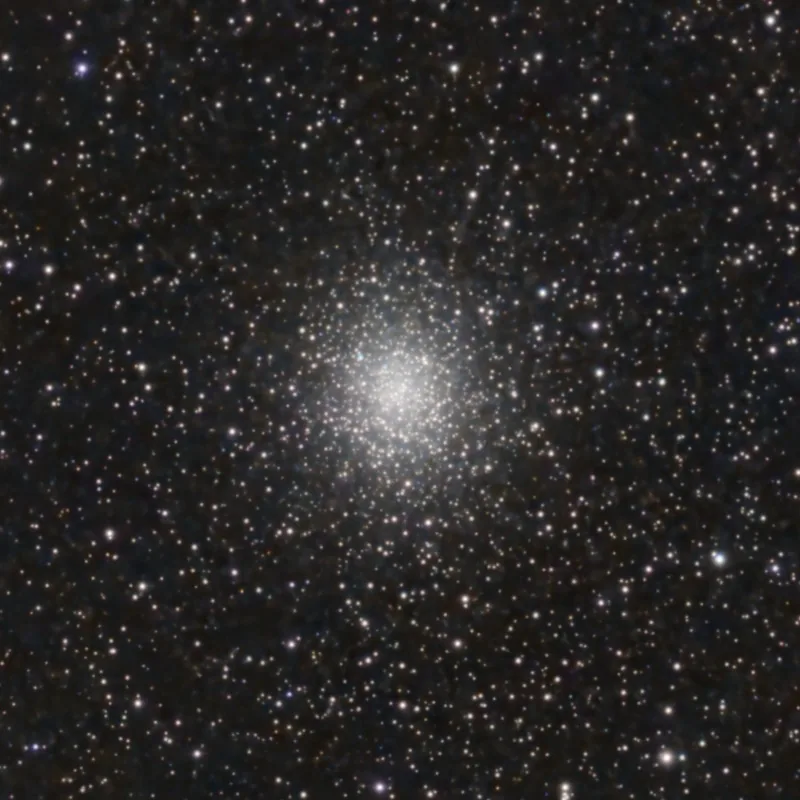
M 19 (Low-Energy) is the most visibly flattened, egg-shaped globular cluster known. The leading explanation is the same close-to-the-center tidal squeeze distorting M 62. But there’s a real caveat: a dust lane along one edge of M 19 makes it look even more flattened than it is, by dimming that side more than the other. In infrared light, where dust matters far less, M 19 looks nearly round. The shape is real; how extreme it looks is partly an illusion of dust, not just physics.
M 14 — the nova nobody noticed for 26 years
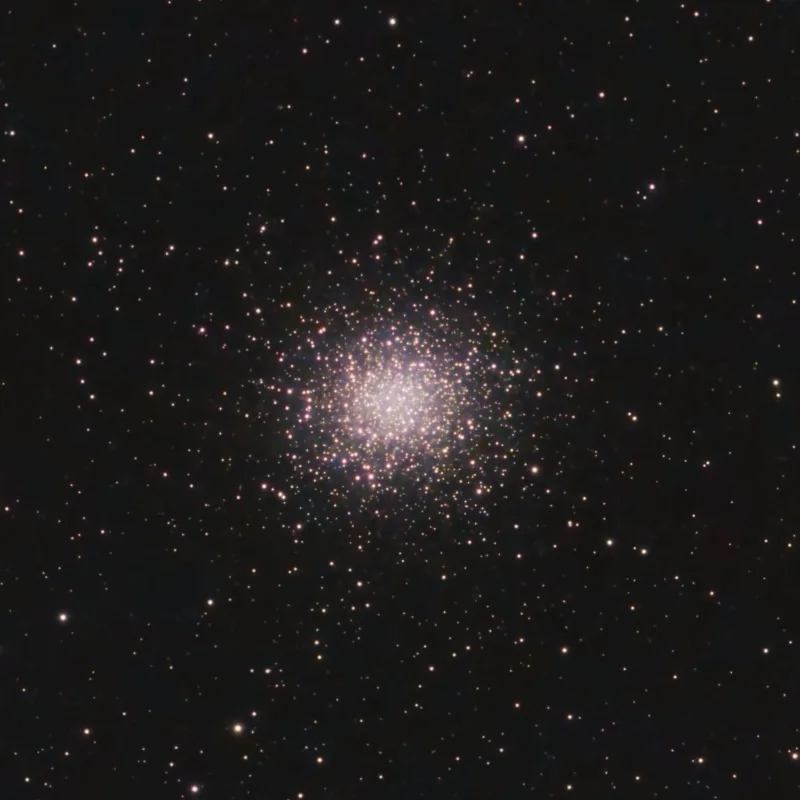
M 14 (Low-Energy) has the best archival-discovery story in this set. In June 1938, a nova flared up inside M 14, bright enough to register on photographic plates – and nobody noticed at the time. It sat there, unremarked, for 26 years, until 1964, when astronomer Amelia Wehlau, reviewing old plates taken between 1932 and 1963, spotted it. Those plates had been taken by Helen Sawyer Hogg – the same astronomer who, seventeen years earlier, gave M 107 its catalog number. It was only the second nova ever recorded in any globular cluster, and the first one ever caught on film – even though the film sat in a drawer for a generation before anyone looked closely enough to find it.
NGC 6426 — the outlier’s outlier
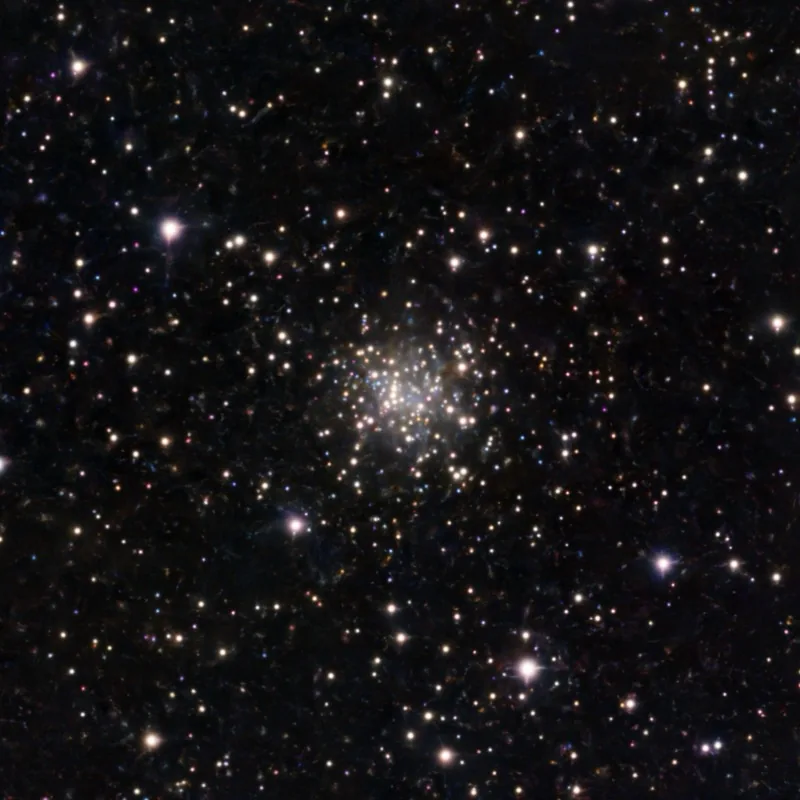
NGC 6426 is the lone High-Energy member of this set, and its physical properties match its dynamical strangeness. It’s roughly 13 billion years old and one of the most metal-poor globulars known – about as old and as chemically primitive as Milky Way clusters get. It orbits far out in the galaxy’s halo, well beyond the rest of this group, and it’s faint enough that it’s the toughest target on this list. It was also the specific subject of its own dedicated orbit study (Koch, Hanke & Kacharov 2018, Astronomy & Astrophysics), precisely because clusters like it are some of the best available probes of the galaxy’s outer halo. If any cluster in this set is genuinely a piece of some other galaxy, this is the leading candidate.
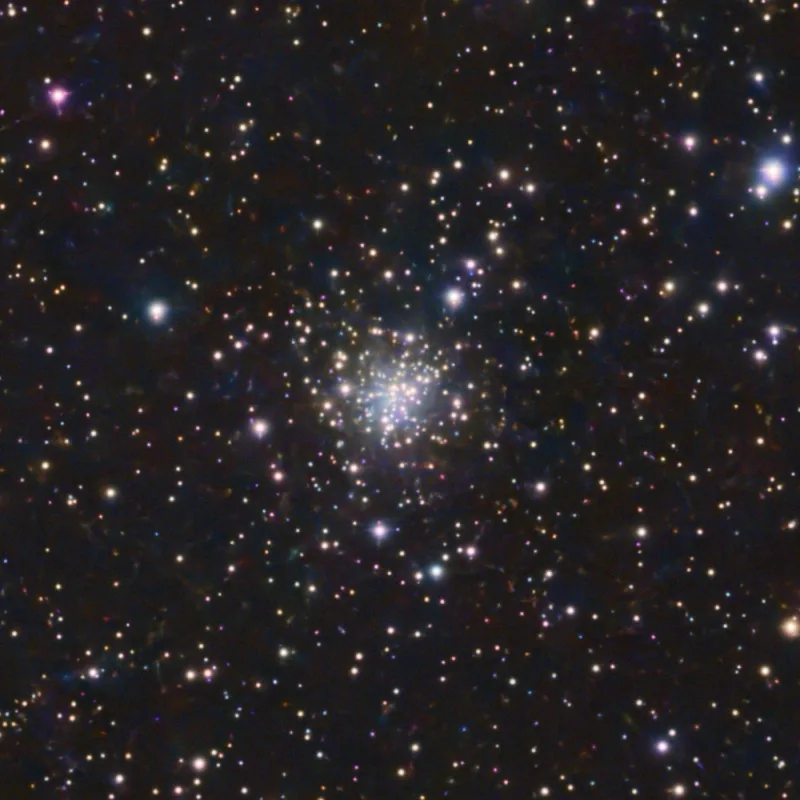
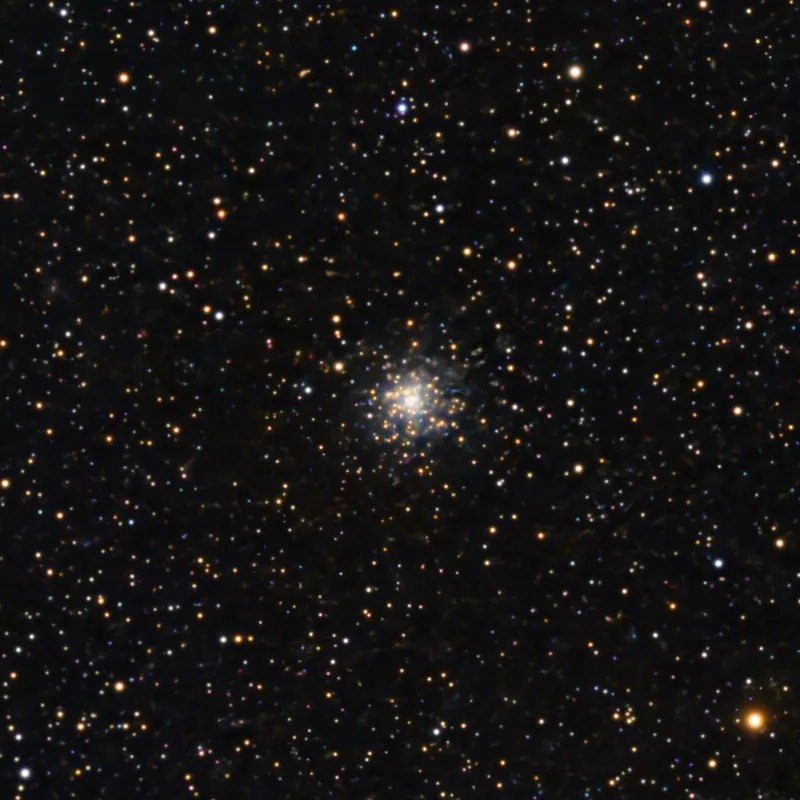
Three more Low-Energy clusters round out this group, without an individual story to tell here beyond their membership:
Also Suspects: The Rest of the Family
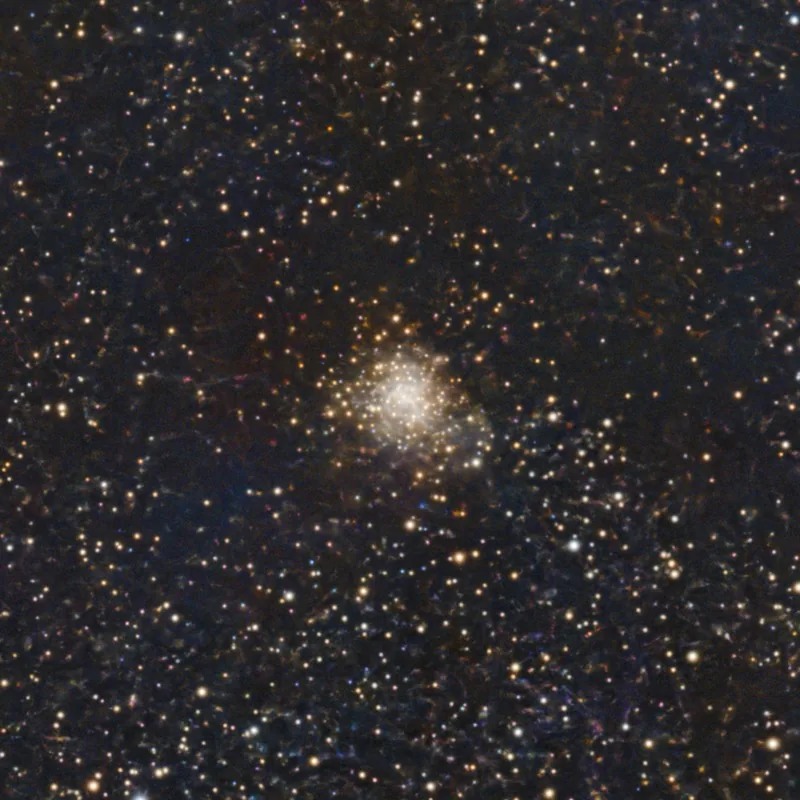
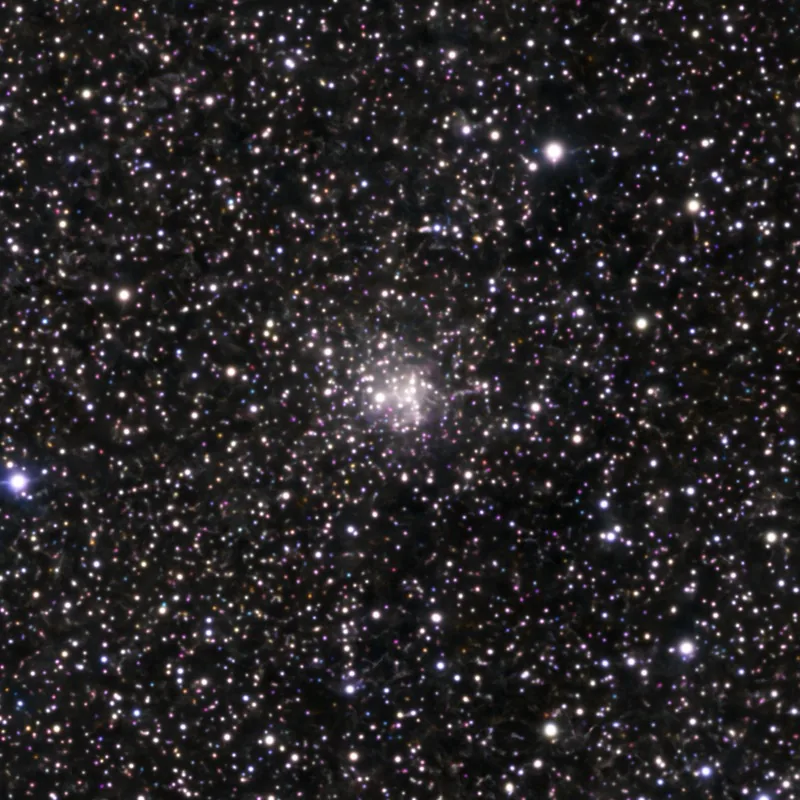
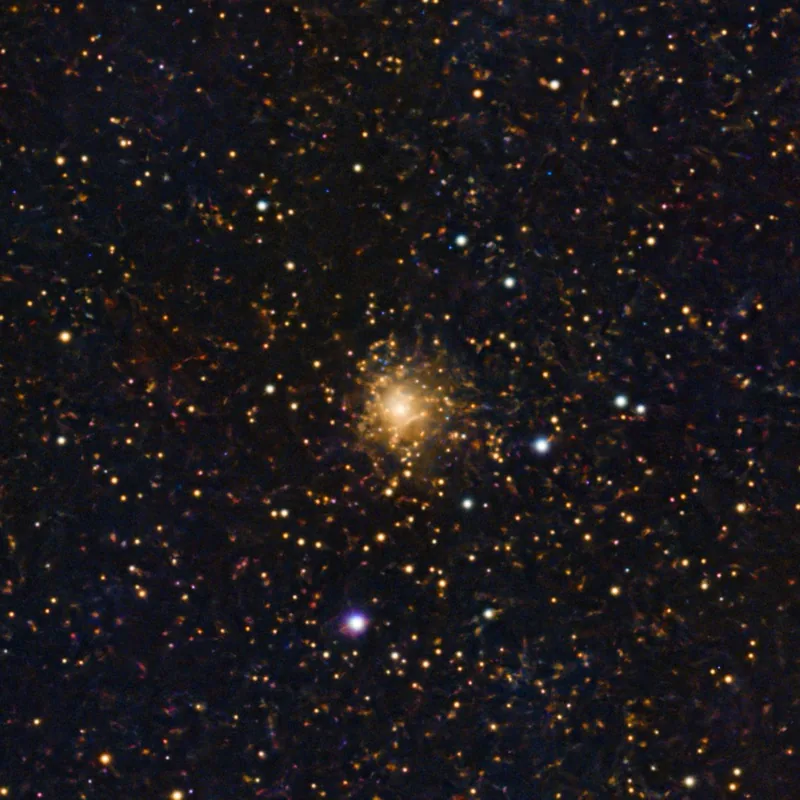
A Wider View
Add it up: 10 of these 20 clusters (7 Main-Bulge, 3 Main-Disk) were almost certainly born in the Milky Way. 2 more (Gaia-Enceladus) are confirmed transplants from a specific, identified merger. The remaining 8 – 7 Low-Energy, 1 High-Energy – are not confirmed natives, and the best current guess leans toward “probably from somewhere else, we just don’t know where.” That’s close to an even split, not the “one oddball in a mostly-native group” picture a quick glance might suggest.
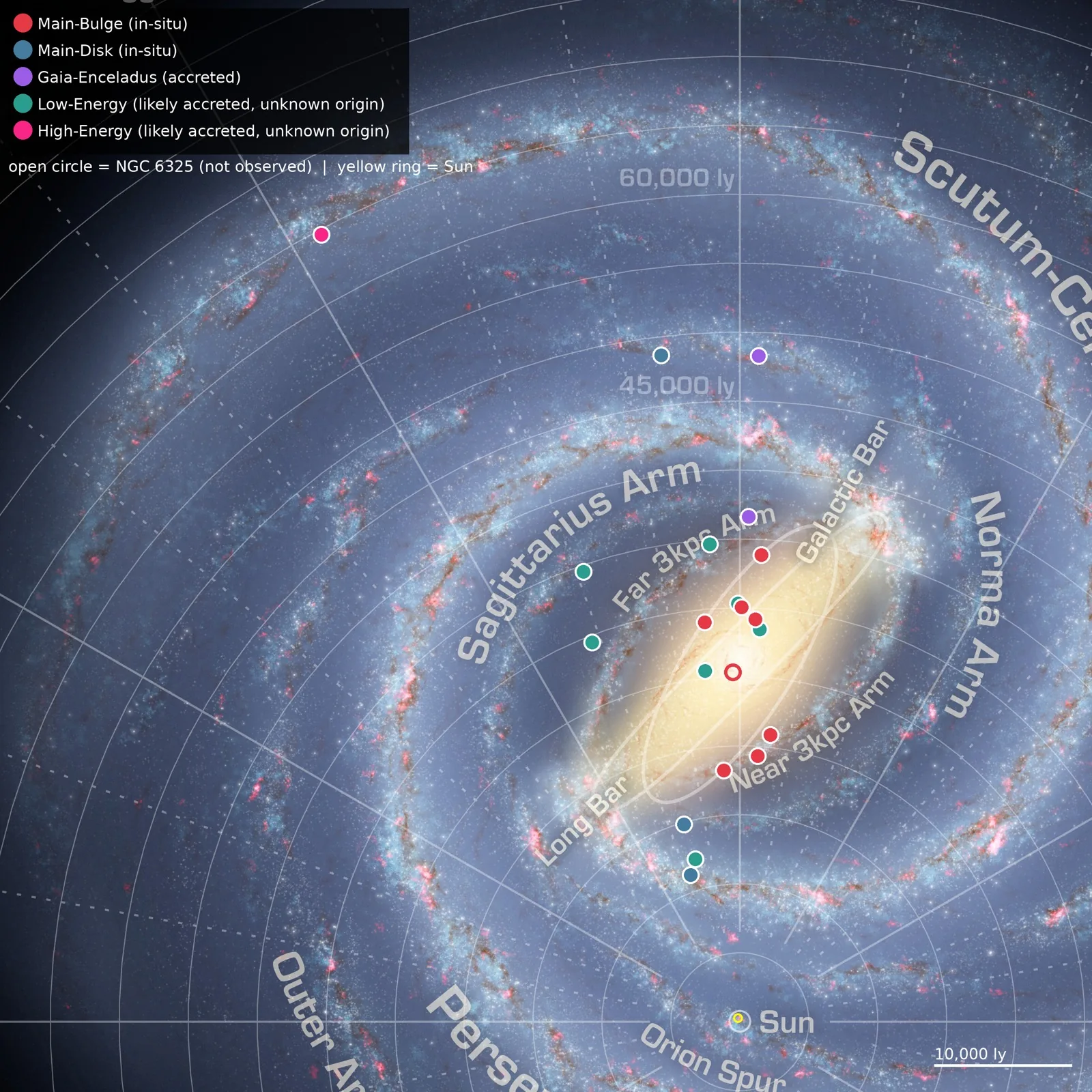
One more cluster is worth including even without a photo of our own yet: NGC 6325, listed in the table below for completeness. Going by its catalog numbers – small (4.0′), faint (mag 11.5) – it’s probably just as visually unremarkable in a small scope as several of the “suspect” clusters above, though we haven’t confirmed that ourselves at the eyepiece. It’s still a confirmed Main-Bulge native, and that’s a useful reminder on its own: how loosely or tightly packed a cluster looks has nothing to do with which family tree it belongs to. Two of the most tightly wound clusters in this set, however – NGC 6293 and NGC 6355 – have both undergone full core collapse, and both are Main-Bulge. (M 62 is sometimes listed as core-collapsed too, in older catalogs, though more recent work disputes that.) That’s not a coincidence: the environment near the galactic center is rough enough on a cluster to drive that kind of collapse more often than the disk or the outer halo does.
| Name | Mag | Size (′) | Class | Dist. (kly) | Origin | l (°) | b (°) |
|---|---|---|---|---|---|---|---|
| M 9 | 7.8 | 12.0 | VIII | 25.8 | Low-Energy | 5.5 | +10.7 |
| M 10 | 6.6 | 20.0 | VII | 13.0 | Low-Energy | 15.1 | +23.1 |
| M 12 | 6.1 | 15.8 | IX | 16.3 | Main-Disk | 15.7 | +26.3 |
| M 14 | 7.6 | 11.0 | VIII | 30.3 | Low-Energy | 21.3 | +14.8 |
| M 19 | 6.8 | 17.0 | VIII | 28.7 | Low-Energy | 356.9 | +9.4 |
| M 62 | 6.4 | 15.1 | IV | 20.9 | Main-Bulge | 353.6 | +7.3 |
| M 107 | 7.8 | 12.9 | X | 19.6 | Main-Bulge | 3.4 | +23.0 |
| NGC 6235 | 8.9 | 5.0 | X | 37.5 | Gaia-Enceladus | 358.9 | +13.5 |
| NGC 6284 | 8.9 | 6.2 | IX | 48.9 | Gaia-Enceladus | 358.3 | +9.9 |
| NGC 6287 | 9.3 | 4.8 | VII | 30.7 | Low-Energy | 0.1 | +11.0 |
| NGC 6293 | 8.3 | 8.1 | IV | 29.3 | Main-Bulge | 357.6 | +7.8 |
| NGC 6304 | 8.3 | 7.9 | VI | 19.2 | Main-Bulge | 355.8 | +5.4 |
| NGC 6316 | 8.1 | 5.4 | III | 33.9 | Main-Bulge | 357.2 | +5.8 |
| NGC 6342 | 9.5 | 4.4 | IV | 29.3 | Main-Bulge | 4.9 | +9.7 |
| NGC 6355 | 8.6 | 4.2 | XI | 30.0 | Main-Bulge | 359.6 | +5.4 |
| NGC 6356 | 8.2 | 10.0 | II | 49.3 | Main-Disk | 6.7 | +10.2 |
| NGC 6366 | 9.5 | 12.9 | XI | 11.4 | Main-Disk | 18.4 | +16.0 |
| NGC 6401 | 7.4 | 4.8 | VIII | 34.6 | Low-Energy | 3.5 | +4.0 |
| NGC 6426 | 10.9 | 4.2 | IX | 67.2 | High-Energy | 28.1 | +16.2 |
| NGC 6517 | 10.1 | 4.0 | IV | 34.6 | Low-Energy | 19.2 | +6.8 |
| NGC 6325 | 11.5 | 4.0 | IV | 25.4 | Main-Bulge | 1.0 | +8.0 |
Finding and Observing Them
These twenty clusters span a wide range of difficulty. M 62 (mag 6.4) and M 10 (mag 6.6) are comfortably within binocular range from a dark site; NGC 6426 (mag 10.9) needs real aperture and a good, dark, transparent night. Most of the rest fall in between – easy to pick up in a 6-inch scope, unremarkable-looking at the eyepiece, and a lot more interesting once you know which family tree each one belongs to.
The whole group sits low in the sky for northern observers, clustered in the same general direction as the galactic center in Sagittarius/Ophiuchus, which rewards summer nights and a clear view toward the south. All twenty were captured here with a mix of an eQuinox2 and Seestar S50/S30 smart scopes – none of them needed a large-aperture instrument, just patience and dark skies, and whatever happened to be clear and up on a given night.