🔭 Telescope Donation
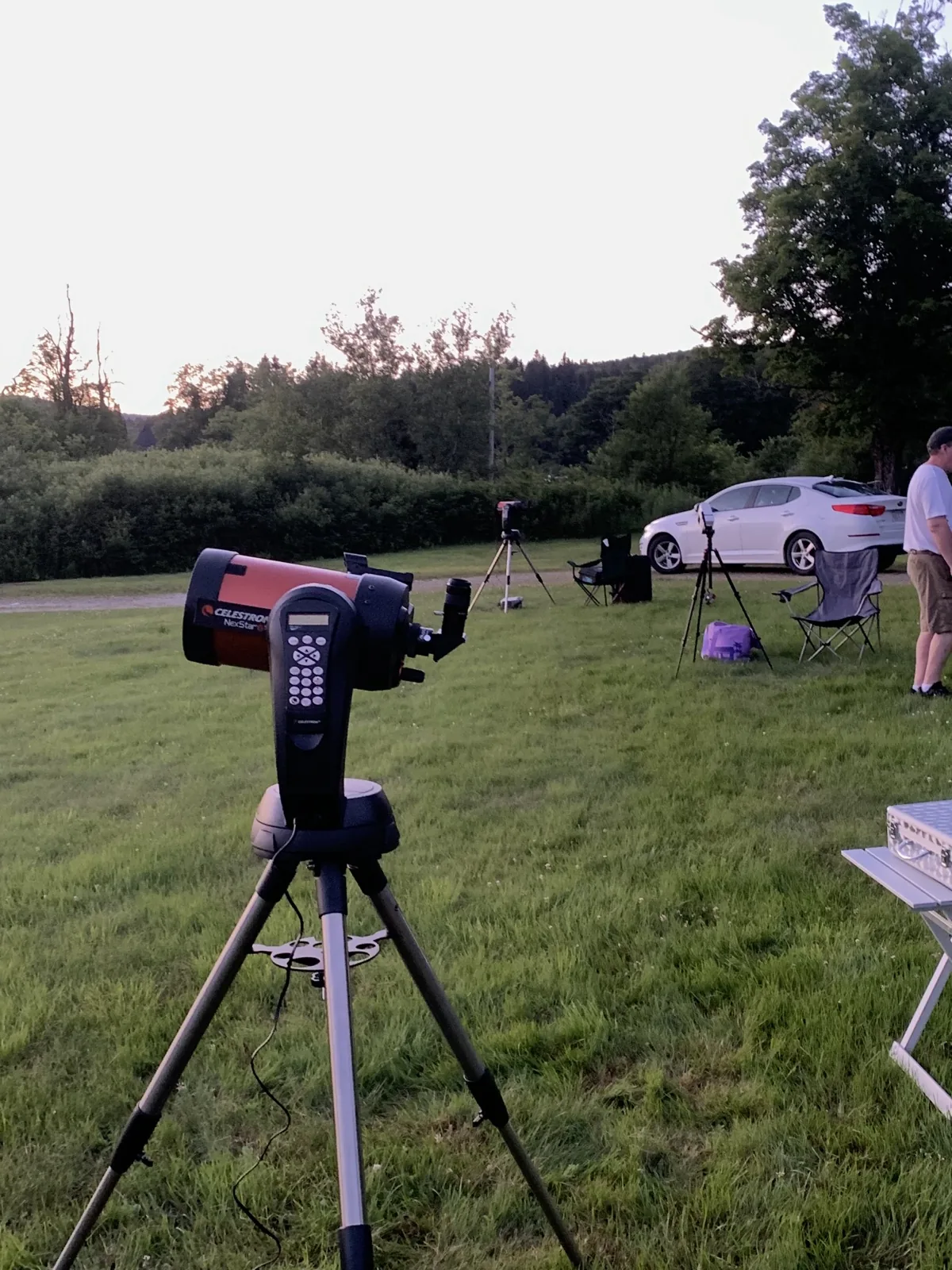
We have a new “club” telescope!
A generous donor has given NBAS a fully-outfitted Celestron NexStar 6SE — a 6" (150mm) Schmidt-Cassegrain with a computerized GoTo mount, plus a full set of eyepieces and filters.
This is a great “first serious” scope: well-suited to the brighter deep-sky objects, and fantastic for planets!
We’ll also be using this telescope as a teaching telescope for members who don’t have a telescope and want to gain more experience using one.
☄️ Perseids
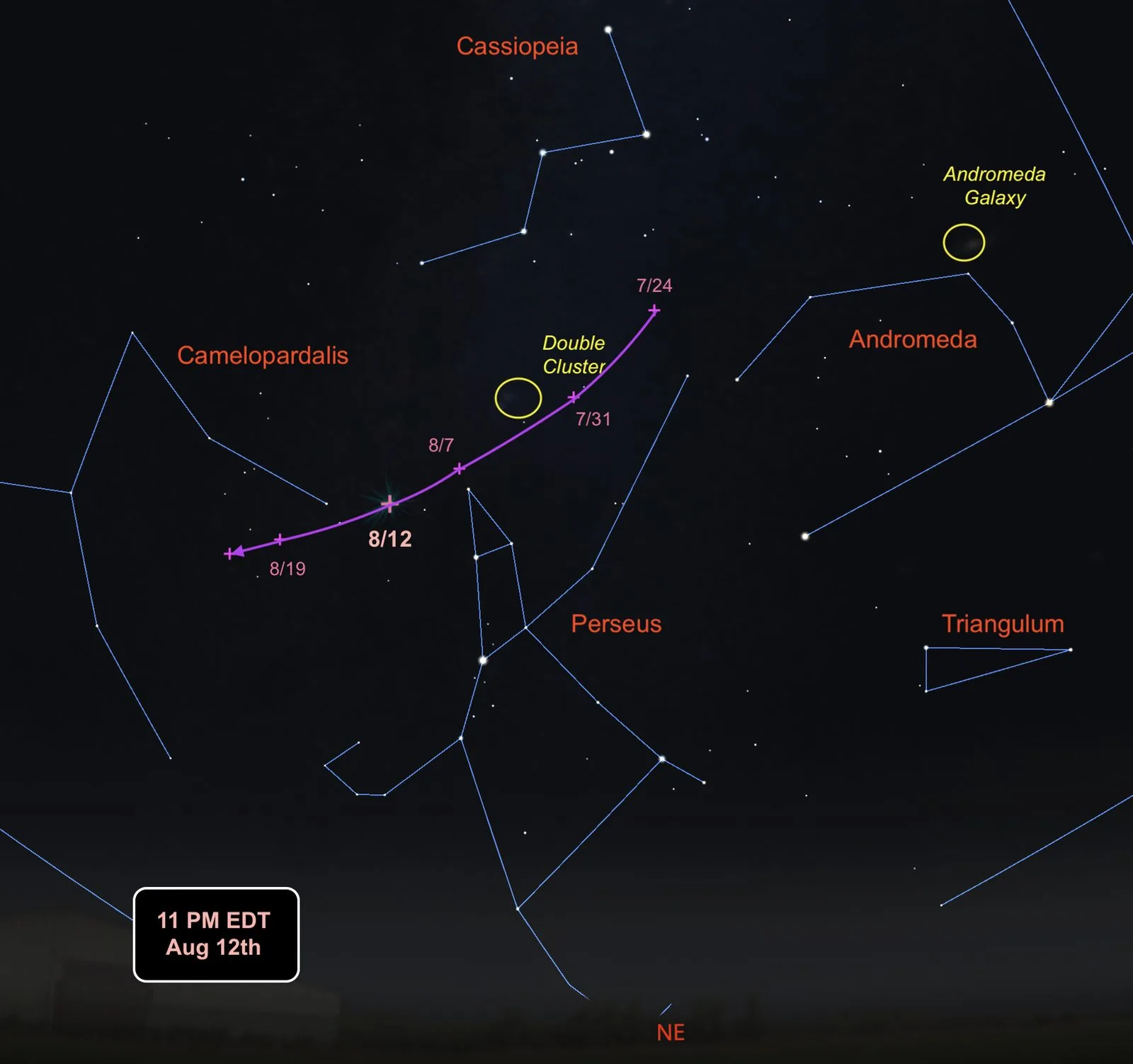
One of the best meteor showers of the year peaks overnight on August 12–13, and the timing couldn’t be better this year: it falls right on the New Moon, so we’ll have fully dark skies for the whole show. Under clear conditions you can expect a meteor every minute or so during the peak hours (roughly 10 PM to dawn), radiating out of Perseus in the northeast. No telescope needed — just find a dark spot, lie back, and give your eyes 20-30 minutes to adjust.
Missing peak night? Our member observing event on August 15th is just a few days past the peak — there will still be plenty of Perseids streaking by.
Where to Look
The radiant — the point in Perseus from which all Perseids appear to originate — rises in the northeast around 10–11 PM and climbs toward the top of the sky by dawn. Its exact position is near the famous Double Cluster (h and χ Persei), a pair of open clusters visible to the naked eye from a dark site and striking in binoculars.
The radiant also drifts slowly eastward over the weeks of the shower — you can see this in the chart above. From mid-July to late August, it moves several degrees as Earth crosses different parts of the debris stream. Near the peak (August 12–13), it sits right in the heart of Perseus.
Here’s a counterintuitive piece of advice: don’t stare at Perseus. Meteors very close to the radiant appear short — they’re coming nearly straight at you. The long, dramatic trails happen farther away, where the meteors cross your field of view at an angle. Look roughly 40 to 90 degrees from Perseus, and let the radiant sit at the edge of your peripheral vision.
How to Watch — Get Comfortable
This is the part people underestimate: the Perseids are an endurance event. The best viewing is between midnight and 4 AM. You are going to be lying still, in the dark, looking at the sky for two to three hours. Being comfortable is not a luxury — it is the difference between a wonderful memory and a miserable one.
What you need:
A reclining lawn chair or a sleeping pad on the ground. Staring straight up from a regular chair is unsustainable. If you can, lie flat on your back; if not, a lawn chair reclined to roughly 45 degrees is the next best thing.
A sleeping bag or heavy blanket, even in August. The temperature drops significantly after midnight, especially at altitude or in rural areas. What feels like a warm evening at 9 PM becomes genuinely cold by 2 AM. Dress much warmer than you think you need to.
A thermos of something warm. Coffee, tea, hot chocolate — a warm drink at 1 AM, under a dark sky full of meteors, is one of life’s more underrated pleasures.
The rhythm of the shower:
Meteors don’t come at a steady rate. You’ll have quiet minutes — sometimes three or four in a row — and then two or three will appear in quick succession. This is normal. Don’t get discouraged during the quiet stretches. Sometimes a fireball — a meteor brighter than Jupiter or Venus — will suddenly light up the whole sky, and you’ll be very glad you were still looking.
📅 Upcoming Events
August 8th - Public Observing at Notchview (Windsor, MA)
The Arunah Hill group hosts monthly public events in Summer/Fall at Notchview in Windsor, MA (on Rt. 9 as you head into Cummington). We’re joining them for this event. Come join us (and get an NBAS sticker)!
August 15th - Member Observing for the Perseids
Our monthly member event happens the next weekend just after the peak of the Perseid meteor shower (there will still be plenty of meteors to see).
September 12th - Public Observing/Lecture, Williamstown MA
The Little Red Schoolhouse (historically the South Center School) is a beautifully preserved 1865 one-room schoolhouse. Located at 32 New Ashford Road (Route 7) in South Williamstown, MA (next to the Store at Five Corners), it currently serves as the home of the Williamstown Historical Museum.
We’ll be there with a lecture by NBAS member Dr. Bob Donahue talking about the history of telescopes with observing through telescopes to follow. (Saturn and Neptune will definitely be on the menu! Maybe even Pluto in a smart scope!)
🌐 What’s Happening on Our Website
Here are a few upcoming articles to look for in August:
- Gliese 710 - a star that will penetrate the Oort Cloud
- Understanding the Bortle scale
- Political Constellations
- M 54 - Globular Cluster that might be the remnant of another galaxy’s core
- Smart Scope Challenge: Find Pluto!
📸 This Month’s Image
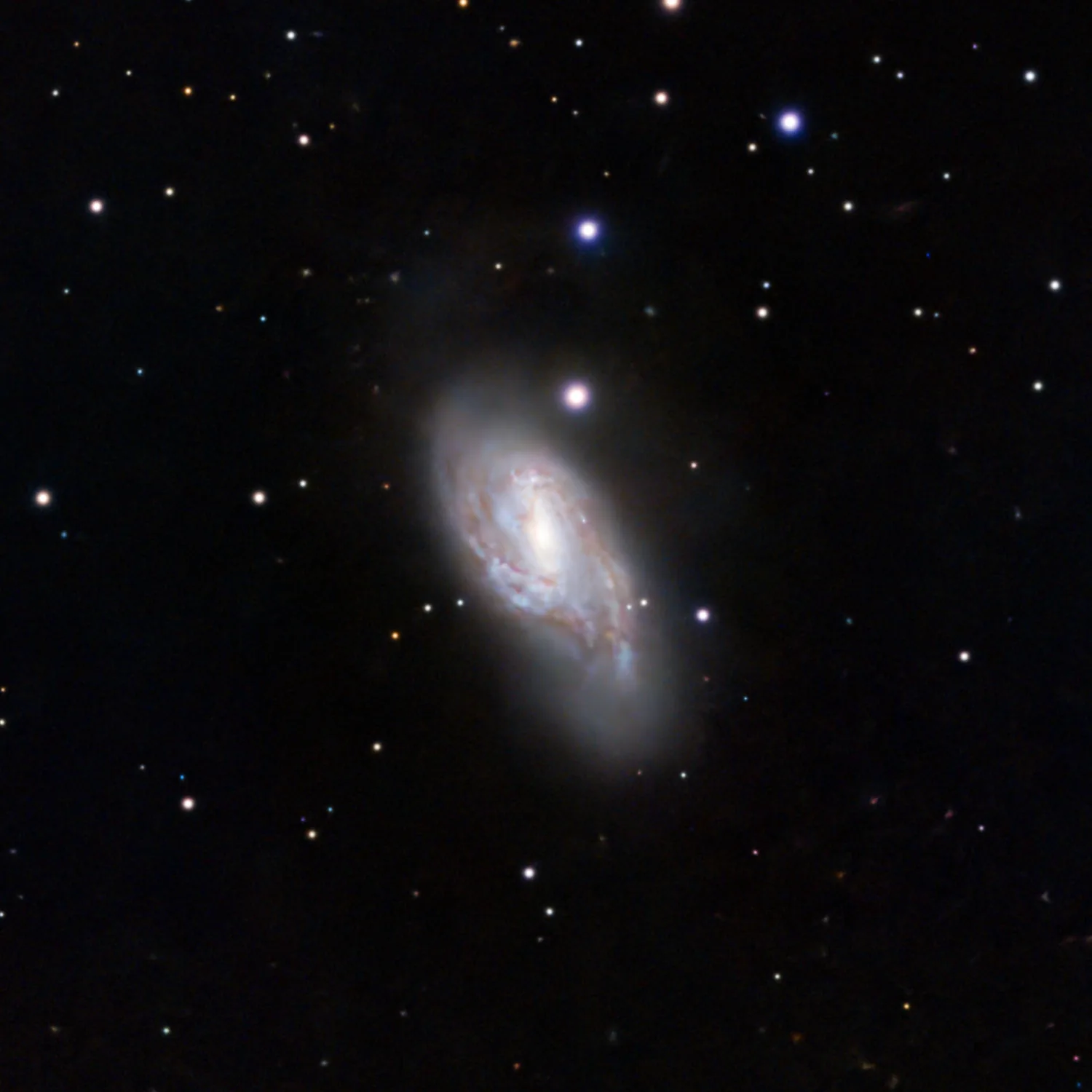
I’ve seen some smart scope images online of objects that are nothing short of outstanding. What many of them have in common is a very long exposure time: I’m far too impatient to sit on targets long enough (not enough clear nights). So, I hit upon the idea that having two Seestars both pointing at the same object at the same time would double the number of frames collected, and I might be able to get better images.
This was from the first night of that experiment. Observing from my Bortle 5 back yard, here’s what a collaboration from Seestar S50 telescopes “Elusippe” and “Ellen” could do with an hour of integration each!
(Now I’m wondering what it would be like to use four of them!)
✨🔭 Monthly Starmap
To help you navigate the night sky this month, we’ve provided a high-resolution starmap. The PNG is great for quick viewing, while the PDF is optimized for sharp home printing.
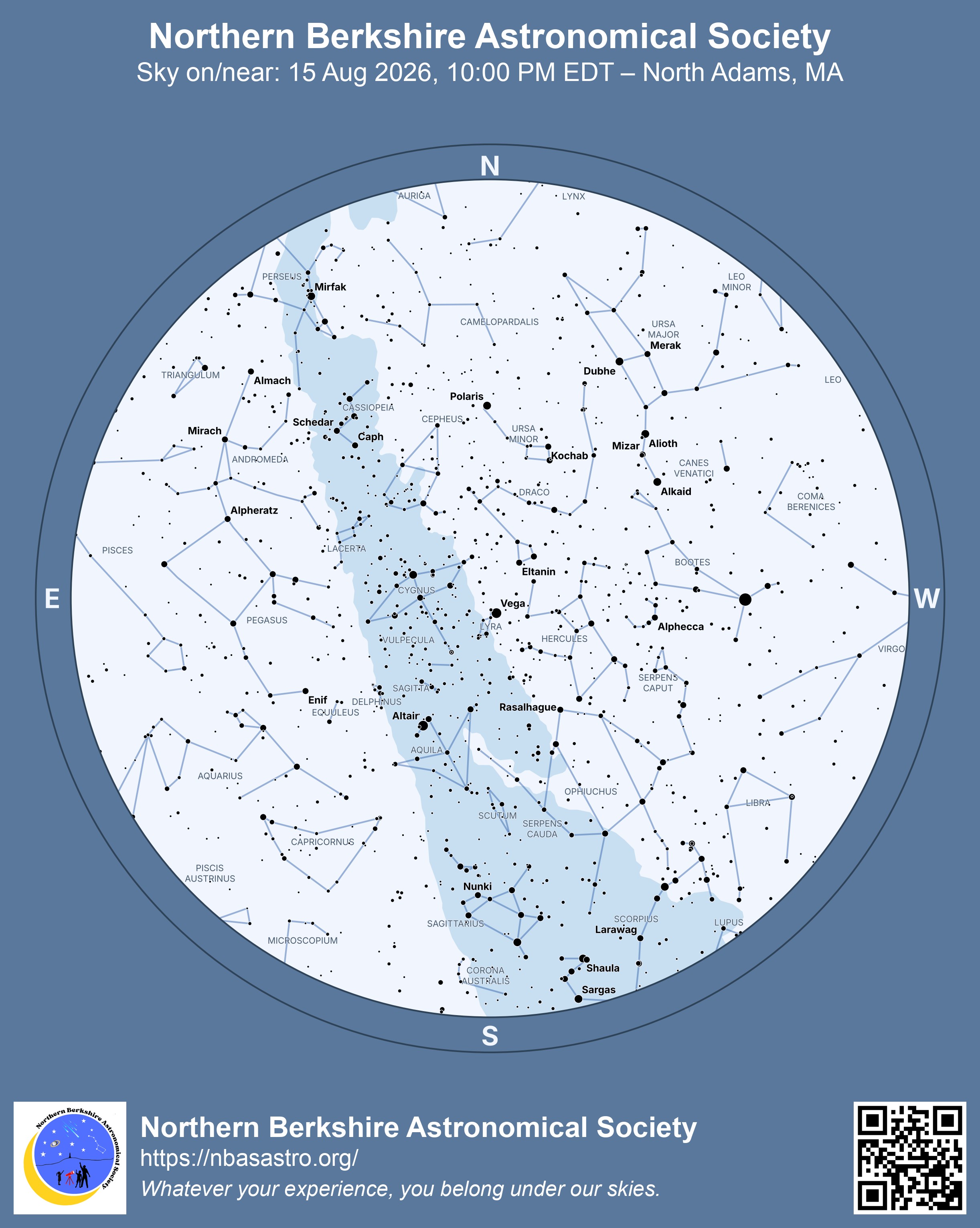
August 2026 Reference Starmap
Reference chart (no planets) — optimized for sharp home printing.
📥 Download Chart (Print Ready)