Fall Is a Scanning Season
Autumn arrives with the equinox on the evening of September 22nd, and with it comes some of the best all-around observing of the year: cooler air, steadier seeing, and an evening sky loaded with easy targets. This isn’t a guided tour with a single path through the stars – it’s a buffet. Pick a clear night, start scanning, and see how many of these you can find.
Nothing here needs a big scope or a deep-sky chart memorized in advance. Everything below is doable with the naked eye, a pair of binoculars, or a small telescope (call it 4-8 inches), roughly sorted from easiest to most challenging.
The Objects
The Pleiades
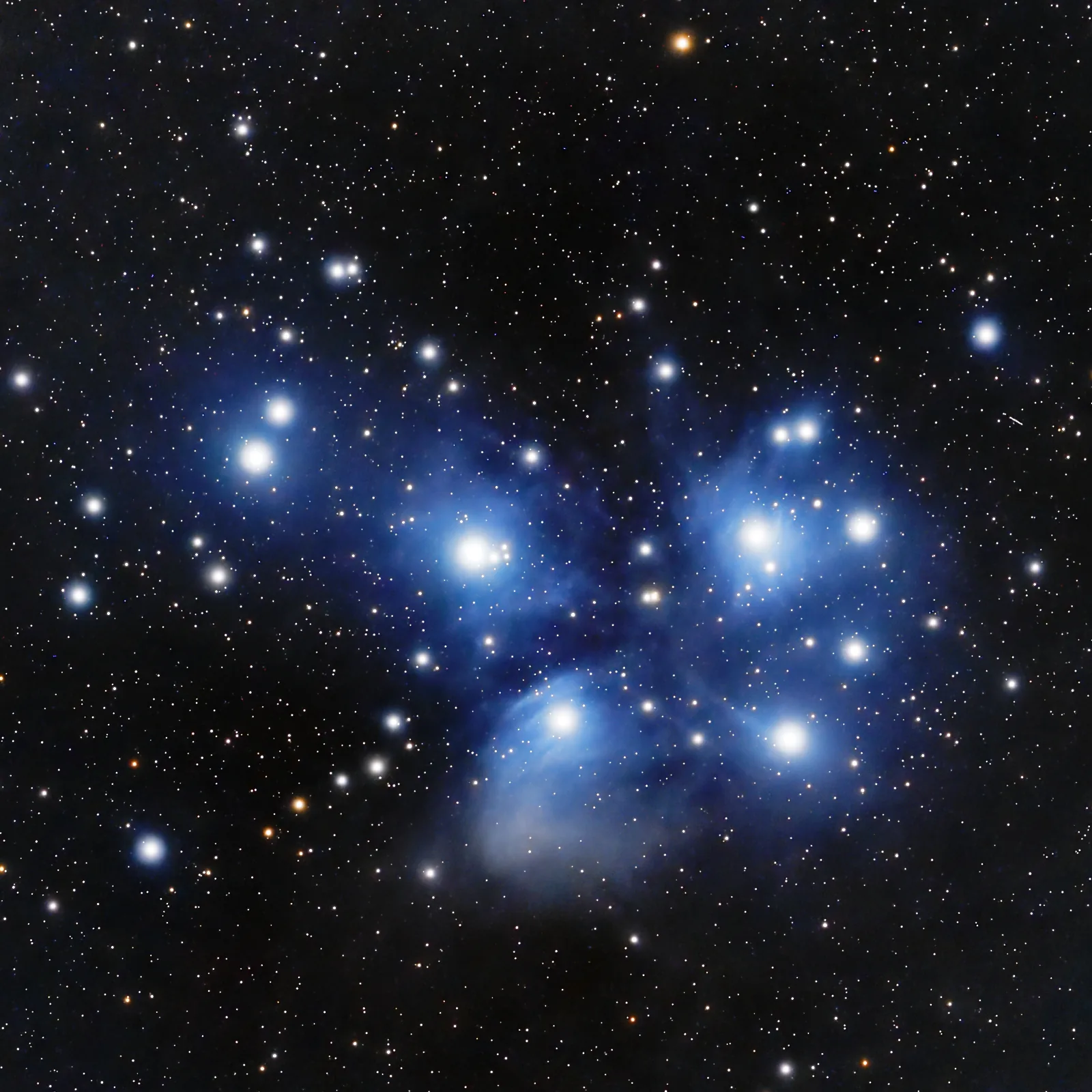
The Pleiades is one of the closest and most easily recognized open clusters in the sky, a knot of hot, young blue stars only about 100 million years old and roughly 444 light-years away. Most people can pick out six or seven stars with the naked eye – hence the cluster’s other name, the Seven Sisters – though sharp-eyed observers under dark skies have counted a dozen or more. Point binoculars at it and the cluster explodes into dozens of icy-blue stars filling the field, one of the best sights of the fall season regardless of experience level.
Long-exposure images like the one here also pick up faint wisps of reflection nebulosity threading between the brightest stars – dust the cluster happens to be passing through, lit up by starlight. It’s not something you’ll see visually, but it’s really there.
The Andromeda Galaxy
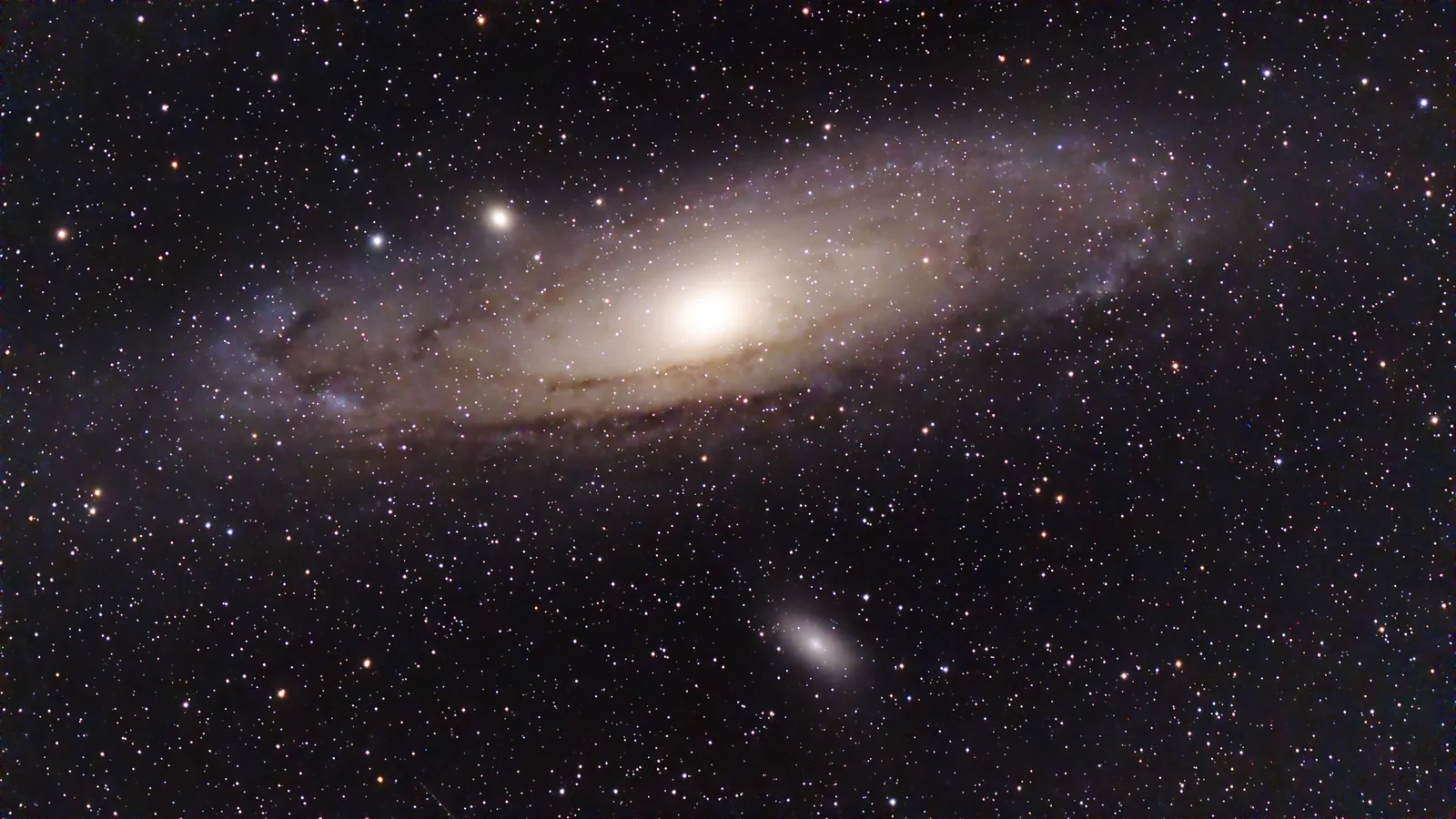
At roughly 2.5 million light-years away, the Andromeda Galaxy is the most distant object most people will ever see with the naked eye – and one of the few other galaxies visible without any optical aid at all, given a dark sky. It’s also the largest member of our Local Group, home to something like a trillion stars, on a slow collision course with the Milky Way that won’t play out for another four billion years or so.
Visually it never gives up its spiral structure. What you’ll actually see, in binoculars or a small scope, is a soft, elongated smudge with a brighter core fading into extended haze. Under a genuinely dark sky, a wide field of view can also pick up its two brightest satellite galaxies, M32 and M110, as small fuzzy companions nearby. Long exposures, like the one here, reveal what your eye can’t: the full spiral disk and dust lanes stretching well beyond anything an eyepiece will show.
The Double Cluster
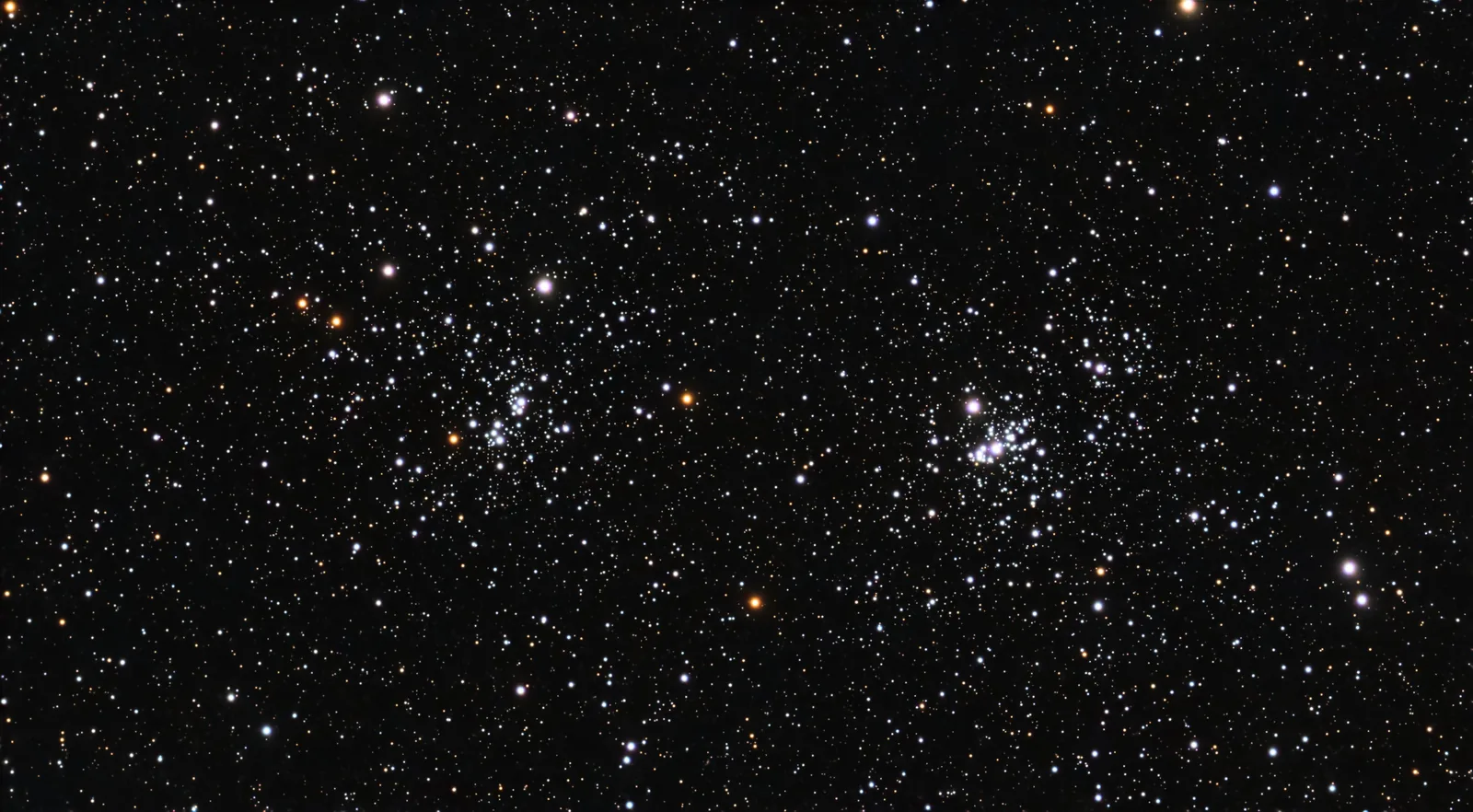
NGC 869 and NGC 884 (together, also Caldwell 14) are two separate open clusters, roughly 7,600 light-years away and only about 12-14 million years old – young enough that many of their brightest stars are still blazing hot supergiants. They’ve been known since antiquity; Hipparchus catalogued them as a “nebulous patch” over two thousand years ago, long before anyone knew they were actually two dense sprays of stars sitting side by side.
Under a dark sky they’re visible to the naked eye as a hazy patch between Cassiopeia and Perseus. In binoculars or a low-power, wide-field telescope, both clusters resolve into a rich, sparkling double swarm that fits comfortably in a single field of view – one of the best rich-field sights of the whole season.
The Great Square of Pegasus
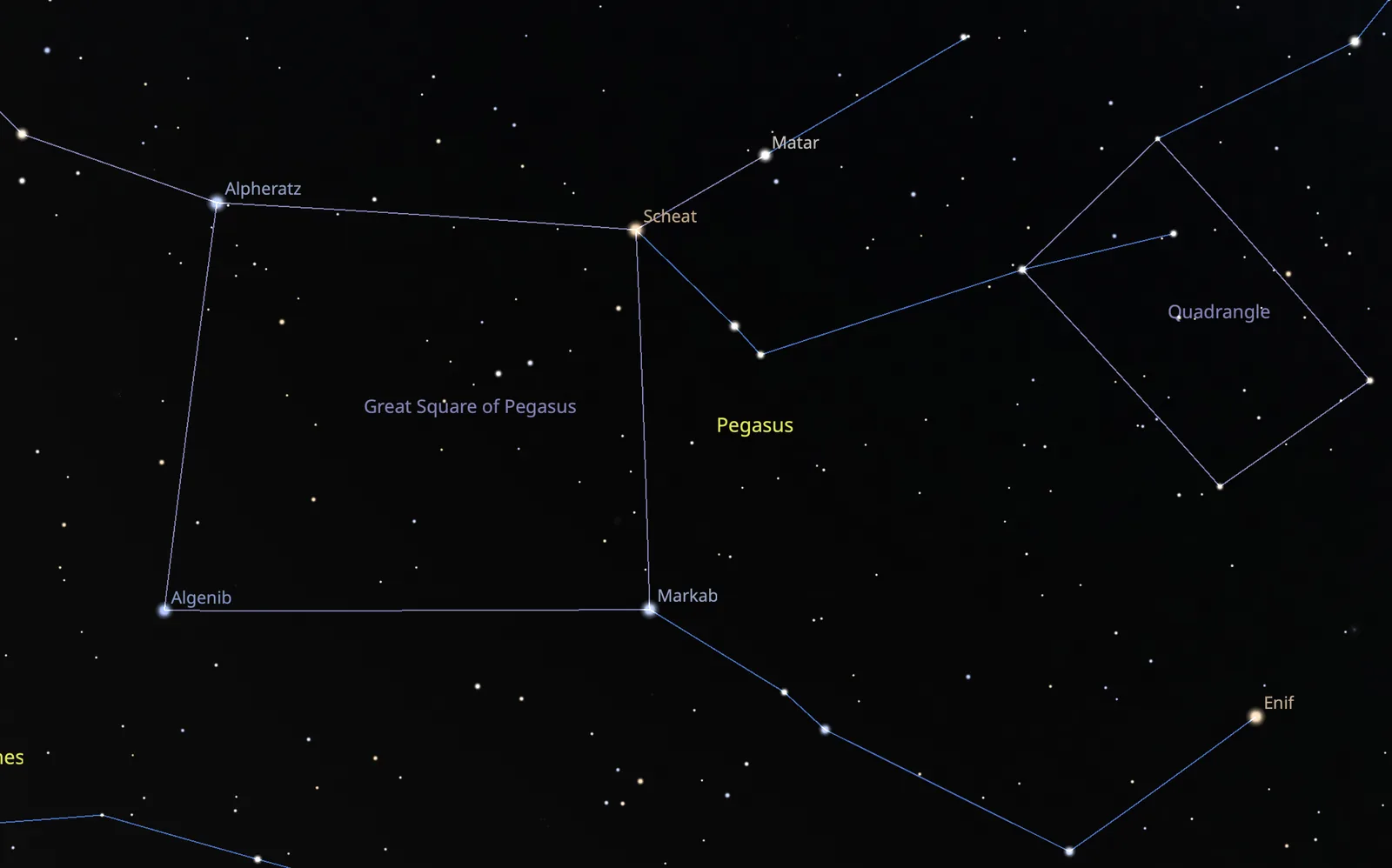
The Great Square is less a constellation than a giant naked-eye signpost: four modestly bright stars – Markab, Scheat, and Algenib in Pegasus, plus Alpheratz, which technically belongs to neighboring Andromeda – forming a square roughly 15 degrees on a side, big enough to block out more sky than most people expect. It rises in the east on fall evenings and is one of the easiest ways to get your bearings for the whole season.
It’s also a good dark-sky test: count how many stars you can see inside the square with the naked eye. Under a truly dark sky, more than a handful become visible; under typical suburban skies, often none at all. Most usefully, it’s the standard starting point for star-hopping to the Andromeda Galaxy – from Alpheratz, follow the chain of stars through Mirach and two fainter stars beyond it, and M31 is right there waiting.
The map above shows stars to magnitude 6.5 – probably requiring a darker sky than most people have access to, but you can compare your visual count with binoculars. (Not counting the corner stars, there are ~35 naked-eye stars inside the Square!)
Blinking Planetary
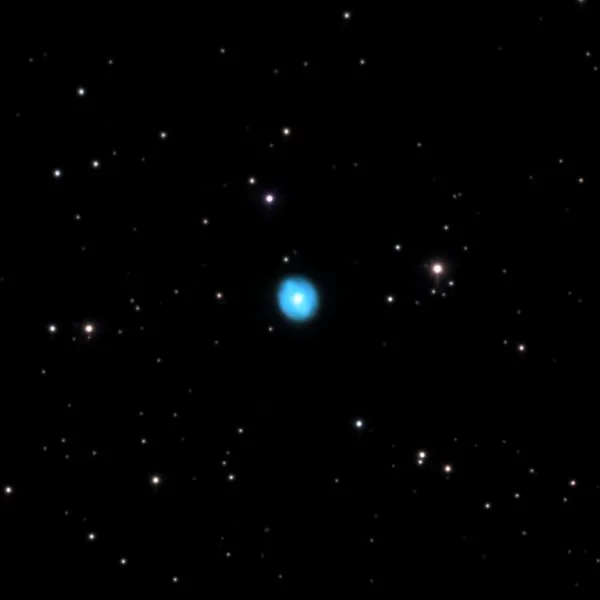
NGC 6826 (Caldwell 15) sits about 2,200 light-years away in Cygnus, and it’s one of the most fun “trick” objects in the sky. Look directly at it and your eye’s cone cells – tuned for fine detail and color – pick out only the bright central star, with the surrounding nebula washed out. Shift your gaze slightly off to the side, using averted vision, and the more light-sensitive rod cells at the edge of your retina pick up the faint, extended glow of the nebula itself, and it snaps into view around the star. Look back directly and it vanishes again.
It’s a real physiological effect, not an illusion, and it’s fully repeatable – a great one to demonstrate at a star party once someone else has confirmed the trick works for them too.
Blue Snowball
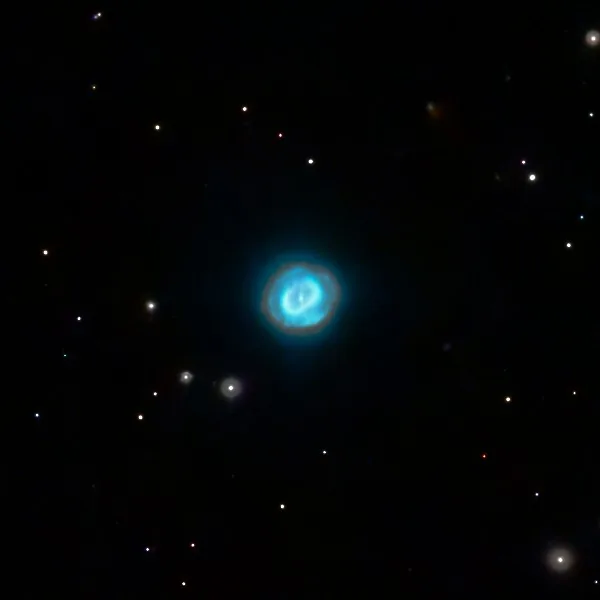
The Blue Snowball (NGC 7662, Caldwell 22) is a compact planetary nebula in Andromeda, close enough in the sky to M31 that it makes a natural next stop once you’ve found the galaxy. Distance estimates vary widely, from roughly 2,500 to nearly 6,000 light-years, but what’s consistent is the color: the blue-green tint comes from doubly-ionized oxygen glowing under ultraviolet light from the hot, dying star at its center.
At low power it looks star-like, easy to walk right past. Push the magnification up and it resolves into a small, distinct disk with real color – one of the more satisfying “aha” moments in a night of small-scope observing.
NGC 891
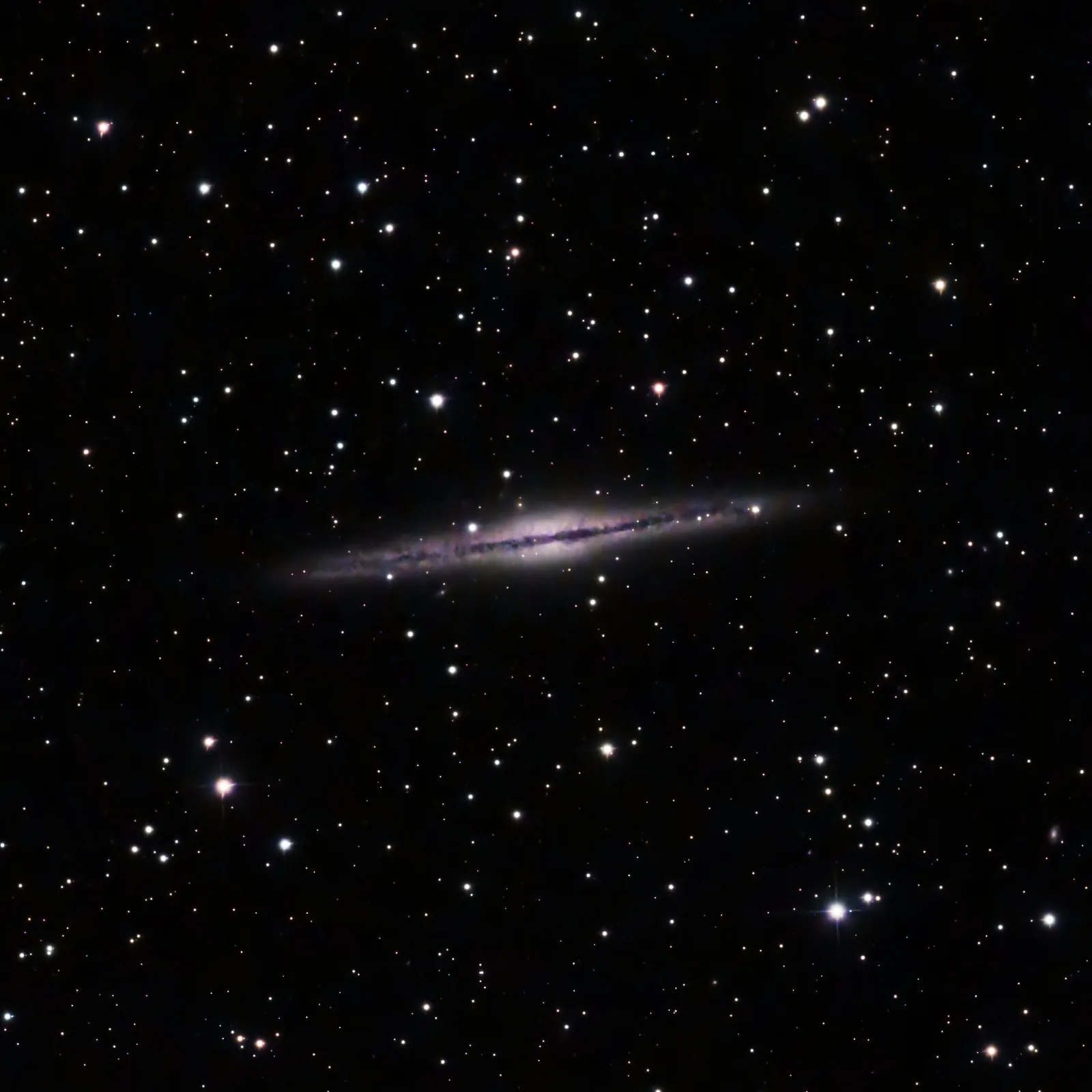
NGC 891 (Caldwell 23) rounds out a nice little tour of Andromeda alongside M31 and the Blue Snowball: a spiral galaxy some 27 to 30 million light-years away, seen almost perfectly edge-on. It’s often used as a stand-in for what our own Milky Way might look like from a similar vantage point outside it – a thin disk of stars split by a dark lane of dust.
That dust lane is the real prize here, but it’s a genuine challenge. In a 4-6 inch scope under dark skies you’re mainly hunting for a faint, thin needle of light with a slightly brighter core – patience required. The dust lane itself becomes a realistic target around 8 inches, and shows up more reliably at 10-12 inches and up. Don’t be discouraged if it takes more than one attempt; this is one of the harder objects on this list for a reason.
The Triangulum Galaxy
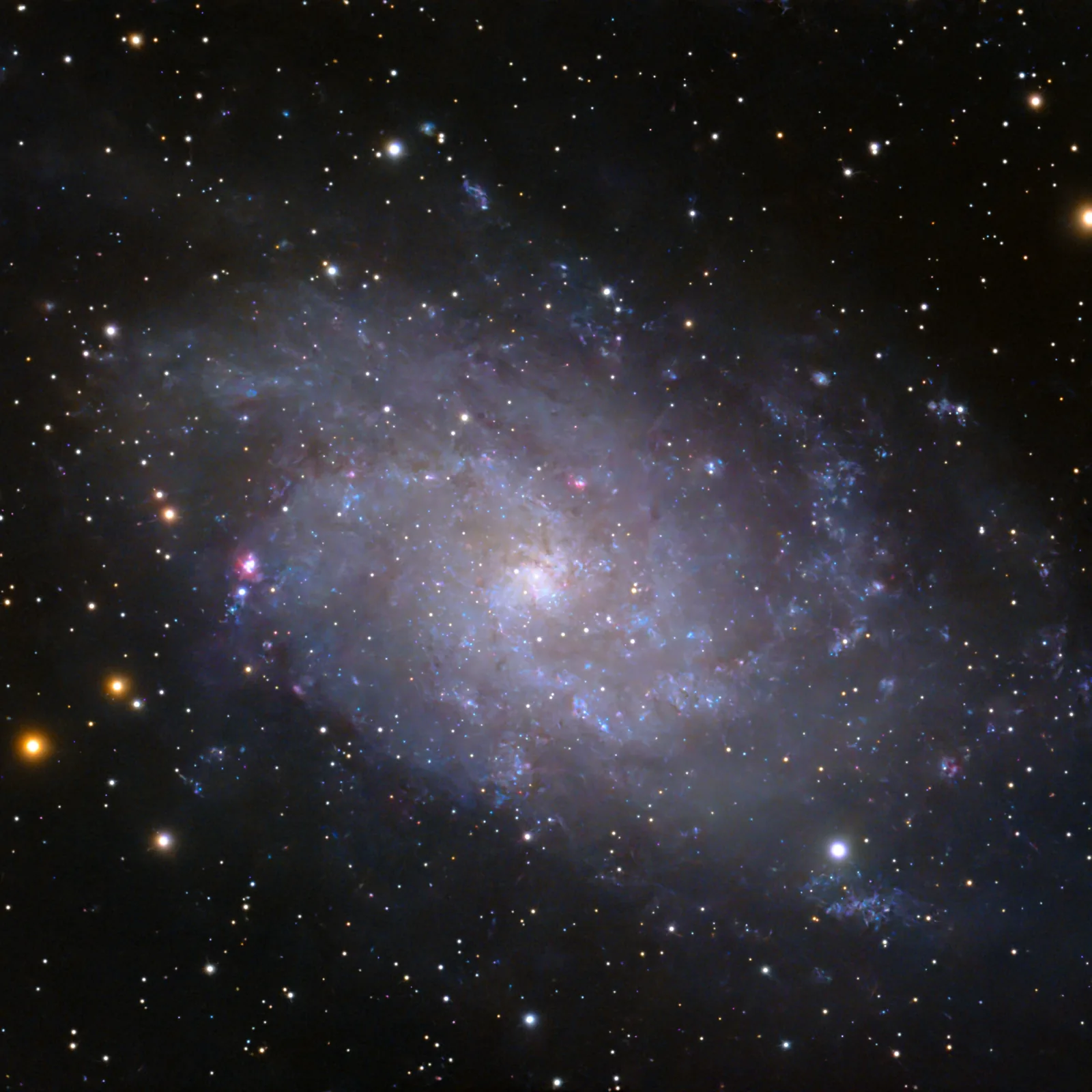
M33 is the third-largest galaxy in the Local Group, roughly 2.7 to 2.9 million light-years away and not much farther than Andromeda – but it’s a much tougher target. Its listed magnitude of 5.7 sounds bright, but that light is spread across nearly three-quarters of a degree of sky, giving it one of the lowest surface brightnesses of any commonly-observed galaxy.
That combination makes it the hardest naked-eye deep-sky object there is: genuinely visible only under excellent, dark, transparent skies, and often invisible or deeply disappointing under any light pollution at all. The trick, if there is one, is to use the lowest useful power you have – wide-field binoculars or a rich-field eyepiece – rather than reaching for magnification, and to give your eyes a full 20-30 minutes to dark-adapt before you go looking.
Messier 2
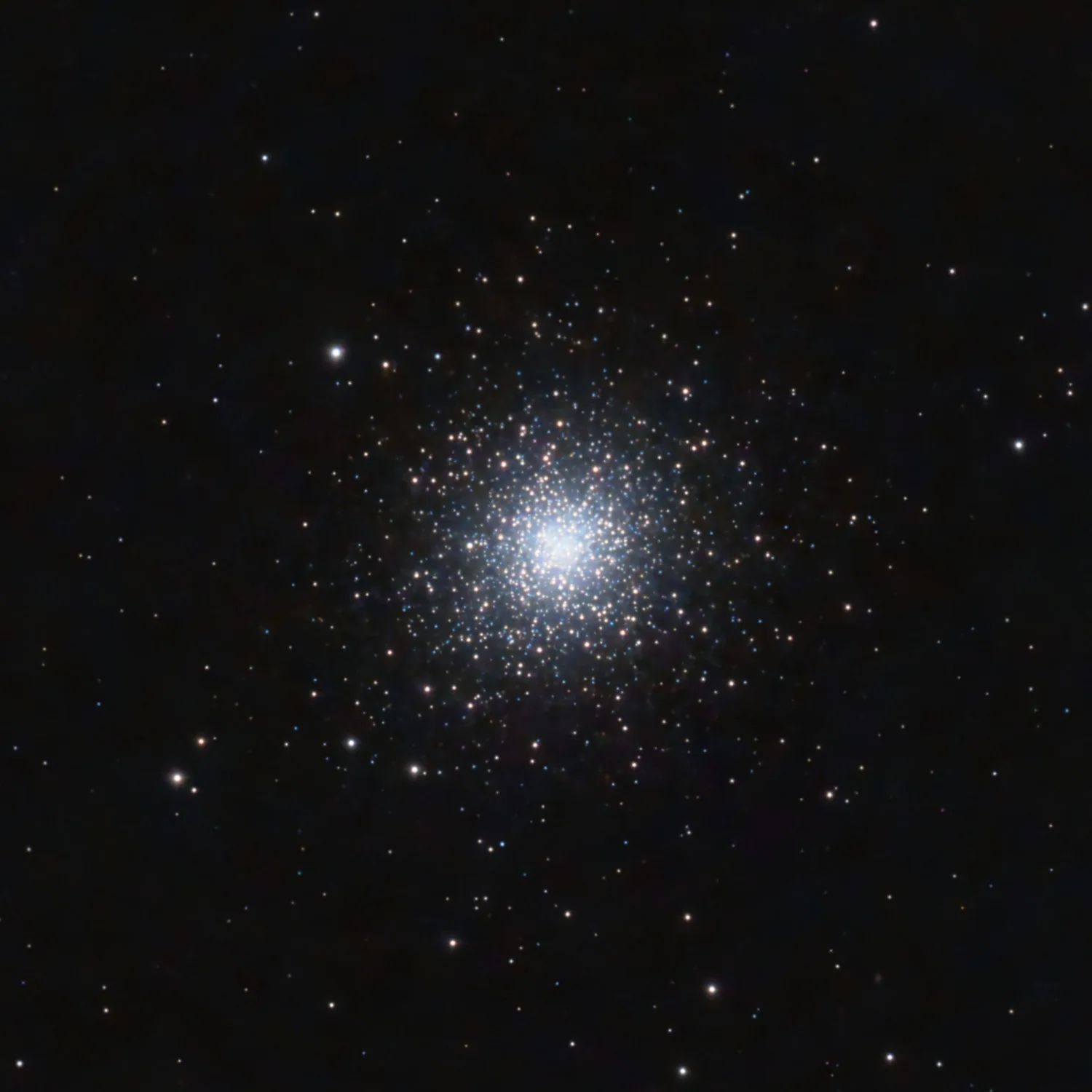
M2 is one of the larger and more densely packed globular clusters known, roughly 37,500 light-years away in Aquarius. In binoculars it’s a faint, round smudge – easy to mistake for an unresolved star at first glance. A small telescope starts to reveal its true texture: a tight, grainy ball of stars that gets more granular with aperture, though fully resolving individual stars all the way to the core takes a considerably larger scope than most beginners are starting with.
It’s a good globular to learn on precisely because it’s forgiving – satisfying in a 4-inch scope, and it just keeps giving up more detail as you move up in aperture from there.
Strangely, even though it’s a bright and somewhat easy object – it doesn’t have a nickname! What do you think it should be called?
Kemble’s Cascade
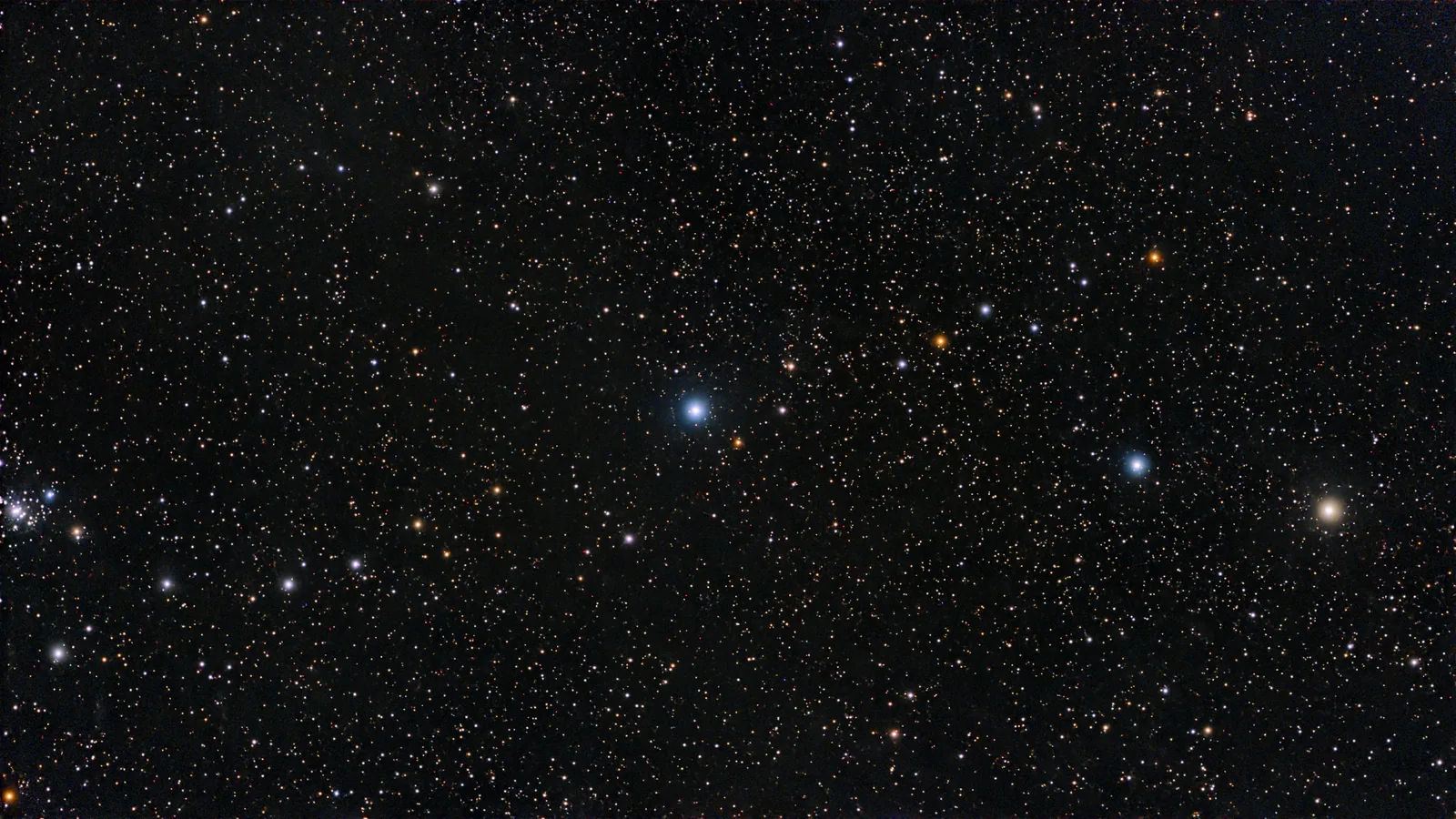
Kemble’s Cascade isn’t in any official catalog – it’s an asterism, a chance alignment of more than 20 stars spanning roughly 2.5 degrees, unrelated to each other in any physical sense. It’s named for Lucian Kemble, a Franciscan friar and amateur astronomer who brought it to wider attention in the 1980s, and it’s become a favorite among binocular observers for the sheer visual drama of a long, straight-ish chain of stars pouring down toward the small open cluster NGC 1502 at its foot.
It sits in Camelopardalis near the Cassiopeia border, a faint, sprawling constellation near the pole that’s technically circumpolar and never sets from mid-northern latitudes – but altitude and darkness still matter for actually seeing it well. Early in fall, it’s low in the northeast at nightfall and worth waiting for later in the night; by November it’s climbed into a much more comfortable early-evening position, so if you strike out on it in September, try again later in the season.
Three Double Stars Worth Checking Out
| Star | Magnitudes | Separation | Distance | Spectral Type |
|---|---|---|---|---|
| Albireo (β Cygni) | 3.1 / 5.1 | 34″ | ~434/401 ly | K2 II + B8 |
| Almach (γ Andromedae) | 2.3 / 4.8 | 10″ | ~390 ly | K2 II + B9 V + A0 V |
| Achird (η Cassiopeiae) | 3.4 / 7.5 | ~13″ (varies) | ~19.2 ly | G0 V + K7 V |
These are three of the most-popular double stars in the Fall. All are accessible in small telescopes (I remember looking at each of them with my 2" Tasco refractor that I got as an 8th birthday present). Aside from being bright (they’re all easy naked-eye stars), they also have interesting color combinations!
Albireo
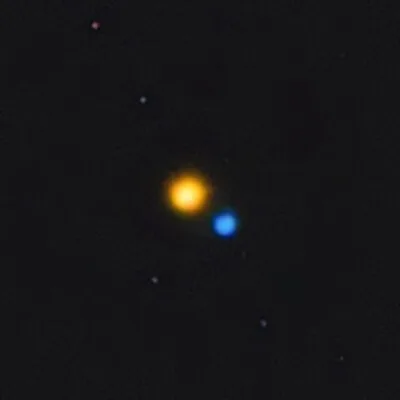
Beta Cygni is the star at the “head” of Cygnus the Swan. This double star is a favorite because it’s one of the first double stars novices attempt: all small telescopes can resolve it, and it’s even possible to see the two stars with strong 10x binoculars.
The color difference is what makes this striking: the brighter red giant star (that appears orange) combined with the bright blue of the fainter star.
But despite their proximity to each other in the sky, distance measurements from the Hipparcos satellite reveal that these two stars are probably not in a physical pair: they appear to be about 30 ly apart, though nearly in the same line of sight from Earth.
Almach
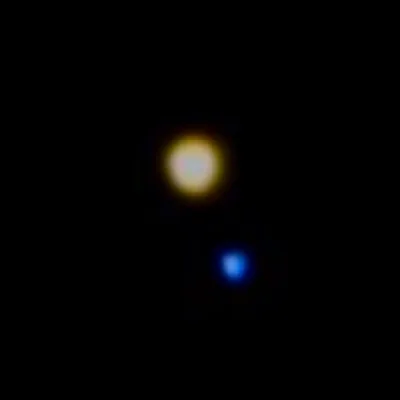
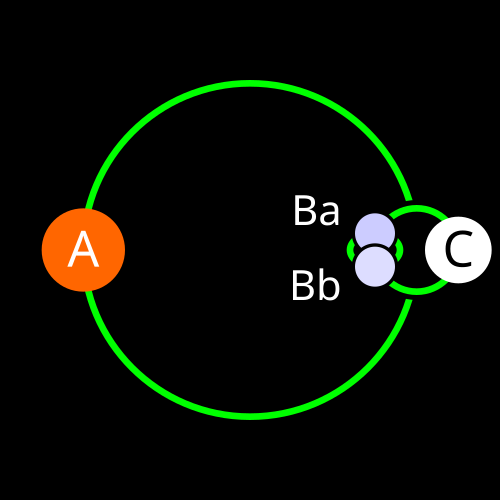
This system is a very interesting comparison to Albireo: the two sets of stars are very similar: a red giant and a hotter dwarf star. But this is actually a quadruple system: the secondary star is itself a triple system (though too close to be resolved).
Although you’d expect the observed colors to be very similar to Albireo, different observers perceive this pair very differently, with the primary star seeming a yellow or gold color, and the secondary anywhere from deep blue to green (even though there are no green stars).
Achird
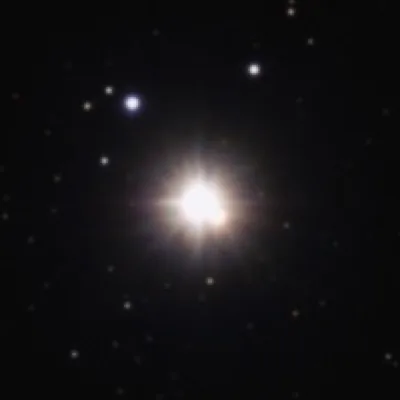
This pair is the closest of the three, and also with the largest difference in magnitude. It’s a physical pair with a period of 472 years in an elliptical orbit, so the separation varies from 5 to 16 arcseconds (they were last at their closest in 1890; currently they’re about 13" apart). In the image - the companion is nearly overwhelmed by the primary - you can see it as a “knob” in the 4 o’clock position.
This is another system where the range of colors perceived by the observer seems to vary quite a bit: the primary has been described as lemon/gold, while the fainter secondary as anything from rusty to purple!
A Few Worth Slowing Down For
The Pleiades and the Double Cluster are the easiest wins on this list – if you’ve got binoculars and a clear night, start there. Albireo is the one to show a beginner: point a small scope at it, hand over the eyepiece, and watch their reaction to the gold-and-blue pair. And NGC 6826 is just plain fun – once you know the trick, you can make a planetary nebula blink on command.
M33 and NGC 891 are the two honest challenges on this list. Both reward a genuinely dark site and some patience more than they reward a bigger telescope. If you strike out on either one, don’t take it personally – try again from a darker site or a moonless night.
A Few Other Things Worth Knowing
The Harvest Moon – the full moon nearest the equinox – falls on September 26th this year.
We’ll discuss the Fall meteor showers in the coming weeks, so we won’t steal that thunder here. Worth an early mention, though: the Leonids peak the night of November 17-18, with the Moon barely a sliver and out of the sky by mid-evening – dark skies for anyone willing to stay up.
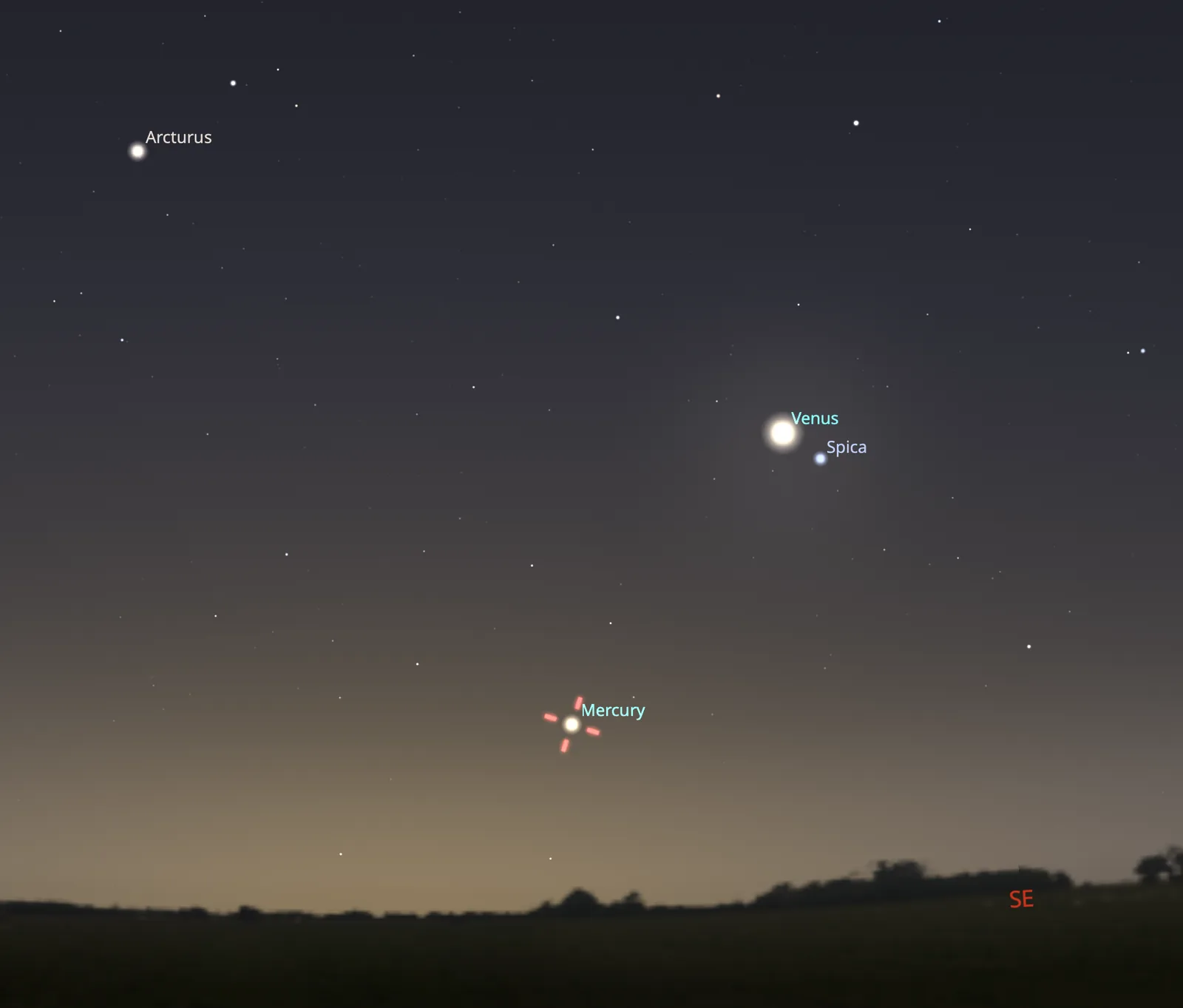
Mercury reaches its best morning elongation of the fall on November 21st, and it turns out to be more than just Mercury: at 6 AM that morning, Venus is up as well, sitting only about 2° from Spica, with Arcturus higher up completing the scene. It’s still an early-alarm target – Mercury itself hugs the horizon – but with Venus and two bright stars sharing the sky, it’s a genuinely rewarding morning to get up for, not just a consolation-prize elongation.
Quick Reference
| Object | Type | Constellation | Mag | Size | Distance | Equipment |
|---|---|---|---|---|---|---|
| M45, Pleiades | Open cluster | Taurus | 1.6 | 110′ | ~444 ly | Naked eye; binoculars ideal |
| M31, Andromeda Galaxy | Galaxy | Andromeda | 3.4 | 178′×63′ | ~2.5 Mly | Naked eye (dark sky); binoculars; small scope |
| Double Cluster, NGC 869/884 | Open cluster pair | Perseus | 3.7 / 3.8 | ~30′ each | ~7,600 ly | Naked eye (faint patch); binoculars or low-power scope |
| Great Square of Pegasus | Asterism | Pegasus/Andromeda | naked eye | ~15° across | – | Naked eye |
| NGC 6826, Blinking Planetary | Planetary nebula | Cygnus | 8.8 | 27″×24″ | ~2,200 ly | Small scope (4-6″) |
| NGC 7662, Blue Snowball | Planetary nebula | Andromeda | 8.3 | 32″×28″ | ~2,500-5,700 ly | Small scope; 6-8″+ for color |
| NGC 891, “Silver Sliver” | Edge-on spiral galaxy | Andromeda | 10.8 | 13.5′×2.5′ | ~27-30 Mly | Small scope; 8″+ for the dust lane |
| M33, Triangulum Galaxy | Galaxy | Triangulum | 5.7 | 73′×45′ | ~2.7-2.9 Mly | Naked eye (exceptional dark sky only); binoculars/small scope |
| M2 | Globular cluster | Aquarius | 6.5 | 12.9′ | ~37,500 ly | Binoculars; small scope for partial resolution |
| Kemble’s Cascade | Asterism | Camelopardalis | ~5-10 (chain) | ~2.5-3° | – | Binoculars (10x50 ideal) |
| Albireo (β Cygni) | Double star | Cygnus | 3.1 / 5.1 | 34″ sep. | ~430 ly | Small scope; strong 10x+ binoculars |
| Almach (γ Andromedae) | Double star | Andromeda | 2.3 / 4.8 | 10″ sep. | ~390 ly | Small scope |
| Achird (η Cassiopeiae) | Double star | Cassiopeia | 3.4 / 7.5 | ~13″ sep. (varies) | ~19.2 ly | Small scope |
Clear skies, and happy hunting.