
The Lizard
Lacerta is one of the “next-generation” constellations: it wasn’t included as one of the 48 constellations in Ptolemy’s Almagest, but was one of the 10 constellations added by Hevelius in 1687, published in 1690 in the Firmamentum Sobiescienum sive Uranographica, which also included other minor constellations visible in Northern skies (Canes Venatici, Leo Minor, Lynx, Scutum, Sextans, and Vulpecula), but also three constellations that didn’t make the final list by the IAU (Cerberus, Mons Maenalus, and Triangulum Minus).
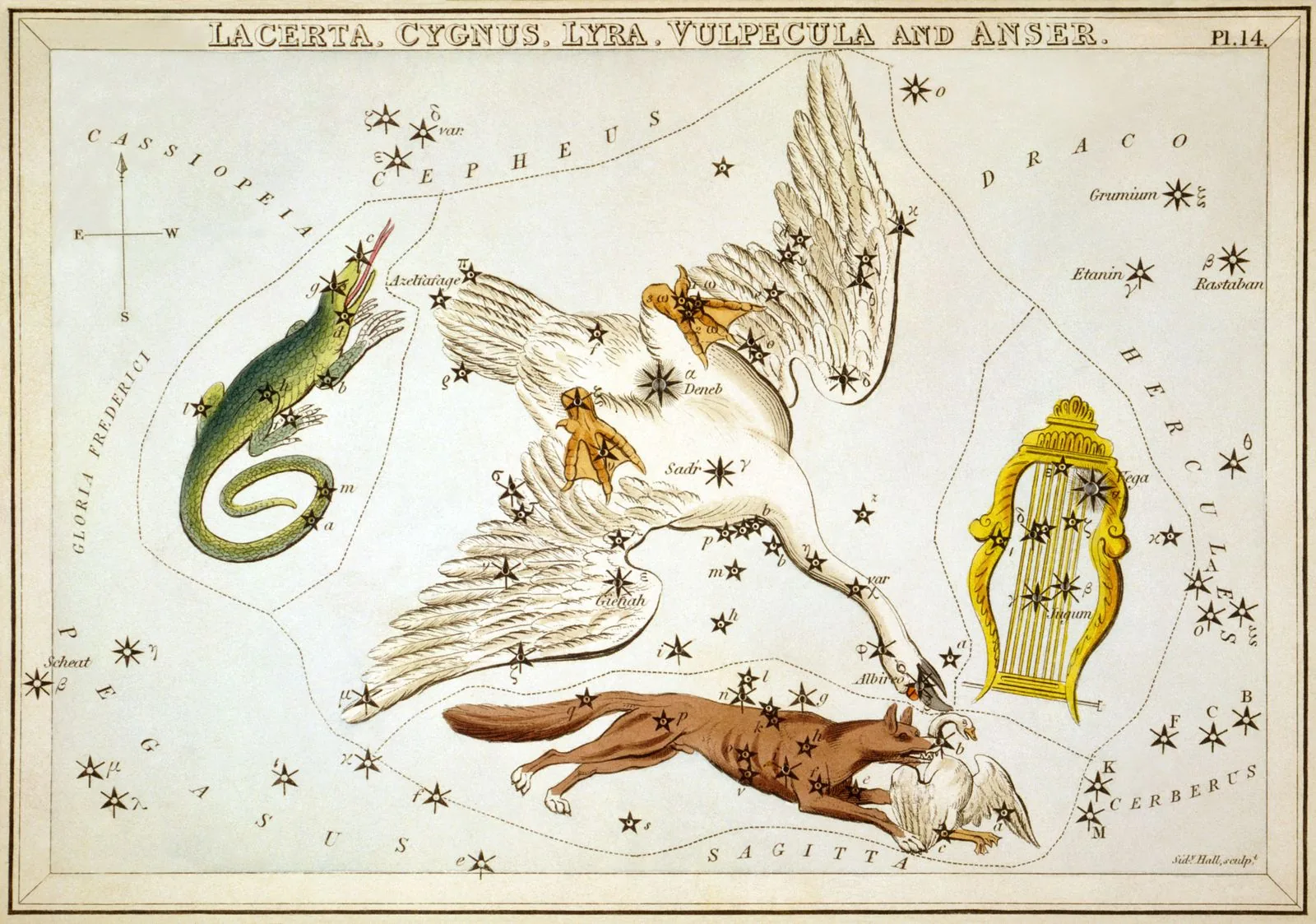
Hevelius’s “lizard” was also originally called “Stellio” after a lizard found in the Mediterranean that shows star-shaped spots. That name is now sometimes given to Alpha (α) Lacertae, the brightest star at a meager brightness of 3.76.
Map of Lacerta
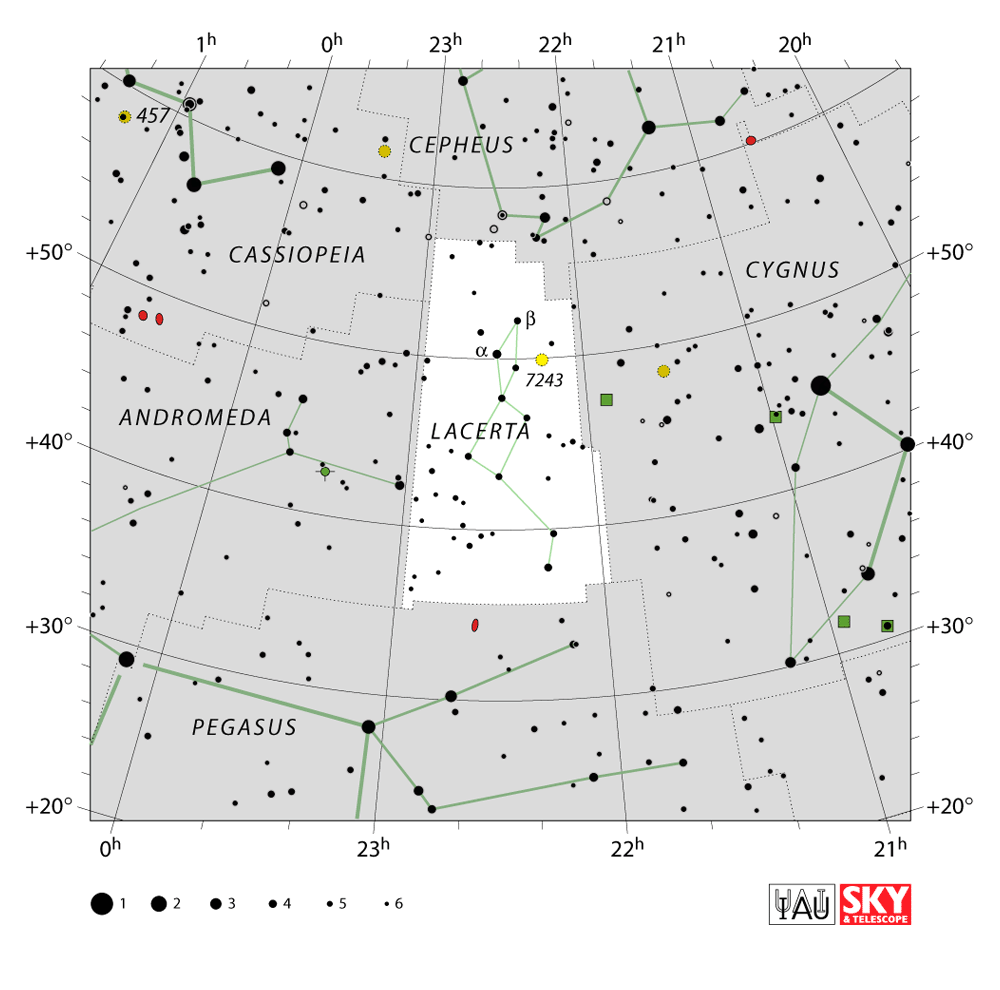
Lacerta is wedged between Cygnus to the west and Andromeda and Cassiopeia to the east — which tells you something about its object inventory. The western edge brushes the galactic plane, which is why most of the deep-sky objects are types found near the disk: open clusters, emission nebulae, and (as we’ll see) one remarkable extragalactic interloper. It’s not a constellation anyone points a scope at first, but that’s precisely what makes it interesting.
EV Lacertae
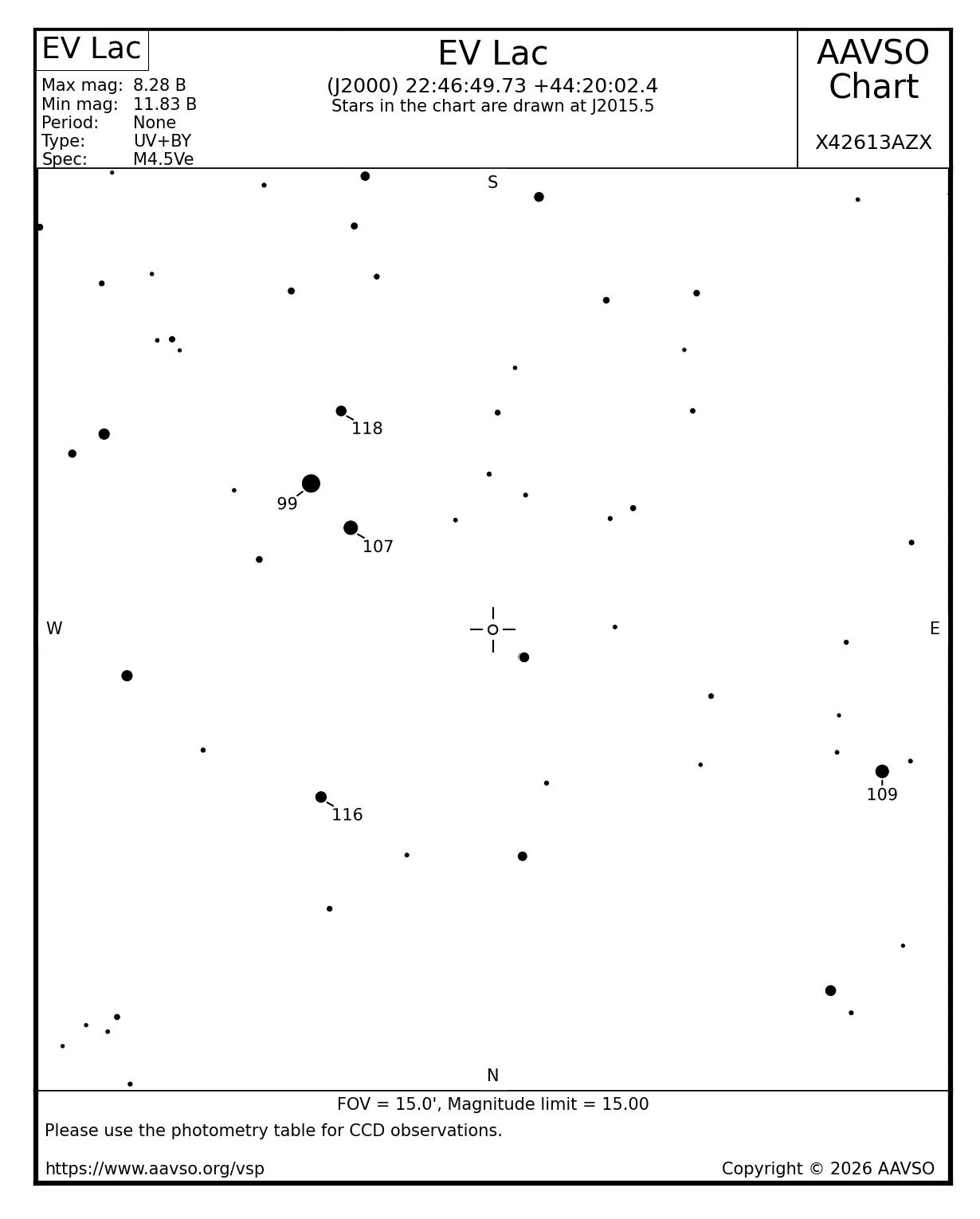
One star on the map deserves a special note. EV Lacertae is an unremarkable red dwarf sitting at magnitude 10 — easily found with binoculars, invisible without them. But EV Lac is also one of the most violent flare stars known. When it erupts, it can brighten by four magnitudes or more in a matter of minutes; in its most extreme events, that’s enough to push it close to naked-eye visibility. The 1952 superflare is the most famous, but modern photometry has catalogued dozens of events. You won’t catch one on a given night — they’re brief, unpredictable, and most are modest — but EV Lac is worth knowing about as you sweep through the field. It’s a reminder that “unremarkable” is sometimes the wrong word for a faint red dot.
Quick Reference: Objects of Interest
| Object | Type | Equipment |
|---|---|---|
| C 16 | Open Cluster | Binoculars/Small Telescope |
| Sh 2-126 | Emission Nebula | Imaging Telescope |
| NGC 7209 | Open Cluster | Small/Medium Telescope |
| IC 1434 | Open Cluster | Small/Medium Telescope |
| Abell 79 | Planetary Nebula | Imaging Telescope |
| BL Lac | Active Galactic Nucleus | Imaging Telescope |
Lizard Scales
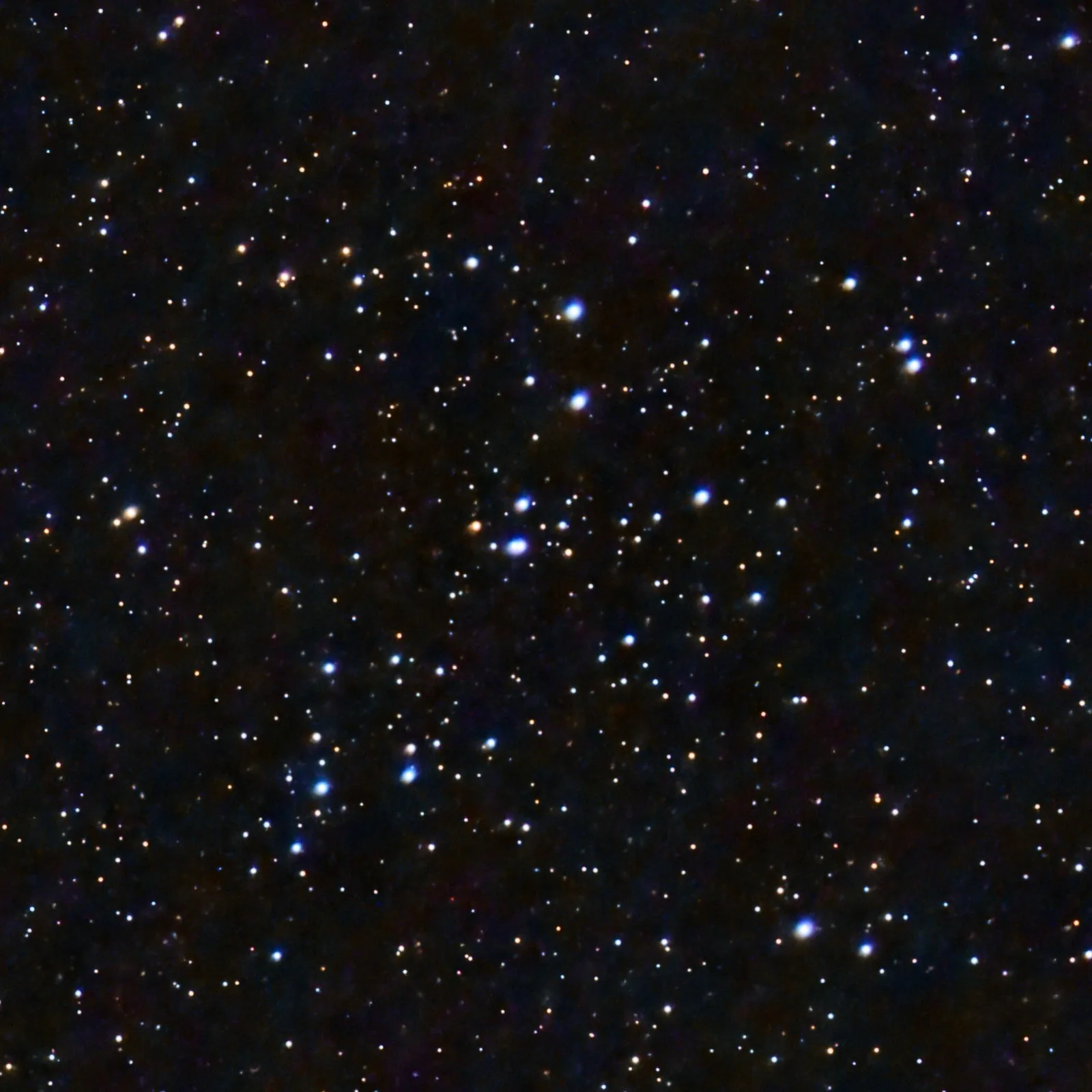
C 16 (NGC 7243) is Lacerta’s most accessible open cluster — bright enough at magnitude 6.4 to pick up in binoculars, and loose enough that a small telescope separates it into a pleasant scatter of about 40 stars across 21 arcminutes. It’s not a dense showpiece, but it’s the right entry point for the constellation: easy to find, rewarding immediately, and a good anchor for navigating to fainter objects nearby. At roughly 2,600 light-years, it’s among the closer open clusters in this part of the sky.
Faint Emission Nebula
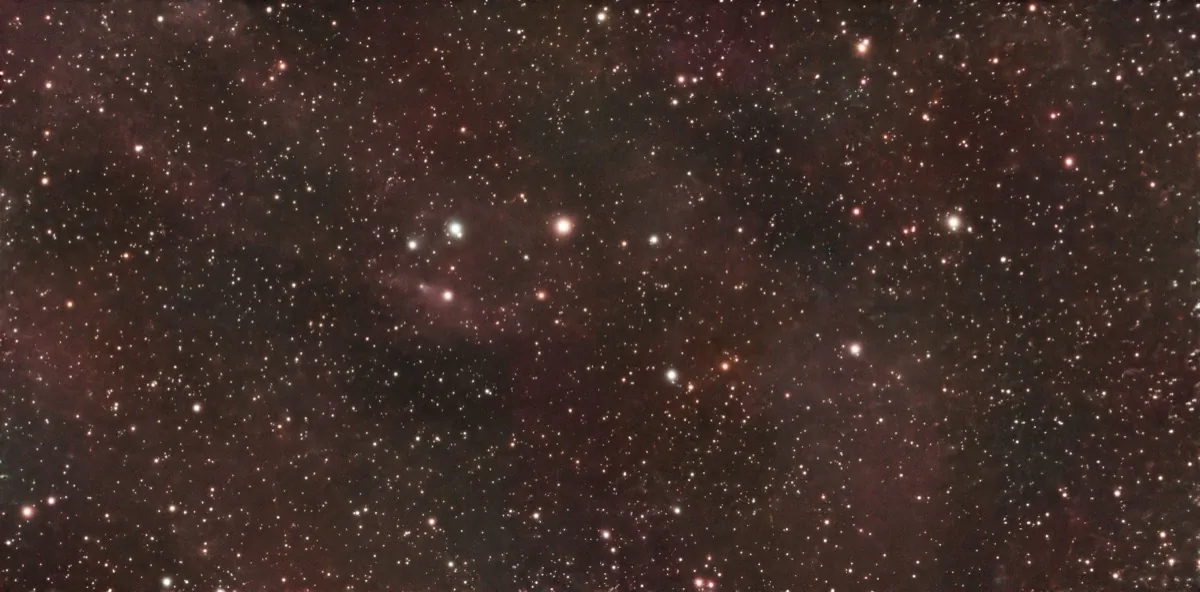
Sh 2-126 is ionized almost entirely by a single star: 10 Lacertae (HD 214080), one of the hottest O-type stars visible to the naked eye. The nebula spreads over more than two degrees of sky — larger than the full Moon several times over — but its surface brightness is so low that it’s invisible without an LP or narrowband filter. What emerges from a long integration is a sweeping, irregular glow surrounding 10 Lac, a target that rewards the effort partly because almost no one makes it.
Drunken Lizard
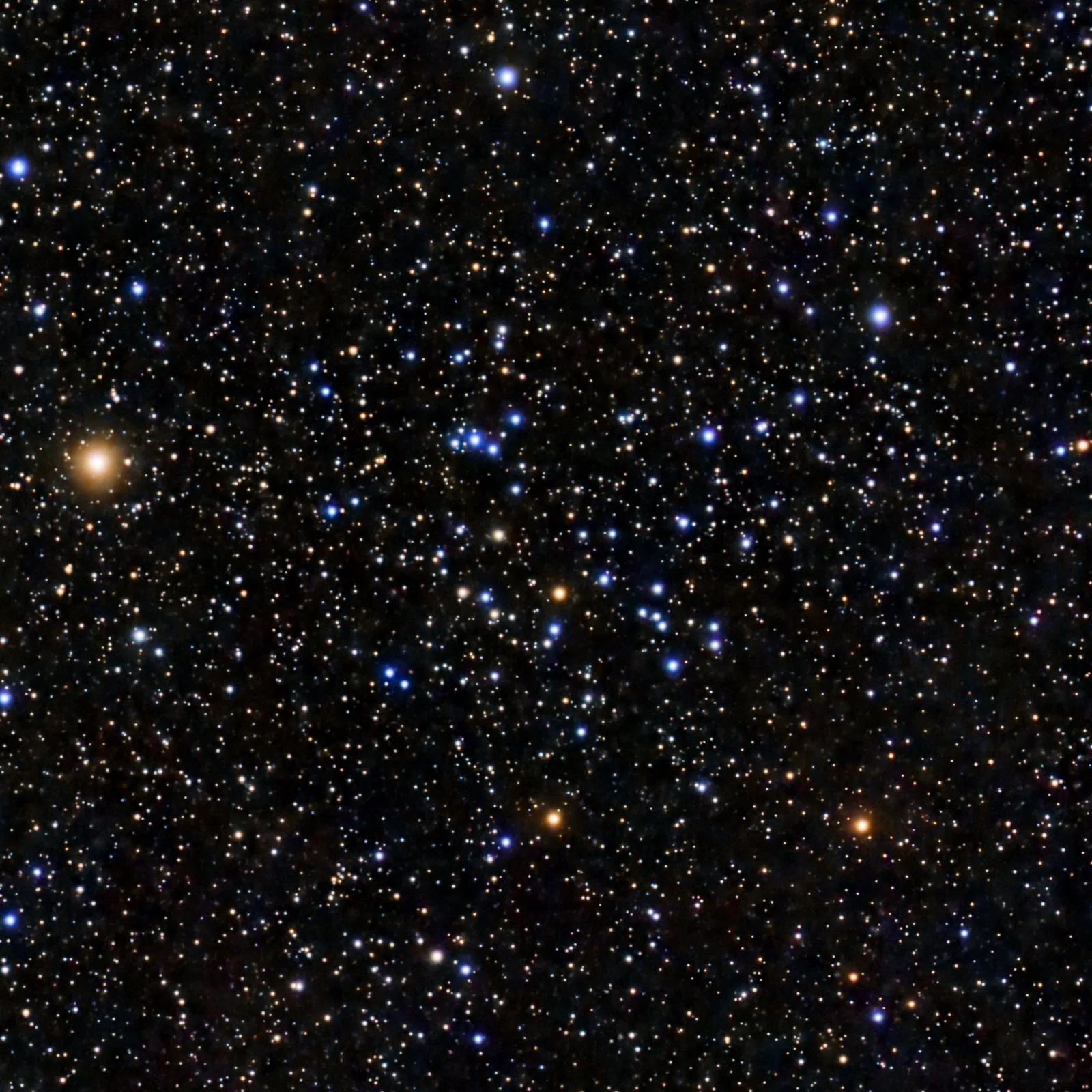
NGC 7209 is the more visually satisfying of Lacerta’s naked-eye open clusters — a moderately rich field of roughly 100 stars spread across 25 arcminutes, at a distance of about 3,200 light-years. The stars have a pleasantly irregular distribution, spread unevenly across the field in a way that feels loosely chaotic at the eyepiece — which is where the nickname comes from. At around 400 million years old, it’s comparable in age to the Hyades, though distance makes it considerably fainter.
Lizard’s Prey
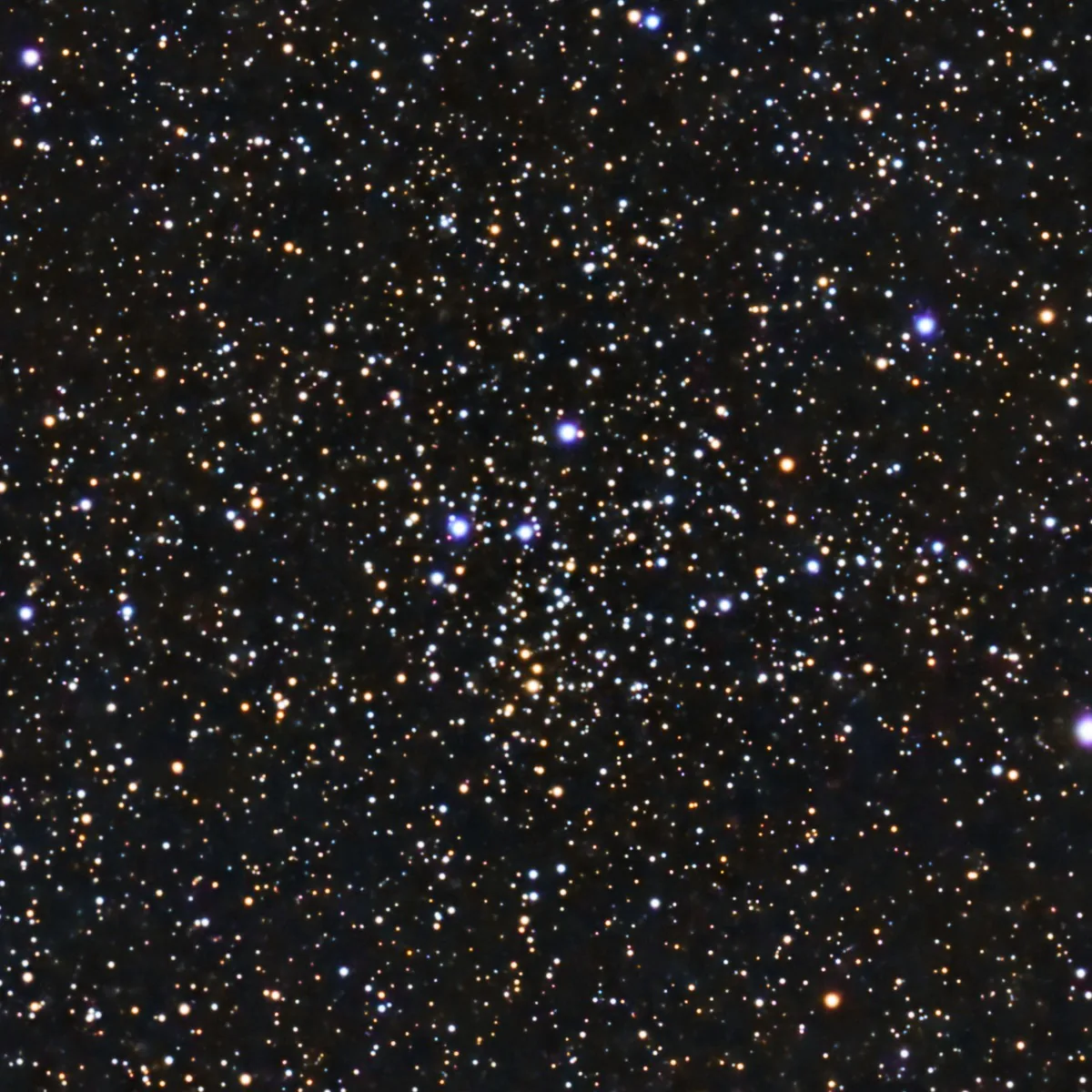
IC 1434 sits just northwest of Beta Lacertae — the tip of the lizard’s head — which is exactly where the name comes from. It’s a richer and more visually rewarding cluster than most of Lacerta’s offerings: a ring of bright blue-white stars around a denser core gives it a distinctive structure that holds up well at the eyepiece, and the surrounding field is full of fainter members. It’s the kind of cluster where you keep looking because there always seems to be one more star to pick out.
Ancient Shell
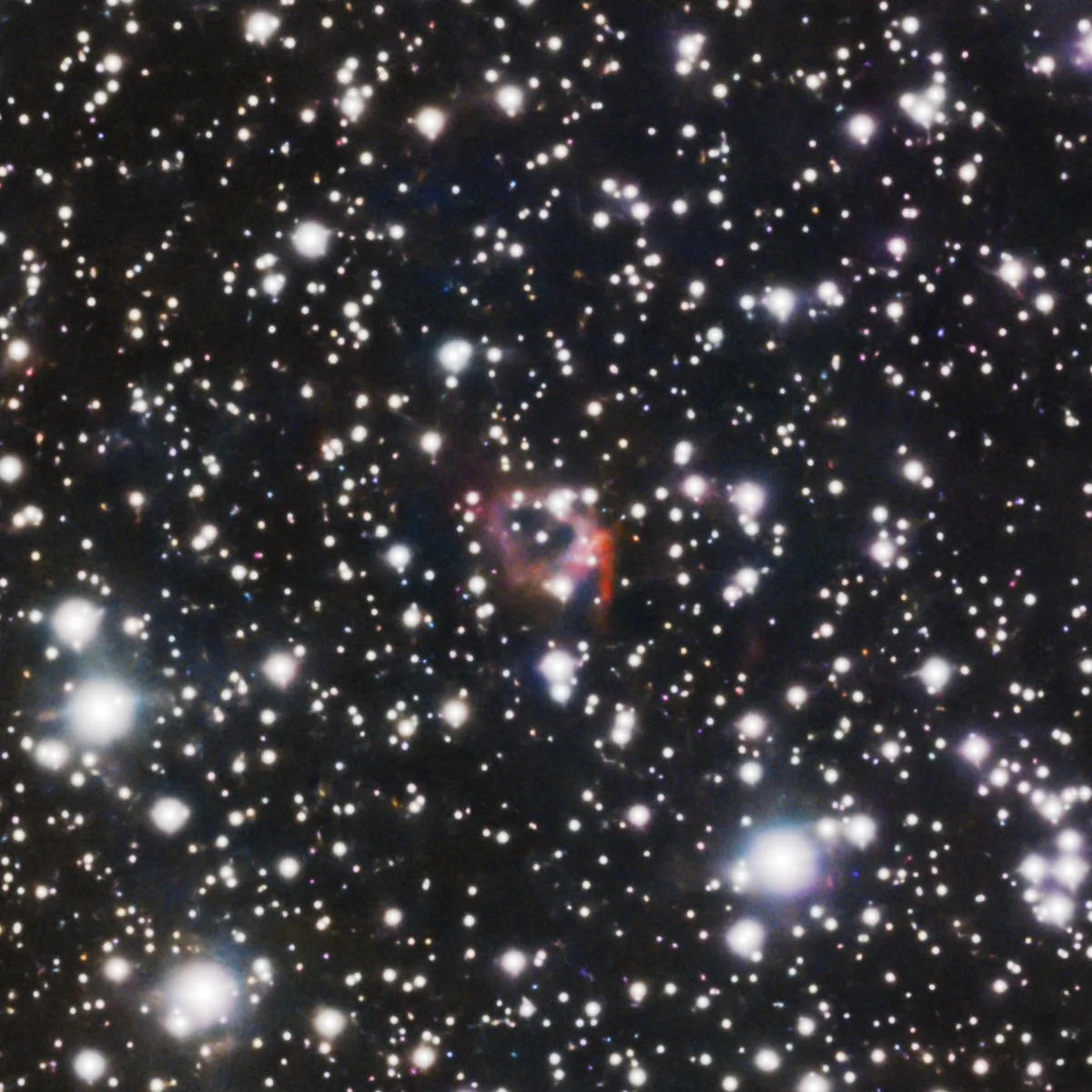
Abell 79 (PN G082.5+11.3) is a large, very old planetary nebula — old enough that the expanding shell has thinned to near-invisibility. It’s an imaging-only target, essentially invisible visually, requiring narrowband techniques (particularly hydrogen-alpha) to coax any signal out of the field. What emerges from a deep integration is a faint, extended ring — a reminder that planetary nebulae don’t stay compact forever, and that the oldest ones occupy far more sky than textbook examples like M 57 or M 27.
BL Lac
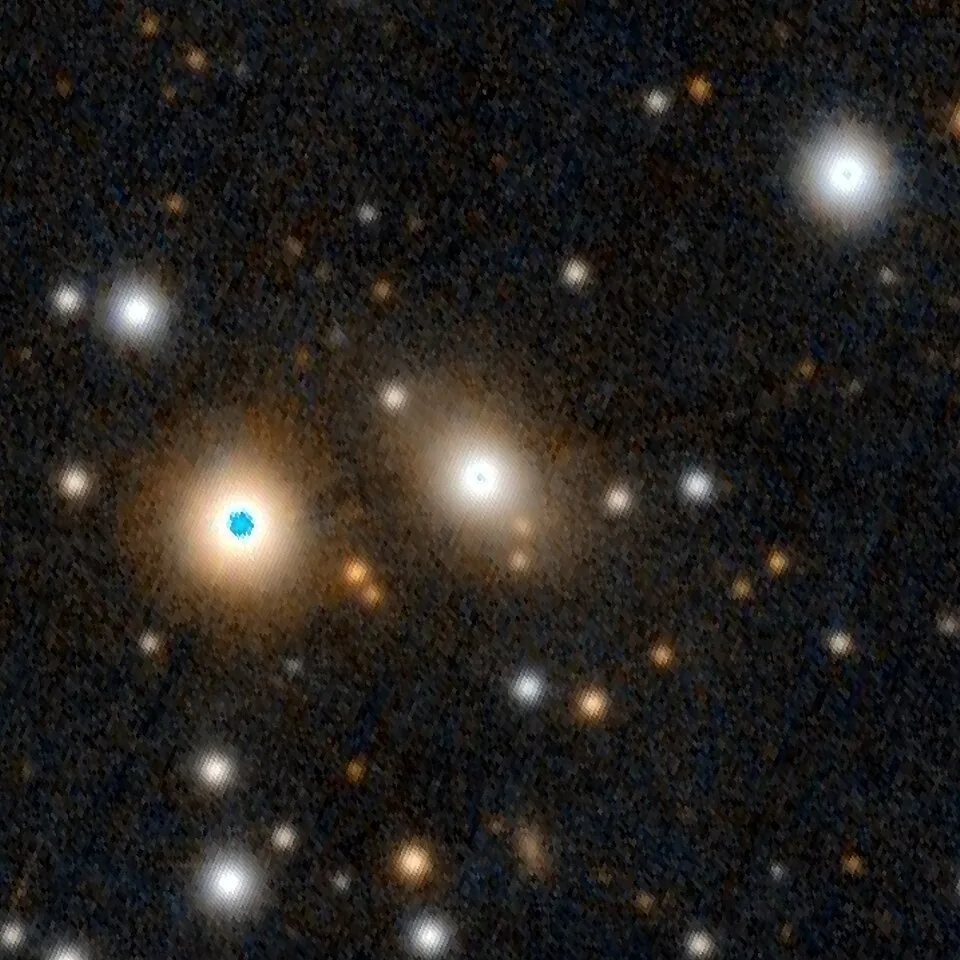
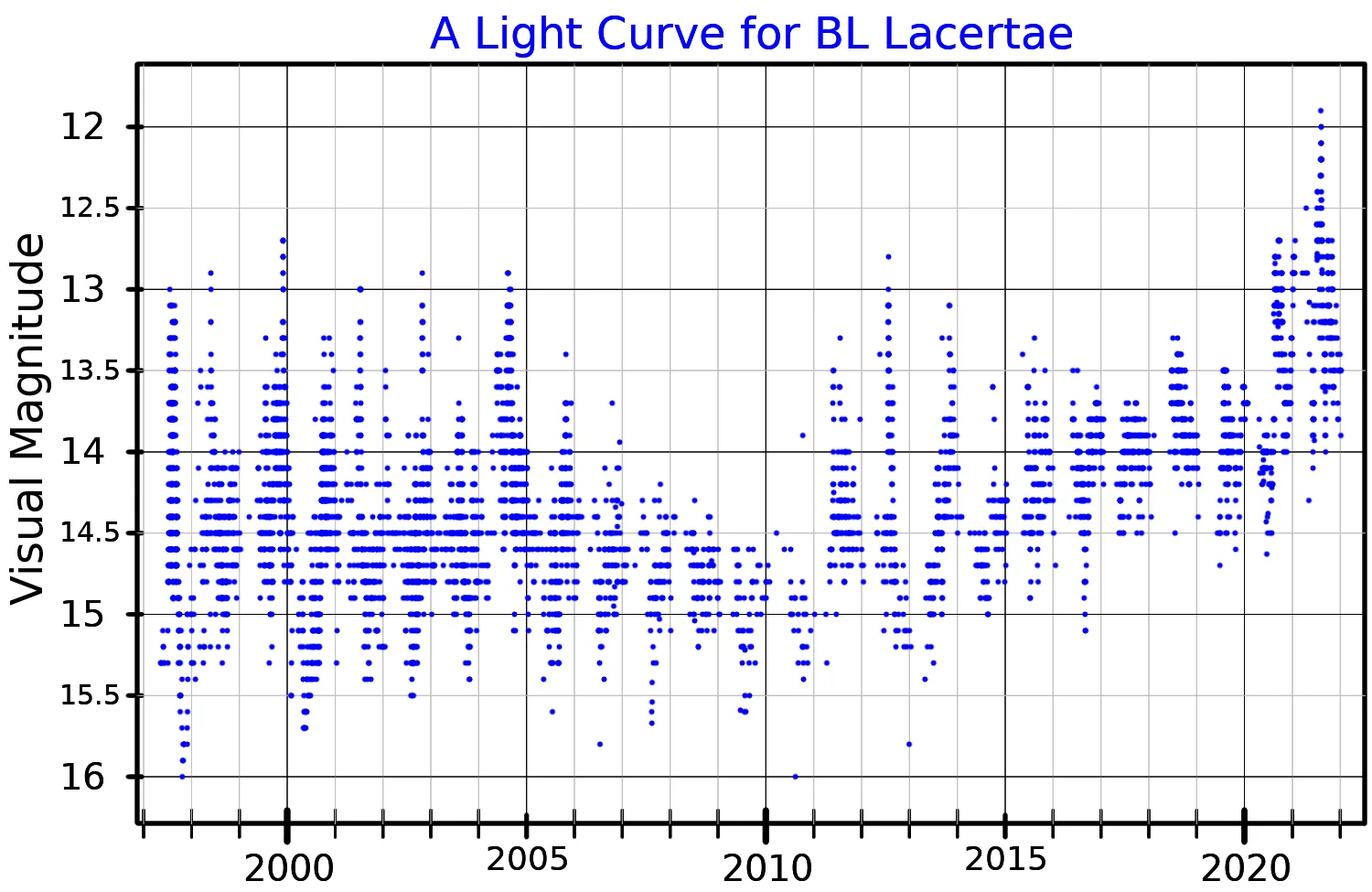
BL Lacertae doesn’t look like much — a slightly fuzzy point of light with a brightness that shifts unpredictably between roughly magnitude 12 and 17, sometimes over just a few days. What it actually is: the prototype blazar, an active galactic nucleus with a relativistic jet aimed almost directly at Earth, at a distance of nearly a billion light-years.
It was catalogued as a variable star in 1929 and not identified as extragalactic until the 1970s; the entire class of BL Lac objects now bears its name. When you image it, you’re looking down the barrel of a jet of plasma moving at close to the speed of light, driven by a supermassive black hole — Lacerta’s reminder that the most obscure constellation on your list can still be hiding something at the edge of the observable universe.