
Perseids, Saturn, and a Packed Hill
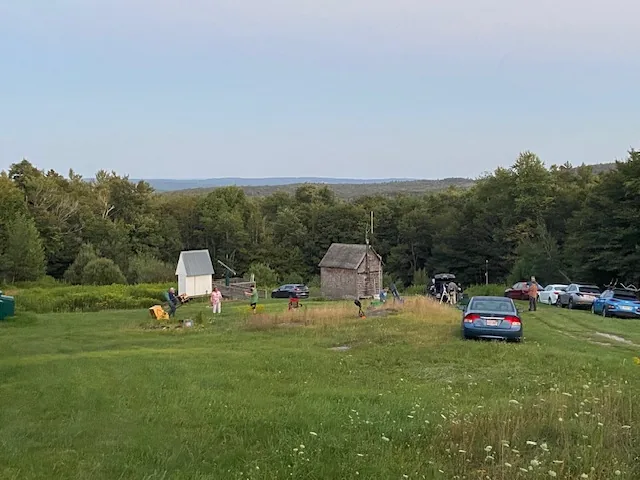
This was planned as our monthly opportunity for members to get together at one of our favorite observing spots, but this time adding in a dinnertime cookout, and some socializing, followed by stargazing. Arunah Hill is one of the darkest observing locations in all of Massachusetts. So it’s a perfect match.
The day was chosen because of an important coincidence: the tail end of the Perseid meteor shower, and a close-to-New Moon. So there was the possibility of dark skies and a good reason to scan the skies.
Moon and Venus - Geneva Smith
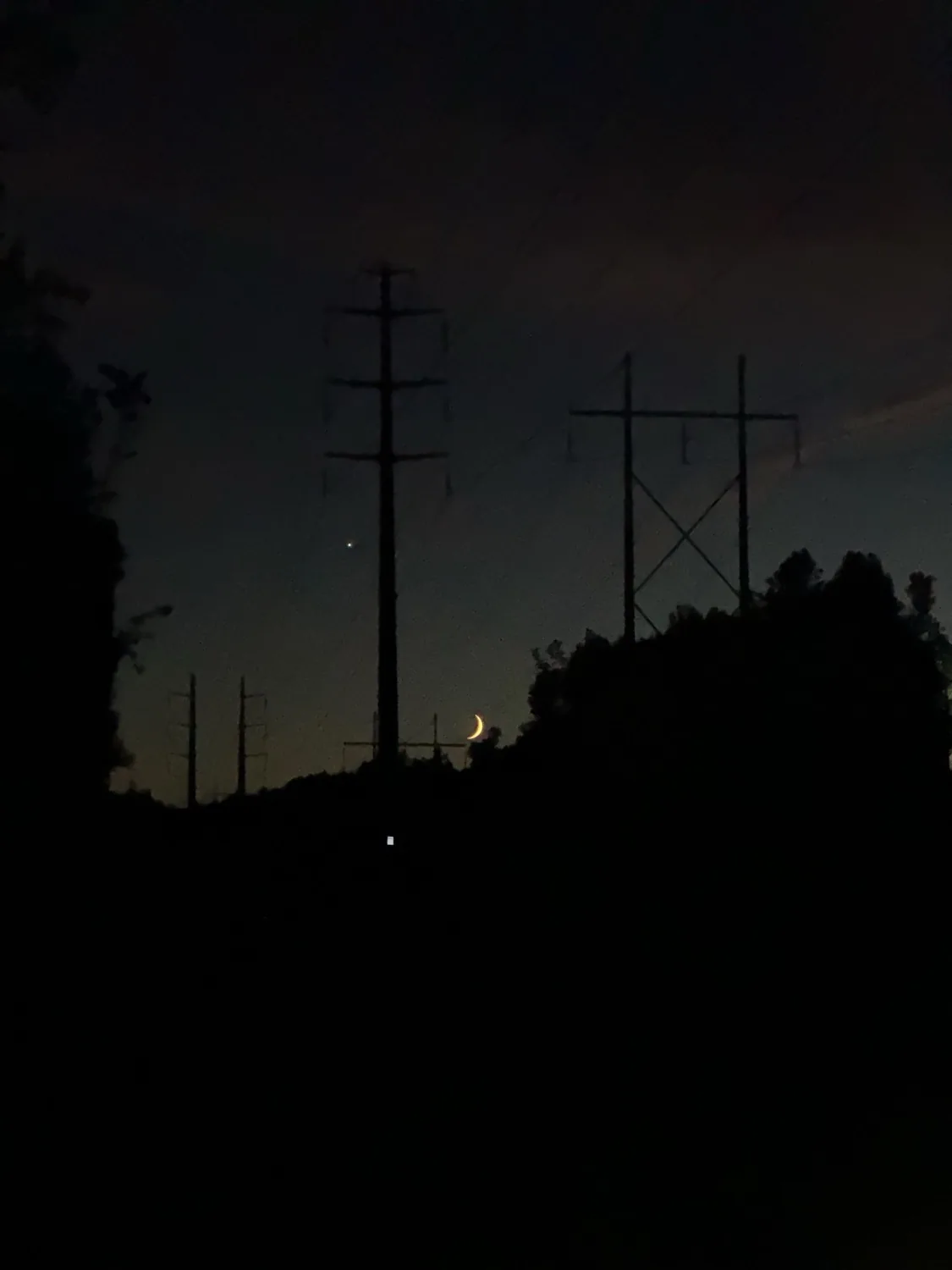
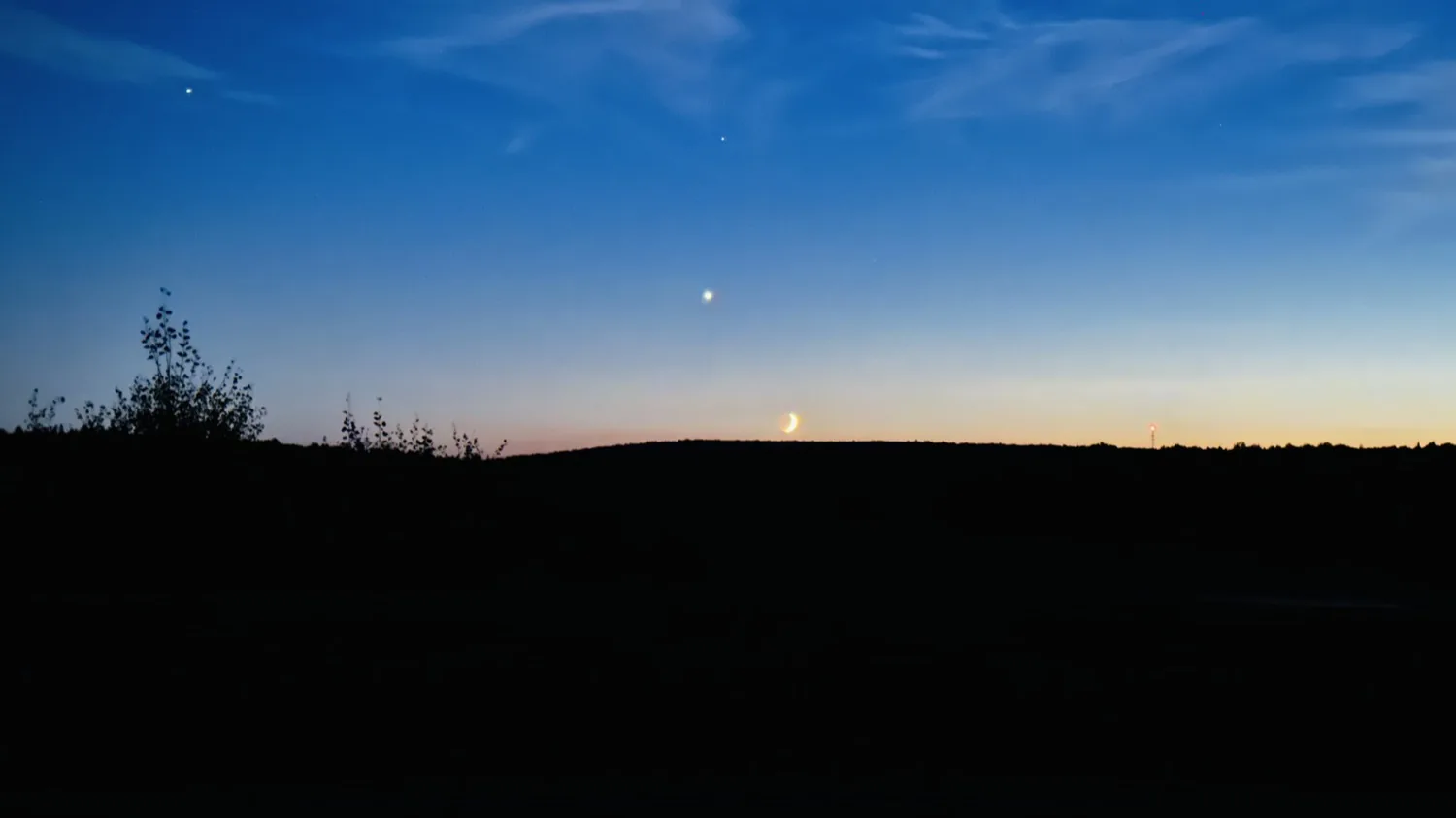
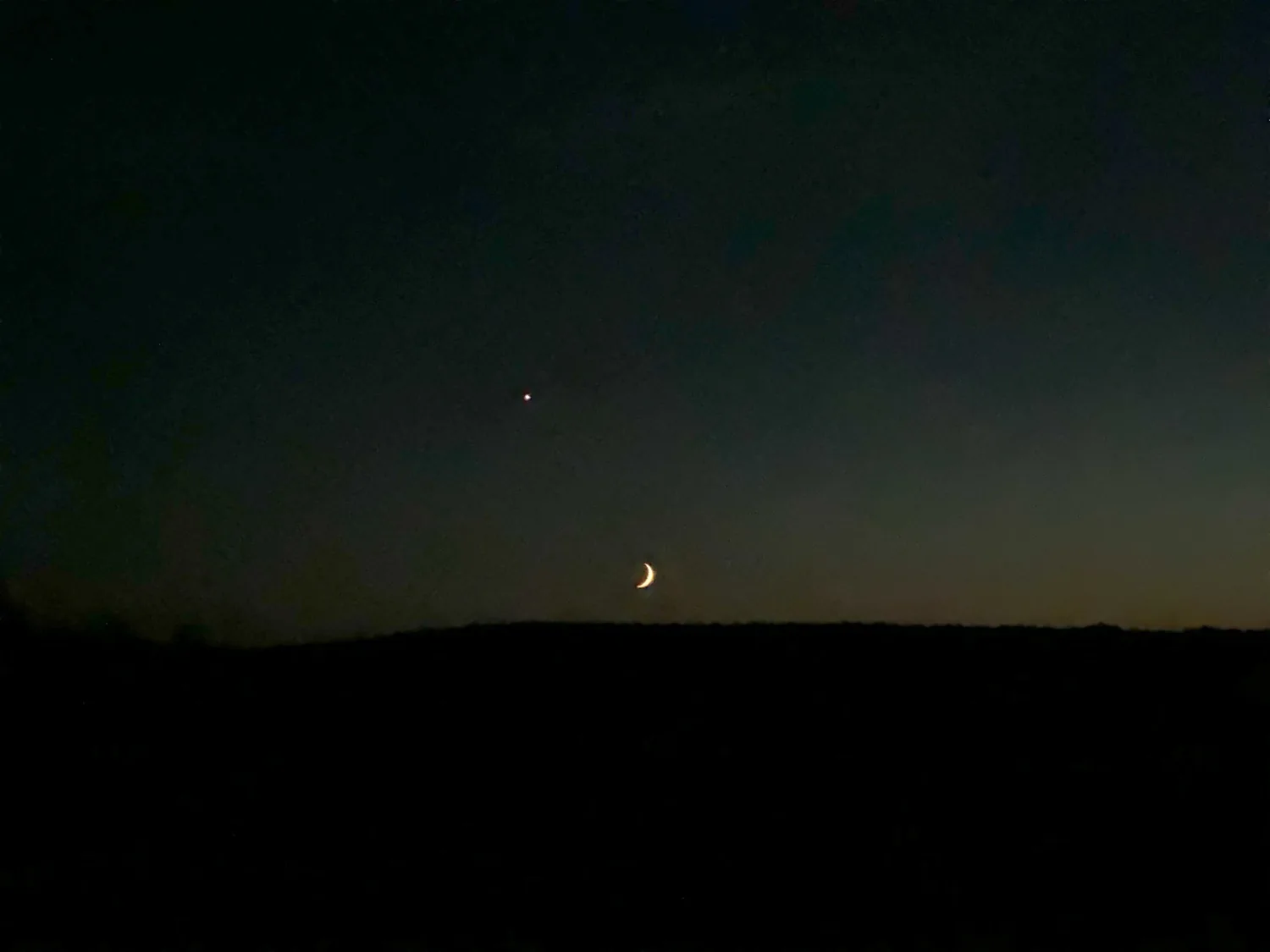
The weather largely cooperated: summer humidity made things a little moist, but not too bad, and for most of the night, cirrus clouds wafted overhead.
From the Hill

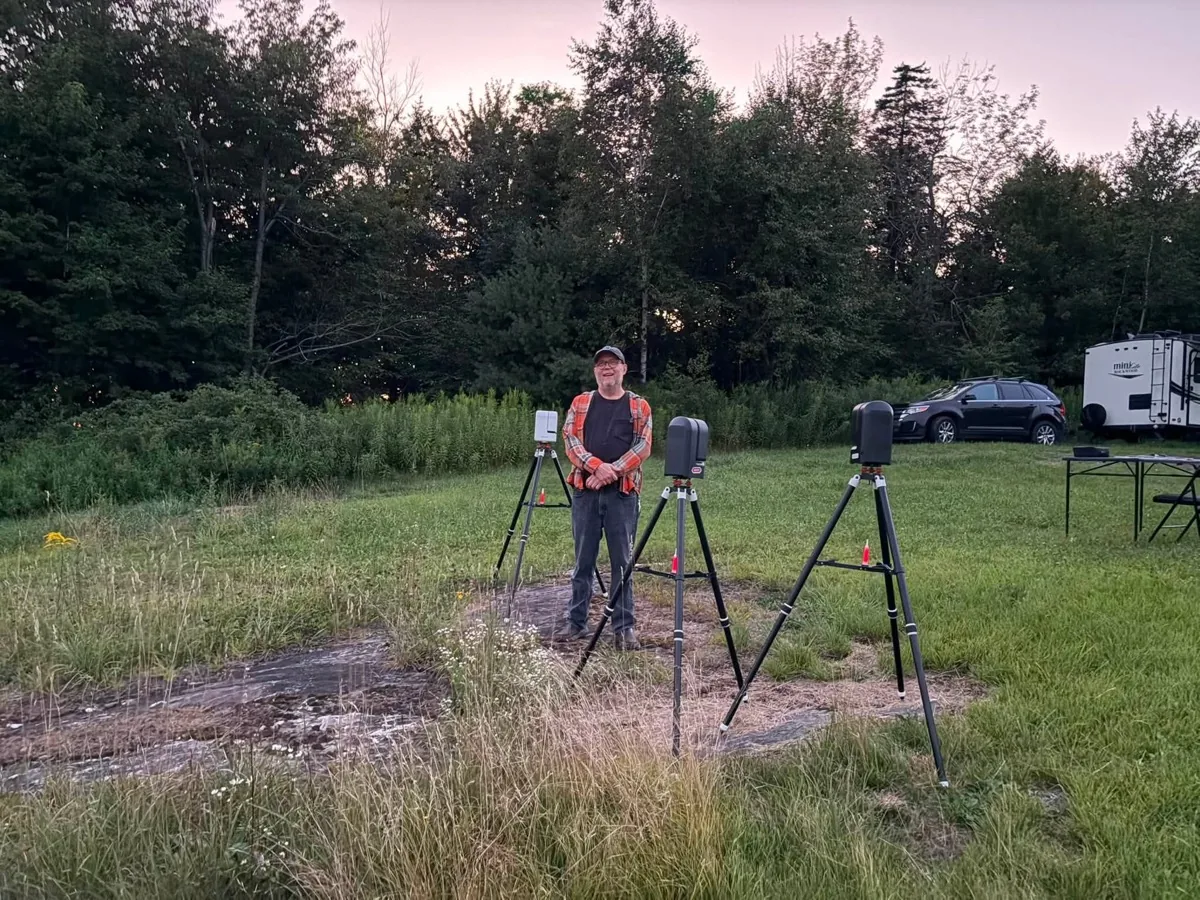
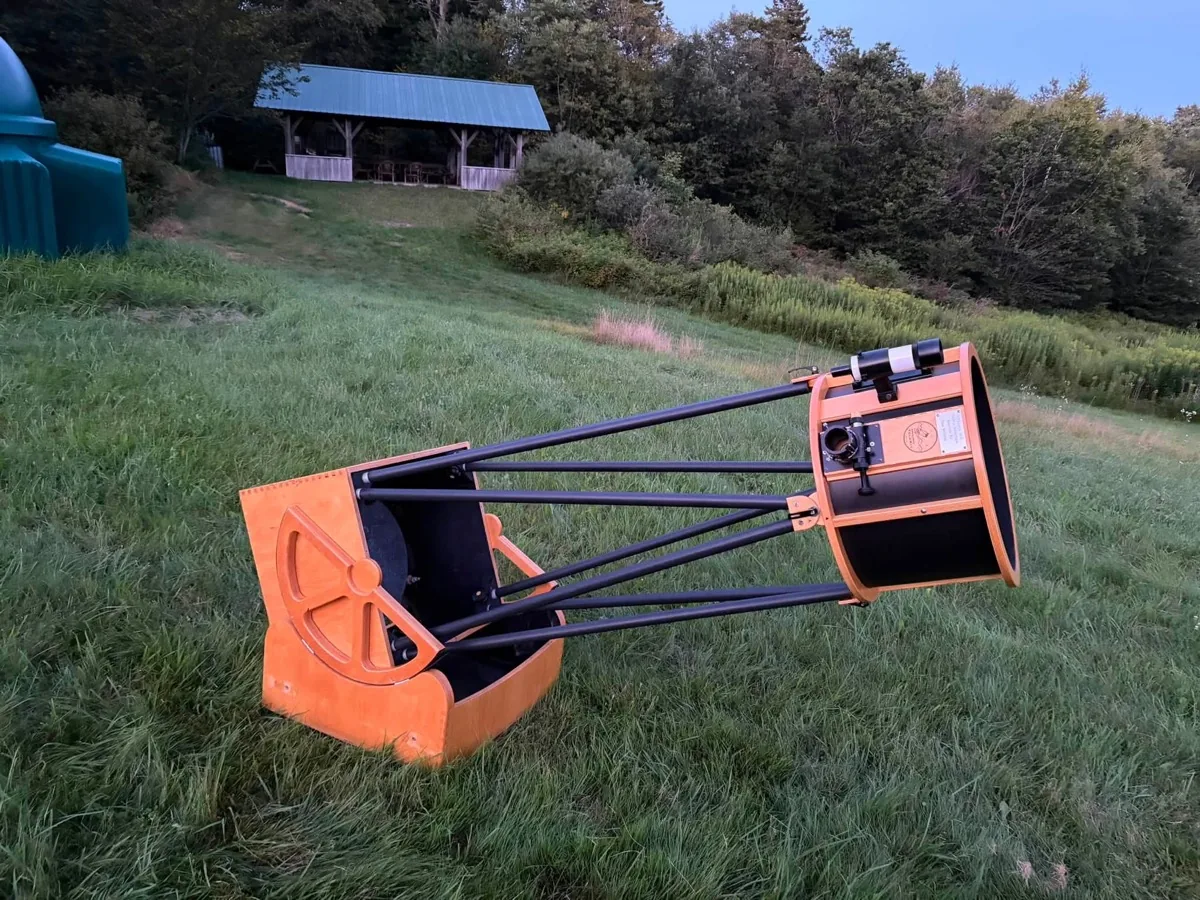
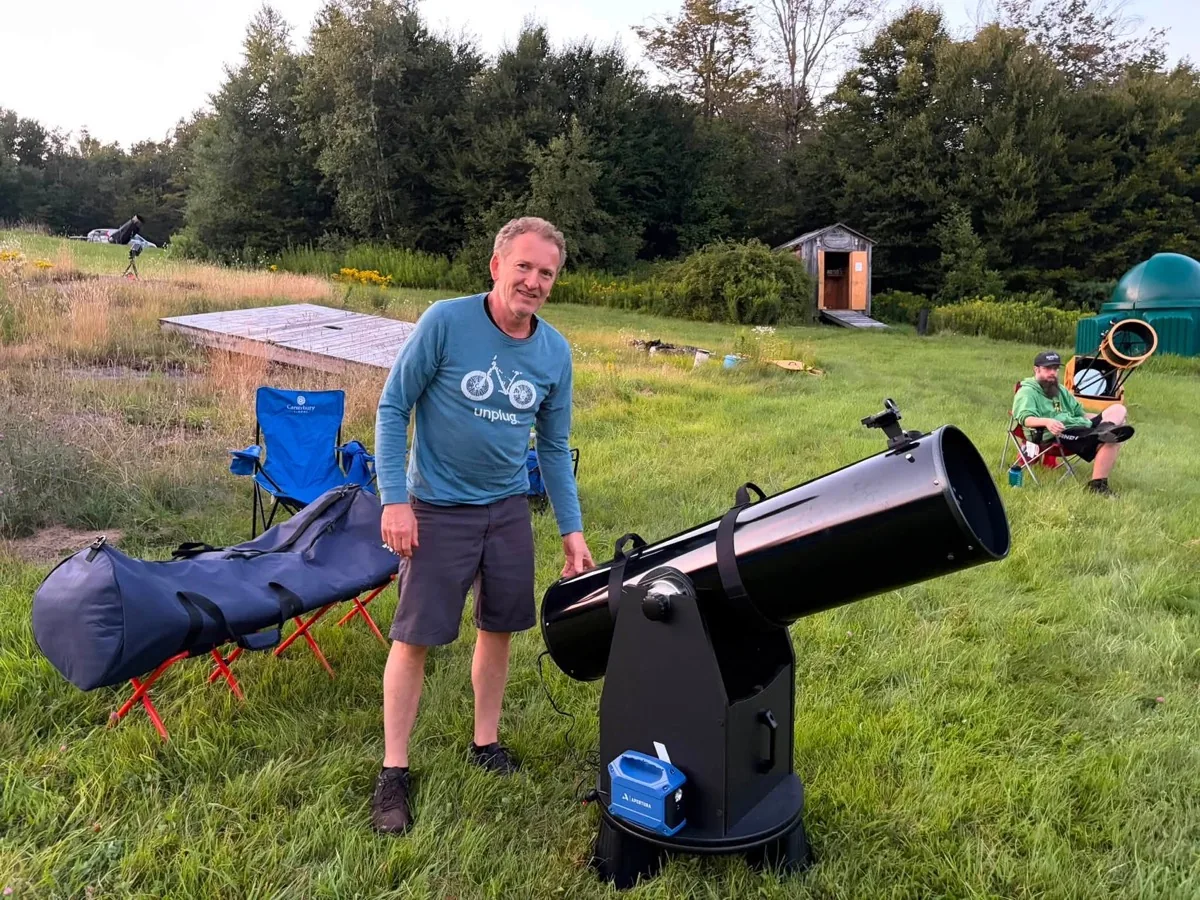
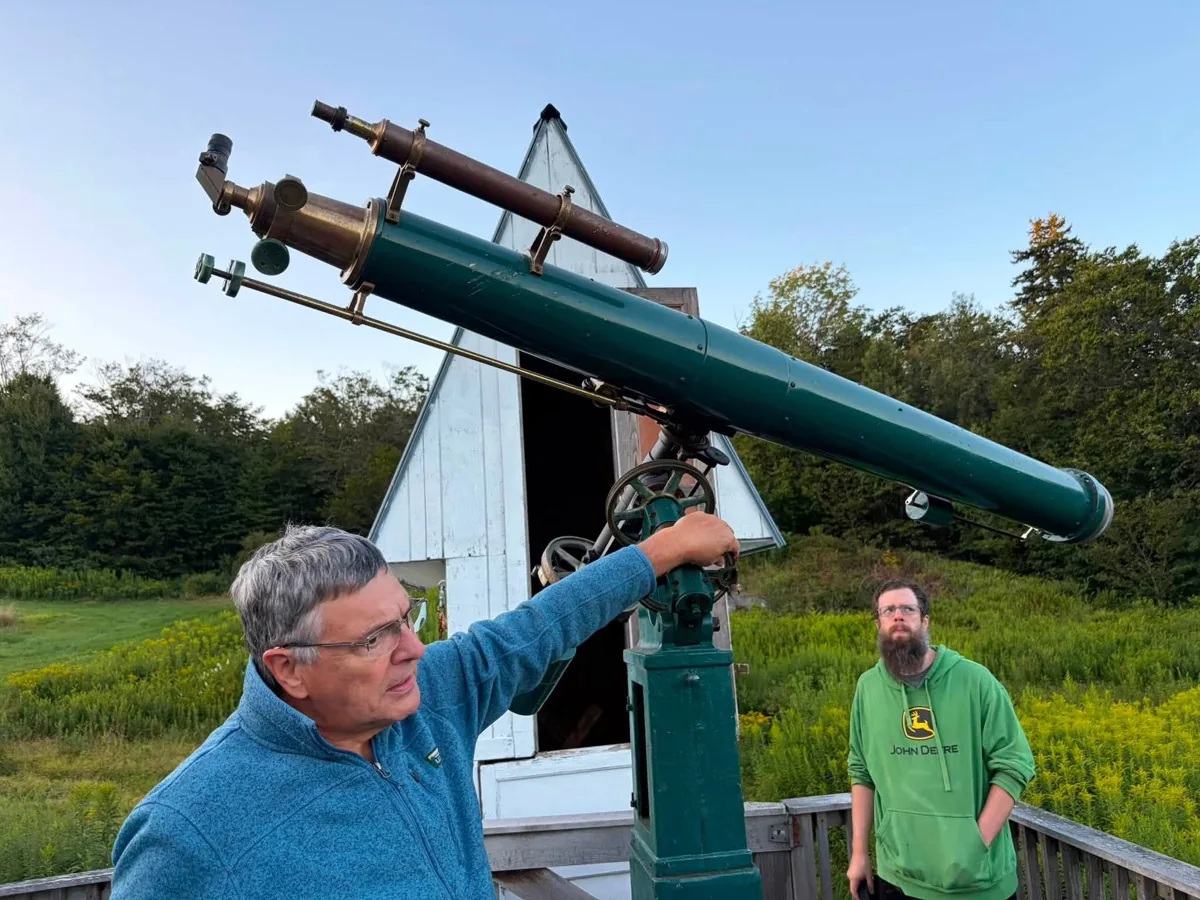
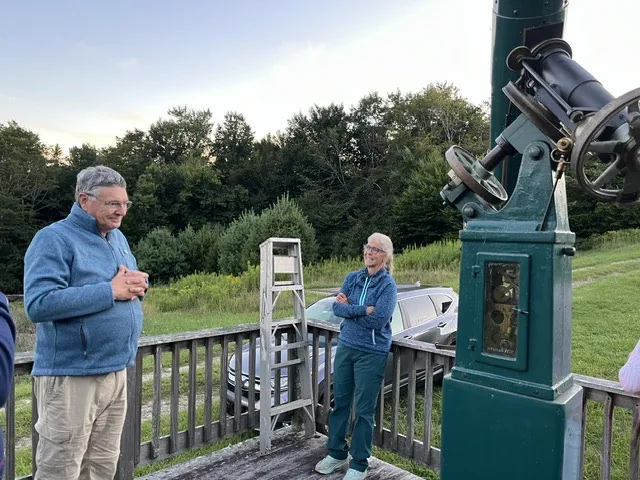
Arunah Hill
But overall, Arunah Hill was buzzing with activity: aside from NBAS members, and the usual Arunah Hill crowd, there were several guests who’d come up both local-area residents who knew about the location, but also many newcomers from as far as the Boston metro area for the night. It’s great to see entire families coming together for sky watching.
“What Is That?”
Not everything we saw that night was on the observing list.
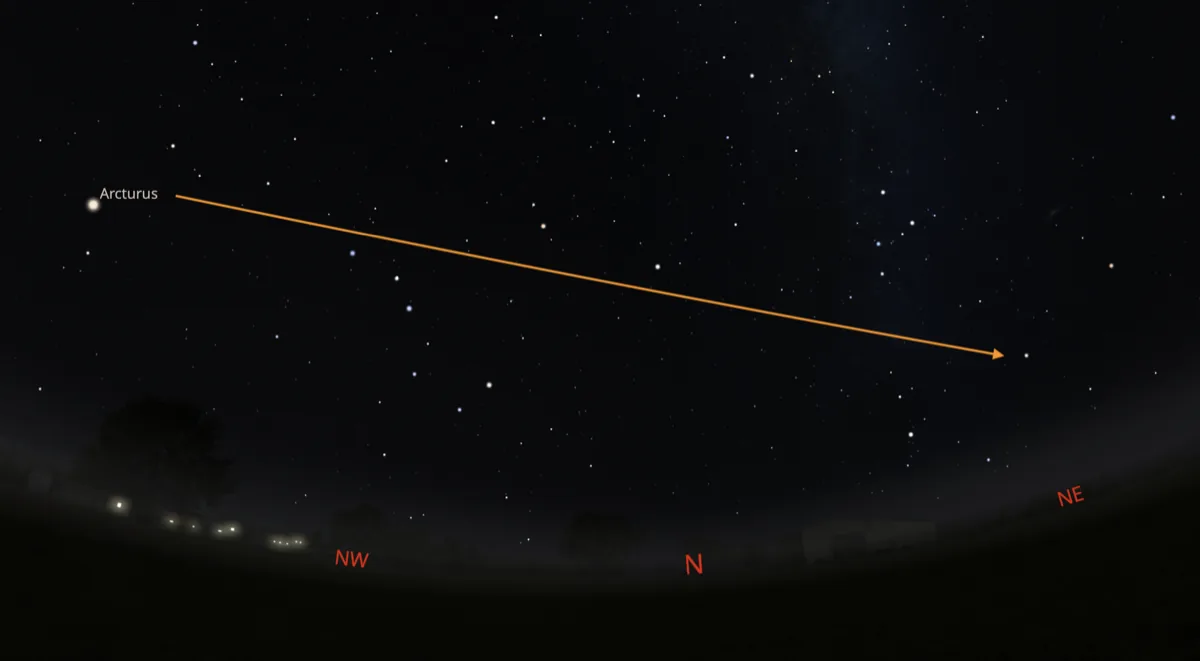
Sometime around 11 p.m., visitor Laura Gaffney was the first to notice it: a bright point of light with a faint, expanding cloud around it, moving steadily across the northern sky — well above the horizon, drifting from the direction of Boötes over toward Cassiopeia, west to east, over the course of a few minutes. Within a minute or two, half the hill was watching and asking the same question, with several people snapping images of this strange interloper.
It took a little musing, but eventually our “UFO” became entirely identified. Here’s what we’ve been able to piece together:
SpaceX launched a Falcon 9 from Cape Canaveral at 9:12 p.m. EDT that night, carrying nine satellites for Globalstar’s HIBLEO-4 constellation (the Globalstar 2-R Launch 1 mission). It was actually one half of a record night for SpaceX — a second Falcon 9 lifted off from Vandenberg Space Force Base in California just 38 minutes and 31 seconds later, the company’s shortest-ever turnaround between two orbital launches. The booster on the Globalstar flight, B1090, was flying for the 14th time and landed back at Cape Canaveral about eight minutes after liftoff.
Interestingly, there was actually an earlier viewing opportunity for this same rocket, if anyone happened to be looking north around 9:18 p.m. — the visibility map below, generated by the SpaceMonkey launch-tracking app, shows roughly how far up the coast the second stage’s ascent would have been visible in the minutes right after liftoff.
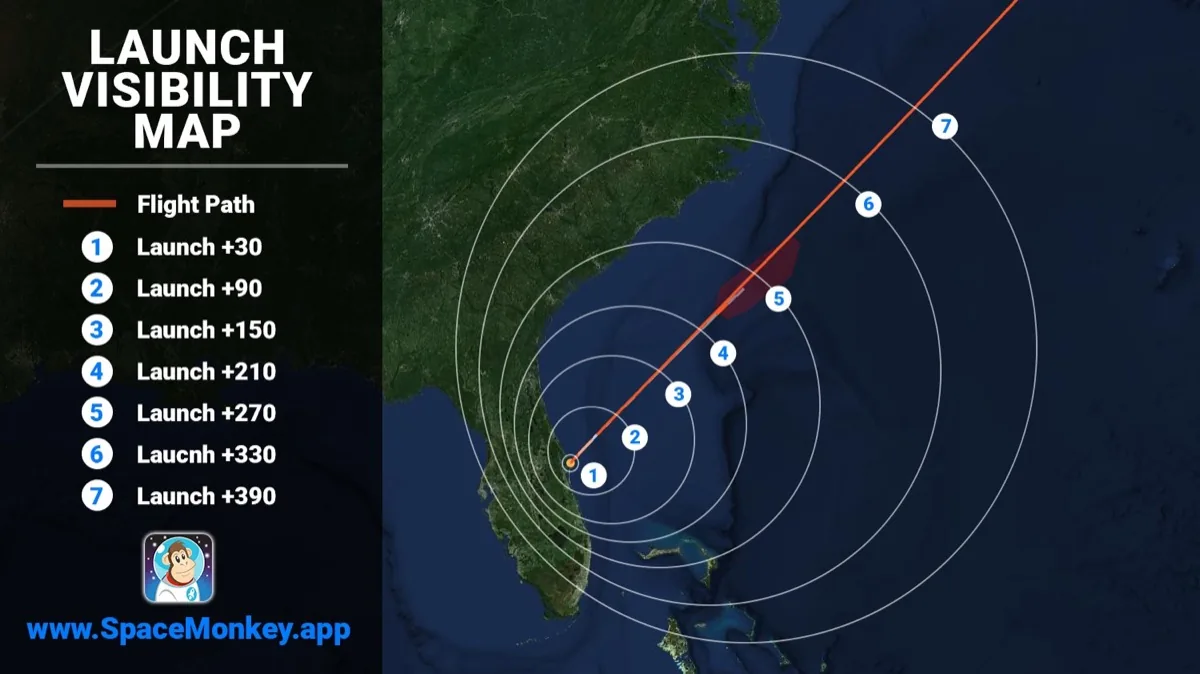
That’s not what we caught, though — this map only covers the climb to orbit, and by the time anyone on the hill noticed anything, that window had long since closed.
None of that, on its own, explains what we saw nearly two hours later. The breakthrough came from a photo one of our members, Kevin Marsh, managed to catch on his phone. The image’s metadata — a timestamp of 11:01:59 PM EDT, GPS coordinates confirming it was shot right from Arunah Hill, and the phone’s compass heading — was enough to pinpoint exactly where in the sky the mysterious object had been.
That timestamp is the key. It’s 109 minutes and 59 seconds after the Globalstar launch — strikingly close to a full orbital period (roughly 114 minutes) at the ~1,400 km altitude where Globalstar’s satellites fly.
Our best explanation: the spent second stage, having deployed its payload about an hour earlier, coasted nearly all the way around the Earth before firing its engine one last time to dump its remaining propellant and set up a controlled reentry. That venting propellant expands and freezes into a sunlit cloud of ice crystals — even though it was fully dark on the ground, the stage itself was still high enough to be in direct sunlight — producing the same “SpaceX spiral” or “space jellyfish” effect that’s been photographed over New England several times in the past year, from other Falcon 9, Vulcan, and Ariane 6 missions.
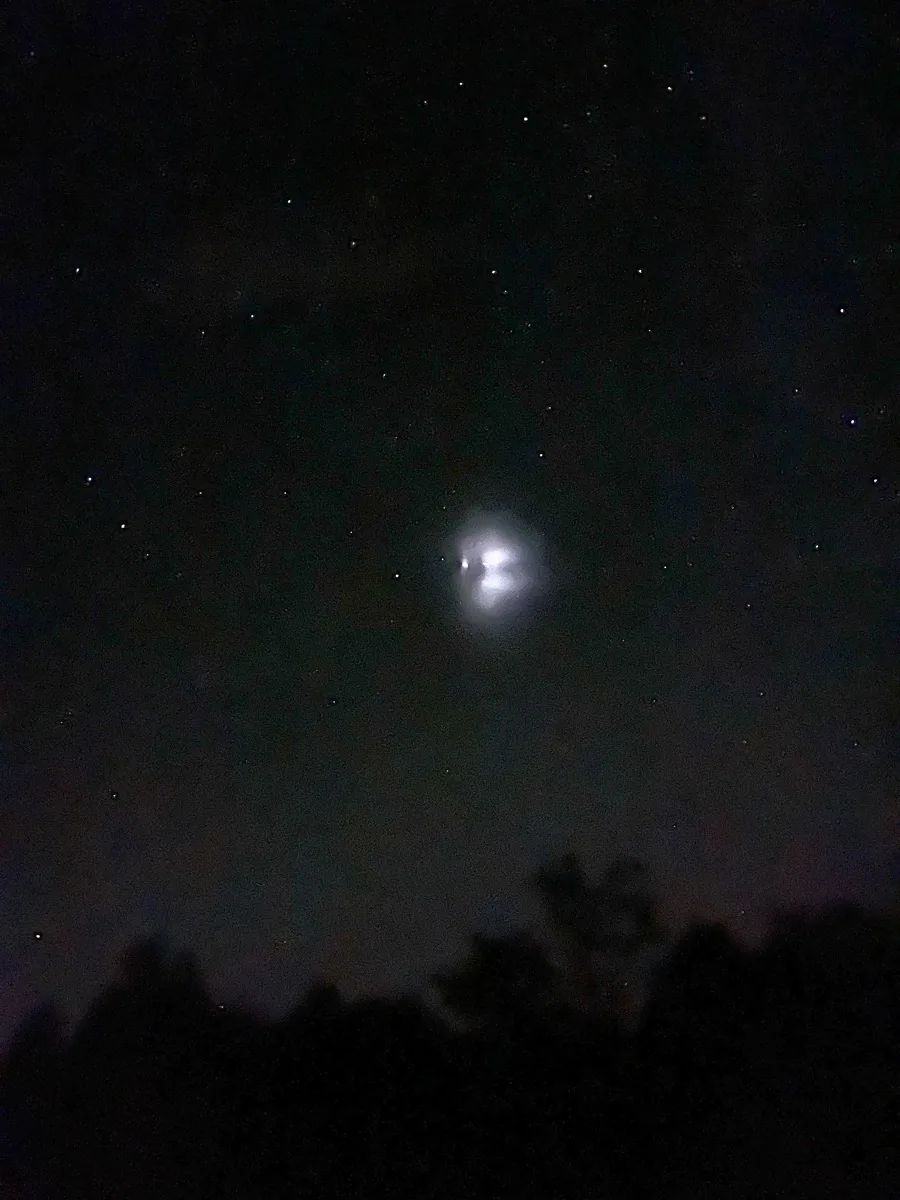
SpaceX second stage venting, seen from Arunah Hill
More Views of the Same Object
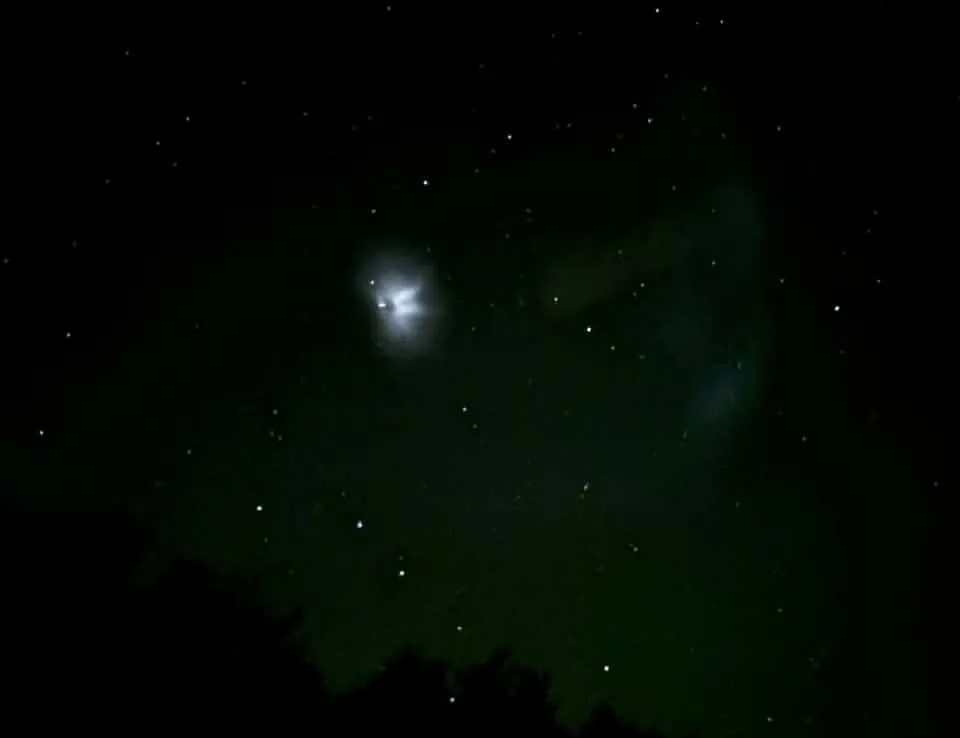
(Bob’s aside: I’m slightly disappointed. All of my attempts at rocket launches at Arunah Hill Days in the past only resulted in my rockets almost immediately disappearing, never to be seen again, and I had the faint hope that maybe one of them had finally managed to make its way back!)
Upcoming NBAS Events
- NBAS Public Event — September 12
- NBAS Public Event — October [date TBD] — details are still being finalized; check back soon or watch our events page for the confirmed date.
Upcoming Arunah Hill Events
Arunah Hill Days — September 4–5. Arunah Hill’s annual on-site gathering,with presentations, rocket launches, raffle, and of course lots of skywatching. Full details are on the Arunah Hill website.
Arunah Hill Starwatch — September 18–19. This is the annual training event for new members for Arunah Hill, going over the correct operation for the club’s telescopes and use of the facility. (If you don’t own a telescope, this might be the event for you - completing the training means that you’re entrusted with access to several quality telescopes, plus you get to know several Arunah Hill members.)