Introduction
Saturn’s system is crowded — as of NASA’s August 2026 count, the planet carries 293 confirmed moons, and there are reportedly hundreds more candidate objects still waiting on enough follow-up observations to be made official. Almost all of those are tiny, irregular, distant captures that no backyard telescope will ever resolve. But eight of Saturn’s moons are big enough and bright enough for amateur equipment, and right now one of the mid-sized ones — Dione — is doing something worth watching closely: night after night, it slips completely behind Saturn’s disk and disappears, sometimes for over an hour at a stretch. On its own, that’s not unusual — with the rings this close to edge-on, several of Saturn’s moons are crossing behind (and in front of) the disk right now. What makes Dione worth flagging is how marginal it is: some nights it clears Saturn’s edge by less than half an arcsecond, about as close to the ragged limit of being able to do this at all as it gets. A little farther out — like its neighbors Rhea and Titan — and it wouldn’t be happening this cycle.
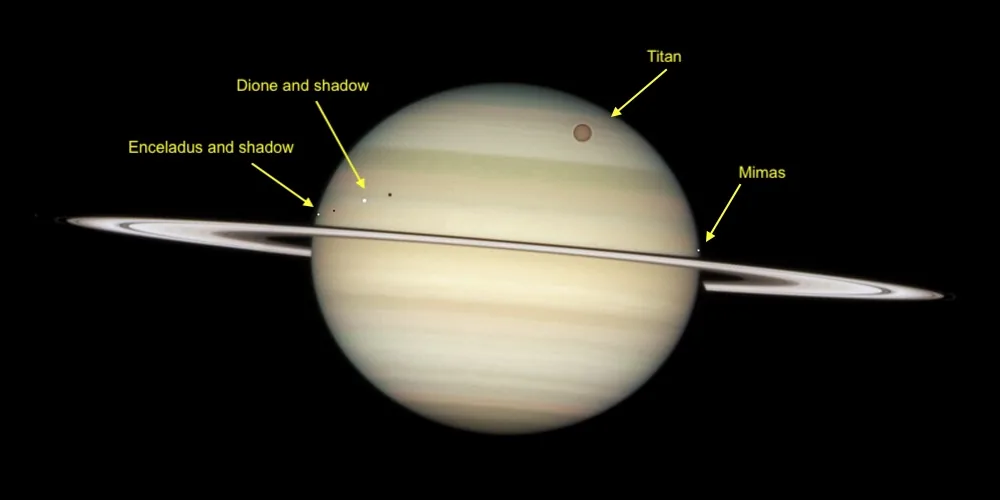
This isn’t a one-off. Saturn’s rings are still nearly edge-on to Earth, which flattens Dione’s orbit into what looks, from our vantage point, like a thin line drawn straight through the planet — and Dione recrosses that line roughly every 1.37 days. We combed the ephemeris for every one of those crossings from late August through mid-September, threw out the ones that happen in daylight or with Saturn below the horizon for North Adams, and came up with six solid opportunities — plus a can’t-miss bonus night, August 27–28, when Dione is joined by three other moons in a close, hours-long dance around Saturn’s disk.
All About Dione
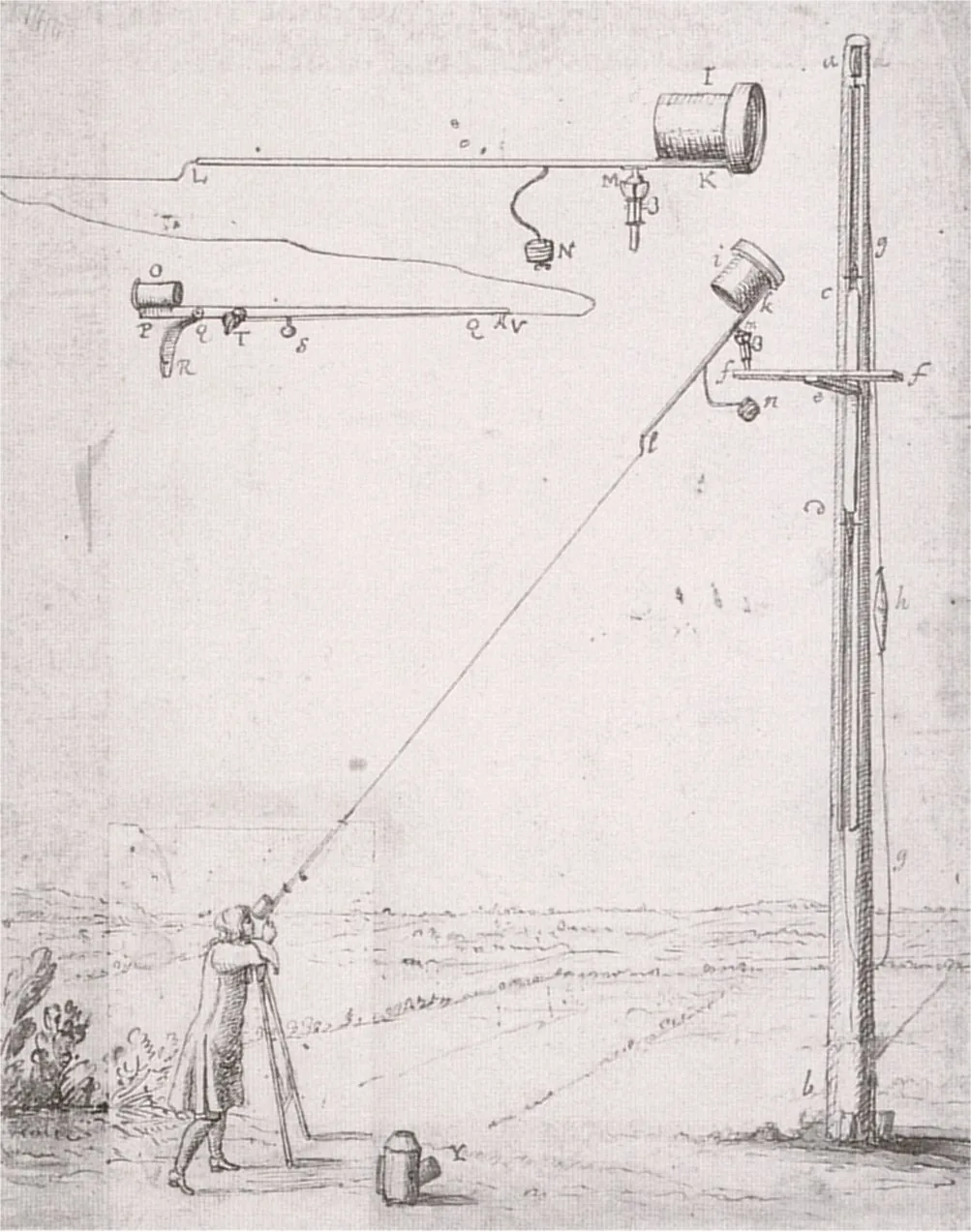
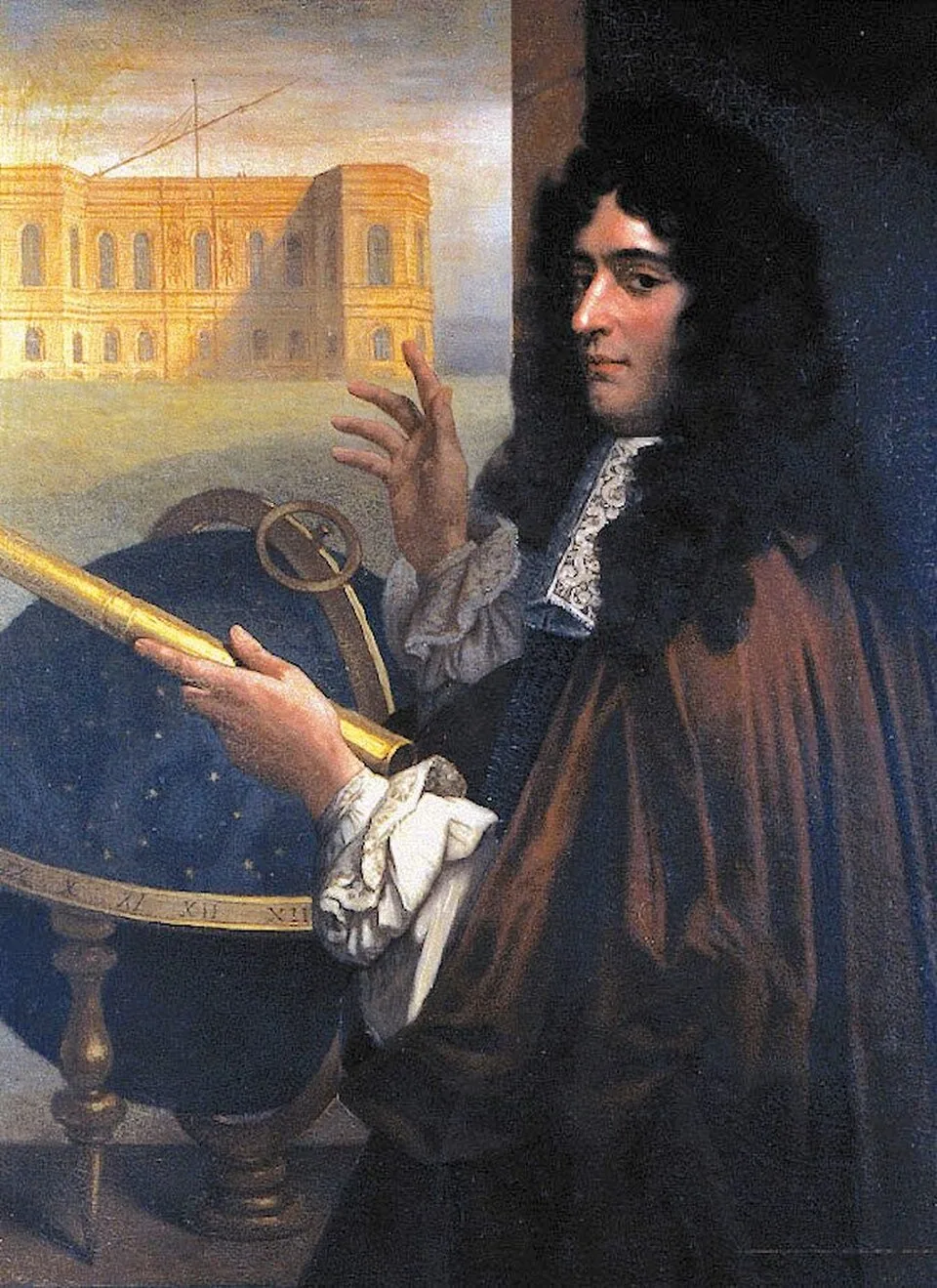
Giovanni Cassini discovered Dione on March 21, 1684, spotting it the same night as its neighbor Tethys through a 100-foot aerial telescope he set up on the grounds of the Paris Observatory — one of several huge Campani lenses (Louis XIV had ordered 86-, 100-, and 136-foot versions) that Cassini used tubeless, aligned by eye and string between the objective lens and the eyepiece. Cassini’s own observing notes from that setup survive, with sketches of how the string-and-pole alignment was rigged — proof that even a discovery this significant started life as a working field notebook. Cassini, ever the diplomat, named his four Saturnian discoveries (Tethys, Dione, Rhea, and Iapetus) Sidera Lodoicea — “the stars of Louis” — after his patron, King Louis XIV. The names we use today didn’t stick until 1847, when John Herschel (son of William, who’d discovered Mimas and Enceladus) proposed naming all of Saturn’s moons after Titans and other figures from Greek mythology. Dione is a Titaness, one of the Oceanids, and in some traditions the mother of Aphrodite.
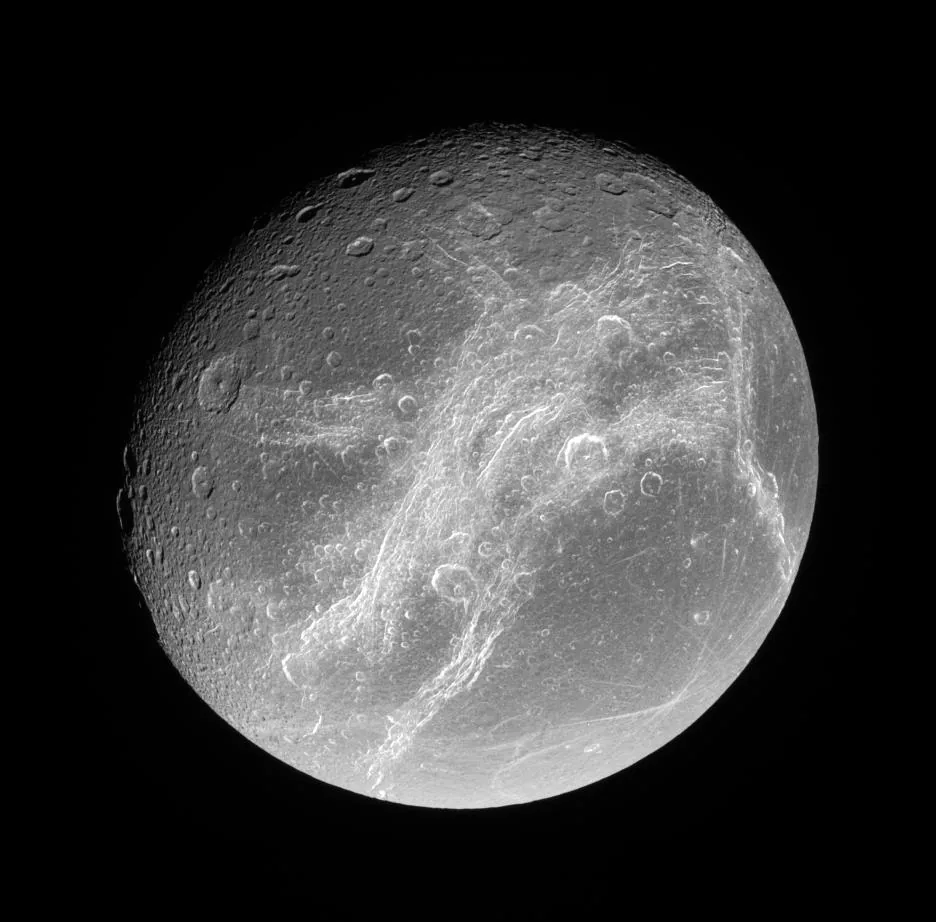
Physically, Dione sits almost exactly in the middle of Saturn’s regular moon system: about 1,123 km across, the 15th-largest moon in the solar system, orbiting once every 2.74 days at 377,400 km out — a little farther than our own Moon is from Earth. Its density (about 1.48 times that of water) points to a composition that’s maybe a third rock, with the rest ice, wrapped in a crust thick enough that Dione mostly reads as a plain, cratered ice-ball at a glance.
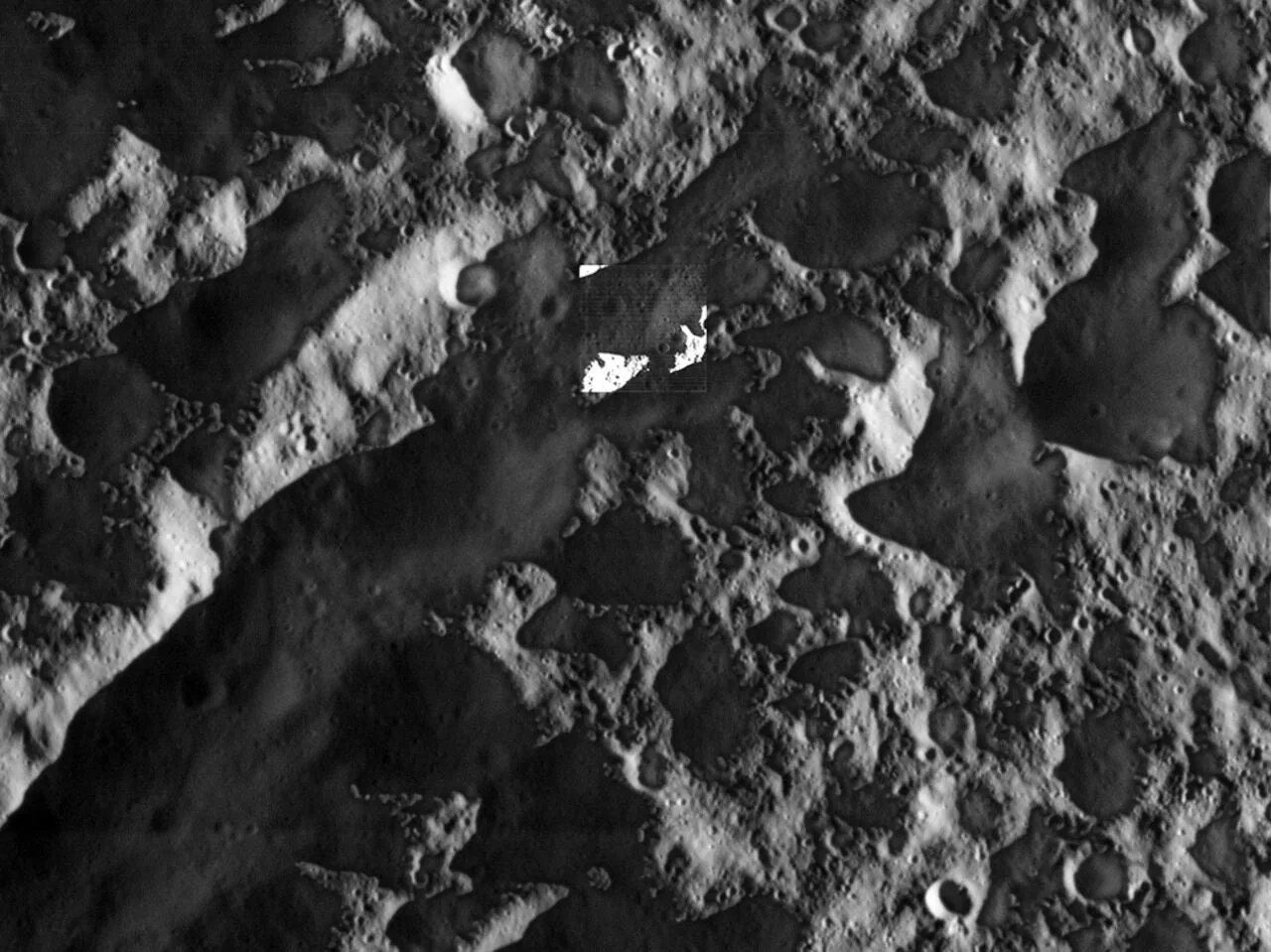
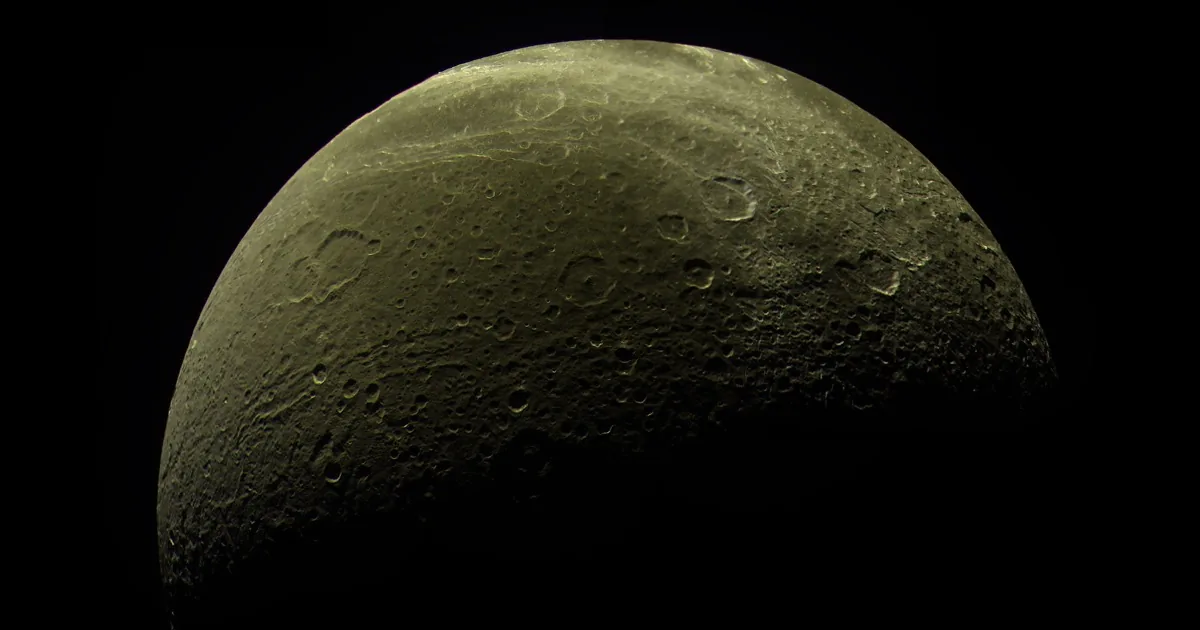
Look closer — which the Cassini probe did, on several flybys between 2005 and 2015 — and Dione gets more interesting. Its trailing hemisphere is streaked with bright, wispy lines that Voyager 1 first photographed in 1980 and couldn’t resolve; Cassini’s higher-resolution images revealed them as networks of tectonic ice cliffs, some running for hundreds of kilometers, formed as Dione’s crust fractured and cracked over billions of years. Cassini also picked up a whisper of an oxygen exosphere around the moon in 2010, and gravity and magnetometer data from later flybys suggest — much like at neighboring Enceladus — a liquid water ocean may be hiding under Dione’s icy shell.
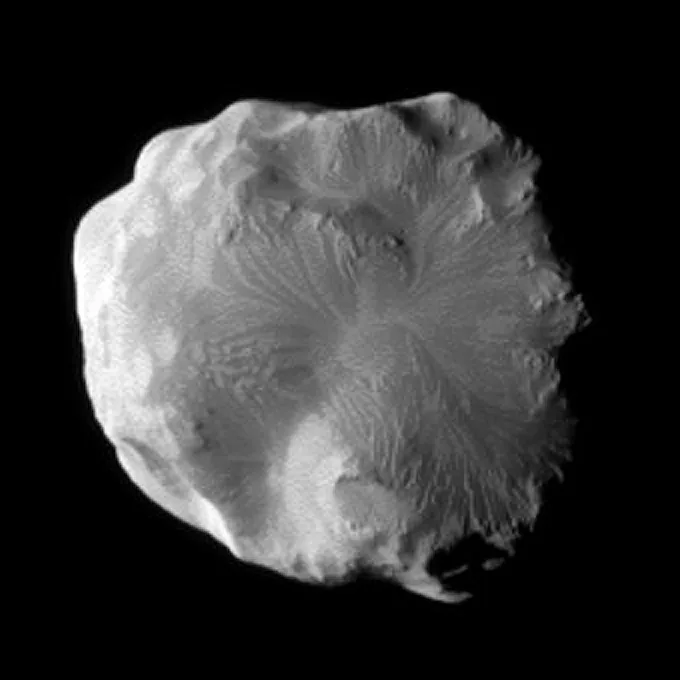
Dione isn’t traveling alone, either. Two much smaller moons, Helene and Polydeuces, share its orbit, parked at the gravitationally stable Lagrange points 60° ahead of and behind Dione. And Dione is locked in a 2:1 orbital resonance with Enceladus — for every one trip Dione makes around Saturn, Enceladus makes exactly two — a relationship that pumps up Enceladus’s orbital eccentricity and is part of what keeps that moon’s south pole geysers erupting.
Why now?
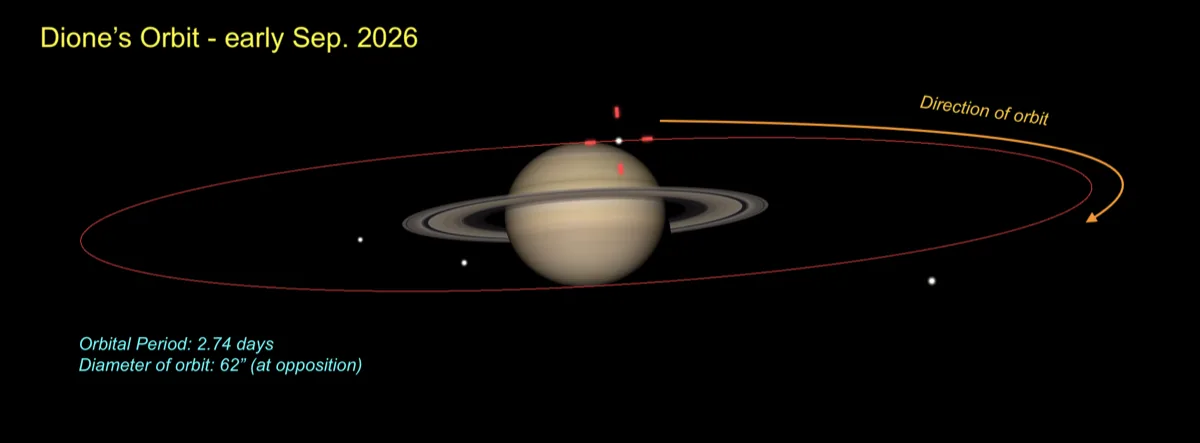
Earth crossed Saturn’s ring plane on March 23, 2025, and Saturn reached its own equinox two months later, in May 2025. That’s the geometric reset button: the ring plane, and the orbital plane of every regular moon (Dione included, since they all orbit in the ring plane), lines up edge-on to our line of sight. For a year or two on either side of that crossing, Dione’s orbit doesn’t look like an ellipse from Earth — it looks like a thin line drawn straight through Saturn. Twice per 2.74-day orbit, that line-of-sight crossing puts Dione either directly in front of the disk (a transit) or, as is the case for every event in this article, directly behind it (an occultation). That’s the mechanism — it’s tied to the ~29.5-year ring-plane cycle (roughly every 13–15 years).
Opposition is a separate, secondary factor: Saturn reaches opposition on October 4, 2026, so through August and September we’re in the run-up — Earth-Saturn distance is shrinking, making Saturn larger in the eyepiece, and it’s rising earlier each night. That doesn’t cause the grazes, but it does make this a comfortable stretch to catch them.
Best Opportunities
All times EDT. “Margin below disk” is how far under Saturn’s edge Dione actually dips at closest approach — smaller means it skims closer to the rim before disappearing.
| Date | Disappears | Reappears | Duration | Altitude | Margin below disk |
|---|---|---|---|---|---|
| Aug 17 | 3:04 AM | 3:57 AM | ~53 min | ~50° | 0.35″ |
| Aug 23 | 11:05 PM | 12:10 AM | ~65 min | 17–28° | 0.47″ |
| Aug 28 | 1:37 AM | 2:46 AM | ~69 min | 44–50° | 0.62″ |
| Sep 3 | 9:36 PM | 10:55 PM | ~80 min | 10–24° | 0.83″ |
| Sep 8 | 12:07 AM | 1:32 AM | ~85 min | 38–48° | 0.92″ |
| Sep 12 | 2:26 AM | 3:59 AM | ~93 min | 47–50° | 1.07″ |
Views
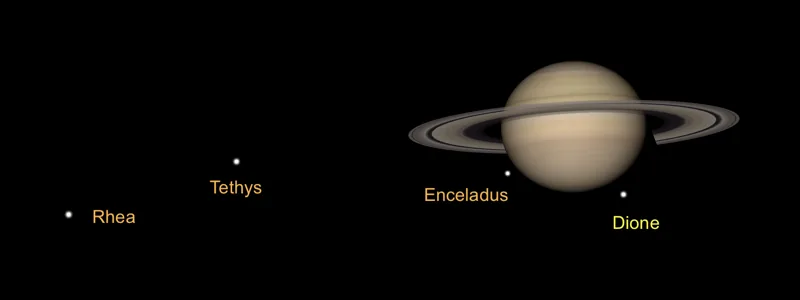
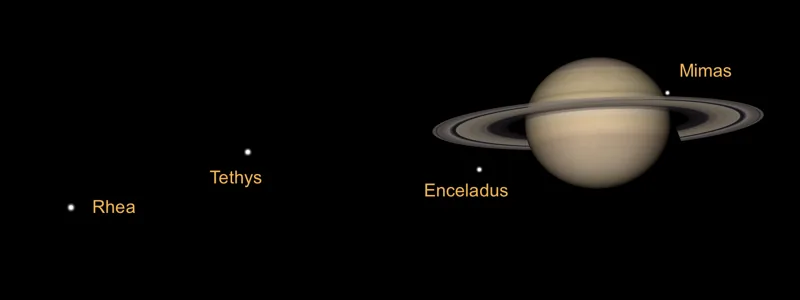
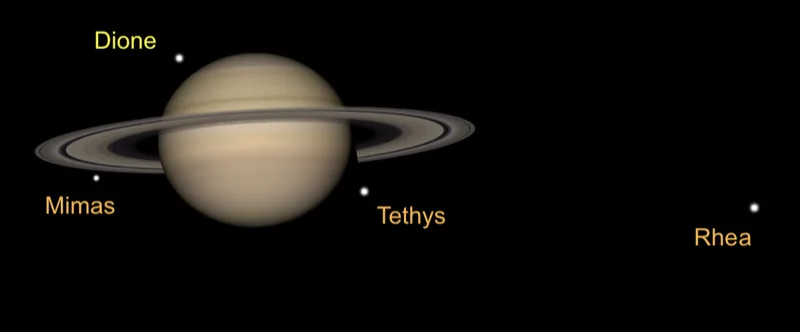
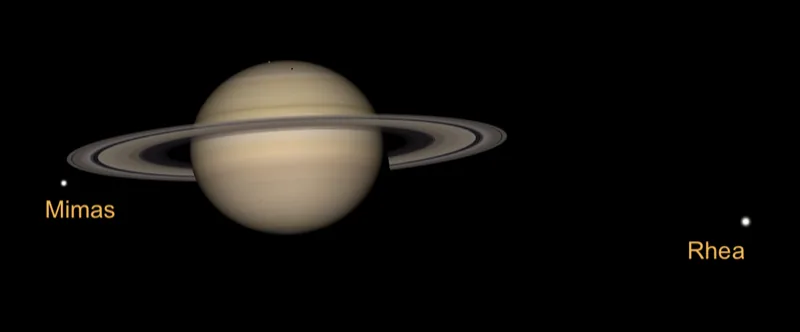
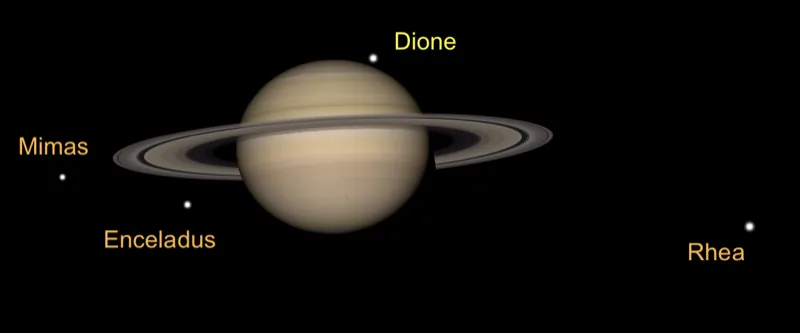
Morning of Aug. 17
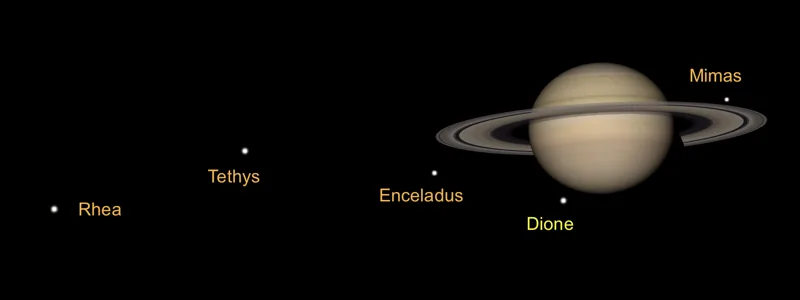
Morning of Sep. 12
How to Observe
Dione holds around magnitude 10.4 through this stretch, well within range of a 6" scope on its own — the catch isn’t Dione’s brightness, it’s Saturn’s. Saturn is close to opposition-brightness (around magnitude 0.4) this same window, and at separations under 10″ its glare will wash out a faint point of light unless you push magnification. Aim for 200–300x if your optics and the night’s seeing can support it (a 10" scope with a 17mm eyepiece and a 2x Barlow gets you there); higher power spreads Saturn’s glow out and makes the gap between planet and moon easier to hold in the eye. Don’t be shy about nudging the planet just out of the field of view if Dione is far enough from the disk to allow it — cutting the glare that way is worth more than any amount of magnification.
Because we’re talking about arcsecond-scale margins, seeing matters more than it usually does for planetary work. A night with steady, high-altitude jet stream and no shimmer will show you a clean, sharp gap right up until Dione blinks out; a turbulent night will blur that same gap into an indistinguishable smear well before the real disappearance time. If you’ve got a choice of nights from the table, check seeing forecasts, not just clear-sky ones.
A few practical notes: get set up and eyes adapted at least 15–20 minutes before the listed “Disappears” time — Dione’s approach is gradual, and watching it visibly close the last arcsecond or two against the disk is most of the fun. Use Stellarium or a similar app beforehand to confirm which faint dot actually is Dione, especially on the August 27–28 night when several moons are clustered together (see below). And log your own timings if you can — even a rough eyeball estimate of when Dione vanishes and returns is a nice way to sanity-check the predictions in this article against what your sky actually shows you.
Unfortunately, this is an observational endeavour that is not possible with “smart” scopes (intricate astrophotography rigs geared to planetary observations might be able capture it with video).
A Dance of Moons, August 27–28 — During a Lunar Eclipse!
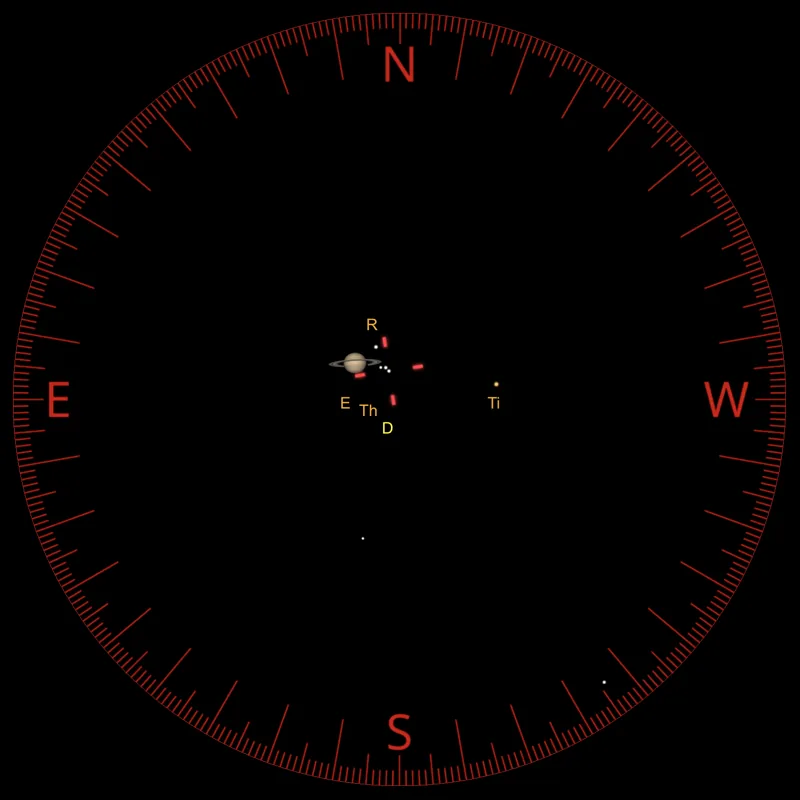
If you’re taking a break from the (/articles/2026/08/nearly-total-lunar-eclipse-aug.-27/)[nearly total lunar eclipse], over the entire night, Dione, Tethys, Enceladus, and Mimas engage in a close-in “dance” all starting on one side of Saturn, then all crossing to other side.
Dance of the Moons
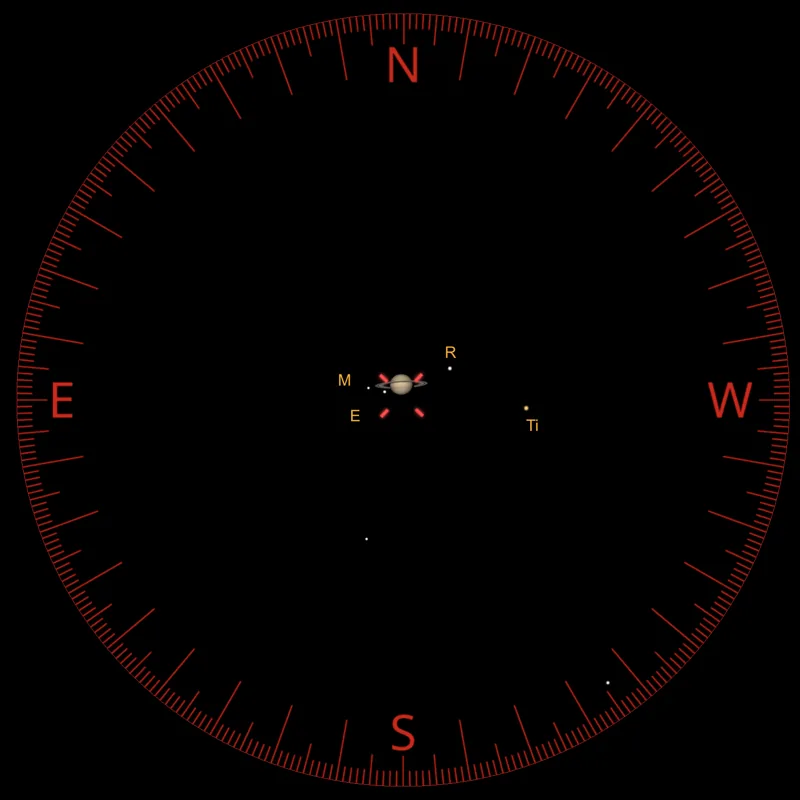
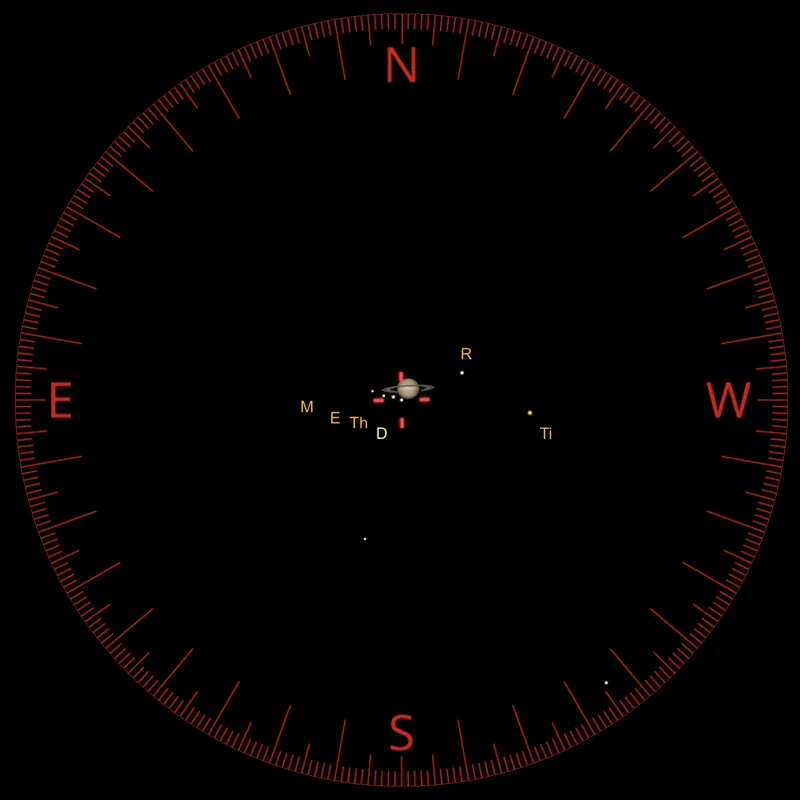
| ID | Moon | Des. | Mag. | Period | Diam. (km) | Max elong. from Saturn | Rank | Discovered |
|---|---|---|---|---|---|---|---|---|
| M | Mimas | I | 12.9 | 0.94 d | 396 | ~30″ | 23rd | Herschel 1789 |
| E | Enceladus | II | 11.9 | 1.37 d | 504 | ~38″ | 19th | Herschel 1789 |
| Th | Tethys | III | 10.2 | 1.89 d | 1062 | ~47″ | 16th | Cassini 1684 |
| D | Dione | IV | 10.4 | 2.74 d | 1123 | ~60″ | 15th | Cassini 1684 |
| R | Rhea | V | 9.7 | 4.52 d | 1527 | ~84″ | 9th | Cassini 1672 |
| Ti | Titan | VI | 8.3 | 15.95 d | 5149 | ~194″ | 2nd | Huygens 1655 |
“Max elong. from Saturn” is roughly how far each moon swings from Saturn’s center as seen from Earth right now (~8.6 AU out). At the ring plane’s current tilt, that elongation only translates into an actual line-of-sight crossing for the four innermost moons on this list. Mimas, Enceladus, and Tethys orbit close enough that they’re still crossing directly in front of Saturn’s disk (a transit) as well as behind it (an occultation) — and on nights when two of them line up together, a mutual event, one moon passing in front of or behind the other. Dione, farther out, sits right at the edge of that same geometry: its closest approach barely clips Saturn’s disk, which is why its margins in the table above are so tight — and why, at this tilt, Dione gets occultations only, no transits. Rhea and Titan orbit too far out for any of it right now; even with the rings this close to edge-on, their closest approach clears Saturn’s disk by several arcseconds, so neither one is grazing, occulting, or transiting this cycle. They’re shown here for scale and because they share the field of view, not because they’re candidates for the table above.
Closing
What makes this run worth catching isn’t just that Dione keeps ducking behind Saturn — it’s that the geometry making it possible is uncommon. Saturn’s rings only sit this close to edge-on once every 13 to 15 years, and once they open back up, a run of grazes and transits like this won’t line up again until the 2030s. If you make it outside for even one of the dates above, you’re watching something most people never will — and if clouds or a full schedule get in the way this time, there’s no need to panic: the rings stay this tight for a year or two yet, so Dione and its neighbors will keep up the show well past this particular list of dates.
Caught one of these events? Send us your images or notes — we’ll feature the best in a follow-up round-up. And keep an eye on the (/series/planet-watch/)[Planet Watch] series for what Saturn’s moons get up to next.