
Making the Best of this Year’s Summer Skies
We haven’t had the best weather this summer. With ground-soaking thunderstorms, smoke from wildfires, and high humidity, getting out and doing imaging has been challenging!
Jeffrey the eQuinox 2
The eQuinox 2 is the largest smart scope in “The Fleet” (114mm aperture) with a 34’ x 47’ FOV. So, it’s capable of looking at smaller objects than the Seestars.
Two Northern Galaxies
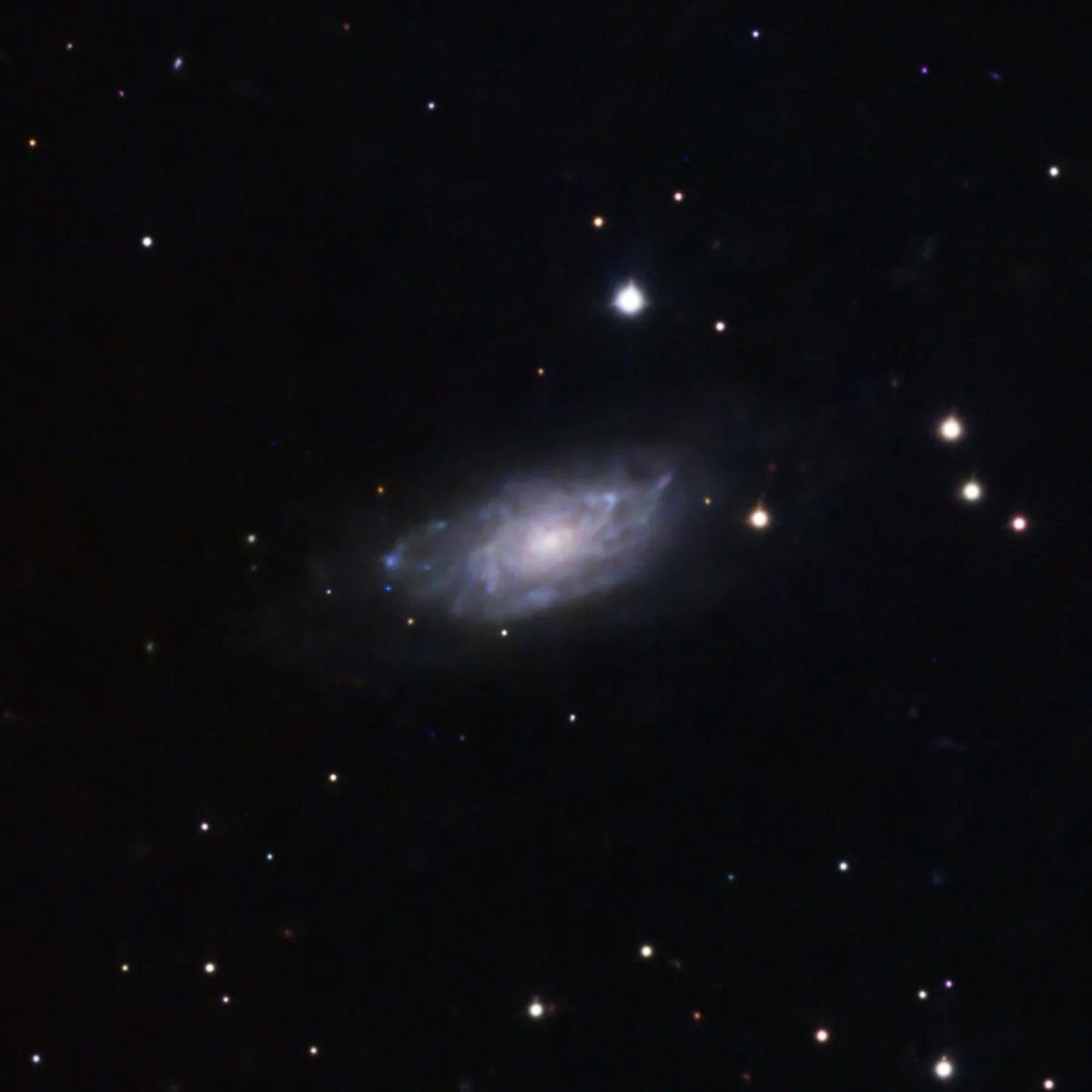
NGC 6015 in Draco
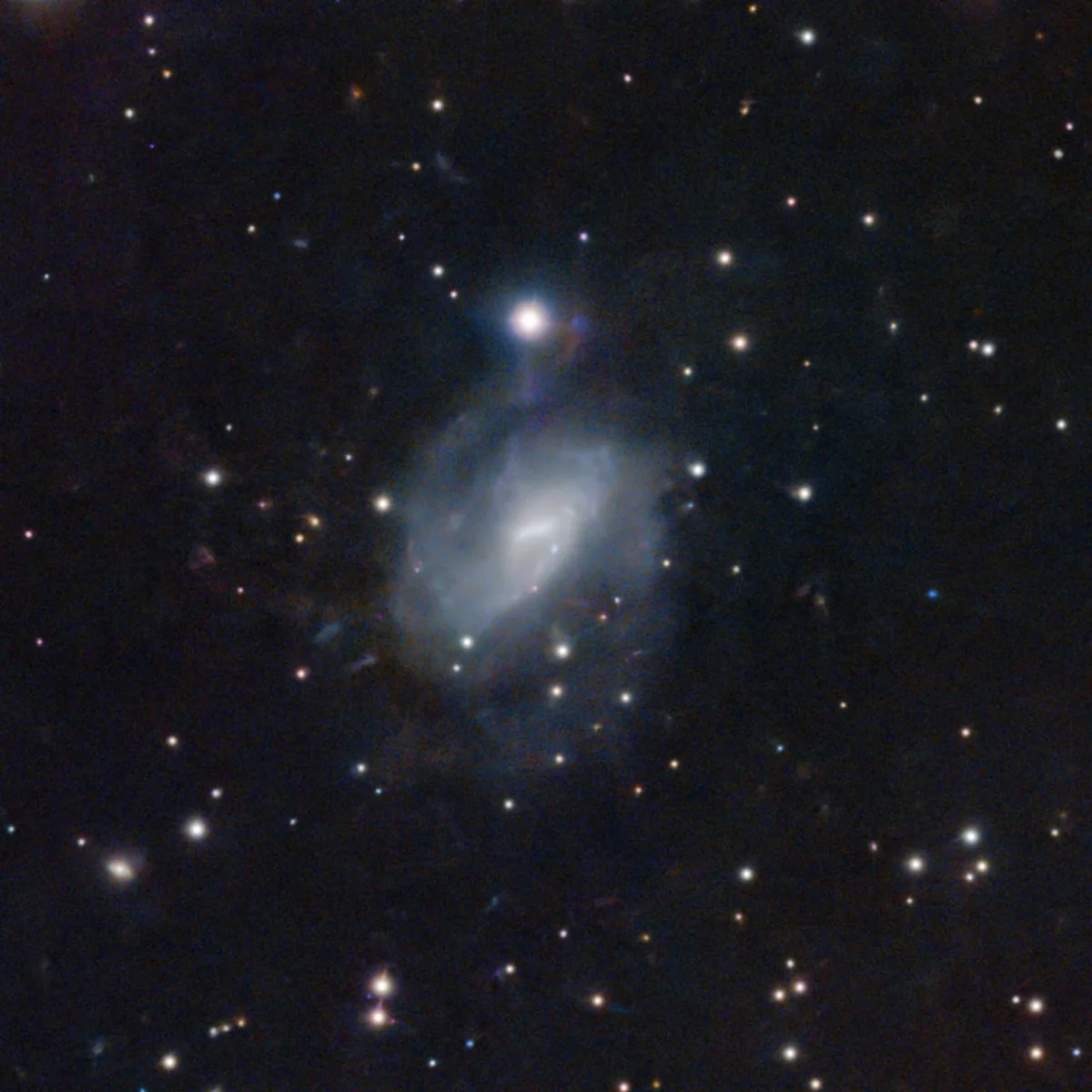
NGC 6140 in Cepheus
Another anonymous galaxy - this time in Cepheus - a constellation not known for having many bright galaxies. Here the challenge is showing any structure because it’s relatively small (2.1’x1.8’) but not so small that the eQuinox 2 can’t capture any detail.
Here two spiral arms extend from the central bar (it’s type SBc) and there’s some mottling within the disk, and apparently over the central nucleus. It’s just a little further out from the previous galaxy - about 58 Mly.
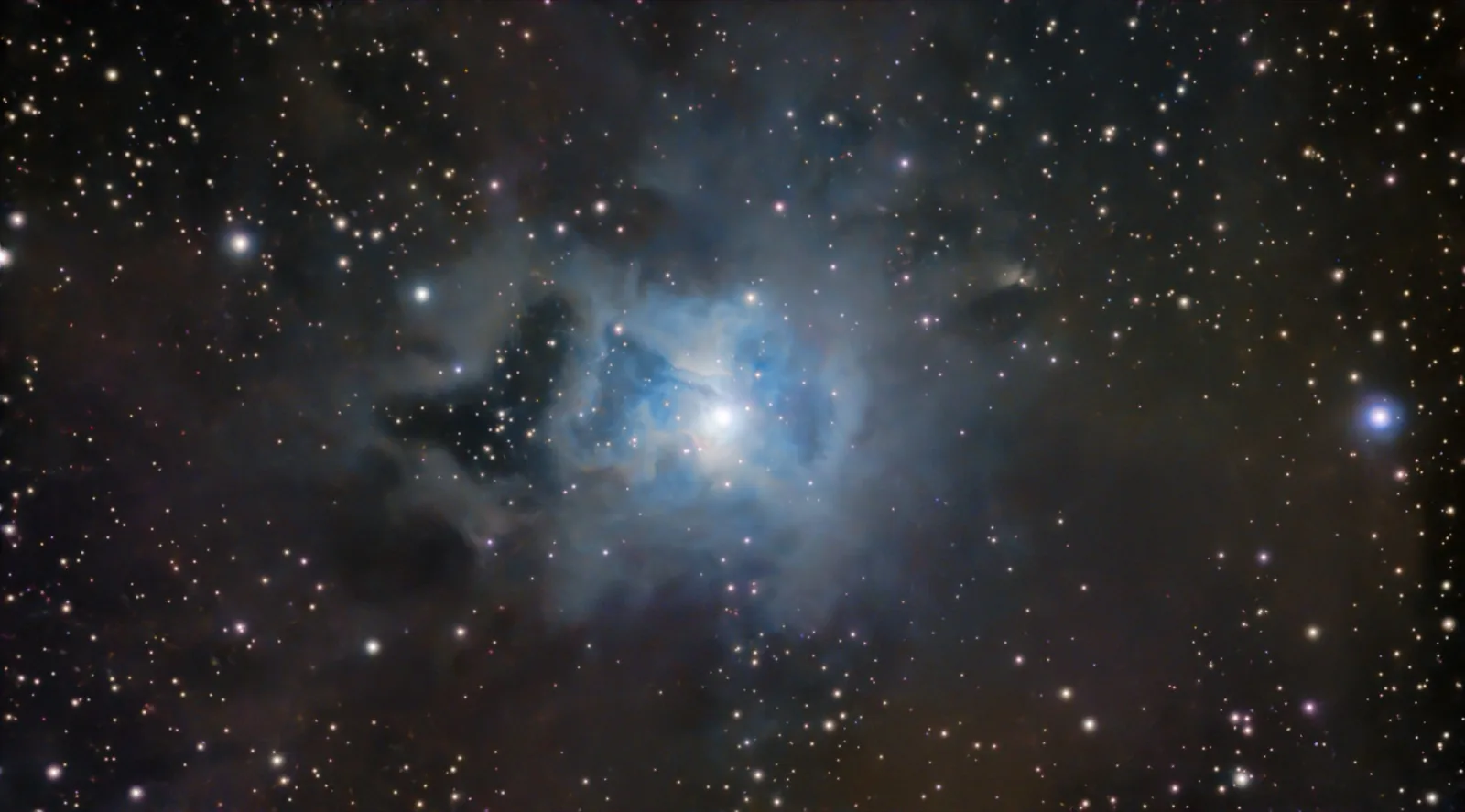
Caldwell 4: The Iris Nebula
This is an object I’ve been meaning to get back to: it’s genuinely beautiful, and one where increasing aperture (or imaging exposure time) just rewards you with more and more detail. Although this is a reflection nebula, the nebulosity is sclupted by star formation: this nebula (also cataloged as NGC 7023) hosts an embedded young star cluster, with young stellar objects hidden in the surrounding clouds of material - invisible to us but visible at infrared wavelengths.
The central stars are illuminating the nebula but they’re not hot enough to cause the bright H II regions we see in other emission nebulae - at least not in full force: longer exposures do show hints of Hα emission on the walls of the dust clouds. Those stars are able to carve out the surrounding molecular cloud giving us the mix of voids and defined clouds.
Ellen and Elusippe: the Seestar S50s
This year I’ve been obsessed with getting long exposures (several of the images presented here are from that effort). To make a bit of a “cheat” I bought a second Seestar S50 (Ellen) with the idea that they’d both observe the same target at the same time, thus doubling the exposure times.
I’m very pleased with the results - it’s making it possible to get a few hours of time on a target on one night.
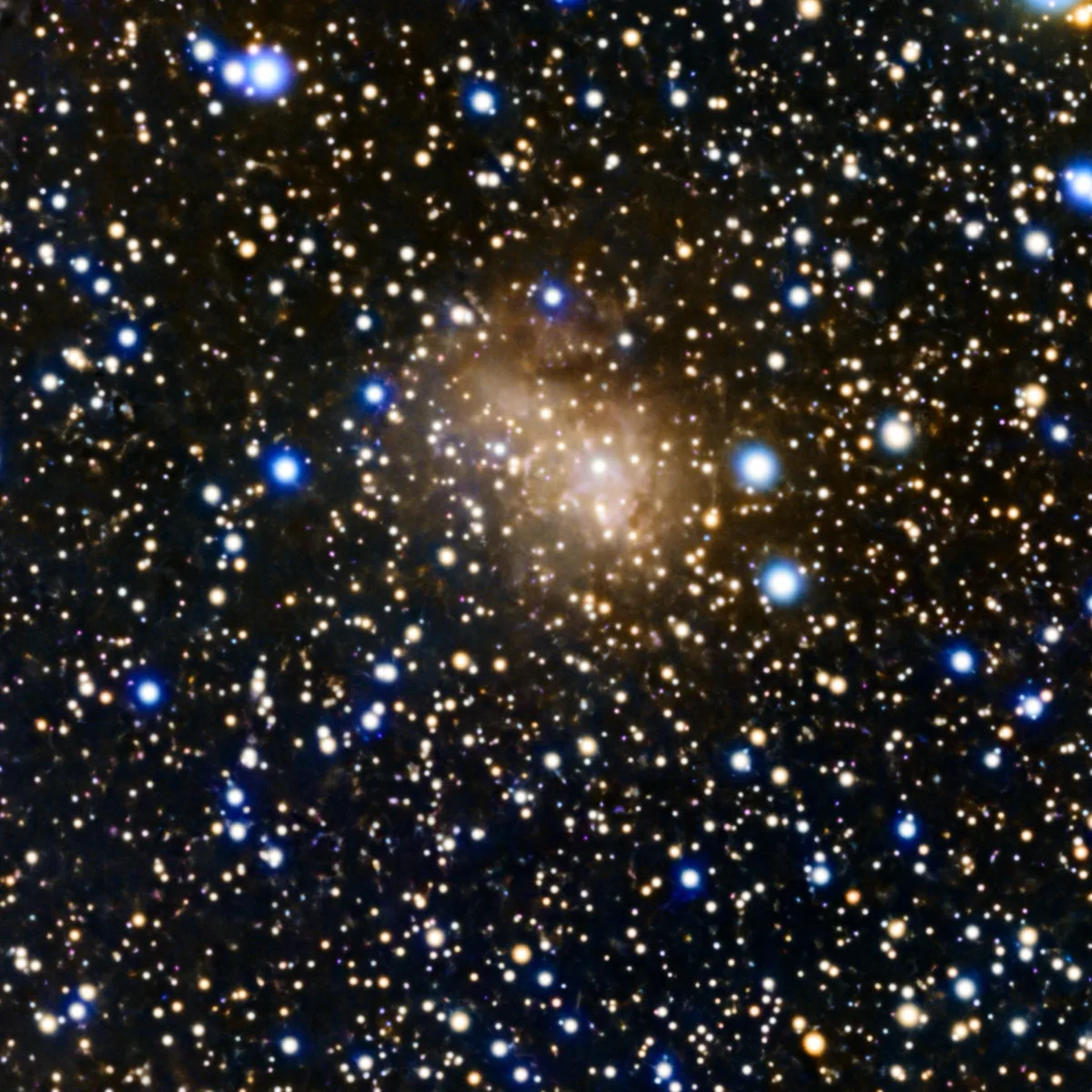
IC 10: The Starburst Galaxy
272 minutes = 4h 32m - a new record for me in terms of long exposures (there are other Seestar owners who show images taken over 20+ hours over several nights - I clearly have a long way to go).
This seemingly unremarkable galaxy was an important target because despite its inconvenient location (it’s only 3° from the plane of the Milky Way so there’s a lot of galactic obscuration in the way - which is also why it seems much redder than most galaxies), it’s actually very close to us (only 2.6 Mly) and has an interesting location within our Local Group, and perhaps also a relationship with the Andromeda Galaxy.
(Andromeda’s “Family” is the topic of an upcoming A Wider View article - stay tuned!)
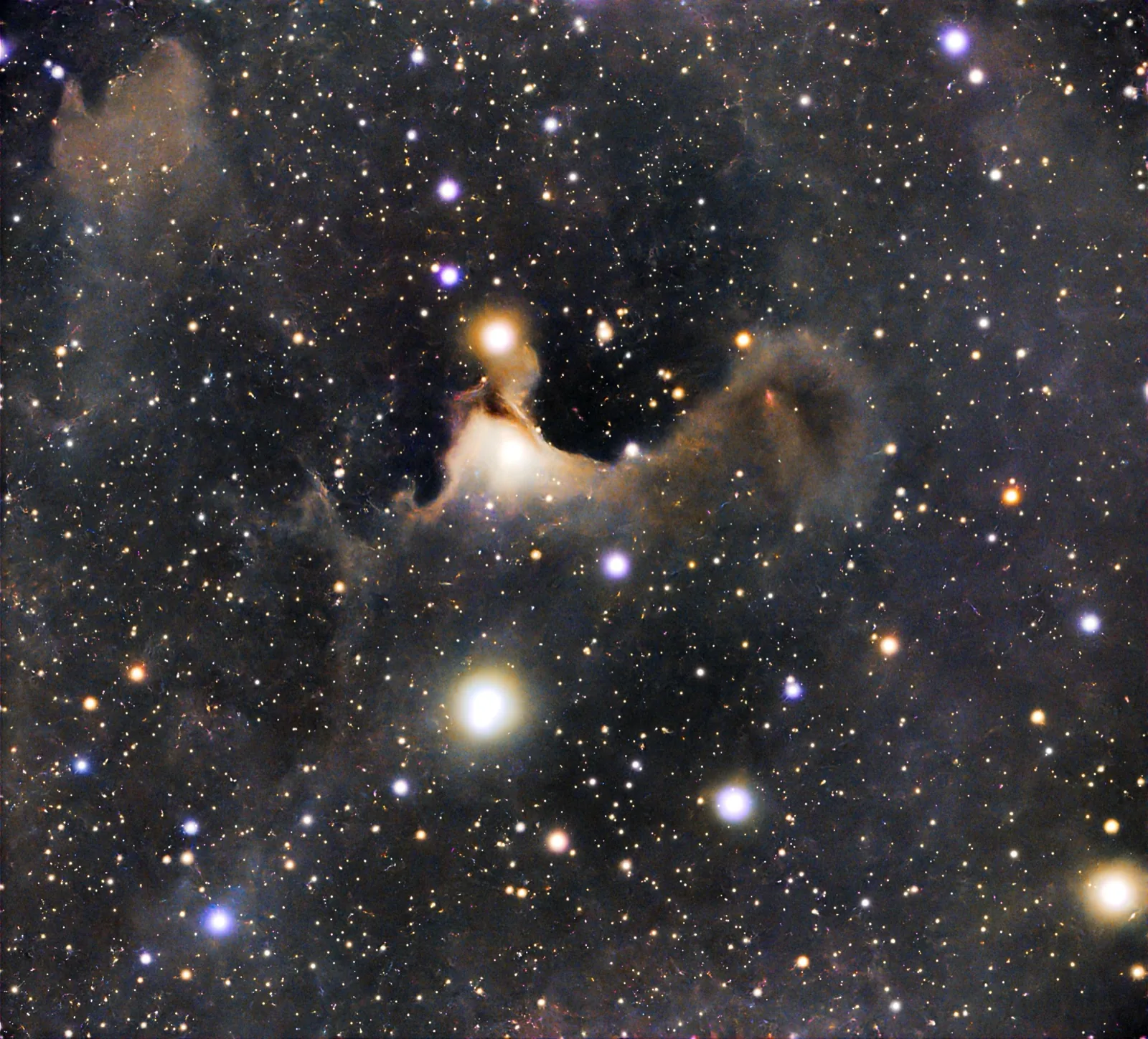
The Ghosts of Cepheus
Another sneak-peek preview!
This is one of my favorite objects because it’s so weird. It’s in a part of the sky rife with “integrated flux nebulosity” clouds that don’t glow because of a nearby hot star, but reflect the light of the entire galactic plane, because these clouds are high above the disk. This one, though, is a bit different: here we’re seeing the glow of stars inside a Bok globule, illuminating it from within.
This nebula is one of several that will be featured in another A Wider View article in October on “Spooky Astronomy”.
Ernestine the Seestar S30
The smallest member of “The Fleet” - Ernestine - is a Seestar S30. It tends to be tasked with objects of larger angular size - generally over 20'.
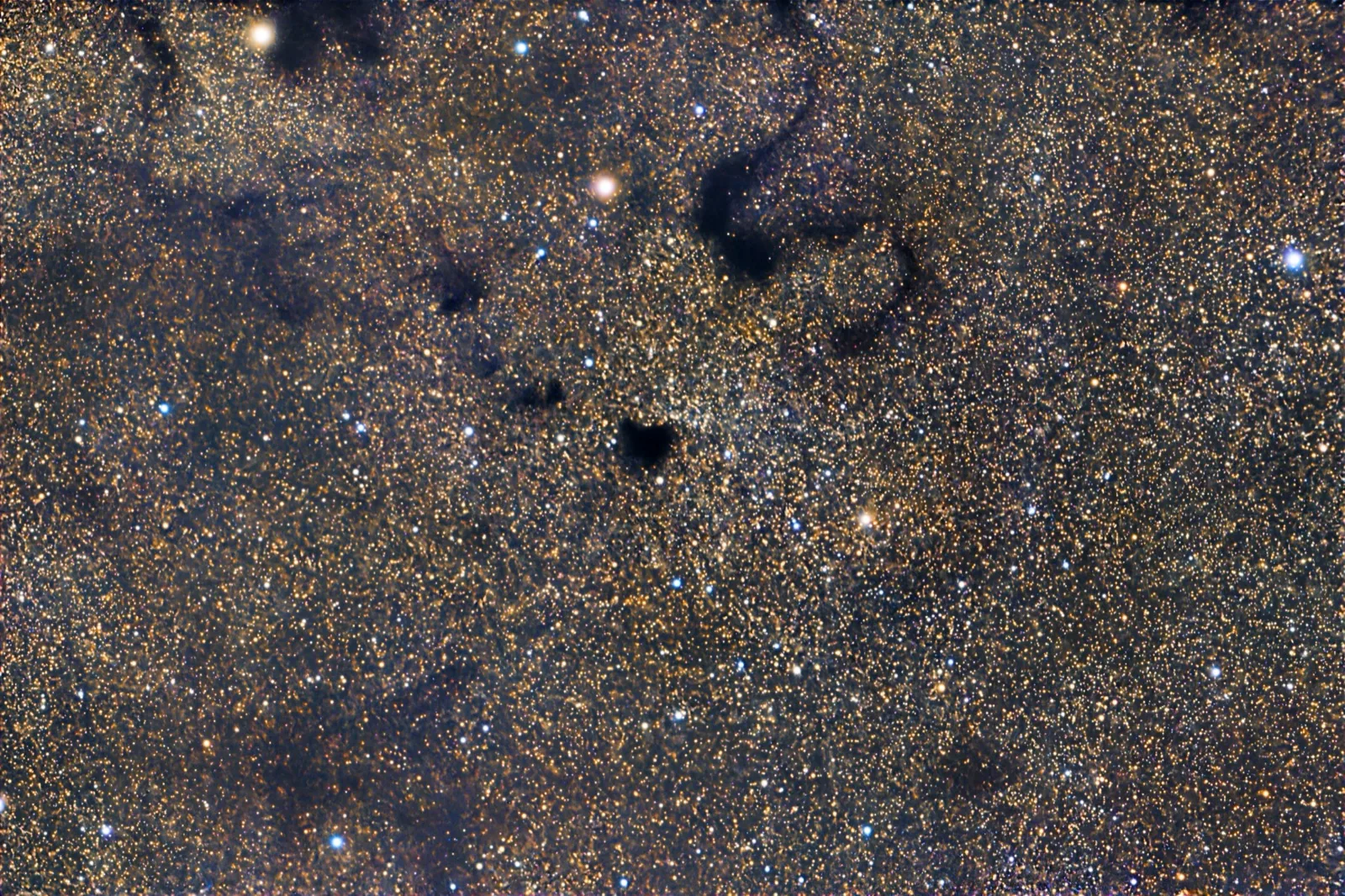
The Ink Spot and Snake Dark Nebulas
I think that dark nebulae tend to be overlooked and forgotten by many people and that’s a missed opportunity. Especially the ones that are set against the background Milky Way, showing a great contrast. These molecular clouds are so dense they block out the light of stars behind them; I also like how many have very elaborate structures.
This complex is somewhat nearby - only about 400-600 ly, but with the Milky Way stars in the background densely filling the entire frame. It’s about 0.5 ly across with a total mass of about twice the Sun’s.
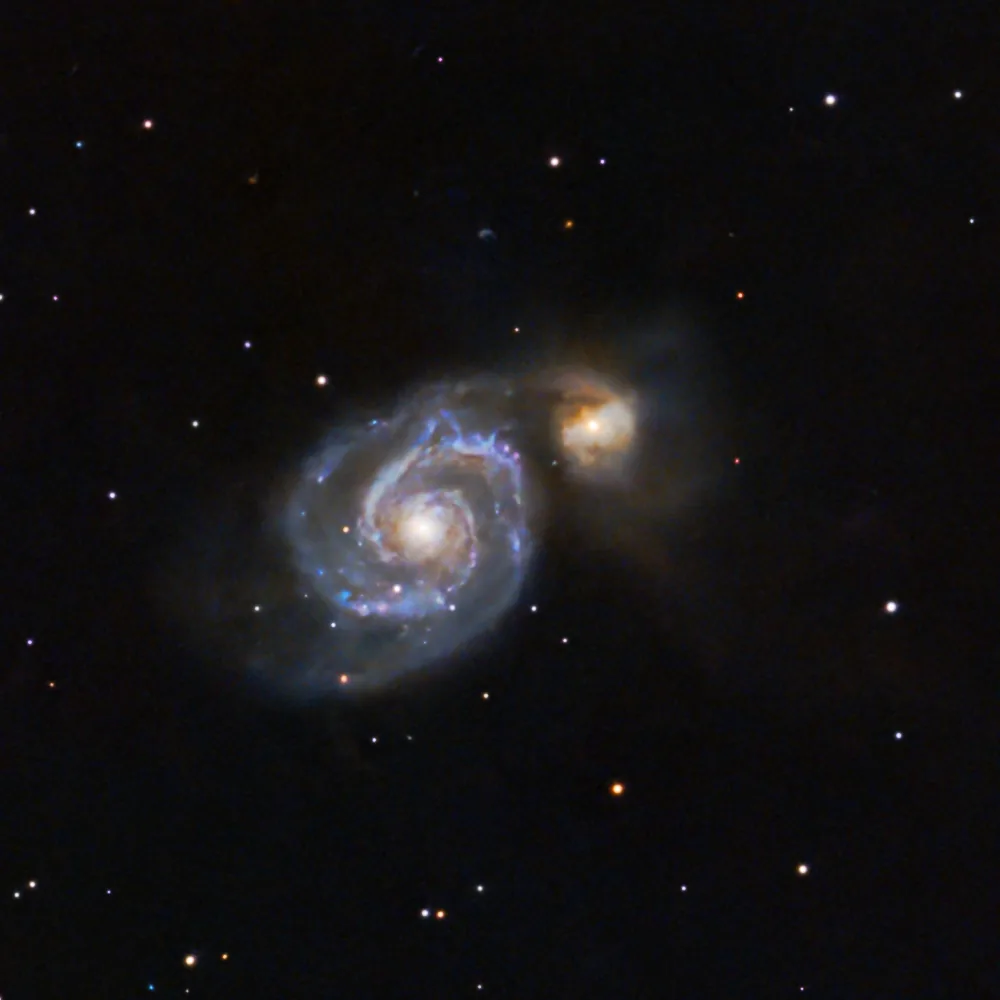
Messier 51: The Whirlpool Galaxy
This interacting pair is on just about everyone’s target list, and I’ve observed it a few times with all the telescopes in the fleet. This time, mostly for comparison, it was Ernestine’s turn.
What I love is not only seeing the effects of galaxy interaction, but also the contrast in color: The spiral arms of M 51 are blue with star formation (and blowing up the image shows amazing detail and structure of the spiral arms and dust lanes) with the older, redder stellar population seen in NGC 5195.
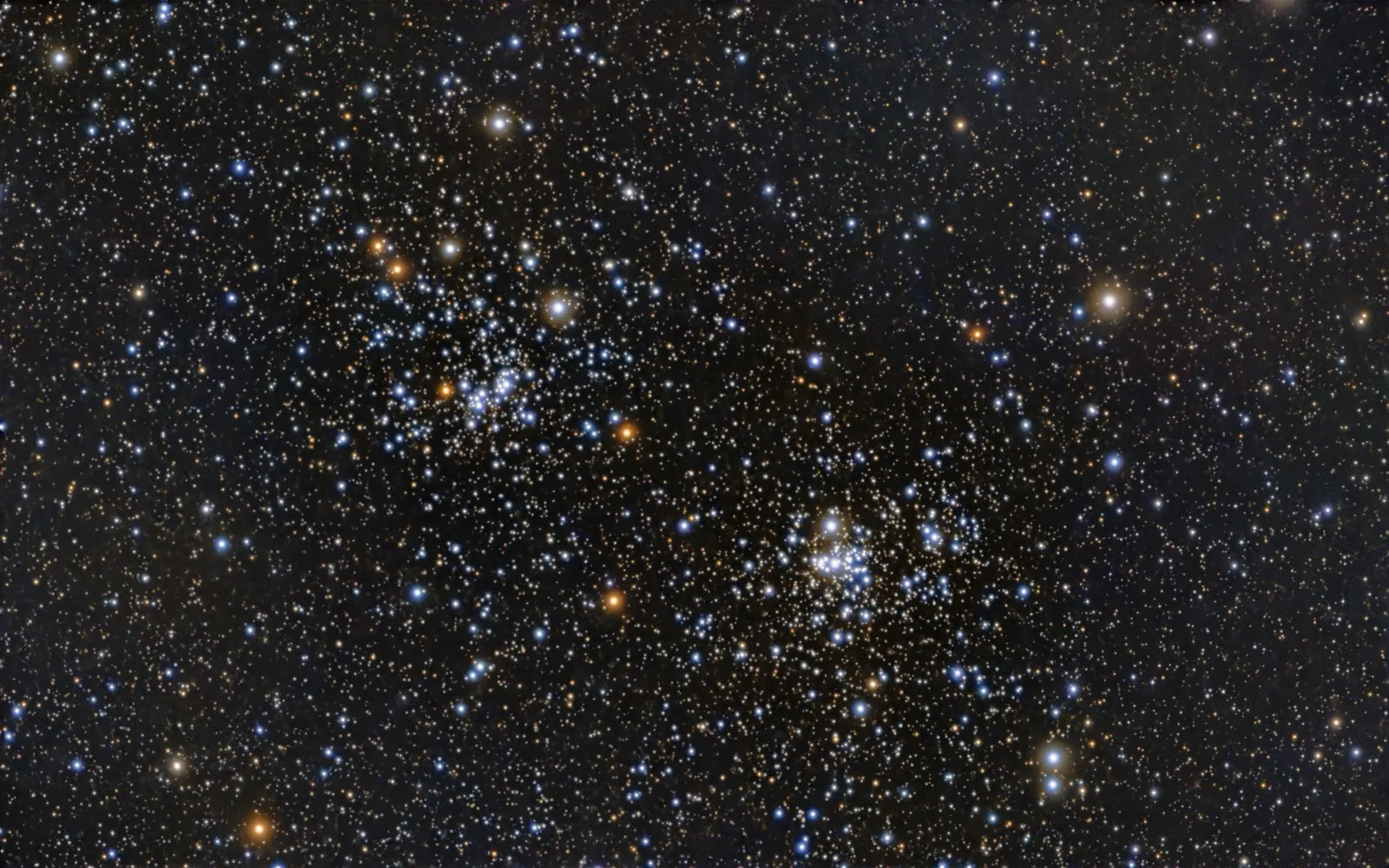
The Perseus Double Cluster
The Double Cluster is one of the few objects in the sky that delights no matter how you observe it: even hunting for it with the naked eye looking for that dim patch midway between the ‘W’ of Cassiopeia and the constellation of Perseus is a fun exercise.
The two clusters: NGC 869 and NGC 884 are not as “together” as one might think - they’re actually at slightly different distances (a few hundred light years separate them). But that doesn’t mean they don’t share a history - they’re both part of the Perseus OB 1 association and have similar ages.
But even slightly separated, each other’s presence would be overwhelming from an observer in one of the clusters looking at the other: it’d take up several degrees in the sky with the brightest stars rivaling the brightness of Jupiter or Venus.
This galaxy in Draco doesn’t have a nickname; most people will have never heard of it. It’s medium-sized: 5.8’x2.6’ which makes it a good fit for the eQuinox 2. It’s 55.1 Mly away - about the same distance as the Virgo Cluster - but in an entirely different direction.
The wide spiral arms (it’s type SAc - similar to M 33 in Triangulum) show definte star-forming activity along one spiral arm and some warping, but this might be intrinsic to the galaxy and not tidal distortion from a nearby galaxy, since it appears to be somewhat isolated.