The Sea Goat
Capricornus is one of the “water” constellations, along with Aquarius, Pisces, Piscis Austrinus, and Cetus. This entire stretch of autumn sky is sometimes called simply “the Sea” – the same watery theme carries into neighboring Eridanus (the river) and even nearby Delphinus (the dolphin). One traditional explanation is that these constellations rose together in the evening sky during ancient Mesopotamia’s rainy season, making the grouping a practical observation as much as a mythological one.
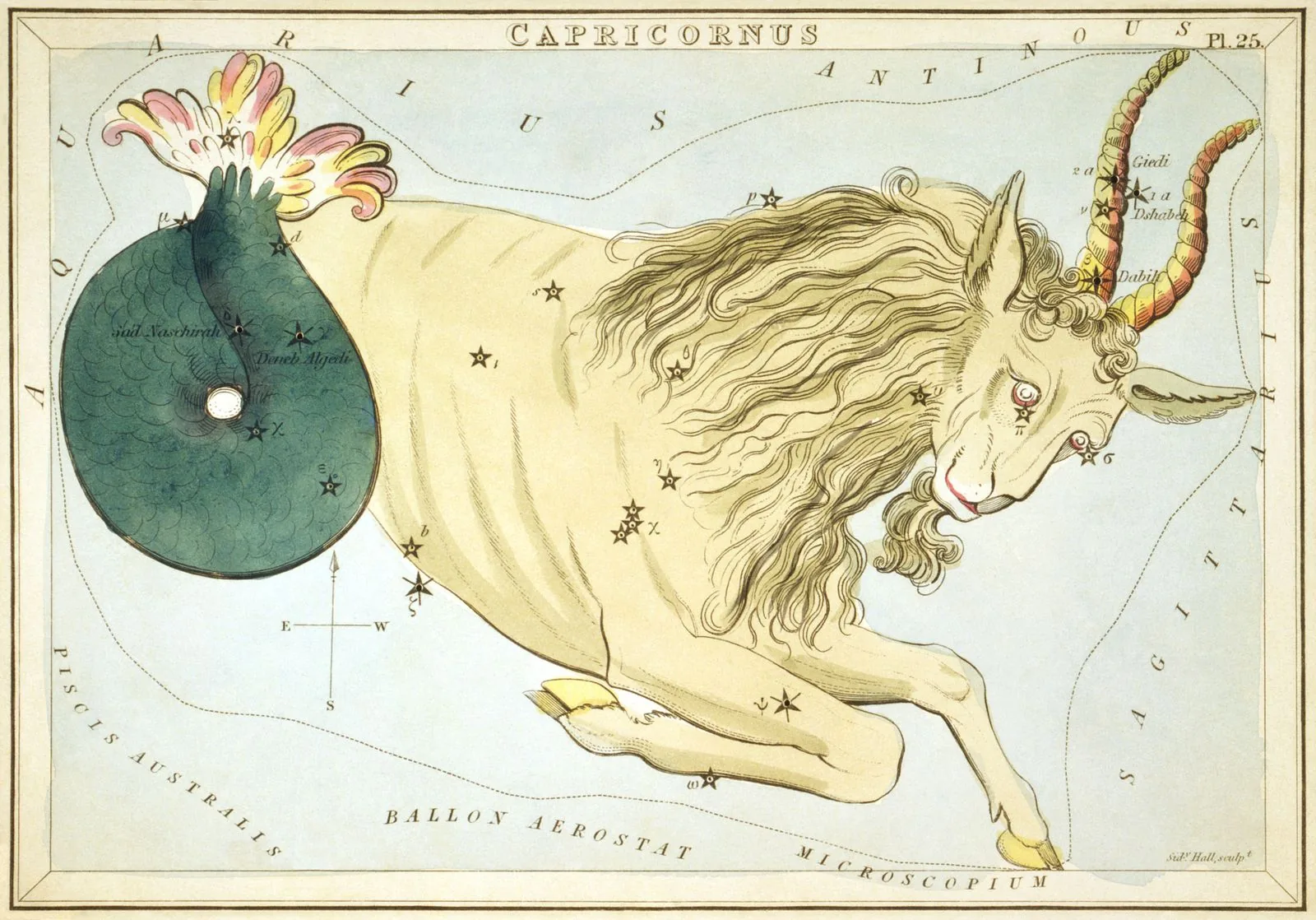

The smallest of the constellations of the Zodiac in area, it’s also one of the dimmest. It also has an interesting history: unlike many of the other constellations listed by Ptolemy in the Almagest, it was first recorded in millennia-old Sumerian cylinders depicting a sea goat demon. This association continued with the Babylonians where it was likewise included in the MUL.APIN (𒀯𒀳) an early star catalog dating from about 1000 BCE surviving in two tablets. From there, it was picked up by the Greeks, who associated it with the god Pan, in goat form. The story goes that during the gods’ war with the monstrous giant Typhon, Pan tried to escape by diving into a river and transforming into a fish – but the change caught him only halfway, leaving him with a fish’s tail grafted onto a goat’s upper body. Zeus, grateful for Pan’s help against Typhon, later placed him in the sky in that same half-and-half form: the sea-goat. But unlike so many of the other Greek constellations, it has no real association with the Olympian gods and goddesses – Pan, for all his fame, was never one of the twelve.
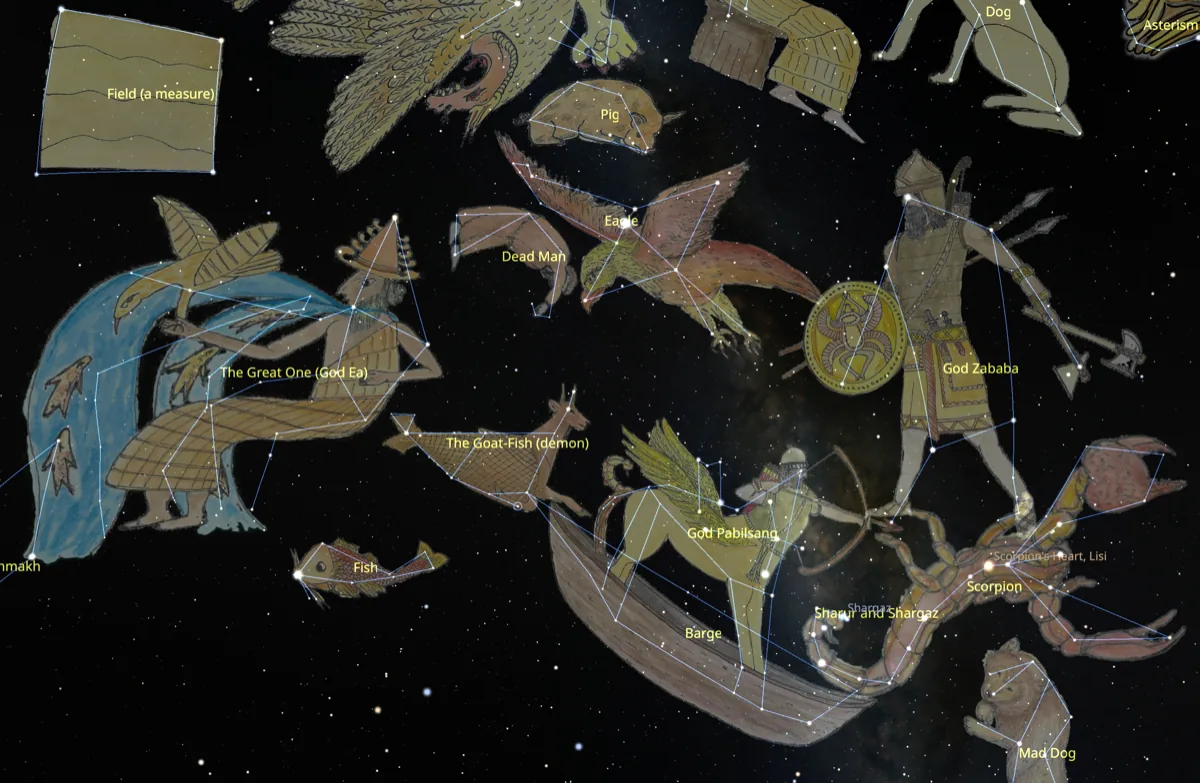
This rendition of the Babylonian constellations (in the Fall sky) show marked similarities with some of the constellations we recognize today, as well as some clear differences. Sagittarius as an archer, and of course Scorpius, resemble modern renditions. Aquila is an eagle, Piscis Austrinus is a fish, the Great Square of Pegasus is a field; but while others like Aquarius and Ophiuchus are marked out with roughly the same stars, they have clearly Babylonian mythological associations.
Map of Capricornus
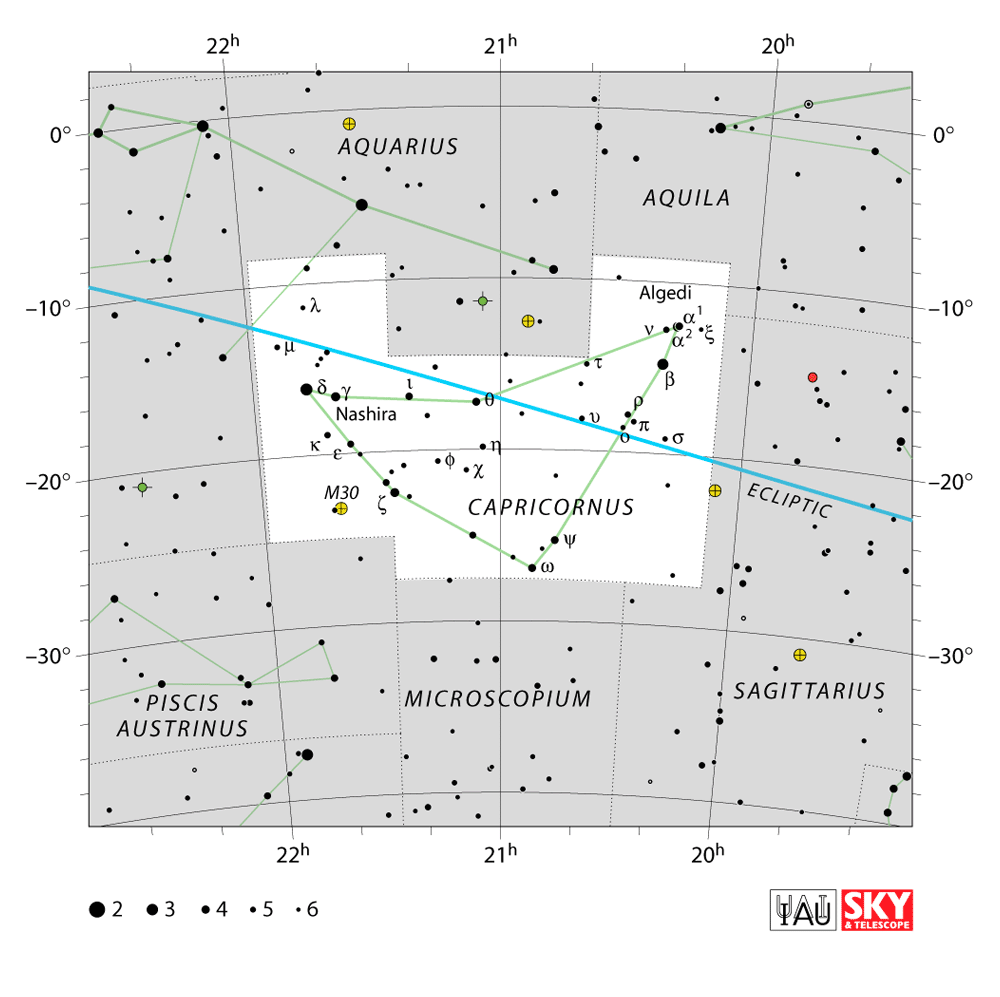
Over two thousand years ago, the location of the Sun at the Winter Solstice was in Capricornus (it’s been in Sagittarius since 130 CE). As that’s the point where the Sun is at its most southern declination of -23°, this is why this latitude on the Earth is still referred to as the “Tropic of Capricorn”.
Its brightest star (in another example of a constellation’s bright star not being the same as the “alpha” star) is Deneb Algedi (δ Capricorni, mag 2.9), marking the tail of the goat (Deneb, loosely translated means “tail”, and it shows up in the names of several stars: Deneb Kaitos (β Ceti), Denebola (β Leonis), and of course Deneb in Cygnus). It was near this star in 1846 that the German astronomer Johann Galle discovered Neptune (although with the current “official” boundaries of the constellations established by the IAU, it was in Aquarius).
For deep-sky observing, Capricornus is almost a desert compared to neighboring Sagittarius to the west and
Aquarius to the north and east. It has only one reasonably bright object - the globular cluster Messier 30;
almost everything else is faint and mostly suitable for imagers.
Quality Over Quantity
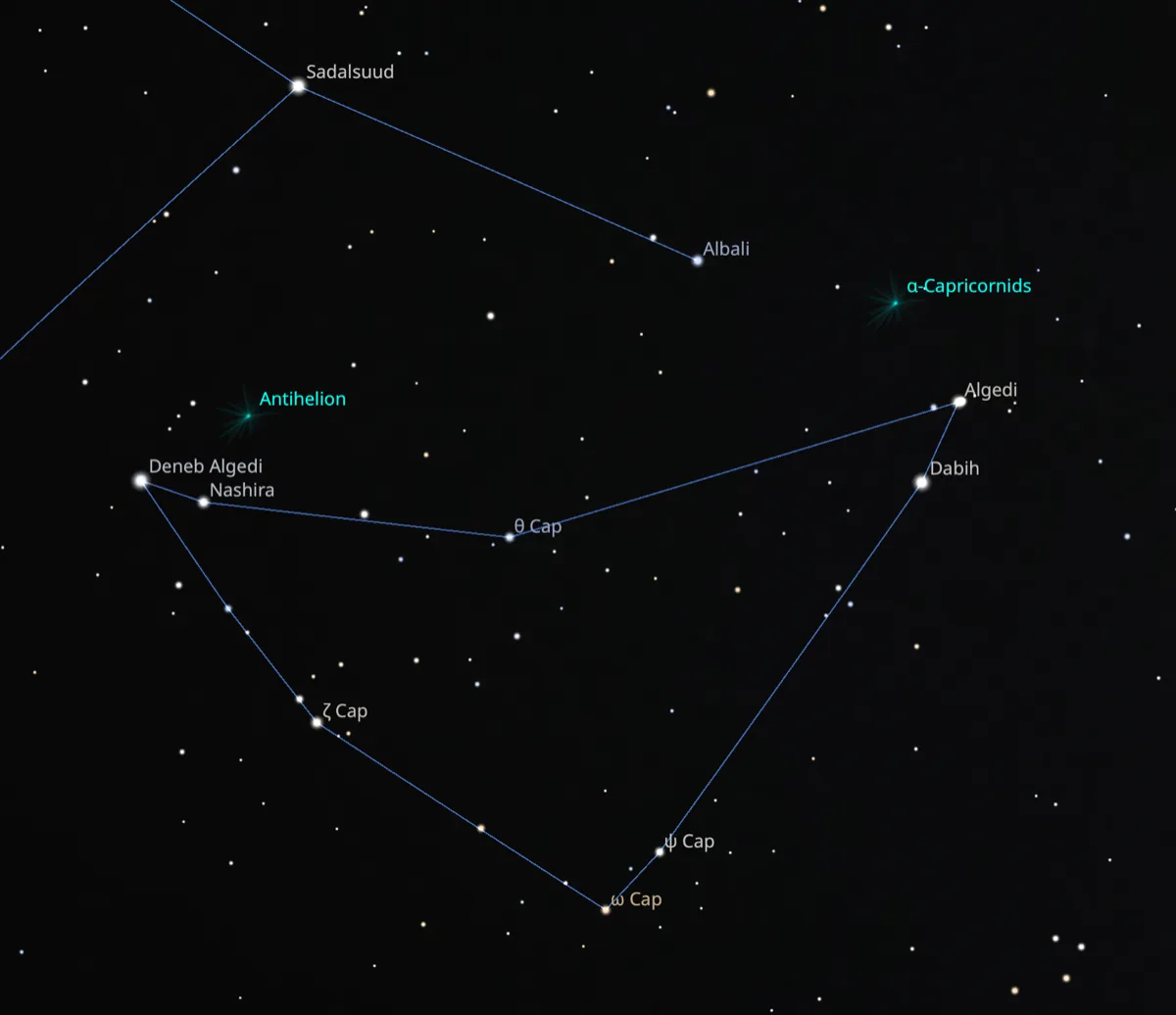
Capricornus also contributes its own event to the summer sky. The Alpha Capricornids are active from early July through mid-August, peaking around July 30-31, with a radiant sitting almost right on top of Algedi itself. It’s not a shower to watch for sheer numbers – the rate rarely tops five meteors an hour, one of the lowest of any named shower – but what it lacks in quantity it makes up for in quality. The Alpha Capricornids are known for an unusually high proportion of bright, slow-moving fireballs, the kind that draw a genuine “whoa” even from people who weren’t watching for it. It rewards patience rather than persistence: fewer meteors, but the ones that do show up tend to be worth the wait.
The parent comet is 169P/NEAT – but roughly 4,000 years ago, about half of it broke apart into dust. That debris trail is slowly precessing into closer alignment with Earth’s orbit, and while the shower isn’t particularly active now, orbital modeling predicts that sometime between 2220 and 2420 – roughly two centuries out – the Alpha Capricornids could become one of the strongest annual meteor showers there is.
Quick Reference: Objects of Interest
| Object | Type | Equipment |
|---|---|---|
| M 30 | Globular Cluster | Binoculars/Small Telescope |
| NGC 6907 | Spiral Galaxy | Small/Medium Telescope |
| Palomar 12 | Globular Cluster | Imaging Telescope |
| Hickson 87 | Compact Galaxy Group | Imaging Telescope |
| IC 5078 | Spiral Galaxy | Medium/Imaging Telescope |
| NGC 6903 | Lenticular Galaxy | Medium/Imaging Telescope |
| Algedi/Dabih (Alpha/Beta Cap) | Wide optical doubles | Naked Eye/Binoculars |
| Alpha Capricornids | Meteor Shower | Naked Eye |
Caught Mid-Collapse
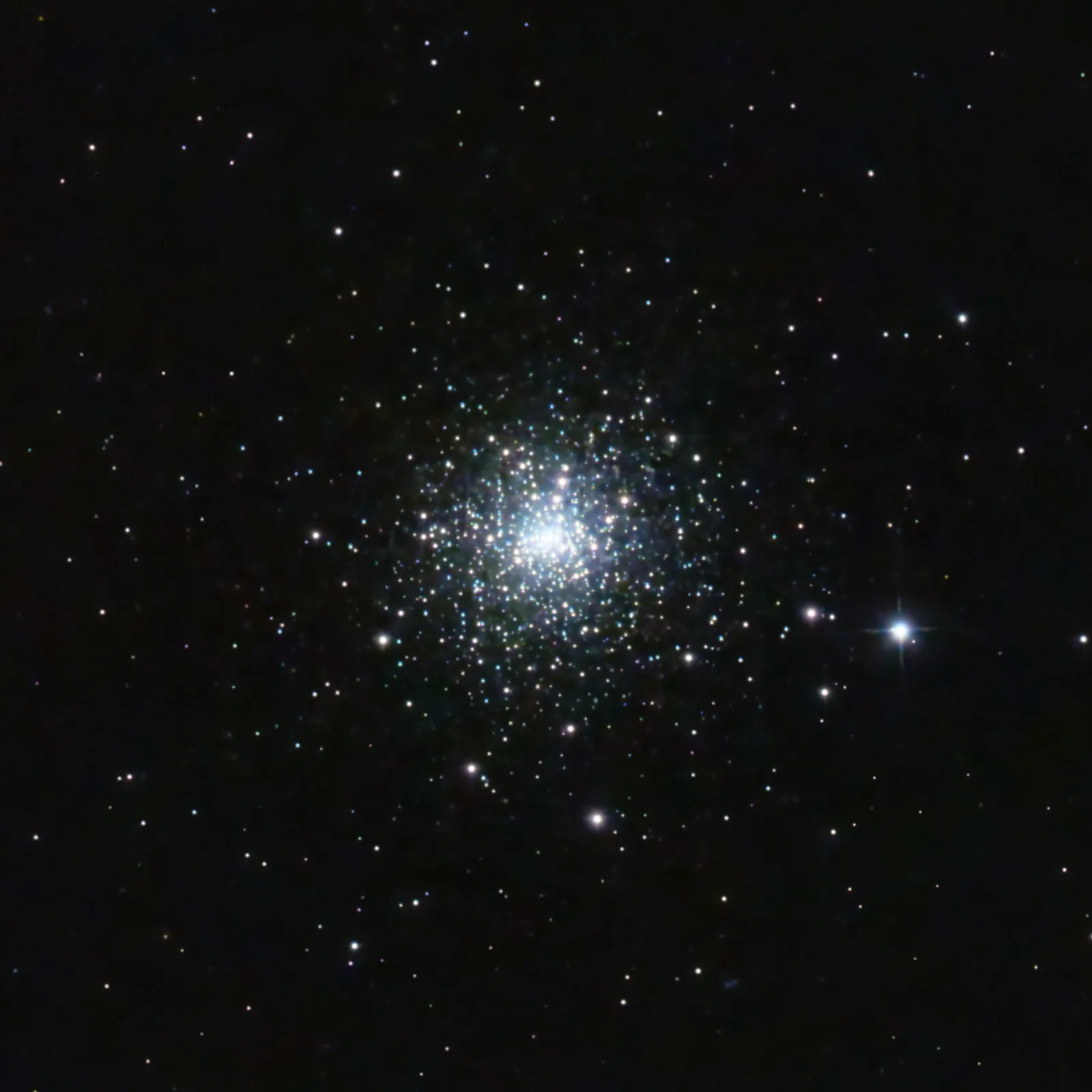
At 12.9 billion years old, M 30 is one of the most ancient globular clusters known – and it’s already lived through a real crisis. When the cluster was about 9.8 billion years old (roughly 3 billion years ago), its core underwent core collapse: a runaway process where gravitational interactions between stars pack the innermost region into an extraordinarily dense knot, today around a million solar masses per cubic parsec, among the densest stellar environments in the Milky Way. That event left a fingerprint. M 30’s blue stragglers – stars that look artificially young for their position on the cluster’s color-magnitude diagram, actually the product of stellar collisions or mergers – split cleanly into two populations by how close they sit to the core: one is a leftover burst from the collapse itself, the other keeps forming slowly and continuously through ordinary binary star evolution. It’s a rare case of a cluster’s stars recording its own dynamical history.
Giant Behemoth
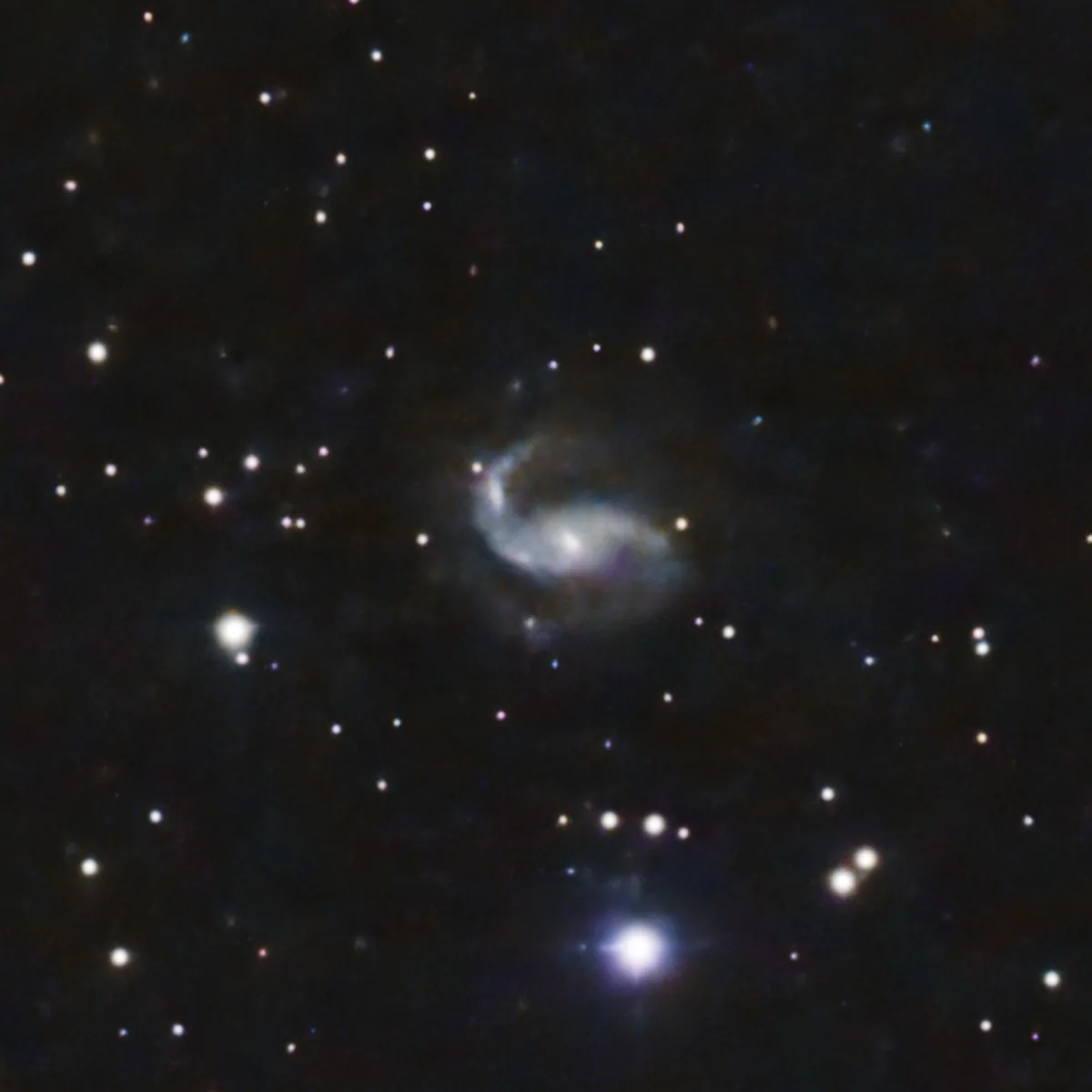
Despite looking like a faint smudge in a small telescope – Capricornus, after all, is a genuinely dim patch of sky – NGC 6907 is a legitimate giant. This barred, two-armed spiral sits around 120-130 million light-years away, but at roughly 100,000 light-years across, it’s essentially the same physical size as our own Milky Way; it just happens to be extremely far away. William Herschel found it in 1784 and had no way of knowing that: to his eyes, and to ours today in a backyard scope, it’s a soft, low-contrast glow. What a small telescope can’t show is that NGC 6907 is quietly furious with star formation – so much of it, wrapped in dust, that the galaxy shines far brighter in infrared light than it does in the visible spectrum, enough to earn it official classification as a luminous infrared galaxy. It’s not alone, either: a smaller companion, NGC 6908, sits nearby, visibly warped by the ongoing gravitational tug-of-war between the two.
The Immigrant Cluster
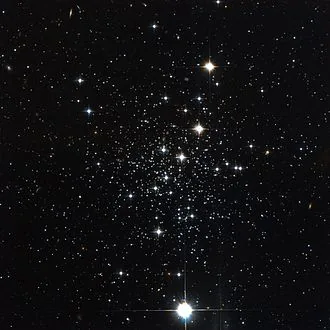
Most Milky Way globular clusters are ancient, some over 12 billion years old, formed either with the galaxy itself or folded in during its earliest mergers. Palomar 12 breaks that pattern. It’s noticeably younger than its peers – by some estimates as much as 30 percent younger – which puzzled astronomers until they traced its orbit and realized where it actually came from: the Sagittarius Dwarf Spheroidal Galaxy, a small satellite galaxy the Milky Way has been slowly devouring for billions of years. Around 1.7 billion years ago, tidal forces during one of Sagittarius’s close passages tore Palomar 12 loose, and it’s been an adopted member of the Milky Way’s halo ever since. Astronomers have even found faint stellar debris from Sagittarius still trailing around the cluster today – a leftover wisp of the galaxy it left behind.
Three Dancers and a Stowaway
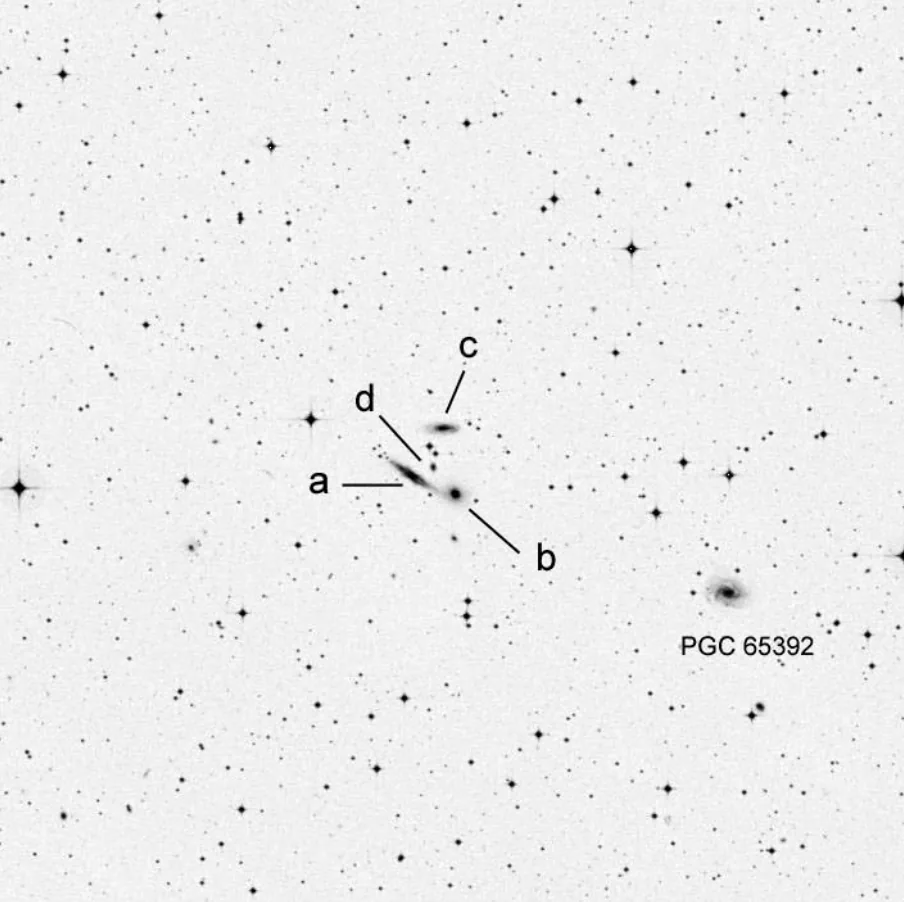
At first glance, Hickson 87 looks like a tight knot of four galaxies caught in a slow gravitational dance – and for a long time, that’s exactly how it was described. Closer study revealed a twist: only three of the four are actually interacting. HCG 87a (a dusty, edge-on spiral), HCG 87b (a bright elliptical), and HCG 87c (a face-on spiral undergoing an active burst of star formation) are genuinely bound together, tugging at each other’s structure across a core only about 170,000 light-years wide – smaller than the Milky Way. The fourth galaxy, HCG 87d, just happens to sit along the same line of sight; it’s a background object with no real connection to the other three. Between the two confirmed active galactic nuclei and the ongoing starburst, this compact group – about 400 million light-years away – is a genuine preview of what happens when galaxies get too close for too long.
Closer Than It Looks
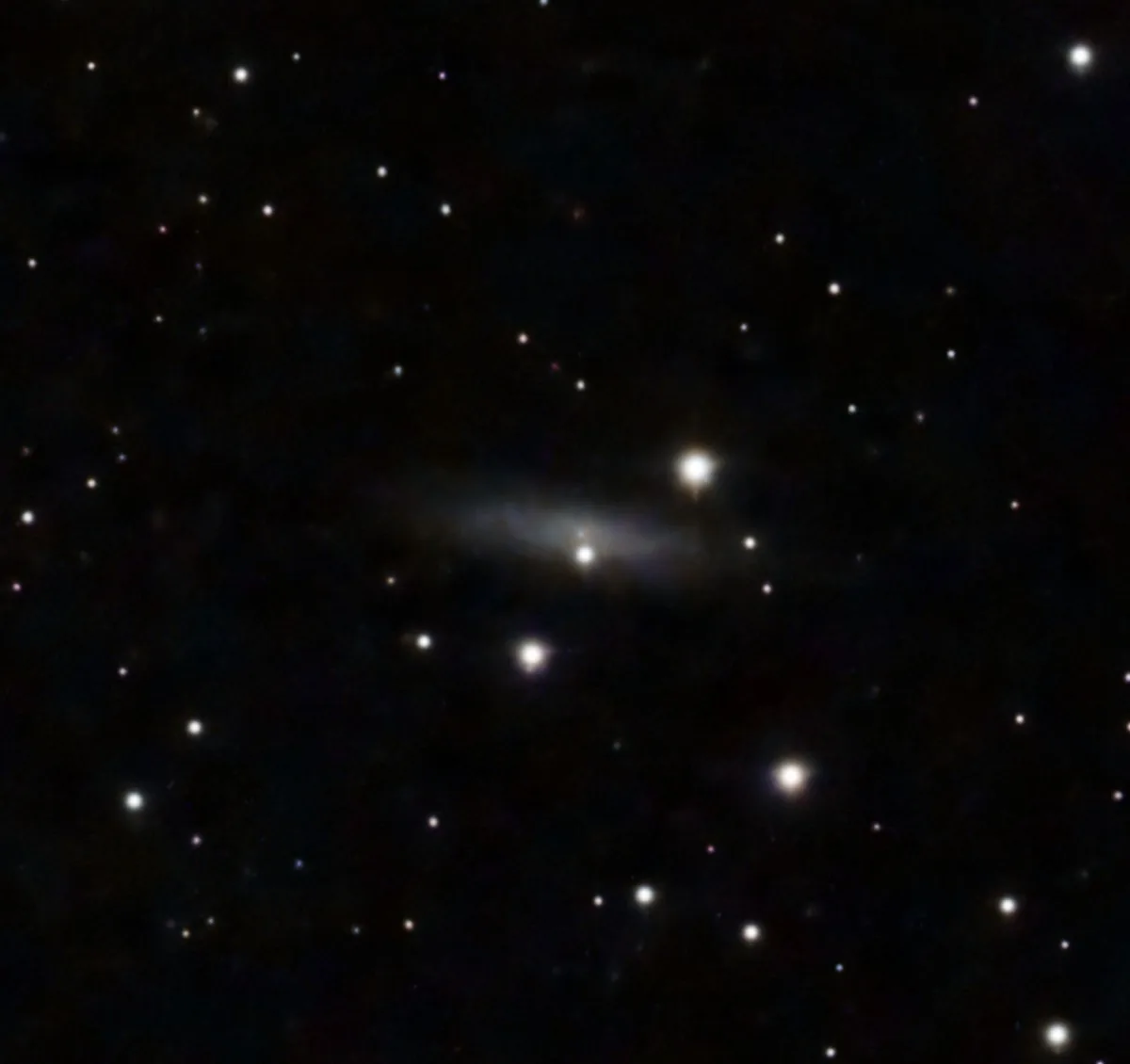
IC 5078 won’t win any beauty contests – through most telescopes it’s little more than a faint, elongated glow tucked inside a small knot of four foreground stars. But don’t mistake faint for far: at roughly 65 million light-years away, it’s actually one of the closer galaxies in this list, well inside the distance of Hickson 87 or NGC 6903. Its dimness comes down to what kind of galaxy it is rather than how far away it sits – IC 5078 is a late-type spiral (classified SAc), a category of galaxy that tends toward loosely wound arms and naturally low surface brightness, spreading its modest light thin across a wide disk. It’s a reminder that “faint” and “distant” aren’t the same thing, and that this small, easily overlooked patch of light is, relatively speaking, a near neighbor.
Light from the Late Jurassic
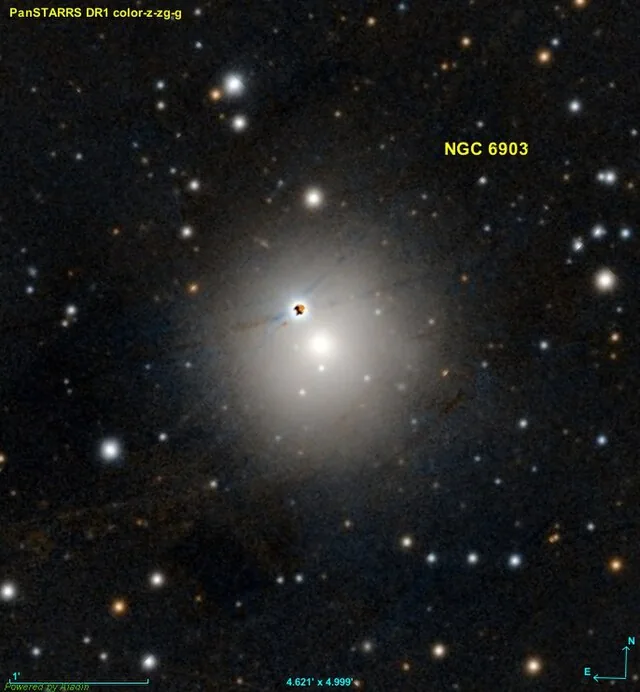
NGC 6903 doesn’t offer much of a show – a small, quiet lenticular galaxy about 149 million light-years away, around magnitude 13, requiring a fairly large aperture just to pick out as more than a soft smudge. But its distance is worth sitting with for a second: the light reaching your eyepiece or sensor tonight left NGC 6903 near the end of the Jurassic period, while dinosaurs still walked the Earth, long before the Rockies or the Alps had finished rising. Nothing about the galaxy itself demands a headline; the headline is simply how long its light has been traveling to get here.
A Pair of Wide Double Stars
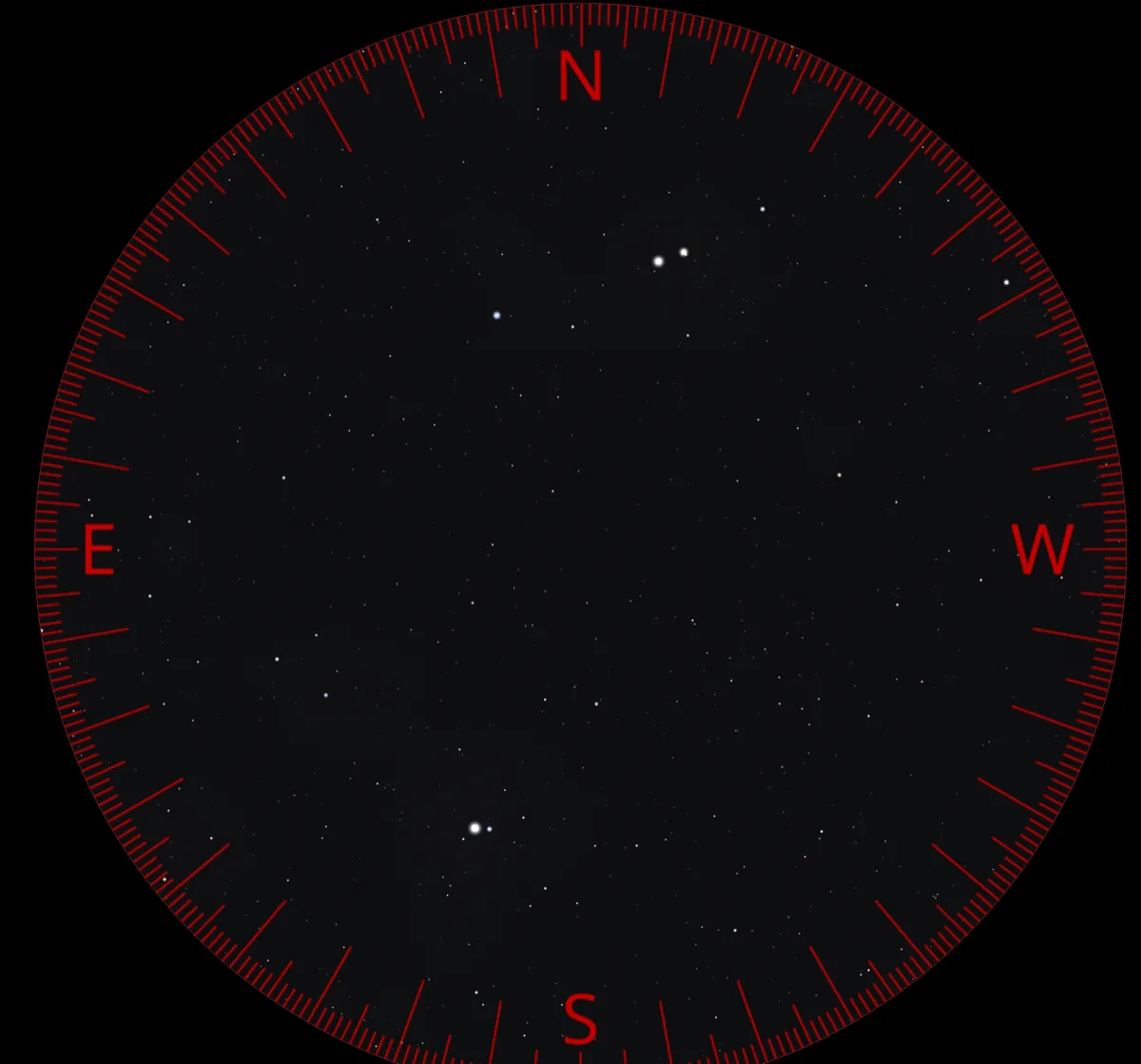
Aim binoculars at the western end of Capricornus and you can catch two different kinds of double star in the same field. Alpha Capricorni (Algedi) is actually two unrelated stars – Alpha-1 and Alpha-2 – that happen to line up almost exactly along our line of sight but sit at wildly different true distances; it’s a coincidence of perspective, not a real pair, wide enough (about 0.11 degrees) to split with the naked eye under a dark sky. A few degrees away, Beta Capricorni (Dabih) is the real thing: a golden-yellow primary about 340 light-years off, paired with a fainter blue-white companion, easily split in any pair of binoculars. Both names trace back to Arabic: Algedi (“the kid,” as in young goat) and Dabih (“the butcher”), which once shared a single lunar mansion together in old Arabic star lore – a fitting pairing for two stars that still sit so close together in our sky, if not in reality.