Last Glimpses of Venus with the Crescent Moon
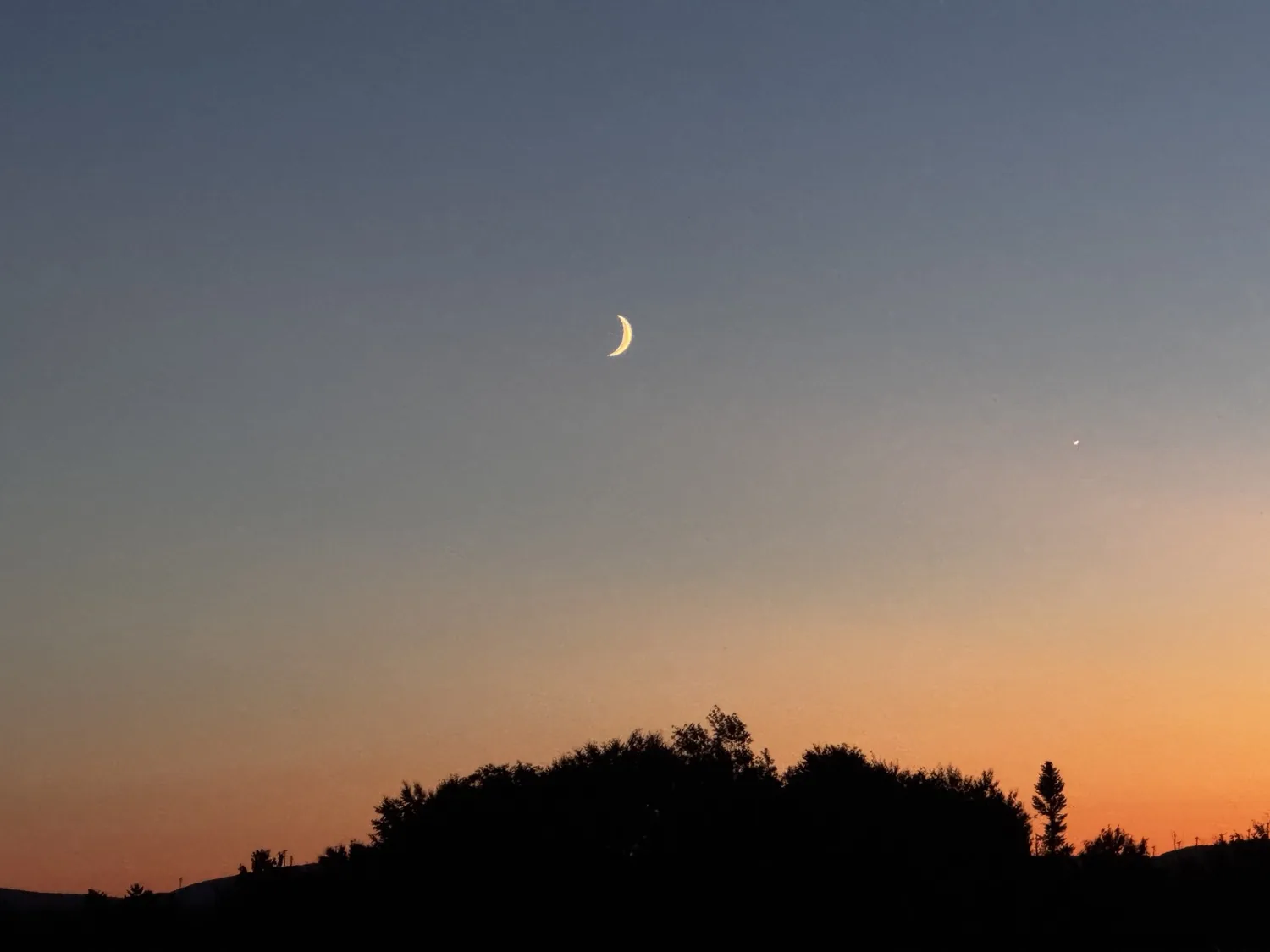
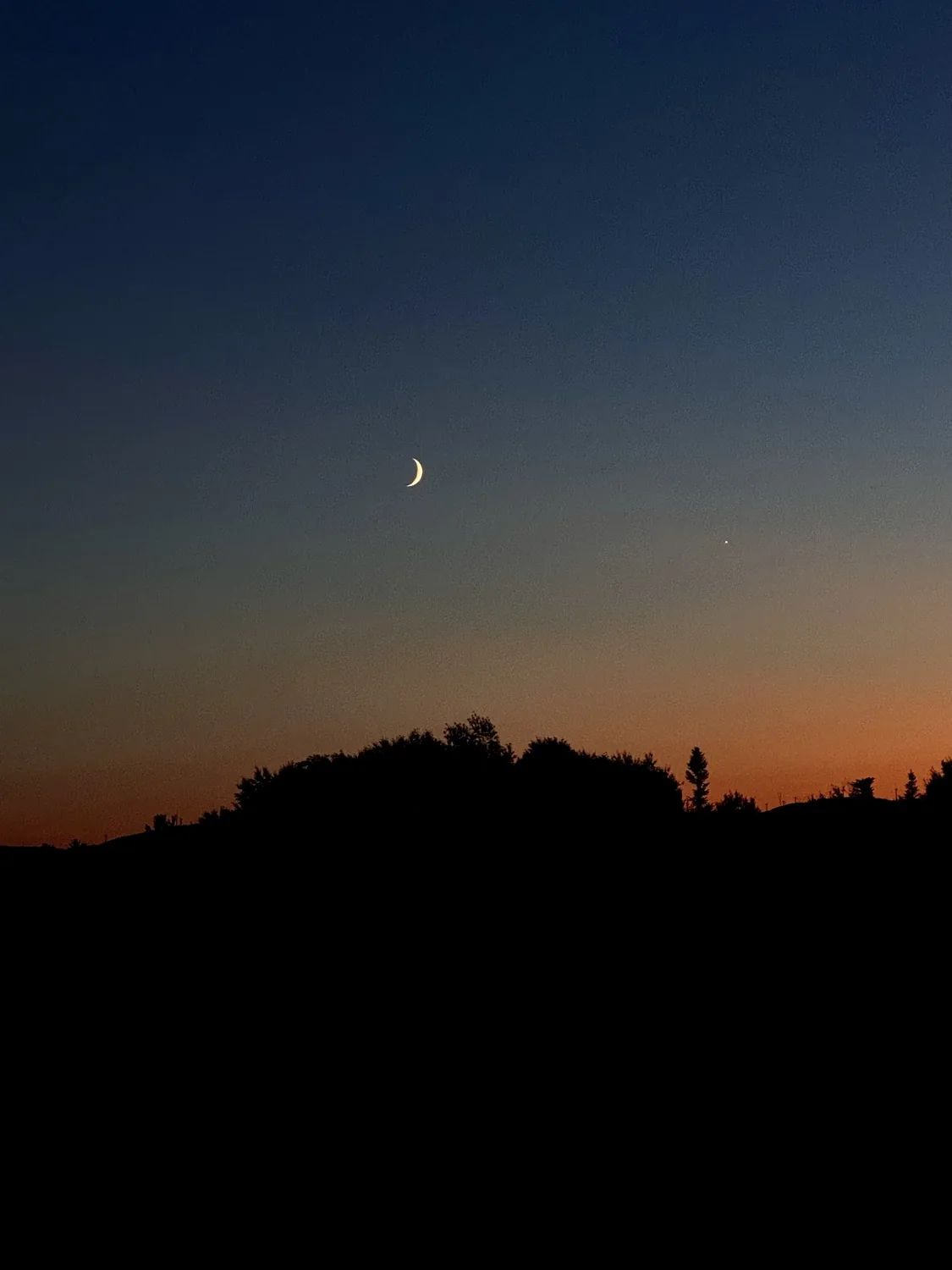
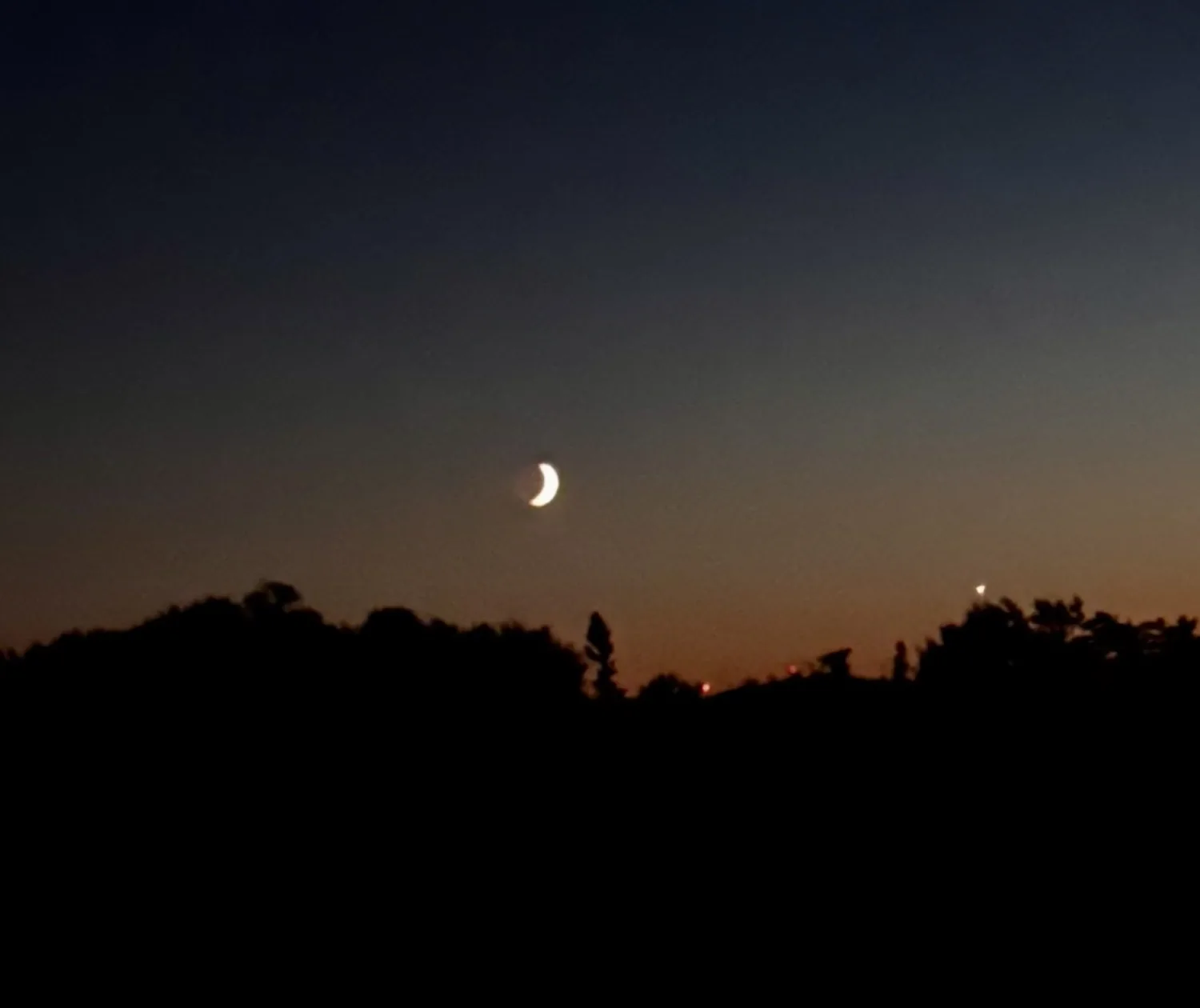
Venus has been hanging in the western sky after sunset since the Spring. But as it has been “catching up” to Earth, it’ll soon reach inferior conjunction October 24th and then become a “morning star” again. As we go into Fall, it’ll inch closer and closer to the Sun, so the next couple of weeks are the last time to catch it in the evening twilight. In a telescope, this is when Venus is at its largest and becomes a crescent - definitely worth the effort!
Moon and Venus in twilight
Moon and Venus in twilight
Moon with Venus at the tree line
Peering Deep into Andromeda
Messier 31 - the Andromeda Galaxy - despite being bright enough to see as a hazy patch with the naked eye on a dark night, is actually a challenging object to image: it’s so large in the sky that the surface brightness is really dim (Messier 33, the Triangulum Galaxy even more so).
So even with imaging telescopes like the Seestar S30, it requires fairly long exposure times.
Bill’s setup uses the scope with an equatorial mount which allows it to take longer exposures (here, 60 seconds), and that really helps to draw out the fainter features (spiral arms, dust lanes, and bluish star-forming regions). Andromeda’s largest companions - Messier 32 and 110 - hover on either side.
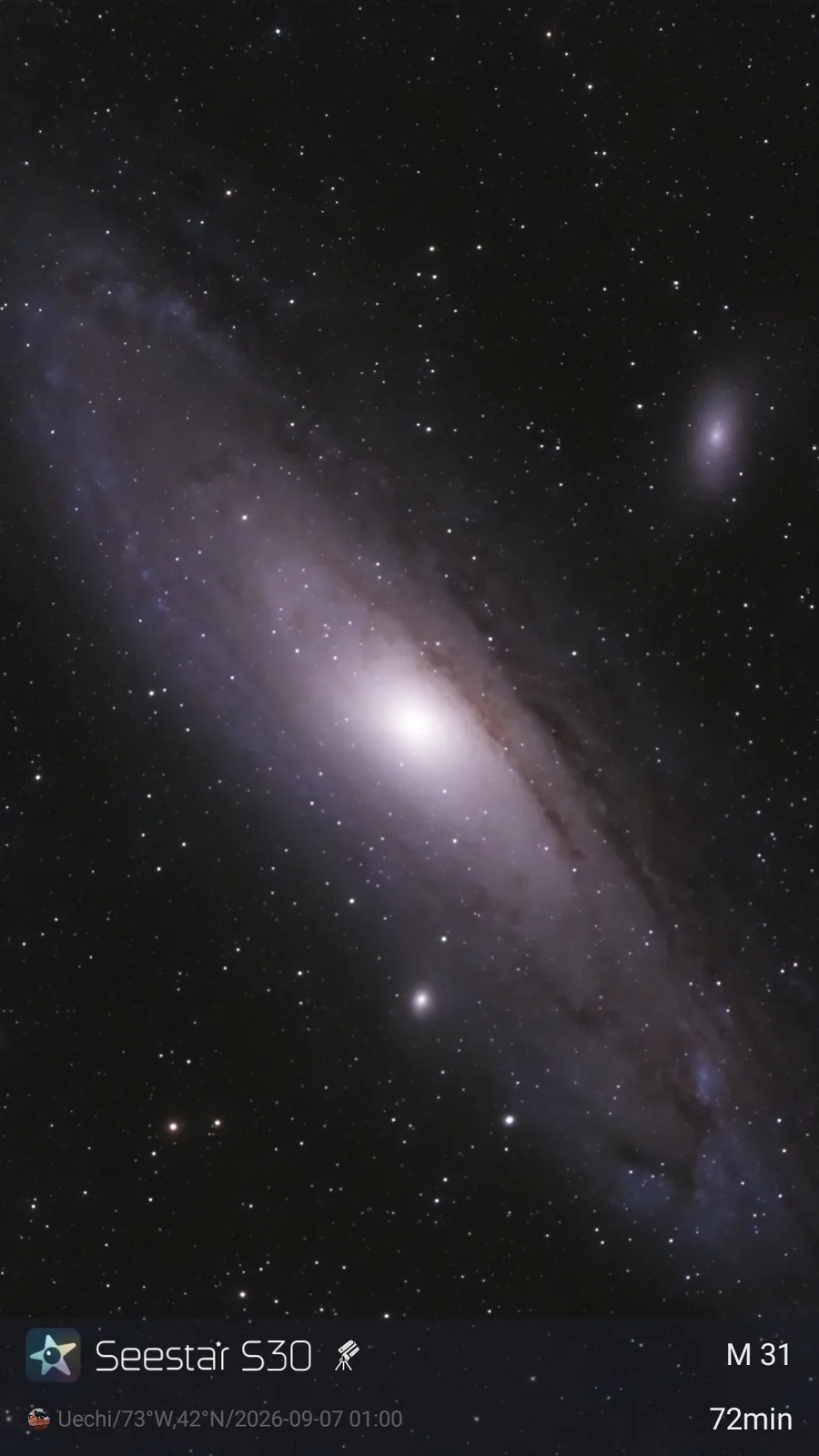
Andromeda Galaxy
Two Compact Galaxy Groups
Compact groups are a fun but challenging imaging target, mostly because the sizes of the individual galaxies are so small - typically under 2.5’ against the sky. So for most smart scopes, they’re at the limit of resolution, but what they lack in detail, they have in arrangement.
Bob D. imaged two of the more popular groups in early September.
Stephan’s Quintet
This close galaxy group is a little misleading because even though they all look like they occupy the same space, the largest (and slightly bluer) galaxy, NGC 7320 is not part of the group - it’s much closer to us than the rest (which are around 290-300 Mly away). At the same time, the little reddish galaxy at the lower left, NGC 7320C, is part of the “physical quintet”.
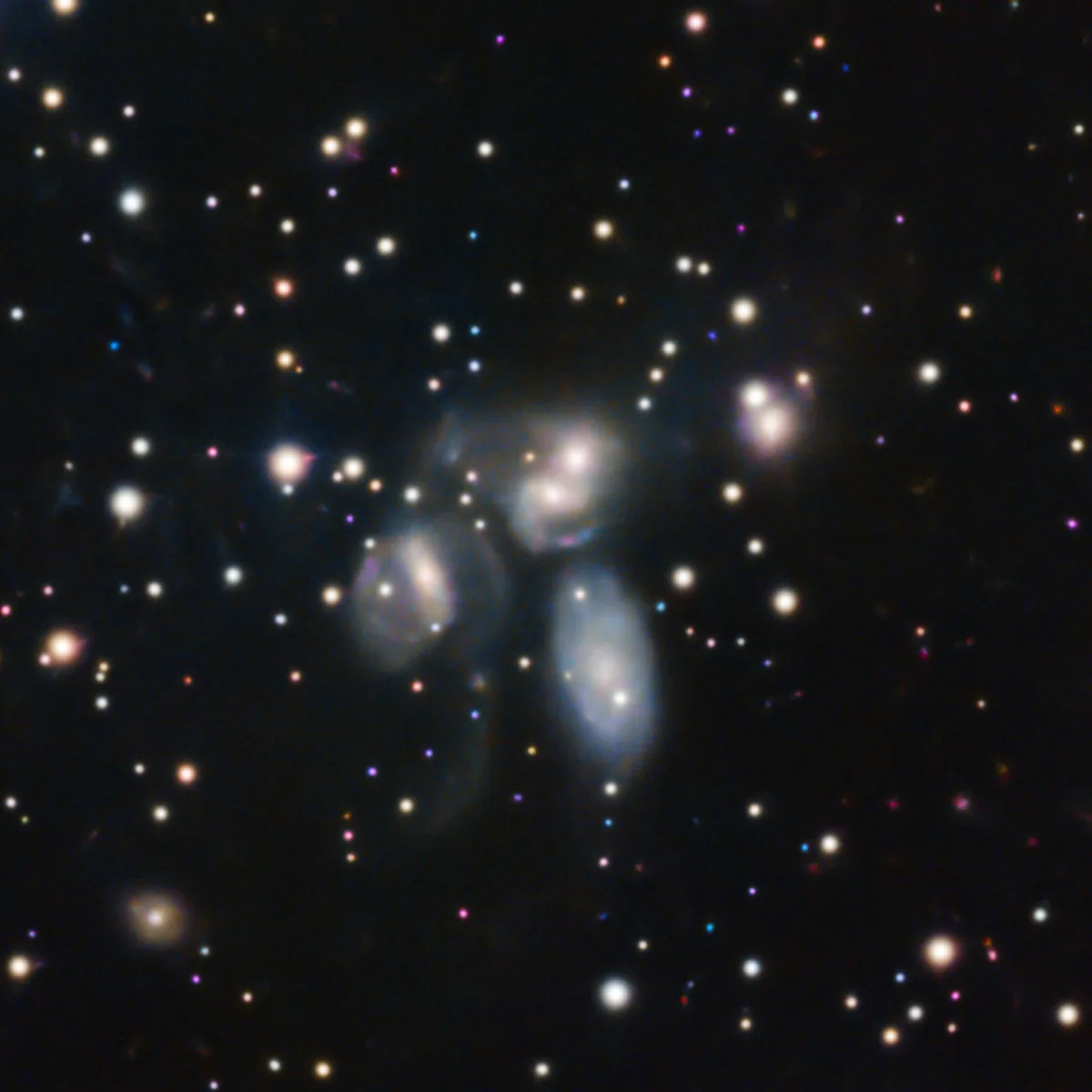
Stephan's Quintet
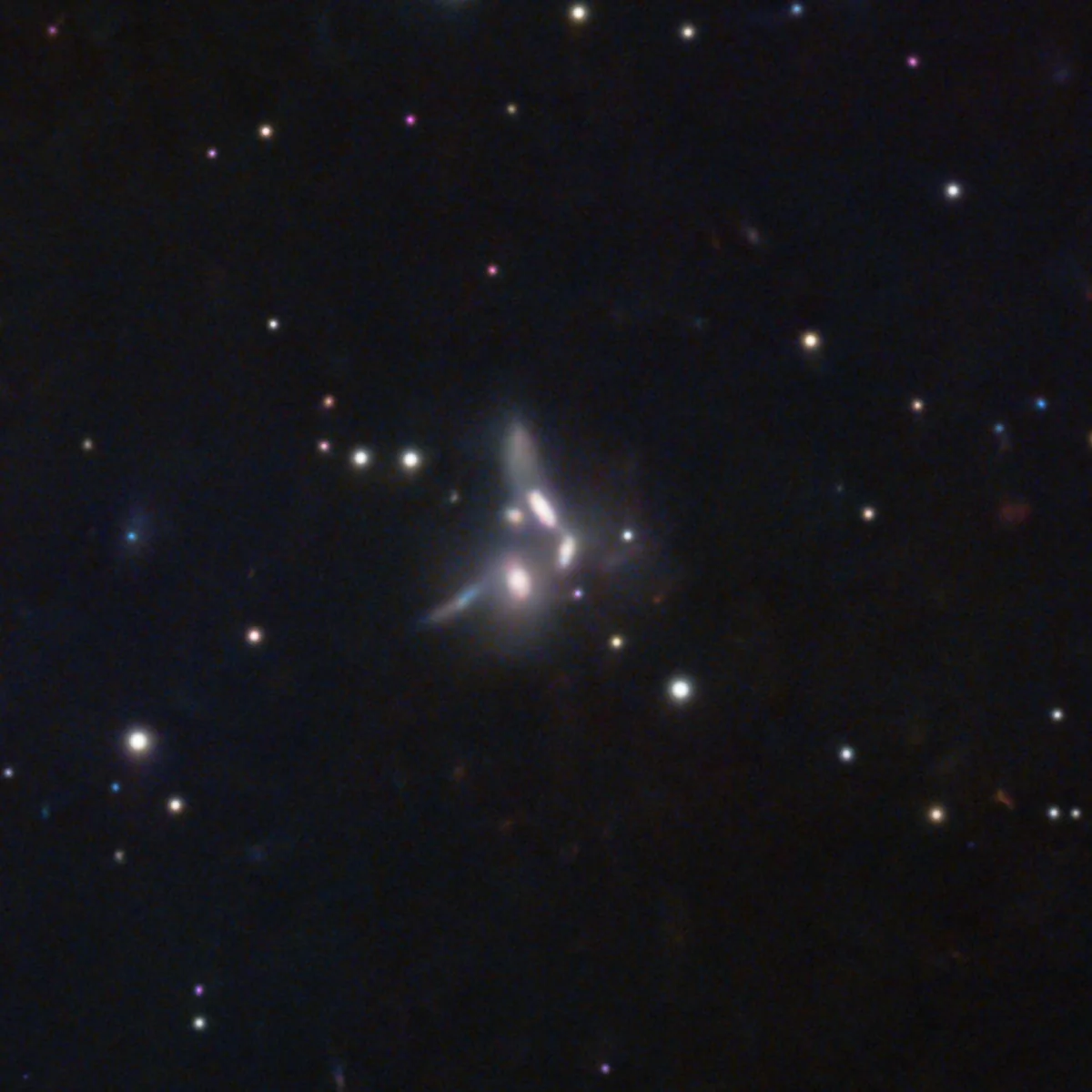
Seyfert’s Sextet
Another compact group (Hickson 79) in Serpens is even more compact though a little closer (about 220 Mly). Like Stephan’s Quintet, one of the galaxies (HCG 79e = NGC 6027d) - the smallest fuzzy “dot” located in the crook of the “L” shaped grouping is much further away: 877 Mly!