
Introduction
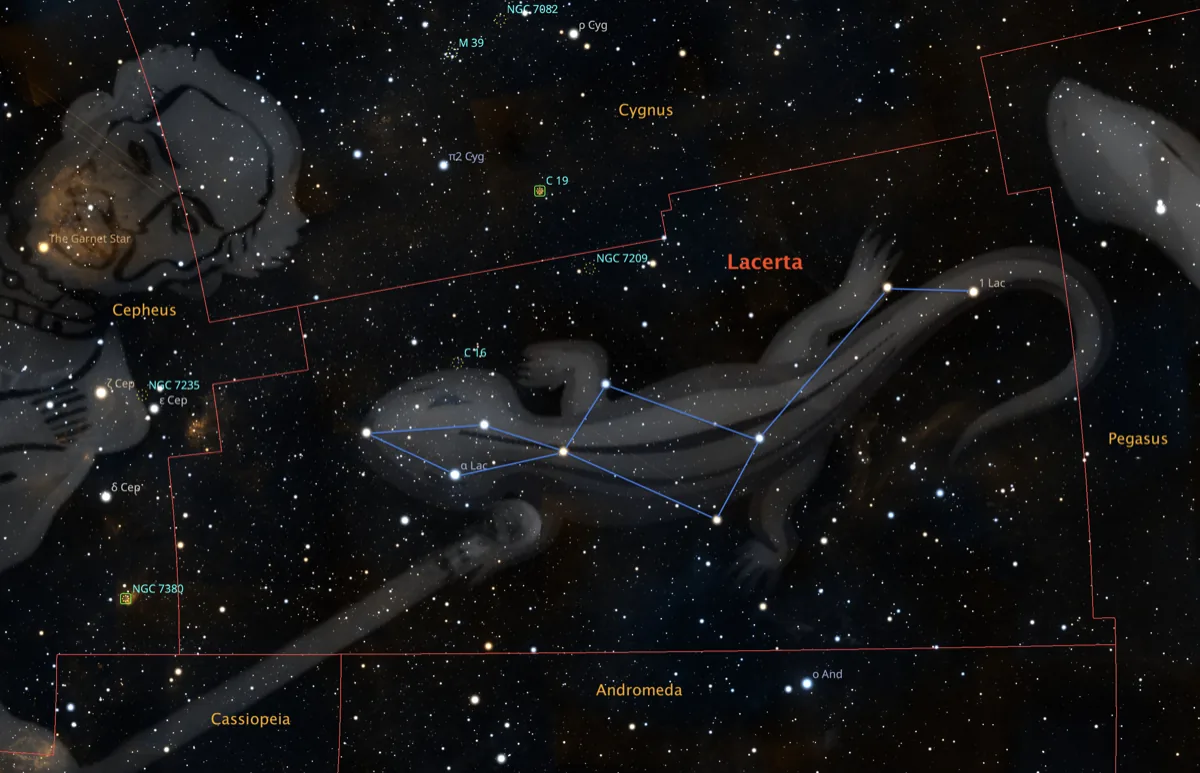
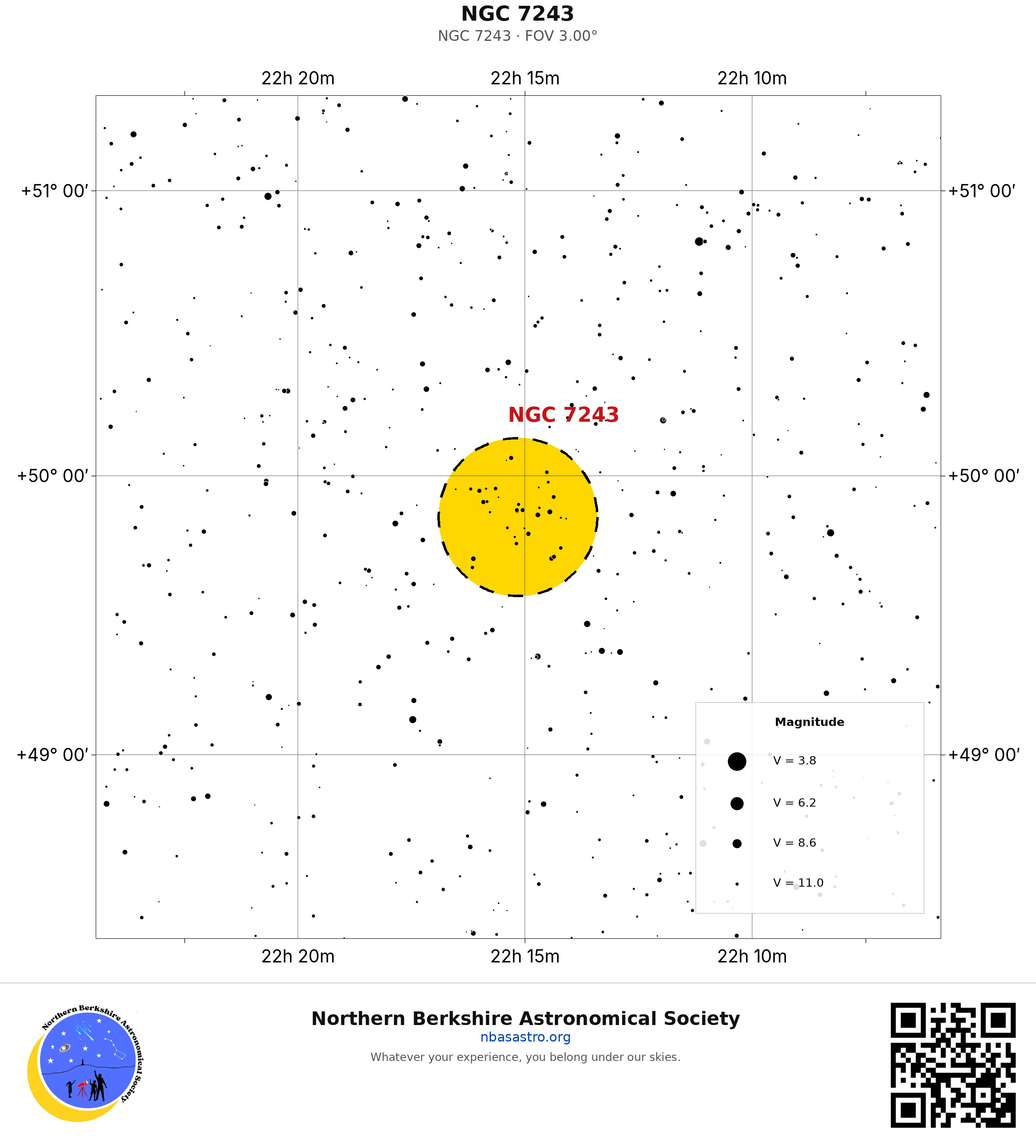
Caldwell 16 is a good target hiding in a bad neighborhood. At magnitude 6.4 and spanning about two-thirds the width of the full Moon, NGC 7243 is bright enough to hint at itself with the naked eye under a dark sky and resolves into a loose scatter of white and blue stars in binoculars or any small scope. It should be a staple. Instead it sits quietly in Lacerta — a constellation most people couldn’t point to if their life depended on it — sandwiched between Cygnus’s crowded Milky Way fields and Cassiopeia’s parade of showcase clusters. Everyone’s on their way to something more famous.
A Constellation With No Story
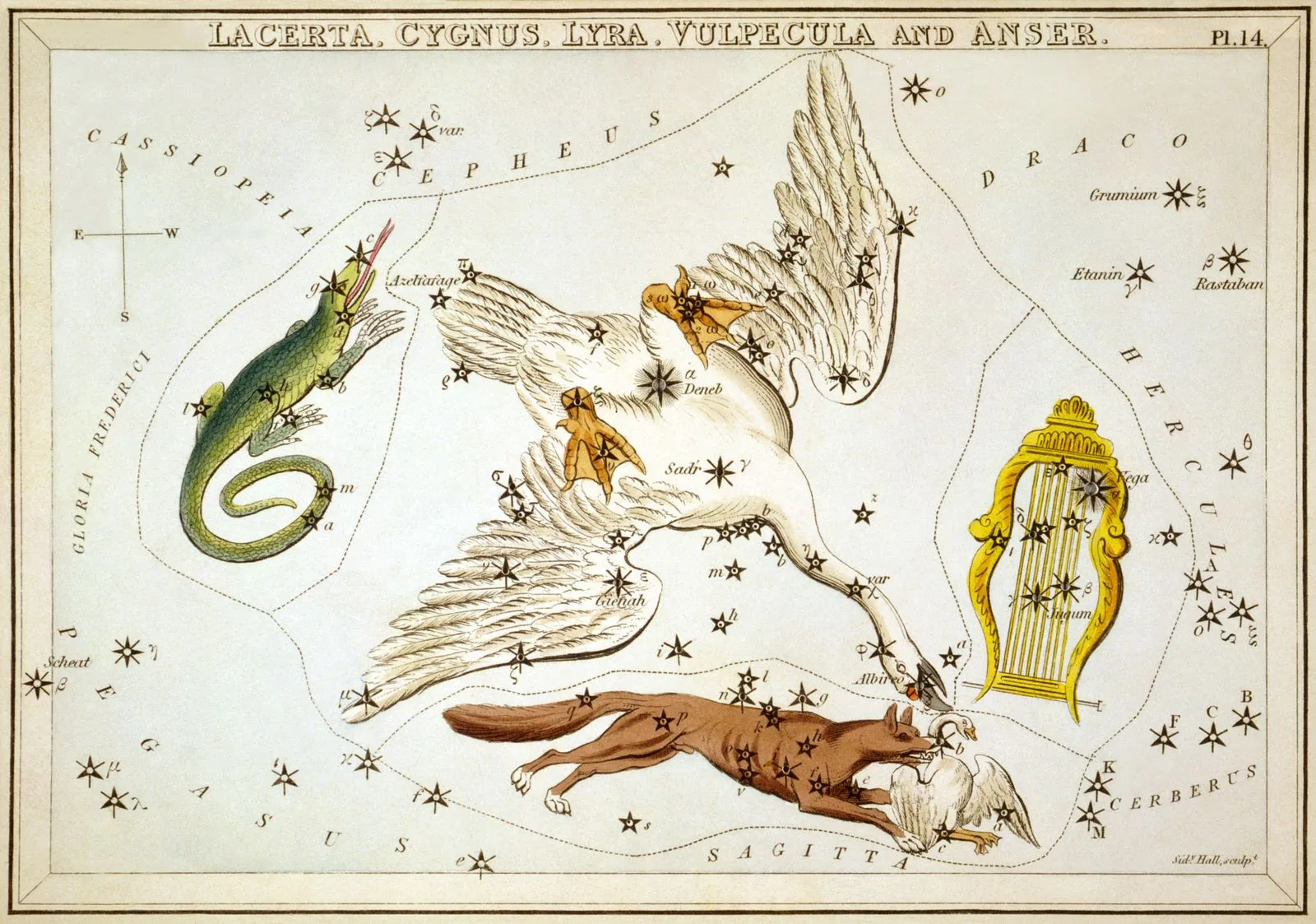
Lacerta, “the lizard,” isn’t ancient. Johannes Hevelius invented it in 1687 to fill a gap between Cygnus, Cepheus, Andromeda, and Pegasus, and unlike almost every other constellation in the sky, it carries no mythology at all — no hero, no god, no tragic transformation. Hevelius wanted to call it Stellio, after a star-spotted lizard, but the name never caught on for the constellation as a whole. It didn’t entirely vanish, though: in 2024, the International Astronomical Union quietly revived it as the official proper name for Alpha (α) Lacertae, the constellation’s brightest star.
Lacerta’s faint zigzag shape is often described as a dimmer echo of Cassiopeia’s W right next door — which is also the easiest way to actually find it. Trace Cassiopeia’s familiar zigzag, then look for a fainter, smaller version of the same shape nearby.
The Cluster Itself
William Herschel logged NGC 7243 in 1788, one of hundreds of entries in his systematic sweep of the sky. Modern surveys put its distance at roughly 2,860 light-years and its age at around 250 million years — old enough that the cluster has visibly started to loosen and spread, young enough that its hottest, most massive members are still burning blue. That’s part of what observers notice first: a genuine contrast between white and vividly blue stars scattered across the field, set against the duller yellow and red stars of the background Milky Way behind them.
Astronomers classify open clusters partly by how concentrated and rich they are — NGC 7243 falls into a middle category, neither tightly packed nor sparse, which is a fair description of what you’ll see: a loose, granular scatter of roughly 70 stars rather than a dense swarm.
Observing NGC 7243
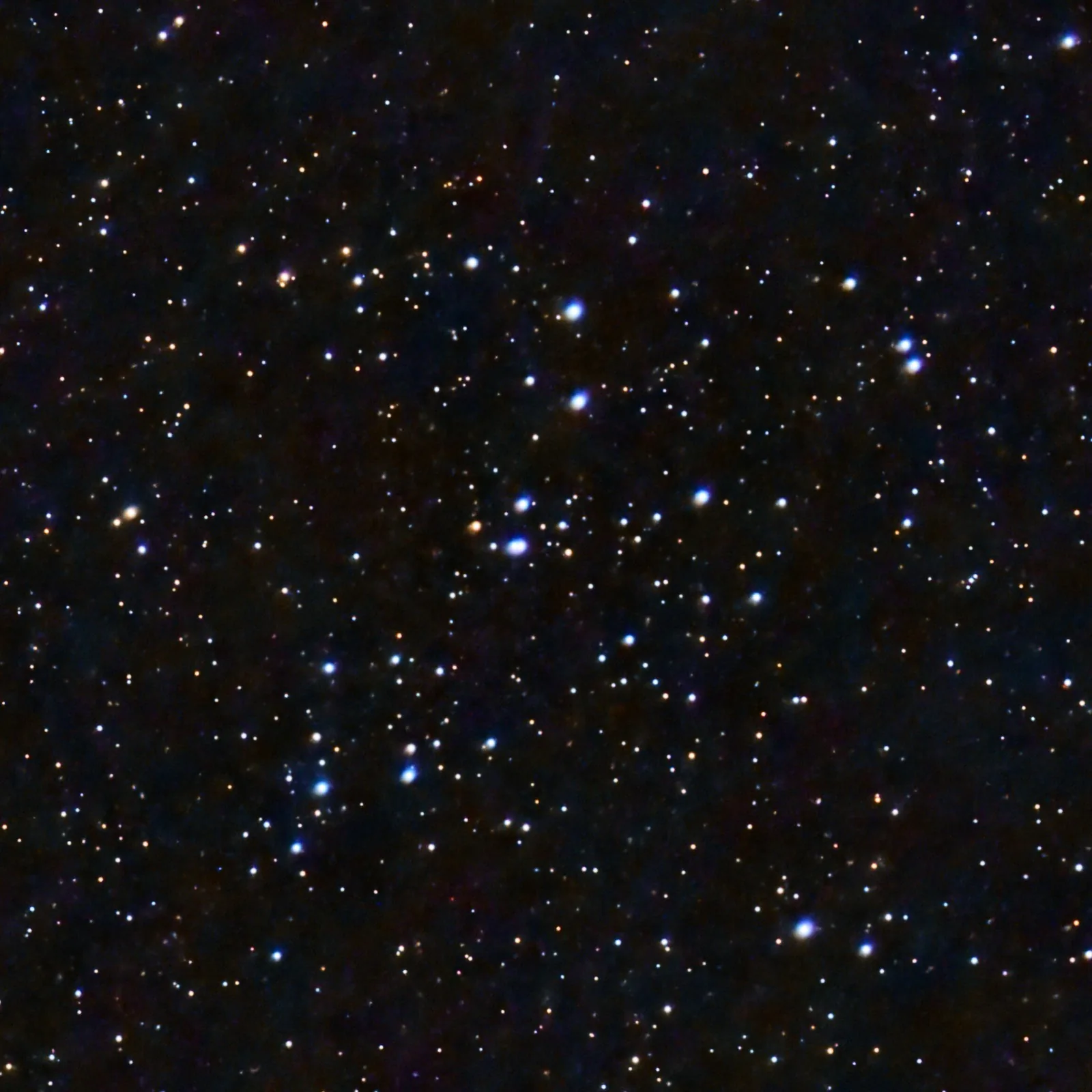
Binoculars pick up a handful of the brighter members against a soft, unresolved glow; a small scope at low power starts resolving individual stars across the full 21-arcminute span, more than most eyepiece fields can comfortably hold at once. The smart-scope image above, about ten minutes of integration with a Seestar S50, shows the same loose scatter and blue-white color contrast that visual observers have been noting for over two centuries.
Here’s roughly what that progression looks like in practice:
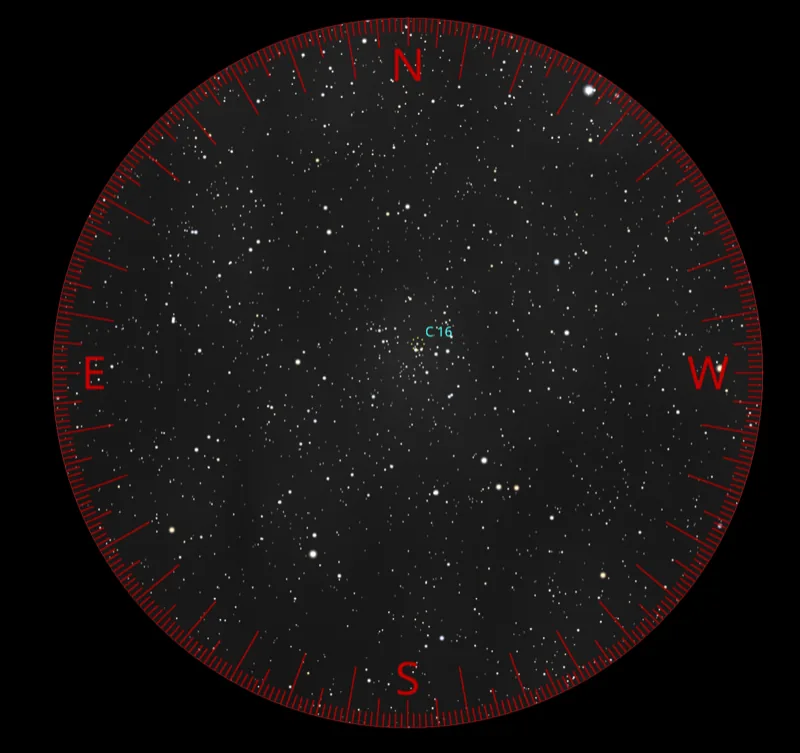
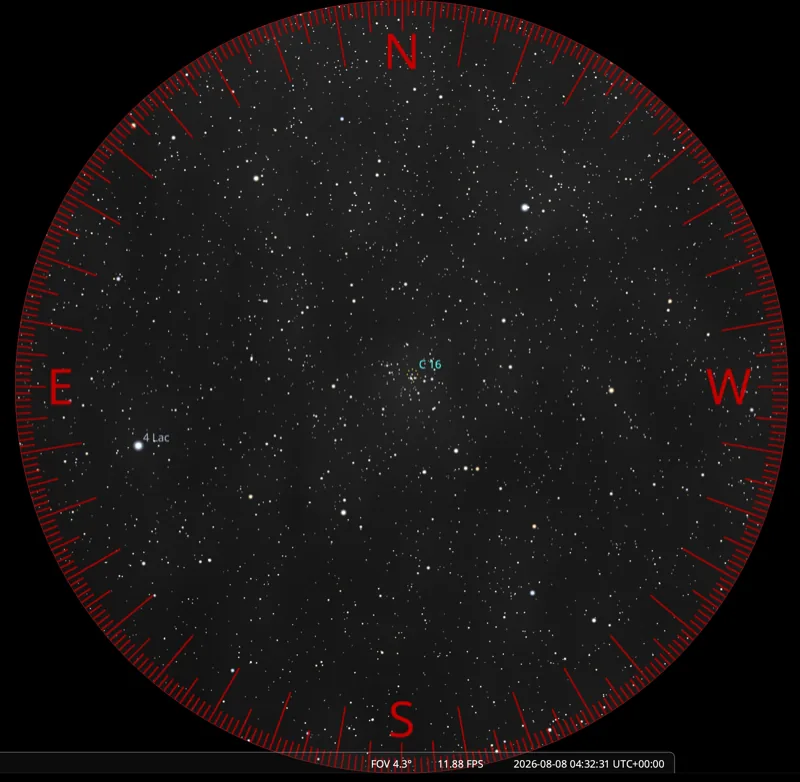
At binocular scale, NGC 7243 is one bright knot among many stars in a rich Milky Way field — you’ll need to know roughly where to look, since nothing about it jumps out as obviously “the cluster” at first glance. Step up to a small refractor and the picture flips: the field narrows, the background thins out, and the cluster’s own stars start to dominate the view instead of blending into the crowd around them.
Lacerta is well placed in the evening sky through late summer and into fall, culminating in the early-to-mid evening this time of year. If you want to extend the session, Alpha Lacertae — the newly-renamed Stellio — sits nearby, along with 4 Lacertae, the double star visible at the edge of the binocular field above.
Closing
Nothing about NGC 7243 is faint, difficult, or obscure once you’re actually looking at it — it’s just parked next door to objects with better name recognition, in a constellation nobody bothered giving a myth. That’s not a knock against it. It’s the whole reason to go find it.