Introduction
October opens with two reasons to set an alarm for the “wrong” side of midnight. On the 6th, the waning crescent Moon occults Jupiter in the pre-dawn sky — naked eye, it’s simply Jupiter vanishing and later reappearing beside the Moon; binoculars turn it into a real pairing worth watching build and resolve; and in a small telescope, Jupiter’s own disk is large enough that the covering and uncovering happen gradually rather than in an instant.
Five days later, on the 11th, Mars threads directly through the Beehive Cluster (M 44), a much fainter and more delicate target that rewards binoculars or a low-power eyepiece. Neither event is convenient. Both are worth the lost sleep.
Event 1: The Moon Occults Jupiter — October 6
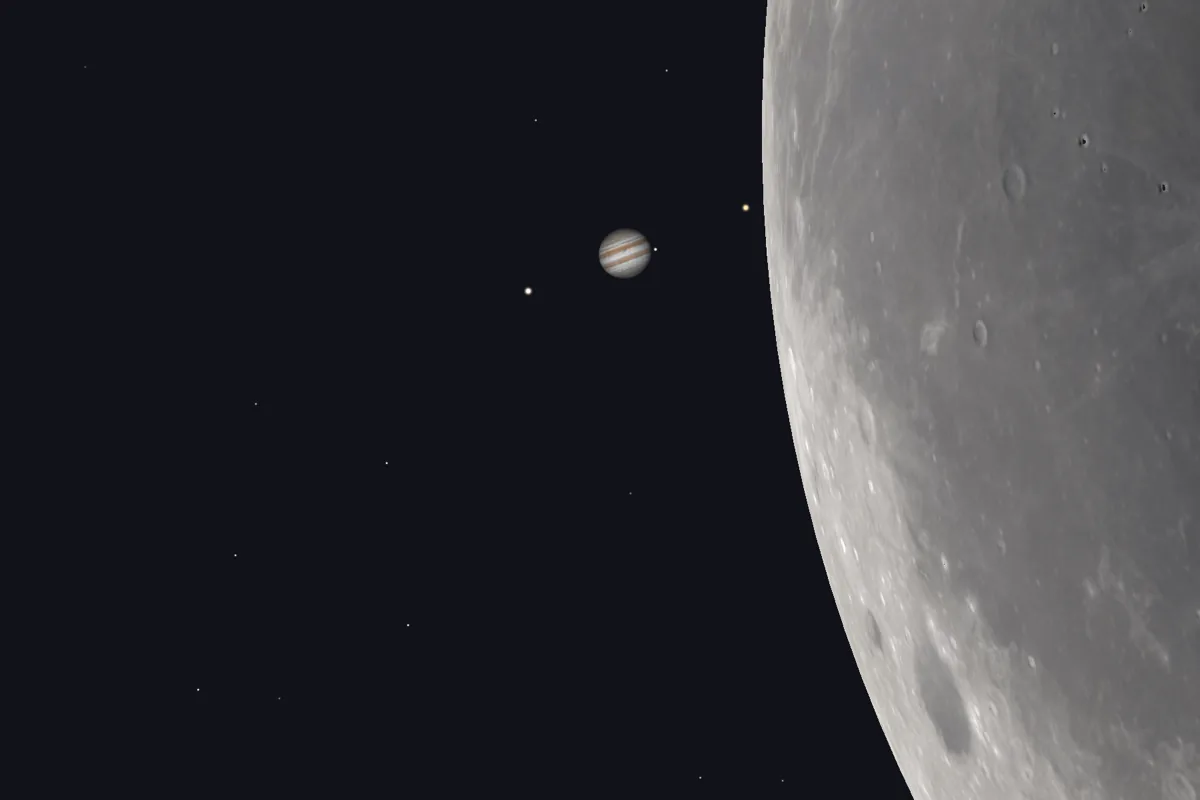
Starting around 4:23 AM EDT, Jupiter and its four Galilean moons close in on the Moon’s limb.
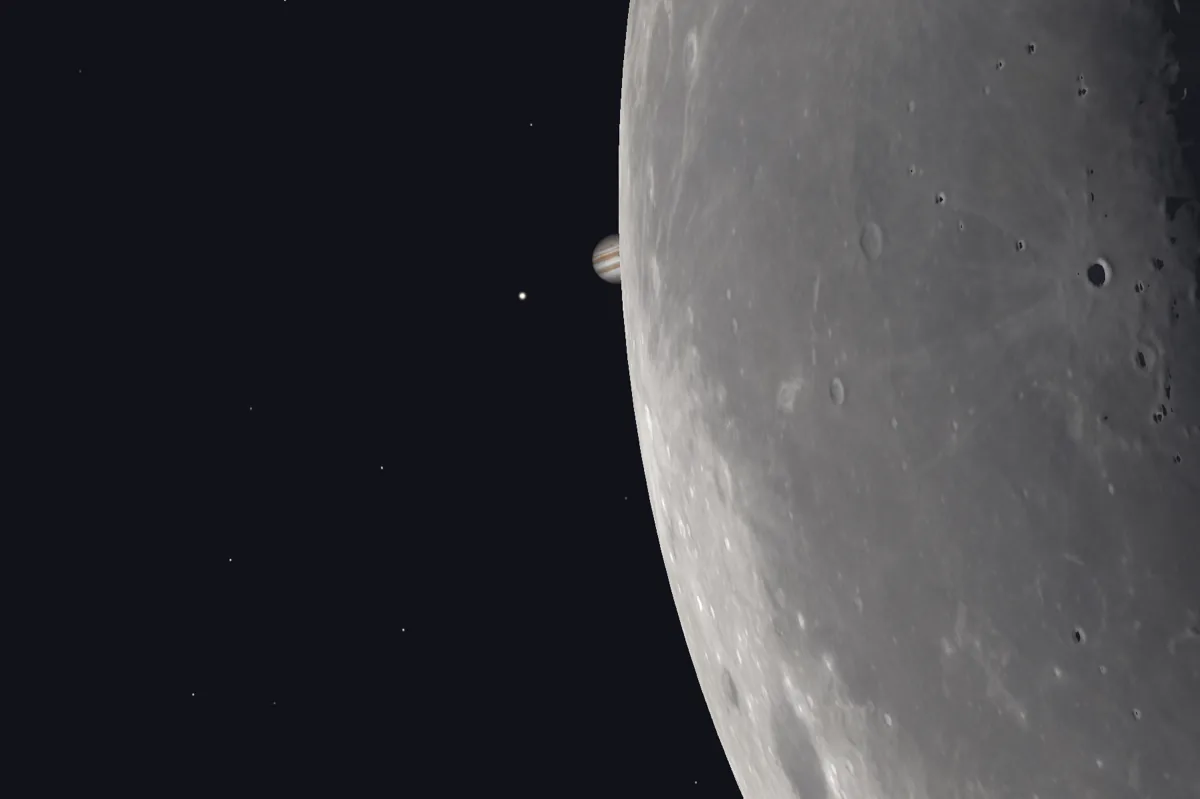
By ingress, Jupiter’s disk is partially hidden behind the Moon — with patience and steady seeing, a telescope should show the planet’s disk being visibly swallowed rather than just winking out, since Jupiter’s own angular size (about 32-45 arcseconds depending on date) is large enough to show the event as a gradual covering rather than an instantaneous disappearance. Ingress happens against the Moon’s bright limb, so Jupiter simply vanishes behind sunlit terrain — straightforward to watch, no special dark-adaptation needed to catch the moment.
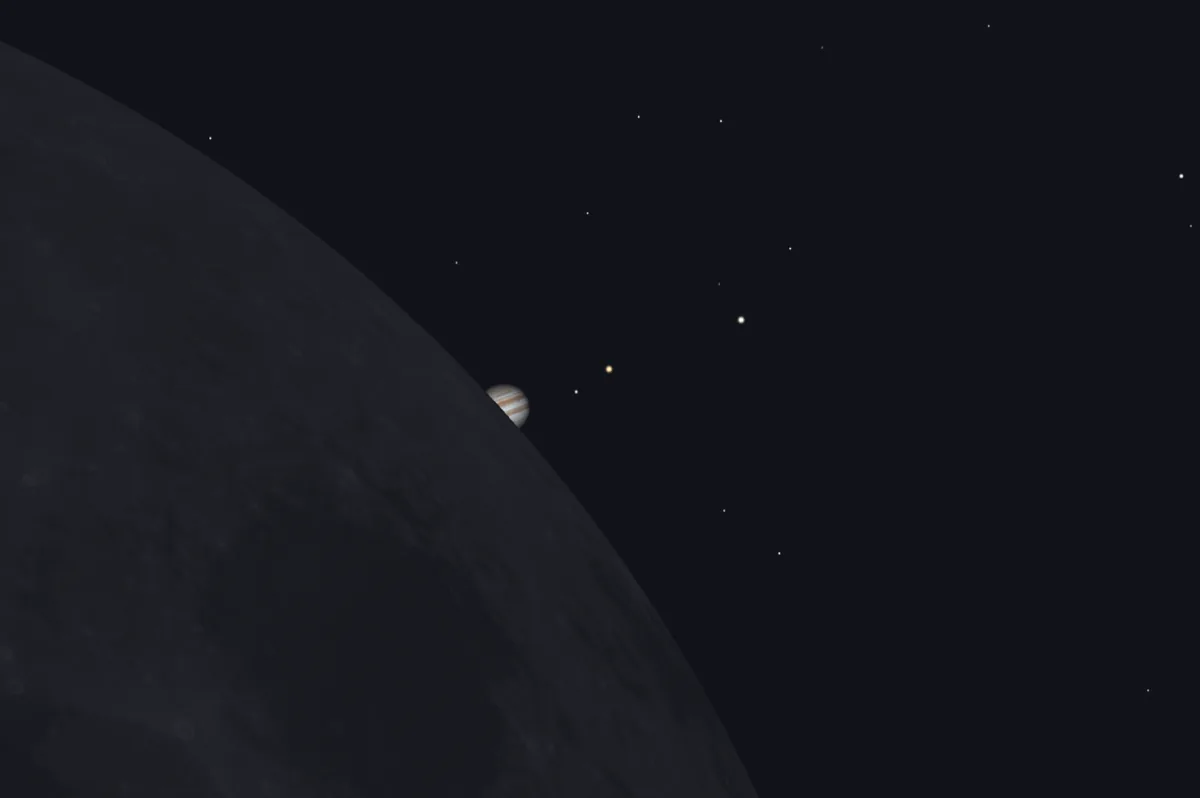
Egress is the more interesting half. Jupiter reappears from behind the Moon’s dark limb — the portion lit only by earthshine, sunlight bounced off Earth’s own daylit face — so it emerges from what looks, at a glance, like empty sky next to the Moon rather than from the bright disk itself.
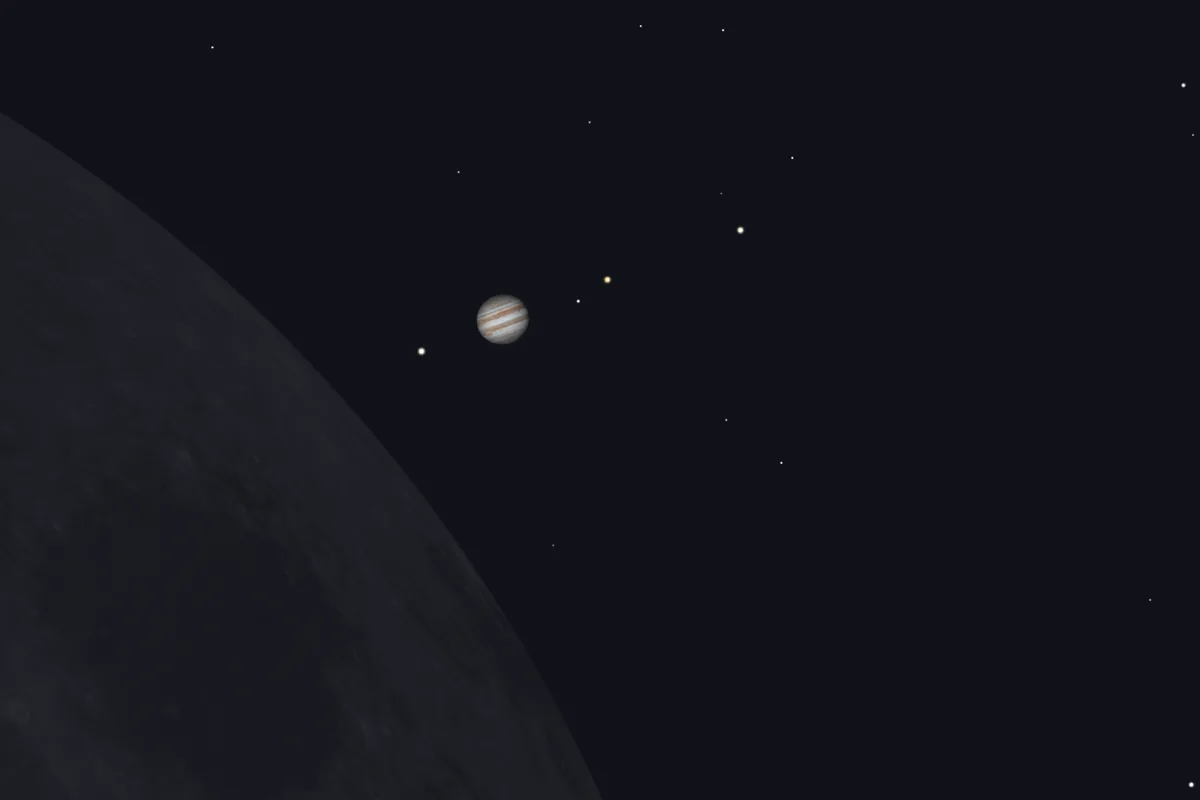
By 5:32 AM, the full planet and its moons are clear of the Moon entirely.
The Galilean Satellites
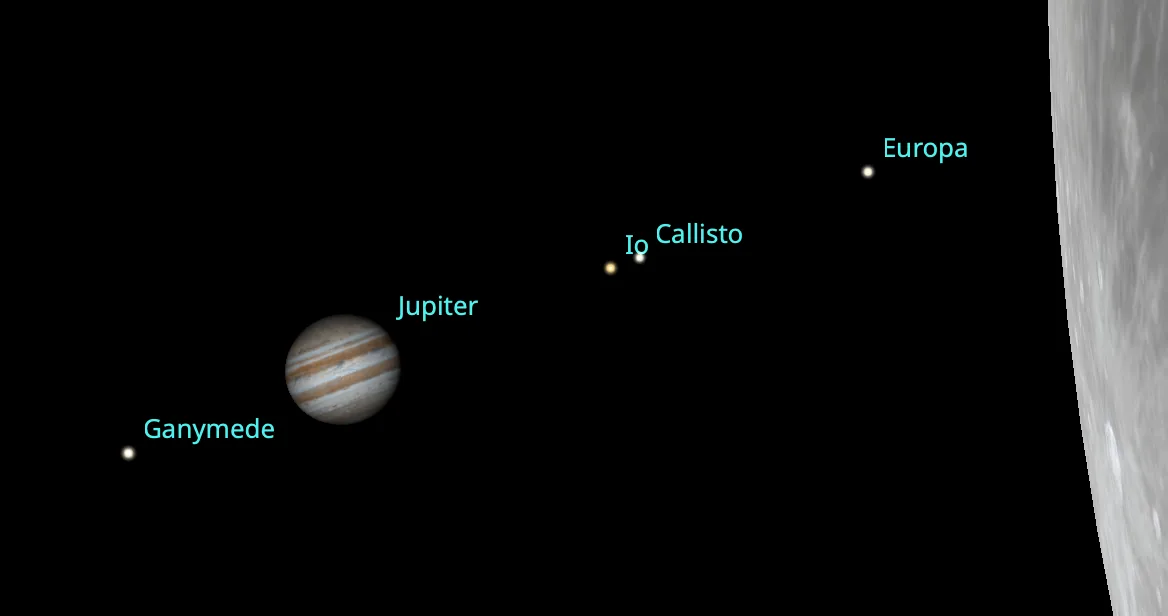
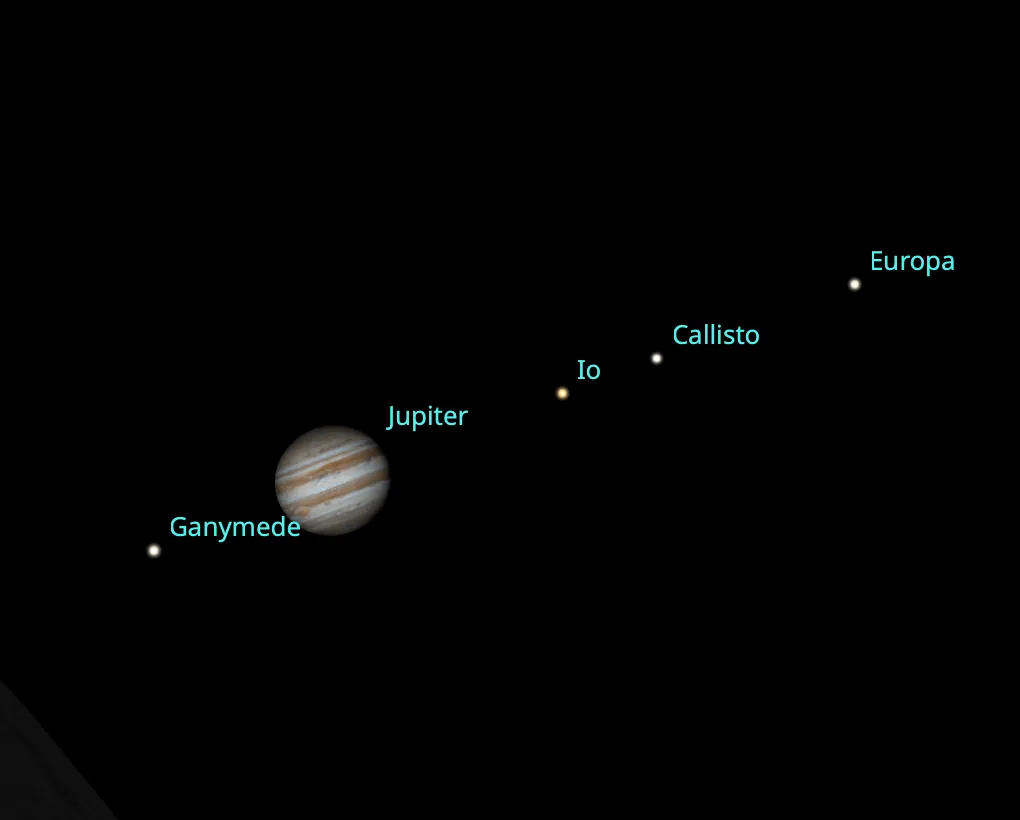
Io’s own orbital motion is fast enough to notice directly: compare its position relative to Callisto in the two frames above, taken roughly an hour apart. That’s a nice aside to point out to anyone at the eyepiece who thinks of the solar system as static on human timescales.
Timing Note
This entire event happens in genuine darkness. Astronomical twilight doesn’t begin over North Adams until 5:21 AM EDT that morning, and sunrise isn’t until 6:55 AM — so even the tail end of egress (5:32 AM) is only about ten minutes into astronomical twilight, well before the sky brightens meaningfully.
Observing: Naked Eye, Binoculars, Telescope
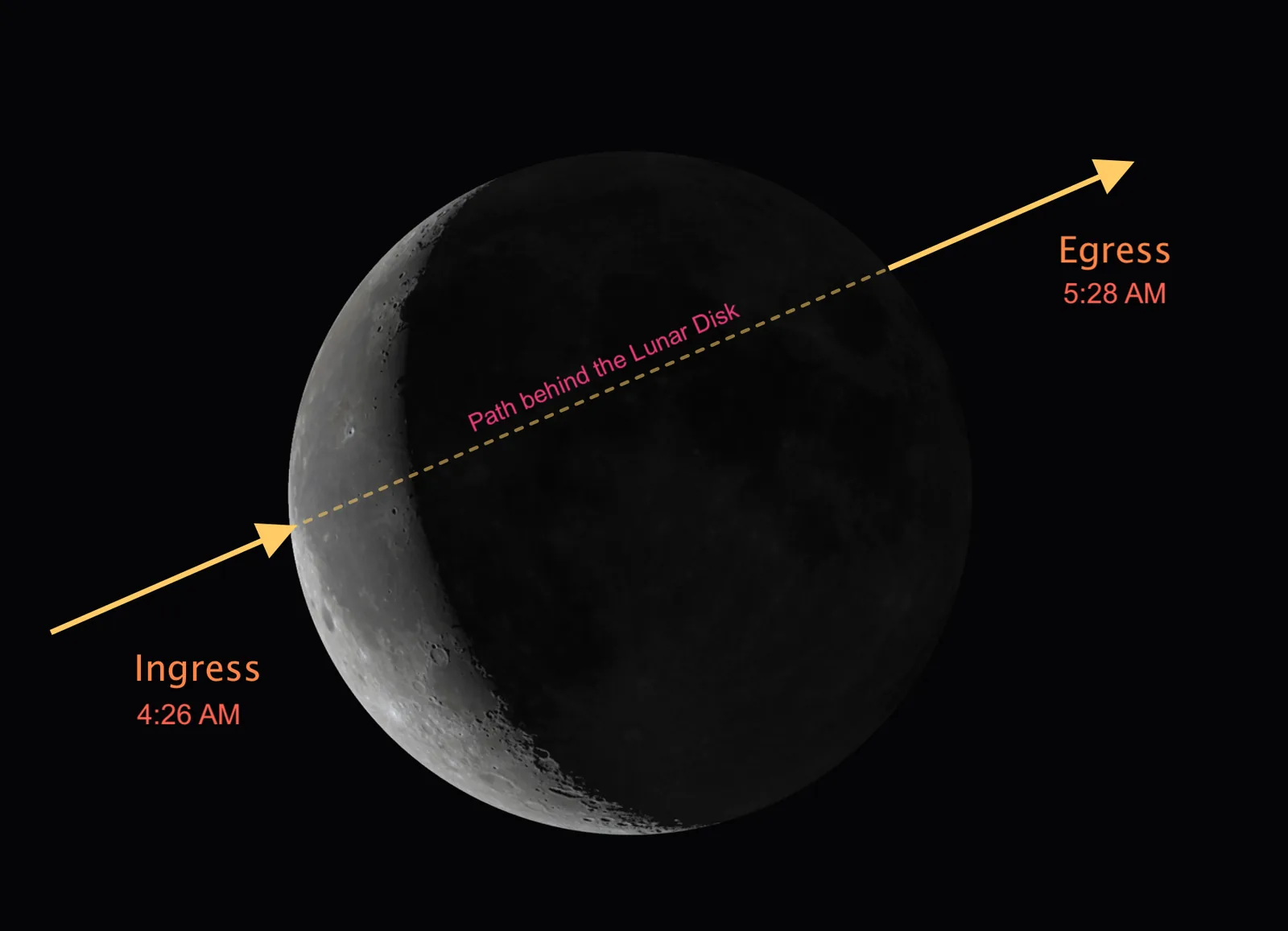
Naked eye, the event is easy to follow even without optical aid: Jupiter sits right next to the crescent Moon, and over the course of the hour it visibly disappears at one point along the limb and reappears at another. You don’t need to know exactly where to look — the Moon itself is the marker.
Binoculars sharpen the picture considerably. The Galilean moons resolve as distinct points strung out on either side of Jupiter, so the approach and departure read as a small system traveling together rather than a single point of light. It’s also the easiest way to catch Io’s motion between the two “moons” frames above.
A small telescope is where the occultation itself becomes an event rather than a before/after. Jupiter’s disk is large enough — 32 to 45 arcseconds depending on the date — that ingress and egress aren’t instantaneous. At the eyepiece, the planet is visibly swallowed by the bright limb over roughly a minute, and later re-emerges from the dark limb the same way, rather than simply blinking on or off.
Event 2: Mars Crosses the Beehive — October 11
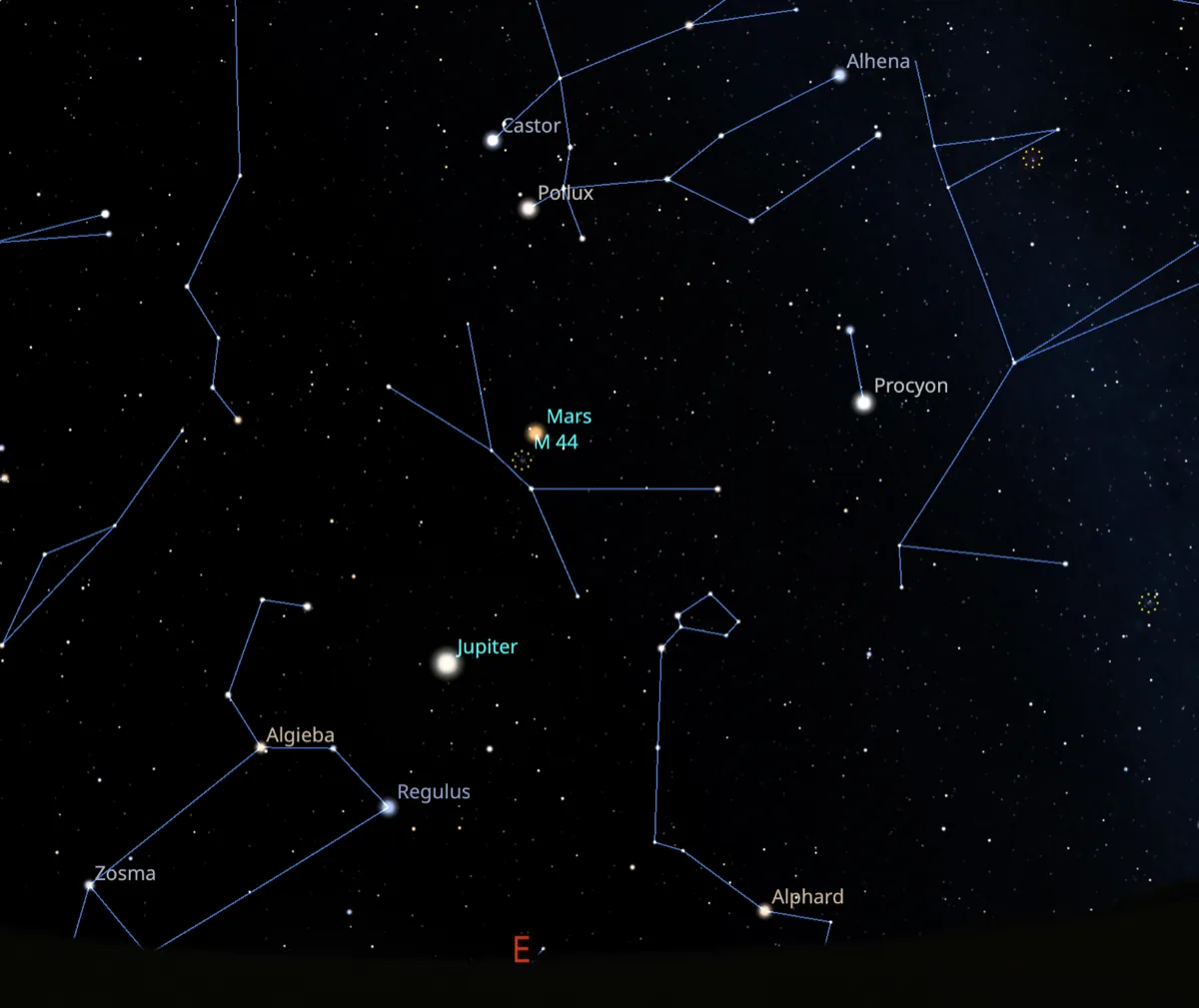
Mars: at 4AM - Three views
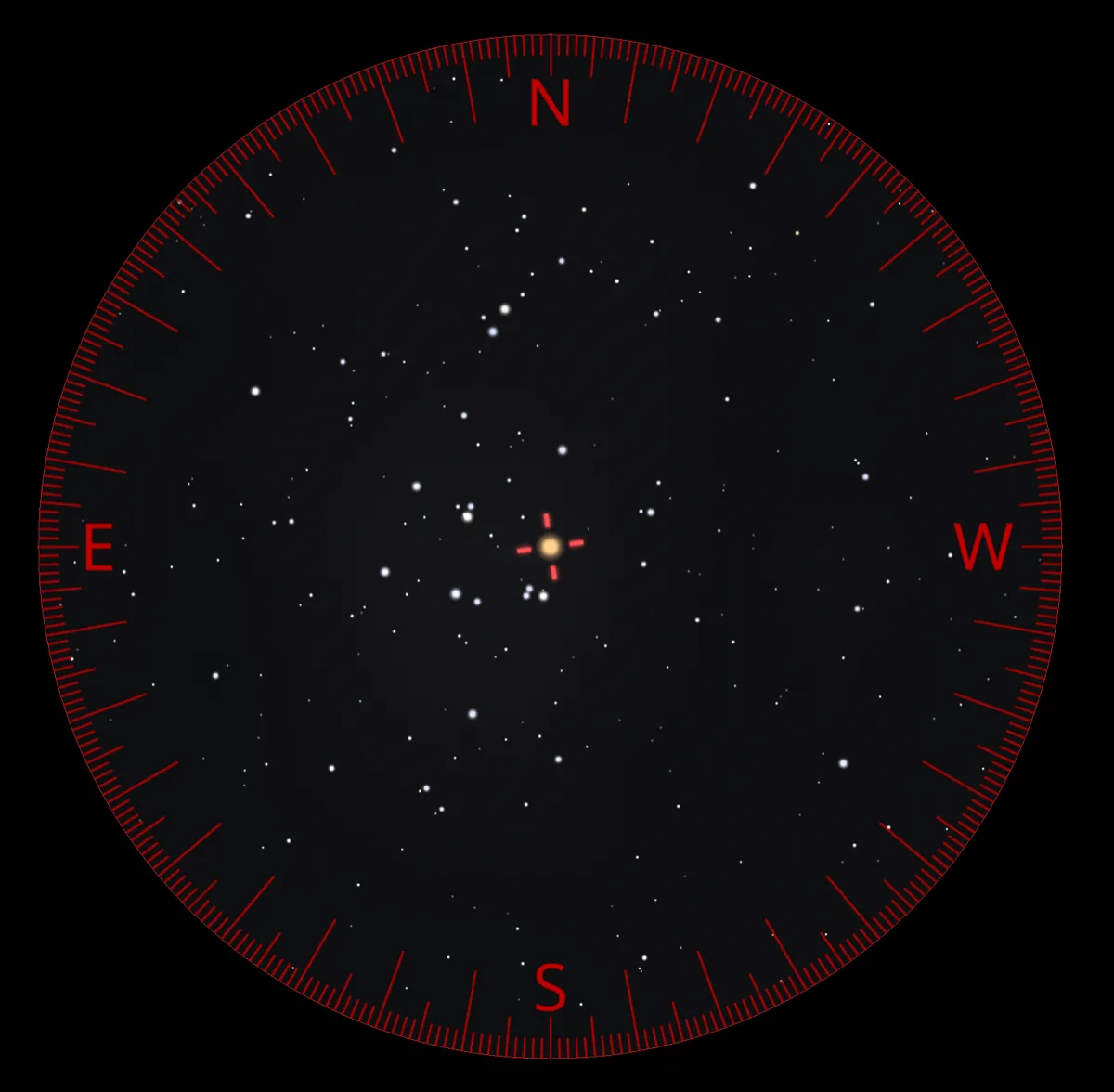
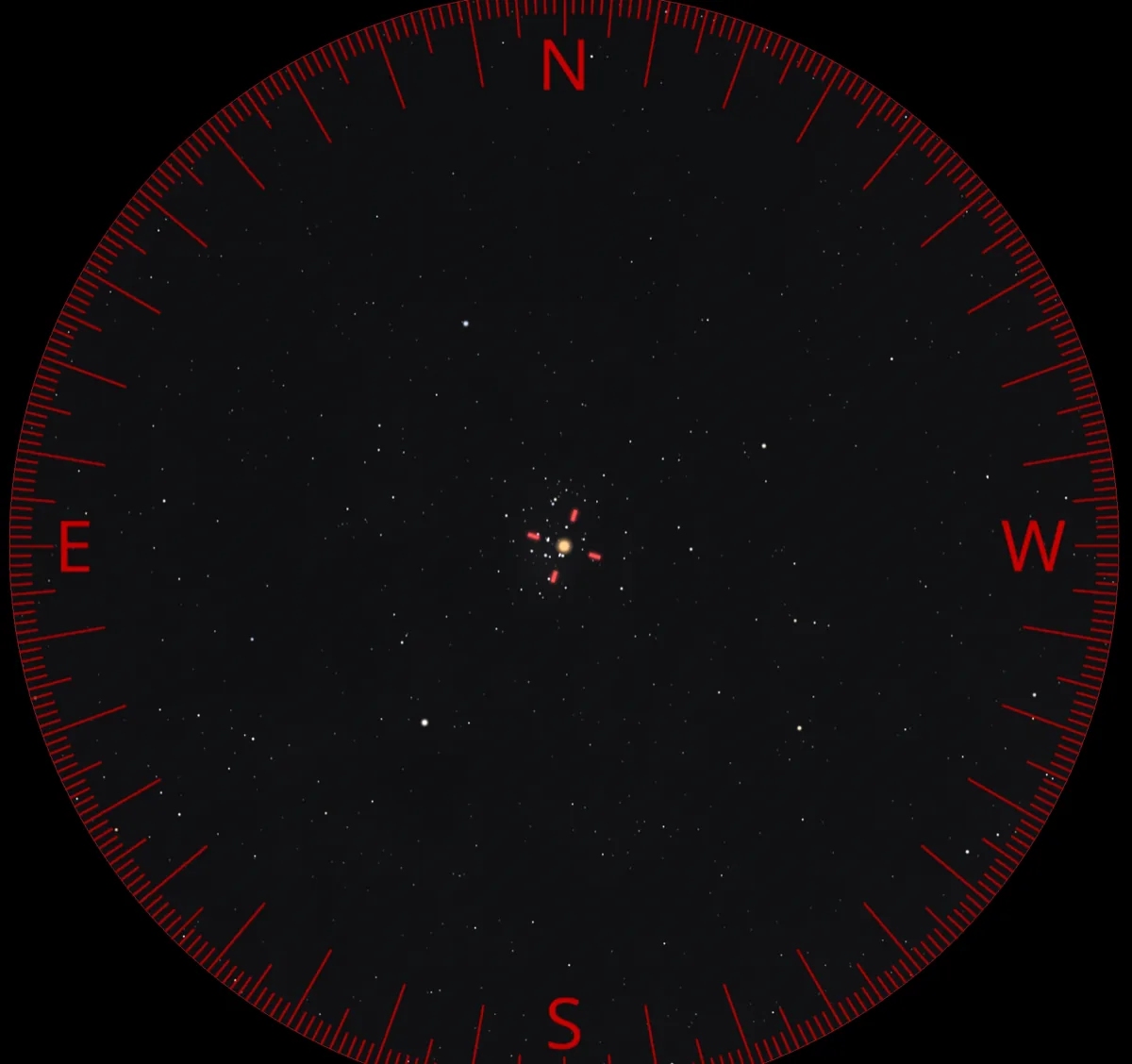
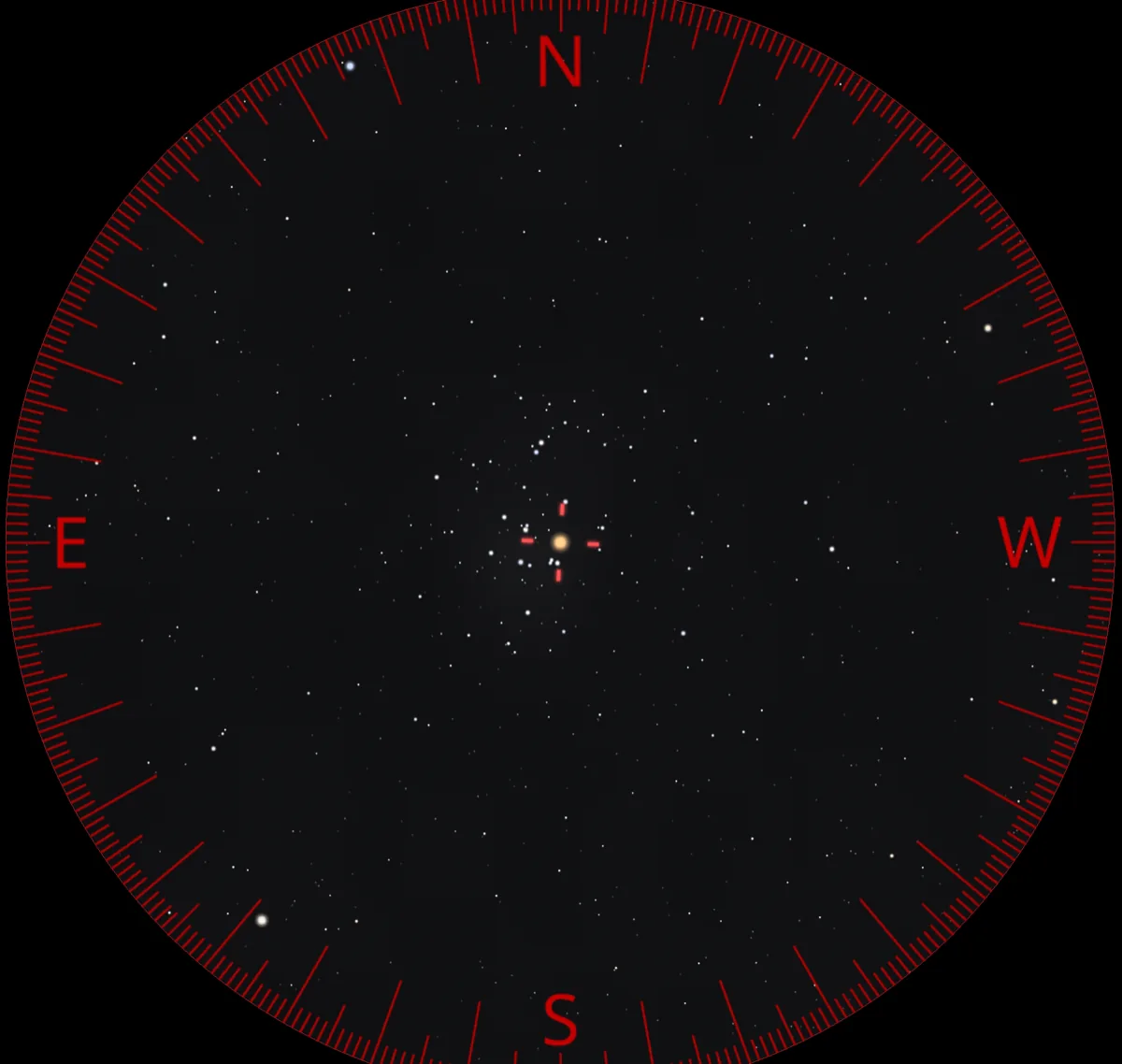
Five days later, Mars passes directly through the Beehive Cluster (M 44) in Cancer — a much quieter event than the Jupiter occultation, but a nice pairing of planet and open cluster in the same low-power field.
Mars is small and unglamorous right now — its disk spans just 5.9 arcseconds on the 11th (confirmed against a geocentric ephemeris), or roughly 1.6 times the angular size of Uranus. This isn’t a night for planetary detail; it’s a night for context, watching a rust-colored point of light drift through a cluster of a few hundred stars 600 light-years away.
Mars doesn’t clear the horizon until roughly 1-2 AM, so there’s a wait before it’s high enough to be worth pointing anything at. By 4:00 AM, the time of the screenshots above, it should be reasonably well placed.
Timing Note
Astronomical twilight begins at 5:27 AM EDT that morning, sunrise at 7:01 AM — so a 4:00 AM observing window leaves comfortable dark-sky time before twilight intrudes.
Closing
These two mornings don’t have much in common beyond the hour on the clock. Jupiter and the Moon give you a real event — something with a start time, a middle, and an end, worth setting an alarm and staying at the eyepiece for. Mars and the Beehive are the opposite: no ingress, no egress, nothing to time, just a small rust-colored point easing its way across a loose swarm of stars over the course of a week, worth a few quiet minutes if you’re up anyway. Different reasons to lose the same hour of sleep — but between the two, October’s pre-dawn sky earns it.