The Queen
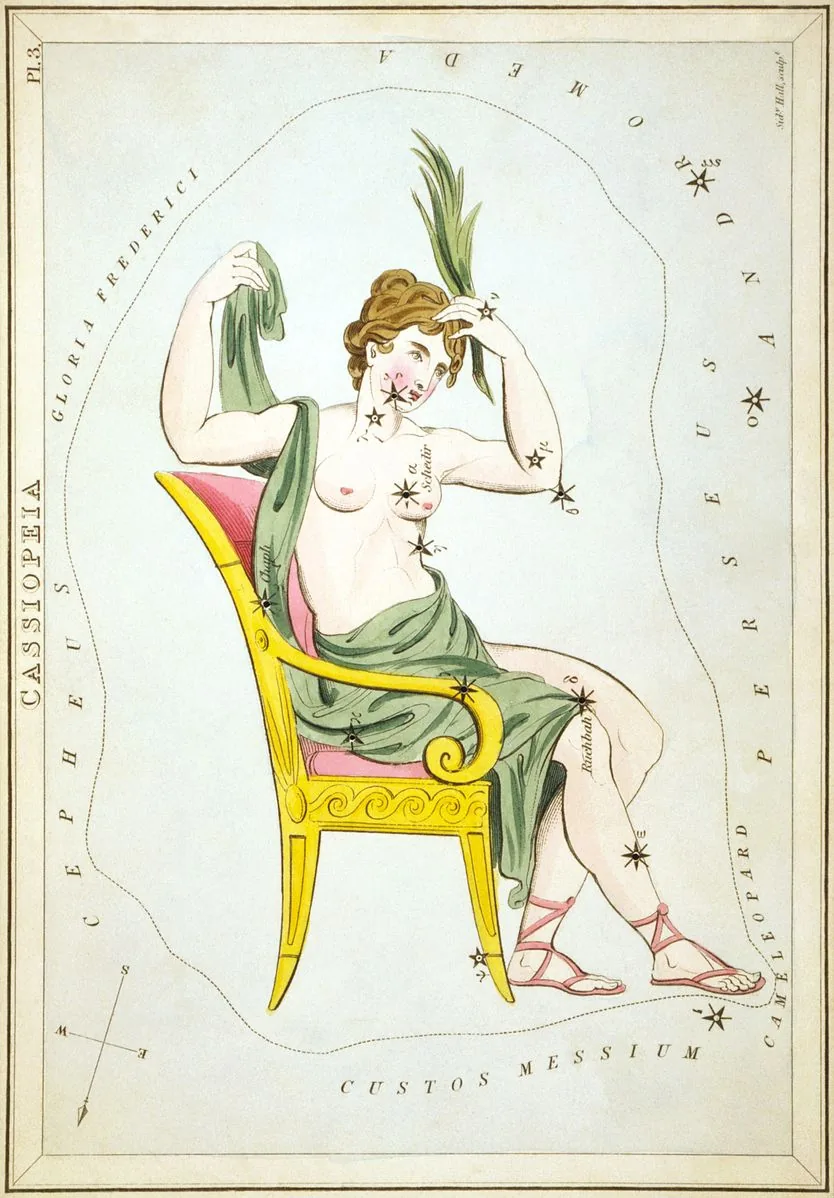
Cassiopeia is one of Ptolemy’s original 48, listed in the Almagest alongside the rest of her family plot: Cepheus her husband, Andromeda her daughter, Perseus the hero, and Cetus the monster sent to ravage their coastline. The story starts with vanity – Cassiopeia, the Queen of Æthiopia boasted that her beauty (in some tellings, Andromeda’s) outshone that of the Nereids, the sea nymphs who counted Poseidon as their protector. The insult reached him, and he sent Cetus to punish the kingdom. Andromeda was chained to a rock as an offering to appease it, and only Perseus’s timely arrival – fresh from beheading Medusa – saved her. Cassiopeia’s own punishment was to be bound to her throne and set in the sky circling the celestial pole forever, which in the old telling meant spending half of every night hanging upside-down.
Map of Cassiopeia
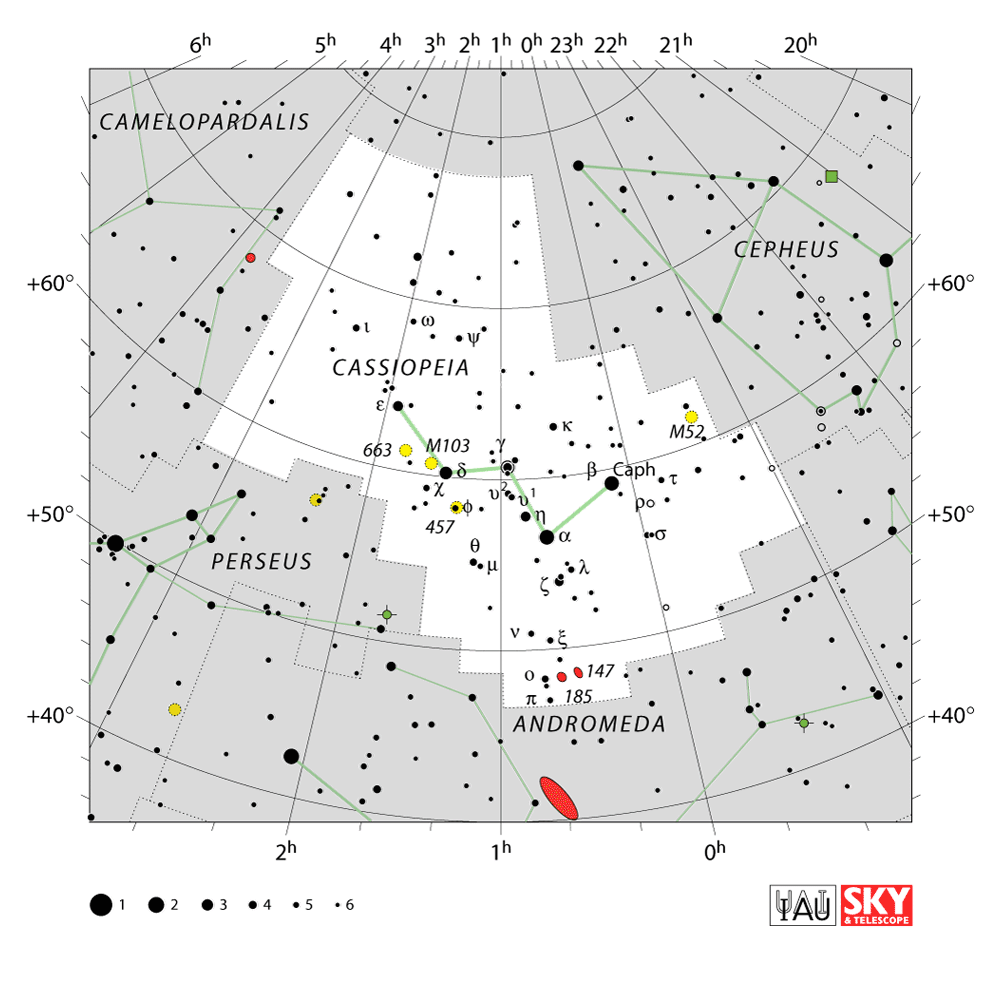
Cassiopeia straddles a genuinely rich stretch of the Milky Way, and it shows: this is a constellation dominated by open clusters and emission nebulae, the signature objects of active star formation close to the galactic plane. Many of the clusters are bright enough that even just casually scanning from one end of the constellation to the other becomes a series of discoveries, not just for discreet clusters, but also seeing the shifts and changes of the background Milky Way.
A Nice Double Star
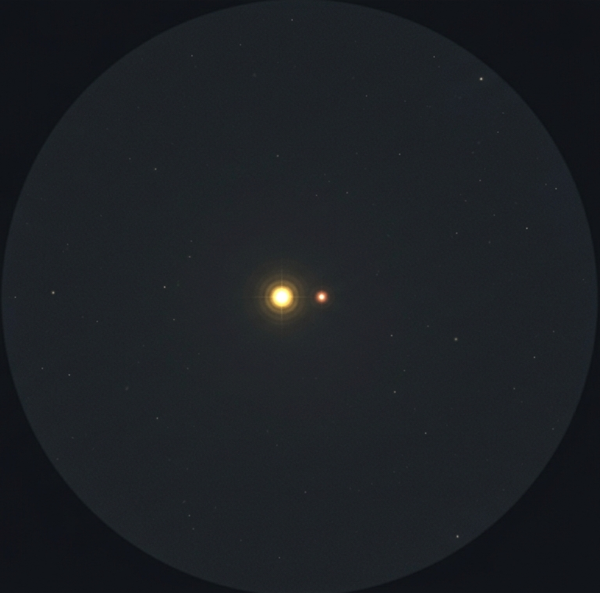
Achird (η Cassiopeiae) is an easy target and a satisfying one: at only 19.3 light-years away, it’s the closest star system in the constellation, and a genuine double – a Sun-like yellow dwarf paired with a fainter orange companion, separated by about 12 arcseconds. That’s wide enough to split cleanly in a small telescope, and the color contrast between the two is obvious once you find it.
Quick Reference: Objects of Interest
| Object | Type | Equipment |
|---|---|---|
| M 52 | Open Cluster | Binoculars/Small Telescope |
| NGC 7789 | Open Cluster | Small/Medium Telescope |
| NGC 7635/C 11 | Emission Nebula | Imaging Telescope |
| NGC 281 | Emission Nebula | Medium/Imaging Telescope |
| IC 1848 | Emission Nebula | Imaging Telescope |
| IC 1795 | Emission Nebula | Imaging Telescope |
| Sh 2-188 | Planetary Nebula | Imaging Telescope |
| NGC 278 | Spiral Galaxy | Medium/Imaging Telescope |
An Old Friend, Nearby
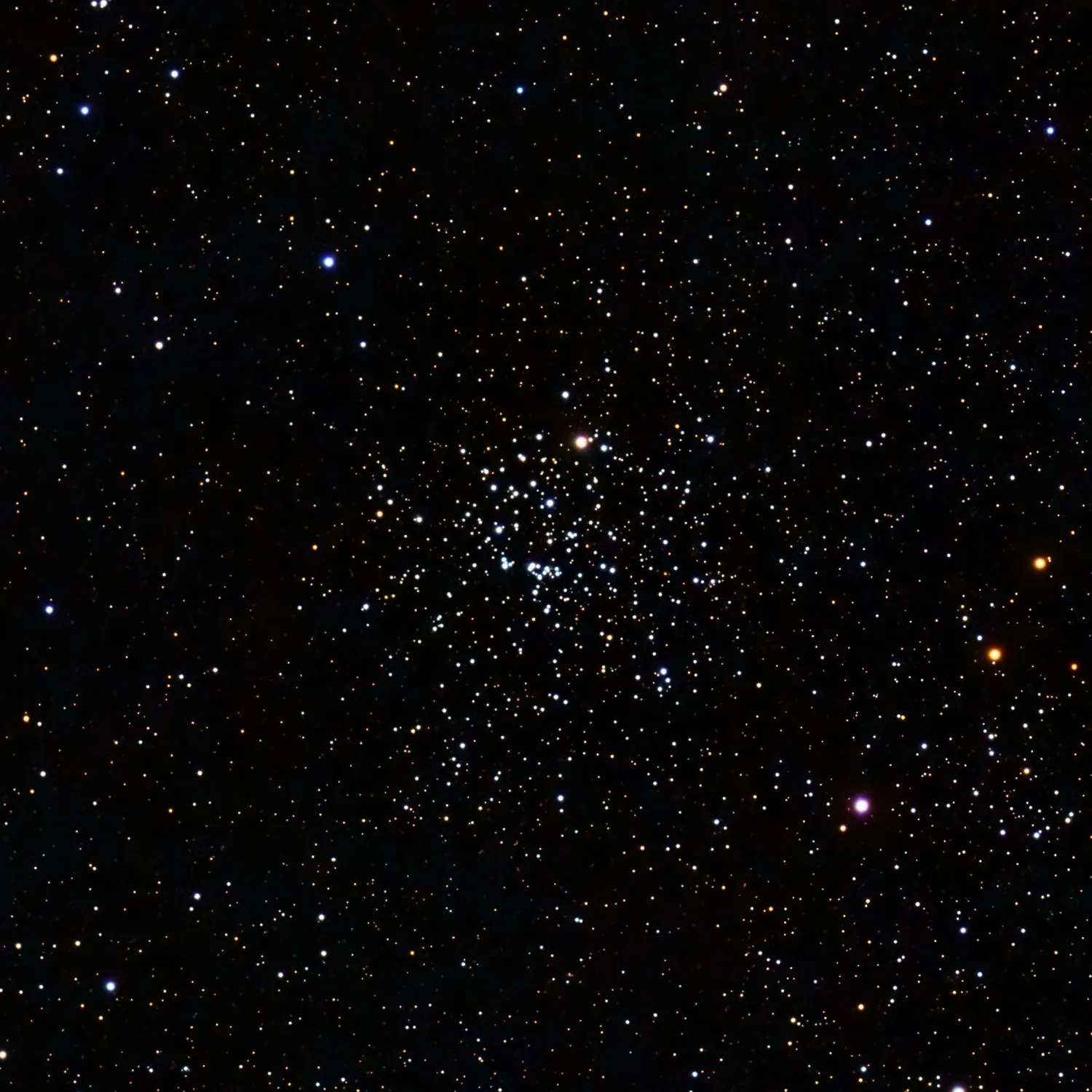
M 52 is Charles Messier’s own find, logged in 1774, and it’s still one of the better binocular open clusters in the fall sky: a few hundred stars in a compact, bright knot roughly 5,000 light-years away, only a few tens of millions of years old. It sits less than a degree from the Bubble Nebula – if you’re star-hopping to one, the other is right there for free, even though one is a cluster of ordinary stars and the other is the product of a single extraordinary one.
Caroline’s Rose
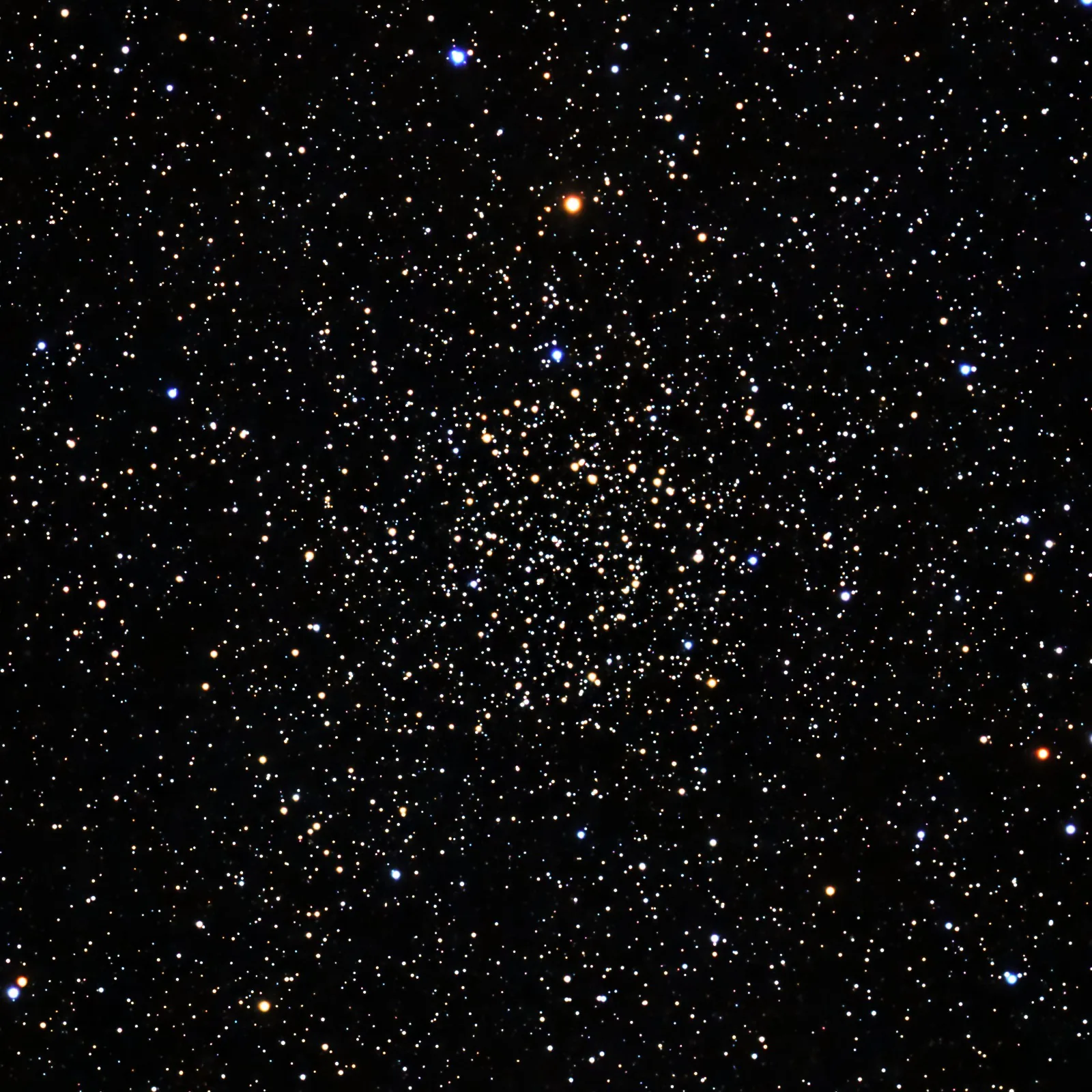
NGC 7789 was Caroline Herschel’s discovery, in 1783 – one of several she found in her own right while cataloging alongside her brother William, at a time when a woman being credited with an astronomical discovery at all was unusual. It’s an unusually rich, unusually old open cluster: well over a thousand stars, and at roughly 1.6 billion years, ancient by open-cluster standards, since most disperse under the galaxy’s tidal pull long before they get that old. In deep images the loops of stars and dark intervening lanes resolve into a genuine rose-like pattern, which is where the nickname comes from – it takes real integration time to bring out, but it’s there.
The Bubble
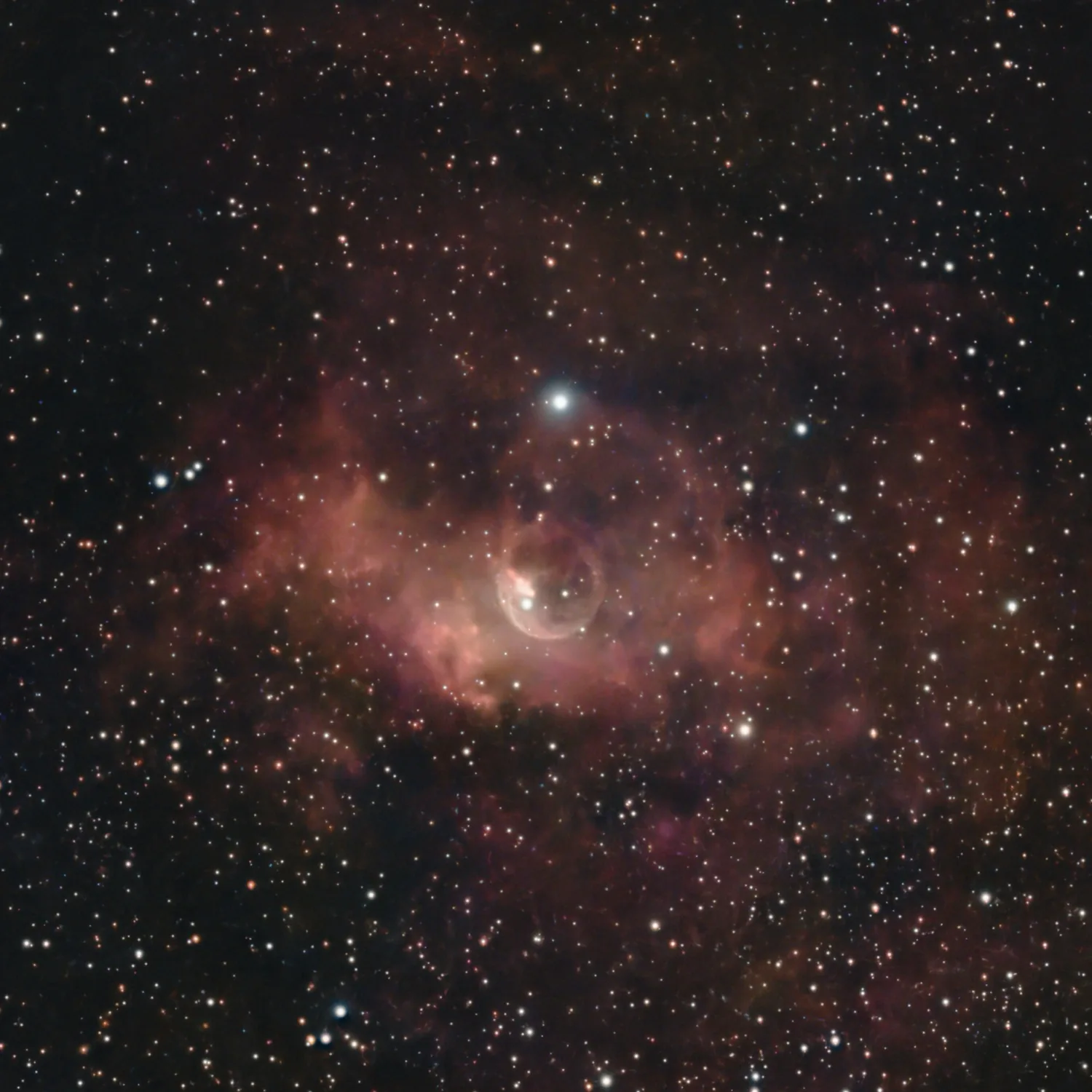
The Bubble Nebula (Caldwell 11) is exactly what it looks like: a shell blown into surrounding gas by the fast stellar wind of a single massive young star, cataloged as BD+60°2522. Distance estimates for it vary widely, anywhere from roughly 7,000 to 11,000 light-years, but the shape itself is the real story – the bubble isn’t centered on the star, because the star is plowing through a denser molecular cloud on one side, and the wind pushes further and faster into the thinner gas on the other. What you’re looking at is a shock front, not a solid shell, roughly 10 light-years across.
Pac-Man
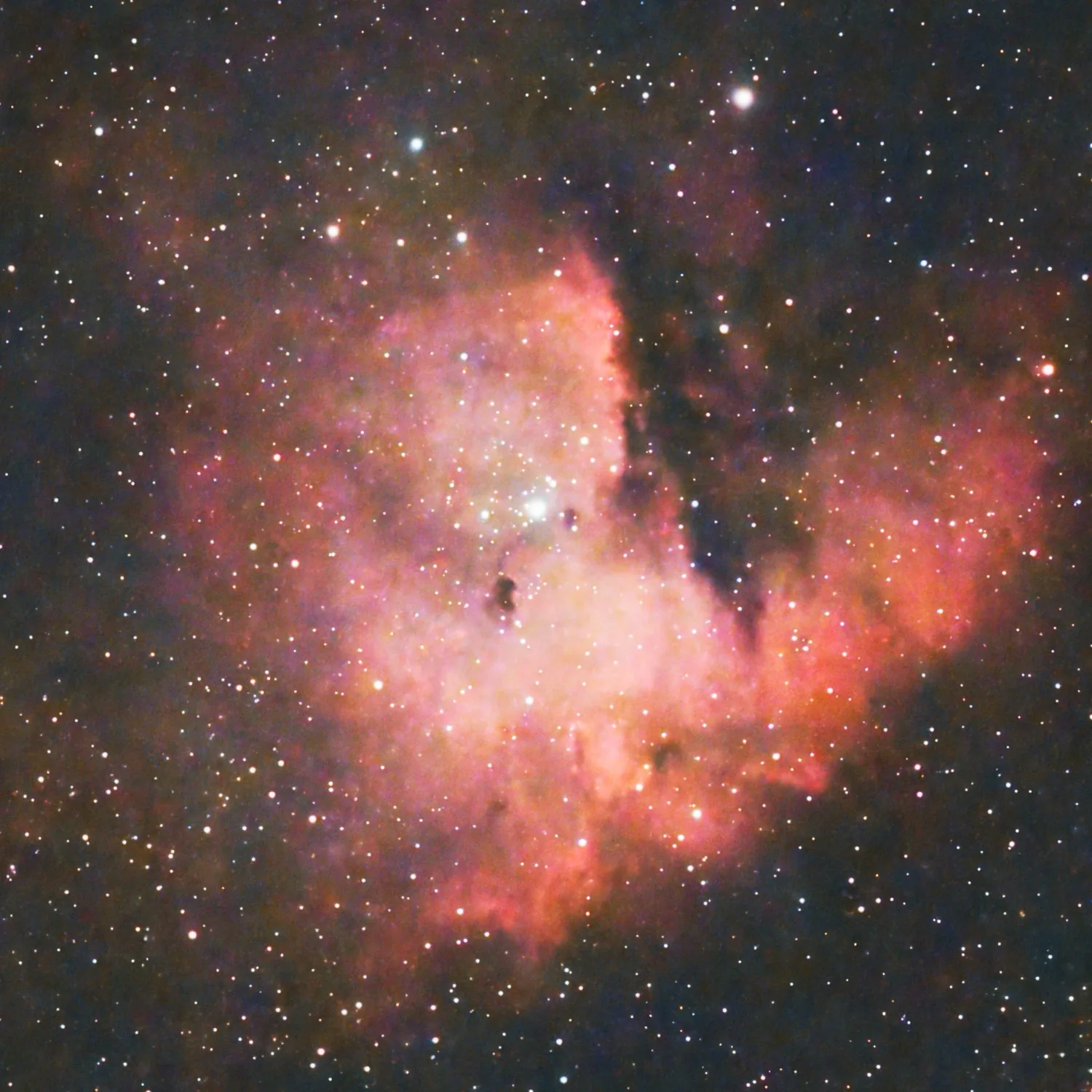
NGC 281 is an emission nebula about 9,500-10,000 light-years away, discovered by Edward Barnard in 1883 and lit up from within by an embedded young cluster, IC 1590, whose hottest stars are energetic enough to ionize the surrounding hydrogen. The “mouth” that gives it the nickname is a dark lane of dust and a scattering of Bok globules – small, dense pockets of gas silhouetted against the glow – eating into the nebula’s edge. Those globules aren’t just decorative: they’re dense enough that some of them may be the sites of the region’s next generation of stars.
The Soul
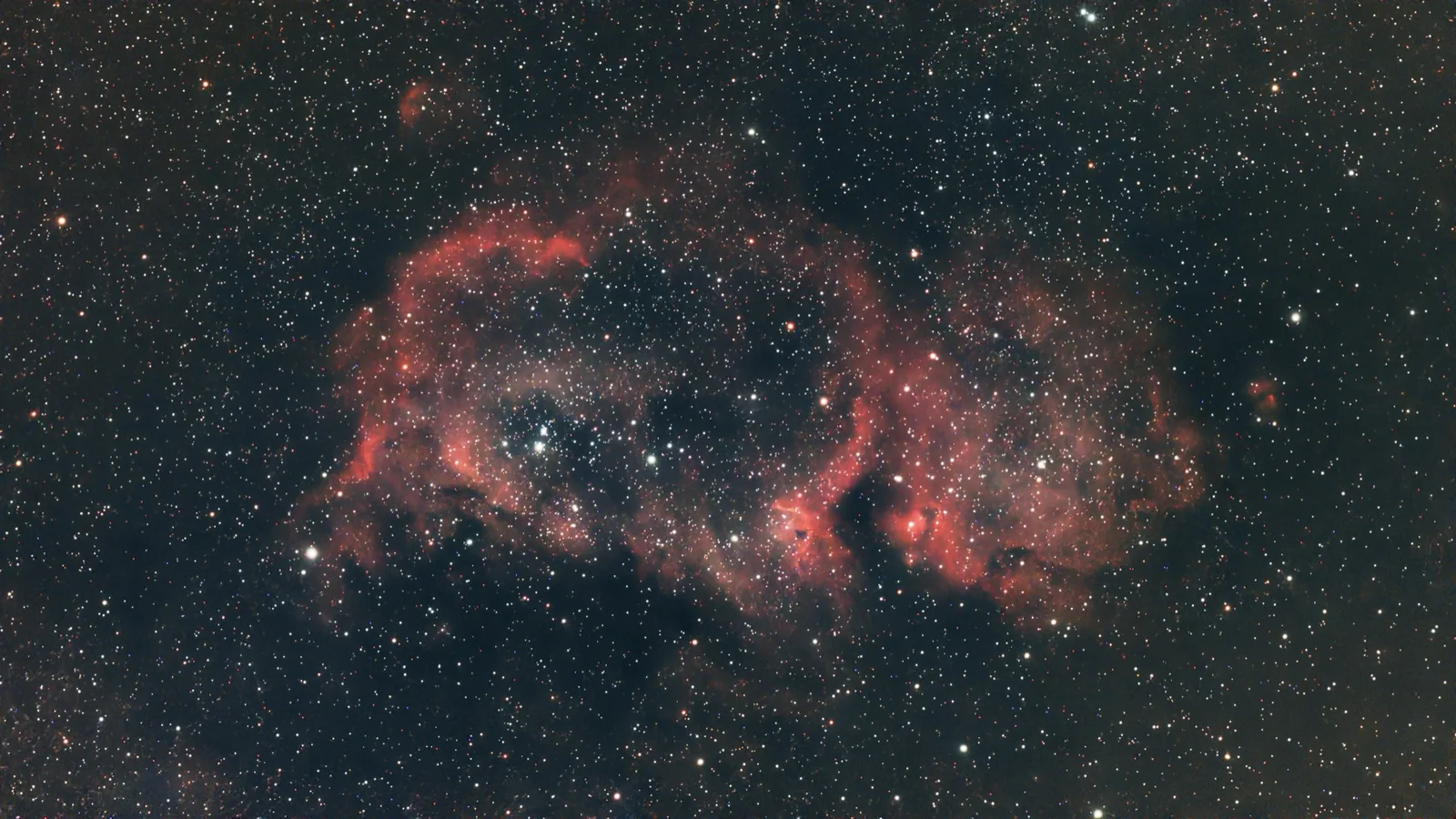
IC 1848, also cataloged as Westerhout 5, is the western half of the Heart and Soul complex – if the Heart Nebula caught your eye in our Perseus Arm piece, this is its quieter twin, roughly 6,500-7,500 light-years away and still actively forming stars. Deep images reveal the same kind of pillar structures made famous by the Eagle Nebula’s “Pillars of Creation”: dense columns of gas being eroded from the outside by radiation and stellar winds from the young, massive stars already born nearby, some of them likely dense enough to collapse into new stars of their own before they’re worn away entirely.
The Fish Head
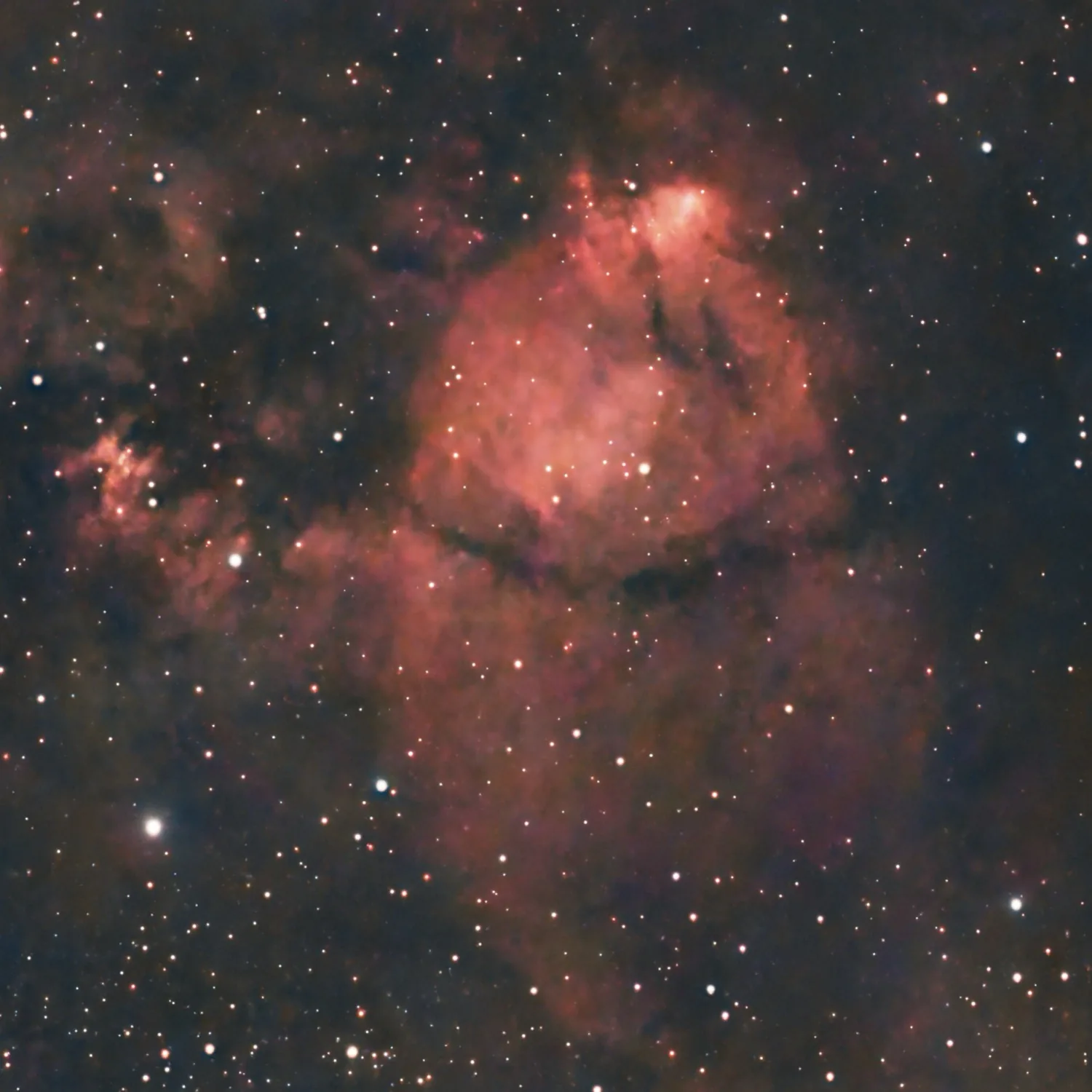
IC 1795 isn’t a separate nebula so much as the brightest, densest edge of the Heart Nebula itself – seen up close. This is the part being most aggressively carved by Melotte 15, the young star cluster embedded at the Heart’s core: the combined radiation and stellar winds from those massive stars have sculpted the dust here into a shape that, unusually for these informal nicknames, really does look like what it’s named for.
Glowing Shrimp?
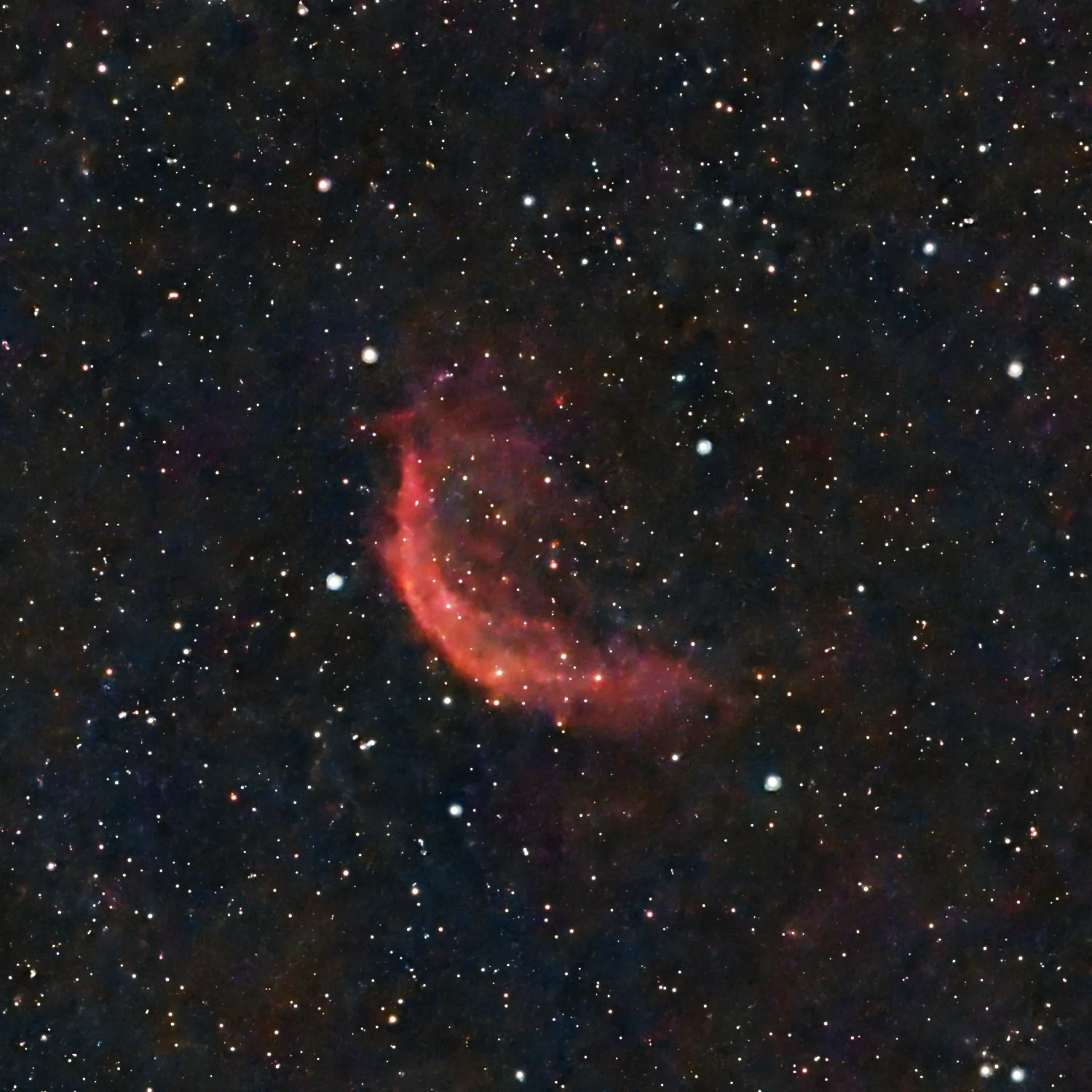
Sh 2-188 – also called the Dolphin or Shrimp Nebula – is a planetary nebula unlike the tidy rings most people picture. Its central star is moving through the interstellar medium at around 125 kilometers per second, and that motion has dragged the expanding shell into a lopsided, comet-like arc: a bright bow shock on the leading edge, with faint trailing filaments stretched out behind. It’s old for a planetary nebula, around 20,000-25,000 years, and roughly 700-900 light-years away. It was actually misclassified as a supernova remnant when it was first photographed, and only later correctly identified – an easy mistake, given how little it resembles its own catalog neighbors.
A Small, but Very Active Galaxy
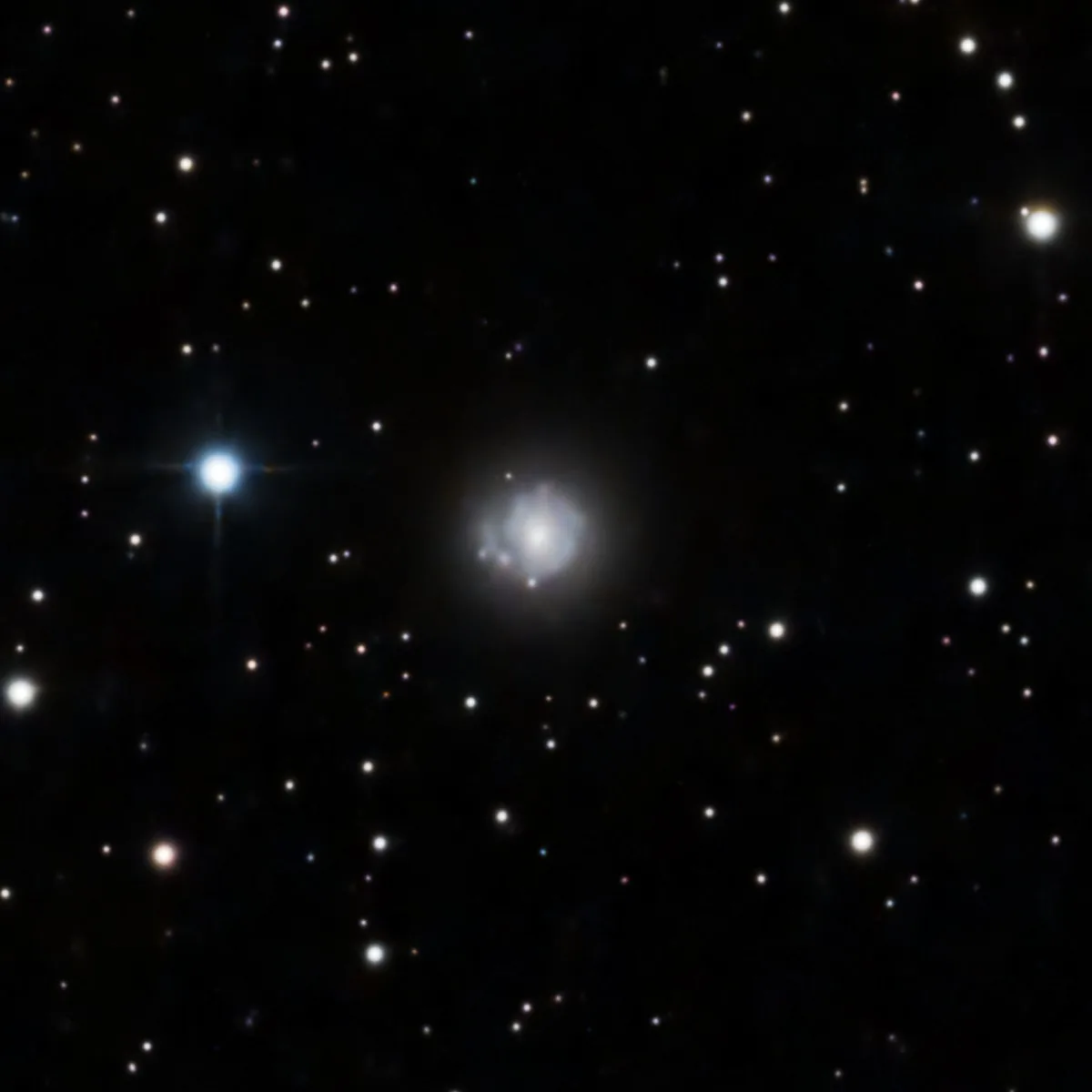
After a run of nebulae, NGC 278 is a change of pace: a small, compact spiral galaxy about 38 million light-years away, discovered by William Herschel in 1786. Don’t let “small” undersell it – it’s in the middle of an intense burst of star formation, visible as bright blue knots threaded through its arms, but that activity is oddly confined to an inner ring only about 13,000 light-years across, leaving the galaxy’s outer disk comparatively dark and quiet. The likely cause is a merger with a smaller, gas-rich companion at some point in its past – a genuine oddity, since this kind of nuclear starburst ring usually shows up in strongly barred galaxies, and NGC 278 isn’t one.