Introduction
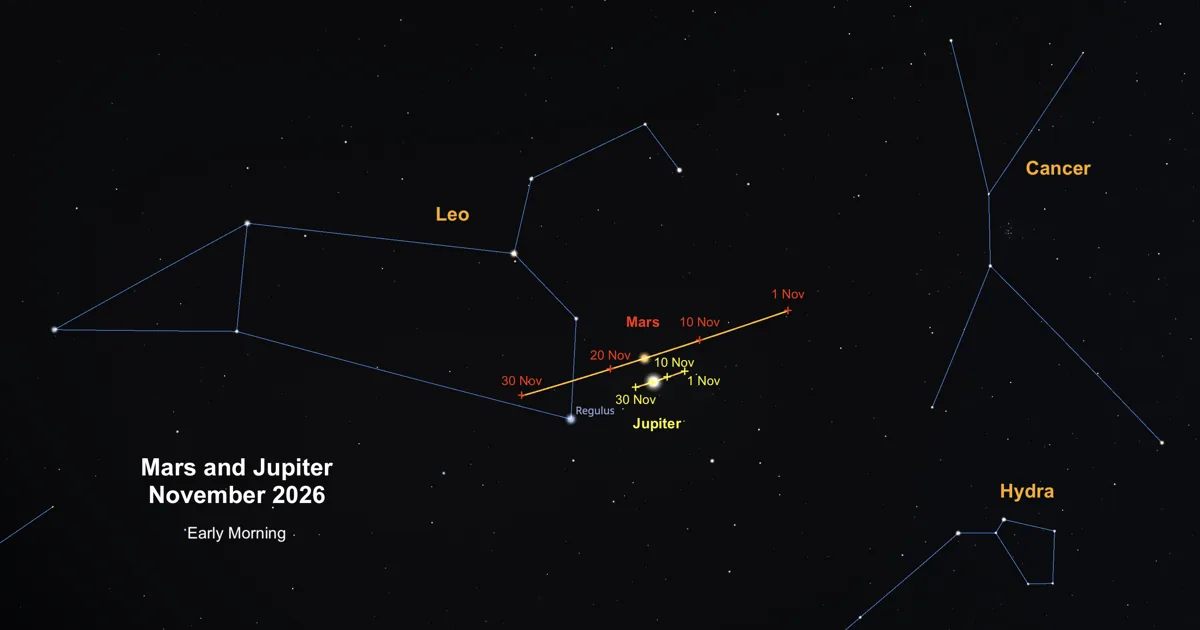
Mars and Jupiter spend all of November working their way toward each other against the stars of Cancer and Leo, reaching their closest approach between November 14 and 16, when they close to as little as 1.1°–1.2° apart.
The View in the Solar System
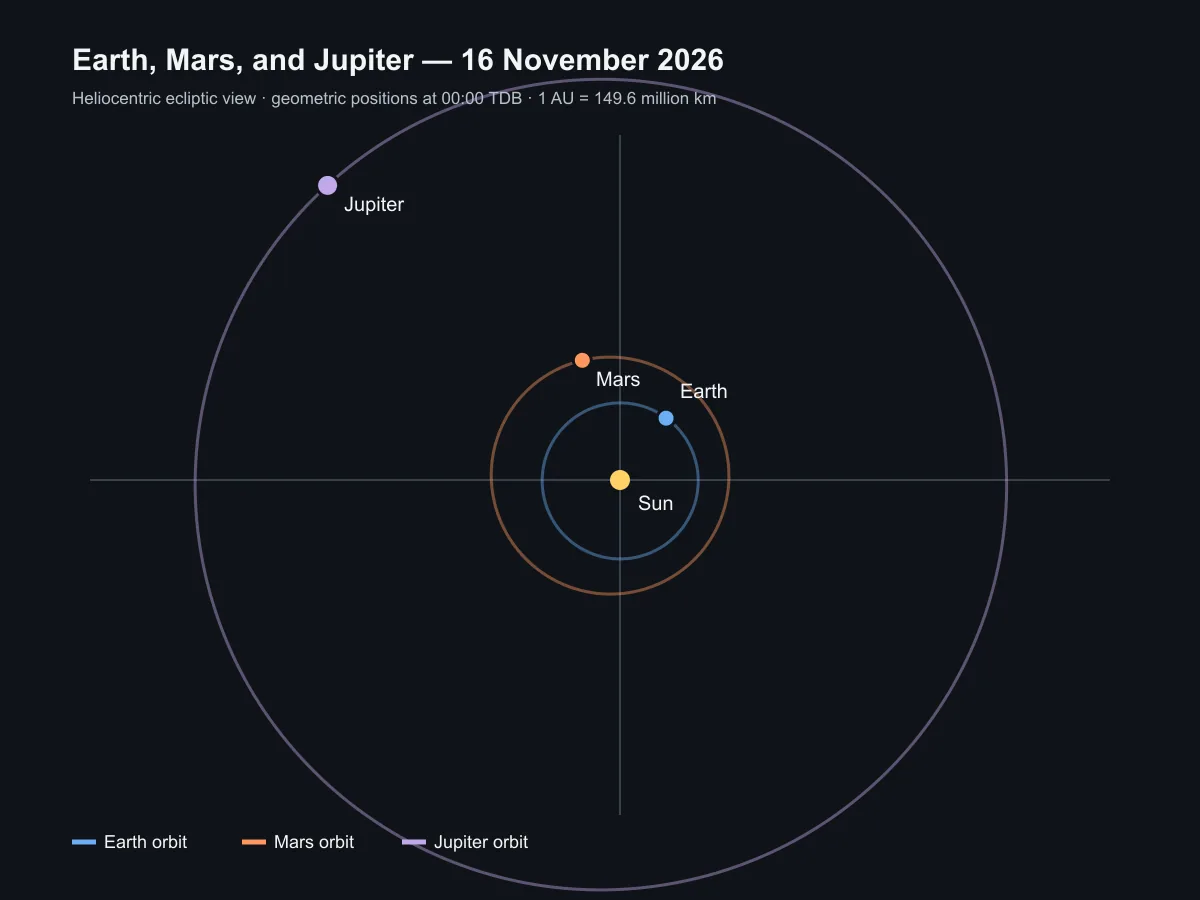
This diagram shows why the view from Earth can be deceiving: Mars and Jupiter only look close together because they happen to line up along nearly the same sightline this month. In reality they’re roughly 350 million miles apart in space — Jupiter sits far beyond Mars in its own, much slower orbit. What we’re seeing is a trick of perspective, not a close pass between the two planets themselves.
Because of the time of year, the pair is also a late-night-into-morning object rather than an early-evening one — look for them rising after midnight and climbing higher as dawn approaches, rather than expecting to spot them right after sunset.
What You’ll See
Naked Eye
Both planets are easy naked-eye targets all month, and watching their positions shift night to night is half the fun. Mars starts November to Jupiter’s west, then swings north of it around mid-month at closest approach, and finishes the month having pulled ahead to Jupiter’s east. The two won’t be done with each other after this, either: heading into 2027, both planets turn retrograde, and Mars very nearly catches back up to Jupiter again in late March.
Watch for a striking brightness contrast, too. Both planets brighten slightly over the course of the month — Mars from magnitude 0.85 to 0.51, Jupiter from -2.00 to -2.19 — but the gap between them stays dramatic throughout: on average, Jupiter outshines Mars by about 2.7–2.8 magnitudes, which works out to roughly 12 to 13 times brighter, even sitting right next to each other in the sky.
Binoculars
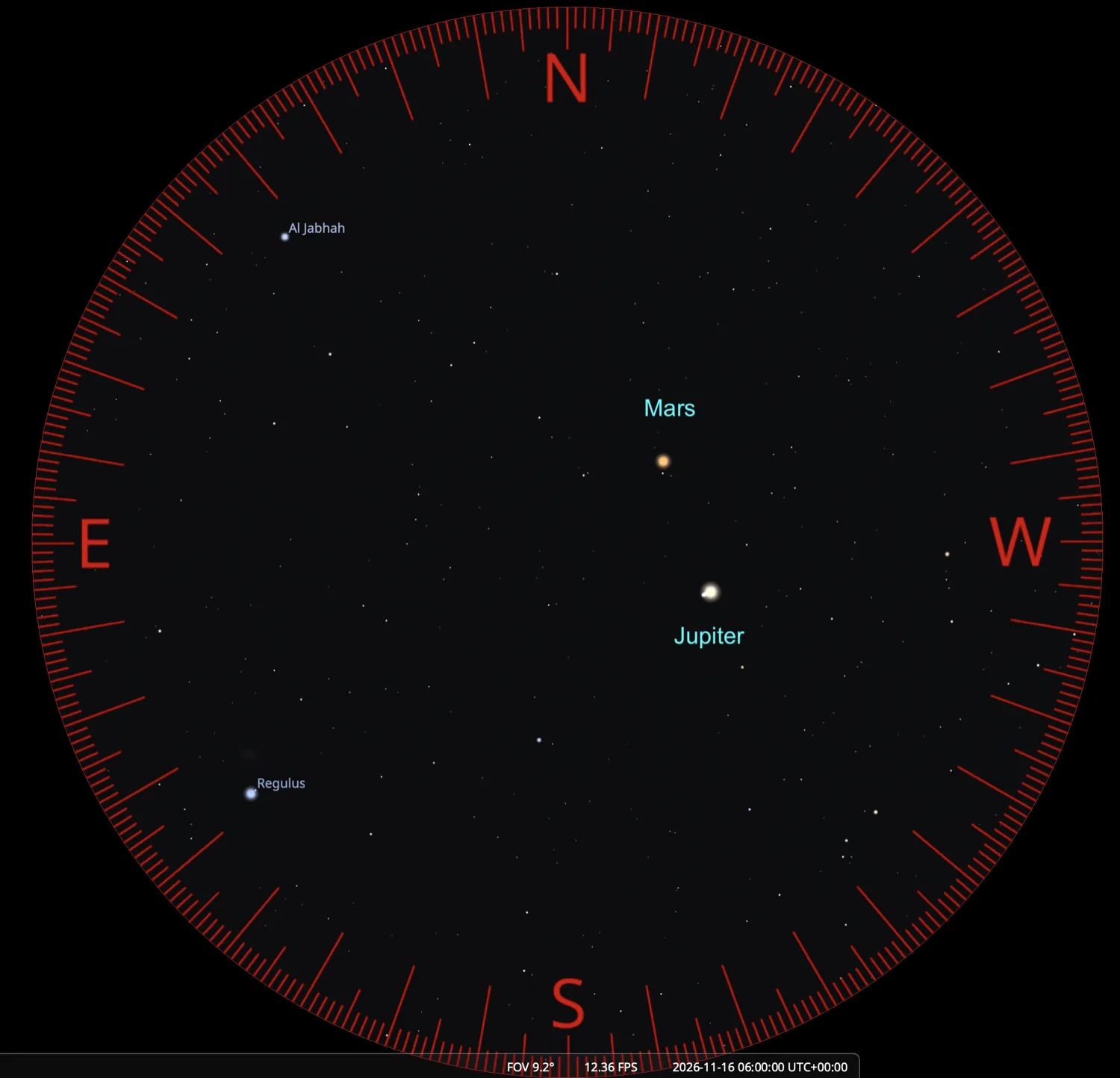
A pair of ordinary binoculars is all you need to hold both planets in the same field of view for most of November — no telescope required to appreciate how close they’ve drawn together.
Small Telescopes
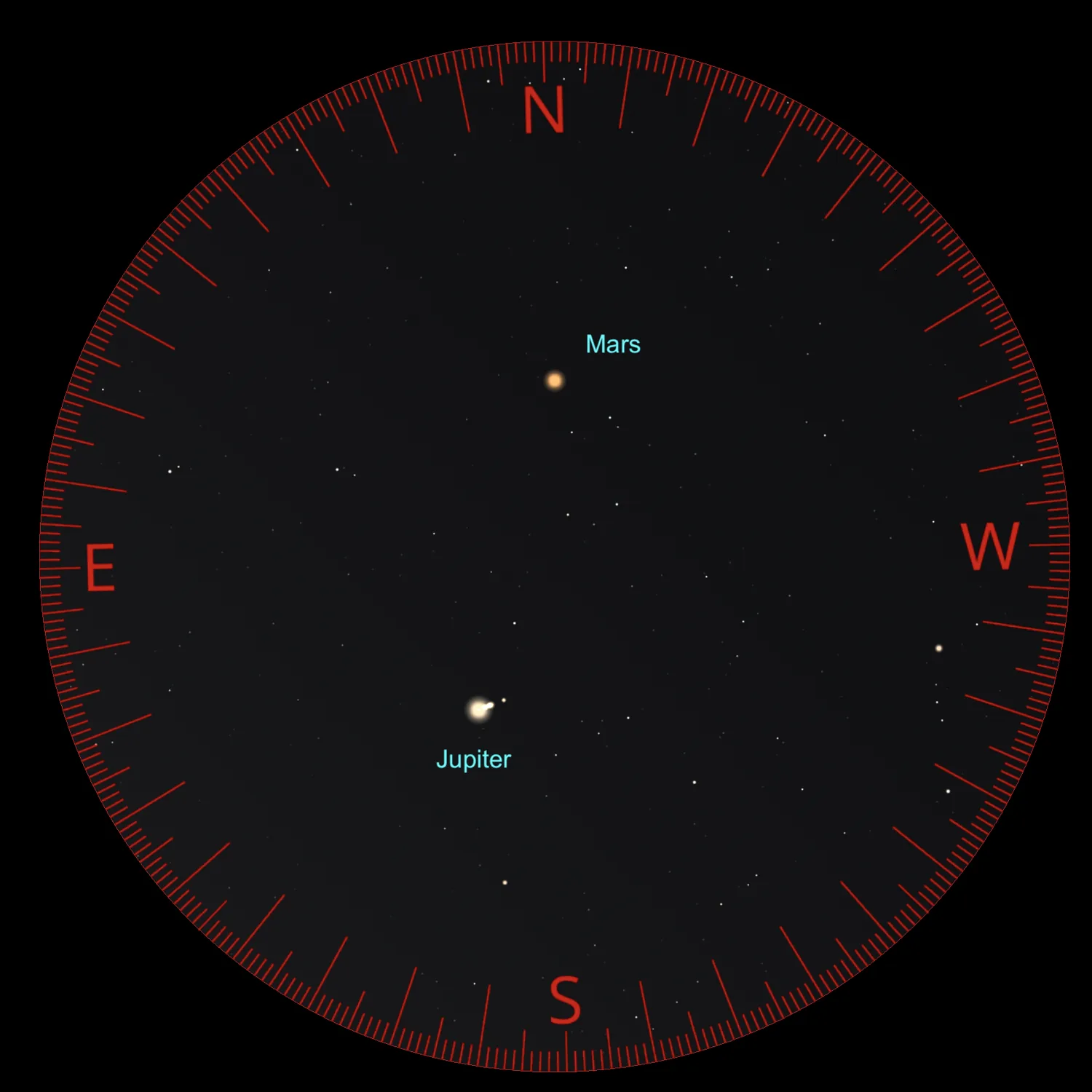
Even a small telescope at low power will comfortably frame both planets side by side for much of the month, making this a good target for a first look through a new scope.
Features on Mars
Don’t expect much surface detail on Mars this time around — it’s a small target all month, growing only from about 6.6″ to 7.9″ in apparent diameter between the start and end of November. At that size, Mars is best appreciated as a small, distinctly reddish disk rather than a source of visible surface features; save the detailed Mars observing for when it’s larger and closer to Earth.
Jupiter and the Galilean Satellites
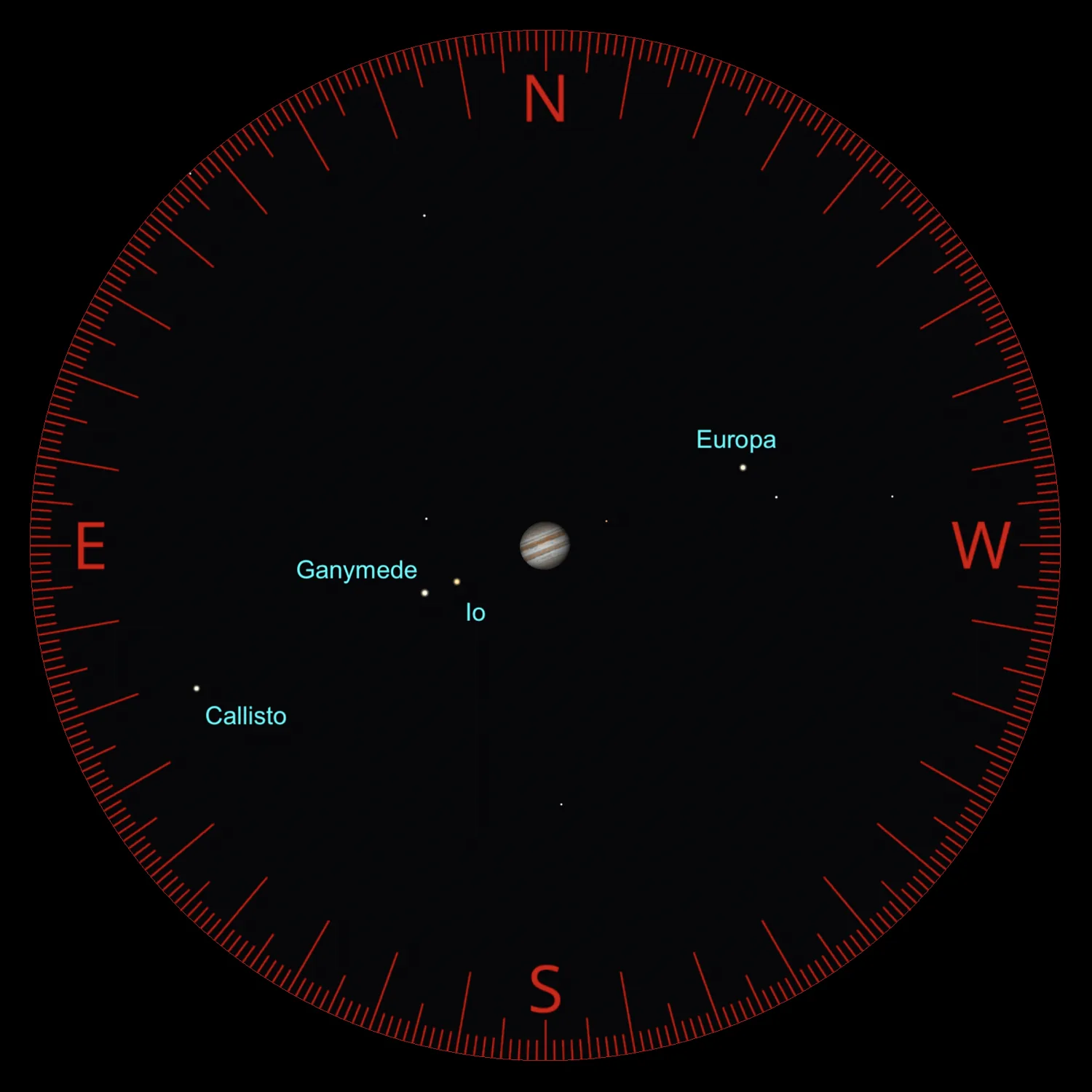
Jupiter, by contrast, rewards a closer look even at modest magnification — its dark cloud bands are easy to pick out, and its four Galilean moons shift position from night to night. For exact positions and upcoming transit and shadow events, check our Solar System Dashboard for up-to-the-minute predictions.
Jupiter and the Moon
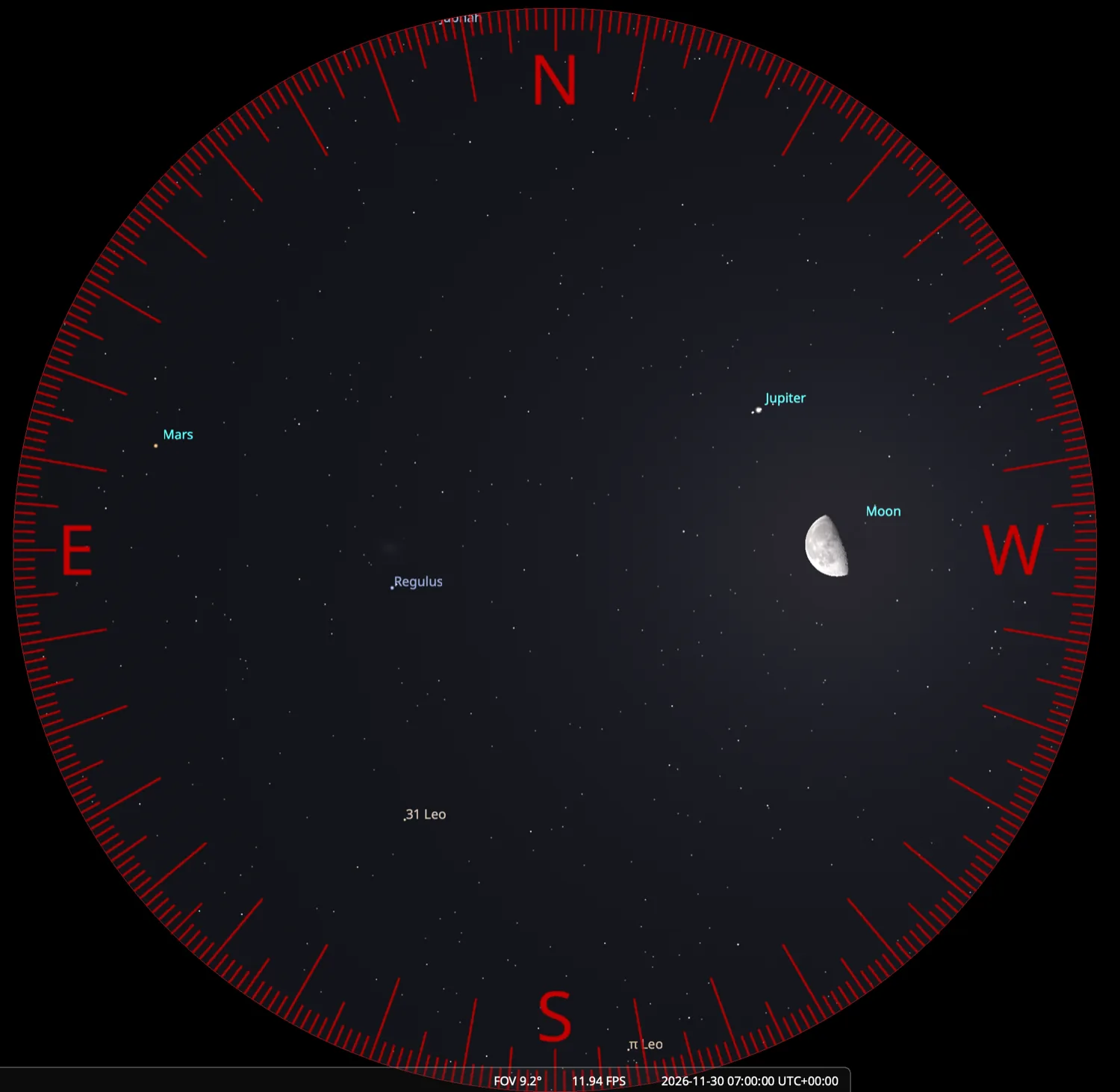
As a bonus for early risers, the waning crescent Moon passes just 1°18′ south of Jupiter on the morning of November 30, offering one more good photo opportunity to close out the month.