Ever since I was a little kid, I wanted to be an astronomer. It was my first love.
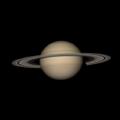
With my first 2" Tasco telescope I “discovered” the rings of Saturn and moons of Jupiter,
double stars, and the brightest star clusters, nebulae, and a few galaxies.
Soon after I got to college (Villanova, U.) I was then bitten by the research “bug”, and
again it was “love at first sight”, this time with variable stars, actually collecting
data used to “figure it all out”. Then I joined the HK Project at the Smithsonian
Astrophysical Observatory, with more data collection but now with the 60-inch at
Mount Wilson Observatory (and then the 100-inch) - the real telescopes!
Over that career, I studied stars similar to the Sun, monitoring stellar activity on
timescales of days (rotation) to months (active region evolution) to years (sunspot
cycles). I finished my PhD dissertation using that data: “Surface Differential
Rotation in a Sample of Cool Dwarf Stars” (looking for latitudinal drift, just like
Carrington’s “butterfly” diagrams for the Sun.
Then exoplanets were discovered: and somewhat coincidentally, many of the first stars
were in our program, so the research extended into exoplanet system environments.
We soon discovered that some exoplanets weren’t exoplanets at all, but large
sunspots: the motion of “cool” spots traversing the stellar surface along the line
of sight also causes fluctuations in the shape of the star’s spectral lines - completely
mimicing the radial velocity variations from an exoplanet. And so - oops! - two
reported exoplanets were “disproved”.
But the funding climate - always precarious - meant having to abandon astronomy - at
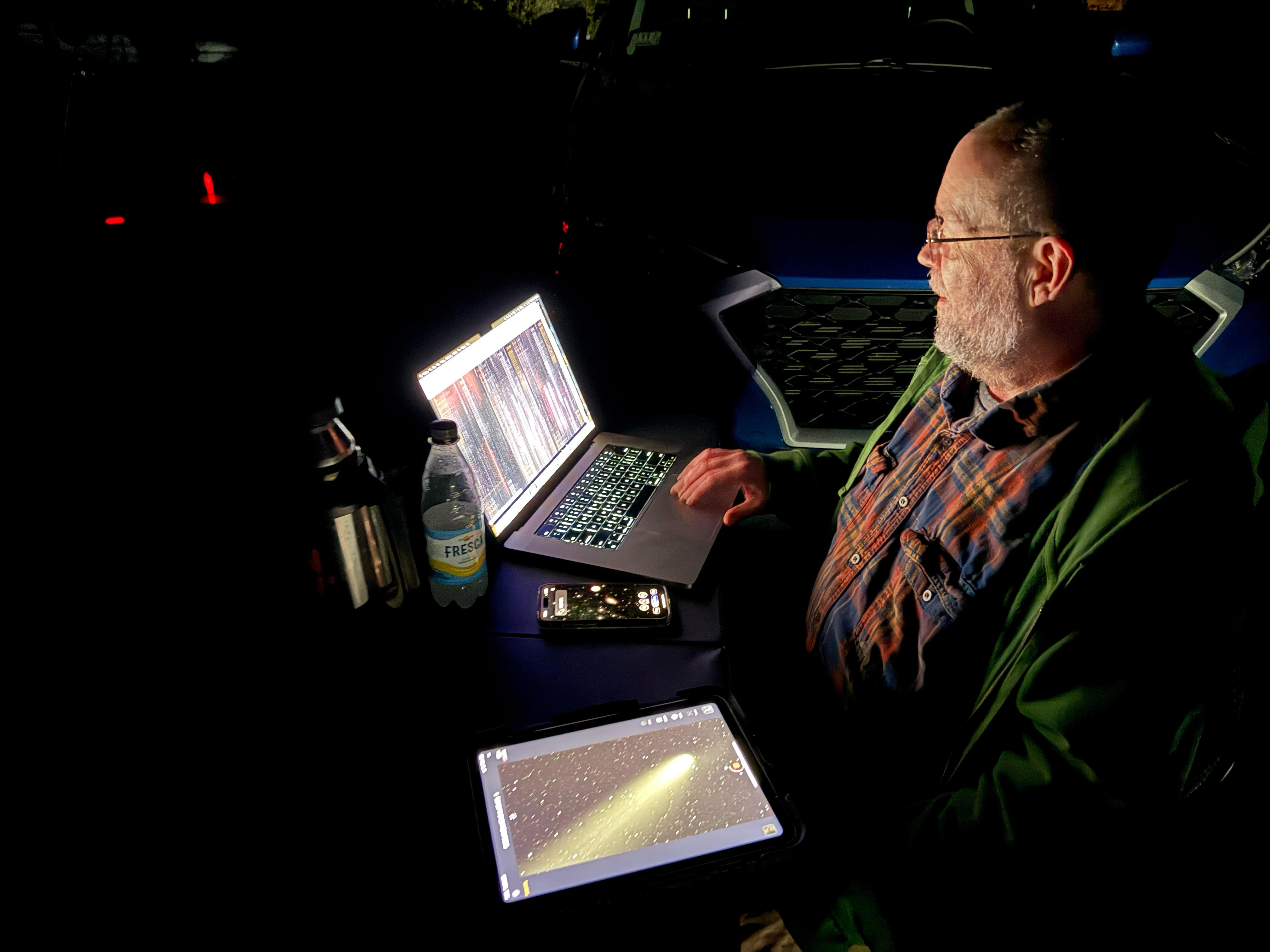
least for a while. Since I moved to the Berkshires a few years ago, I rekindled
my original passion of just looking at the sky “for fun”. Armed with a “fleet”
of smart scopes (I have four as of 2026), I’m combing through the skies “re-discovering”
objects, and learning about all the scientific knowledge we’ve gleaned since first
reading about them in high school. We’ve learned a lot!
Public Talks
Here are some public talks that I’ve given - if your organization would like me to share any with you, please reach out to me:
as well as talks on Smart Telescopes, “What’s Up in the Sky” seasonal features, and Citizen Science programs.