
If the telescope is the engine, the eyepiece is the steering wheel. It’s what you actually look through, and it has an enormous effect on what you see. Yet many beginners spend all their money on the telescope and treat eyepieces as an afterthought. This is a mistake worth avoiding.
How Eyepiece Focal Length Works
The focal length of an eyepiece — printed on its barrel in millimeters — determines the magnification you get when combined with your telescope. The formula is simple:
Magnification = Telescope focal length ÷ Eyepiece focal length
A shorter eyepiece focal length gives higher magnification. A 5 mm eyepiece in a 1000 mm telescope gives 200×. The same telescope with a 25 mm eyepiece gives 40×.
This means eyepieces are interchangeable tools — swap them out to change what you’re looking at. Low power (longer focal length) for wide star fields and large objects; high power (shorter focal length) for planets, the Moon, and tight double stars.
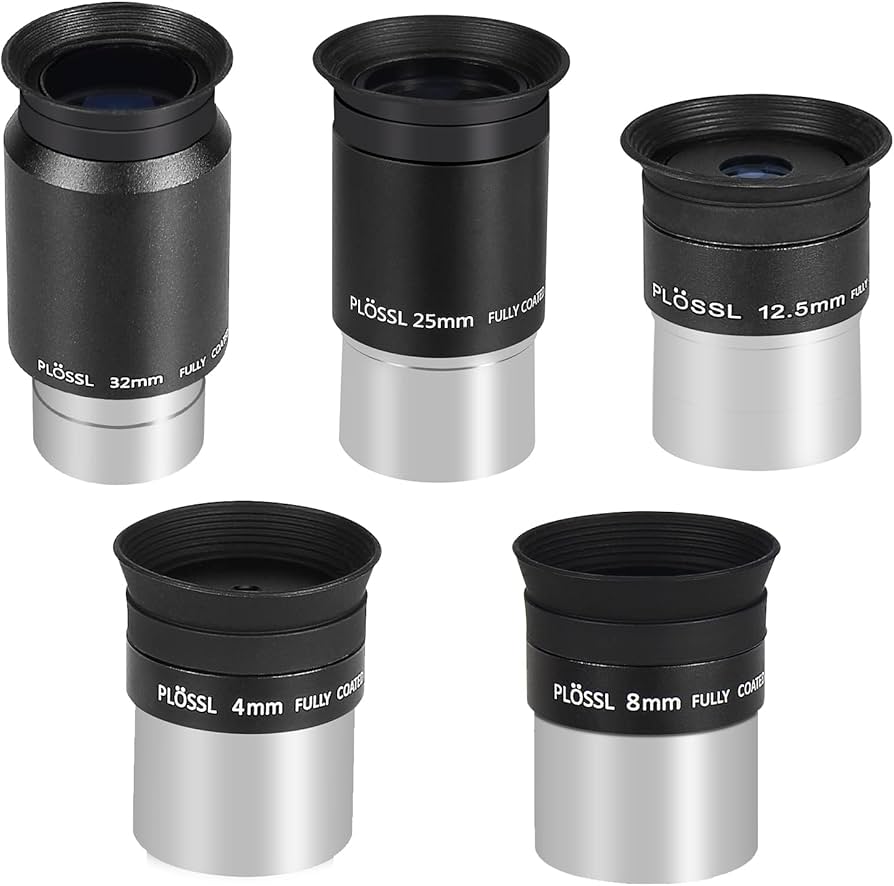
Barrel Size
Eyepieces come in two standard barrel diameters:
- 1.25 inch — the standard for most modern telescopes. A wide range of quality eyepieces is available at all price points.
- 2 inch — used in larger, higher-end telescopes. Allows wider apparent fields of view, particularly useful for low-power wide-field observing.
- 0.965 inch — an older, smaller standard found on cheap department-store telescopes. Avoid it. The eyepieces that come with these scopes are typically low-grade plastic optics, and quality alternatives are hard to find. If a telescope you’re considering uses 0.965" eyepieces, that’s a red flag.
Most beginner telescopes use 1.25" eyepieces, and that’s a perfectly good standard to build on.
Spend More on Eyepieces Than You Think You Should
This is the one piece of advice most experienced observers wish someone had given them earlier: eyepieces are worth splurging on.
A high-quality eyepiece on a modest telescope will outperform a cheap eyepiece on an expensive one. Good eyepieces offer sharper images across the full field of view, better contrast, more comfortable viewing, and they last forever — unlike telescopes, which you may upgrade, eyepieces go with you from scope to scope.
You don’t need to buy the most expensive eyepieces on day one. But when you’re ready to invest, a few quality pieces will transform your observing experience more than almost any other upgrade.
Optical Considerations
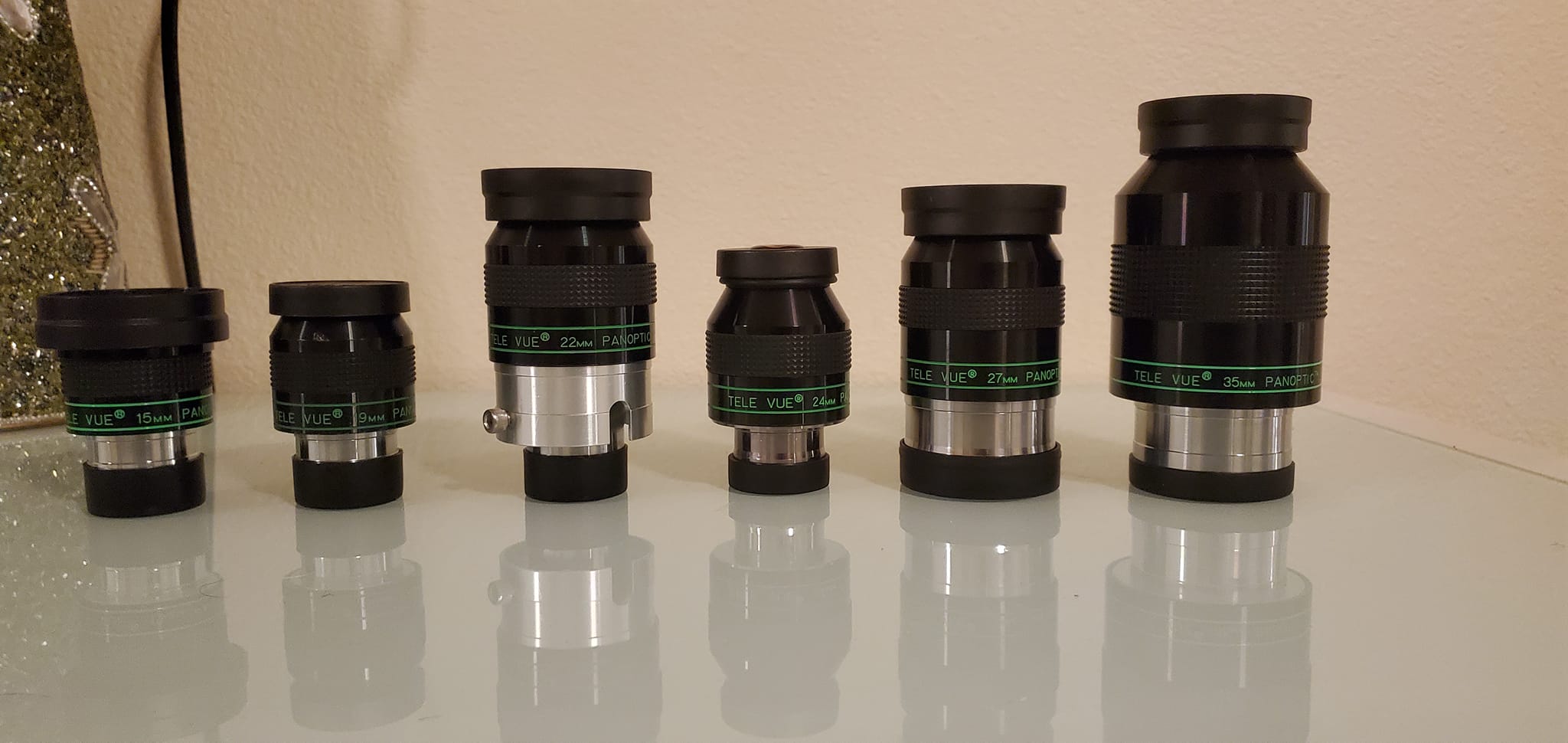
Not all eyepieces are created equal. A few things worth knowing:
Apparent field of view (AFOV) is how wide the “window” of the eyepiece appears when you look through it — a fixed property of the eyepiece design, independent of your telescope. More on how this translates to actual sky coverage below.
Eye relief is the distance your eye can be from the eyepiece lens and still see the full field. Short eye relief means pressing your eye right up to the glass; longer eye relief is more comfortable, especially at high magnification or if you wear glasses. More on this in the next section.
Coatings matter significantly. Fully multicoated eyepieces transmit more light and produce better contrast than uncoated or partially coated ones. Look for “fully multicoated” in any eyepiece you buy.
Eye Relief and High Magnification
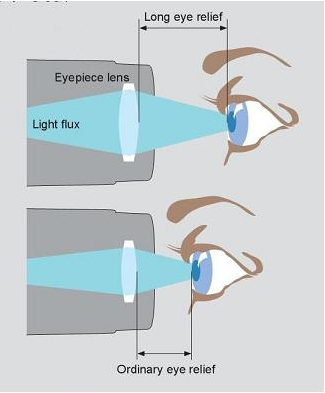
At high magnification, eye relief becomes critical. Short eye relief forces you to hold your eye uncomfortably close to the lens, making it easy to lose the image entirely with the slightest movement. If you wear glasses, you may not be able to see the full field at all.
If you find high-magnification viewing uncomfortable, the problem is almost always the eyepiece, not you.
Barlow Lenses
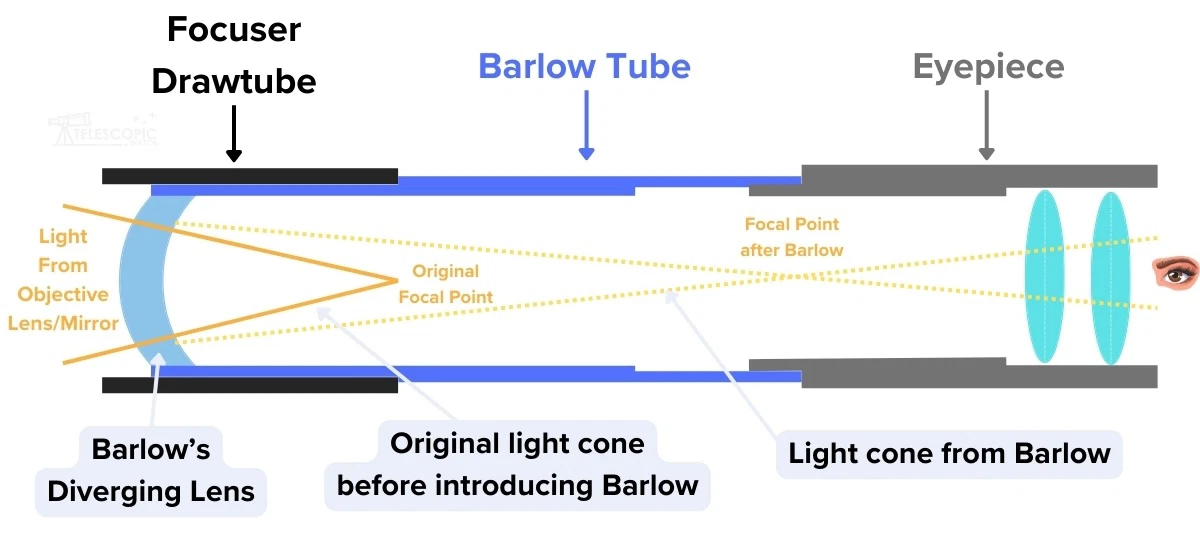
A Barlow lens is a simple optical element that fits between your telescope and eyepiece, multiplying the magnification by a fixed factor — typically 2× or 3×.
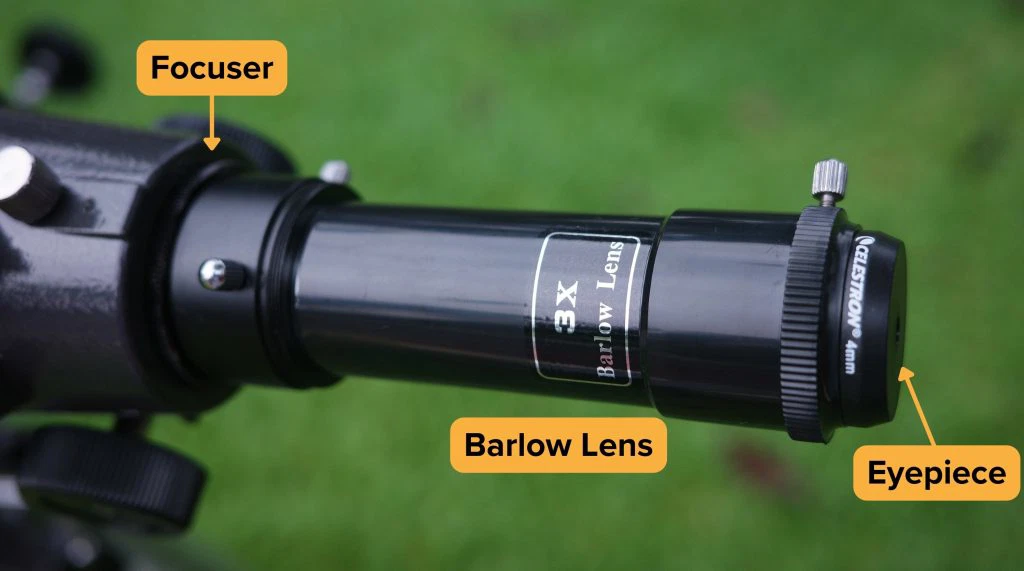
The practical benefit: a 2× Barlow effectively doubles your eyepiece collection. A 25mm and a 10mm eyepiece plus a 2× Barlow gives you 25mm, 12.5mm, 10mm, and 5mm — four magnifications from two eyepieces.
Barlow lenses also increase eye relief on short-focal-length eyepieces, making high magnification more comfortable to use.
A quality Barlow is one of the best value purchases in astronomy.
Field of View
Every eyepiece has an apparent field of view (AFOV) — how wide the “window” looks when you hold it up and look through it, measured in degrees. A 50° AFOV feels like looking through a porthole; an 82° AFOV feels like floating in space. This is a fixed property of the eyepiece design.
What you actually see in the sky is the true field of view (TFOV), which depends on both the eyepiece and your telescope:
TFOV = AFOV ÷ Magnification
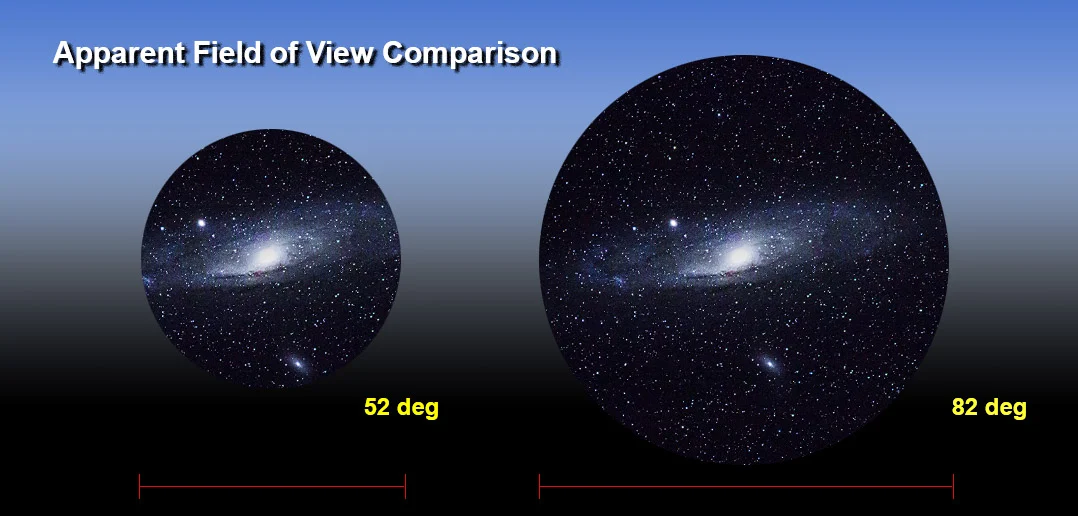
At low power with a wide-field eyepiece, you might see several degrees of sky — enough to frame an entire star cluster or the Andromeda Galaxy. At high power, your field narrows to a fraction of a degree, ideal for splitting tight double stars or studying planetary detail.
This is why magnification is always a tradeoff: more power means a narrower, dimmer view. Knowing when to zoom in and when to pull back is one of the fundamental skills of observing.
A Practical Starter Kit
You don’t need many eyepieces to start. A sensible first set:
- A 25mm or 32mm for low power, wide-field views and finding objects
- A 10mm or 8mm for planetary and lunar work
- A 2× Barlow to double your range
This gives you four effective focal lengths from three purchases, covering everything from sweeping star fields to close planetary detail. Add eyepieces as your interests develop — there’s no need to own a full set on day one.