Telescopes come in several distinct optical designs, each with real strengths and weaknesses. Understanding the differences will help you match a scope to what you actually want to observe — and avoid buying something that frustrates you.
The three fundamental designs are refractors, reflectors, and compound (or catadioptric) scopes. The Dobsonian is a variant of the reflector worth treating on its own terms.
Refractors
A refractor uses a lens at the front of the tube to gather and focus light. It’s the telescope most people picture when they think of a telescope — a long tube with a big glass lens at one end.
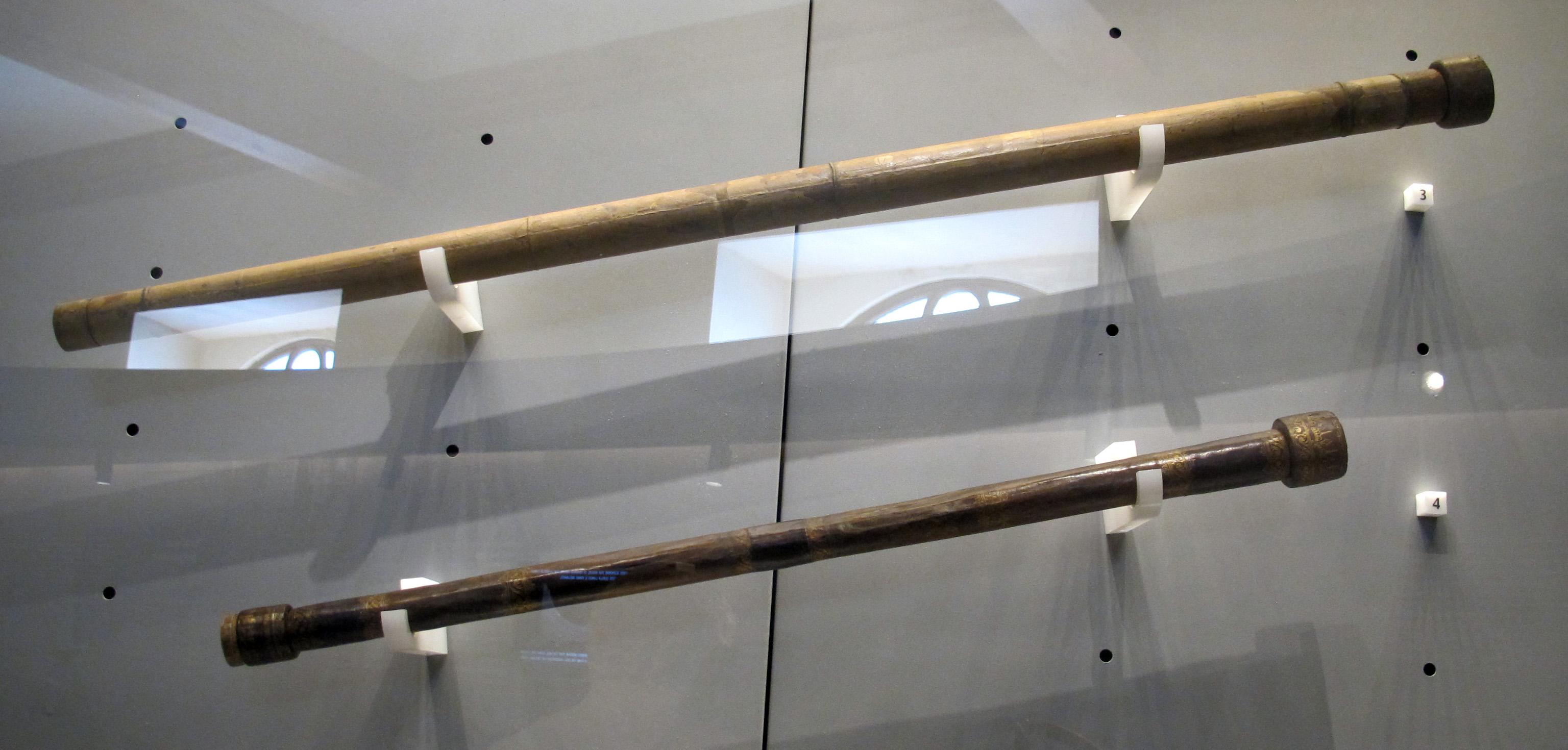
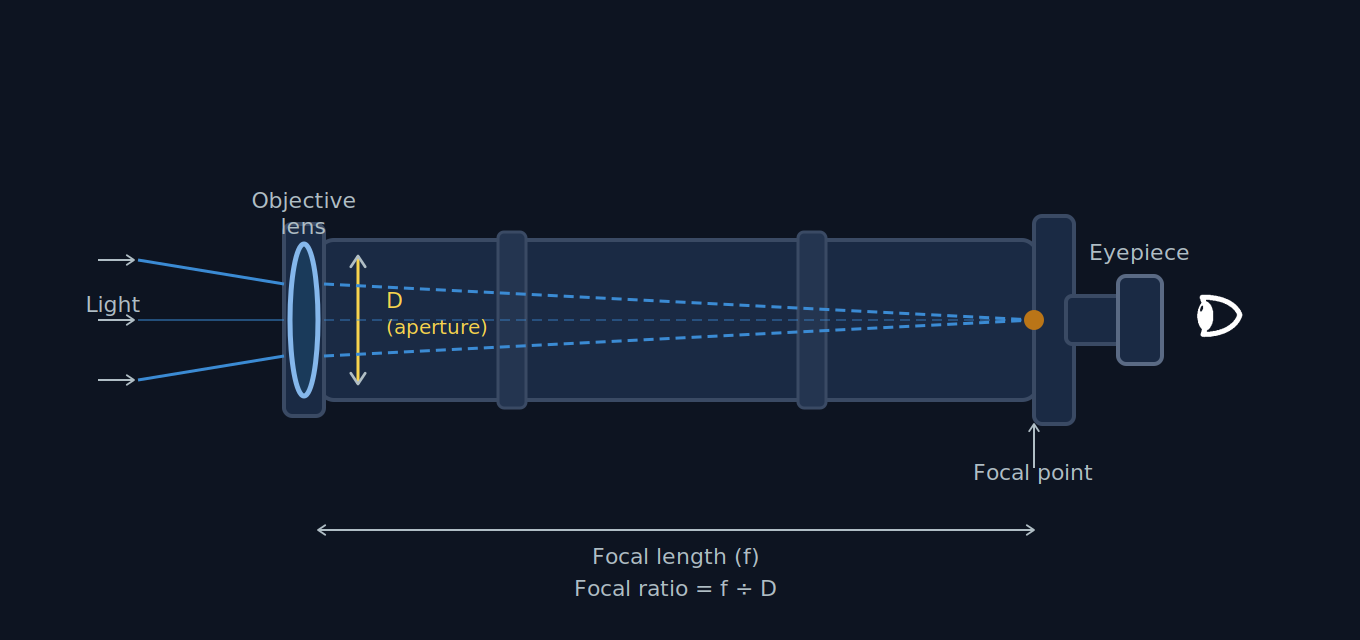
Refractors are the lowest-maintenance of all telescope types. The optics are sealed inside the tube, so they never need alignment (collimation) and rarely need cleaning. They produce sharp, high-contrast images that are excellent for the Moon, planets, and double stars.
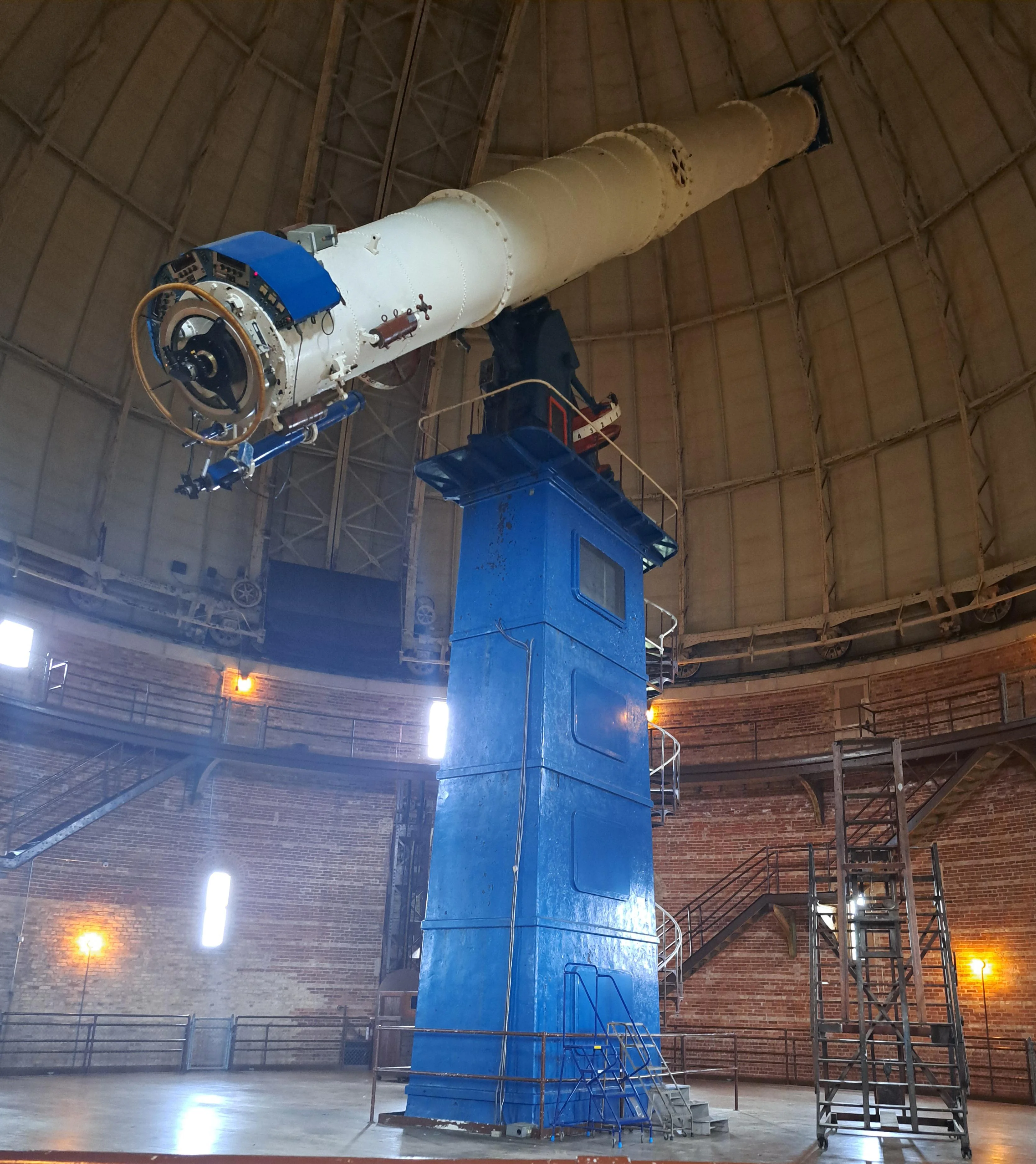
Very large refractors also have a weight problem since the objective lens is at the end of a very large tube, and that can start to flex the tube. The largest refractor ever put to use is a Yerkes Observatory; it has a 40" aperture, which is about the practical limit for a refractor.
Best for: Moon, planets, double stars, daytime terrestrial use.| Pros | Cons |
|---|---|
| Low maintenance, sealed optics | Expensive per mm of aperture |
| Sharp, high-contrast images | Chromatic aberration in cheaper models |
| Durable and portable | Limited aperture at reasonable prices |
| Good for daytime use | Long tubes can be awkward |
Cost tier: $150–$600 for a decent beginner refractor (60–100 mm = 2-4 inches). Quality apochromatic refractors run $500–$2,000+. Larger refractors quickly run to several thousand dollars!
Reflectors
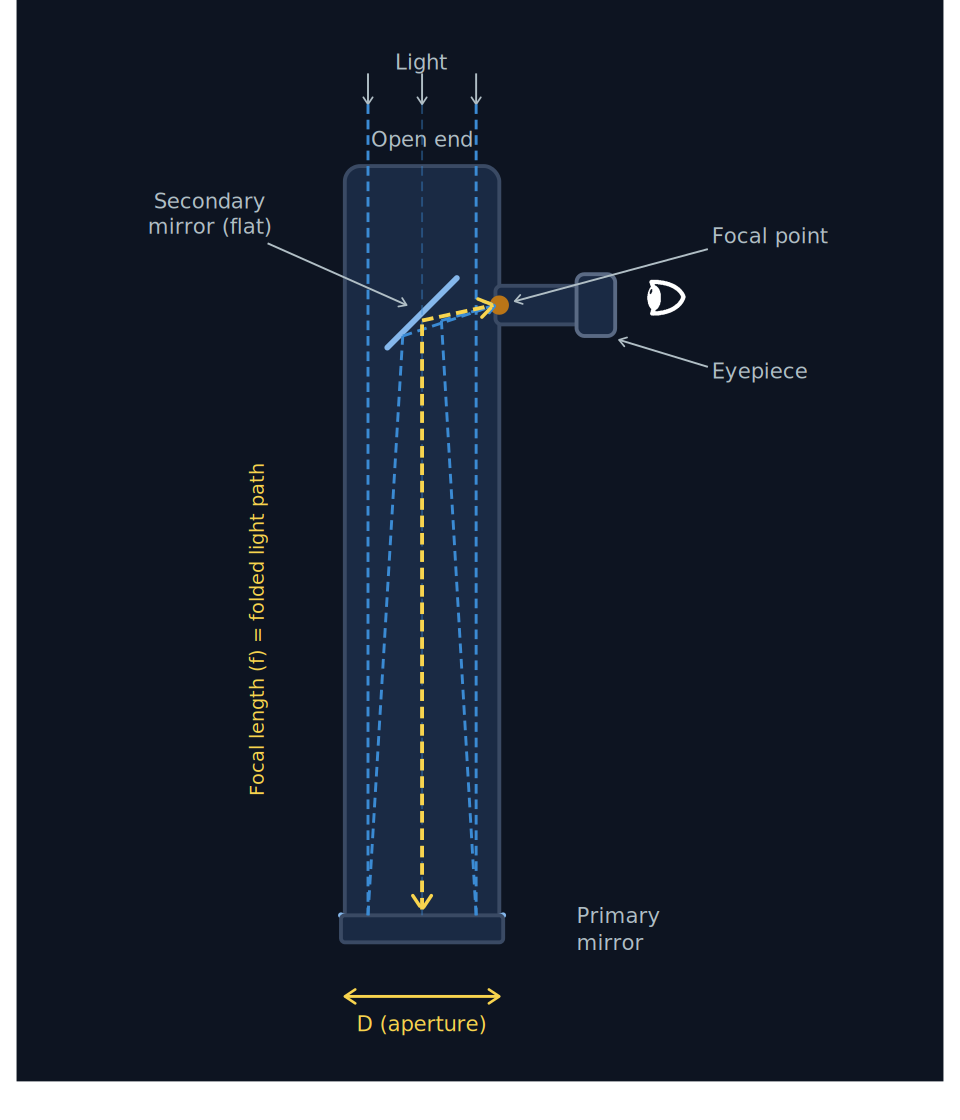
A reflector uses a mirror — not a lens — to gather light. The primary mirror sits at the bottom of an open tube; light travels down the tube, reflects off the primary mirror, then off a smaller secondary mirror, and into the eyepiece at the side of the tube.
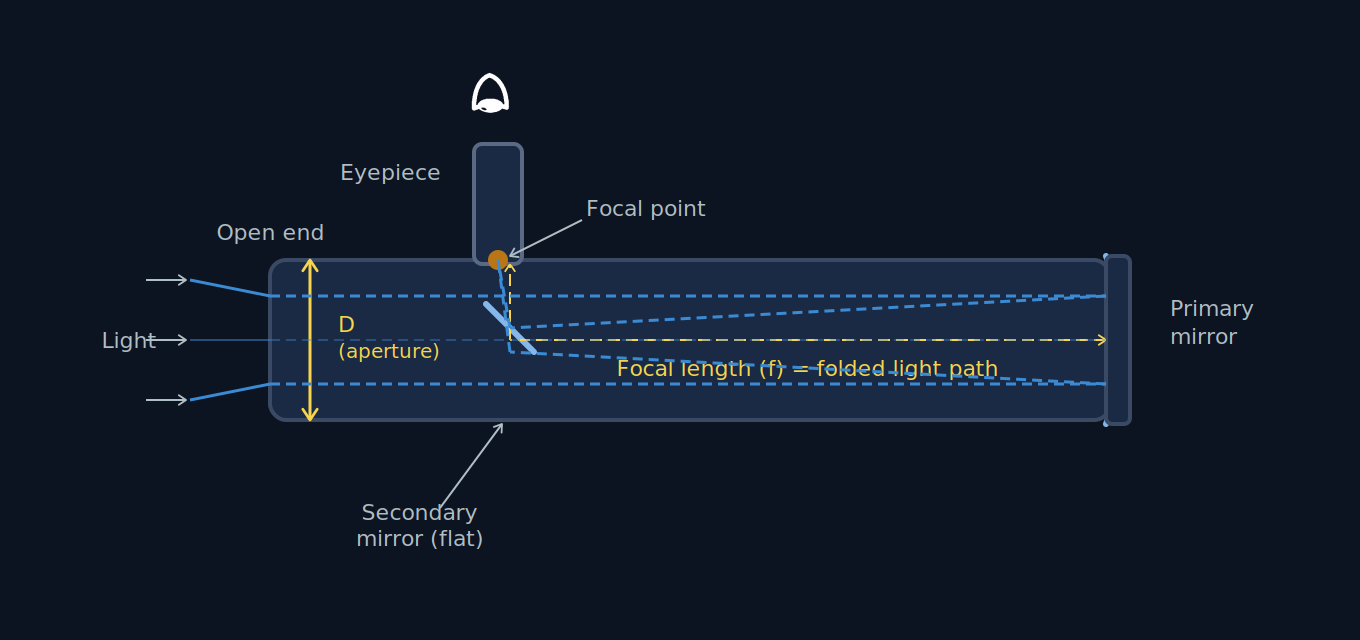
This design — called a Newtonian reflector — gives you the most aperture for your money of any telescope type. Mirrors are cheaper to manufacture than lenses of equivalent quality, so a $300 reflector will typically have significantly more light-gathering power than a $300 refractor.
The tradeoff: reflectors require periodic collimation (alignment of the mirrors) and the open tube means the mirrors can collect dust and dew. They’re also bulkier than refractors of similar aperture.
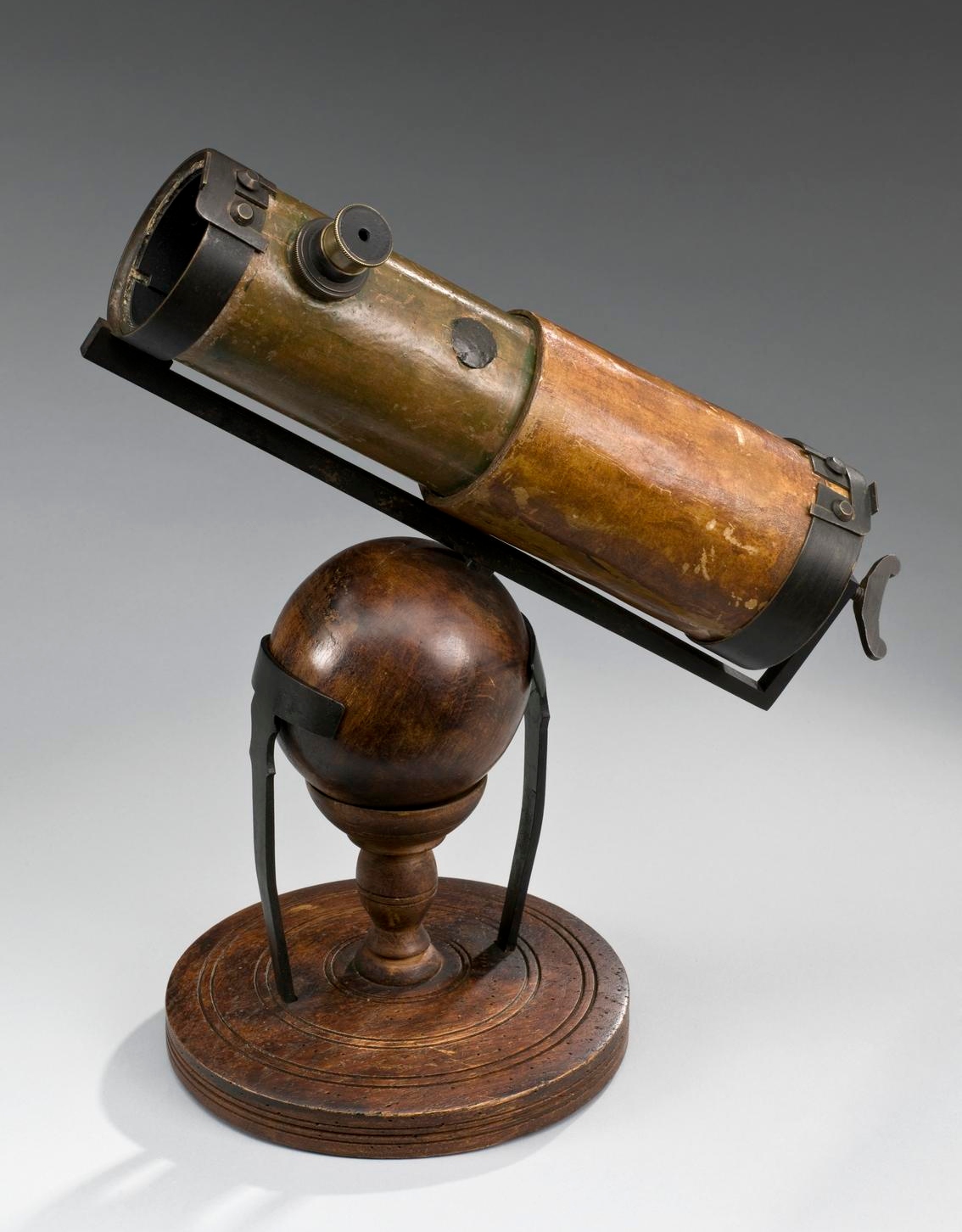
Best for: Deep-sky objects (nebulae, galaxies, star clusters), general observing.
| Pros | Cons |
|---|---|
| Best aperture per dollar | Requires periodic collimation |
| No chromatic aberration | Open tube collects dust and dew |
| Great for deep-sky objects | Eyepiece position can be awkward |
| Wide range of sizes available | Bulkier than refractors |
Cost tier: $150–$400 for a solid beginner reflector (114–150 mm = 4-6 inches).
Cassegrain & Compound Scopes
Compound telescopes — also called catadioptric scopes — use a combination of mirrors and a corrector lens to fold a long optical path into a short, compact tube. The two most common designs are the Schmidt-Cassegrain (SCT) and the Maksutov-Cassegrain (Mak).
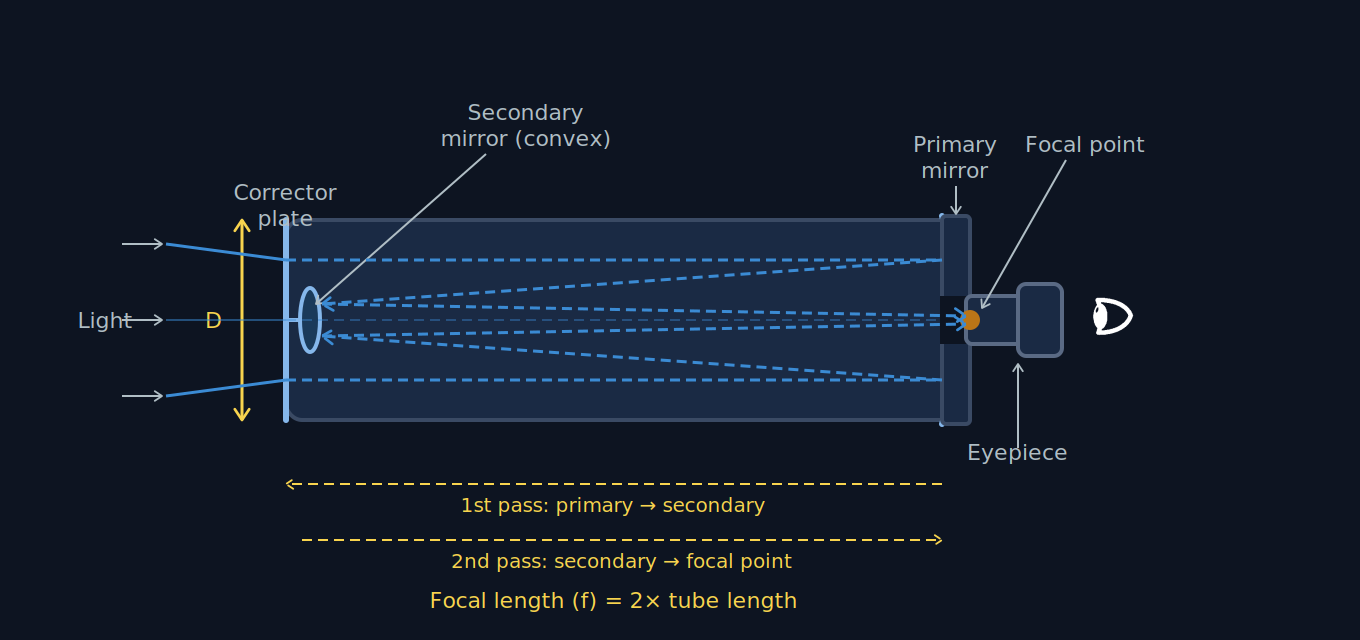
The big appeal is portability: an 8" SCT has a tube only about 18" long, compared to a Newtonian reflector of the same aperture which would be 4–5 feet long. Compound scopes are also versatile — they work well for both planetary and deep-sky observing, and many are popular for astrophotography.
The tradeoff (to some extend) is cost. Compound scopes are the most expensive design per millimeter of aperture. They also require collimation (though less frequently than Newtonians) and can suffer from “cool-down time” — the closed tube traps warm air that needs to equalize with the outside temperature before the optics perform at their best. Many models on the market (all the Celestron cassegrains) have a corrector plate that holds the secondary mirror in place. This also closes off the interior of the telescope so that dust and dew can never reach the mirrors. If handled gently, a Cassegrain requires very little maintenance.
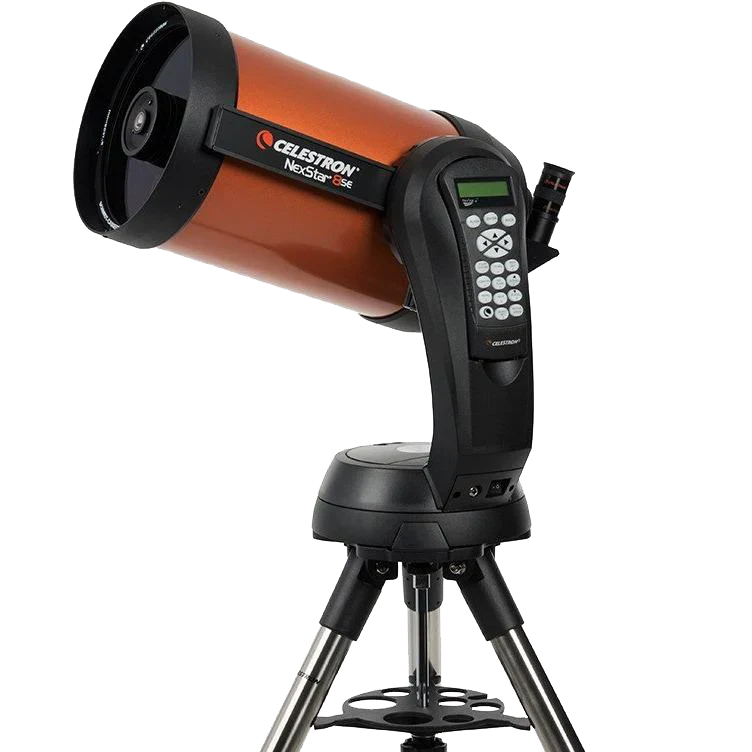
Best for: Planets, Moon, and deep-sky — a true all-rounder. Popular for astrophotography.
| Pros | Cons |
|---|---|
| Compact and portable | Most expensive per mm of aperture |
| Versatile — good for most targets | Requires cool-down time |
| Great for astrophotography | Collimation needed occasionally |
| High focal lengths available | Heavier than they look |
Cost tier: $400–$800 for a starter SCT (5–6"). Quality 8" SCTs run $900–$1,500.
Dobsonians
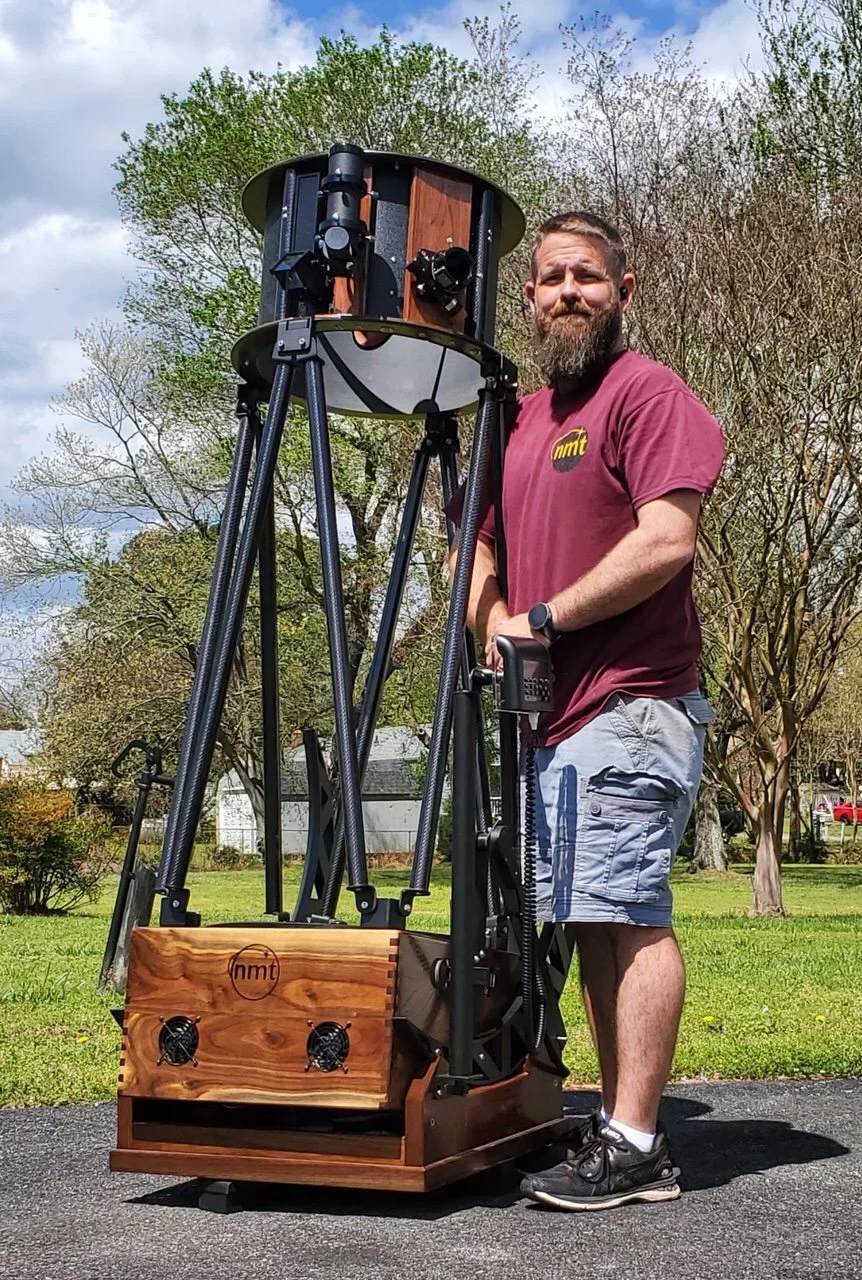
A Dobsonian’s simple wooden or composite mount is cheap to build and rock-solid to use. This means the money goes into the mirror — not the mount. For the same price as a modest SCT, you can have a Dobsonian with two or three times the aperture. An 8" Dobsonian — a serious instrument capable of showing you thousands of deep-sky objects — can be had for $500–$800.
The limitation is that the simple alt-azimuth mount doesn’t track the sky as Earth rotates, so objects drift through the field of view at high magnification. This makes Dobsonians less ideal for astrophotography. But for visual observing — especially deep-sky — they’re hard to beat.
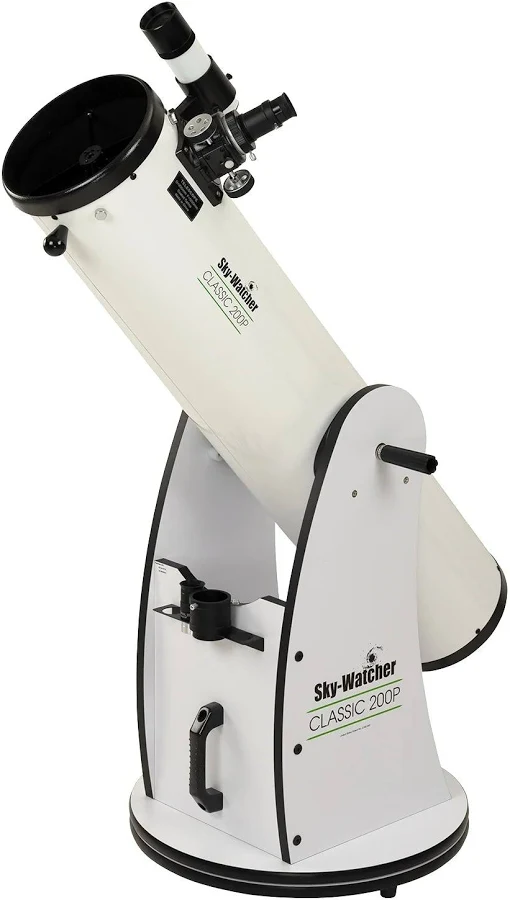
Best for: Deep-sky objects, anyone who wants maximum aperture for minimum money.
| Pros | Cons |
|---|---|
| Best aperture per dollar of any design | No tracking — objects drift at high power |
| Stable, simple mount | Large apertures are bulky to transport |
| Excellent for deep-sky observing | Not ideal for astrophotography |
| Large apertures available affordably | Eyepiece height varies as scope moves |
Cost tier: $300–$500 for an 8" Dobsonian. 10–12" models run $500–$900.
“Smart” Scopes
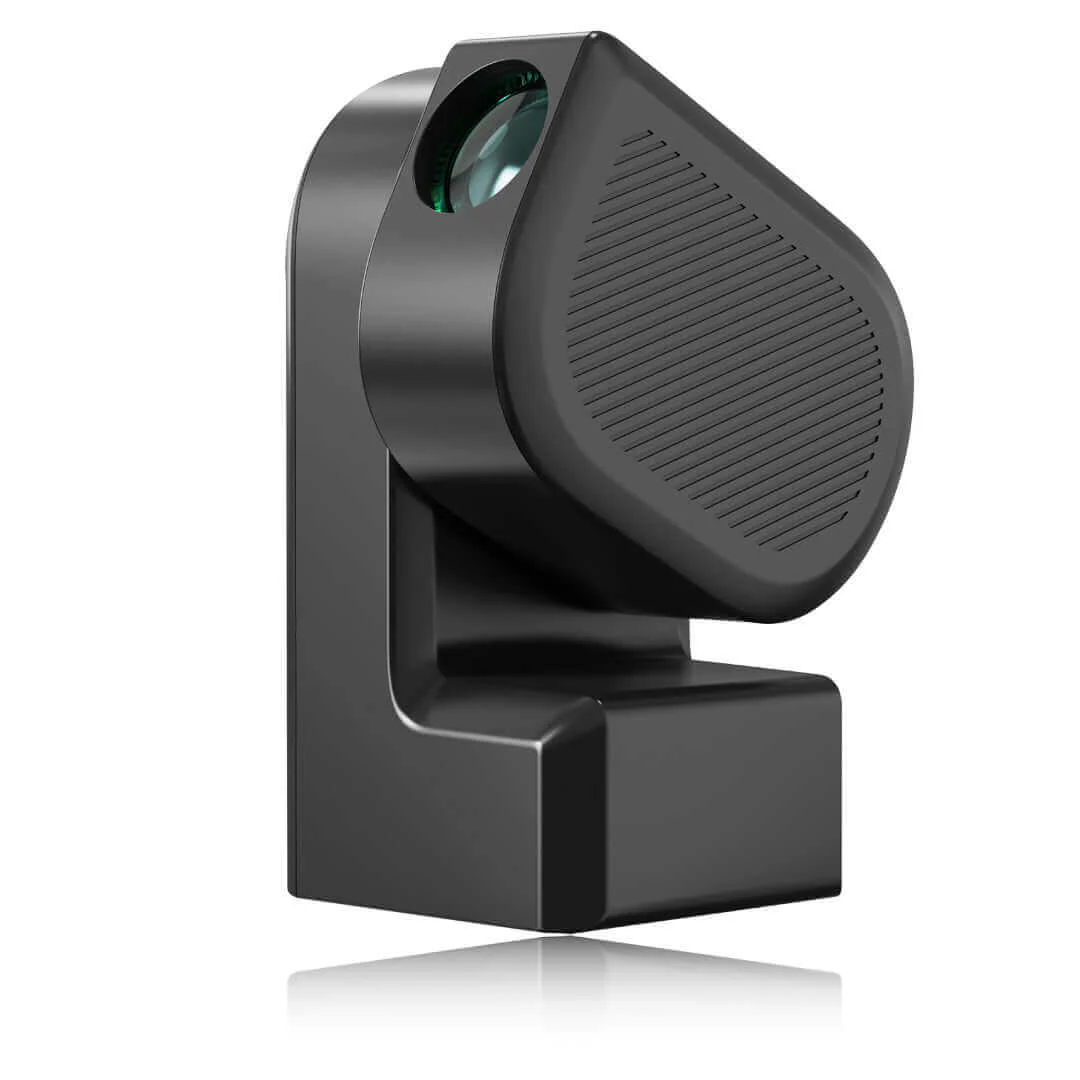
Prices range from a few hundred dollars to ~$4000 depending on the model.
They deserve their own detailed discussion, which you’ll find on the Smart Scopes page. If you’re drawn to the idea of a telescope that does the pointing for you — or one that produces processed images rather than requiring you to look through an eyepiece — that page is worth reading before you decide.
Which Type Is Right for You?
There’s no universally correct answer — it depends on what you want to observe, how much you want to spend, and how much you’re willing to learn. A rough guide:
- Just getting started, want something easy: Refractor (70–80mm) or small Dobsonian (6–8")
- Want to see as much sky as possible on a budget: Dobsonian
- Want one scope that does everything reasonably well: 6–8" SCT or Maksutov
- Interested in astrophotography from the start: SCT on a motorized mount, or a dedicated imaging refractor or a “smart” scope.
Other things to consider
If you’re not able to observe from home (pesky trees, and neighboring buildings), portability becomes an issue: if you do go to a more remote area you have to pack up your scope, set it up, then break it down again at the end of the observing session, which can be frustrating in the middle of the night after the temperature drops.
Think about the long-term: buying a cheap scope (or a “cheap but good” scope) might make sense economically, but if you reach that instrument’s capabilities too quickly, you’ll find you have to re-invest in an upgrade (some things - like eyepieces - you might be able to use on multiple telescopes: see our Eyepieces page for more about that).
While aperture is the primary motivator for buying a telescope, consider other possibilities for getting access to larger telescopes: astronomy clubs will have dedicated members with incredible gear and they’ll usually be very eager to let you look through them! Some clubs also offer access to telescopes to their members.
When you’re ready to think about what to actually buy, the Buying Guide covers what to look for — and what to avoid.