NBAS Weekly StarMap
A weekly map of the night sky as seen from North Adams, MA — updated every Wednesday for our Bortle 4 skies.
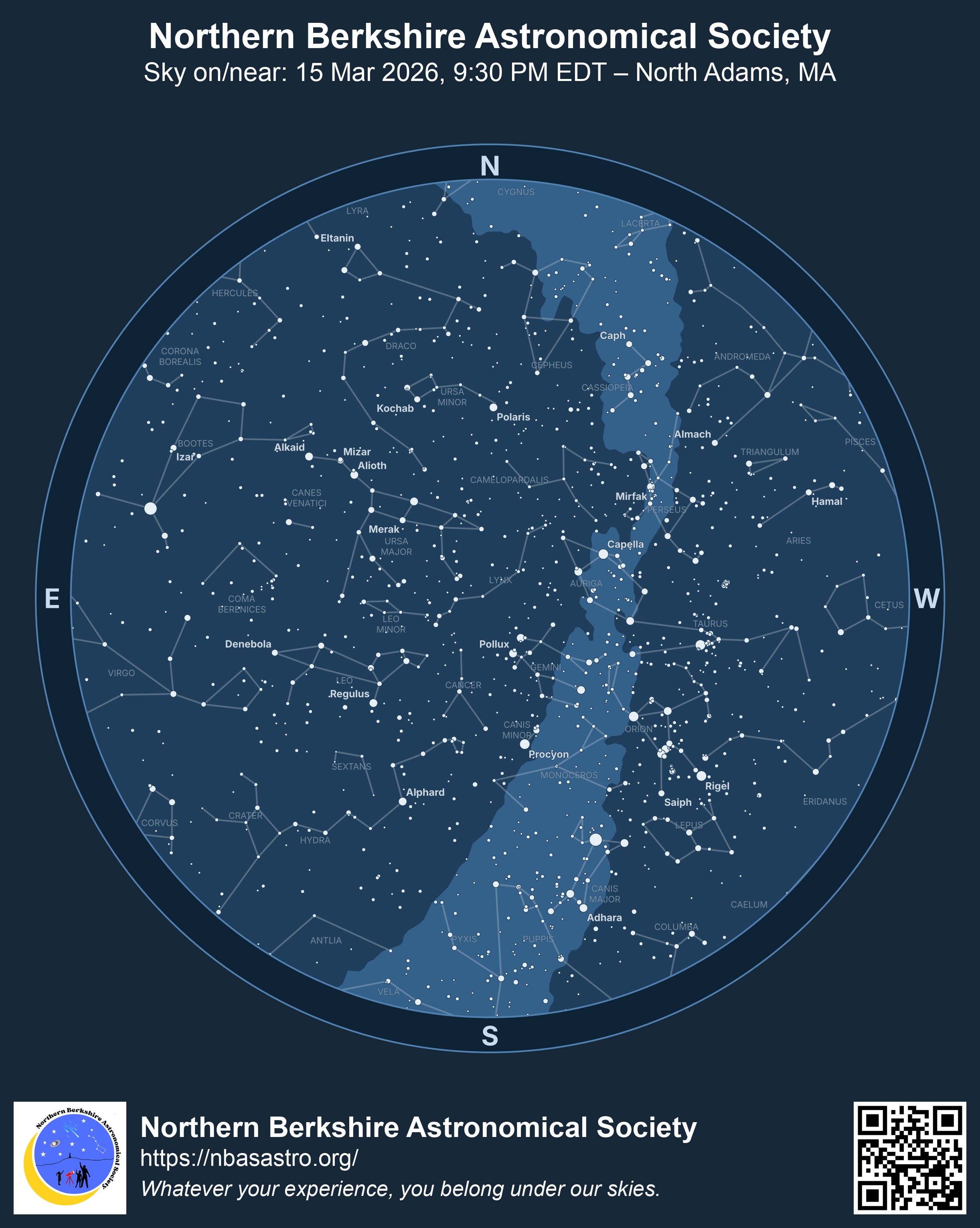
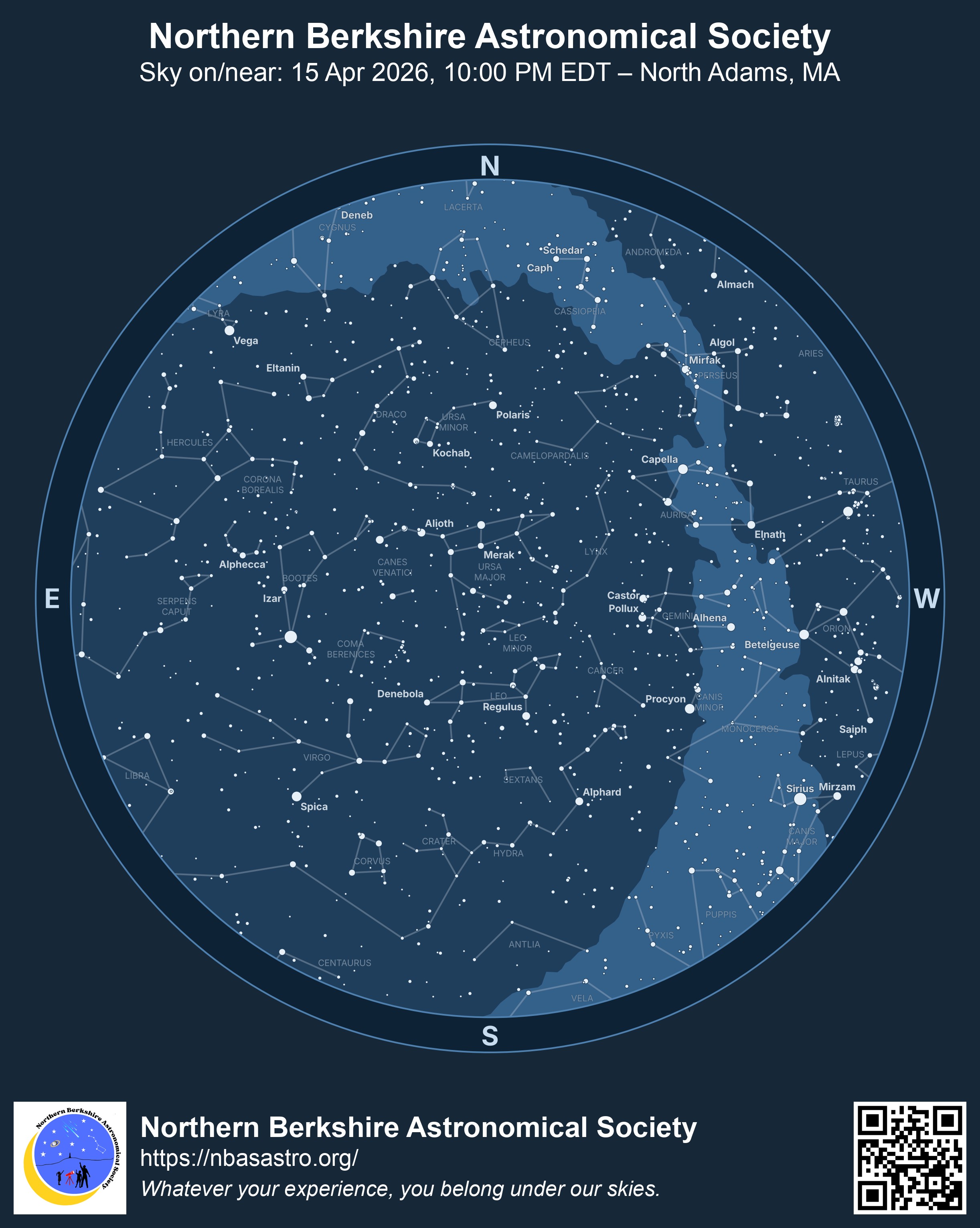
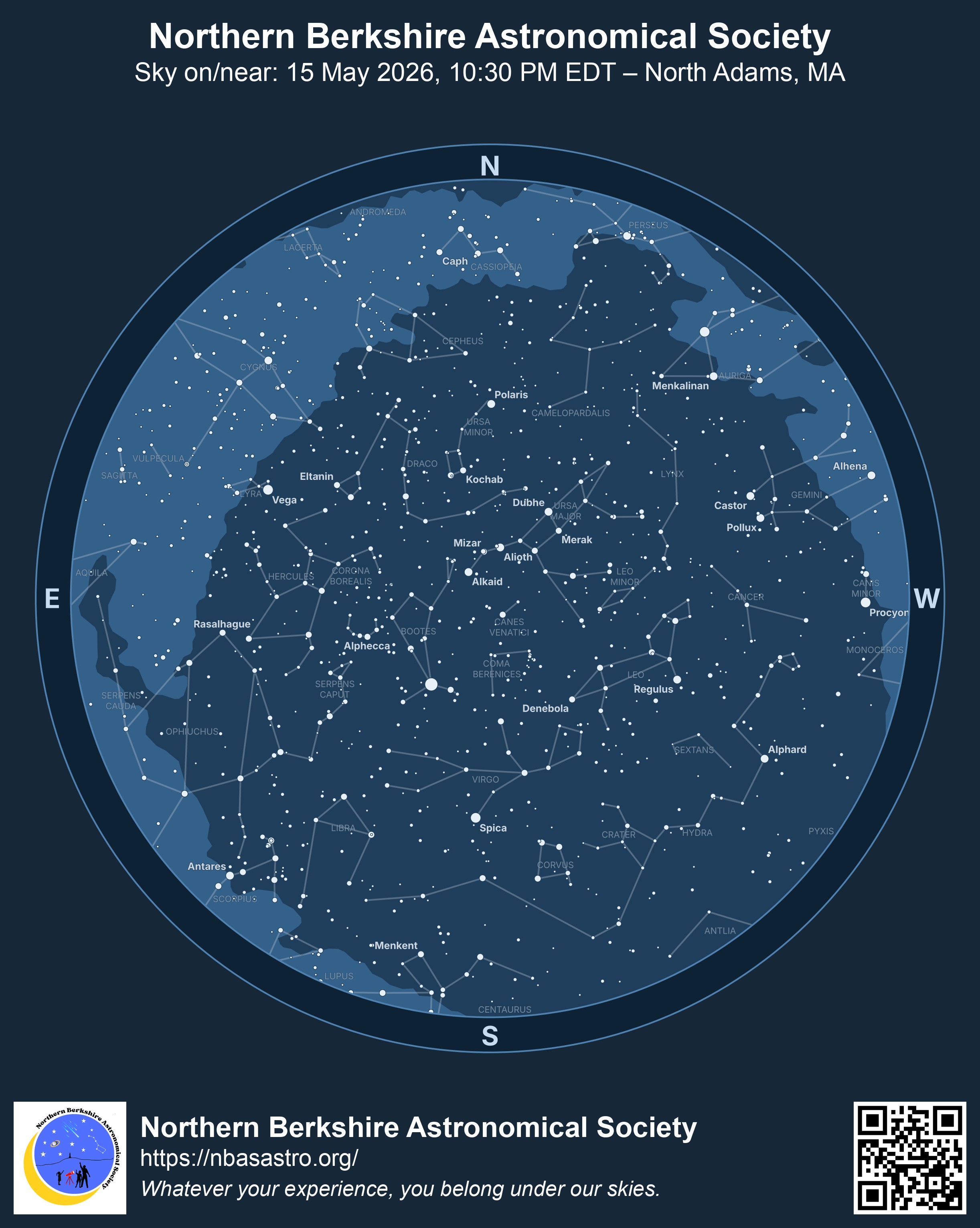
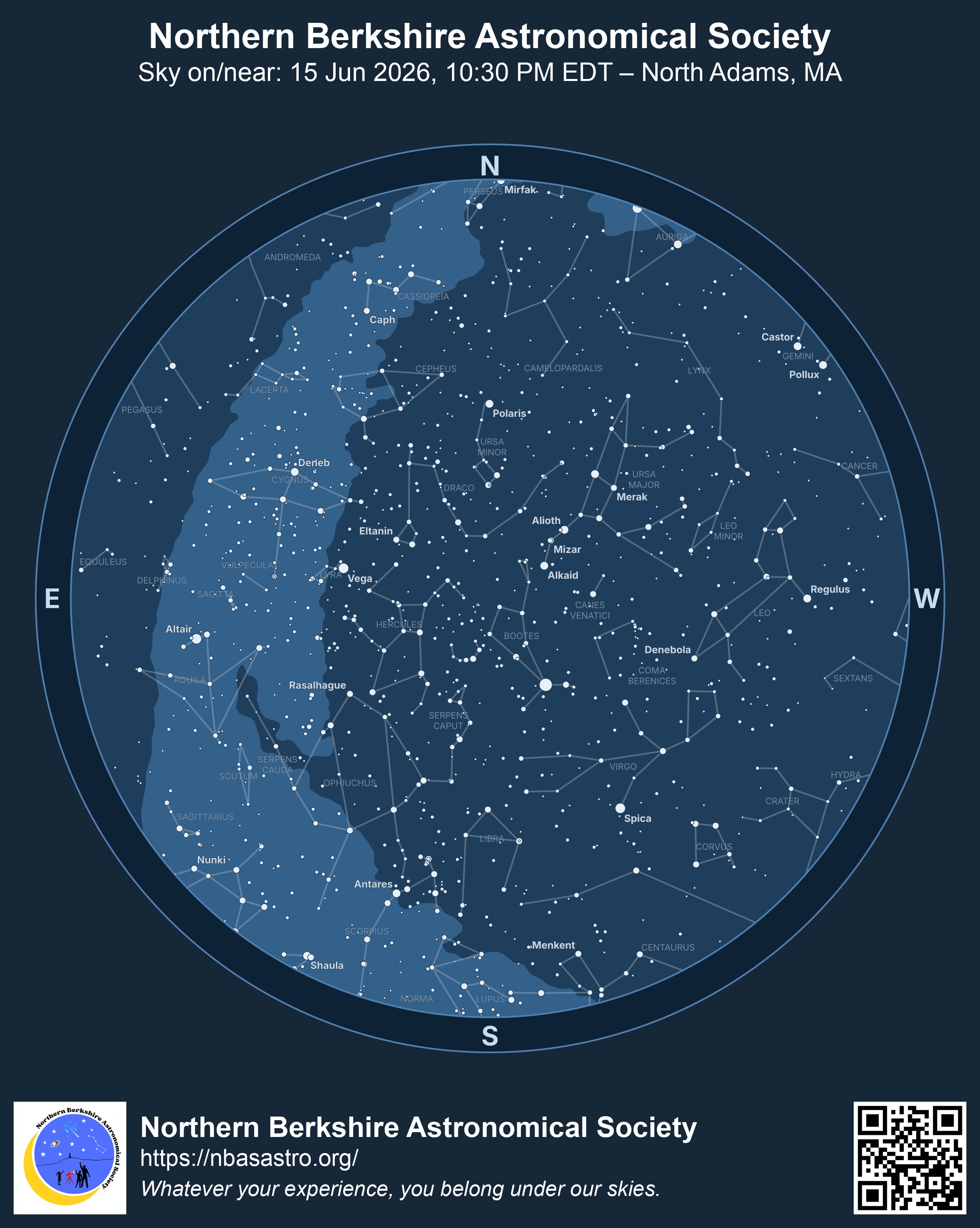
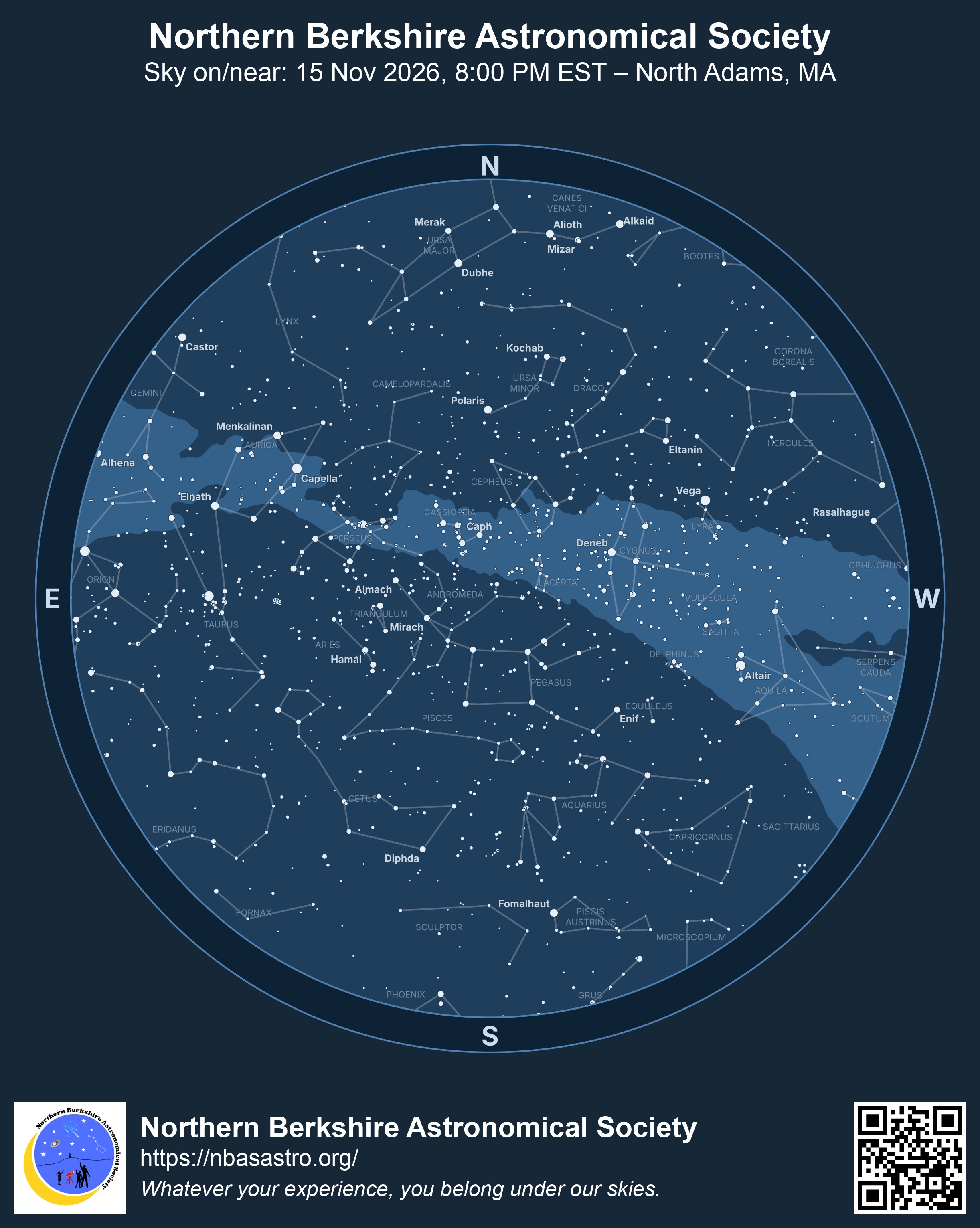
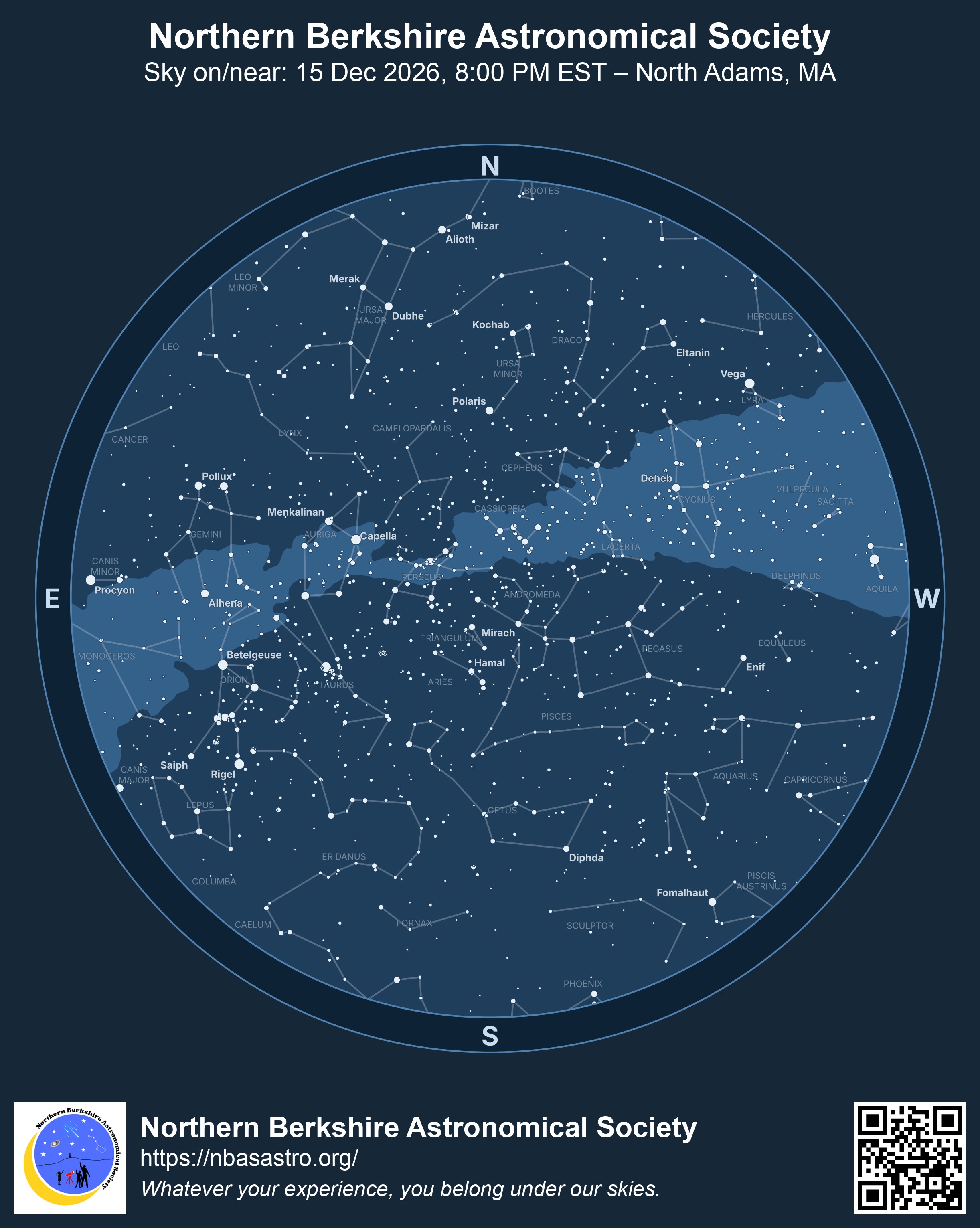
Using This Map
How to read a star map
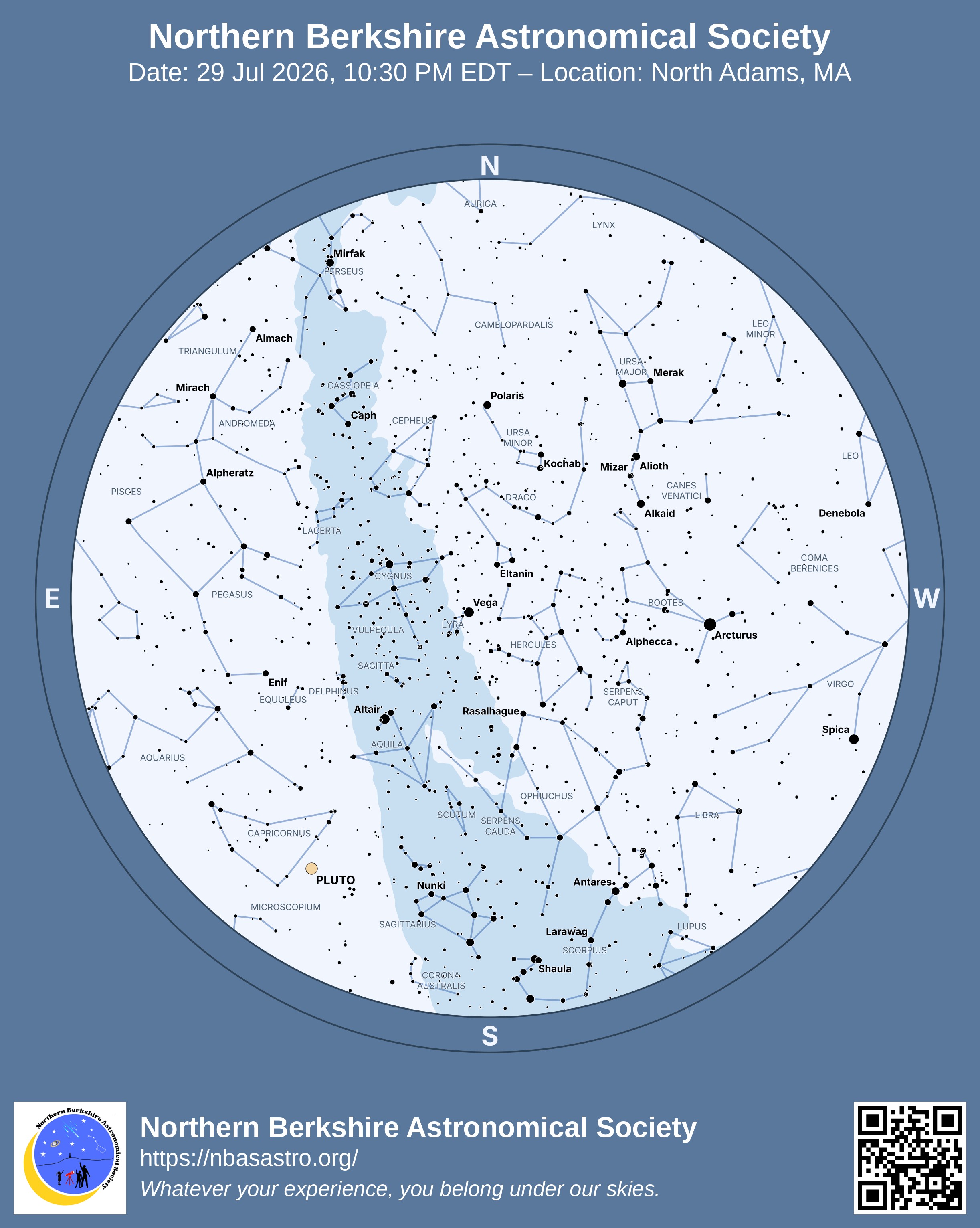
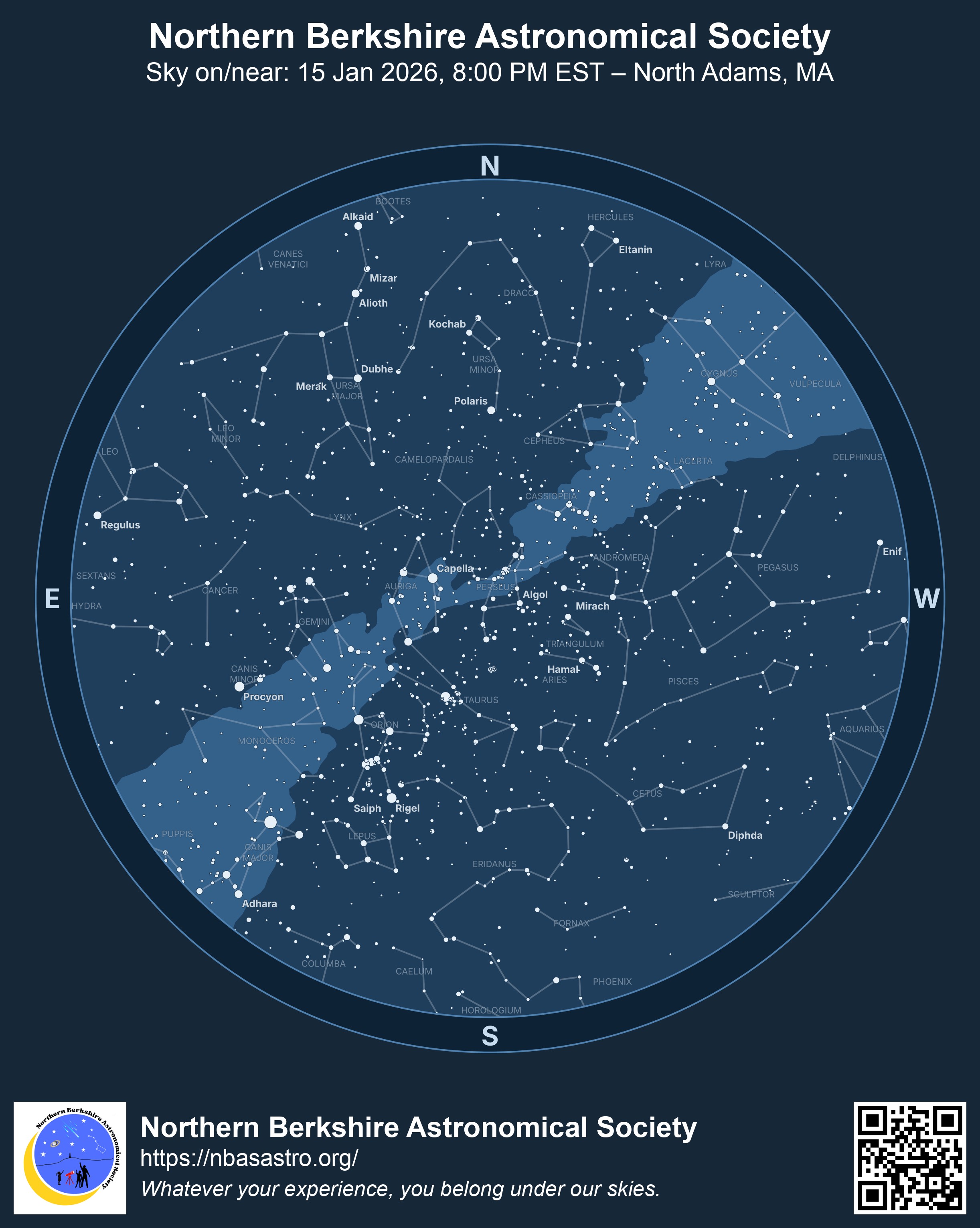
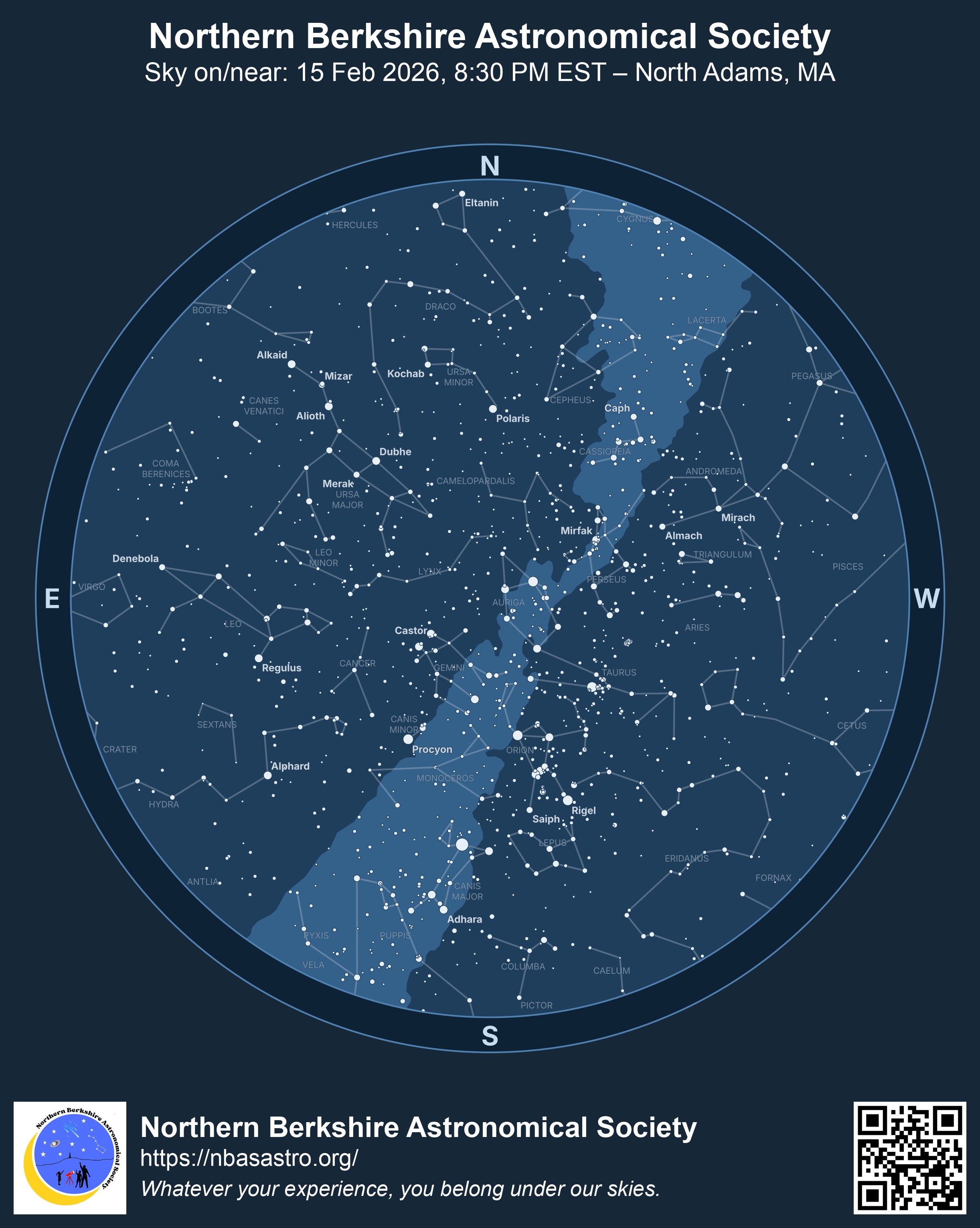
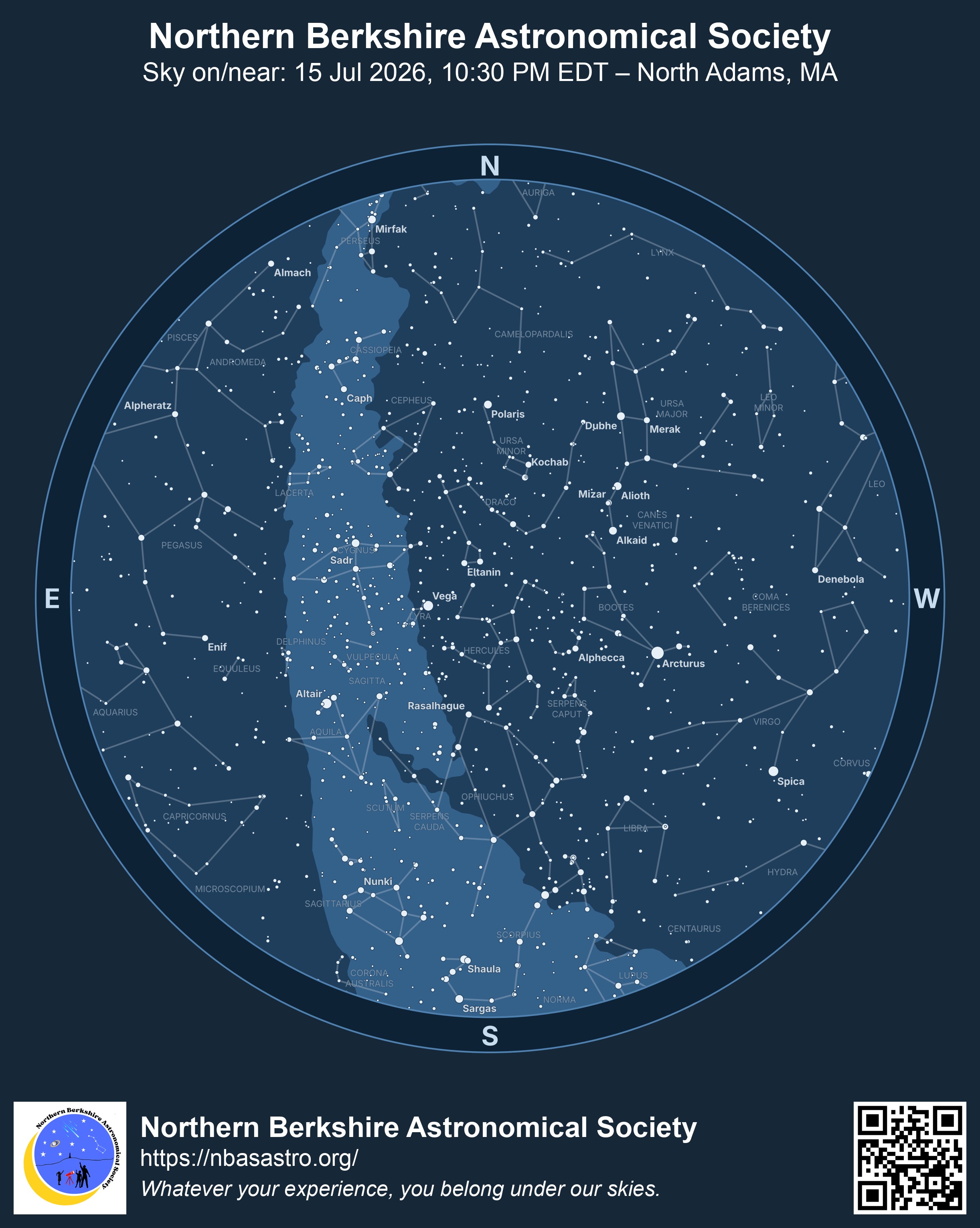
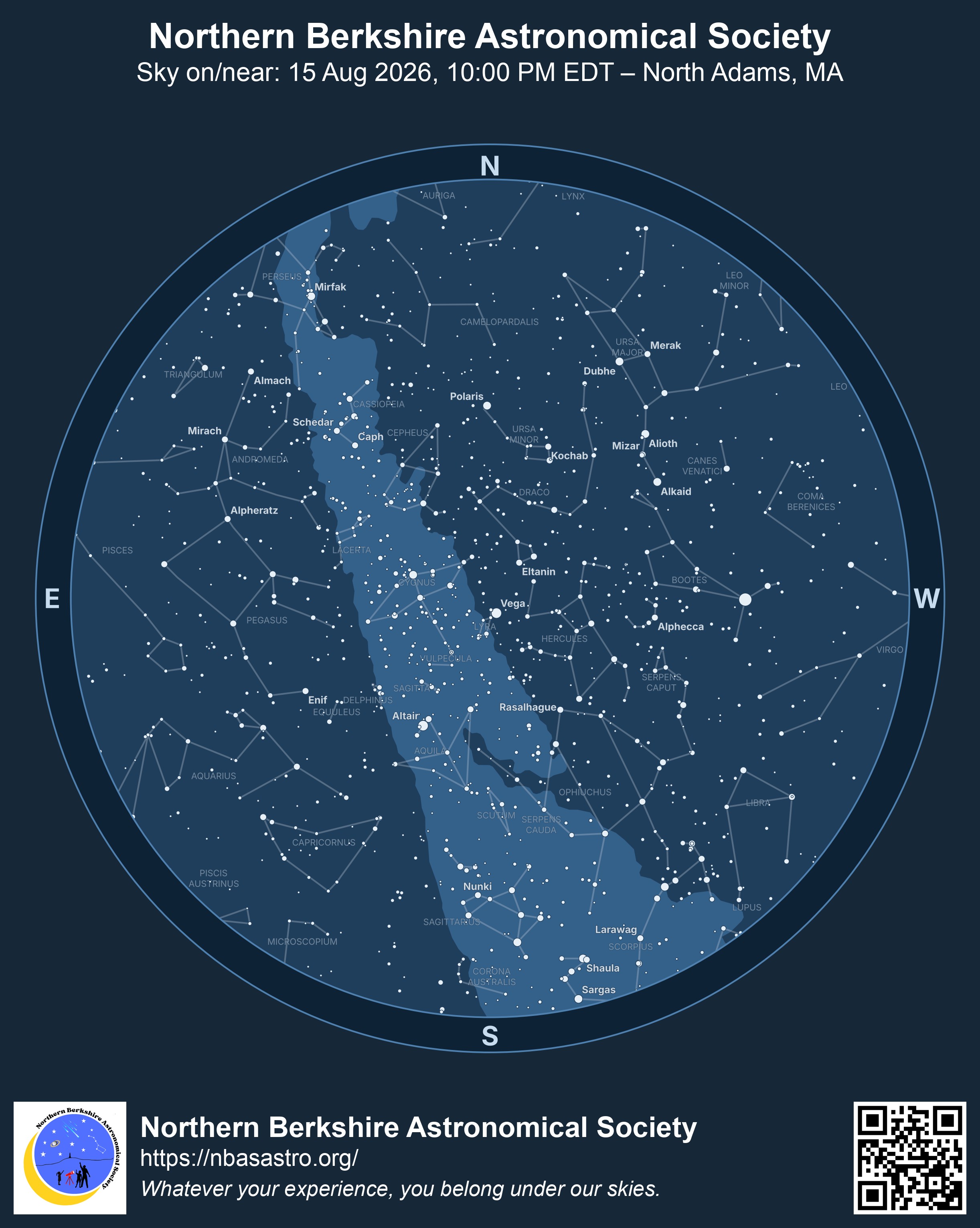
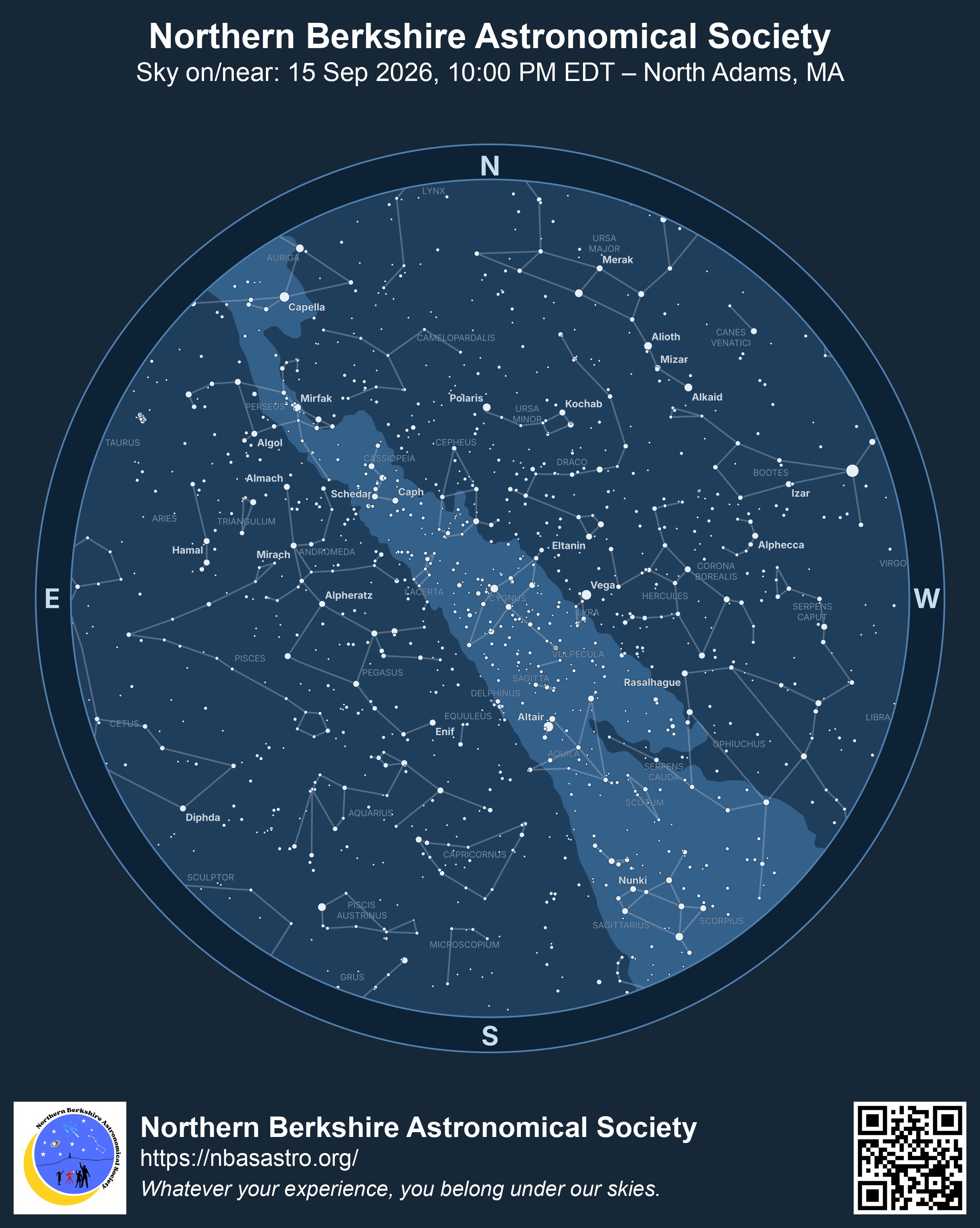
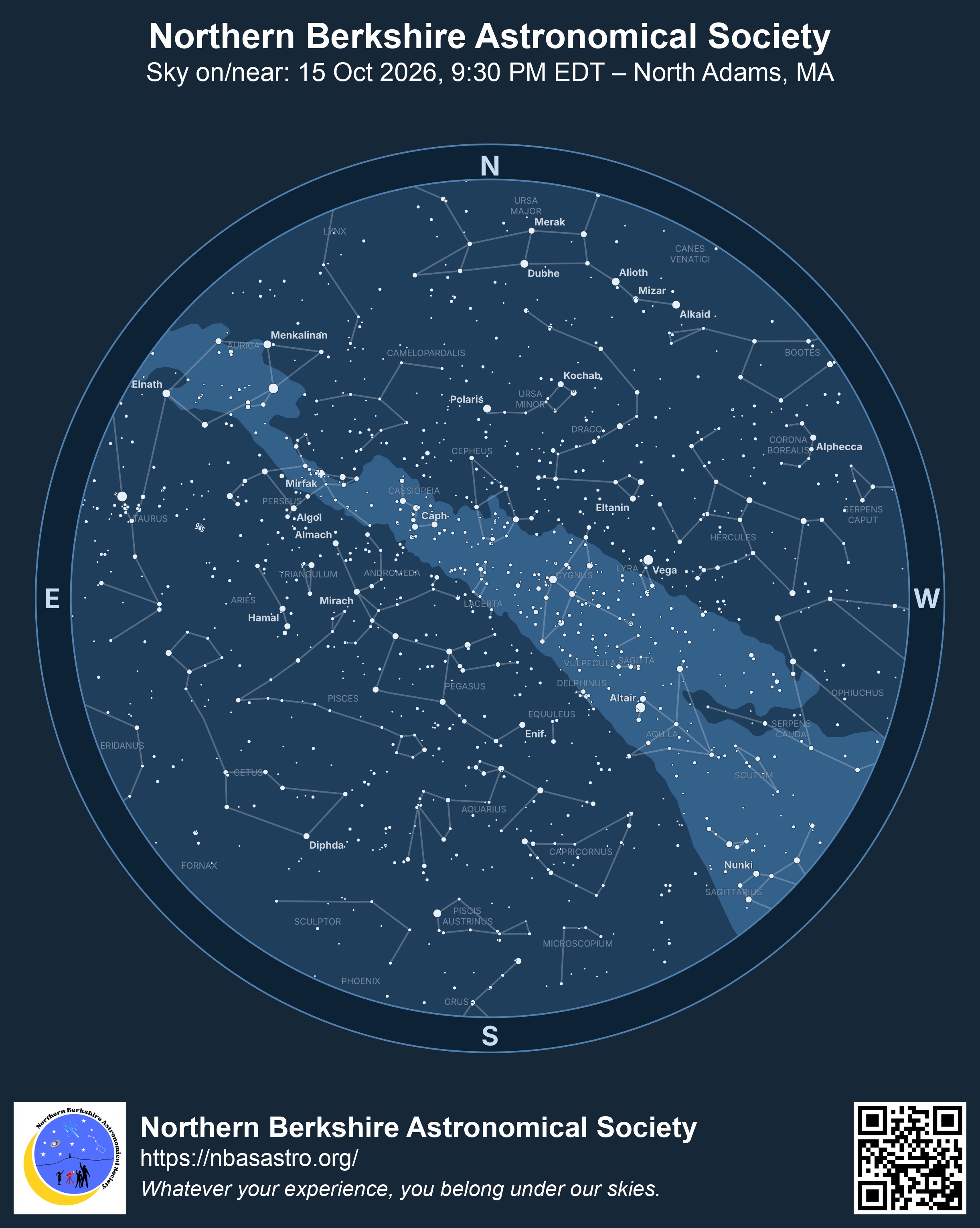
The map shows the entire sky as if you were lying on your back looking straight up. The edge of the circle is your horizon; the center is directly overhead (the zenith).
- Hold the map so the compass direction you are facing points away from you — if you're facing south, rotate the map so S is at the bottom.
- North is always toward Polaris, the North Star, which sits near the center-top of the map (it barely moves all night).
- East and West are swapped compared to a ground map — because you're looking up, not down.
- The map is set for 9:30 PM EDT on 28 Oct 2026. Stars rise in the east and set in the west as the night progresses.
What the symbols mean
- Dot size = brightness. Larger dots are brighter stars. The brightest stars are also labeled by name.
- Blue lines connect stars into the familiar constellation patterns (stick figures).
- Grey constellation labels (e.g., ORION, CASSIOPEIA) name the constellation region, not just the stick figure.
- Orange/yellow circles are planets — they move week to week, which is why they're labeled distinctly.
- Light blue cloud running diagonally across the map is the Milky Way — our galaxy seen edge-on.
Using it outside
- Let your eyes dark-adapt. Stay away from bright lights for 15–20 minutes. Your eyes become dramatically more sensitive in the dark.
- Use a red light to read the map. Red light (a red-filtered flashlight or a dim phone screen with a red filter app) preserves your night vision. White light resets your adaptation.
- Start with the bright stuff. Find one or two labeled bright stars first to orient yourself, then work outward to fainter objects.
- Hold the map overhead with the appropriate compass direction pointing away from you, or lay it flat and look up.
- In summer, wait until the time shown on the map — it stays light late and the sky needs to fully darken.
- Our skies in North Adams are Bortle 4 — dark enough to see the Milky Way on clear, moonless nights.